Plus, receive recommendations and exclusive offers on all of your favorite books and authors from Simon & Schuster.
0:00 /
LIST PRICE $30.00
PRICE MAY VARY BY RETAILER
Free shipping when you spend $40. Terms apply.
Buy from Other Retailers
Table of Contents
About the Book
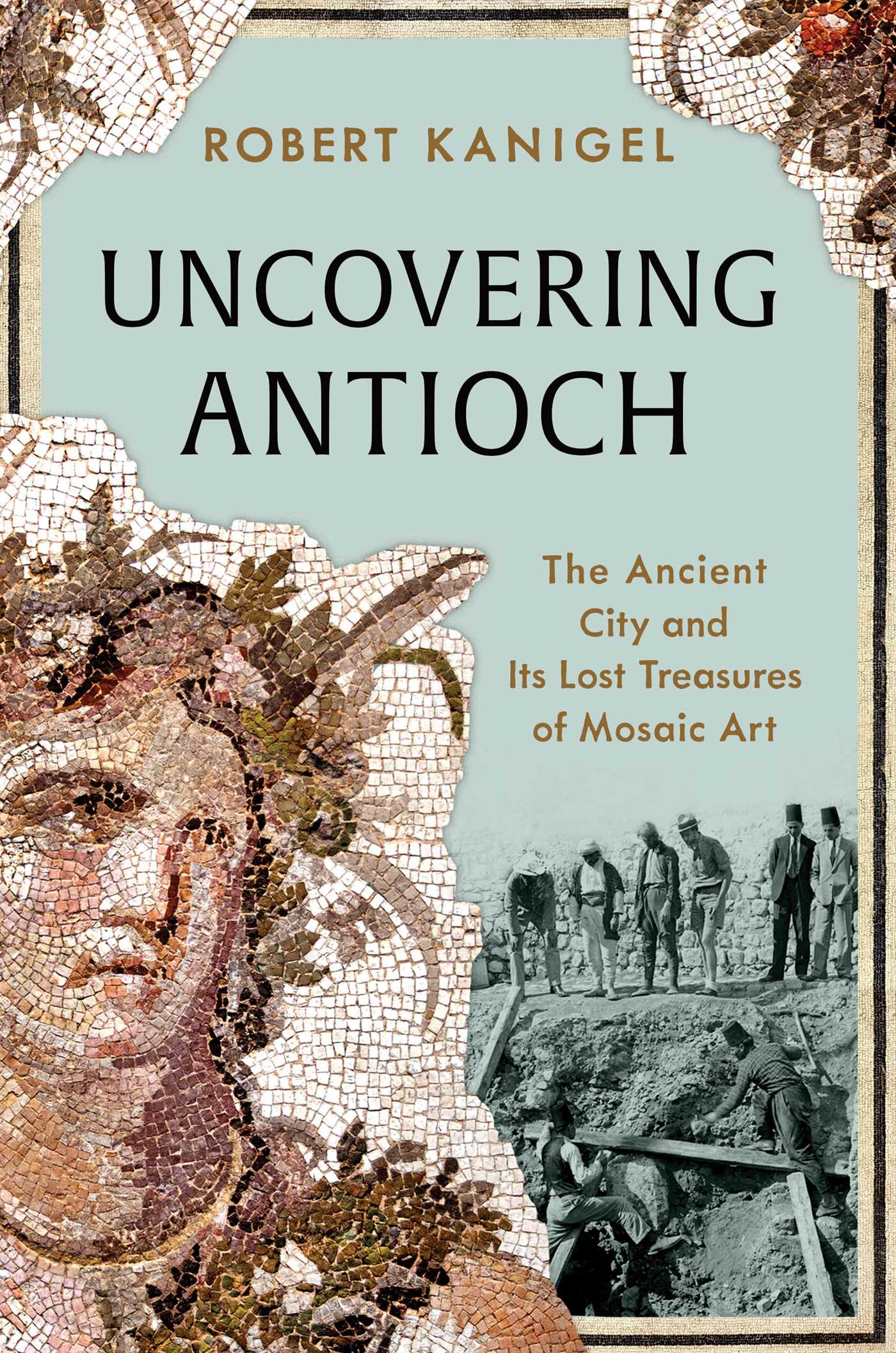
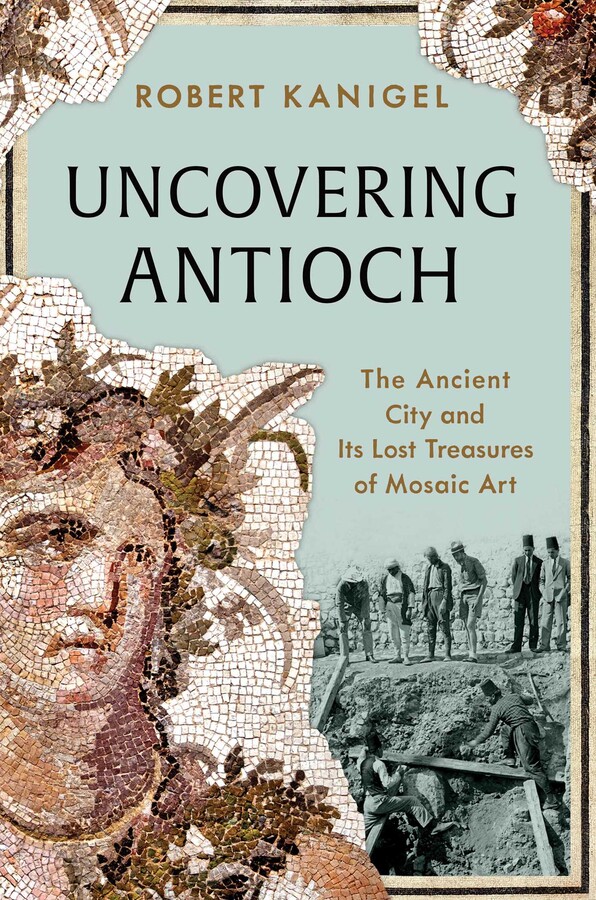
The story of the making, loss, and recovery of some of the greatest treasures of antiquity, raising questions about ancient mosaic art and its creation, the work of archaeology, and museum practice.
In 1932, after years of fundraising and flurries of letters back and forth, an archaeological team from Princeton University gathered in Antioch, Syria. They expected to find sculptures, frescos, palace walls, and busts. Instead, all across this ancient Roman metropolis, they stumbled upon one site after another of extraordinary mosaic treasure, incomparable in number, quality, and historical significance.
There were some three hundred of them in all, glories of color and design, stones and pieces of glass heaped up into spectacular images. Many of them were vast, room-sized tableaus, commissioned by wealthy Antiochenes for their villas. They depict banquets, drinking contests, olive harvests; lions, leopards, peacocks, and gazelles; legends, scenes from mythology, Cupid and Psyche, Narcissus and Dionysus. Though dated to early in the Christian era, they are unabashedly pagan; the animals and plants they depict are so life-like scholars can often identify them by species. A vast, collectively obsessive outpouring of industry and effort, art and artisanship, they stand for beauty, the drive to make it, and the human need to have it as part of life.
The eight-year dig at Antioch was an astonishing human enterprise, one that survived Depression-era financial downturns, interpersonal conflict, and the looming threat of World War II. Gained were mosaics that ultimately ended up in museums around the world—Harvard University, Boston’s Museum of Fine Arts, The Baltimore Museum of Art, New York’s Metropolitan, Paris’s Louvre, and more than a dozen others. But while an archaeological triumph, shedding new light on the ancient world, it also raised profound questions about the nature and progress of art. Who has a right to a work of art—the country of origin or the archaeologists who dig it up? Is art more interesting for its beauty, its history, or the craft and intelligence that goes into its making? What elevates a craftsperson into an artist? Robert Kanigel tackles these questions and more, breathing life into this landmark adventure of intellect and discovery.
In 1932, after years of fundraising and flurries of letters back and forth, an archaeological team from Princeton University gathered in Antioch, Syria. They expected to find sculptures, frescos, palace walls, and busts. Instead, all across this ancient Roman metropolis, they stumbled upon one site after another of extraordinary mosaic treasure, incomparable in number, quality, and historical significance.
There were some three hundred of them in all, glories of color and design, stones and pieces of glass heaped up into spectacular images. Many of them were vast, room-sized tableaus, commissioned by wealthy Antiochenes for their villas. They depict banquets, drinking contests, olive harvests; lions, leopards, peacocks, and gazelles; legends, scenes from mythology, Cupid and Psyche, Narcissus and Dionysus. Though dated to early in the Christian era, they are unabashedly pagan; the animals and plants they depict are so life-like scholars can often identify them by species. A vast, collectively obsessive outpouring of industry and effort, art and artisanship, they stand for beauty, the drive to make it, and the human need to have it as part of life.
The eight-year dig at Antioch was an astonishing human enterprise, one that survived Depression-era financial downturns, interpersonal conflict, and the looming threat of World War II. Gained were mosaics that ultimately ended up in museums around the world—Harvard University, Boston’s Museum of Fine Arts, The Baltimore Museum of Art, New York’s Metropolitan, Paris’s Louvre, and more than a dozen others. But while an archaeological triumph, shedding new light on the ancient world, it also raised profound questions about the nature and progress of art. Who has a right to a work of art—the country of origin or the archaeologists who dig it up? Is art more interesting for its beauty, its history, or the craft and intelligence that goes into its making? What elevates a craftsperson into an artist? Robert Kanigel tackles these questions and more, breathing life into this landmark adventure of intellect and discovery.
Excerpt
Prologue: Eros and Psyche PROLOGUE Eros and Psyche
There are some three hundred of them, these mosaics from the Roman metropolis of Antioch in ancient Syria—chiseled fragments of stone and glass heaped up into visions of gods and goddesses, glories of color and design. Many are vast, room-sized tableaus, commissioned by wealthy Antiochenes for their baths and villas. They depict banquets, drinking contests, olive harvests; lions, leopards, peacocks, and gazelles; scenes from mythology, Cupid and Psyche, Narcissus and Dionysus.
Though dated to early in the Christian era, they are unabashedly pagan, scarcely a Christian image in the lot. The animals and plants they represent are so lifelike that scholars can often identify them by species. Their dazzlingly intricate geometries fairly burst into three dimensions. Together, the Antioch mosaics represent a vast, collectively obsessive outpouring of art and artisanship. They stand for beauty, the will to make it, and the need to knit it into our lives.
Through them, we glimpse something of what men and women long ago cherished, what tugged at their imaginations, how they were like us, and how they were not. While some mosaics were damaged over the ages, some destroyed altogether, many had lain undisturbed for all the intervening centuries, their stones impervious, their luster little dimmed, looking much as they had when first laid down, forming an almost direct, unmediated, uncorrupted window into the past.
I don’t think Charles Rufus Morey of Princeton University gave much thought to mosaics. Not at first, anyway. Not in 1927, when he first learned of French interest in mounting an archaeological dig in Antioch. Or over the next few years as he begged and bargained to get the expedition going. Or even by 1932, when the first astonishing mosaic treasures were unearthed. In his early proselytizing on behalf of an Antioch venture, Mr. Morey had nothing to say of mosaics, couldn’t have imagined them so ardently admired, haggled over, studied and scrutinized, then bought up or traded by Harvard University, Boston’s Museum of Fine Arts, New York’s Metropolitan, Paris’s Louvre, or any of the more than twenty other museums that house them today.
In his 1938 book, The Mosaics of Antioch, Mr. Morey couldn’t always be counted on even to call them mosaics. They were “pavements,” because they’d been found not on walls but on the floors of public baths and private villas. Or they were “paintings,” because he was comparing them to other works of art that really were paintings, familiar subjects and themes of Greek and Roman art expressed now in bits of stone and glass. Only rarely did he nod to some feature that emerged from the little tiles that made them mosaics, the tesserae: He noted the masterly technique of one mosaic devoted to the Roman god Neptune, its marble squares of such “minute dimensions for the subtle flesh shades and features of the faces.” He saluted the special crew of workmen charged with lifting the mosaics from the earth, setting them on beds of concrete while never, presumably, losing a single precious tile.
It might be churlish to suggest that Mr. Morey couldn’t at first accept that the big finds coming out of Antioch weren’t sculptures, inscriptions, busts, palace walls, and frescoes; they weren’t the trove he “knew” would be found there. They were, rather, products of a medium often overlooked, deemed lesser in the precincts of high art. In his book, Morey had to take them seriously because, spanning five hundred years of late antiquity, they gave evidence for some of his pet notions about how classic Greek art had shape-shifted into the Byzantine art of the Middle Ages; that they were mosaics could seem an afterthought.
Not here, though, not in this book.
Lucky to grow up in an era during which the crafts in America have flourished, I came to care about mosaics perhaps more than Mr. Morey did, or at least differently. It began in 2014 when I took a single introductory class in mosaics at the American Visionary Art Museum in Baltimore. At the end of the day, I had produced a paperback-sized thing—about all I dare call it—built up from small pieces of blue, green, and white glass, sprinkled with adorable little mirrors, glued down onto a board.
How to explain why glass and stone should attract me, but not charcoal or acrylic or the rest of the myriad of materials with which we make art? Why did I early give up on the possibility of drawing a graceful line, yet happily embrace—both in writing books and making mosaics—the challenge of making graceful compositions? As a mosaicist I am still every bit the amateur, a hobbyist. Still, with smalti and stone, broken teacups, hammers and cutters, glue and grout, by now I’ve made a couple of dozen mosaics. At first, with much confusion, ineptitude, and an obvious deficit of training and experience. Later, some small gains—works larger and more complex, experiments in color and design, maybe a little more interesting. So much to get wrong—the natural consequence of seeing too indistinctly, of rendering too crudely. But also pleasure and some little pride when my mosaics worked out well, or well enough. None of them will ever grace a gallery or museum. Yet by now I’ve put enough time and energy into their making that I’m moved to ask what I find so satisfying in them; how, for example, they can be seen as “paintings,” as Mr. Morey did, yet in their stony permanence, transcend painting. Certainly, my hands-on experience, coupled with visits over the years to the serene and stunning Antioch Court at the Baltimore Museum of Art, where mosaics from Antioch have been exhibited since the 1930s, left me susceptible to every turn of the aesthetic, cultural, and human story I undertake to tell in this book.
Though a working writer for decades, I’ve had a long, if intermittent, relationship with crafts, too, and the material and tactile world of which they are a part. My father and grandfather ran a shop in Brooklyn where dull, gray steel emerged from steaming tanks of chemicals electroplated in yellow brass or silvery chrome. In college, I studied to become a mechanical engineer, and for a few years afterward I worked as one. I was drawn to the sheer thinginess of the physical world, to the smell of hot metal chips coming off the lathe; to novel objects and working mechanisms that had never before been, yet now, occasionally through my contrivance, were. Then, for a time, in my twenties and thirties, I worked in leather, making bags, purses, and bicycling gear, even shoes, always relishing leather’s soft touch and tactile presence.
Later, I read C. P. Snow’s famous “Two Cultures” lecture, his lament for the ungainly gap among intellectuals between the humanities and the sciences, between Shakespeare’s tragedies and the second law of thermodynamics. I came to see another such split, an analogous one, between art, words, and ideas on the one hand and the often overlooked or denigrated realm of steel and stone, tools and machines, objects and their makers, studios, factories, and shops, artisans and craftsmen, on the other.
In the reflected glow of the ancient metropolis upon which the Antioch mosaics throw such warming light, those who made them can recede into the background. The mosaics about which Mr. Morey wrote in 1938, that hundreds of art historians, classicists, archaeologists, and other scholars have studied since, and that countless museum visitors have admired close-up over the years were the work of human hands, eyes, and minds. This book delves into realms of art, myth, history, religion, and human striving. But I hope, too, never to neglect for long the sound of hammers hacking limestone, marble, and glass into tiny tiles, the feel of them in the fingers as they’re laid into wet mortar, the satisfaction gleaned by artists and ordinary workers as they stood back to look at what they had made, and would then leave to us.
Before the mosaics there was Antioch.
Along with Alexandria, Constantinople, and Rome itself, Antioch was one of the four great cities of the ancient Roman world. For three centuries, it had been the capital of the Seleucid kingdom, largest of the fragments into which Alexander the Great’s empire broke up after his death in 323 BCE. In 64 BCE it was absorbed by Rome. It was in Antioch—third-largest city in the world, “up-to-date, amusing, elegant, wicked”—that St. Paul preached the new religion, Christianity. There, it is recorded in Acts of the Apostles 11:26, Christians were first called Christians. At its height in the fourth century, it was home to perhaps half a million people.
Lying near the border of today’s Syria and southern Turkey, twenty miles back from the shores of the eastern Mediterranean, the dart-shaped island of Cyprus pointing straight at it, Antioch was a polyglot jumble of Greek and Roman, East and West, Christian, Jew, and pagan. It was an immigrant city, alive with foreign ways, proudly cosmopolitan, home to merchants and traders, scholars and soldiers. From Antioch, in 361 CE, the emperor Julian the Apostate waged his brief, bold, unsuccessful campaign to turn back the new state religion, Christianity, and welcome back Athena, Dionysus, and the other Greek and Roman gods. “From all the corners of the world,” asserted the fourth-century orator Libanius, a son of Antioch and among its most ardent champions, the city’s leaders “collect fine marble of all descriptions, and this they use upon beautiful buildings which illumine our city like stars.” He loved the place, in all its unbridled urbanity. “Every part teems with human beings.” This, for hundreds of years, was the capital of Roman Asia.
Then, in 526, Antioch was struck by an earthquake that took a quarter of a million lives; it was one of many that racked the city over the centuries, both earlier and since. A quake in February 2023 left large parts of modern Antioch and surroundings in ruins and killed more than fifty thousand people across Turkey and Syria; in a few terrifying moments of hellish shaking, collapse, dust, and death, it called up the whole awful story in a way history books never could. After past disasters, Antioch had each time been rebuilt, one emperor after another restoring the crippled city, erecting new walls, laying out new imperial ways, aqueducts, and baths. But after 526, and especially after the Persians sacked what remained of Antioch in 540, the city never came back, or not to what it was. Absorbed by the Ottoman Empire in the seventh century, this ancient city of vast historical, religious, and cultural importance was reduced to a cheerless backwater, all but lost to the world. By the 1930s, it was a town of perhaps thirty-five thousand “huddled on a fraction of the ancient area of the city,” as one visitor noted, its past underground, obliterated, invisible. Though alive in the awareness of archaeologists, classicists, art historians, and biblical scholars, who’d grown into intellectual maturity with its past splendor secure in their minds and imaginations, physically speaking, ancient Antioch was lost.
But in 1927, the French, who during this time presided over Syria as something like a colony, aimed to find it. Just before Christmas, Rufus Morey, chair of the Art and Archaeology Department at Princeton, received roundabout word from René Dussaud, curator of Near Eastern art at the Louvre, that it and the Musées Nationaux de France would look with favor on a Princeton archaeological dig at Antioch.
It is not clear whether the French acted on their own to approach Princeton, or whether their overture followed some discreet informal inquiry, possibly from Morey himself. But invitation it surely was. It went from the Louvre to Bayard Dodge—the well-connected president of the American University of Beirut, scholar of Islam, and Princeton grad—thence through a colleague in the Princeton history department, Dana Munro, and finally to Morey. Ten days later, Morey wrote to Dodge. “As you probably know, we have had this project as a dream for some years.” Now word from Dussaud meant the dream might yet be realized.
No one, it should be said, was talking about mosaics.
Today, the great floor mosaics recovered from Antioch bear names like Mosaic of the Striding Lion, the Rams’ Head Mosaic, or the Mosaic of Briseis’s Farewell. Some of them are known simply for the ruined villas in which they were found, like the House of the Calendar or the House of the Drunken Dionysus. These names didn’t originate in ancient times. Or in the Princeton expedition’s later excavation diaries, or in the crude sketches and raw scribbles of each day’s field books. Before a mosaic emerged into the light, after all, it had no name, for the excavators didn’t always know what they’d found. Their accounts sometimes sag under vague, equivocal references to “one section of a large villa,” or “a pavement of large marble and limestone tesserae,” or “figure panels… arranged toward the entrance from the hall.” Only later did the mosaics get the more picturesque or fanciful names by which they’re known today.
One of them would be called the Mosaic of the Boat of Psyches. In a story going back to the second-century Roman writer Apuleius, a beautiful princess, Psyche, was loved by Eros (Cupid, to the Romans), son of the goddess Aphrodite. The mosaic, found almost wholly intact, shows Eros driving, as if a chariot or boat, two butterfly-winged Psyche figures (the myth itself speaks of but one); another scholar’s preferred name was Eros as Charioteer of Souls. In any case, the ruined third-century villa where it was found in 1934 took the name of this find, becoming the House of the Boat of Psyches.
But this was just one of many mosaics found on the site in Daphne, an elite suburb a few miles up into the hills outside Antioch. The more the team explored the villa, which had been rebuilt in the fifth century, the more they found. “The rest of the pavements [floor mosaics] in this area were so numerous and of such outstanding quality that we decided to excavate the whole building.”
Another mosaic found was a bust of Tethys originally thought to be Thalassa, both of them being sea or water goddesses. In the ancient Greek creation story going back to Hesiod, even before Homer, Tethys was one of the Titans, beings that preceded the rest of the Greek pantheon. Wings erupting from her brow, she was the sister and wife of Okeanos, who represented the great river thought to encircle the world. “Modelled in light red with white highlights and shadows of grey and yellow-grey,” the expedition’s published account describes Tethys: “Pupils of eyes, black under light red eyelids and grey-blue eyebrows. Wing-like antennae, yellow, shaded green and grey…”
In a book normally consulted only by scholars, its photos rendered in muddy black and white, so dutiful an accounting of color might be necessary. But the humdrum detail cheats us, too, the Psyches and winged Erotes of the Greco-Roman tradition, the sea goddesses and Titans, a little lost to us. Better to pull up close to Tethys and really see her.
On a wall at the Baltimore Museum of Art she stands about six feet high, four and a half wide. We need no lessons in mythology, from the mosaic itself or its interpreters, to enjoy her; like some other mosaics from the House of the Boat of Psyches and elsewhere in Antioch, this one is a hoot. In her iconic head wings, Tethys appears about life-sized, turned a little to one side, a riotous tide of marine life around her. She looks out from her perch on the museum wall, a dragon-headed sea creature around her neck, swarmed by fish, crabs, and wiggling, slithering eels. And by an Erote—a winged infant representing Eros or an aspect of him, a fixture of Roman art—plump thighs wrapped around a dolphin, cruising along, fishing. Fishing fruitfully, in fact, actually landing a fish; there it is, dangling from a line suspended from its pole. In its freshness, its sweet, unlikely playfulness, it reminds me of the early Beatles, with their marmalade skies, tangerine trees, sea of green.
Tethys shows up in another mosaic from a different room in the same complex, this time with her husband, Okeanos; crab claws erupt from his forehead, framed by hair in unruly wavelets, all in reds and yellows, beside a trio of peacocks. Other mosaics from room 8 of the House of the Boat of Psyches also bear a watery flavor; water looms large in Antioch’s own view of itself, splashing down mountain slopes to the sea or channeled through aqueducts, its fresh, plentiful flow a source of civic pride.
Many of Antioch’s mosaics are awash in water, stocked with deities of all things wet and wonderful. Yet, abiding in stony perpetuity with meanings contested, secrets unrevealed, they resist any too facile an interpretation. A mosaic allowing just a single reading was like a bad poem, one that “means” some one thing, tedious and dull. The Antioch mosaics are usually better than that. They could provoke thoughtful interpretation—or squeals of delight. Some of the geometric mosaics, in their convoluted symmetries, their recurring forms and folds, defy words altogether, leaving a viewer to wander happily within their intricate visual landscapes.
The cool floors of mosaics afforded relief from the Mediterranean heat; that was one reason they were so popular in Antioch and throughout the region. A bigger factor was that they wowed visitors, gave patrons a chance to show off their wealth, their taste, their embrace of the storied Greek past. And the breadth of interpretation they could inspire suggests their worth, too, as spur to an evening’s fine conversation, like a good book.
Like any work of art, a mosaic could also be enjoyed for its sheer artistry, embodied in every grouping of tesserae—the tens or hundreds of thousands of small square-cut tiles, in color sometimes limited to a narrow palette, yet representing so wide a range of subject matter and vision. Viewed up close, clumps of tiles could arrest the eye’s attention and distort; but at any little distance they all but disappeared, revealing the goddess, the plate of food, or the crab scuttling across the sand.
Through its mosaics, a myriad of such surprising and alluring moments emerged from the great dig at Antioch; indeed, an undercurrent of number, an exultant too-muchness, runs through our story. The first few mosaics were something of a surprise. Then others were dug up. And they kept on coming, big, beautiful, and many, from all over the city and its hinterlands, from Daphne to Seleucia, the old working port, a few miles down the Orontes river. Their excess and opulence tallied with many an account of Antioch itself: “Fashion was the only law, pleasure the only pursuit, and the splendour of dress and furniture was the only distinction of the citizens of Antioch.” So wrote Edward Gibbon, in The History of the Decline and Fall of the Roman Empire, of Antioch during the reign of the emperor Julian. “The arts of luxury were honoured; the serious and manly virtues were the subject of ridicule; and the contempt for female modesty and reverent age announced the universal corruption of the capital of the East.” Gibbon’s pronouncement might be overdrawn, but it spoke a partial truth of Antioch during the final five hundred years of its imperial life.
When the mosaics did start coming out of Antioch in 1932, many of them already had takers: First in line were the original subscribers, the institutions that had ponied up for the costly, yearslong effort; the mosaic finds had first to be apportioned among them. But which ones? And just how? In the end, some stayed in Antioch, some went to France, some to America. Then, later, other museums and arts institutions wanted some for their own collections, buying, trading, sometimes pleading for coveted specimens.
Newspapers of the day would style the Princeton excavations as “The Dig of the Century”—a considerable claim given Howard Carter and Lord Carnarvon’s discovery of the tomb of Tutankhamen in Egypt in 1922. The story of the dig, its impact on Antioch in the minds of scholars and thinkers and on our understanding of late antique art, and on mosaics as its own distinctive way of making art, are the subjects of this book. So, too, is the subsequent fate of the mosaics, once they were unearthed—their sometimes tortured passage from the East, where they’d lain untouched for 1,500 years or more, to new lives in the cultural and art capitals of the West.
Part I, “This Big Thing,” tells how the Antioch excavations came to be in the first place, the forces converging on them, the exasperating search for funding and support, all before the team from Princeton ever reached Antioch. They were bound for a place where most of them had never been and which they knew, if they knew anything, only from books, New Testament references, and scattered historical accounts.
Part II, “East,” embeds the reader in the eight years of excavations. We encounter the early disappointments, the persistent ignorance about where anything was to be found in the ancient city, the thrill of the first mosaic finds, the divisions, frustrations, and resentments among the expedition’s shifting staff, and the civil strife and threat of war that finally forced them out of Antioch.
Part III, “West,” tells how half or more of the recovered mosaics were dispatched to museums in America and France; what they revealed about the progress of Western art and the making of the later Byzantine and medieval eras; how the mosaics were subsequently bought, sold, traded, conserved, and exhibited; what we know of how they were made, and how later generations of art historians and other museum professionals brought to the mosaics new insight and understanding.
This sort of familiar three-part scheme—roughly before, during, and after the excavations—makes for a kind of road map to Uncovering Antioch. But a perhaps equally useful way to navigate the book’s varied territory, heedless of chapter-and-part, is to anticipate some of the recurring themes wending through it.
This book can be seen, first, as the biography of a great expedition, one conceived, lived, experienced, witnessed, and influenced by many people, their voices sounding together here, bringing to life an adventure of art and intellect. The dig recovered ancient art. It could sometimes seem like the work of science. But in the end it was a human undertaking.
In Uncovering Antioch we meet an interwoven skein of archaeologists and excavators from the Louvre, Princeton University, Massachusetts, Baltimore, Beirut, and all through the Near East. These ambitious, sometimes prickly men—almost no women yet—worked the dig through the 1930s and up to the onset of World War II. For the most part they were serious intellects, knowledgeable professionals. But that, as we’ll see, didn’t shield them from confusion, mistrust, and mistake.
We meet Morey, the dig’s original mastermind; affable Sandy Campbell; the haughty young Frenchman Jean Lassus; the eccentric field excavator Clarence Fisher, bearer of secrets. They planned, they erred, they feuded, they found. Later, we see the mosaics through the probing intellect of Italian art historian Doro Levi, victim of Mussolini’s racial laws, marooned in America during the war. We peer over the shoulder of the driven and innovative art historian Christine Kondoleon, determined to see the mosaics through new eyes. Together, they pilot us through the story.
Uncovering Antioch, too, is a story never entirely removed from the unholy realm of money and grasping want. The theme crops up first in the “Hard Money” chapter of Part I, which tells of early efforts to fund the expedition and so bring it into being. Here was a seductively attractive and ambitious venture that for four years didn’t actually exist, and at several desperate turns looked like it never would. It needed money, a certain amount of it, and couldn’t get it. The theme surfaces again in Part II, in the chapter titled “Divvying Up the Spoils”; and again in Part III, “For Sale or Trade,” as the mosaics are dispatched to distant places and seemingly unlikely institutions. Museums cared for their mosaics, studied them, exhibited them. But first they had to get them, which often meant dealing and wheedling for them.
The Antioch mosaics are profoundly physical objects—fifty or a hundred thousand, say, pieces of stone, each the size of a fingernail, gathered and set down on a heavy concrete base; they are things, not just images—big, awkward, sometimes fragile, stone and glass essences-of-earth, physical facts, impossible to take for granted. Drawn up from underground only with great effort, often coming to the surface ravaged and broken, they demanded restoration and loving care, though they didn’t always get them.
Many of the mosaics can be esteemed as major works of art; some, certainly, cannot. Often, they were the work of men we might not today term artists at all. To get at something of the nature and conditions of their work, whether seen as art, craft, or something else, is part of what I’ve tried to do in Uncovering Antioch. Typically, we lack first-person accounts and are often left at the thresholds of the great villas and baths in which the mosaics were conceived and laid down, at tantalizing remove, peeking in from outside. But at a few junctures, I hope, readers will gain satisfying glimpses of what lies within and come away moved to imagine more.
Today, the mosaics unearthed from Antioch take up breadths of wall and floor in the museums of Paris, Baltimore, New York, and numerous other American cities, as well as in the great halls of the new archaeological museum in Antioch, which is now part of Türkiye and known as Antakya; the 2023 earthquake seems to have spared most of them. They are almost always the big guy in the room: In their size, bulk, and weight, in the thousands of small acts of art, care, and patience embodied in their close-packed tiles, they rarely strike me as decorous or reserved. They are many and large and they cut across centuries. They offer no modest snapshot of the past, no meek insight, but together an arresting tableau of a former world.
Conceived and created in the age of the Empire, lost underground for a thousand years and more, largely forgotten, then uncovered and raised in the twentieth century, laid before us now in the twenty-first, they command our attention, just as they finally did Mr. Morey’s.
There are some three hundred of them, these mosaics from the Roman metropolis of Antioch in ancient Syria—chiseled fragments of stone and glass heaped up into visions of gods and goddesses, glories of color and design. Many are vast, room-sized tableaus, commissioned by wealthy Antiochenes for their baths and villas. They depict banquets, drinking contests, olive harvests; lions, leopards, peacocks, and gazelles; scenes from mythology, Cupid and Psyche, Narcissus and Dionysus.
Though dated to early in the Christian era, they are unabashedly pagan, scarcely a Christian image in the lot. The animals and plants they represent are so lifelike that scholars can often identify them by species. Their dazzlingly intricate geometries fairly burst into three dimensions. Together, the Antioch mosaics represent a vast, collectively obsessive outpouring of art and artisanship. They stand for beauty, the will to make it, and the need to knit it into our lives.
Through them, we glimpse something of what men and women long ago cherished, what tugged at their imaginations, how they were like us, and how they were not. While some mosaics were damaged over the ages, some destroyed altogether, many had lain undisturbed for all the intervening centuries, their stones impervious, their luster little dimmed, looking much as they had when first laid down, forming an almost direct, unmediated, uncorrupted window into the past.
I don’t think Charles Rufus Morey of Princeton University gave much thought to mosaics. Not at first, anyway. Not in 1927, when he first learned of French interest in mounting an archaeological dig in Antioch. Or over the next few years as he begged and bargained to get the expedition going. Or even by 1932, when the first astonishing mosaic treasures were unearthed. In his early proselytizing on behalf of an Antioch venture, Mr. Morey had nothing to say of mosaics, couldn’t have imagined them so ardently admired, haggled over, studied and scrutinized, then bought up or traded by Harvard University, Boston’s Museum of Fine Arts, New York’s Metropolitan, Paris’s Louvre, or any of the more than twenty other museums that house them today.
In his 1938 book, The Mosaics of Antioch, Mr. Morey couldn’t always be counted on even to call them mosaics. They were “pavements,” because they’d been found not on walls but on the floors of public baths and private villas. Or they were “paintings,” because he was comparing them to other works of art that really were paintings, familiar subjects and themes of Greek and Roman art expressed now in bits of stone and glass. Only rarely did he nod to some feature that emerged from the little tiles that made them mosaics, the tesserae: He noted the masterly technique of one mosaic devoted to the Roman god Neptune, its marble squares of such “minute dimensions for the subtle flesh shades and features of the faces.” He saluted the special crew of workmen charged with lifting the mosaics from the earth, setting them on beds of concrete while never, presumably, losing a single precious tile.
It might be churlish to suggest that Mr. Morey couldn’t at first accept that the big finds coming out of Antioch weren’t sculptures, inscriptions, busts, palace walls, and frescoes; they weren’t the trove he “knew” would be found there. They were, rather, products of a medium often overlooked, deemed lesser in the precincts of high art. In his book, Morey had to take them seriously because, spanning five hundred years of late antiquity, they gave evidence for some of his pet notions about how classic Greek art had shape-shifted into the Byzantine art of the Middle Ages; that they were mosaics could seem an afterthought.
Not here, though, not in this book.
Lucky to grow up in an era during which the crafts in America have flourished, I came to care about mosaics perhaps more than Mr. Morey did, or at least differently. It began in 2014 when I took a single introductory class in mosaics at the American Visionary Art Museum in Baltimore. At the end of the day, I had produced a paperback-sized thing—about all I dare call it—built up from small pieces of blue, green, and white glass, sprinkled with adorable little mirrors, glued down onto a board.
How to explain why glass and stone should attract me, but not charcoal or acrylic or the rest of the myriad of materials with which we make art? Why did I early give up on the possibility of drawing a graceful line, yet happily embrace—both in writing books and making mosaics—the challenge of making graceful compositions? As a mosaicist I am still every bit the amateur, a hobbyist. Still, with smalti and stone, broken teacups, hammers and cutters, glue and grout, by now I’ve made a couple of dozen mosaics. At first, with much confusion, ineptitude, and an obvious deficit of training and experience. Later, some small gains—works larger and more complex, experiments in color and design, maybe a little more interesting. So much to get wrong—the natural consequence of seeing too indistinctly, of rendering too crudely. But also pleasure and some little pride when my mosaics worked out well, or well enough. None of them will ever grace a gallery or museum. Yet by now I’ve put enough time and energy into their making that I’m moved to ask what I find so satisfying in them; how, for example, they can be seen as “paintings,” as Mr. Morey did, yet in their stony permanence, transcend painting. Certainly, my hands-on experience, coupled with visits over the years to the serene and stunning Antioch Court at the Baltimore Museum of Art, where mosaics from Antioch have been exhibited since the 1930s, left me susceptible to every turn of the aesthetic, cultural, and human story I undertake to tell in this book.
Though a working writer for decades, I’ve had a long, if intermittent, relationship with crafts, too, and the material and tactile world of which they are a part. My father and grandfather ran a shop in Brooklyn where dull, gray steel emerged from steaming tanks of chemicals electroplated in yellow brass or silvery chrome. In college, I studied to become a mechanical engineer, and for a few years afterward I worked as one. I was drawn to the sheer thinginess of the physical world, to the smell of hot metal chips coming off the lathe; to novel objects and working mechanisms that had never before been, yet now, occasionally through my contrivance, were. Then, for a time, in my twenties and thirties, I worked in leather, making bags, purses, and bicycling gear, even shoes, always relishing leather’s soft touch and tactile presence.
Later, I read C. P. Snow’s famous “Two Cultures” lecture, his lament for the ungainly gap among intellectuals between the humanities and the sciences, between Shakespeare’s tragedies and the second law of thermodynamics. I came to see another such split, an analogous one, between art, words, and ideas on the one hand and the often overlooked or denigrated realm of steel and stone, tools and machines, objects and their makers, studios, factories, and shops, artisans and craftsmen, on the other.
In the reflected glow of the ancient metropolis upon which the Antioch mosaics throw such warming light, those who made them can recede into the background. The mosaics about which Mr. Morey wrote in 1938, that hundreds of art historians, classicists, archaeologists, and other scholars have studied since, and that countless museum visitors have admired close-up over the years were the work of human hands, eyes, and minds. This book delves into realms of art, myth, history, religion, and human striving. But I hope, too, never to neglect for long the sound of hammers hacking limestone, marble, and glass into tiny tiles, the feel of them in the fingers as they’re laid into wet mortar, the satisfaction gleaned by artists and ordinary workers as they stood back to look at what they had made, and would then leave to us.
Before the mosaics there was Antioch.
Along with Alexandria, Constantinople, and Rome itself, Antioch was one of the four great cities of the ancient Roman world. For three centuries, it had been the capital of the Seleucid kingdom, largest of the fragments into which Alexander the Great’s empire broke up after his death in 323 BCE. In 64 BCE it was absorbed by Rome. It was in Antioch—third-largest city in the world, “up-to-date, amusing, elegant, wicked”—that St. Paul preached the new religion, Christianity. There, it is recorded in Acts of the Apostles 11:26, Christians were first called Christians. At its height in the fourth century, it was home to perhaps half a million people.
Lying near the border of today’s Syria and southern Turkey, twenty miles back from the shores of the eastern Mediterranean, the dart-shaped island of Cyprus pointing straight at it, Antioch was a polyglot jumble of Greek and Roman, East and West, Christian, Jew, and pagan. It was an immigrant city, alive with foreign ways, proudly cosmopolitan, home to merchants and traders, scholars and soldiers. From Antioch, in 361 CE, the emperor Julian the Apostate waged his brief, bold, unsuccessful campaign to turn back the new state religion, Christianity, and welcome back Athena, Dionysus, and the other Greek and Roman gods. “From all the corners of the world,” asserted the fourth-century orator Libanius, a son of Antioch and among its most ardent champions, the city’s leaders “collect fine marble of all descriptions, and this they use upon beautiful buildings which illumine our city like stars.” He loved the place, in all its unbridled urbanity. “Every part teems with human beings.” This, for hundreds of years, was the capital of Roman Asia.
Then, in 526, Antioch was struck by an earthquake that took a quarter of a million lives; it was one of many that racked the city over the centuries, both earlier and since. A quake in February 2023 left large parts of modern Antioch and surroundings in ruins and killed more than fifty thousand people across Turkey and Syria; in a few terrifying moments of hellish shaking, collapse, dust, and death, it called up the whole awful story in a way history books never could. After past disasters, Antioch had each time been rebuilt, one emperor after another restoring the crippled city, erecting new walls, laying out new imperial ways, aqueducts, and baths. But after 526, and especially after the Persians sacked what remained of Antioch in 540, the city never came back, or not to what it was. Absorbed by the Ottoman Empire in the seventh century, this ancient city of vast historical, religious, and cultural importance was reduced to a cheerless backwater, all but lost to the world. By the 1930s, it was a town of perhaps thirty-five thousand “huddled on a fraction of the ancient area of the city,” as one visitor noted, its past underground, obliterated, invisible. Though alive in the awareness of archaeologists, classicists, art historians, and biblical scholars, who’d grown into intellectual maturity with its past splendor secure in their minds and imaginations, physically speaking, ancient Antioch was lost.
But in 1927, the French, who during this time presided over Syria as something like a colony, aimed to find it. Just before Christmas, Rufus Morey, chair of the Art and Archaeology Department at Princeton, received roundabout word from René Dussaud, curator of Near Eastern art at the Louvre, that it and the Musées Nationaux de France would look with favor on a Princeton archaeological dig at Antioch.
It is not clear whether the French acted on their own to approach Princeton, or whether their overture followed some discreet informal inquiry, possibly from Morey himself. But invitation it surely was. It went from the Louvre to Bayard Dodge—the well-connected president of the American University of Beirut, scholar of Islam, and Princeton grad—thence through a colleague in the Princeton history department, Dana Munro, and finally to Morey. Ten days later, Morey wrote to Dodge. “As you probably know, we have had this project as a dream for some years.” Now word from Dussaud meant the dream might yet be realized.
No one, it should be said, was talking about mosaics.
Today, the great floor mosaics recovered from Antioch bear names like Mosaic of the Striding Lion, the Rams’ Head Mosaic, or the Mosaic of Briseis’s Farewell. Some of them are known simply for the ruined villas in which they were found, like the House of the Calendar or the House of the Drunken Dionysus. These names didn’t originate in ancient times. Or in the Princeton expedition’s later excavation diaries, or in the crude sketches and raw scribbles of each day’s field books. Before a mosaic emerged into the light, after all, it had no name, for the excavators didn’t always know what they’d found. Their accounts sometimes sag under vague, equivocal references to “one section of a large villa,” or “a pavement of large marble and limestone tesserae,” or “figure panels… arranged toward the entrance from the hall.” Only later did the mosaics get the more picturesque or fanciful names by which they’re known today.
One of them would be called the Mosaic of the Boat of Psyches. In a story going back to the second-century Roman writer Apuleius, a beautiful princess, Psyche, was loved by Eros (Cupid, to the Romans), son of the goddess Aphrodite. The mosaic, found almost wholly intact, shows Eros driving, as if a chariot or boat, two butterfly-winged Psyche figures (the myth itself speaks of but one); another scholar’s preferred name was Eros as Charioteer of Souls. In any case, the ruined third-century villa where it was found in 1934 took the name of this find, becoming the House of the Boat of Psyches.
But this was just one of many mosaics found on the site in Daphne, an elite suburb a few miles up into the hills outside Antioch. The more the team explored the villa, which had been rebuilt in the fifth century, the more they found. “The rest of the pavements [floor mosaics] in this area were so numerous and of such outstanding quality that we decided to excavate the whole building.”
Another mosaic found was a bust of Tethys originally thought to be Thalassa, both of them being sea or water goddesses. In the ancient Greek creation story going back to Hesiod, even before Homer, Tethys was one of the Titans, beings that preceded the rest of the Greek pantheon. Wings erupting from her brow, she was the sister and wife of Okeanos, who represented the great river thought to encircle the world. “Modelled in light red with white highlights and shadows of grey and yellow-grey,” the expedition’s published account describes Tethys: “Pupils of eyes, black under light red eyelids and grey-blue eyebrows. Wing-like antennae, yellow, shaded green and grey…”
In a book normally consulted only by scholars, its photos rendered in muddy black and white, so dutiful an accounting of color might be necessary. But the humdrum detail cheats us, too, the Psyches and winged Erotes of the Greco-Roman tradition, the sea goddesses and Titans, a little lost to us. Better to pull up close to Tethys and really see her.
On a wall at the Baltimore Museum of Art she stands about six feet high, four and a half wide. We need no lessons in mythology, from the mosaic itself or its interpreters, to enjoy her; like some other mosaics from the House of the Boat of Psyches and elsewhere in Antioch, this one is a hoot. In her iconic head wings, Tethys appears about life-sized, turned a little to one side, a riotous tide of marine life around her. She looks out from her perch on the museum wall, a dragon-headed sea creature around her neck, swarmed by fish, crabs, and wiggling, slithering eels. And by an Erote—a winged infant representing Eros or an aspect of him, a fixture of Roman art—plump thighs wrapped around a dolphin, cruising along, fishing. Fishing fruitfully, in fact, actually landing a fish; there it is, dangling from a line suspended from its pole. In its freshness, its sweet, unlikely playfulness, it reminds me of the early Beatles, with their marmalade skies, tangerine trees, sea of green.
Tethys shows up in another mosaic from a different room in the same complex, this time with her husband, Okeanos; crab claws erupt from his forehead, framed by hair in unruly wavelets, all in reds and yellows, beside a trio of peacocks. Other mosaics from room 8 of the House of the Boat of Psyches also bear a watery flavor; water looms large in Antioch’s own view of itself, splashing down mountain slopes to the sea or channeled through aqueducts, its fresh, plentiful flow a source of civic pride.
Many of Antioch’s mosaics are awash in water, stocked with deities of all things wet and wonderful. Yet, abiding in stony perpetuity with meanings contested, secrets unrevealed, they resist any too facile an interpretation. A mosaic allowing just a single reading was like a bad poem, one that “means” some one thing, tedious and dull. The Antioch mosaics are usually better than that. They could provoke thoughtful interpretation—or squeals of delight. Some of the geometric mosaics, in their convoluted symmetries, their recurring forms and folds, defy words altogether, leaving a viewer to wander happily within their intricate visual landscapes.
The cool floors of mosaics afforded relief from the Mediterranean heat; that was one reason they were so popular in Antioch and throughout the region. A bigger factor was that they wowed visitors, gave patrons a chance to show off their wealth, their taste, their embrace of the storied Greek past. And the breadth of interpretation they could inspire suggests their worth, too, as spur to an evening’s fine conversation, like a good book.
Like any work of art, a mosaic could also be enjoyed for its sheer artistry, embodied in every grouping of tesserae—the tens or hundreds of thousands of small square-cut tiles, in color sometimes limited to a narrow palette, yet representing so wide a range of subject matter and vision. Viewed up close, clumps of tiles could arrest the eye’s attention and distort; but at any little distance they all but disappeared, revealing the goddess, the plate of food, or the crab scuttling across the sand.
Through its mosaics, a myriad of such surprising and alluring moments emerged from the great dig at Antioch; indeed, an undercurrent of number, an exultant too-muchness, runs through our story. The first few mosaics were something of a surprise. Then others were dug up. And they kept on coming, big, beautiful, and many, from all over the city and its hinterlands, from Daphne to Seleucia, the old working port, a few miles down the Orontes river. Their excess and opulence tallied with many an account of Antioch itself: “Fashion was the only law, pleasure the only pursuit, and the splendour of dress and furniture was the only distinction of the citizens of Antioch.” So wrote Edward Gibbon, in The History of the Decline and Fall of the Roman Empire, of Antioch during the reign of the emperor Julian. “The arts of luxury were honoured; the serious and manly virtues were the subject of ridicule; and the contempt for female modesty and reverent age announced the universal corruption of the capital of the East.” Gibbon’s pronouncement might be overdrawn, but it spoke a partial truth of Antioch during the final five hundred years of its imperial life.
When the mosaics did start coming out of Antioch in 1932, many of them already had takers: First in line were the original subscribers, the institutions that had ponied up for the costly, yearslong effort; the mosaic finds had first to be apportioned among them. But which ones? And just how? In the end, some stayed in Antioch, some went to France, some to America. Then, later, other museums and arts institutions wanted some for their own collections, buying, trading, sometimes pleading for coveted specimens.
Newspapers of the day would style the Princeton excavations as “The Dig of the Century”—a considerable claim given Howard Carter and Lord Carnarvon’s discovery of the tomb of Tutankhamen in Egypt in 1922. The story of the dig, its impact on Antioch in the minds of scholars and thinkers and on our understanding of late antique art, and on mosaics as its own distinctive way of making art, are the subjects of this book. So, too, is the subsequent fate of the mosaics, once they were unearthed—their sometimes tortured passage from the East, where they’d lain untouched for 1,500 years or more, to new lives in the cultural and art capitals of the West.
Part I, “This Big Thing,” tells how the Antioch excavations came to be in the first place, the forces converging on them, the exasperating search for funding and support, all before the team from Princeton ever reached Antioch. They were bound for a place where most of them had never been and which they knew, if they knew anything, only from books, New Testament references, and scattered historical accounts.
Part II, “East,” embeds the reader in the eight years of excavations. We encounter the early disappointments, the persistent ignorance about where anything was to be found in the ancient city, the thrill of the first mosaic finds, the divisions, frustrations, and resentments among the expedition’s shifting staff, and the civil strife and threat of war that finally forced them out of Antioch.
Part III, “West,” tells how half or more of the recovered mosaics were dispatched to museums in America and France; what they revealed about the progress of Western art and the making of the later Byzantine and medieval eras; how the mosaics were subsequently bought, sold, traded, conserved, and exhibited; what we know of how they were made, and how later generations of art historians and other museum professionals brought to the mosaics new insight and understanding.
This sort of familiar three-part scheme—roughly before, during, and after the excavations—makes for a kind of road map to Uncovering Antioch. But a perhaps equally useful way to navigate the book’s varied territory, heedless of chapter-and-part, is to anticipate some of the recurring themes wending through it.
This book can be seen, first, as the biography of a great expedition, one conceived, lived, experienced, witnessed, and influenced by many people, their voices sounding together here, bringing to life an adventure of art and intellect. The dig recovered ancient art. It could sometimes seem like the work of science. But in the end it was a human undertaking.
In Uncovering Antioch we meet an interwoven skein of archaeologists and excavators from the Louvre, Princeton University, Massachusetts, Baltimore, Beirut, and all through the Near East. These ambitious, sometimes prickly men—almost no women yet—worked the dig through the 1930s and up to the onset of World War II. For the most part they were serious intellects, knowledgeable professionals. But that, as we’ll see, didn’t shield them from confusion, mistrust, and mistake.
We meet Morey, the dig’s original mastermind; affable Sandy Campbell; the haughty young Frenchman Jean Lassus; the eccentric field excavator Clarence Fisher, bearer of secrets. They planned, they erred, they feuded, they found. Later, we see the mosaics through the probing intellect of Italian art historian Doro Levi, victim of Mussolini’s racial laws, marooned in America during the war. We peer over the shoulder of the driven and innovative art historian Christine Kondoleon, determined to see the mosaics through new eyes. Together, they pilot us through the story.
Uncovering Antioch, too, is a story never entirely removed from the unholy realm of money and grasping want. The theme crops up first in the “Hard Money” chapter of Part I, which tells of early efforts to fund the expedition and so bring it into being. Here was a seductively attractive and ambitious venture that for four years didn’t actually exist, and at several desperate turns looked like it never would. It needed money, a certain amount of it, and couldn’t get it. The theme surfaces again in Part II, in the chapter titled “Divvying Up the Spoils”; and again in Part III, “For Sale or Trade,” as the mosaics are dispatched to distant places and seemingly unlikely institutions. Museums cared for their mosaics, studied them, exhibited them. But first they had to get them, which often meant dealing and wheedling for them.
The Antioch mosaics are profoundly physical objects—fifty or a hundred thousand, say, pieces of stone, each the size of a fingernail, gathered and set down on a heavy concrete base; they are things, not just images—big, awkward, sometimes fragile, stone and glass essences-of-earth, physical facts, impossible to take for granted. Drawn up from underground only with great effort, often coming to the surface ravaged and broken, they demanded restoration and loving care, though they didn’t always get them.
Many of the mosaics can be esteemed as major works of art; some, certainly, cannot. Often, they were the work of men we might not today term artists at all. To get at something of the nature and conditions of their work, whether seen as art, craft, or something else, is part of what I’ve tried to do in Uncovering Antioch. Typically, we lack first-person accounts and are often left at the thresholds of the great villas and baths in which the mosaics were conceived and laid down, at tantalizing remove, peeking in from outside. But at a few junctures, I hope, readers will gain satisfying glimpses of what lies within and come away moved to imagine more.
Today, the mosaics unearthed from Antioch take up breadths of wall and floor in the museums of Paris, Baltimore, New York, and numerous other American cities, as well as in the great halls of the new archaeological museum in Antioch, which is now part of Türkiye and known as Antakya; the 2023 earthquake seems to have spared most of them. They are almost always the big guy in the room: In their size, bulk, and weight, in the thousands of small acts of art, care, and patience embodied in their close-packed tiles, they rarely strike me as decorous or reserved. They are many and large and they cut across centuries. They offer no modest snapshot of the past, no meek insight, but together an arresting tableau of a former world.
Conceived and created in the age of the Empire, lost underground for a thousand years and more, largely forgotten, then uncovered and raised in the twentieth century, laid before us now in the twenty-first, they command our attention, just as they finally did Mr. Morey’s.
About the Author
Sarah Merrow
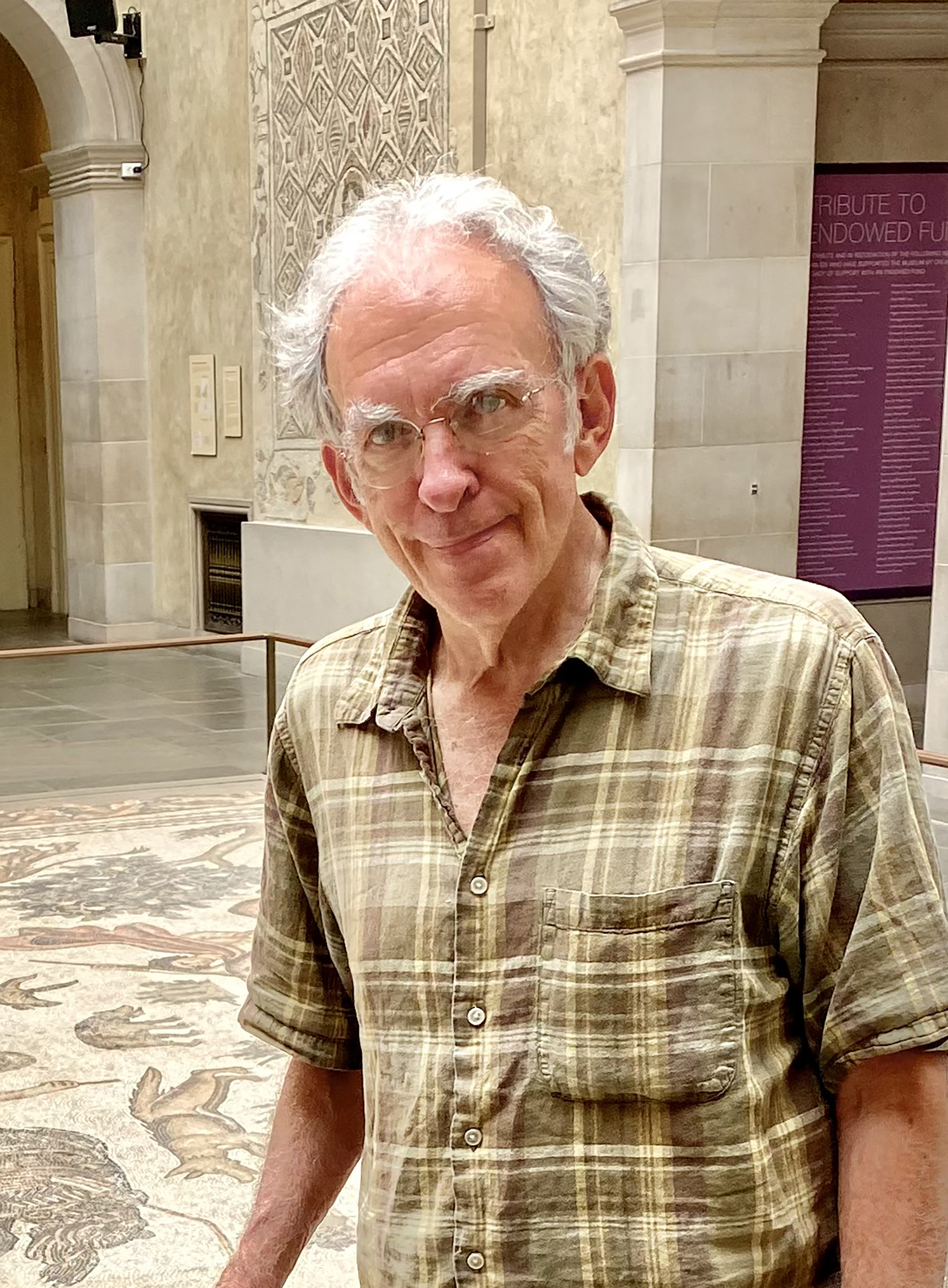
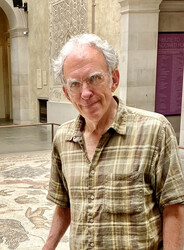
Robert Kanigel is the author of The Man Who Knew Infinity, Eyes on the Street, The One Best Way, Hearing Homer’s Song, and six other nonfiction books—in biography, history, history of science, and memoir. He has been a finalist for the National Book Critics Circle Award and the Los Angeles Times Book Prize, and a recipient of a National Endowment for the Humanities Public Scholar award as well as a Guggenheim fellowship. He spent earlier lives as a mechanical engineer, a professor of science writing at MIT, and a freelance writer of magazine articles, essays, and reviews. An avid cyclist and amateur mosaicist, he lives in Baltimore.
Product Details
- Publisher: Simon & Schuster (August 25, 2026)
- Length: 320 pages
- ISBN13: 9781668006252
Browse Related Books
Raves and Reviews
“A richly detailed history of a grand treasure hunt.”
—Kirkus Reviews
"Readers will enjoy Kanigel’s clear prose and photographs showing the archeologists, the dig, and detailed views of the mosaics."
—Library Journal
"A thorough account of a key archaeological dig...Kanigel furnishes his history with impeccable detail, resulting in a treat for armchair archaeologists and art historians."
—Publishers Weekly
Resources and Downloads
High Resolution Images
-
Book Cover Image (jpg): Uncovering Antioch
Hardcover 9781668006252
-
Author Photo (jpg): Robert Kanigel Sarah Merrow(0.1 MB)
Any use of an author photo must include its respective photo credit