Plus, receive recommendations and exclusive offers on all of your favorite books and authors from Simon & Schuster.
LIST PRICE $29.00
PRICE MAY VARY BY RETAILER
Free shipping when you spend $40. Terms apply.
Buy from Other Retailers
Table of Contents
About the Book
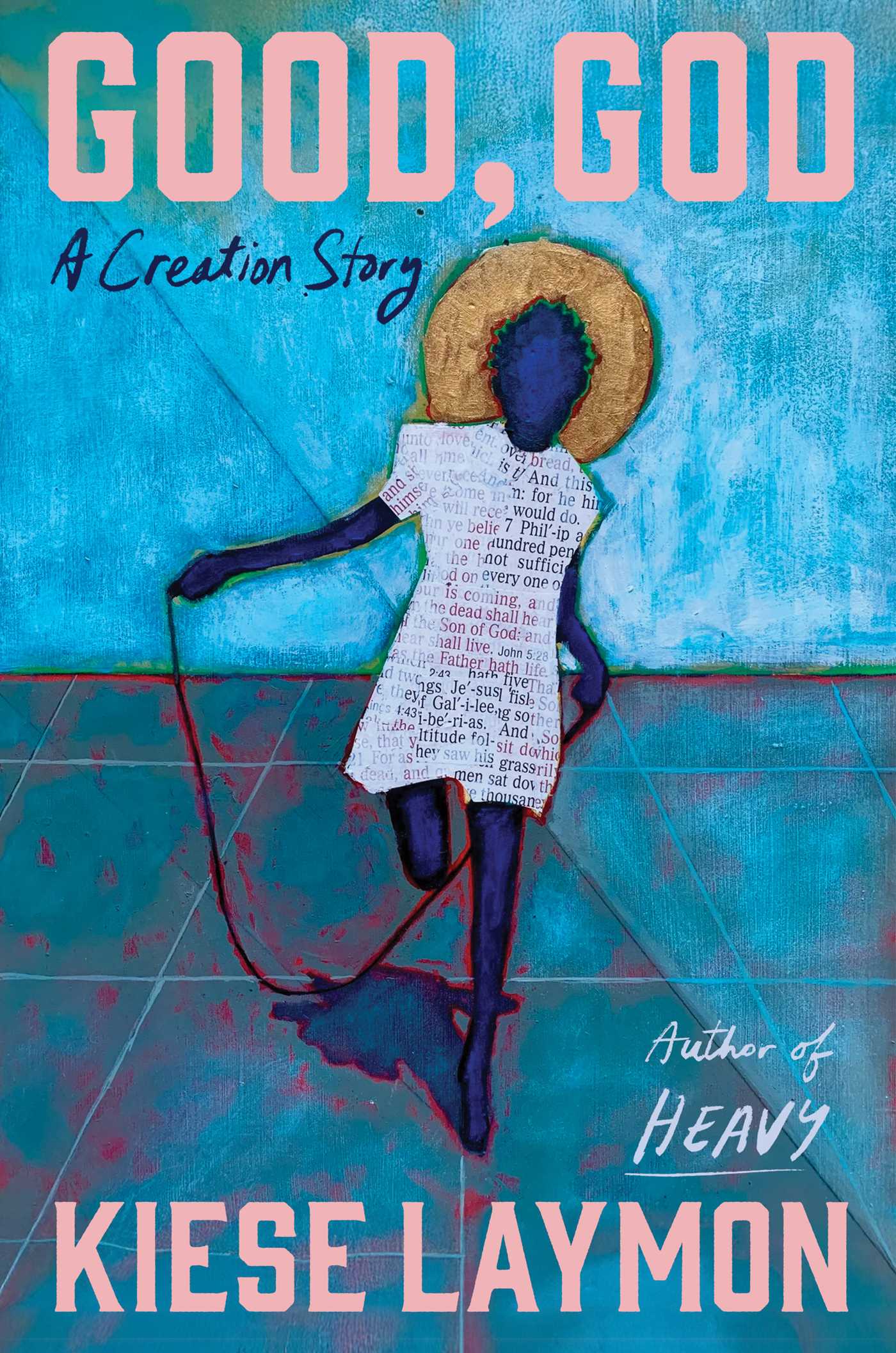
A powerful, benedictive new memoir from a master of the form, Good, God: A Creation Story probes the comic, and often ghoulish, experience of creating children, creating good friendship, creating good art, and creating good Gods while waiting to die in America.
When Kiese Laymon’s best friend invites him to help her create a child in the age of Trump, Laymon must reckon with how a romanticization of Mississippi, his role as a writer, and his grandmother, have telegraphed the kind of friend, father, and artist he can be. Why doesn’t he want to be a father in this nation? Why is he insistent that Mississippi is the only place he would consider helping a child be born? What if his grandmother, his reason for living and making art, dies before a child can be born?
While probing the relationships with three generations of women in his life, Laymon continues his courageous, wide-open approach to memoir with Good, God—an attempt to lay bare the knot of intimacy and brutality that lies at the heart of all confession: whether it be between parent and child, partner and partner, reader and writer, comedy and tragedy, the north and the deep south.
Spanning fifty years, from his childhood to the present, delivered through several powerful episodes that fold into one another—his childhood memories of a mysterious stranger whose sudden appearance undoes his grandmother; a kind Northern white family who comes to stay with his grandmother on the presumption that they know her from his books; the process of trying to create a child with his best friend as he is treated for cancer—Good, God invites us into experiences we cannot shed, where good, God, grandmothers, prayer, and every conception of love itself, must be reconsidered, recast and recreated holy.
When Kiese Laymon’s best friend invites him to help her create a child in the age of Trump, Laymon must reckon with how a romanticization of Mississippi, his role as a writer, and his grandmother, have telegraphed the kind of friend, father, and artist he can be. Why doesn’t he want to be a father in this nation? Why is he insistent that Mississippi is the only place he would consider helping a child be born? What if his grandmother, his reason for living and making art, dies before a child can be born?
While probing the relationships with three generations of women in his life, Laymon continues his courageous, wide-open approach to memoir with Good, God—an attempt to lay bare the knot of intimacy and brutality that lies at the heart of all confession: whether it be between parent and child, partner and partner, reader and writer, comedy and tragedy, the north and the deep south.
Spanning fifty years, from his childhood to the present, delivered through several powerful episodes that fold into one another—his childhood memories of a mysterious stranger whose sudden appearance undoes his grandmother; a kind Northern white family who comes to stay with his grandmother on the presumption that they know her from his books; the process of trying to create a child with his best friend as he is treated for cancer—Good, God invites us into experiences we cannot shed, where good, God, grandmothers, prayer, and every conception of love itself, must be reconsidered, recast and recreated holy.
About the Author
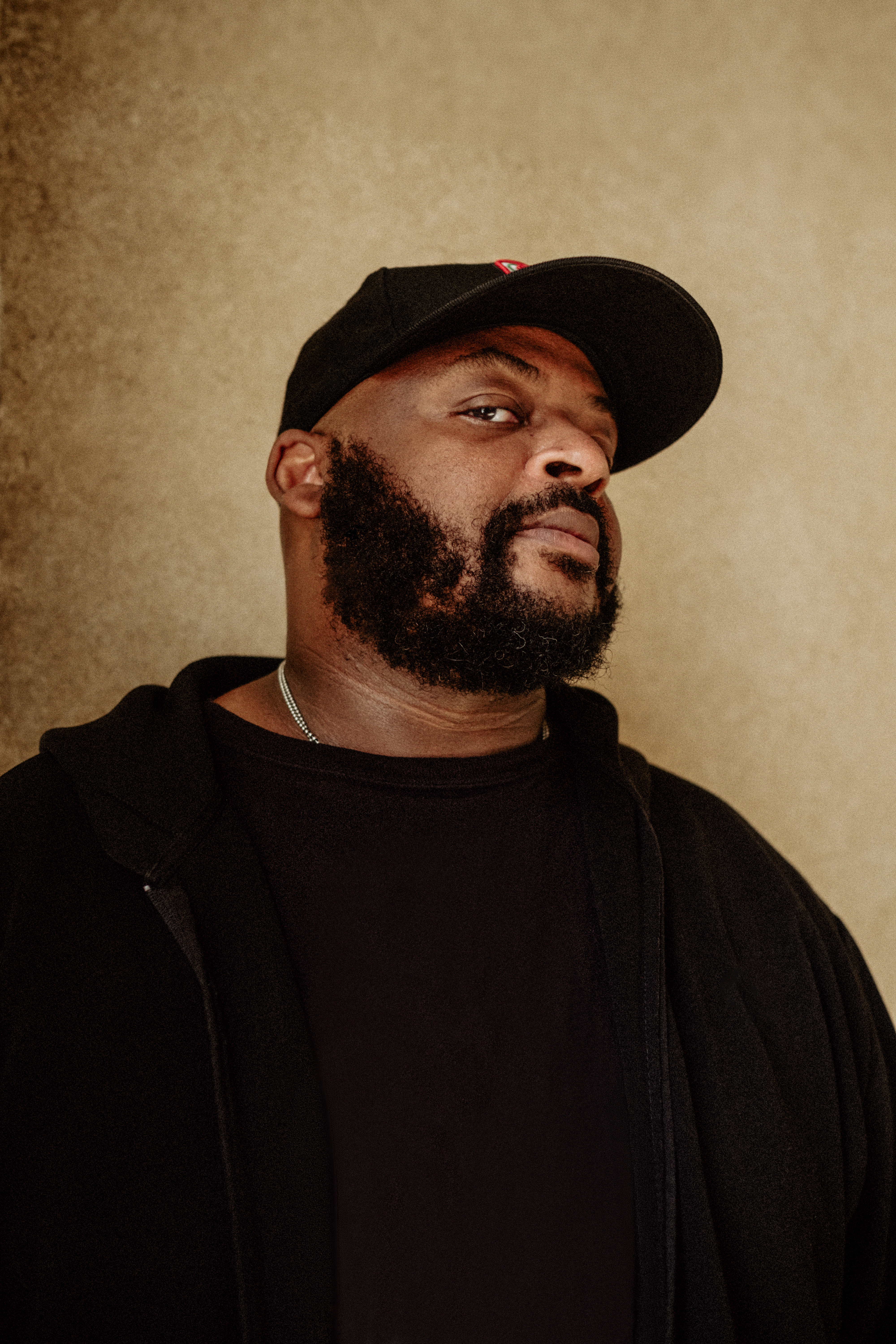
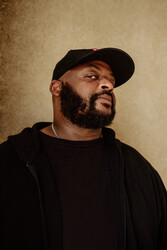
Photograph by D'Artagnan Winford
Kiese Laymon is a Black southern writer from Jackson, Mississippi. Laymon is the Libbie Shearn Moody Professor of English and Creative Writing at Rice University. Laymon is the author of Long Division, which won the NAACP Image Award for fiction, and the essay collection, How to Slowly Kill Yourself and Others in America, named a notable book of the year by The New York Times. Laymon’s bestselling memoir, Heavy: An American Memoir, won the Andrew Carnegie Medal for Excellence in Nonfiction, the Christopher Isherwood Prize for Autobiographical Prose, the Austen Riggs Erikson Prize for Excellence in Mental Health Media, and was named one of the 50 Best Memoirs of the Past 50 Years by The New York Times. Laymon is the recipient of 2020–2021 Radcliffe Fellowship at Harvard. He is the founder of The Catherine Coleman Literary Arts and Justice Initiative, a program based out of the Margaret Walker Center at Jackson State University, aimed at aiding young people in Jackson get more comfortable reading, writing, revising, and sharing on their own terms, in their own communities. He is the cohost of Reckon True Stories with Deesha Philyaw. Kiese Laymon was awarded a MacArthur Fellowship in 2022.
Product Details
- Publisher: Scribner (April 6, 2027)
- Length: 256 pages
- ISBN13: 9781982172138
Browse Related Books
Raves and Reviews
"I missed Kie's humor, his brilliance, his grace, his insight, his expansive honesty, how he trusts us with the tenderest parts of himself and revises so we see everything anew. Laymon signifies and saves with a singular voice, a singular vision. How grateful I am for Kie and Good, God!" —Jesmyn Ward, author of Let Us Descend
"When I was a sophomore in college, I was barreling home down a two-lane country road and tried to pass four cars at once. I had to get over at the last second to avoid a head-on collision, but I overshot the lane and flipped my car. The flight was brief, kaleidoscopic, frightening, beautiful, and liberating; the landing was hard enough to make me feel as though every cell in my body had been reconstituted. Good, God is the barreling, the beautiful flight, the reconstitution, the reckoning, the relief; I have yet to catch my breath. Kiese stands alone, a titan of his own making." —Addie Citchens, author of Dominion
"Like a praying grandmother, Good, God is an unapologetically Black cultural treasure, a light unto the devastating paths we tread as writers, lovers, children, parents, Mississippians, Americans. Among the many riches in these tear-baptized pages is Kiese’s grateful and gracious awareness that, if we’re fortunate, our grandmothers are our first gods. These gods, like every line in this book, have the power to heal and confound, to nurture and upend. Good, God made me laugh until I realized just how lonely I felt, made me weep and miss my dead, made me fear that I didn’t love or understand or appreciate them nearly enough. Kiese’s commandments demand much of us, but never more than he demands of himself. Good, God is a testament to vulnerability and honesty. It will make parents and children and nations believe that it’s not too late to be better to ourselves and to each other." —Deesha Philyaw, author of The True Confessions of First Lady Freeman
"Good, God by Kiese Laymon truly astonished me. There is just so much value in what Laymon is doing here, showing us the revolutionary things an artist can do and say on the page; the relentless courage it takes to be this honest and vulnerable. Line for revelatory line, nobody writing today is really fucking with Laymon. What he did here was give us something gospel, something holy, something that loves and chastises in the right way. I will be reckoning with this book until the day I die because there is endless truth and wisdom in it to uncover. The bottom line is this: Good, God is a masterwork and Kiese Laymon is a master teacher." —Robert Jones, Jr., author of The Prophets
"Kiese Laymon is a griot that effortlessly blends fact, fiction, hope, despair, southern blackness, and honesty into the most beautifulest of thangs that demands your attention and won't let go until Kiese lets you loose. A dazzling narration of vulnerability and what it means for black men to be honest and speak their truth to power." —Regina N. Bradley, author of Chronicling Stankonia: the Rise of the Hip Hop South
“Kiese Laymon’s Good, God does the difficult work of understanding what it means to revise our relationship to an irreversible past, to our memory of it, and to the future we write with it. In this marvelous, vulnerable book, Laymon traces the loops of space-time that comprise the collision of memory and story, that fabric that makes generations, linking children to grandparents, great grandparents, and beyond. I wish I could share this book with my Grandma. I know I’ll be discussing it with her in my head. Good, God. demands much of us—and thank G-d it does.” —Chanda Prescod-Weinstein, author of The Edge of Space-Time
"In 'Book of Job,' Nneka sings, 'when we die, we love.' So I don’t guess vampires—and ghouls determined to prowl graveyards—feature that song. And they won’t read Good, God; they’ll turn back to their mirrors where they don’t have to reflect or live or die. But we who are trying to know that we are the rough drafts of our dead, we trying to live like we are our—first-, second-, and third-person—experiences here, we know that we are each other’s only mirrors. And so Good, God invites us to our deepest social seeing with Kiese’s art a trusted busted reckless priceless guide to braveries personal familial social political. We’ve all known and been ghouls; we’ve chosen our graveyards to prowl. In 'Book of Job,' Nneka sings: 'honesty is intelligence.' In that light, and by the pressure of a life-giving ultimatum called revision, sometimes also known as parenthood, Good, God burns through seemingly all fear to an accuracy—without which there’s no honesty—that is the only hope for our intelligence; it better be, cause when the lights go out—and they’re out—and things go 'black as life,' we is the only clothesline we got left." —Ed Pavlic, author of Call It In the Air
"In Good, God, Laymon further proves he is the most honest writer of his generation. To experience his prose is to experience his courage, and to experience his courage is to bear witness to his love of Mississippi, his people, and anyone willing to engage with the complex funk of it all." —Jason Reynolds, author of Long Way Down
Resources and Downloads
High Resolution Images
-
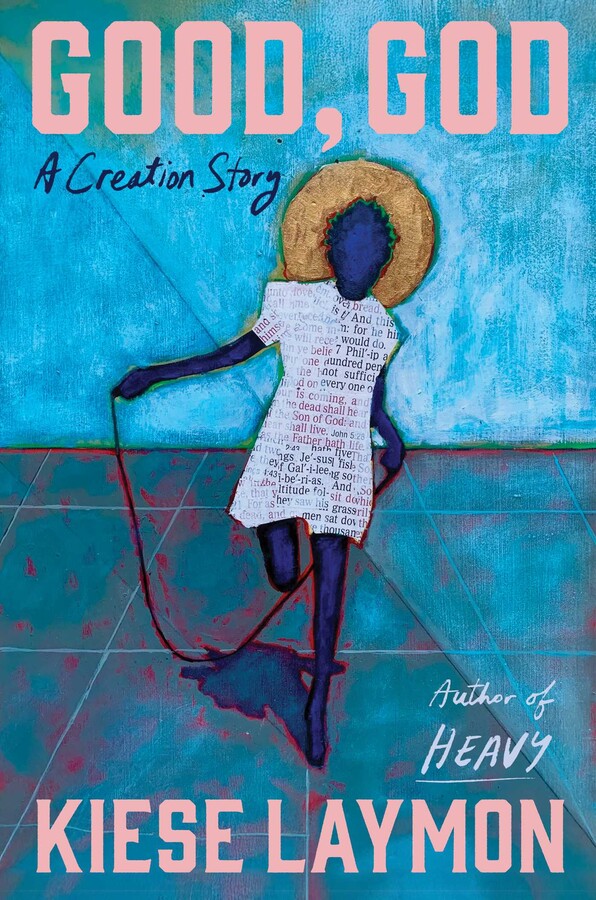
Book Cover Image (jpg): Good, God
Hardcover 9781982172138
-
Author Photo (jpg): Kiese Laymon Photograph by D'Artagnan Winford(0.1 MB)
Any use of an author photo must include its respective photo credit