
Plus, receive recommendations and exclusive offers on all of your favorite books and authors from Simon & Schuster.
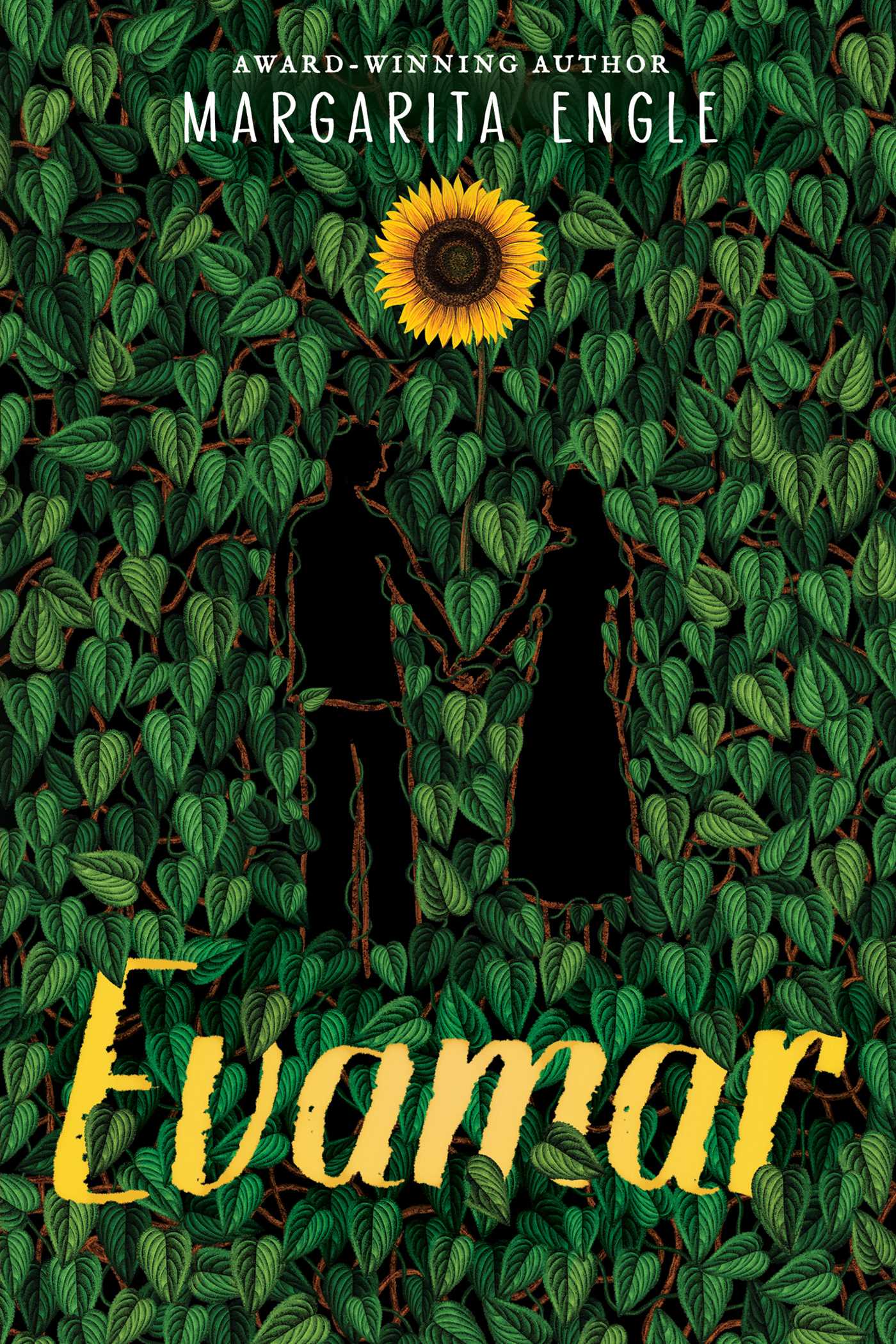
Evamar
LIST PRICE $13.99
PRICE MAY VARY BY RETAILER
Get 20% off with code COZY26 plus free shipping on orders of $40 or more. Discount on physical products only. Terms apply.
Buy from Other Retailers
Table of Contents
About the Book
Three starred reviews!
From award-winning author Margarita Engle comes a “spellbinding” (Publishers Weekly, starred review) novel in verse about first love, hidden cultures, and ancestral connections that follows a teen’s journey to uncover her late grandmother’s roots in Cuba.
Just before she was transformed
into an invisible spirit
my grandmother whispered her last wishes
into my ear:
Sprinkle my ashes in a patch of girasoles,
wait patiently, harvest the seeds,
fly to la isla, find el jardín,
plant las semillas.
Then and only then—
read my diaries.
Evamar has arrived in Cuba with her abuela’s ashes and her mother’s warnings: Don’t talk politics, boil the tap water before you drink, y por favor absolutamente, don’t fall in love. But then she meets Río, a captivating drummer whose music and presence she can’t ignore.
Río bears his own scars, separated from his family in the United States. As their bond deepens, Evamar discovers an ancestral treasure that could change her future—and the lives of millions of Caribbeans.
Reading Group Guide
Get a FREE ebook by joining our mailing list today! Plus, receive recommendations for your next Book Club read.
By clicking 'Sign me up' I agree to the Terms of Use and acknowledge the Privacy Policy and Notice of Financial Incentive. Free ebook offer available to NEW US subscribers only. Offer redeemable at Simon & Schuster's ebook fulfillment partner. Must redeem within 90 days. See full terms and conditions and this month's choices.
Reading Group Guide
Evamar
By Margarita Engle
About the Book
Evamar visits Cuba with hopes of fulfilling her abuela’s last wishes to have her ashes planted with the sunflowers in the garden where she grew up. Evamar is not prepared for the information she finds in her abuela’s diaries or the experience of first love. She meets Río, who was deported to Cuba and is itching to return to his family in the US. They bond through grief and the soulful music Río plays on drums. Together they uncover a life-changing treasure that honors their Indigenous Taíno ancestors.
Discussion Questions
1. Who has taught descendants of exiles to “think of Cuba / as a mythical world / beyond reach”? (p. 5) Use examples from the text.
2. Why does Evasol choose sunflowers as the plant with which her ashes should be buried?
3. The US Department of Agriculture has strict enforcements on what plants can be brought into the US and how they must be transported (https://www.aphis.usda.gov/plant-imports/how-to-import). In small groups, discuss why the US was able to bring foreign plants into Cuba without the same level of regulations.
4. Evamar thinks about how people in Cuba are fearful of saying what’s on their mind because of censorship laws, and then she questions, “How have I lived almost eighteen years / without understanding how it really feels / to be silenced?” (p. 183) While freedom of speech exists in the US, have you ever been afraid to speak your mind? Have you ever been silenced? Explain. Why do countries ban freedom of speech? Use examples from the book, current events, and personal experience to answer.
5. Evamar says, “food, words, music, and wistfulness are the only threads / that tie third-generation teens to the lost isla.” (p. 12) What else defines culture? Does visiting frequently or living on the land of your ancestors make you closer to their culture? How so?
6. One of the “inherited rules” for the descendants of exiles states that spending money in Cuba only benefits the corrupt regime. (p. 15) Discuss this complicated idea and how it fits into opinions on the tourism industry.
7. Discuss the privilege that Evamar and her brother hold compared to Río and his family. How can space be created for the struggles of both those living on the island and the descendants of exiles? Describe the different experiences and how they can find commonality to support one another. Use examples from the book.
8. Why does Cedro get to feel brave and adventurous for traveling, while Evamar primarily feels fear?
9. Why does Evamar receive so many warnings about young love? Find examples from the book and real life where love has created positive experiences.
10. Describe how music in the book serves to move the plot along and build a relationship between the main characters. How is music a part of Cuban culture, and what role does it play?
11. Look up a basic nutrition guide for a teen and compare it to the food ration cards described in the book. (p. 77) Explain how the food rations are used against the Cuban people.
12. Concrete poetry is when a poem creates a visual image in the intentional use of certain words and spacing to add another layer of meaning (https://poets.org/glossary/concretepoetry). What is the purpose of the concrete poems in Evamar? Choose one and explain how the meaning would change if it had been written in a different format.
13. Compare Evamar’s and Río’s interpretations of the crochet butterfly tapestry. What influences their perspectives?
14. Evamar states that the tour at Harvard University’s Botanical Station for Tropical Research and Sugar Cane Investigation will hide the story about modern Cuba’s perpetual hunger. (p. 119) What is lost when authorities avoid uncomfortable topics or histories when educating others? What is a way to bring awareness to these issues and create change?
15. Evamar has a hard time trusting Río even as she falls for him. Where does her distrust of men come from? Is it justified? How is trust built?
16. Both Evamar and Río experience loss in different ways, with the death of a relative and being forcefully separated from family. Evamar says, “I want to know how / to move on / after a loss,” but is this possible? (p. 134) Is loss something to move on from or forget? Discuss with a partner.
17. In small groups, discuss the poem, “When a Language Sleeps,” and consider how history is recorded. (p. 139) Is writing the only way to give history legitimacy? Explain your reasoning.
18. What do you think is the purpose of including el batá, the two-headed drum, in the story and how does it characterize Río?
19. Linguistics and the roots of words are referenced in the book a lot. Describe the significance of this area of study. Why does it matter where words come from?
20. Think about Yoandi’s decision to join the army. How does it compare to teens in the US joining the army? Use examples from the text and real life to answer.
21. What does the poem “Mirror Images” mean? (p. 214) What do you think the metaphor for shimmering glass represents? Is it possible to truly understand someone else’s experience? Explain.
22. Think about the desperation the fruit thieves felt and how feeding them changed them from enemies to friends. What did you think about this scenario? Is kindness enough to change harmful behavior? Why or why not?
23. Evasol’s notebooks provided a tool to prove to Caribbean people that their elders’ knowledge and language did not go extinct. What is necessary for Evamar and Río’s next shared journey to succeed?
Extension Activities
1. The “inherited rules” for traveling to Cuba contradict one another and bring up the question of what is right and who benefits from these rules. (p. 15) Think about the unspoken rules in your own culture or family system, and write a reflection essay about them. Do you notice any contradictions or areas of support? Are there rules you want to break or reinforce? Share why.
2. Despite being a DACA Dreamer, Río was sent back to Cuba by the US Coast Guard. Research current immigration law for DACA Dreamers and discuss as a small group the steps Río would need to take to get back to the US and if it would be possible. Make a list of resources that would help someone in Río’s situation.
3. Evamar ponders why she never asked her abuela about “her childhood in this garden / of night-blooming / magic.” (p. 105) Consider someone from your family or a close friend. Write a list of questions you want to ask about their lives, even if you don’t yet have the courage to do so.
4. Evasol claims that taking the Opiyel figure “was a rescue, not a theft.” (p. 239) Although Evamar taking the figure from the museum would be considered theft, there have been instances of repatriation for objects taken from Indigenous and other cultures. Look up the definition of repatriation, and give a presentation on one repatriated item. Explain the origin of the object, its historical value, and why you chose it.
5. While Río and Evamar ride Chispa into town, Río considers how “life on horseback used to mean that a man / was wealthy, but now it just means we’re / incredibly / poor.” (p. 178) Consider how the economy has changed over the past decades. What signals of wealth have changed in either direction? Research examples of inflation or ask adults for examples from back when they were teens.
6. Write a poem inspired by the connection between Evamar and Evasol when Evamar says, “her / past / which / is / also / the / root / of / my / future.” (p. 24) Think about what Evamar means, and use the themes of ancestry and preservation of culture in the book to get you started.
Guide written by Cynthia Medrano, Librarian at the Highland Park Public Library.
The websites referenced above are provided for informational purposes only and are not intended as an endorsement or promotion of any website. Simon & Schuster is not responsible for the functionality or content of any external website and expressly disclaims all responsibility and liability in connection therewith.
This guide has been provided by Simon & Schuster for classroom, library, and reading group use. It may be reproduced in its entirety or excerpted for these purposes. For more Simon & Schuster guides and classroom materials, please visit simonandschuster.net/m/prek12-teachers-librarians/teaching-resources.
About the Author
Photograph (c) Shevaun Williams
Margarita Engle is the Cuban American author of many books including the verse novels Rima’s Rebellion; Your Heart, My Sky; With a Star in My Hand; The Surrender Tree, a Newbery Honor winner; The Lightning Dreamer; Evamar; Maravilla in Sunlight; and Wild Dreamers, a Pura Belpré Young Adult Author Honor book. Her verse memoirs include Soaring Earth and Enchanted Air, which received the Pura Belpré Award, a Walter Dean Myers Award Honor, and was a finalist for the YALSA Award for Excellence in Nonfiction, among others. Her picture books include Drum Dream Girl, Dancing Hands, and The Flying Girl. Visit her at MargaritaEngle.com.
Product Details
- Publisher: Atheneum Books for Young Readers (August 10, 2027)
- Length: 288 pages
- ISBN13: 9781665988087
- Grades: 7 and up
- Ages: 12 - 99
Browse Related Books
Raves and Reviews
* "Engle proves once again her mastery of the verse novel. A stunning, sensory work."
– Booklist, STARRED REVIEW
* “Written in beautifully emotive verse, the story alternates between the pair’s perspectives as they fall passionately in love, despite the looming challenges of a long-distance romance complicated by international politics. . . . Readers will root for the young couple and, after a deeply buried secret is revealed, they’ll hope for a sequel to explore its possibilities. Captivating and heartfelt.”
– Kirkus Reviews, STARRED REVIEW
* “Spellbinding . . . Lyrical narration is rendered with a striking mix of romanticism and reality with Spanish text—accompanied by translations—smoothly incorporated throughout. It’s an immersive love song to the power of both ancestral history and first romance.”
– Publishers Weekly, STARRED REVIEW
“Engle continues to be a master poet . . . Gorgeous verse gives a distinct tone and style to the shared narration: Evamar’s voice is dreamy and reflective, with cinematic imagery, while Rio’s is more direct, aching with want but weighed down by circumstance. . . . Fans of Engle’s Wild Dreamers will appreciate another contemplation on the intricacies of moving between the cultures that have informed your past and the choices that will shape your future.”
– The Bulletin of the Center for Children's Books
“The hallmarks of Engle’s verse novels are in evidence here, from visual creativity in the poems’ placement on the page to the deep connection her young adult characters have to their Cuban heritage. Those factors make for a satisfying quick read that packs multiple emotional punches. Evamar is a character who’s easy to root for, believably caught up in first love yet also a community-minded teen. . . . While the ending provides no easy answers . . . it is infused with hope.”
– Horn Book
* "Engle proves once again her mastery of the verse novel. A stunning, sensory work."
– Booklist, STARRED REVIEW
“Engle continues to be a master poet . . . Gorgeous verse gives a distinct tone and style to the shared narration: Evamar’s voice is dreamy and reflective, with cinematic imagery, while Rio’s is more direct, aching with want but weighed down by circumstance. . . . Fans of Engle’s Wild Dreamers will appreciate another contemplation on the intricacies of moving between the cultures that have informed your past and the choices that will shape your future.”
– The Bulletin of the Center for Children's Books
* “Written in beautifully emotive verse, the story alternates between the pair’s perspectives as they fall passionately in love, despite the looming challenges of a long-distance romance complicated by international politics. . . . Readers will root for the young couple and, after a deeply buried secret is revealed, they’ll hope for a sequel to explore its possibilities. Captivating and heartfelt.”
– Kirkus Reviews, STARRED REVIEW
* “Spellbinding . . . Lyrical narration is rendered with a striking mix of romanticism and reality with Spanish text—accompanied by translations—smoothly incorporated throughout. It’s an immersive love song to the power of both ancestral history and first romance.”
– Publishers Weekly, STARRED REVIEW
“The hallmarks of Engle’s verse novels are in evidence here, from visual creativity in the poems’ placement on the page to the deep connection her young adult characters have to their Cuban heritage. Those factors make for a satisfying quick read that packs multiple emotional punches. Evamar is a character who’s easy to root for, believably caught up in first love yet also a community-minded teen. . . . While the ending provides no easy answers . . . it is infused with hope.”
– Horn Book
Awards and Honors
- Junior Library Guild Gold Standard Selection
Resources and Downloads
High Resolution Images
-
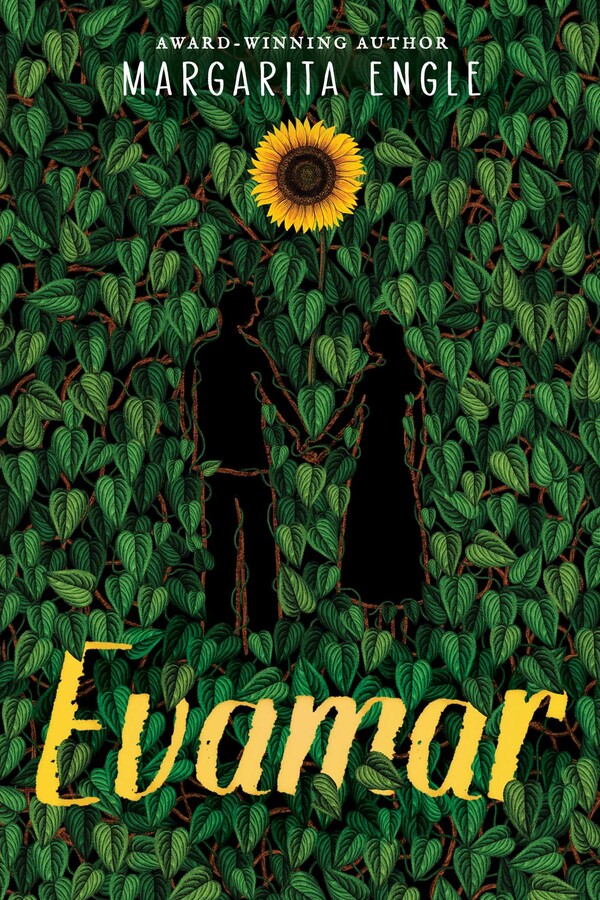
Book Cover Image (jpg): Evamar
Trade Paperback 9781665988087
-
Author Photo (jpg): Margarita Engle Photograph (c) Shevaun Williams(0.1 MB)
Any use of an author photo must include its respective photo credit