Plus, receive recommendations and exclusive offers on all of your favorite books and authors from Simon & Schuster.
0:00 /
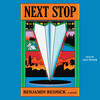
Next Stop
LIST PRICE $28.00
PRICE MAY VARY BY RETAILER
Free shipping when you spend $40. Terms apply.
Buy from Other Retailers
Table of Contents
About the Book
* WINNER OF THE EDWARD LEWIS WALLANT AWARD AND FINALIST FOR THE SAMI ROHR PRIZE *
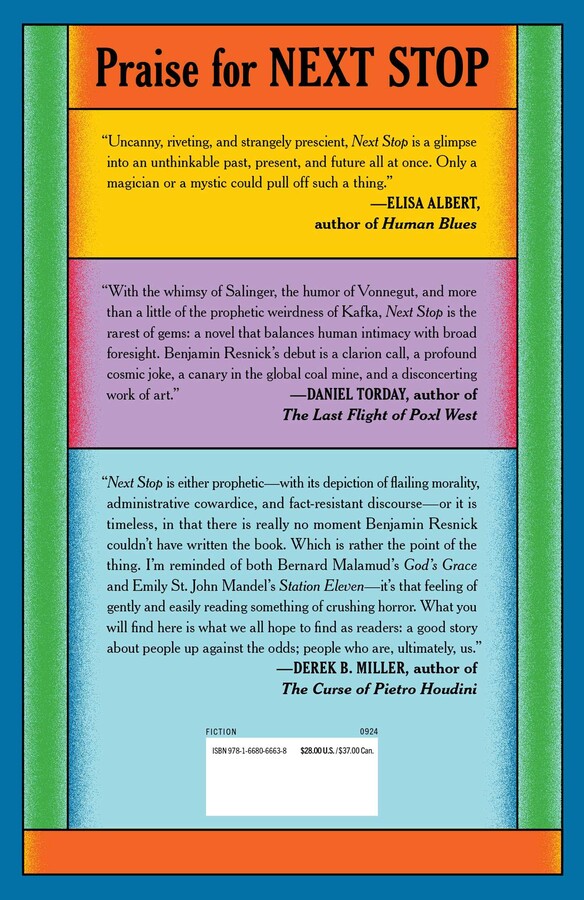
A gripping and hauntingly prescient novel that explores the precariousness of Jewish American life after a black hole consumes Israel, setting off a chain of global anomalies plunging the world into a time of peril and miracles.
When a black hole suddenly consumes Israel and as mysterious anomalies spread across the globe, suddenly the world teeters on the brink of chaos. As antisemitic paranoia and violence escalate, Jewish citizens Ethan and Ella find themselves navigating a landscape fraught with danger and uncertainty.
Ella, a dedicated photojournalist, captures the shifting dynamics of their nameless American city, documenting the resilience and struggles of its Jewish residents. Some are drawn to the anomalies, disappearing into an abandoned subway system that seems to connect the world, while others form militias in the south. Yet, Ethan, Ella, and her young son Michael choose to remain, seeking solace in small joys amidst the hostility.
But then thousands of commercial planes vanish from the sky. Air travel stops. Borders close. Refugees pour into the capital. Eventually all Jews in the city are forced to relocate to the Pale, an area sandwiched between a park and a river. There, under the watchful eye of border guards, drones, and robotic dogs, they form a fragile new society.
Suspenseful, thought-provoking, and brilliantly conceived, Next Stop is a masterful blend of speculative fiction and family drama. Invoking biblical and historical themes in a world eerily similar to our own, it is a profound exploration of memory, identity, and survival.
A gripping and hauntingly prescient novel that explores the precariousness of Jewish American life after a black hole consumes Israel, setting off a chain of global anomalies plunging the world into a time of peril and miracles.
When a black hole suddenly consumes Israel and as mysterious anomalies spread across the globe, suddenly the world teeters on the brink of chaos. As antisemitic paranoia and violence escalate, Jewish citizens Ethan and Ella find themselves navigating a landscape fraught with danger and uncertainty.
Ella, a dedicated photojournalist, captures the shifting dynamics of their nameless American city, documenting the resilience and struggles of its Jewish residents. Some are drawn to the anomalies, disappearing into an abandoned subway system that seems to connect the world, while others form militias in the south. Yet, Ethan, Ella, and her young son Michael choose to remain, seeking solace in small joys amidst the hostility.
But then thousands of commercial planes vanish from the sky. Air travel stops. Borders close. Refugees pour into the capital. Eventually all Jews in the city are forced to relocate to the Pale, an area sandwiched between a park and a river. There, under the watchful eye of border guards, drones, and robotic dogs, they form a fragile new society.
Suspenseful, thought-provoking, and brilliantly conceived, Next Stop is a masterful blend of speculative fiction and family drama. Invoking biblical and historical themes in a world eerily similar to our own, it is a profound exploration of memory, identity, and survival.
Excerpt
Chapter I
ETHAN AND ELLA MET IN a coworking space, one of the airy open-plan offices that were common in their city at that time. Ethan had worked there longer and he liked the office, which was on the twenty-sixth floor of a tall building. It was full of plants and full of light and there was a balcony on the eastern side with a rock garden and benches and he would often sit outside, even in the fall and early spring, and this reminded him of his childhood during the pandemic. He remembered windows, high places, the cold.
During those years they lived in a very tall building in a different city. They were meant to live in that apartment for only six months, while his parents looked for a house, but that was not what happened. Life was predictable and orderly until it was not, and in the end they lived there almost three years, from when he was six until he was eight. He learned to read. His parents argued and reconciled endlessly. His great-grandmother, whom he did not remember, died.
The schools did not reopen for more than a year in that city, and he cycled through many different fixations during that time—dinosaurs, self-portraits, Rube Goldberg machines, unboxing videos, Zoom karate, Cosmic Kids Yoga, Minecraft, making slime. One of the most durable was folding paper airplanes with his father and then throwing them from their balcony and watching them fly out over the lake. They went through reams of paper and the airplanes were scattered everywhere, which bothered his mother and, for a while, every day, she would insist that they gather them into a pile in one corner of the room. And then, without warning, she gave up and the planes—the ones that did not make the one-way trip over the water—came to rest where they would.
Later, when he would visit his parents as an adult, he would often walk by the old building. And once, several years before he met Ella, he knocked on the door of their old apartment, 22E, and asked the couple living there if he could look around. They seemed much older to Ethan, though they really were not, and the wife was pregnant. At first, they regarded him with some suspicion. But Ethan was charming and soft-spoken, and he seemed harmless and a little lost, like a child. “I spent the pandemic here,” he said, and the husband looked at his wife and then said, “Would you like to come in?”
They spent half an hour together. They made coffee and Ethan asked for a few sheets of paper and he showed them how to fold a few airplane models. But none of them flew as far as he remembered.
ETHAN HAD NEVER THROWN AN airplane from the balcony of the office building, even after working there for four years. He thought about it, though.
He wrote for a website that covered tech trends. He did not like his job very much because his performance was tied directly to clicks and he suspected that the other writers—six of them in all—were faster and funnier than he was. And often when he could not think of anything to write about he would go out onto the balcony to look out over the city or up into the sky and sometimes he would think of the apartment on the twenty-second floor.
It was on the balcony that he first saw Ella. He was sitting on a bench in late November, looking up at the knifelike form of a peregrine falcon as it rose into the sky, when he noticed her standing near the rail on the far side. She was wearing a yellow blazer and leggings and to Ethan she looked cold and very small.
She was facing the opposite direction, so she must have assumed she was alone. He had been watching her for only a few seconds when she took a paper airplane from the pocket of her coat. After quickly adjusting the wings, she threw it out over the city. From where he was sitting, he was unable to see its flight.
When she turned, he saw her face, pale and sharp, like the airplane.
He cupped his hands around his mouth and called out, “I’ve always wanted to do that.”
“Why haven’t you?”
“I guess I’m worried it might land on a car and cause an accident.”
“You should worry less,” she said, and she blew air into her cupped hands and went back inside.
ETHAN DID NOT SPEAK WITH Ella again until several weeks later, when they met by chance at one of the office’s four kitchenettes. He had hoped they would talk sooner but she was there only sporadically, twice the week of the airplane, once the following week, and then not at all for two weeks after that. By then the episode on the balcony had taken on a dreamlike quality for Ethan, significant but almost forgotten. And when she came up next to him, he did not immediately recognize her.
She was studying a little packet of jerky, turning it over several times in her hands. Her fingernails were alternating shades of pink and blue—newly painted and glossy—and around her wrist were several silver bracelets, which glittered beneath the overhead lights. Everything about her was small. She had small hands and small shoulders and a small, delicate mouth. But her expression was the same as the expression he remembered from the balcony—severe and searching, and her face had a shadowy quality, despite the paleness of her skin. All of this seemed at odds with the fragile, childlike features, the small hands and the fancifully painted nails, and still she was reading the package.
“They don’t have any weird additives,” he said.
“Oh,” she said, glancing quickly to her left. “It’s not that.”
“What are you looking for?”
“It’s nothing. I was just reading the ingredients.”
“They’re good. I eat too many of those.”
She returned the packet to the jar. “I’ll have to take your word for it,” she said. She turned to leave.
“Excuse me,” he said. “Listen, I might have this wrong, but did we meet a few weeks ago on the balcony? You threw a paper airplane. That was you, right?”
“No,” she said, after a brief pause. “You must be thinking of someone else.”
“Oh,” he said. “I thought it was you.”
“I don’t think so,” she said, and instead of the jerky she took a small bag of granola clusters and walked away.
LATER THAT AFTERNOON, ELLA SAW him again on the balcony. He was sitting under a heat lamp, his legs beneath a blanket and his laptop balanced on his knees. It was cold outside, but he did not look cold, which she found intriguing. She was not sure why she lied about the airplane. There was no reason to lie. And now she felt guilty, though when she thought about it there really was no reason for that either because likely enough she would never speak to him again. Ella was a freelance photographer and she was stringing for a magazine that rented a few desks in the office. She would be done with the project at the end of the day and tomorrow she was planning to take her son on a train south to meet up with a friend from college. He did not seem to be enjoying his school of late and he had become increasingly anxious at home and Ella hoped that some time in a more pastoral setting would help him reset. She was not planning to return to the city for a month or so, and even then, unless she happened to take another gig at the same magazine, she would not return to that coworking space.
She watched him from behind her desk. Then she went outside. “Here,” she said, handing him an airplane and sitting down on the edge of the bench. “I’m sorry I lied earlier.”
He turned the plane over in his hands. “That’s okay. I wasn’t trying to be creepy.”
“You weren’t creepy.”
“Is this the same plane?”
“No, that one was different.”
“Did it fly well? I couldn’t see from where I was sitting.”
“It started off okay, but then it got caught in some wind and went into a spiral. It was a good one—that design won the world record for distance. This one I designed myself.”
“It feels like the weighting is pretty good.”
“You know about it?”
“I spent most of the pandemic folding airplanes with my father and throwing them from the balcony of our apartment.”
She smiled. “Me too. With my sister. I was lucky not to be an only child.”
He nodded. “That’s a funny coincidence. Did you grow up in the city?”
“Yes,” she said. “I’ve always lived at the center of the universe.”
“The true provincialism of a native.”
She laughed, an easy, rolling laugh. The sound of it was bright and surprising because he did not think he had said anything particularly funny. He decided that he would try to make her laugh again.
“Did you know I was lying?”
“I think I wasn’t sure,” he said. “I’m Ethan, by the way.”
“Ella.”
They were quiet for a few seconds. Ethan adjusted the wings of the plane. Then he said, “What is it that you like about them? About paper airplanes, I mean,” and she thought for a moment and said, “I guess I like them because they seem very free and very light, even when they crash.”
ETHAN ASKED AROUND BUT NOBODY else on the floor knew Ella. The magazine, he discovered, maintained a few different workspaces in that neighborhood; however, the desks in his office were used only by stringers and so none of the people using them in the weeks that followed could say who she was.
It was a culture magazine, which mostly covered life in the city. He realized that he had heard of it because a few years earlier it ran a buzzy, controversial feature about a Jewish theater company doing experimental shows in the southern part of the city, transforming several abandoned warehouses along the water into venues for immersive theatrical experiences called “the Jewholes.” But he had only read articles about the article, never the feature itself. Hoping to find whatever project she had been working on—or perhaps something she had done in the past—Ethan went to the website and looked through a few recent features, as well as some of the older, archived content. He did not find any Ellas. “Ella” had been a popular girls’ name at the time when they were born and without her last name his search for her byline elsewhere was similarly unsuccessful. And so once again, she began to fade from his mind. Then, one morning, about three weeks later, he went to the magazine’s website again and there it was: “To the Underground” by Ella Halperin.
The photographs were in color, but they were shot mostly at night and the limited blue-gray palette made them look almost black-and-white. This gave the series an otherworldly quality and as he scrolled through he had the sense that he was looking back in time. People running to or from something. People waiting to be born anew. Jews.
Particularly striking was an image of a young family, a mother, father, and two small children. They were seated in their living room, at the opening of a large gray tent, mother and father cross-legged and one child on each lap. To their left, where the flap of the tent draped down, was a neat pile of folded clothing and a line of sneakers, along with several gallon-sized jugs of water. The parents were looking straight at the camera, their eyes wide and limpid. The son was looking toward his sister, his expression simultaneously fearful and defiant; the daughter, a few years older, was holding a calico cat protectively on her lap. Below the photo was a brief description: The Geller family plans to enter the anomaly at the Northlands subway stop at the end of the coming week. When asked about their decision, Sheila and Daniel Geller, both physicians, expressed uncertainty about what they would find but cited concerns about their children’s safety in light of newly proposed restrictions. For the past several days they have practiced sleeping in the tent that they anticipate sharing on the far side. In this image, Lauren and Ezra Geller, 10 and 6, guard the family cat, which they will leave with a cousin.
Ethan was stirred by the images and also very pleased to have found Ella’s name. But because she was a freelancer, the magazine did not offer any direct contact information. And because she did not appear to have any public social media profiles, he decided to try the “Contact us” form on the website.
Hi, if possible, please pass along the following message to Ella Halperin. Thank you—
_________
Hi Ella,
It’s Ethan from the coworking space downtown. I just wanted to reach out to say that I saw your photo essay this morning. It’s so well done, really lovely. I especially liked the portrait of the Geller family. I guess it has a special resonance for me. I’d love to have a chance to ask you about it. Worst-case scenario you get a free cup of coffee. Let me know—
Ethan Block
He concluded with his email address and clicked Send. Then he stood up at his desk and walked a meandering lap around the office. He stopped twice for snacks, though he was not hungry, and both times he nervously chose a small handful of unpleasantly spicy wasabi peas, shaking them in his palm like dice. For the rest of the day he had trouble concentrating. He managed to post once about a video game controller optimized for some of the newer combat systems. But for most of the day he cast around aimlessly and refreshed his email. When Ethan’s boss found him outside looking up at the sky, he asked him, with genuine concern, if everything was all right.
“Yes, fine, absolutely,” he said.
“Because you’re a little behind, you know that, right? I just want to make sure everything is okay. I don’t just mean with work. It’s not easy for us lately.”
“Us?”
His boss lowered his voice. “Us.”
Ethan smiled and said, “Yes, of course. I really appreciate it.”
“I know you can do this,” he said. “You just have to make the decision. There is still the future to think about.”
Ethan nodded. He liked his boss. And he wanted to please him. But as he walked away Ethan had the strange impression that their whole conversation was a memory belonging to someone else, a thing of the past, just like Ella.
ELLA RECEIVED ETHAN’S MESSAGE WHILE she was still in the south. She had not thought of him since they spoke and as she watched her son run through a patch of dandelions, kicking their seeds into the wind and sunlight, she tried to recall his face. She found that she was unable to picture him clearly.
Ella had not dated very much since Michael was born, on a warm morning in early fall six years ago. A few weeks after she found out that she was pregnant, Michael’s father went north, along with many others, and did not come back. At first she was desperately angry. But the anger faded, perhaps more rapidly than she would have expected, and soon enough she felt emptied out. She had intended to terminate the pregnancy. But she kept on delaying the procedure until one morning she woke up and realized that she did not want to have the procedure at all. She still marveled at this fact. It remained shrouded in mystery.
It was a strange feature of life in their city that babies came home in cabs, on buses, on subways, as though they were people and not small gods. Ella’s mother came to the hospital to help her with the labor, which lasted through the night. In her imagination, Michael was born early in the morning, as the sun was rising over the city. This is because the last photograph she took before he was born—a view of the city from her hospital room on the fifteenth floor—was time-stamped at 5:26 a.m. The next image had been taken by her mother—a picture of Michael, still covered in blood, on a scale beneath surgical lamps—and it had the same bluish glow and so the images became entwined in her memory. In reality he was born hours later, at 10:18 a.m., when the sun was already high in the sky. But she remembered him coming at dawn.
Like all children, he disordered and remade her life. When she brought him home, carrying him up three flights of stairs in a detachable car seat, everything about her apartment seemed altered and somehow insubstantial. She said, “This is where you live now. This is your home.”
She brought him from room to room. Then she swaddled him in a blanket the way the nurse had shown her and together they lay down on the bed. His eyes were an indeterminate, watery gray and she tried to imagine how she must look to him, blurry and bright. She thought, For your sake, I would gladly burn the city to the ground, and then she whispered those words over him like a benediction.
Now, almost six and a half years later, he ran over and rested his chin on her forearm. “What are you reading?” he asked.
“Just an email.”
“Are you doing work?”
“No, it’s from somebody who liked some of my pictures.”
“Is it a friend?”
“No,” she said. “Not really. He wants to be.”
“I want you to run with me,” Michael said.
So she got up and ran.
ETHAN AND ELLA MET FOR coffee two weeks after that. The coffee shop was crowded even though coffee had become more expensive in recent years. The barista practiced making hearts on top of cappuccinos. A woman met a man who was not her husband. People sat and talked about their lives, their work, their children. They talked about the situation and the events and the holes or they did not.
Ethan chose a coffee shop near the coworking space where they met because he thought that might be convenient for her. It was not until after they had made the date that he realized he had no idea where she would be coming from. He apologized as soon as she sat down.
“I wasn’t thinking,” he said.
“It’s okay. This neighborhood is all right. I haven’t been over here for a while. Since I finished the project you saw.”
“You mentioned you were in the south for a few weeks—”
“Visiting an old friend.”
“How was it?”
“It was nice. I only wish it was closer. It’s a twelve-hour train ride. We should have flown.”
“Why didn’t you?”
“You know, I’m not sure. I guess an intuition that the train would be better somehow.” She took a sip of her coffee, which she had sweetened heavily with agave.
“Where do you live?” he asked.
“Uptown. We have a little two-bedroom.”
“You live with a roommate?”
“With my son.”
She watched him as he turned it over in his mind. To her surprise, though he had looked nervous and ill at ease when she first came in, he did not look that way now. He was thinking—calmly, carefully—and as he did she studied his face, brown hair and light brown eyes and a sharp, prominent nose and slightly downturned lips that made him look sad even when he was not. He was handsome, she thought, and though he was a few years older than she was—and though his short, unkempt beard was already showing small flecks of gray—there was a boyishness about his face, a youthful energy tempered by something else, melancholy, perhaps, though she was not sure.
“You have a son?” he said.
“Yes. But not a partner. It’s just us. His father went north when there was that radiation hoax at the hole in Canada. He isn’t Jewish.”
Behind him the espresso machine hissed and sent up a plume of steam. Then he said, “I should know what to ask, but I’m out of my depth.”
She was struck by his persistent calm and she smiled. It was a different smile from what he had seen before. It changed her face.
“His name is Michael,” she said. “He’s in kindergarten.”
“Where is the school?”
“He goes to a little Montessori school near us uptown. In general he really likes it, but recently there have been issues. Some of the kids started excluding him. That’s why we took a break and went south.”
“I’m sorry. I hope things are better now.”
“We’ll see. He’s still the same kid.”
“You mean he’s still Jewish?”
“Yes,” she said. “Yes, that’s exactly what I mean.”
After a pause he said, “I’m Jewish also.”
She laughed. “You didn’t need to tell me that.”
“I know. Of course. I get nervous around pretty girls.”
She rolled her eyes. “How many times have you said that?”
“First time,” he said. Then, “You keep kosher?”
“How do you know that?”
“You didn’t eat the jerky. I realized why a little later.”
“There are some of us who still do,” she said tightly.
“I know.”
“I grew up sort of religious. I guess there are things that are hard to give up. What about you?”
“I had a bar mitzvah. That’s about it.”
“Do you still have non-Jewish friends? I mean, from before.”
“I have a friend from college, Feng. His family is from Taiwan. We talk once in a while.” He tried to gauge her response. Then he said, “So you really do keep kosher?”
“Sometimes. Anyway, that popcorn at your office is pretty good. It’s actually one of Michael’s favorite things.”
He nodded. “Maybe I could bring him a bag sometime.”
“Maybe,” she said.
WHEN THEY WERE FINISHED WITH their coffee they walked in a nearby park. They found that they had a fair amount in common. They had both attended the same university in the city (their graduating class was one of the last that included Jewish students), though they had never crossed paths. They both had parents in academia. In Ella’s case it was her mother and her father who had been professors at the university where Ethan and Ella studied.
As they exited the park, Ella told him that she needed to walk farther downtown to meet with someone about a gig and that he could walk with her if he wanted. It was a Tuesday morning and the sidewalks were busy, though less busy than they would have been only a few years ago. On the corner south of the coffee shop they passed a homeless man with a white cat and a sign that read:
alien inside my toenail riding clouds of acid.
red yellow. waterfall inside.
fuck the jews! fuck the jews! fuck the jews!
snake monsters from the holes.
please help a veteran thank you god bless
Ethan dropped a coin into his cup and Ella looked at him with surprise. He shrugged. “He’s crazy,” he said. “How can it make anything worse?” She nodded and they kept on going south.
As they walked, Ethan told her how much he really did admire her work, that it wasn’t just an excuse to ask her out, and she said that she appreciated it, which she did because she believed him and also because she knew her work was good and she enjoyed it when it was recognized as such. She asked him about his job, if he always wanted to be in journalism, and he said he wasn’t sure what he did counted as journalism and he told her how it made him anxious because he wasn’t fast enough at churning out posts. When they finally talked about the people in her photographs, a few blocks before Ella reached her destination, they disagreed stridently. Ethan thought they were outright crazy. He explained—with an off-putting grandeur that seemed out of character to Ella—that the situation would resolve itself and that the Second Event would fade and things would be fine because they were always fine.
But things weren’t always fine, she said. People leave. People run. Other people come and gather power. Or no one has power and maybe that’s worse. Just last week, she said, there was a car-bombing across the street from their apartment. You can read about it. The windows shook. And she wanted to say that because he did not yet have children he did not understand that death was unacceptable. But she did not say it.
There was still some tension between them when they arrived at the office where she was to have her meeting. Both of them felt sorry for arguing, because what was the point, really, and to make peace, she showed him a picture of Michael holding a dandelion.
“He’s beautiful,” he said. “He looks like you.” Then he asked, “Can I kiss you on the cheek?”
“Maybe next time,” she said, and then she stepped into the revolving door. It turned smoothly, carrying her easily away.
Ethan looked on from the sidewalk as her small, fragile form was blurred by the glass and by the light.
I
ETHAN AND ELLA MET IN a coworking space, one of the airy open-plan offices that were common in their city at that time. Ethan had worked there longer and he liked the office, which was on the twenty-sixth floor of a tall building. It was full of plants and full of light and there was a balcony on the eastern side with a rock garden and benches and he would often sit outside, even in the fall and early spring, and this reminded him of his childhood during the pandemic. He remembered windows, high places, the cold.
During those years they lived in a very tall building in a different city. They were meant to live in that apartment for only six months, while his parents looked for a house, but that was not what happened. Life was predictable and orderly until it was not, and in the end they lived there almost three years, from when he was six until he was eight. He learned to read. His parents argued and reconciled endlessly. His great-grandmother, whom he did not remember, died.
The schools did not reopen for more than a year in that city, and he cycled through many different fixations during that time—dinosaurs, self-portraits, Rube Goldberg machines, unboxing videos, Zoom karate, Cosmic Kids Yoga, Minecraft, making slime. One of the most durable was folding paper airplanes with his father and then throwing them from their balcony and watching them fly out over the lake. They went through reams of paper and the airplanes were scattered everywhere, which bothered his mother and, for a while, every day, she would insist that they gather them into a pile in one corner of the room. And then, without warning, she gave up and the planes—the ones that did not make the one-way trip over the water—came to rest where they would.
Later, when he would visit his parents as an adult, he would often walk by the old building. And once, several years before he met Ella, he knocked on the door of their old apartment, 22E, and asked the couple living there if he could look around. They seemed much older to Ethan, though they really were not, and the wife was pregnant. At first, they regarded him with some suspicion. But Ethan was charming and soft-spoken, and he seemed harmless and a little lost, like a child. “I spent the pandemic here,” he said, and the husband looked at his wife and then said, “Would you like to come in?”
They spent half an hour together. They made coffee and Ethan asked for a few sheets of paper and he showed them how to fold a few airplane models. But none of them flew as far as he remembered.
ETHAN HAD NEVER THROWN AN airplane from the balcony of the office building, even after working there for four years. He thought about it, though.
He wrote for a website that covered tech trends. He did not like his job very much because his performance was tied directly to clicks and he suspected that the other writers—six of them in all—were faster and funnier than he was. And often when he could not think of anything to write about he would go out onto the balcony to look out over the city or up into the sky and sometimes he would think of the apartment on the twenty-second floor.
It was on the balcony that he first saw Ella. He was sitting on a bench in late November, looking up at the knifelike form of a peregrine falcon as it rose into the sky, when he noticed her standing near the rail on the far side. She was wearing a yellow blazer and leggings and to Ethan she looked cold and very small.
She was facing the opposite direction, so she must have assumed she was alone. He had been watching her for only a few seconds when she took a paper airplane from the pocket of her coat. After quickly adjusting the wings, she threw it out over the city. From where he was sitting, he was unable to see its flight.
When she turned, he saw her face, pale and sharp, like the airplane.
He cupped his hands around his mouth and called out, “I’ve always wanted to do that.”
“Why haven’t you?”
“I guess I’m worried it might land on a car and cause an accident.”
“You should worry less,” she said, and she blew air into her cupped hands and went back inside.
ETHAN DID NOT SPEAK WITH Ella again until several weeks later, when they met by chance at one of the office’s four kitchenettes. He had hoped they would talk sooner but she was there only sporadically, twice the week of the airplane, once the following week, and then not at all for two weeks after that. By then the episode on the balcony had taken on a dreamlike quality for Ethan, significant but almost forgotten. And when she came up next to him, he did not immediately recognize her.
She was studying a little packet of jerky, turning it over several times in her hands. Her fingernails were alternating shades of pink and blue—newly painted and glossy—and around her wrist were several silver bracelets, which glittered beneath the overhead lights. Everything about her was small. She had small hands and small shoulders and a small, delicate mouth. But her expression was the same as the expression he remembered from the balcony—severe and searching, and her face had a shadowy quality, despite the paleness of her skin. All of this seemed at odds with the fragile, childlike features, the small hands and the fancifully painted nails, and still she was reading the package.
“They don’t have any weird additives,” he said.
“Oh,” she said, glancing quickly to her left. “It’s not that.”
“What are you looking for?”
“It’s nothing. I was just reading the ingredients.”
“They’re good. I eat too many of those.”
She returned the packet to the jar. “I’ll have to take your word for it,” she said. She turned to leave.
“Excuse me,” he said. “Listen, I might have this wrong, but did we meet a few weeks ago on the balcony? You threw a paper airplane. That was you, right?”
“No,” she said, after a brief pause. “You must be thinking of someone else.”
“Oh,” he said. “I thought it was you.”
“I don’t think so,” she said, and instead of the jerky she took a small bag of granola clusters and walked away.
LATER THAT AFTERNOON, ELLA SAW him again on the balcony. He was sitting under a heat lamp, his legs beneath a blanket and his laptop balanced on his knees. It was cold outside, but he did not look cold, which she found intriguing. She was not sure why she lied about the airplane. There was no reason to lie. And now she felt guilty, though when she thought about it there really was no reason for that either because likely enough she would never speak to him again. Ella was a freelance photographer and she was stringing for a magazine that rented a few desks in the office. She would be done with the project at the end of the day and tomorrow she was planning to take her son on a train south to meet up with a friend from college. He did not seem to be enjoying his school of late and he had become increasingly anxious at home and Ella hoped that some time in a more pastoral setting would help him reset. She was not planning to return to the city for a month or so, and even then, unless she happened to take another gig at the same magazine, she would not return to that coworking space.
She watched him from behind her desk. Then she went outside. “Here,” she said, handing him an airplane and sitting down on the edge of the bench. “I’m sorry I lied earlier.”
He turned the plane over in his hands. “That’s okay. I wasn’t trying to be creepy.”
“You weren’t creepy.”
“Is this the same plane?”
“No, that one was different.”
“Did it fly well? I couldn’t see from where I was sitting.”
“It started off okay, but then it got caught in some wind and went into a spiral. It was a good one—that design won the world record for distance. This one I designed myself.”
“It feels like the weighting is pretty good.”
“You know about it?”
“I spent most of the pandemic folding airplanes with my father and throwing them from the balcony of our apartment.”
She smiled. “Me too. With my sister. I was lucky not to be an only child.”
He nodded. “That’s a funny coincidence. Did you grow up in the city?”
“Yes,” she said. “I’ve always lived at the center of the universe.”
“The true provincialism of a native.”
She laughed, an easy, rolling laugh. The sound of it was bright and surprising because he did not think he had said anything particularly funny. He decided that he would try to make her laugh again.
“Did you know I was lying?”
“I think I wasn’t sure,” he said. “I’m Ethan, by the way.”
“Ella.”
They were quiet for a few seconds. Ethan adjusted the wings of the plane. Then he said, “What is it that you like about them? About paper airplanes, I mean,” and she thought for a moment and said, “I guess I like them because they seem very free and very light, even when they crash.”
ETHAN ASKED AROUND BUT NOBODY else on the floor knew Ella. The magazine, he discovered, maintained a few different workspaces in that neighborhood; however, the desks in his office were used only by stringers and so none of the people using them in the weeks that followed could say who she was.
It was a culture magazine, which mostly covered life in the city. He realized that he had heard of it because a few years earlier it ran a buzzy, controversial feature about a Jewish theater company doing experimental shows in the southern part of the city, transforming several abandoned warehouses along the water into venues for immersive theatrical experiences called “the Jewholes.” But he had only read articles about the article, never the feature itself. Hoping to find whatever project she had been working on—or perhaps something she had done in the past—Ethan went to the website and looked through a few recent features, as well as some of the older, archived content. He did not find any Ellas. “Ella” had been a popular girls’ name at the time when they were born and without her last name his search for her byline elsewhere was similarly unsuccessful. And so once again, she began to fade from his mind. Then, one morning, about three weeks later, he went to the magazine’s website again and there it was: “To the Underground” by Ella Halperin.
The photographs were in color, but they were shot mostly at night and the limited blue-gray palette made them look almost black-and-white. This gave the series an otherworldly quality and as he scrolled through he had the sense that he was looking back in time. People running to or from something. People waiting to be born anew. Jews.
Particularly striking was an image of a young family, a mother, father, and two small children. They were seated in their living room, at the opening of a large gray tent, mother and father cross-legged and one child on each lap. To their left, where the flap of the tent draped down, was a neat pile of folded clothing and a line of sneakers, along with several gallon-sized jugs of water. The parents were looking straight at the camera, their eyes wide and limpid. The son was looking toward his sister, his expression simultaneously fearful and defiant; the daughter, a few years older, was holding a calico cat protectively on her lap. Below the photo was a brief description: The Geller family plans to enter the anomaly at the Northlands subway stop at the end of the coming week. When asked about their decision, Sheila and Daniel Geller, both physicians, expressed uncertainty about what they would find but cited concerns about their children’s safety in light of newly proposed restrictions. For the past several days they have practiced sleeping in the tent that they anticipate sharing on the far side. In this image, Lauren and Ezra Geller, 10 and 6, guard the family cat, which they will leave with a cousin.
Ethan was stirred by the images and also very pleased to have found Ella’s name. But because she was a freelancer, the magazine did not offer any direct contact information. And because she did not appear to have any public social media profiles, he decided to try the “Contact us” form on the website.
Hi, if possible, please pass along the following message to Ella Halperin. Thank you—
_________
Hi Ella,
It’s Ethan from the coworking space downtown. I just wanted to reach out to say that I saw your photo essay this morning. It’s so well done, really lovely. I especially liked the portrait of the Geller family. I guess it has a special resonance for me. I’d love to have a chance to ask you about it. Worst-case scenario you get a free cup of coffee. Let me know—
Ethan Block
He concluded with his email address and clicked Send. Then he stood up at his desk and walked a meandering lap around the office. He stopped twice for snacks, though he was not hungry, and both times he nervously chose a small handful of unpleasantly spicy wasabi peas, shaking them in his palm like dice. For the rest of the day he had trouble concentrating. He managed to post once about a video game controller optimized for some of the newer combat systems. But for most of the day he cast around aimlessly and refreshed his email. When Ethan’s boss found him outside looking up at the sky, he asked him, with genuine concern, if everything was all right.
“Yes, fine, absolutely,” he said.
“Because you’re a little behind, you know that, right? I just want to make sure everything is okay. I don’t just mean with work. It’s not easy for us lately.”
“Us?”
His boss lowered his voice. “Us.”
Ethan smiled and said, “Yes, of course. I really appreciate it.”
“I know you can do this,” he said. “You just have to make the decision. There is still the future to think about.”
Ethan nodded. He liked his boss. And he wanted to please him. But as he walked away Ethan had the strange impression that their whole conversation was a memory belonging to someone else, a thing of the past, just like Ella.
ELLA RECEIVED ETHAN’S MESSAGE WHILE she was still in the south. She had not thought of him since they spoke and as she watched her son run through a patch of dandelions, kicking their seeds into the wind and sunlight, she tried to recall his face. She found that she was unable to picture him clearly.
Ella had not dated very much since Michael was born, on a warm morning in early fall six years ago. A few weeks after she found out that she was pregnant, Michael’s father went north, along with many others, and did not come back. At first she was desperately angry. But the anger faded, perhaps more rapidly than she would have expected, and soon enough she felt emptied out. She had intended to terminate the pregnancy. But she kept on delaying the procedure until one morning she woke up and realized that she did not want to have the procedure at all. She still marveled at this fact. It remained shrouded in mystery.
It was a strange feature of life in their city that babies came home in cabs, on buses, on subways, as though they were people and not small gods. Ella’s mother came to the hospital to help her with the labor, which lasted through the night. In her imagination, Michael was born early in the morning, as the sun was rising over the city. This is because the last photograph she took before he was born—a view of the city from her hospital room on the fifteenth floor—was time-stamped at 5:26 a.m. The next image had been taken by her mother—a picture of Michael, still covered in blood, on a scale beneath surgical lamps—and it had the same bluish glow and so the images became entwined in her memory. In reality he was born hours later, at 10:18 a.m., when the sun was already high in the sky. But she remembered him coming at dawn.
Like all children, he disordered and remade her life. When she brought him home, carrying him up three flights of stairs in a detachable car seat, everything about her apartment seemed altered and somehow insubstantial. She said, “This is where you live now. This is your home.”
She brought him from room to room. Then she swaddled him in a blanket the way the nurse had shown her and together they lay down on the bed. His eyes were an indeterminate, watery gray and she tried to imagine how she must look to him, blurry and bright. She thought, For your sake, I would gladly burn the city to the ground, and then she whispered those words over him like a benediction.
Now, almost six and a half years later, he ran over and rested his chin on her forearm. “What are you reading?” he asked.
“Just an email.”
“Are you doing work?”
“No, it’s from somebody who liked some of my pictures.”
“Is it a friend?”
“No,” she said. “Not really. He wants to be.”
“I want you to run with me,” Michael said.
So she got up and ran.
ETHAN AND ELLA MET FOR coffee two weeks after that. The coffee shop was crowded even though coffee had become more expensive in recent years. The barista practiced making hearts on top of cappuccinos. A woman met a man who was not her husband. People sat and talked about their lives, their work, their children. They talked about the situation and the events and the holes or they did not.
Ethan chose a coffee shop near the coworking space where they met because he thought that might be convenient for her. It was not until after they had made the date that he realized he had no idea where she would be coming from. He apologized as soon as she sat down.
“I wasn’t thinking,” he said.
“It’s okay. This neighborhood is all right. I haven’t been over here for a while. Since I finished the project you saw.”
“You mentioned you were in the south for a few weeks—”
“Visiting an old friend.”
“How was it?”
“It was nice. I only wish it was closer. It’s a twelve-hour train ride. We should have flown.”
“Why didn’t you?”
“You know, I’m not sure. I guess an intuition that the train would be better somehow.” She took a sip of her coffee, which she had sweetened heavily with agave.
“Where do you live?” he asked.
“Uptown. We have a little two-bedroom.”
“You live with a roommate?”
“With my son.”
She watched him as he turned it over in his mind. To her surprise, though he had looked nervous and ill at ease when she first came in, he did not look that way now. He was thinking—calmly, carefully—and as he did she studied his face, brown hair and light brown eyes and a sharp, prominent nose and slightly downturned lips that made him look sad even when he was not. He was handsome, she thought, and though he was a few years older than she was—and though his short, unkempt beard was already showing small flecks of gray—there was a boyishness about his face, a youthful energy tempered by something else, melancholy, perhaps, though she was not sure.
“You have a son?” he said.
“Yes. But not a partner. It’s just us. His father went north when there was that radiation hoax at the hole in Canada. He isn’t Jewish.”
Behind him the espresso machine hissed and sent up a plume of steam. Then he said, “I should know what to ask, but I’m out of my depth.”
She was struck by his persistent calm and she smiled. It was a different smile from what he had seen before. It changed her face.
“His name is Michael,” she said. “He’s in kindergarten.”
“Where is the school?”
“He goes to a little Montessori school near us uptown. In general he really likes it, but recently there have been issues. Some of the kids started excluding him. That’s why we took a break and went south.”
“I’m sorry. I hope things are better now.”
“We’ll see. He’s still the same kid.”
“You mean he’s still Jewish?”
“Yes,” she said. “Yes, that’s exactly what I mean.”
After a pause he said, “I’m Jewish also.”
She laughed. “You didn’t need to tell me that.”
“I know. Of course. I get nervous around pretty girls.”
She rolled her eyes. “How many times have you said that?”
“First time,” he said. Then, “You keep kosher?”
“How do you know that?”
“You didn’t eat the jerky. I realized why a little later.”
“There are some of us who still do,” she said tightly.
“I know.”
“I grew up sort of religious. I guess there are things that are hard to give up. What about you?”
“I had a bar mitzvah. That’s about it.”
“Do you still have non-Jewish friends? I mean, from before.”
“I have a friend from college, Feng. His family is from Taiwan. We talk once in a while.” He tried to gauge her response. Then he said, “So you really do keep kosher?”
“Sometimes. Anyway, that popcorn at your office is pretty good. It’s actually one of Michael’s favorite things.”
He nodded. “Maybe I could bring him a bag sometime.”
“Maybe,” she said.
WHEN THEY WERE FINISHED WITH their coffee they walked in a nearby park. They found that they had a fair amount in common. They had both attended the same university in the city (their graduating class was one of the last that included Jewish students), though they had never crossed paths. They both had parents in academia. In Ella’s case it was her mother and her father who had been professors at the university where Ethan and Ella studied.
As they exited the park, Ella told him that she needed to walk farther downtown to meet with someone about a gig and that he could walk with her if he wanted. It was a Tuesday morning and the sidewalks were busy, though less busy than they would have been only a few years ago. On the corner south of the coffee shop they passed a homeless man with a white cat and a sign that read:
alien inside my toenail riding clouds of acid.
red yellow. waterfall inside.
fuck the jews! fuck the jews! fuck the jews!
snake monsters from the holes.
please help a veteran thank you god bless
Ethan dropped a coin into his cup and Ella looked at him with surprise. He shrugged. “He’s crazy,” he said. “How can it make anything worse?” She nodded and they kept on going south.
As they walked, Ethan told her how much he really did admire her work, that it wasn’t just an excuse to ask her out, and she said that she appreciated it, which she did because she believed him and also because she knew her work was good and she enjoyed it when it was recognized as such. She asked him about his job, if he always wanted to be in journalism, and he said he wasn’t sure what he did counted as journalism and he told her how it made him anxious because he wasn’t fast enough at churning out posts. When they finally talked about the people in her photographs, a few blocks before Ella reached her destination, they disagreed stridently. Ethan thought they were outright crazy. He explained—with an off-putting grandeur that seemed out of character to Ella—that the situation would resolve itself and that the Second Event would fade and things would be fine because they were always fine.
But things weren’t always fine, she said. People leave. People run. Other people come and gather power. Or no one has power and maybe that’s worse. Just last week, she said, there was a car-bombing across the street from their apartment. You can read about it. The windows shook. And she wanted to say that because he did not yet have children he did not understand that death was unacceptable. But she did not say it.
There was still some tension between them when they arrived at the office where she was to have her meeting. Both of them felt sorry for arguing, because what was the point, really, and to make peace, she showed him a picture of Michael holding a dandelion.
“He’s beautiful,” he said. “He looks like you.” Then he asked, “Can I kiss you on the cheek?”
“Maybe next time,” she said, and then she stepped into the revolving door. It turned smoothly, carrying her easily away.
Ethan looked on from the sidewalk as her small, fragile form was blurred by the glass and by the light.
Reading Group Guide
Get a FREE ebook by joining our mailing list today! Plus, receive recommendations for your next Book Club read.
By clicking 'Sign me up' I agree to the Terms of Use and acknowledge the Privacy Policy and Notice of Financial Incentive. Free ebook offer available to NEW US subscribers only. Offer redeemable at Simon & Schuster's ebook fulfillment partner. Must redeem within 90 days. See full terms and conditions and this month's choices.
This reading group guide for Next Stop includes an introduction, discussion questions, ideas for enhancing your book club, and a Q&A with author Benjamin Resnick. The suggested questions are intended to help your reading group find new and interesting angles and topics for your discussion. We hope that these ideas will enrich your conversation and increase your enjoyment of the book.
Introduction
A strange, inexplicable series of events, including the disappearance of the entire State of Israel into a black hole, results in rampant antisemitism that forces Jewish people to make life-changing decisions: Do they venture south and join a militia? Do they follow the magnetic call of these anomalies and parachute down? Do they stay and scrape together a life in heavily policed neighborhoods as an increasingly hostile world seems to devolve around them? Resnick’s prophetic debut follows a young, blended family—Ethan, Ella, and her son, Michael—as they seek safety, community, and connection in a society on the brink. A speculative family story about love in catastrophe, Next Stop is an uncannily resonant novel that both invokes and challenges the fault lines between our collective, national, and individual histories and futures.
Discussion Questions
1. Next Stop takes place in an unnamed city in the United States. How do you think the story would change if the city were named? Why might Resnick have chosen to keep the city nameless?
2. Ethan and Ella initially bond when she tells him she likes paper airplanes because “they seem very free and very light, even when they crash” (page 8). What do you think Ethan likes about paper airplanes? Why?
3. Throughout the book, many characters are displaced and forced to reckon with the fact the places they once considered home pose a threat to their safety. How do you think the characters’ perception of home changes as a result?
4. As Ethan considers his future and his relationship with Ella, he asks her if she thinks they would have ended up together if they were not faced with the systemic antisemitism that arose in the aftermath of the events (page 200). What do you think brought Ella and Ethan together? Is it the same thing keeping them together?
5. When the Rosenfelds flee the city and move to the Pale, Ethan helps them settle—he finds them an apartment, helps them get health insurance, and guides them through the school-enrollment process (page 195). Are Ethan, Ella, and Michael able to find the community and support they provide to others while living in the Pale? How?
6. How would you describe Michael? What do you think enables him to survive and find joy amid prevalent antisemitism?
7. When reflecting on her relationship with Ethan, Ella looks at him and thinks: “When cast out on endless waters there are some who thrash and kick. Others surrender. He looked like a man drowning and it enraged her and filled her with compassion” (page 208). Why did she have this reaction? Do you agree with Ella’s judgment?
8. Put yourself in Ethan’s and Ella’s shoes. Torn between staying with elder family members and exposing yourself to danger or moving underground to safety and isolation, what would you have done?
9. Shortly before Ella decides that going underground would ensure the family’s safety, she and her father watch as the Rabbits organize “a seder-night exodus” (page 213). What is the significance of witnessing this on the first night of Passover, the holiday commemorating the liberation of Jewish people from slavery in Egypt?
10. How does Ethan’s definition of family evolve throughout the novel? How does his relationship to Ella and Michael change?
11. How do you interpret the messiah character? In what ways does his appearance advance the plot?
12. Despite the threat of the unknown looming over Michael and Nathaniel at the end of the novel, the boys seem hopeful with the “promises of the next station, the new station” (page 287). What might life be like after their arrival at this new station?
Enhance Your Book Club
Ethan lives in an unnamed city in the United States. Consider and discuss how the narrative would have been different if it were told from the perspective of someone coming from a small town or rural community rather than a big city.
Think about when Michael boards the train without his mother. Though he has effectively lost his parents, he is unafraid as he reads the posters along the train car walls. Create some of the posters that may have inspired hope for Michael.
Read chapters XVI and XVII of the book together. How does the tone differ across these two chapters? Discuss how Resnick’s word choice and use of literary devices help him achieve the differences within twenty-one pages.
A Conversation with Benjamin Resnick
What was your day-to-day writing process like for Next Stop? Did you work with any sort of outline?
I tend to write in a very methodical way. When I am actively working on a project my rule for myself is to write five hundred words a day, every day, except for Shabbat, and I usually do manage to do that until I have a completed draft. The editing process is a little different, of course, and for me that usually involves clarifying and making cuts. I’m not a fan of lengthy exposition in fiction and in my effort to avoid that sometimes my stories come out a bit too cryptic on the first go around. So I wind up explaining things more as I edit. But I’m also a big believer in cuts, and in the motto that shorter is usually better.
I don’t work from detailed written outlines. I do, however, find that I am most successful when I have a pretty good idea of where the story is going at the outset. And I make notes to myself throughout, which I usually keep at the end of the document. Deleting all of those notes when I finally finish a draft is always satisfying.
Were there any books, or media generally, that energized or encouraged you as you developed this novel?
In its early stages, some of the themes and atmosphere of Next Stop were inspired by Mohsin Hamid’s Exit West and by the dreamlike aspects of Kazuo Ishiguro’s work. In a similar way, though I didn’t read it until after my book came out, Paul Lynch’s Prophet Song feels like Next Stop’s spiritual cousin. And I absolutely love Ursula K. Le Guin’s novels, particularly The Dispossessed and The Left Hand of Darkness. She was simply a master storyteller and world-builder and I think everyone writing speculative fiction in English owes her a great debt.
In a very different vein, I also had shows like The Walking Dead rattling around in my head. Next Stop is not postapocalyptic zombie fiction, but it shares an affinity with some of those stories, at least in my imagination.
How is your storytelling influenced by your work as a rabbi? Is your writing informed at all by your experience as a professional chef?
Rabbis are storytellers in many different and important ways. As a rabbi I frequently tell people that I talk for a living. All day long I have conversations with fascinating people about the things that matter most to them. And those conversations almost always involve hearing stories and telling stories. That’s an incredible way to move through life and I’m sure it influences my fiction in all kinds of ways, consciously and unconsciously.
But it’s also true that the kind of writing I do when I’m working on something like a sermon is very different from the kind of writing I do when I’m working on a novel. Writing sermons is usually a very fluid process for me. I write them quickly and very soon after they’re done they’re out in the world and I get instant feedback. Fiction writing isn’t like that at all—it’s slow and much more difficult for me and, of course, it’s a more protracted process.
Also, when it comes to sermons I don’t think originality is really the main currency. In a sermon you’re not necessarily trying to be innovative. Instead you’re trying to be an authentic voice of an ancient tradition, like a musician playing a piece by a great master. You want to play it in a way that people will be able to hear it and in a way that will be maximally impactful. That requires creativity, but you’re not trying to say something brand new. In contrast, with fiction the canvas is much bigger and, at least in my imagination, I’m trying to create something that is genuinely novel.
Is my writing informed by my past work as a chef? That’s a fantastic question and not one that I’ve been asked before! My restaurant days were so long ago that the truth is it’s hard for me to really know how they come through in my writing. But I’m sure they do. Just as our dreams are populated by aspects of ourselves, I think that everything we do as fiction writers is, on some level, self-referential. Sometimes people ask if my characters are autobiographical or based on people that I know, and the answer I usually give is “No, not on a conscious level.” A novel isn’t a diary or a memoir. But at the end of the day all my stories are populated by people I dreamed up, so on some level they’re all me, or different sides of me, or instantiations of ideas I want to explore. Getting back to the question, even though I haven’t cooked professionally for many years, I still love food and cooking and my sense of myself as a semiprofessional cook remains an important part of my identity. So I think that must come out in my writing somehow, even if I’d be hard-pressed to identify it.
Which of the characters in Next Stop did you find easiest to write? If you could return to any in the form of a short story or novella, who would you want to explore?
I hardly ever find writing fiction easy, but I really enjoyed writing about Michael and if I were going to return to the world of Next Stop, I would want to see what happened to him and what he’s doing now, probably as an adult.
Is there a section, scene, or sentence in the book about which you are especially proud?
My favorite sentence in the book is “It was a strange feature of life in their city that babies came home in cabs, on buses, on subways, as though they were people and not small gods.” Parenting is one of the central preoccupations in the book (and in my life!) and that sentence captures a lot about my own experience as a father.
Relatedly (and following up on the previous question), I’m also really proud of Michael as a character and I enjoy writing about children in general. It’s important to take children seriously as characters and that’s a specific kind of challenge, in part, I think, because children change so quickly. A five-year-old is really different from a six-and-a-half-year-old (in terms of interests, speech, etc.) even though that’s not so much time from an adult perspective. So if you’re telling a story that unfolds over, say, a couple of years, and you’re including child characters, you need to have an intensity of focus and remain attentive to those changes. I’ve gotten really nice feedback about the characterization of Michael and that’s extremely gratifying.
On page 233, Joel carves the following inscription on a subway tile after Ella, Ethan, and Michael leave:
כאן גרה משפחה יהודית שמחה בין התחנה הקודמת לתחנה הבאה
Would you mind translating this to English?
I am actually hesitant to translate it because it was very important to me that it remain untranslated and untransliterated in the book. But you’ve made it this far so here you go: “Here lived a happy Jewish family between the previous stop and the next stop.”
I wanted it to be untranslated in the book because I imagined three different ways of experiencing it, all of which are related to what I think the book is trying to do. For Hebrew readers, it’s like a surprising embrace, a moment of secret intimacy and pride. For readers who have a little bit of Hebrew (i.e., many American Jews), it functions as a little homework assignment (they can look it up!) and might also inspire a twinge of guilt, reminding them that they need to work on their Hebrew (and, as a rabbi, I’m here to say that they really should!). And for readers with no Hebrew whatsoever, it heightens the foreignness of the story, positioning those readers on the outside, to some extent.
Did you ever consider writing Next Stop in a more literal way, with more certainty around its bigger questions? Where do you imagine the subway to be going?
No, not really. Creating a dreamlike, quasi-mythological atmosphere was important to me from the beginning. I never want to be cryptic for the sake of being cryptic, but I like books that invite speculation and, in order to really accomplish that, I think writers need to be withholding, to a point. I also think stories linger in the mind for longer when they remain somewhat mysterious. Or that’s true for me, anyway.
So I do have my own ideas about where the subway is going, but in keeping with the spirit of what I just said, I won’t share them. I will say that, at least for me, the subway is not heading off into oblivion. Eventually the children will arrive somewhere and begin to build something new. Most readers that I’ve talked to seem to interpret it that way, though I have had some readers who think the ending is really bleak and that the train is just a one-way ride to nowhere. That’s not how I see it, but the book leaves it open.
I’ll also add that my own tolerance for unanswered questions—and for multiple answers to the same question—is probably higher than average and I suspect that’s something I inherited from my ancestors. Endless questions and interpretive ambiguities strike me as central features of Jewish tradition.
What advice would you give Michael at the end of the novel?
Try to hold on to both the past and the future at the same moment. And remember that being a Jew is a wonderful thing.
How do you define home?
Fundamentally, home is wherever my wife and children are. That’s a cliché but it’s completely true, which is why everyone says it! It’s also the case that there are some corners of the world—physical places—where I feel more at home than others. To a large extent I’m sure that’s a function of the fact that I’ve spent lots of time with my family in those places, and so they become part of our shared history and a part of how we love and relate to one another.
But I don’t think that’s the only thing going on and in some ways my connection to certain cities and places is more mysterious to me. I grew up in Chicago and I wouldn’t say that Chicago is still my home, but I will always love the Chicago Cubs. On the other hand, I’ve lived much of my adult life in New York City and I love it passionately, but I have only a passing interest in the Mets. And ever since graduating from college I’ve felt that New York City is one of my homes, even though we moved away for several years and even though we now live just outside of it. I don’t know how to explain that entirely. In a similar way I feel profoundly at home whenever I’m in Israel, even though I only really lived there once, for about eight months, when I was in rabbinical school. But the bougainvillea in Jerusalem are a part of my soul every bit as much as the tulips in Central Park.
What message would you hope your readers learn from Next Stop?
In my mind, an overarching message is that the scaffolding around which we build our lives day to day—our shared vision of society, our politics, our health and physical safety—is inherently fragile. And the veneer that shields us from profound uncertainty and even crisis is quite thin. And at the same time, we have each other. We are children and parents and we are members of communities and nations and those things matter and sometimes they will save us, even if only temporarily.
Introduction
A strange, inexplicable series of events, including the disappearance of the entire State of Israel into a black hole, results in rampant antisemitism that forces Jewish people to make life-changing decisions: Do they venture south and join a militia? Do they follow the magnetic call of these anomalies and parachute down? Do they stay and scrape together a life in heavily policed neighborhoods as an increasingly hostile world seems to devolve around them? Resnick’s prophetic debut follows a young, blended family—Ethan, Ella, and her son, Michael—as they seek safety, community, and connection in a society on the brink. A speculative family story about love in catastrophe, Next Stop is an uncannily resonant novel that both invokes and challenges the fault lines between our collective, national, and individual histories and futures.
Discussion Questions
1. Next Stop takes place in an unnamed city in the United States. How do you think the story would change if the city were named? Why might Resnick have chosen to keep the city nameless?
2. Ethan and Ella initially bond when she tells him she likes paper airplanes because “they seem very free and very light, even when they crash” (page 8). What do you think Ethan likes about paper airplanes? Why?
3. Throughout the book, many characters are displaced and forced to reckon with the fact the places they once considered home pose a threat to their safety. How do you think the characters’ perception of home changes as a result?
4. As Ethan considers his future and his relationship with Ella, he asks her if she thinks they would have ended up together if they were not faced with the systemic antisemitism that arose in the aftermath of the events (page 200). What do you think brought Ella and Ethan together? Is it the same thing keeping them together?
5. When the Rosenfelds flee the city and move to the Pale, Ethan helps them settle—he finds them an apartment, helps them get health insurance, and guides them through the school-enrollment process (page 195). Are Ethan, Ella, and Michael able to find the community and support they provide to others while living in the Pale? How?
6. How would you describe Michael? What do you think enables him to survive and find joy amid prevalent antisemitism?
7. When reflecting on her relationship with Ethan, Ella looks at him and thinks: “When cast out on endless waters there are some who thrash and kick. Others surrender. He looked like a man drowning and it enraged her and filled her with compassion” (page 208). Why did she have this reaction? Do you agree with Ella’s judgment?
8. Put yourself in Ethan’s and Ella’s shoes. Torn between staying with elder family members and exposing yourself to danger or moving underground to safety and isolation, what would you have done?
9. Shortly before Ella decides that going underground would ensure the family’s safety, she and her father watch as the Rabbits organize “a seder-night exodus” (page 213). What is the significance of witnessing this on the first night of Passover, the holiday commemorating the liberation of Jewish people from slavery in Egypt?
10. How does Ethan’s definition of family evolve throughout the novel? How does his relationship to Ella and Michael change?
11. How do you interpret the messiah character? In what ways does his appearance advance the plot?
12. Despite the threat of the unknown looming over Michael and Nathaniel at the end of the novel, the boys seem hopeful with the “promises of the next station, the new station” (page 287). What might life be like after their arrival at this new station?
Enhance Your Book Club
Ethan lives in an unnamed city in the United States. Consider and discuss how the narrative would have been different if it were told from the perspective of someone coming from a small town or rural community rather than a big city.
Think about when Michael boards the train without his mother. Though he has effectively lost his parents, he is unafraid as he reads the posters along the train car walls. Create some of the posters that may have inspired hope for Michael.
Read chapters XVI and XVII of the book together. How does the tone differ across these two chapters? Discuss how Resnick’s word choice and use of literary devices help him achieve the differences within twenty-one pages.
A Conversation with Benjamin Resnick
What was your day-to-day writing process like for Next Stop? Did you work with any sort of outline?
I tend to write in a very methodical way. When I am actively working on a project my rule for myself is to write five hundred words a day, every day, except for Shabbat, and I usually do manage to do that until I have a completed draft. The editing process is a little different, of course, and for me that usually involves clarifying and making cuts. I’m not a fan of lengthy exposition in fiction and in my effort to avoid that sometimes my stories come out a bit too cryptic on the first go around. So I wind up explaining things more as I edit. But I’m also a big believer in cuts, and in the motto that shorter is usually better.
I don’t work from detailed written outlines. I do, however, find that I am most successful when I have a pretty good idea of where the story is going at the outset. And I make notes to myself throughout, which I usually keep at the end of the document. Deleting all of those notes when I finally finish a draft is always satisfying.
Were there any books, or media generally, that energized or encouraged you as you developed this novel?
In its early stages, some of the themes and atmosphere of Next Stop were inspired by Mohsin Hamid’s Exit West and by the dreamlike aspects of Kazuo Ishiguro’s work. In a similar way, though I didn’t read it until after my book came out, Paul Lynch’s Prophet Song feels like Next Stop’s spiritual cousin. And I absolutely love Ursula K. Le Guin’s novels, particularly The Dispossessed and The Left Hand of Darkness. She was simply a master storyteller and world-builder and I think everyone writing speculative fiction in English owes her a great debt.
In a very different vein, I also had shows like The Walking Dead rattling around in my head. Next Stop is not postapocalyptic zombie fiction, but it shares an affinity with some of those stories, at least in my imagination.
How is your storytelling influenced by your work as a rabbi? Is your writing informed at all by your experience as a professional chef?
Rabbis are storytellers in many different and important ways. As a rabbi I frequently tell people that I talk for a living. All day long I have conversations with fascinating people about the things that matter most to them. And those conversations almost always involve hearing stories and telling stories. That’s an incredible way to move through life and I’m sure it influences my fiction in all kinds of ways, consciously and unconsciously.
But it’s also true that the kind of writing I do when I’m working on something like a sermon is very different from the kind of writing I do when I’m working on a novel. Writing sermons is usually a very fluid process for me. I write them quickly and very soon after they’re done they’re out in the world and I get instant feedback. Fiction writing isn’t like that at all—it’s slow and much more difficult for me and, of course, it’s a more protracted process.
Also, when it comes to sermons I don’t think originality is really the main currency. In a sermon you’re not necessarily trying to be innovative. Instead you’re trying to be an authentic voice of an ancient tradition, like a musician playing a piece by a great master. You want to play it in a way that people will be able to hear it and in a way that will be maximally impactful. That requires creativity, but you’re not trying to say something brand new. In contrast, with fiction the canvas is much bigger and, at least in my imagination, I’m trying to create something that is genuinely novel.
Is my writing informed by my past work as a chef? That’s a fantastic question and not one that I’ve been asked before! My restaurant days were so long ago that the truth is it’s hard for me to really know how they come through in my writing. But I’m sure they do. Just as our dreams are populated by aspects of ourselves, I think that everything we do as fiction writers is, on some level, self-referential. Sometimes people ask if my characters are autobiographical or based on people that I know, and the answer I usually give is “No, not on a conscious level.” A novel isn’t a diary or a memoir. But at the end of the day all my stories are populated by people I dreamed up, so on some level they’re all me, or different sides of me, or instantiations of ideas I want to explore. Getting back to the question, even though I haven’t cooked professionally for many years, I still love food and cooking and my sense of myself as a semiprofessional cook remains an important part of my identity. So I think that must come out in my writing somehow, even if I’d be hard-pressed to identify it.
Which of the characters in Next Stop did you find easiest to write? If you could return to any in the form of a short story or novella, who would you want to explore?
I hardly ever find writing fiction easy, but I really enjoyed writing about Michael and if I were going to return to the world of Next Stop, I would want to see what happened to him and what he’s doing now, probably as an adult.
Is there a section, scene, or sentence in the book about which you are especially proud?
My favorite sentence in the book is “It was a strange feature of life in their city that babies came home in cabs, on buses, on subways, as though they were people and not small gods.” Parenting is one of the central preoccupations in the book (and in my life!) and that sentence captures a lot about my own experience as a father.
Relatedly (and following up on the previous question), I’m also really proud of Michael as a character and I enjoy writing about children in general. It’s important to take children seriously as characters and that’s a specific kind of challenge, in part, I think, because children change so quickly. A five-year-old is really different from a six-and-a-half-year-old (in terms of interests, speech, etc.) even though that’s not so much time from an adult perspective. So if you’re telling a story that unfolds over, say, a couple of years, and you’re including child characters, you need to have an intensity of focus and remain attentive to those changes. I’ve gotten really nice feedback about the characterization of Michael and that’s extremely gratifying.
On page 233, Joel carves the following inscription on a subway tile after Ella, Ethan, and Michael leave:
כאן גרה משפחה יהודית שמחה בין התחנה הקודמת לתחנה הבאה
Would you mind translating this to English?
I am actually hesitant to translate it because it was very important to me that it remain untranslated and untransliterated in the book. But you’ve made it this far so here you go: “Here lived a happy Jewish family between the previous stop and the next stop.”
I wanted it to be untranslated in the book because I imagined three different ways of experiencing it, all of which are related to what I think the book is trying to do. For Hebrew readers, it’s like a surprising embrace, a moment of secret intimacy and pride. For readers who have a little bit of Hebrew (i.e., many American Jews), it functions as a little homework assignment (they can look it up!) and might also inspire a twinge of guilt, reminding them that they need to work on their Hebrew (and, as a rabbi, I’m here to say that they really should!). And for readers with no Hebrew whatsoever, it heightens the foreignness of the story, positioning those readers on the outside, to some extent.
Did you ever consider writing Next Stop in a more literal way, with more certainty around its bigger questions? Where do you imagine the subway to be going?
No, not really. Creating a dreamlike, quasi-mythological atmosphere was important to me from the beginning. I never want to be cryptic for the sake of being cryptic, but I like books that invite speculation and, in order to really accomplish that, I think writers need to be withholding, to a point. I also think stories linger in the mind for longer when they remain somewhat mysterious. Or that’s true for me, anyway.
So I do have my own ideas about where the subway is going, but in keeping with the spirit of what I just said, I won’t share them. I will say that, at least for me, the subway is not heading off into oblivion. Eventually the children will arrive somewhere and begin to build something new. Most readers that I’ve talked to seem to interpret it that way, though I have had some readers who think the ending is really bleak and that the train is just a one-way ride to nowhere. That’s not how I see it, but the book leaves it open.
I’ll also add that my own tolerance for unanswered questions—and for multiple answers to the same question—is probably higher than average and I suspect that’s something I inherited from my ancestors. Endless questions and interpretive ambiguities strike me as central features of Jewish tradition.
What advice would you give Michael at the end of the novel?
Try to hold on to both the past and the future at the same moment. And remember that being a Jew is a wonderful thing.
How do you define home?
Fundamentally, home is wherever my wife and children are. That’s a cliché but it’s completely true, which is why everyone says it! It’s also the case that there are some corners of the world—physical places—where I feel more at home than others. To a large extent I’m sure that’s a function of the fact that I’ve spent lots of time with my family in those places, and so they become part of our shared history and a part of how we love and relate to one another.
But I don’t think that’s the only thing going on and in some ways my connection to certain cities and places is more mysterious to me. I grew up in Chicago and I wouldn’t say that Chicago is still my home, but I will always love the Chicago Cubs. On the other hand, I’ve lived much of my adult life in New York City and I love it passionately, but I have only a passing interest in the Mets. And ever since graduating from college I’ve felt that New York City is one of my homes, even though we moved away for several years and even though we now live just outside of it. I don’t know how to explain that entirely. In a similar way I feel profoundly at home whenever I’m in Israel, even though I only really lived there once, for about eight months, when I was in rabbinical school. But the bougainvillea in Jerusalem are a part of my soul every bit as much as the tulips in Central Park.
What message would you hope your readers learn from Next Stop?
In my mind, an overarching message is that the scaffolding around which we build our lives day to day—our shared vision of society, our politics, our health and physical safety—is inherently fragile. And the veneer that shields us from profound uncertainty and even crisis is quite thin. And at the same time, we have each other. We are children and parents and we are members of communities and nations and those things matter and sometimes they will save us, even if only temporarily.
About the Author
Photograph by Ken Resnick
Benjamin Resnick is the rabbi of the Pelham Jewish Center in New York. Ordained at the Jewish Theological Seminary of America, he lives in Pelham with his family. Next Stop is his first novel.
Product Details
- Publisher: Avid Reader Press/Simon & Schuster (September 10, 2024)
- Length: 304 pages
- ISBN13: 9781668066638
Browse Related Books
Raves and Reviews
“A striking debut. . . Resnick skillfully uses the raw materials of postapocalyptic fiction and speaks lucidly to his Jewish characters’ legacy of displacement. This timely tale will appeal to fans of speculative fantasies by Michael Chabon and Lavie Tidhar.” —Publishers Weekly
“Resnick’s prose is lucid and moves at a steady clip, never dwelling anywhere too long, avoiding the kind of teeth-gnashing misery one might expect in a novel about persecution and ethnic cleansing. For all its futuristic terrors, this is really a story about a family.” —Jewish Book Council
"Uncanny, riveting, and strangely prescient, Next Stop is that rarest of narratives: a glimpse into an unthinkable past, present, and future all at once. Only a magician or a mystic could pull off such a thing." —Elisa Albert, author of Human Blues
"Next Stop is either prophetic—with its depiction of flailing morality, administrative cowardice, and fact-resistant discourse—or it is timeless, in that there is really no moment Benjamin Resnick couldn't have written the book. I'm reminded of both Bernard Malamud's God's Grace and Emily St. John Mandel's Station Eleven—it's that feeling of gently and easily reading something of crushing horror. What you will find here is what we all hope to find as readers: a good story about people up against the odds; people who are, ultimately, us." —Derek B. Miller, author of The Curse of Pietro Houdini
"With the whimsy of Salinger, the humor of Vonnegut, and more than a little of the prophetic weirdness of Kafka, Next Stop is the rarest of gems: a novel made up of equal parts human intimacy and broad foresight. Benjamin Resnick's debut is a clarion call, a profound cosmic joke, a canary in the global coalmine, and a disconcerting work of art." —Daniel Torday, author of The Last Flight of Poxl West
“It is a brave and troubling novel. Using elements from apocalyptic fiction like Station Eleven, Resnick was influenced by the great Jewish writers and has made use of the legacy of displacement in an extremely chilling read.” —Melanie Fleishman, Center for Fiction
Resources and Downloads
High Resolution Images
-
Book Cover Image (jpg): Next Stop
Hardcover 9781668066638
-
Author Photo (jpg): Benjamin Resnick Photograph by Ken Resnick(0.1 MB)
Any use of an author photo must include its respective photo credit