Philippe Druillet was born in
Toulouse,
Haute-Garonne, France, but spent his youth in
Spain, returning to France in 1952 after the death of his father. A
science fiction and
comics fan, Druillet worked as a
photographer after graduating from high school, drawing only for his own pleasure.
His first published series was his version of Michael Moorcock's Elric stories in a short-lived magazine. His first book,
Le Mystère des abîmes (
The Mystery of the Abyss), appeared in 1966.
[1] It introduced his recurring hero
Lone Sloane and played on science-fiction themes partially inspired by his favourite writers,
H. P. Lovecraft and
A.E. van Vogt. Later, Druillet created book covers for new editions of Lovecraft's work, as well as numerous movie posters.
After Druillet became a regular contributor to the
Franco-Belgian comics magazine
Pilote in 1970, his
Lone Sloane saga grew steadily more flamboyant as he pursued innovative new imagery, including bold page designs and
computer-generated images. His backdrops of gigantic structures inspired by
Art Nouveau,
indigenous architecture, and
Gothic cathedrals earned him the nickname of "space architect". Six tales about Sloane's exploits were collected in
Les six voyages de Lone Sloane in 1972, hailed by many as his masterpiece, and Sloane was again the hero of the graphic novel
Délirius (1973), written by
Jacques Lob. In 1973, Druillet also produced the
Moorcock's
Elric-inspired
Yragaël for
Pilote, and
Vuzz for the magazine
Phénix.
In 1975, Druillet joined
Jean-Pierre Dionnet,
Bernard Farkas, and
Moebius to form the publishing house
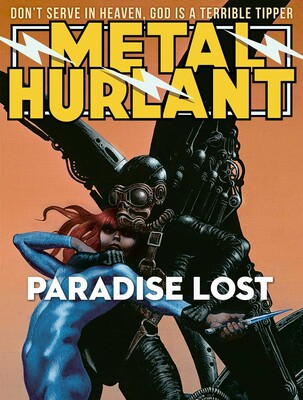
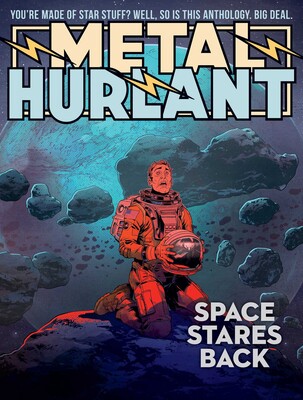
Les Humanoïdes Associés and the magazine
Métal Hurlant.
[1] This was to be a vehicle for his finest stories, and showcased a steady evolution in his graphical skills. His series
Lone Sloane and
Vuzz continued, and other stories of this period include
La Nuit, and
Nosferatu. In 1980, Druillet produced
Salammbô, a comic book trilogy based upon
Flaubert's proto–
heroic fantasy novel
Salammbô.
Outside his work as a cartoonist and illustrator, Druillet has also been active in
architecture,
rock opera,
painting,
sculpture, and
digital art. He worked as a designer on the film
Sorcerer, directed by
William Friedkin in 1976. He collaborated on
Rolf Liebermann's
Wagner Space Opera in the
Opera de Paris in the late 1970s to early 1980s, and founded the Space Art Création in 1984.
[1] More recently, he created the artwork and designed large parts of the background of the 2005 TV miniseries remake
Les Rois maudits (The Accursed Kings).