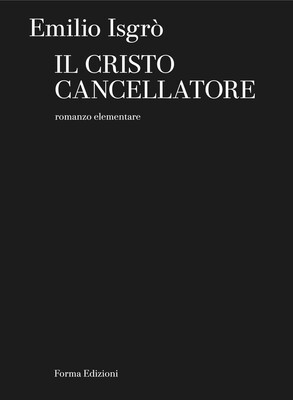
Emilio Isgrò (born October 1937 in Barcellona Pozzo di Gotto, Sicily) is a renowned Italian artist, writer, poet, and conceptual pioneer. He gained
international recognition starting in 1964 with his groundbreaking “erasure” technique—redacting printed texts like encyclopedias and literary works to create
visual poetry and conceptual art.
After relocating to Milan in 1956, Isgrò made his literary debut with the poetry collection Fiere del Sud in 1956, and soon shifted toward visual expression. In 1966,
during his solo exhibition in Venice, he introduced his idea of poetry as a “general art of the sign.” Over the decades, he exhibited widely – including the Venice Biennale (1972, 1978, 1986, 1993), São Paulo Biennial (where he won first prize in 1977), MoMA in New York (1992–93), and Peggy Guggenheim Collection in Venice (1994). His installations have included remarkable works like Chopin (1979), a 15-piano installation in Milan, plus powerful multimedia projects at La Scala and in Bologna in the 1980s. Isgrò’s impact stretches beyond visual art – he’s also the author of novels, plays, and theoretical writings, and his work has been honored with retrospectives in major venues such as Palermo (2001), Milan (2016), Rome, and Venice (2019).