
Get updates about Lisa See and recommended reads from Simon & Schuster.
Plus, get a FREE ebook when you sign up!
A Letter from Lisa See
Los Angeles in 1871 was a tiny, dirty, and violent town of just over 5,000 people, of whom 180 were Chinese. The 34 Chinese women who lived here were precious—coveted, and kept in seclusion to keep them safe. On October 24, 1871, 10% of the population rioted against the Chinese, killing 18 Chinese men and boys in what came to be called the Night of Horrors, the event around which Daughters of the Sun and Moon takes place. City fathers, who’d been busy promoting a land boom, were horrified. They tore down the building and ripped up the street where much of the violence had occurred, hoping to erase what had happened. And they launched a campaign to promote Los Angeles as safe and welcoming to all—no matter their color or where they came from. My great-grandparents, Fong See and Ticie Pruett, bought the sales pitch. They needed what was being offered—real or not.
Fong See was Chinese, Ticie Pruett was white, and it was against the law for them to be married. They sought a safe place to raise their five bi-racial children. When they moved to Los Angeles in 1897, they rented space to live and work a literal stone’s throw from where the Night of Horrors started. Today this area is a small grassy knoll. I’ve walked on that land more times than I can count, and when I do, I think about my great-grandparents and how brave they were. I think about my aunties, who were brought here in arranged marriages and kept inside for safety reasons even after I was born. And I think about the real women who were the inspiration for Moon, Dove, and Petal in the novel.
Moon is based on the wife of Doctor Tong. Dove was inspired by a young girl who was brought to Los Angeles in an arranged marriage to a much older Chinese merchant, who was described in the press as being “hideously ugly.” And Petal, my favorite character, draws from the lives of two women who were sold by their families in China, brought here against their will, and then sold again. I have always been interested in stories about women that have been lost, forgotten, or deliberately cover up, but to spend time with these particular real women was an honor and a privilege.
I only had one title for the novel. I loved the idea of my three characters all being women and therefore “daughters.” The sun and moon part fit because the three women are very different from each other—by class, by the size and shape of their feet, by marriage status, by whether they are free or not. But while they are as different as can be from each other, they are still connected as women. I believe this is true for all women around the world. We may look different, practice different religions, live in very different cultures, and yet we are bound by our shared female anatomy, our shared desire to be loved, and our need to survive and endure.
About the Book
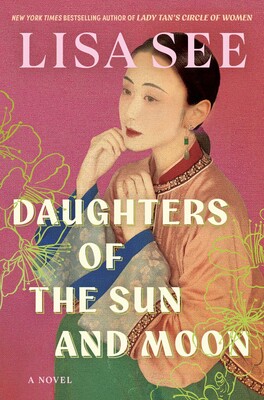
Daughters of the Sun and Moon
A Novel
By Lisa See
Beloved New York Times bestselling author Lisa See draws on the vibrancy and turmoil of post-Civil War Los Angeles to tell the story of three Chinese women who managed to survive and, eventually, thrive, despite all odds.
Hardcover
LIST PRICE $29.00
PRICE MAY VARY BY RETAILER
Get 25% off with code GIFT26 plus free shipping on orders of $40 or more. Discount on physical products only. Terms apply.
Buy from Other Retailers
Lisa See
Lisa See is the instant New York Times bestselling author of Daughters of the Sun and Moon, Lady Tan’s Circle of Women, The Island of Sea Women, The Tea Girl of Hummingbird Lane, Snow Flower and the Secret Fan, Peony in Love, Shanghai Girls, China Dolls, and Dreams of Joy, which debuted at #1. She is also the author of On Gold Mountain, which tells the story of her Chinese American family’s settlement in Los Angeles. See was the recipient of the Golden Spike Award from the Chinese Historical Association of Southern California and the Historymaker’s Award from the Chinese American Museum. She was also named National Woman of the Year by the Organization of Chinese American Women.
Author Alerts
By clicking 'Sign me up' I agree to the Terms of Use and acknowledge the Privacy Policy and Notice of Financial Incentive. Free ebook offer available to NEW US subscribers only. Offer redeemable at Simon & Schuster's ebook fulfillment partner. Must redeem within 90 days. See full terms and conditions and this month's choices.