Plus, receive recommendations and exclusive offers on all of your favorite books and authors from Simon & Schuster.
0:00 /
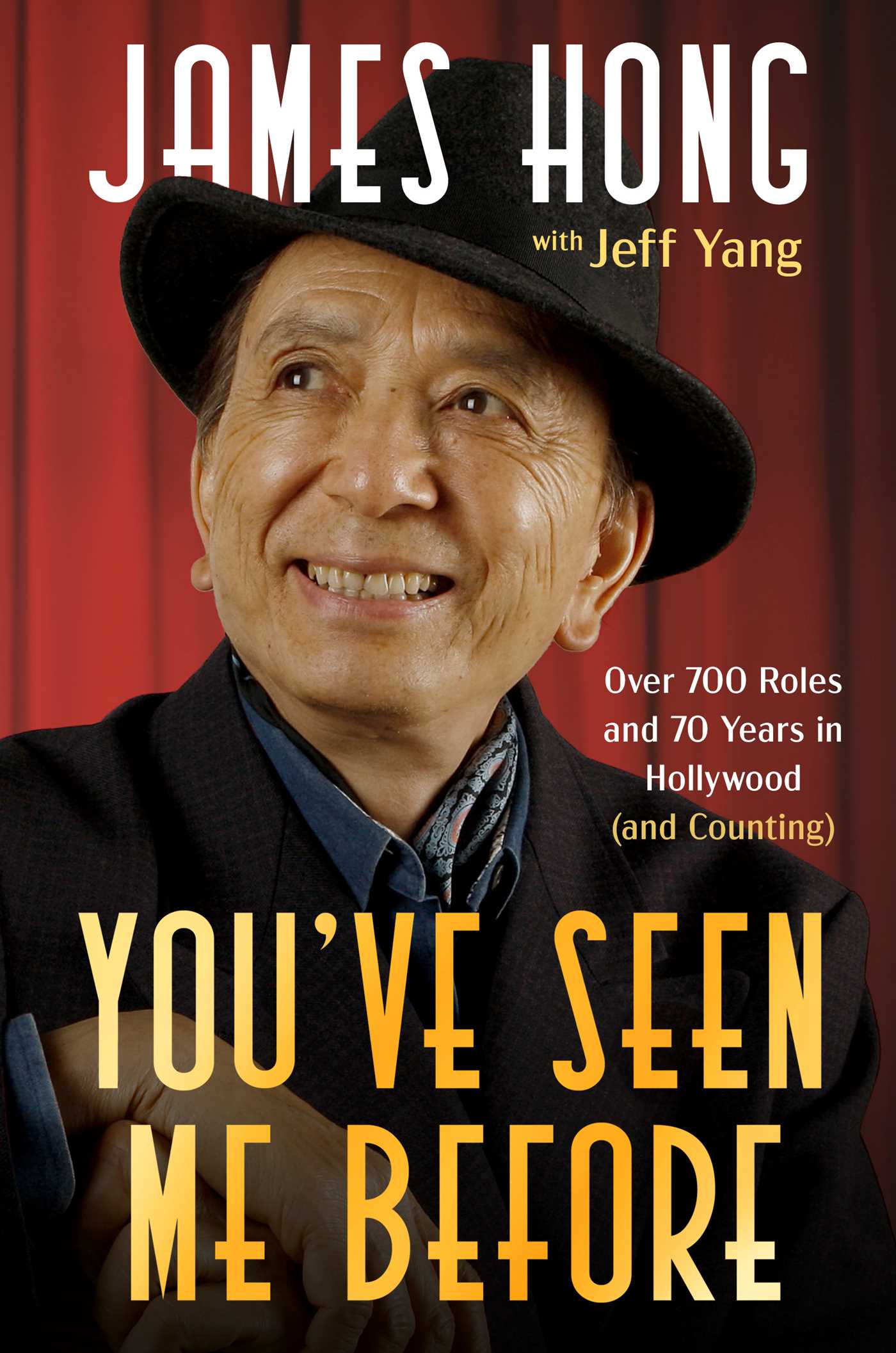
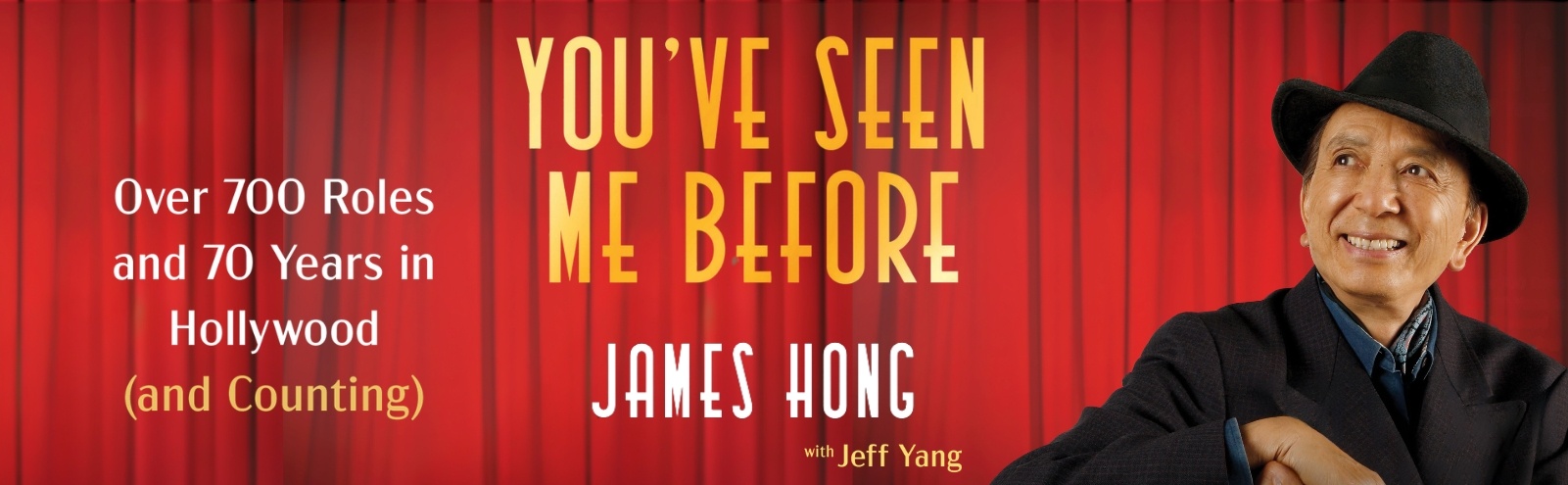
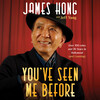
You've Seen Me Before
Over 700 roles and 70 Years in Hollywood (And Counting)
By James Hong
With Jeff Yang
LIST PRICE $30.00
PRICE MAY VARY BY RETAILER
Get 20% off with code SPOOKY plus free shipping on orders of $40 or more. Discount on physical products only. Terms apply.
Buy from Other Retailers
Table of Contents
About the Book
A sweeping memoir of an Asian American Hollywood pioneer, star of Everything Everywhere All at Once and Mulan, from coming of age under the Chinese Exclusion Act to becoming one of the hardest-working actors in the business.
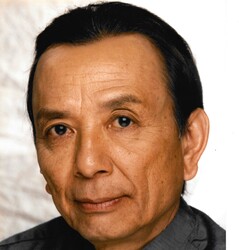
You might not know actor James Hong’s name, but we can guarantee you’ve seen him before. With over seven hundred acting credits and counting, James is one of Hollywood’s most prolific actors and a pioneer in Asian American entertainment.
Born to Chinese immigrants in Minneapolis, Hong endured the aggressive anti-Asian racism of the 1930s, served in the army during Korean War, and—somewhere in the mix—was bitten by the performance bug that would eventually lead to a seventy-year long career in showbiz (and counting).
From his iconic role as Chi-Fu in Disney’s Mulan to the hilariously terrifying Lo Pan in Big Trouble in Little China and Kung Fu Panda’s beloved Mr. Ping, James has been capturing viewers hearts for years. And who could forget his powerful, viral speech as he accepted the Best Ensemble Cast honors on behalf of Everything Everywhere All at Once at the Actor Awards?
Drawing on never-before-seen archival materials and hours of interviews, this is a powerful first-person journey through James’s incredible life and unique family history: a quintessential Asian American post-immigrant story, filled with new anecdotes and wisdom drawn from an unprecedented career, threaded through with an incisive look at nearly a century of Hollywood history.
You might not know actor James Hong’s name, but we can guarantee you’ve seen him before. With over seven hundred acting credits and counting, James is one of Hollywood’s most prolific actors and a pioneer in Asian American entertainment.
Born to Chinese immigrants in Minneapolis, Hong endured the aggressive anti-Asian racism of the 1930s, served in the army during Korean War, and—somewhere in the mix—was bitten by the performance bug that would eventually lead to a seventy-year long career in showbiz (and counting).
From his iconic role as Chi-Fu in Disney’s Mulan to the hilariously terrifying Lo Pan in Big Trouble in Little China and Kung Fu Panda’s beloved Mr. Ping, James has been capturing viewers hearts for years. And who could forget his powerful, viral speech as he accepted the Best Ensemble Cast honors on behalf of Everything Everywhere All at Once at the Actor Awards?
Drawing on never-before-seen archival materials and hours of interviews, this is a powerful first-person journey through James’s incredible life and unique family history: a quintessential Asian American post-immigrant story, filled with new anecdotes and wisdom drawn from an unprecedented career, threaded through with an incisive look at nearly a century of Hollywood history.
Excerpt
Chapter One CHAPTER ONE
WHAT DO YOU THINK THIS IS—A SCHOOL FOR CHINESE ACTORS?!!”
J. Carrol Naish shouted this at me, before leaving his on-camera position and advancing toward me as if he were about to slug me. I had been off camera feeding him cue lines and, inadvertently, missed one. I prepared to defend myself, frozen with fear, but he brushed by me and continued on to his dressing room. I walked to mine, shocked.
It was 1956, and this was my first time with a regular role on television. I’d been cast as Barry Chan, number one son of the brilliant “Oriental detective,” Charlie Chan, probably the most popular Chinese character in Hollywood at the time, even if he wasn’t real, and even if he was almost never played by an actor of Chinese descent. Not this time either: My costar in The New Adventures of Charlie Chan, and the series lead, was the actor J. Carrol Naish, “Hollywood’s One-Man UN,” who was known for playing every race under the sun—and who, with a face full of makeup and taped-up eyes, was supposed to be my father.
The producer, Rudy Flothow, entered my dressing room. “Perhaps, James, you should go to Mr. Naish’s dressing room and apologize.”
Naish wasn’t happy about the role, with all the cosmetics and prosthetics he had to wear. He had two prosthetics glued onto his eyelids, and the acetone burned them. He could not move his head freely for fear that the spaces between the prosthetics and his eyes would be visible. To address that, he always insisted that I personally stand in his line of sight, acting out my dialogue off-screen, saying it helped him “get into character.” Of course, he never did the same for me. Also, he could not speak as fluidly as he normally would, hampered by that stilted “ching chong” Chinese accent he was using. It wasn’t easy. Naish was ornery even at his best. But on that day, he was particularly irritable.
I went into his dressing room; he was fixing his prosthetic eyepieces. I said I was sorry that I had missed his cue line. When he didn’t reply, I assumed everything was okay. I went back to my dressing room.
Moments later, Rudy Flothow came to my room and said, “I’m sorry, James. Mr. Naish said it’s either you or him.”
Of course, Rudy chose me. Stunned, I packed my belongings from my dressing room and left the studio in Borehamwood, outside of London, where we’d been shooting for three months.
On the plane back to Hollywood, California, J. Carrol Naish’s words kept echoing in my brain—What do you think this is? A school for Chinese actors!? Whatever made him say that to a fellow actor, a colleague in the same production?
Clearly there existed prejudice in Naish’s attitude toward me, as well as resentment of my ability to move freely and speak naturally as his lively son, things he couldn’t do in his elaborate makeup and heavy-handed accent.
The TV series, The New Adventures of Charlie Chan, was canceled after one season. Maybe because the show lacked heart, without a believable relationship of love and humor between the detective and his number one son.
THAT THEY FIRED me so easily in 1957, to me, meant that it was easy to fire an Asian American actor from any series without any consequences. However, the fact that the series was canceled indicated that it did matter.
It took me time to recover from that horrendous experience and continue my acting career. But I had survived growing up as a Chinese boy in the Midwest during the era of Exclusion, the only time in American history when a group was specifically banned from immigrating because of ethnicity. The 1882 Chinese Exclusion Act was not repealed until 1943. During this time, most of the Chinese who were already in America were not citizens; and therefore, they had no rights. They were foreigners, and it was not considered a crime if they were murdered or beaten. I lived through this situation during most of my youth.
I broke into Hollywood when the movies were still just black-and- white and the actors were mainly white; however, as my career advanced, I still managed to get hired and act in more screen roles than any other human being on the planet, past or present and maybe future, earning approximately 730 SAG-AFTRA union credits in feature films, TV series, and voice-overs during the course of seventy-three years. (I’m still waiting for the Guinness Book of World Records to confirm that officially. Are you listening, Guinness? You know where to find me.)
Through most of my career, the prejudice I experienced on the set of Charlie Chan wasn’t the exception. And yet, I fought through such nightmares to achieve what seemed like an impossible dream—outlasting, and in many cases outliving, everyone who doubted me… including some of my nearest and dearest. Hardly a day goes by without me wishing that my mother and father had lived to see where I’ve gotten to today so that they could be reassured that the choice I’d made was crazy—but just crazy enough to work. In my imagination, I explain to them what they never understood while they were alive: Do you see, Mom? Acting isn’t a bottom-of-the-barrel profession! It’s respectable and valued! And it’s okay to show your feelings to people! And Dad… yes, you can make money doing it, too!
But they are gone. And so, too, are many beloved friends, cherished cast members and collaborators, respected mentors and elders I’ve encountered over the years.
And I’m still here. Still working. Still making marks on the world, earning honors, performing in award-winning productions, adding to the long scroll of credits attached to my bio.
I’m Chinese American, a descendant of one of the world’s oldest civilizations, the child of immigrants who battled all their lives simply to be allowed to belong. So persistence is in my blood, and fighting is in my bones.
LET’S START FROM the beginning.
I was born in Minneapolis, Minnesota, the year the Great Depression started. In the Chinese zodiac, it was the year of the snake—as of this writing in 2025, it’s the year of the snake again, eight full cycles since I was born. Snake-year people are supposed to be wise and charming, with a mysterious, intuitive nature, but also sensible and diligent. We’re known for our strong wills. Some may call us stubborn, but I prefer to think of us snakes as determined.
On February 22, 1929, my mother gave birth to me at 713 3rd Avenue South with the help of a midwife—in an apartment right above my father’s herbal store. My father, Frank Hong, had started his store a half decade earlier with the help of the local chapter of the “benevolent association” that he’d join and eventually lead, Hip Sing Tong. My father was an American, but he still lived in a very Chinese world—as Chinese as you could get in a very white city like Minneapolis of the 1930s, anyway. He was constantly struggling to secure the same rights for Chinese Americans that the white population of Minneapolis enjoyed.
Step through the doorway of our building at 713 3rd Avenue South, and you had three choices of where to go, each of them leading to a different part of our Chinese reality.
The main door led to the store, named Hong Yuen, which sold everything from dried goods, including medicinal herbs, to vegetables from San Francisco, such as bitter melon, winter melon, and lily roots. The variety of dried goods was stored in a wall full of separate wooden drawers behind Hong Yuen’s glass counter. My father and his workers could look at your tongue and the color of your eyeballs, feel the slackness of your skin, and check your pulse, then, based on the results, pull treasures from the drawers that you could brew into a pungent tea that would fix you up, if you could force it down. (Just the smell from the herbal remedies my mother boiled for us was often enough to make me pretend to be completely healthy.) There was enough space in the store for packed audiences to gather for performances by visiting Chinese opera singers, who would croon tales from history and legend in their flowing robes, intricate face paint, and bobbing headdresses, keening and striding and gesturing to the pok-pok-pok sound of percussion sticks.
Behind the store was a kitchen, where delicious meals would be fired up for the workers and for our “downstairs guests,” the flow of tired working men who’d take the stairwell down into the dark basement beneath the store on weekends after their laundries and restaurants closed, to sip on medicinal tonics (which you could be excused for mistaking as alcohol, though any intoxicating aspect of the beverages was surely accidental since Prohibition had made liquor illegal) and play Chinese games of chance. Money may have changed hands during these noisy, fast-paced rounds of pai gow, and maybe tempers occasionally grew heated when too much of it ended up in too few hands, but my father and his men would lean on the table and look sternly at anyone who threatened to break the peace—or to make the basement loud enough for the aboveground folks to become suspicious. The main reason the men gathered there was because they had no wives or family to go home to, due to the Exclusion Act.
The most problematic aspect of these large gatherings of men from all over Minneapolis was that some of them were carrying germs of contagious diseases, like tuberculosis. As a result, the Hong family’s children were exposed to these illnesses. Somehow, my siblings and I survived it all and became immune. We carried small scars in our lungs from TB infections. In time, mine disappeared, but my sister Jade was not so lucky. Later in life, she had to have a small part of her lung removed as a precaution.
In those days, one simply had to survive diseases like tuberculosis, measles, chicken pox, and whooping cough. Contracting these contagious illnesses was the unavoidable consequence of living in crowded conditions, and immunization methods were not prevalent. I believe—since I did, in fact, survive—that it all made me that much stronger by natural means.
There was a separate door outside that provided access to the upstairs apartments, though one could also enter from the adjacent door in the herb shop. Behind these doors were the stairs, dimly lit and rickety, that led to the second floor. On the right side of that floor was the apartment of our neighbors, the Huie family, owners of a store farther down the block. They had two young children, a daughter, Elsa, and a son, Get. Get ended up becoming one of my closest friends growing up, which made sense since our families lived for years just a few feet apart; we could all hear one another through the walls.
On the left side was our household, the Hong family residence—a kitchen, a living room, a bathroom, and three small bedrooms, into which two adults and the continuously expanding set of Hong kids were crammed. Initially just the four of us shared the kids’ rooms: my two older sisters, Jean, aged seven when I was born, and Pearl, aged five; my older brother, Walter, aged three; and baby me bringing up the rear, until my sister Jade came along three years later, and my sisters Rose and Betty a few years after her.
Seven of us in total, and my parents would have kept on having more if their child after Betty hadn’t been stillborn. It was as if my father, having set down his roots in America, wanted to make sure his family tree would bear as much fruit as possible. He was, after all, the patriarch—the first in his family to carry the Hong name. And perhaps he wanted to make sure he wouldn’t be the last.
Dad’s name was changed due to the typical shenanigans that occur when names cross borders. In China, surnames are spoken and written first. We Chinese see families as more important than individuals, after all. But in the West, including America, the reverse is true: Family names are “last names.” Given names come first. Which is why Clark Gable isn’t referred to as “Gable Clark”!
My father was born as Ng Fook Hong in Kee May San, a tiny village on the outskirts of Toisan, Guangdong province. Which means by all rights, I should be “Jimmy Ng.” I don’t know if I’d have made it in Hollywood as an Ng, which Americans back then had a hard time pronouncing, and might have assumed was just shorthand for “No Good.”
It was all very hard on my mother, who grew up a simple girl from a village near Toisan, and after marrying her much older husband, would soon be a taxed and exhausted mother of seven (and almost eight). The deal that her mother had struck for her in the arranged marriage was that her new husband would provide for her generously in America, ensuring that there would always be a roof over her head and food on her table and money to send back to the village. In exchange, she would bear and raise Frank Hong’s children, keep them fed, safe, and warm. Of course, it was expected that the children would be well educated and in the future get good-paying jobs and provide for the parents as they grew old. It’s the family system, staying close to each other, providing for each other, and keeping the family name and bloodline going forever.
Did they love each other? It wasn’t something they ever said, or showed in ways that non-Chinese families might easily recognize. Did they love us? Of course they did.
They did keep us fed and safe, but there were no kind or encouraging words. The rules of behavior and obligation to the family were taken for granted and ingrained in us daily. That was their version of love. As our numbers grew and as we got older, it became nearly impossible for my mother to pay attention to us individually.
As the littlest one for a few years, I was always underfoot, an annoyance to my older brother, a tiresome duty to my older sisters. Even as a toddler, I had to find my own ways to amuse myself. I’d wander down into the store if there was an opera performance going on and sit raptly on a stack of rice sacks in the corner, watching these geniuses demonstrate how they could transform from brave general to terrified maiden to angry demon through nothing more than a shift in expression, vocal tone, and posture. I would run around the apartment, mimicking their tones and movements, using a couple of pieces of wood as clackers, until an irritated older sibling swatted me on the behind and took them away.
Sometimes I’d go down even farther into the belly of our building, to the basement that had become the de facto social club for the Hip Sing Tong, listening to the working men call out, joke, and argue in their varied dialects—their tongues exposing the villages they came from in Toisan, a region where every town has its own unique way of speaking. Sometimes they’d call to me through the dark, smoky air to bring them a new cup or order them a snack. I’d run to fulfill the errand, and they’d press a coin or even a bill in my hand, if they were winning. When my father chased me back upstairs, I’d repeat new phrases as I climbed the stairwell, imitating all the different accents I’d heard in the crowded store.
And in the living room of our small apartment, sometimes my mother would be sitting in her chair, staring off into the distance. Or she might be in her bedroom doing her bei shu, reading out loud from her Chinese storybook in her singsong rhythm, a form of recreation from her village in China. Perhaps from her I inherited my ability to do voice-overs for Hollywood.
Neighborhood kids would be playing marbles on our living room rug, which had a circular design. When I wasn’t playing with them, I often went into the kitchen to listen to the glorious sounds coming out of the radio, that magic wooden box: music ranging from classical to swing; the sleek, rounded voices of serialized thrillers; and the rapid-fire banter of comedians and variety show personalities. I loved them all and spent hours practicing their voices and tones while looking at myself in the bathroom mirror.
All these sounds were my friends and companions when I didn’t have any others. They didn’t just fill my ears; they filled my heart.
And then when I was about four, my father made a decision that took us away from everything familiar and dropped us into a world full of alien sounds and exotic sights. It’s strange—nothing was more important to him than his fight to become an American. He’d spent years and thousands of dollars arguing with the government, trying to convince them that he’d been born in San Francisco (he wasn’t) and was thus a natural-born citizen of the United States (Chinese were barred from naturalization in those times). Only through native birth on US soil could my father belong to this country, so, like many Chinese of the time, he claimed it; unlike many of his fellows, he had the grit and tenacity and resources to pursue that claim through endless courts and immigration adjudications, and as in so many things Frank Hong set his mind to, he eventually prevailed.
But just a few years after he obtained his American citizenship, he decided that his American kids were losing touch with their roots. Despite the Chinese bubble that surrounded us in Minneapolis, we still had to emerge from that bubble to go to school. As we became Americanized, we were forgetting how to read, write, and speak Chinese. We envied the toys and clothes of our white classmates. Maybe the final straw was seeing my older sisters swoon over blond movie stars; maybe it was hearing me, his youngest son, seemingly possessed by “white ghosts” while practicing my impersonations of movie stars like Groucho Marx. My father must have wondered, Was Wah Jeem, his youngest son, out of his mind?
Aside from the many changes in his life, he also must have been talking to some of the merchants, who would have told him that business was booming in Hong Kong. So as an aggressive businessperson, he must have thought his chances of becoming a bigger man would be better in Hong Kong than as the owner of an herb store in Minneapolis.
For whatever reason, Frank Hong decided it was time to move his family from the City of Lakes to the Pearl of the Orient: Hong Kong.
WE TRAVELED BY ship. Airlines that connected cities on opposite sides of the world wouldn’t exist for half a decade, and even if they had, the Hongs were in no position to afford that kind of travel. The two-week journey was miserable for my parents, my four siblings (by this time, my younger sister Jade was born, and was the official baby of the family, moving me up a rung in status), and me. I was too young to remember the details of the journey by train from Minneapolis to Seattle, and then by steamship from Seattle to Hong Kong, only that I cried and complained and asked repeatedly why we had to leave home until my father shut me up.
Somehow we made it across the ocean, and we disembarked at the Port of Hong Kong onto the bustling streets of the city, which even then was much more crowded and frantic than Minneapolis ever was, even at the peak of rush hour. But our trip wasn’t over yet. We wouldn’t be living in Hong Kong proper, but in Kowloon, the part of the city of Hong Kong that sits at the tip of a peninsula stretching out from continental China. To get there, you took a ferry from the main city on Hong Kong Island across Victoria Harbour. We were all extremely tired of boats by that time, but this was new, so all of us still crowded to the stern to watch Hong Kong shrinking away in the distance and then ran across to the bow to watch Kowloon grow bigger and bigger until we finally landed at the docks in Tsim Sha Tsui. The sights of Hong Kong and Kowloon, and the feelings my new surroundings generated, were astounding to young James Hong at age five. Kowloon meant “Nine Dragons,” and that ominous image seemed just right to me as a child.
Today Kowloon is Hong Kong’s garish nightlife capital, with every part of it full of neon lights, noise, and people. Back then, it was mostly a center for commercial shipping and industry. It came as a shock to us that our father already had a home in Kowloon. It made sense, as he and our mother had lived there for a year after they were first married, before coming back to Minneapolis to settle down and raise a family. The apartment house was larger than our 3rd Avenue South apartment, though we kids still had to share rooms, much to my brother’s dismay. One point of consternation: There was no toilet inside. Any business that needed to be done would have to take place in an outhouse in the alley behind our apartment building, even if you had the urge to go in the middle of the night. That change was a crushing blow to me, as the only child still of an age when holding my pee for a full ten hours wasn’t entirely certain.
The second blow came when my parents told me that I would have to go to school. School was always something my siblings had to do during the day, while I scampered around the apartment or investigated the goings-on in the store and basement until I was hungry enough to ask my mother for something to eat. But in this British colony, not going to school was out of the question. Any protest was useless. I found myself enrolled in Yuk Gee Elementary, a local school a few blocks from our home.
I was still just five years old, but after my father showed me the way to Yuk Gee on the first day of classes, he told me it would be my job to find my way there and back daily, without escort. I’d never been allowed on the streets by myself in Minneapolis, and while I spoke Toisanese with my parents, I was most comfortable speaking in English and couldn’t read a single character in Chinese outside of my name, which meant street and building signs were complete mysteries to me. Plus, the Chinese dialect they used in Hong Kong was Cantonese, specifically Hong Kong Cantonese, which to me was what Toisanese would sound like if it was being spoken on a radio channel with a lot of crackle and static: Everyone sounded clipped, garbled, and vaguely annoyed at all times.
All of this meant that my walk of a few blocks was an adventure. There were lots of bicycles and rickshaw traffic to maneuver around. If I strayed off the main road, I’d probably be lost forever. If I needed help, I’d have to look for an English speaker, which for me meant a white British person. They were hard to understand, too, but at least they could understand me. And though the streets weren’t as crowded as those on the island, they still had other people, some of whom were creepy or intimidating. I still remember when I saw an old beggar, sitting with his back against the square supporting column of a building I passed every day, holding his hand out to passersby for money. He could tell that as a little kid I didn’t have anything and simply gave me a gap-toothed smile, which I tried to return.
Then a pair of Sikh policemen, tall and bearded and holding billy clubs, suddenly stepped between us, ordering the beggar to get out of the public street. The beggar protested that he was doing nothing wrong, or began to… until his words were cut off by the sticks of the policemen coming down with brutal force, beating the old man like dirty laundry. Unfortunately, most of the Sikhs were heavyset Indian policemen hired by the British who ruled Hong Kong, a territory ceded to England after China lost the Opium War. The Sikhs abused their status and often bullied the poor Chinese citizens.
I wasn’t afraid of the beggar, but I was terrified of the policemen and the sudden violence they rained down on him. I ran as fast as I could to leave the old man’s screams behind, trying to convince myself that if only I was a little bit bigger and older, I’d have tried to stop them.
Yuk Gee was a small and simple school, its classrooms and play yard surrounded by a concrete wall. The play yard itself was not paved with the typical asphalt; instead, it was covered with concrete stucco, sharp enough to be painful if you ran across it in bare feet. During recess, we were given balls to play basketball or soccer on the play yard. Woe to any boy who tripped and fell onto that razor-studded surface; you’d get your shins and knees scraped raw, and teachers would just tell you to stop screaming, wash the blood off at the tap, and hold a rag against your wounds until they stopped flowing.
Things weren’t easier inside the classroom either. If you misbehaved or made a mistake, the teacher would take his bamboo stick—usually used as a pointer to tap on questions on the chalkboard, or to pick out students to answer them—and snap it down sharply on your hand. They were expert in swinging the stick hard enough to hurt, but not hard enough to leave permanent marks.
They had become experts through lots of practice. One kid in our class named Hung, who was intellectually slower than the rest, was constantly caught staring vacantly into space when the teacher called on him. When pressed, Hung would mumble an answer, which was always wrong, and snap, the stick would come down on his hand, again and again. On bad days, the class would end with the teacher covered in sweat from the exercise of whipping that poor boy. When it happened, it was hard not to compare what was going on to my traumatic memory of the policemen beating the beggar.
As with the street incident, I couldn’t intervene directly; we were all expected to sit quietly and stare straight ahead when discipline was taking place. But there was one thing that I could do: I could try to grab the teacher’s attention so he’d leave my classmate alone. Even though I started out the year far behind, unable to read or write and barely able to speak, I threw myself into schoolwork with a diligence I’d never applied to anything before and was soon getting our teacher’s rare benevolent smiles. It didn’t make me popular among the other kids in the class, but the overall mood was improved, and Hung’s whippings went from daily to weekly.
When our teacher announced that students in our class would be competing in a grade-wide calligraphy contest, it seemed like a perfect opportunity to end the year on a high note. Calligraphy requires artistic penmanship. The writer must hold the brush upright and move his hands and arms smoothly, and each stroke in a Chinese character must be written in the correct order.
Unfortunately, Hung was no better at calligraphy than he was at calculations. There were smears and spots everywhere, and his characters looked like someone had smashed a tarantula on the paper. But it turned out I was quite good at it, in part because I inherited long fingers from my parents (and long earlobes, which Chinese believe to be a sign of an extended lifespan. Once when I had minor surgery as an adult, the doctor suggested that he could “trim” my earlobes, and I asked him if he was trying to kill me by shortening my life; he never touched them, and thank God for that, because as a result I’m still here writing this at age ninety-seven).
When the results were announced for the contest, the teacher proudly informed the class that I, Ng Wah Jeem, had gotten first place. Me, the kid from America, who’d never touched an ink brush in my life until arriving in Kowloon a few months before. Even my classmates were happy for me as I approached the front of the room and was awarded my prize: an engraved brass inkstone shaped like a peach.
It was the first time I’d ever won anything, maybe the first time that I had ever been acknowledged in any way for my talent or hard work. Having this physical proof that I meant something to the world filled me with pride and joy, and after school I raced home to show it off to my family.
Nothing.
No congratulations, no hugs, no pats on the back. Not even any curiosity. My siblings looked at it and shrugged. My father raised his eyebrows, then went back to reading the newspaper. My mother stared at it, then told me to go wash my hands for dinner. I felt downtrodden because of this lack of praise. But that reaction by my family was very Chinese. “Don’t spoil the child.”
That was typical of my mother’s attitude, and it was one shared by many immigrant parents of her era: Kids who got undeserved attention simply craved more of the same, when they should be thankful for having a roof over their heads and food on the table.
OUR TIME IN Kowloon sped along. I was five, six, then seven years old, and my Cantonese was nearly fluent. Having finally gotten big enough to explore beyond the several blocks between my school and our house, even to stray with classmates across the ferry and onto the main island, the city grew familiar to me—becoming my first real city, as I’d been too young to explore beyond our household walls when we lived in Minneapolis.
For the first time, I felt like part of a majority. For the first time, I felt at home.
Until a couple of events occurred that unsettled me.
The first was when a cousin of my father’s, whom we were all told to call Uncle, visited us from the mainland. We treated him to dinner at a restaurant. After the meal, a special treat came out that I’d never tasted before: a mountain of glistening white, steaming faintly in the warm Hong Kong air, surrounded by cut fruit of all kinds. Full of curiosity, I didn’t even wait for permission to dig my spoon into it—and because we were with company, my father didn’t slap my wrist as he usually would have. My siblings, seeing me go unpunished, also scooped piles of this new dish onto their plates. My father called it syut gou—a type of Chinese ice cream.
But the Chinese ice cream wasn’t the strange event. It was instead another surprise, produced by the mainland uncle from his shoulder bag as we made the pile of syut gou disappear. It was a large rock, bigger than both of my fists put together, with a gray metallic appearance and odd square outcroppings. Our uncle said he’d found it lying on the ground in the middle of a field—the glitter catching his eye and originally making him think he’d discovered a treasure. When he picked it up, he found that it was surprisingly heavy for its size; he passed it around, and when it arrived in my hands, I almost dropped it on my plate. Part of the reason he had come to Hong Kong was to get a jeweler to look at it. The jeweler told him it was a lump of tungsten, an incredibly useful metal, but not precious the way that silver or gold was. Tungsten was hard and heavy and, as it turned out, abundant in Mainland China. It would not make my uncle rich, but decades later, as China grew and its industrial capacity boomed, control of 85 percent of the world’s tungsten supply was one of the resources that would help boost China’s economy.
Later, I would learn that tungsten had a special property: When spun into wire and powered with electrical current, it emits a bright glow. Tungsten incandescent bulbs bring light to homes, buildings, and streets all around the world—and they give Hollywood the magical power to turn the dark of night into the bright of day. Filmmakers also love tungsten lights because they give skin a lush golden tint—though ironically it took a long time for them to appreciate those of us who have that tint naturally!
The second odd occurrence was a dark one, and something that burned itself into my childhood memory forever. A few months had passed since Tungsten Uncle visited, and Hong Kong’s monsoon season had begun. The threat of sudden storms kept us at home, even my father, who usually spent evenings out doing whatever it is he did, staying away into the wee hours. With the sky now pitch-black, a heavy rain beginning to fall, and winds whipping loose trash and debris around the streets, it was dangerous to go outside even to use the toilet. We hunkered down in our beds, comforters pulled up to our cheeks, and tried to sleep.
I’d drifted off into a fitful doze when a loud noise suddenly jolted me awake. For some reason, the door to the outhouse was swinging freely, and the wind caused the door to slam against its frame, the bang-bang-bang punctuating the sound of the rising storm like gunfire. I could hear my father stomping down the hall, grumbling over which of us was to blame for this annoyance. He opened the back door and headed toward the outhouse, approximately twenty feet away.
I pulled myself up and peeked out of my bedroom window to spy on him. Just as my father’s silhouette arrived at the alley’s end and reached for the door, there was a sudden lightning flash, and both of us saw it at the same time: There was something—someone—in the outhouse, dangling on a rope from its rafters. A man had hung himself on our property, and the feet of his corpse, swaying back and forth, were striking the door as it swung open and shut in the wind: Bang! Bang! Bang!
In the weeks that followed, my father, a man of total self-confidence who rarely displayed his emotions, seemed rattled and nervous. Who wouldn’t be? I was, too, jumping at every shadow. But we soon discovered that his anxiety wasn’t just driven by superstition.
The rains had moved on, leaving a thick, heavy layer of humidity behind. I had heat rash and boils all over my skin. One afternoon, my siblings and I had returned from school and were trying to do our homework, drenched in sweat, when we heard our father burst into the house and run up the stairs and into the kitchen.
“The gold!” he shouted to my shocked mother. “Where is the children’s gold?”
By this time we’d popped out of our rooms and were watching as my mother and father pulled open drawers and cabinets, looking for the small velvet bag containing the gold jewelry that was traditionally given by family members and well-wishers as gifts to newborn children. These were our treasures; every so often, my mother would take that bag out and let us try on the bracelets and rings and necklaces under her eagle eye, to make sure nothing got lost and the soft, pure gold wasn’t bent or broken. Why would my father be asking for it now?
The answer became obvious when my mother produced the bag from its hiding place and my father grabbed it, then ran down the stairs and out the door. I suspected our treasures wouldn’t be coming back.
Fortunately, our father did. But his expression was still more troubled than I’d ever seen. The man who took his life in our toilet was a horrible omen. My father’s luck in Kowloon had turned sour, and wherever he was going in the evenings—clearly some Hong Kong version of the gambling den in our old Minneapolis basement—someone at that place now had custody of our gold. But you could always earn more money. You couldn’t buy a new life.
It was time, he announced, for us to go home.
HOME MEANT AMERICA. And more specifically, it meant Minneapolis. It meant unwinding the long trip that took us to Hong Kong, where I’d managed to learn the language, assimilate into the culture, find friends, and create a fairly comfortable life—to return to a country and a city that I barely remembered after spending more than half of my life abroad.
I was aggravated all the way from Minneapolis to Kowloon, and now I was aggravated all the way back from Kowloon to Minneapolis. During this trip, I was old enough for the details of our journey to sink in, and they were horrible. We had traveled to Hong Kong crammed into bunk beds in second class. We traveled back to America in third class, a very low class, given that my father had lost his savings and even our personal treasures, and we were fleeing the island with debt collectors on our tails. From what I recall, third class meant very crowded living quarters with no private rooms, just one huge area with some bunks and hammocks at the level of the waterline of the ship. We had to sleep in shifts, while those who were awake kept an eye on our bags and belongings—not that we had much.
Our treacherous journey to America took approximately eighteen days across the giant churning waves of the Pacific Ocean. Father had gone ahead weeks before to arrange things with immigration officials for our return, so the trip was just us kids, overseen by our mother, who was now making her third miserable trip across this rocking sea. As third-class passengers, we received awful meals consisting of a slop-like brown stew with old vegetables and small chunks of fatty meat and gristle, as well as occasional stale bread and leftovers from the somewhat better meals given to the second-class passengers. (Life on the steamships back then was like the rest of society: The higher up you were, the better you ate, and only the worst from the levels above trickled down to the ones below.)
I was seasick and threw up every day, which angered my mother given that we weren’t given much food to start with. I asked a crewman if I could go up on deck to see the ocean, sky, and sunlight, thinking it might help settle my stomach, but was told third-class passengers weren’t allowed topside. One day, it was my turn to empty the swill bucket we were assigned, which was full of food waste and vomit. I dumped it out into the “gash chute” that led directly out of the ship and into the water, and then—because it smelled so bad—brought it over to the bathing area to rinse it out, hoping I wouldn’t run into anyone who might question what I was doing. I was still unfamiliar with showers since we didn’t have them in Kowloon nor in our Minneapolis tenement, so I held the swill bucket up to the showerhead. Because I couldn’t reach high enough, when I turned on the water and the pressure came out in a jet, I ended up getting thoroughly soaked with water mixed with my own sick. I was stupid. But in my defense, I was delirious from days of tossing, turning, and throwing up, due to the rocking and rolling of the waves.
There was just one “treasure” in our personal luggage, and that was the cage containing my mother’s pet, a nameless black bird that my father had given her as a surprise gift while we lived in Kowloon. We all thought she’d hate it, since she’d scoffed at our requests to have a cat or dog in the past—but somehow it was love at first sight between my mother and the sleek, shiny-eyed creature, which she fed by hand and did her best to train. She actually managed to teach it some Toisanese phrases; it would croak Dou guee! Dou guee! (“I’m hungry! I’m hungry!”) when it wanted a treat. However, we had no bird food for the bird. My mother saved bits of fat from her stew to feed it instead. Dou Guee—my nickname for the bird—gobbled the trimmings up, snapping them out of my mother’s hand hungrily. But a week after we left port, she pulled the cover away from the bird’s cage to find it lying on its back, feet in the air, its once-shiny eyes glassy and blank. We worried then that it had gotten poisoned, but now I know that birds are very sensitive to their diets and shouldn’t be given foods that are high in iron, like fatty red meat. It can kill them.
The death of Dou Guee took a little of my mother’s spirits away as well. Though she continued to make sure we ate and showered and shared the hammock in fair shifts, she talked very little for the rest of the trip and refused to throw away the bird’s cage. Toward the end of the journey, I caught her whispering into it, softly grieving her pet’s loss and apologizing for her deadly mistake. I nearly burst into tears, in part because I grieved along with her, in part because I’d never heard her speak that kindly to anyone before, including me.
When we finally stepped ashore at our destination, I had an unexpected flood of emotion. We may have gotten used to Hong Kong, but America was the nation in which I was born, and the place where I knew in my heart I belonged—even if each of us Hongs was interrogated for hours upon arriving in Seattle, over the course of several days, by immigration officials looking for any excuse to declare us frauds and foreigners and expel us back across the ocean. They separately asked us questions like “How many steps were there in your Minneapolis apartment going upstairs?” If they heard any discrepancy among our answers, they would claim we were not a family, that we were trying to sneak in foreigners posing as American family members. Somehow we children were smart enough to provide the correct answers.
However, because my mother did not speak a word of English, the immigration officers held her for interrogation on the fourth floor of the immigration building. They detained her for weeks as we stayed with my father, crammed into a small room rented from one of his Tong friends. I can remember him bringing my sisters Jean, Pearl, Jade, and Rose, and my brother Walter and me, to visit her. We stood on the sidewalk, looking up at the fourth-floor window above. My mother would peek down through the iron bars, yelling in Chinese, cautioning us to be obedient children and to be sure to eat our rice.
Somehow, looking up at her silhouette, I was reminded of Dou Guee. My sisters and brother and I yelled answers back to our mother until the guards came out to stop us.
After the authorities finally cleared our mother for entry, we returned to Minnesota. As we entered our Minneapolis home at 713 3rd Avenue South, the workers were loading inventory into my father’s store. They paused only to shout his name, “Ah Hong,” and bow their heads in welcome and respect. I inhaled the familiar smells of herbs, medicinal roots, and dried vegetables, heard the creaking of the stairs under our family’s feet, and, as the rest of the Hong clan pushed into our old apartment, paused when the door across from ours cracked open to reveal a slice of a familiar face: It was Get Huie, four years older and a foot taller.
“Looks like you’re back,” he said, raising his eyebrows.
“Looks like we are,” I responded, and gave him a wide grin in response.
Get Huie said, “I’ll play you a game of marbles on your rug tomorrow.”
Then he shut the door.
Yes, I was home.
I STARTED AT Washington Grade School in Minneapolis when I was about nine years old. I was very shy, mainly due to the fact that my English wasn’t good enough for me to comfortably socialize with other students. It was a very lonely time for me. I would frequently stand in the shadows underneath the stairways, hiding and keeping out of sight of the other children, who played on the playground.
Or so I thought. Not far enough out of sight, as it turned out.
One day, I was confronted by two of my classmates. They were the rough-around-the-edges type—Curtis, strong-looking, and skinny Butterfingers. As a quiet, unassuming Asian boy, I must have looked like an easy target hiding in the shadows. I wasn’t prepared for what was coming.
“Did you hear something, Butters? I thought I heard something over here.”
“A mouse?”
“It didn’t sound like no mouse.”
Curtis jumped down the last five steps of the landing and poked his head around the corner, his grinning face homing in on my hideout. “Well, lookee here, Butter, if it isn’t Jimmy King Kong Hong from Hong Kong,” he spat. “Get out of there, King Kong, that’s our spot.”
I didn’t know how to respond. Their spot? They’d never shown up before, and even if they had, hiding spots were first come, first served.
“I said, that’s our spot. Butterfingers—drag that rat out of there.”
Eager to please his friend, Butterfingers lumbered over, leaned in, and grabbed me by the shirt, pulling me forward out from under the stairwell. I’d never learned how to fight; I was pretty sure my father could, but he’d never taught me to defend myself, and any squabbles between students back at Yuk Gee Elementary were quickly separated by teachers wielding bamboo sticks.
Curtis told Butterfingers, “Go ahead and hit him.”
Butterfingers looked reluctant despite the other boy’s insistence. In retrospect, I wonder if Curtis was testing Butterfingers’s qualifications to join his “gang.” So, after some prodding, Butterfingers stepped up to me and hit me in the face. The blow knocked me down and I was startled. I did cry a little bit, but I got up right away, not knowing what else I was supposed to do.
Curtis shouted, “Hit him and make him stay down.”
Butterfingers hit me again. I fell down a second time, but some instinct made me get up again. By then a small crowd had gathered around. You could tell by the looks and mumbled comments they were feeling sorry for me, but that didn’t bother Curtis, whose whole world was occupied by two idiots who refused to follow his directions—me for not staying down when hit, and Butters for not hitting me hard enough to make me stay down: “What are you trying to do, ching chong? I said stay down! Butters, hit him again!”
Butterfingers swung at me a third time. I fell down dazed, but somehow, I struggled and got up again. By this time many from the crowd were sympathetic toward me and shouted out, “Leave him alone! Leave him alone!” Curtis did not like this and reluctantly walked away.
Butterfingers leaned in close to me and said, “I’m sorry. Why didn’t you stay down?”
I didn’t have an answer for him, certainly not one I could’ve expressed in English. But inside my head where only I could hear, a voice that might’ve sounded like my dad shouted that it didn’t matter how many times I was knocked down—it was my duty to keep getting up. That was his own philosophy, certainly. And of all the things I inherited from my dad, that philosophy is what kept me going even when it felt like I had nothing left in the tank.
There was a silver lining to that fight. Or beating, really, as I hadn’t fought back at all. Over time, some of the kids in the crowd got used to me; they started nodding toward me in the hall, then patting the seats next to them in the auditorium and lunchroom. Maybe it broke the ice—and just think, all it took was someone almost breaking my face. As for Curtis and Butterfingers, after my older brother Walter heard about the fight, he and his very sturdy friend Tommy Lee came over to my school and had a “conversation” with them. Those two troublemakers never bothered me again—in fact, they went out of their way to give me a very wide berth. It must have been a very intense conversation.
Afterward, I studied hard to relearn my English as perfectly as I could. I started making friends at school and began to relax and have fun. In fact, I started to enjoy my time with classmates more than I did my time at home. My father had always been a tough disciplinarian, and my mother was far from a warm parent herself.
We had little to no playtime or sleepovers with friends. No concerts. No holiday trips or fun shopping sprees. My parents believed that the most important gifts they could give us were healthy bodies—as well fed as possible—and good educations, the better with which to obtain status and money in the future. Hugs? Kisses? Family fun time? Unnecessary, and perhaps even distracting.
On the other hand, if we made a mistake, they believed we needed to learn why we shouldn’t do it again as sharply and quickly as possible. There was a time when I decided to show off by climbing up on a handrail that I thought was wide enough to walk on. It wasn’t, and gravity existed, so I fell, hit my head, and knocked myself briefly unconscious. When I came to, I found myself flat on my back and staring up at my father, who was crouched over me, slapping my face as my mother and sisters tried to hold back his arms. I still can’t believe that he was trying to punish me while I was hurt and semiconscious.
The only person who took me anywhere was my uncle Sing Bo Sook, a friend of my father’s I called uncle, as I did all of my dad’s friends. He secretly took me to the Minnesota State Fair several times and paid for everything, from popcorn to hot dogs. He also would bring me to the laundry business he owned, Chinese Hand Laundry. He would let me, “little Wah Jeem,” choose treasures from a tray of leftover buttons, cuff links, and trinkets that fell out of the dirty laundry. His business did everything by hand. One time he asked me to pick up the iron and put it on the stove. “Wah Jeem, pick up the iron and bring it over here.” I tried, but being too small, could not lift it. Knowing it was too heavy for me, he laughed at having pulled one over on me. For some reason he loved me like a son. I will always treasure the memories of those afternoons spent with him, especially our wonderful trips together to the Minnesota State Fair.
There were very few other adults around us who did anything other than ignore me or treat me like a pest or an alien being from another planet. One was our family physician, Dr. Eisenberg, a kindly man who gave us checkups and took care of the minor medical needs of all seven of us for very little money. A very generous person, he was genuinely interested in the health of our big family.
But I’d soon meet someone who’d treat me with nothing but kindness, and who unbeknownst to me would set me on the path that led to the rest of my life. One day, I ran into Get Huie in our adjoining hallway and was shocked to see him dressed up in his best clothes. “Did someone die?” I asked him, and he punched me on the arm.
“Don’t say unlucky things!”
It turned out that Get wasn’t dressed for a funeral but to go with his family to a place they’d begun attending regularly every Sunday: Westminster Presbyterian Church, just a few blocks from our home, at 12th and Nicollet. It was a bit of a shock to see them heading off to a Christian church. But Get explained that Westminster had a Sunday school specifically for Chinese families and served free snacks afterward. He invited me to come along, and with my mind stuck on the snacks, I quickly informed my mother of Get’s invitation while racing to put on some good pants. Pretty soon, six of us Hongs (my father refused to give up his Sunday morning for anything) were trotting down the sidewalk as well, tracing the Huies’ footsteps, and only arriving a little late to the sermon, delivered by the Reverend Dr. Arnold H. Lowe. At first I’d imagined him as Chinese, given his last name, but no, he was a bespectacled white man with pronounced ears. He delivered his sermon in English, which my mother didn’t understand at all. But looking at her face, she seemed to derive comfort from it, the same kind of comfort she had when she played with her pet Dou Guee, now somewhere up in Bird Heaven, if there was one.
Soon after the sermon, the kids were ushered downstairs for Sunday school, where I was placed in a class with Get—he was later baptized with the English name “John” as part of an effort by the church to have all of us christened with “proper” American and ideally biblical names, with two other Chinese boys getting “Matthew” and “Mark”—and our other friend, Roger Woo, who’d somehow dodged being named “Luke.” The teacher was Miss Brown, and she turned out to be one of the kindest and gentlest people I’d ever have the fortune of meeting in my life.
Miss Brown, the Reverend Dr. Lowe, and the rest of the Westminster congregation were generous and welcoming to the Chinese members they invited to join them. Every Christmas, they’d make sure that every kid received a present. One Christmas, the congregation gave me a sled, which Johnny, Roger, and I rode down the snow-covered hills at Powderhorn Park again and again, screaming in glee.
And speaking of gifts, Miss Brown also encouraged the three of us to play the part of the Three Kings in the church’s annual Sunday School Christmas Pageant. “We Three Kings of Orient are, bearing gifts, we traverse afar” we would sing as the three “Oriental kings” walked down the aisle, carrying gift-wrapped boxes and hoping our fake beards wouldn’t fall off, to the applause of the delighted congregation.
I eventually got so comfortable playing one of the three kings that one year, I took it upon myself to perform a monologue at a church talent show. It was probably my first public appearance as a comedian. The skit was about a baker and a boy who wanted to buy peach pork pie. I played both roles: the baker and the boy. I had a mustache on a wire that I held up to my lip as I played the part of the baker, using a deep voice, and then I took down the mustache and spoke in a high voice as the little boy customer. Miss Brown gave me a warm and loving smile afterward. Perhaps she knew that I would be a performer one day.
Thank you, Miss Brown. I’ve never forgotten how you added a moment of love to my life.
WE WOUND UP staying at 713 3rd Avenue South only long enough to get our bearings and for my father to reconnect with his old friends and contacts in the Hip Sing Tong.
After school ended, our father bought a new house in a neighborhood in South Minneapolis, on 22nd Street, not far from a lovely city oasis called Powderhorn Park. Our new home was the first detached house we’d lived in, where we didn’t have neighbors connected to us on the other side of thin walls, and we had a backyard and a little more room to spread out. My mother could even start a garden with bok choy, snow peas, and bitter melon. She was very happy to be able to work in the soil again. It reminded her of her life in her village.
We needed that elbow room: My oldest sisters were teenagers now, always talking and gossiping about boys and fashion. My brother Walter had always seemed older than his age—now almost fourteen, he had only grown more stern and serious. We still shared a bedroom, but it was as if there was an invisible line dividing it, and he didn’t want my belongings—or me—to cross it. He now saw me as a source of chaos and annoyance.
As a result, I spent as little time in the bedroom as possible, while Walter spent as much as he could.
Much of my time at home was spent reacquainting myself with the magic box in our living room, my old friend the Philco Transitone, cheap but beautifully designed.
While we were away, I had pushed English and Americanness into the far back of my brain, and to access it again, I first had to forge like an explorer through a jungle of Chinese words and ideas. By listening to the radio for hours, I slowly cut away the overgrowth of my Chineseness, creating a neatly trimmed lane back toward feeling like an American. I didn’t just practice my English—I kept up my habit of imitating the voices I heard, honing my impersonations of the stars of that golden age: Jack Benny’s snide sarcasm, the honey-smooth crooning of Bing Crosby, Edward G. Robinson’s menacing nasal twang, and especially, the unmatchable rapid-fire vocal gymnastics of the great Groucho Marx, actor, comedian, and vaudeville icon.
Groucho was my hero. After we’d left for Kowloon, he and his brothers had successfully made the move off the airwaves to become big stars on the silver screen; even in Hong Kong I’d seen posters of the Marx Brothers in blockbuster comedies like Horse Feathers and Duck Soup, though I’d never gotten a chance to see their movies—or any movies at all, since my parents saw them as a distraction from school, and there were no theaters near our neighborhood in Kowloon anyway.
Now that I was back in Minneapolis, movie billboards were everywhere, taunting me with their promised glories. One day, I took a ride with my father on the streetcar that connected our neighborhood and downtown, and caught a glimpse of a passing billboard that had just been put up, touting THE YEAR’S BIG LAUGH, MUSIC, AND GIRL SHOW… A DAY AT THE RACES, starring none other than Groucho and his brilliant brothers, Chico and Harpo.
Suddenly, it became my life’s mission to see A Day at the Races. But to do so, I’d first needed to figure out how to earn some money. My parents would never buy me a ticket; the most they did was contribute a quarter a week to my bank account on Banking Day, a program run by my school that gave each of us kids a bankbook, asking parents to contribute whatever they could to our future savings. But I couldn’t touch that money—though it did come in handy once I turned twenty-one, providing me with enough to get my adult life started in a whole new city—thank you for that, my practical Chinese parents!
So on my six-block walk to and from school, I’d gather off the street the discarded tinfoil inner linings that used to come in cigarette packages, rolling them into a large ball to sell to the metal collector for a few cents a pound. My friends helped me get a job delivering and hawking newspapers. They also taught me how to pitch pennies, a game where players would toss pennies at the wall of a building, with the coin that landed closest to the wall winning all the coins.
Then I came across Rudy’s Barbershop. I peeked inside and saw that the shop had a shoeshine stand and nobody was manning it. So I went inside and introduced myself to Rudy, the owner and the only one working at that time. That was how I became the head shoeshine boy of Rudy’s Barbershop. I honed my craft with diligence. I bought all colors of polish, several shining rags, and the color liquid that goes on the edge of the soles. I had quite a few customers, but getting a quarter for shining a pair of dirty shoes was not easy. I learned how to snap the polishing rag to make a cracking sound, which showed off my expertise, and I even used a hand whisk broom to brush stray hairs off the customers’ clothes.
After the barbershop closed for the day, it was my job to sweep and mop the floor. Rudy paid me a small wage for that, but he also told me that the cleaning of the shop was just part of the “rental” of the space.
One day, my father took me along on a visit to his friend Lee, the manager of Nankin Cafe, a huge restaurant in downtown Minneapolis located at 15 South 7th Street. It was a general practice in Minneapolis that many restaurants served both ethnic and American foods. The Nankin, an extremely popular chop suey house, served Chinese and American. My father and Lee had a friendly rivalry relationship from a while back, when my father had a fancy, high-class restaurant, Golden Pheasant Inn, down the block.
Lee treated us to a fine meal, served by smart-looking young men in short black jackets. I was impressed by how they whisked dishes onto the table without disturbing my father and Lee as they spoke, and even more impressed at the small pile of coins Dad left for them as a tip. Impulsively, just as my father thanked his friend and reached for his overcoat, readying us to leave for home, I jumped up, turned to Lee, and asked him for a job.
Lee responded with a chuckle. “Such a tiny waiter? I don’t have a uniform that will fit you!” Just as my father was about to apologize for my rude request, his friend held up a hand and said that he would be happy to have a son of Frank Hong on his staff and offered me a job clearing away dirty dishes and spreading fresh tablecloths. If I did a good job as busboy, he’d give me an hourly wage of a whole quarter—I’d be earning what my parents put in my bank account once a week every hour—the cost of a whole movie ticket!
I quickly agreed to Lee’s salary, and beginning that week I toiled away at Nankin Cafe, gathering dishes, refilling tea, and helping sweep the main dining room and grand staircase that led up to a balcony dining area. I did such a good job that the general manager promoted me to pantry boy, which meant I would work alongside Get Huie—who had gotten a job at the restaurant after hearing my pockets jingling—and the dessert chefs, two enormous German ladies. Nankin was such a large restaurant that it had four cooks, two making Chinese food and two making American dishes, and required two chefs just for the desserts. Get and I were responsible for making huge urns of coffee and tea, and keeping everyone’s cups filled, as well as helping serve desserts. My salary increased to fifty cents an hour.
Finally, on a hot afternoon in July, after finishing my shift cleaning up after Nankin’s lively lunch crowd, I walked down Nicollet Avenue toward the Loring Theater, just a few blocks down from Westminster Presbyterian.
The ticket seller looked at me with curiosity when I gave her my quarter but handed me the stub of paper that was my golden key into paradise anyway. “The peanut gallery,” she said, pointing up behind her toward the balcony, which had a smattering of teens and dozing older folks. I planted myself in the front row right behind the ornate, gold-leaf-covered balustrade, letting my head rest on my arms as my eyes drank in the images that were beginning to pop up on the shining silver screen. First a newsreel about the tough times people were facing across the country—the Depression had caused so many people to lose their jobs and even homes, and the problem was only made worse by the gigantic dust storms that had swept across the middle of America, destroying crops and causing farmers to travel away from their homes and into the big cities, especially out West to California, in search of any opportunities to keep their families alive.
After that was a cartoon, a short animation about a pair of puppies chased away from their home by the household cat, who then has to retrieve them from the dangerous outside world before their owner comes home. I loved it.
But all of this was just snacks before the main meal of the Marx Brothers, the grand premiere of A Day at the Races, announced by the roar of a lion, its head framed by the banner of Metro-Goldwyn-Mayer. And the meal was a feast: as promised, laughs, music, and girls (though I wasn’t quite old enough to be very interested in the latter), wall-to-wall wisecracks, and goofy antics, with Groucho even more animated, clever, and charismatic in pictures than he was in audio. I rode home on the streetcar, but it might as well have been a cloud. And when I got back to my room, my brother was reading a book on his bed. I grabbed a pencil and waggled my eyebrows at him, and he just snorted, having no idea what my latest foolishness was about.
After that, I went to the movies as often as possible. I even began recognizing some of the other regulars in the balcony, who always nodded cordially to me when I arrived—somehow, we were all the same in the dark, bound together by our shared love of the cinema.
But with the arrival of fall, those peaceful days would end. It was time for James Hong to continue his education and start junior high, American style.
I went to a good public school called Bryant Junior High, an American Swedish Institute founded in 1929 to celebrate Swedish immigrants and the culture they brought to the Midwest; it was just a short walk away from our home. The school had become increasingly mixed and multiracial, despite the quiet attempts of local communities to enforce segregation. Deeds back then banned people from selling or renting their homes to “any person or persons of Chinese, Japanese, Moorish, Turkish, Negro, Mongolian, or African blood or descent.” That would obviously have included us, but my father was smart enough to buy a home that was old enough to have been built before these “racial covenants” began to be inserted.
But more non-white families had been moving in, drawn there by the same things that had appealed to my father: cheap homes, open spaces, and decent schools. While the attitude of “Minnesota Nice” still prevailed, there were certainly tensions among the established white residents and newer families like our own—although, thankfully, I felt very little of this as I walked to Bryant Junior High. I felt very comfortable.
I CONTINUED TO work at the Nankin after class and on weekends, and in the fall and winter, I raked leaves and shoveled my neighbors’ walks for dimes. Meanwhile, my father’s status continued to rise, due to the success of his businesses and his growing influence in the city, which had by this time extended beyond the Chinese community and into the Minneapolis establishment. I remember being dragged along after school by my father to the Minneapolis district attorney, whose name was Bernquist. As he was about to enter, the secretary intercepted him and said, “Sir, Mr. Bernquist is busy!” But Frank Hong just brushed past her, dragging me in by the hand, and swung open the door without announcement.
“Oh hello, Boon Casey!” he shouted—“Boon Casey” being the closest my father could come to saying “Bernquist.”
And rather than call for security, the district attorney just looked up from his papers, smiled, and said, “Come on in, Frank.” Frank W. Hong was now seen as the unofficial “mayor” of Chinese Minneapolis, called upon whenever there was need for a liaison into the community and invited into the halls of municipal power for meetings and socials.
So, as I was finishing out my second year at Bryant Junior High and getting ready for high school, my father decided to buy a house reflecting his new status, a two-story duplex at 3233 Clinton Avenue South. My mother had a bigger garden with more fresh Chinese vegetables. Given how little space we’d had in our prior homes, the duplex was big enough for our whole family to live on either of its floors; perhaps Dad was planning ahead for a time when Jean or Pearl might get married and raise their own family in an adjacent home. But as soon as we moved in, we spread out across both floors, since it was hard enough to get any privacy with so many siblings.
Meanwhile, I myself was somewhat inspired by my father’s rise in politics. I decided to run for treasurer of my class at Bryant, which usually was a contest won by the most popular candidate, or the one who made the wildest (and usually unfulfilled) promises about what they might do with the class funds. I pulled out a victory. I gave off the aura of reliability, and I was good at math—some stereotypes have truth behind them!
As treasurer, I had to lead our class’s paper drive, where we’d compete with other classes in trying to amass the largest amount of old newspapers and circulars. During our grade assembly, we had to deliver a presentation, rallying kids to the campaign. I had the idea to do our presentation as a skit based on the newspaper comic strip Li’l Abner. Though I didn’t act in it, I wrote the play and directed it. The students loved it, laughing and applauding, and as my actors took a bow, the principal called me out from the wings to take a bow with them. He was surprised when I didn’t come out from backstage but stood up in the audience and took my bow. Afterward he congratulated me for having rehearsed the skit so well that I didn’t need to be backstage managing the production.
That was a new experience: a whole crowd of my peers cheering and celebrating what I had done, without even knowing that I was the one responsible. Little James Hong, esteemed playwright and director. Friends, enemies, and strangers alike—applauding based on the merits of my work, regardless of my name, what I looked like, or where I came from. It was intoxicating. It was addictive. I wanted more. And I wanted to experience it in person someday.
I borrowed a page from my father and pushed through the obstacle of my anxiety. Our junior high had a theater club—a small one, mostly made up of misfits and cutups and people who loved attention. The club’s advisor, a warm and sympathetic woman named Miss Bess, welcomed me to the gang of oddballs and immediately cast me in my first major role as the mustache-twirling villain in a stereotypical melodrama, The Perils of Pauline. I, Dick Dastardly, kidnapped the ingenue, demanding that her family pay an exorbitant ransom for her release. When they pleaded that they couldn’t even afford to pay their rent, I had my henchman strap her down on a sawmill, the deadly blade spinning just a few feet from her pretty blond curls.
Unfortunately, the blade was made of cardboard and none of us were particularly skilled at making props. As it moved closer to our shrieking heroine, it fell off the dowel that was turning it and rolled away offstage. Pauline stopped screaming, her mouth open and face blank. My henchman was equally dumbfounded.
Instinctively, I shifted my tone and expression, pulled out my best Edward G. Robinson, and turned to my hench with a tough guy stare: “Hey you dirty rat, I thought I told you to get that fixed!”
The audience let go of its collective breath and began howling with laughter. In the wings, I could see Miss Bess laughing as well—along with my classmate who’d been cast to play the hero, waiting for his cue. I picked up the fallen cardboard saw blade and planted it back in place, prompting more howling from the audience as we continued the scene. Miss Bess said I had saved the day. I liked her because she was kind and taught me a lot about stage acting, and I am sorry that I didn’t go back and visit her years after graduation. Those are the things that make me think now and then about how unappreciative and dumb I can be; I regret not being more thoughtful in the past and present.
I learned two important lessons that day. The first was that it didn’t matter what role you played—villain, sidekick, comic relief—if you gave it your all, if you brought humanity and passion to the part, you’d be remembered. You’d make an impact. The second was that you needed to be ready for anything in show business, and sometimes the best response to the unexpected is to do something equally unexpected right back.
I continued acting with Miss Bess through the rest of junior high school, always playing important roles that displayed my ability to do interesting and memorable characters, but never the protagonist or hero. It’s not that Miss Bess didn’t want to give me the chance—parents of other members of the club had already suggested that she was playing favorites in casting me in so many visible roles in every play. Even so, at graduation, she sought me out and gave me a hug. “James Hong,” she said, “as soon as I saw you do that ad-lib in that first play, I knew you’d be somebody someday.”
I was deeply touched. It might have been the first time I sensed that I might want to someday pursue acting as a career. It certainly inspired me to join the drama club at Central High, which all of the local junior highs fed into. The club there was bigger, as were the productions—and the personalities. I also continued my streak of political success from Bryant Junior High and was elected to our class cabinet.
Of course, there was one area where I wasn’t successful socially, and that was with girls—not for want of trying, of course. But the number of Chinese families in Minneapolis was still in the low thousands. And while the Minneapolis public school system wasn’t racially segregated by law, it might as well have been, practically speaking. By this time we had moved to a new house, 4451 Pillsbury Avenue, which had approximately a ten-step incline to the front door.
At Central High School, I was one of two Asian members of the student body (and the other was also a guy). As such, if I wanted to go on a date at Central, my options were asking out a white girl or no one at all.
Naturally, none of the white girls wanted to date a Chinese boy, and why would they? I finally caught a break when a very pretty girl named Carol accepted my request for a date. She seemed flattered and said she’d be delighted. I bought a corsage and went to her apartment door.
After I knocked, the entryway door slowly opened. Carol’s family’s living space was on the second floor. The door was operated by a mechanical device that hitched to the first-floor doorknob by a rod that extended up a staircase to the second-floor landing. Carol stood on the landing, looking very pretty, and I was about to enter and go upstairs to her with my flower when Carol’s mother came out and stood at the top of the stairs, pushing Carol behind her. Her mother shouted down to me, “My daughter cannot go out with you.”
Then she quickly pulled the lever that moved the rod that extended down the stairs to the front door, mechanically slamming the door in my face. BAM!
I stood there, shocked, holding tightly on to the corsage. I walked away, loosened my grip on the corsage, and threw it into the bushes. That was the only date I had at Central High School… a “no date” date.
My experience with Carol made it clear to me that I wasn’t going to be dating any white girls while at Central. But when prom time came along, I had to figure out something. I was one of the student government leaders expected to help plan and run the prom. I wasn’t going to be the only one in my classroom to show up alone.
Fortunately, the previous summer, I’d met a girl named Eleanor Wong, the younger daughter of one of my father’s friends, when I’d driven down to the tiny lakeside town of Albert Lea, two hours south of Minneapolis. The two of us came from similar backgrounds: Both of us were from immigrant Chinese families, both of us were born and raised in Minnesota, and even though she was three years my junior, we’d bonded over our mutual love of movies. She told me she secretly aspired to be a television writer, which seemed as impossible as my quiet dream of being an actor.
Every other Asian girl in Minneapolis seemed to have already been asked to prom, so, out of more convenient prom options, I overcame my embarrassment and gave Eleanor a call. She told me she empathized with me—it wasn’t easy finding dates as a Chinese girl in Albert Lea either—and made the two-hour drive to Minneapolis, just to be my consolation date. I’m sure everyone thought the tiny Chinese girl I walked in with was a cousin or younger sister, and I didn’t bother to correct them; they weren’t far off, frankly! But Eleanor was good company, and being with her was definitely better than showing up alone… or with one of my actual sisters.
MY DISASTROUS DATING experiences made me even more invested in the drama club. I longed for the sense of power and possibility that came from being someone else, even for just a little while, and bathing in the approval of the crowd was the only thing that really healed my self-esteem. Through my sophomore and junior years, I acted in a couple of productions and soon became one of the core members of our school’s theater group.
Our senior play was traditionally our club’s most elaborate production and the send-off to our graduating members, which of course, by my fourth year, included me. We were all very excited when Miss Gross, our club advisor, announced that we would be doing an elaborate costume drama for our senior show: the very British play The Barretts of Wimpole Street, about the secret romance between the poet Elizabeth Barrett and her eventual husband and fellow poet, Robert Browning, over the angry disapproval of her father, Edward Moulton-Barrett—a man who declared himself the enemy of love, and who barred his daughters from marrying.
I didn’t imagine that I’d be given the role of the dashing Robert, but I was looking forward to bringing out my British accent to play the monstrous Edward. I felt certain that I could bring the right level of supercilious contempt and seething rage to the performance, filtered through that very British tone and diction I’d heard for years in Hong Kong.
To my shock, after the announcement of the cast without my name, Miss Gross pulled me aside to ask if I would be willing to serve as the show’s production manager. She made it sound like an honor; and of course, there was a lot of responsibility in the position. But I hadn’t asked for it—and more importantly, it was an offstage role. I asked why I couldn’t be considered for one of the acting parts, since I was one of the graduating seniors and certainly among the most experienced and capable members of the club.
Her response shook me: She said that she just couldn’t see where I’d fit into the cast in a British historical play. “It would look odd for you to play Elizabeth Browning’s father, don’t you think?” she said, a little hint of embarrassment in her voice, as if she was pleading with me to be understanding. The Moulton-Barrett role would instead be assigned to my close friend, Robert Quinroe, a good-natured redhead who’d only joined the club a year before. He was a great guy, but certainly not an astute actor.
I was angry. Who wouldn’t be? It wasn’t even that I would never be considered for the role of the romantic hero; she was saying she couldn’t even imagine me as the father in our senior class play, solely because of my race.
When I got home from school, I sat in my room seething and began writing a letter in which I laid out my disappointment and announced that I was quitting the club. But midway through my rant, I paused and reconsidered. What would this accomplish, other than causing drama—the wrong kind of drama—for our club, to which I’d given four years of my life?
And I hardly wanted to hurt my innocent friend Robert’s feelings in the process.
I crumpled up the letter and let the whole thing slide by, as I had with many of these matters. That’s life, but the hurt was there. As for being production manager, of course I did a great job. But as an actor, I would have to wait for another day to prove my talent.
WHAT DO YOU THINK THIS IS—A SCHOOL FOR CHINESE ACTORS?!!”
J. Carrol Naish shouted this at me, before leaving his on-camera position and advancing toward me as if he were about to slug me. I had been off camera feeding him cue lines and, inadvertently, missed one. I prepared to defend myself, frozen with fear, but he brushed by me and continued on to his dressing room. I walked to mine, shocked.
It was 1956, and this was my first time with a regular role on television. I’d been cast as Barry Chan, number one son of the brilliant “Oriental detective,” Charlie Chan, probably the most popular Chinese character in Hollywood at the time, even if he wasn’t real, and even if he was almost never played by an actor of Chinese descent. Not this time either: My costar in The New Adventures of Charlie Chan, and the series lead, was the actor J. Carrol Naish, “Hollywood’s One-Man UN,” who was known for playing every race under the sun—and who, with a face full of makeup and taped-up eyes, was supposed to be my father.
The producer, Rudy Flothow, entered my dressing room. “Perhaps, James, you should go to Mr. Naish’s dressing room and apologize.”
Naish wasn’t happy about the role, with all the cosmetics and prosthetics he had to wear. He had two prosthetics glued onto his eyelids, and the acetone burned them. He could not move his head freely for fear that the spaces between the prosthetics and his eyes would be visible. To address that, he always insisted that I personally stand in his line of sight, acting out my dialogue off-screen, saying it helped him “get into character.” Of course, he never did the same for me. Also, he could not speak as fluidly as he normally would, hampered by that stilted “ching chong” Chinese accent he was using. It wasn’t easy. Naish was ornery even at his best. But on that day, he was particularly irritable.
I went into his dressing room; he was fixing his prosthetic eyepieces. I said I was sorry that I had missed his cue line. When he didn’t reply, I assumed everything was okay. I went back to my dressing room.
Moments later, Rudy Flothow came to my room and said, “I’m sorry, James. Mr. Naish said it’s either you or him.”
Of course, Rudy chose me. Stunned, I packed my belongings from my dressing room and left the studio in Borehamwood, outside of London, where we’d been shooting for three months.
On the plane back to Hollywood, California, J. Carrol Naish’s words kept echoing in my brain—What do you think this is? A school for Chinese actors!? Whatever made him say that to a fellow actor, a colleague in the same production?
Clearly there existed prejudice in Naish’s attitude toward me, as well as resentment of my ability to move freely and speak naturally as his lively son, things he couldn’t do in his elaborate makeup and heavy-handed accent.
The TV series, The New Adventures of Charlie Chan, was canceled after one season. Maybe because the show lacked heart, without a believable relationship of love and humor between the detective and his number one son.
THAT THEY FIRED me so easily in 1957, to me, meant that it was easy to fire an Asian American actor from any series without any consequences. However, the fact that the series was canceled indicated that it did matter.
It took me time to recover from that horrendous experience and continue my acting career. But I had survived growing up as a Chinese boy in the Midwest during the era of Exclusion, the only time in American history when a group was specifically banned from immigrating because of ethnicity. The 1882 Chinese Exclusion Act was not repealed until 1943. During this time, most of the Chinese who were already in America were not citizens; and therefore, they had no rights. They were foreigners, and it was not considered a crime if they were murdered or beaten. I lived through this situation during most of my youth.
I broke into Hollywood when the movies were still just black-and- white and the actors were mainly white; however, as my career advanced, I still managed to get hired and act in more screen roles than any other human being on the planet, past or present and maybe future, earning approximately 730 SAG-AFTRA union credits in feature films, TV series, and voice-overs during the course of seventy-three years. (I’m still waiting for the Guinness Book of World Records to confirm that officially. Are you listening, Guinness? You know where to find me.)
Through most of my career, the prejudice I experienced on the set of Charlie Chan wasn’t the exception. And yet, I fought through such nightmares to achieve what seemed like an impossible dream—outlasting, and in many cases outliving, everyone who doubted me… including some of my nearest and dearest. Hardly a day goes by without me wishing that my mother and father had lived to see where I’ve gotten to today so that they could be reassured that the choice I’d made was crazy—but just crazy enough to work. In my imagination, I explain to them what they never understood while they were alive: Do you see, Mom? Acting isn’t a bottom-of-the-barrel profession! It’s respectable and valued! And it’s okay to show your feelings to people! And Dad… yes, you can make money doing it, too!
But they are gone. And so, too, are many beloved friends, cherished cast members and collaborators, respected mentors and elders I’ve encountered over the years.
And I’m still here. Still working. Still making marks on the world, earning honors, performing in award-winning productions, adding to the long scroll of credits attached to my bio.
I’m Chinese American, a descendant of one of the world’s oldest civilizations, the child of immigrants who battled all their lives simply to be allowed to belong. So persistence is in my blood, and fighting is in my bones.
LET’S START FROM the beginning.
I was born in Minneapolis, Minnesota, the year the Great Depression started. In the Chinese zodiac, it was the year of the snake—as of this writing in 2025, it’s the year of the snake again, eight full cycles since I was born. Snake-year people are supposed to be wise and charming, with a mysterious, intuitive nature, but also sensible and diligent. We’re known for our strong wills. Some may call us stubborn, but I prefer to think of us snakes as determined.
On February 22, 1929, my mother gave birth to me at 713 3rd Avenue South with the help of a midwife—in an apartment right above my father’s herbal store. My father, Frank Hong, had started his store a half decade earlier with the help of the local chapter of the “benevolent association” that he’d join and eventually lead, Hip Sing Tong. My father was an American, but he still lived in a very Chinese world—as Chinese as you could get in a very white city like Minneapolis of the 1930s, anyway. He was constantly struggling to secure the same rights for Chinese Americans that the white population of Minneapolis enjoyed.
Step through the doorway of our building at 713 3rd Avenue South, and you had three choices of where to go, each of them leading to a different part of our Chinese reality.
The main door led to the store, named Hong Yuen, which sold everything from dried goods, including medicinal herbs, to vegetables from San Francisco, such as bitter melon, winter melon, and lily roots. The variety of dried goods was stored in a wall full of separate wooden drawers behind Hong Yuen’s glass counter. My father and his workers could look at your tongue and the color of your eyeballs, feel the slackness of your skin, and check your pulse, then, based on the results, pull treasures from the drawers that you could brew into a pungent tea that would fix you up, if you could force it down. (Just the smell from the herbal remedies my mother boiled for us was often enough to make me pretend to be completely healthy.) There was enough space in the store for packed audiences to gather for performances by visiting Chinese opera singers, who would croon tales from history and legend in their flowing robes, intricate face paint, and bobbing headdresses, keening and striding and gesturing to the pok-pok-pok sound of percussion sticks.
Behind the store was a kitchen, where delicious meals would be fired up for the workers and for our “downstairs guests,” the flow of tired working men who’d take the stairwell down into the dark basement beneath the store on weekends after their laundries and restaurants closed, to sip on medicinal tonics (which you could be excused for mistaking as alcohol, though any intoxicating aspect of the beverages was surely accidental since Prohibition had made liquor illegal) and play Chinese games of chance. Money may have changed hands during these noisy, fast-paced rounds of pai gow, and maybe tempers occasionally grew heated when too much of it ended up in too few hands, but my father and his men would lean on the table and look sternly at anyone who threatened to break the peace—or to make the basement loud enough for the aboveground folks to become suspicious. The main reason the men gathered there was because they had no wives or family to go home to, due to the Exclusion Act.
The most problematic aspect of these large gatherings of men from all over Minneapolis was that some of them were carrying germs of contagious diseases, like tuberculosis. As a result, the Hong family’s children were exposed to these illnesses. Somehow, my siblings and I survived it all and became immune. We carried small scars in our lungs from TB infections. In time, mine disappeared, but my sister Jade was not so lucky. Later in life, she had to have a small part of her lung removed as a precaution.
In those days, one simply had to survive diseases like tuberculosis, measles, chicken pox, and whooping cough. Contracting these contagious illnesses was the unavoidable consequence of living in crowded conditions, and immunization methods were not prevalent. I believe—since I did, in fact, survive—that it all made me that much stronger by natural means.
There was a separate door outside that provided access to the upstairs apartments, though one could also enter from the adjacent door in the herb shop. Behind these doors were the stairs, dimly lit and rickety, that led to the second floor. On the right side of that floor was the apartment of our neighbors, the Huie family, owners of a store farther down the block. They had two young children, a daughter, Elsa, and a son, Get. Get ended up becoming one of my closest friends growing up, which made sense since our families lived for years just a few feet apart; we could all hear one another through the walls.
On the left side was our household, the Hong family residence—a kitchen, a living room, a bathroom, and three small bedrooms, into which two adults and the continuously expanding set of Hong kids were crammed. Initially just the four of us shared the kids’ rooms: my two older sisters, Jean, aged seven when I was born, and Pearl, aged five; my older brother, Walter, aged three; and baby me bringing up the rear, until my sister Jade came along three years later, and my sisters Rose and Betty a few years after her.
Seven of us in total, and my parents would have kept on having more if their child after Betty hadn’t been stillborn. It was as if my father, having set down his roots in America, wanted to make sure his family tree would bear as much fruit as possible. He was, after all, the patriarch—the first in his family to carry the Hong name. And perhaps he wanted to make sure he wouldn’t be the last.
Dad’s name was changed due to the typical shenanigans that occur when names cross borders. In China, surnames are spoken and written first. We Chinese see families as more important than individuals, after all. But in the West, including America, the reverse is true: Family names are “last names.” Given names come first. Which is why Clark Gable isn’t referred to as “Gable Clark”!
My father was born as Ng Fook Hong in Kee May San, a tiny village on the outskirts of Toisan, Guangdong province. Which means by all rights, I should be “Jimmy Ng.” I don’t know if I’d have made it in Hollywood as an Ng, which Americans back then had a hard time pronouncing, and might have assumed was just shorthand for “No Good.”
It was all very hard on my mother, who grew up a simple girl from a village near Toisan, and after marrying her much older husband, would soon be a taxed and exhausted mother of seven (and almost eight). The deal that her mother had struck for her in the arranged marriage was that her new husband would provide for her generously in America, ensuring that there would always be a roof over her head and food on her table and money to send back to the village. In exchange, she would bear and raise Frank Hong’s children, keep them fed, safe, and warm. Of course, it was expected that the children would be well educated and in the future get good-paying jobs and provide for the parents as they grew old. It’s the family system, staying close to each other, providing for each other, and keeping the family name and bloodline going forever.
Did they love each other? It wasn’t something they ever said, or showed in ways that non-Chinese families might easily recognize. Did they love us? Of course they did.
They did keep us fed and safe, but there were no kind or encouraging words. The rules of behavior and obligation to the family were taken for granted and ingrained in us daily. That was their version of love. As our numbers grew and as we got older, it became nearly impossible for my mother to pay attention to us individually.
As the littlest one for a few years, I was always underfoot, an annoyance to my older brother, a tiresome duty to my older sisters. Even as a toddler, I had to find my own ways to amuse myself. I’d wander down into the store if there was an opera performance going on and sit raptly on a stack of rice sacks in the corner, watching these geniuses demonstrate how they could transform from brave general to terrified maiden to angry demon through nothing more than a shift in expression, vocal tone, and posture. I would run around the apartment, mimicking their tones and movements, using a couple of pieces of wood as clackers, until an irritated older sibling swatted me on the behind and took them away.
Sometimes I’d go down even farther into the belly of our building, to the basement that had become the de facto social club for the Hip Sing Tong, listening to the working men call out, joke, and argue in their varied dialects—their tongues exposing the villages they came from in Toisan, a region where every town has its own unique way of speaking. Sometimes they’d call to me through the dark, smoky air to bring them a new cup or order them a snack. I’d run to fulfill the errand, and they’d press a coin or even a bill in my hand, if they were winning. When my father chased me back upstairs, I’d repeat new phrases as I climbed the stairwell, imitating all the different accents I’d heard in the crowded store.
And in the living room of our small apartment, sometimes my mother would be sitting in her chair, staring off into the distance. Or she might be in her bedroom doing her bei shu, reading out loud from her Chinese storybook in her singsong rhythm, a form of recreation from her village in China. Perhaps from her I inherited my ability to do voice-overs for Hollywood.
Neighborhood kids would be playing marbles on our living room rug, which had a circular design. When I wasn’t playing with them, I often went into the kitchen to listen to the glorious sounds coming out of the radio, that magic wooden box: music ranging from classical to swing; the sleek, rounded voices of serialized thrillers; and the rapid-fire banter of comedians and variety show personalities. I loved them all and spent hours practicing their voices and tones while looking at myself in the bathroom mirror.
All these sounds were my friends and companions when I didn’t have any others. They didn’t just fill my ears; they filled my heart.
And then when I was about four, my father made a decision that took us away from everything familiar and dropped us into a world full of alien sounds and exotic sights. It’s strange—nothing was more important to him than his fight to become an American. He’d spent years and thousands of dollars arguing with the government, trying to convince them that he’d been born in San Francisco (he wasn’t) and was thus a natural-born citizen of the United States (Chinese were barred from naturalization in those times). Only through native birth on US soil could my father belong to this country, so, like many Chinese of the time, he claimed it; unlike many of his fellows, he had the grit and tenacity and resources to pursue that claim through endless courts and immigration adjudications, and as in so many things Frank Hong set his mind to, he eventually prevailed.
But just a few years after he obtained his American citizenship, he decided that his American kids were losing touch with their roots. Despite the Chinese bubble that surrounded us in Minneapolis, we still had to emerge from that bubble to go to school. As we became Americanized, we were forgetting how to read, write, and speak Chinese. We envied the toys and clothes of our white classmates. Maybe the final straw was seeing my older sisters swoon over blond movie stars; maybe it was hearing me, his youngest son, seemingly possessed by “white ghosts” while practicing my impersonations of movie stars like Groucho Marx. My father must have wondered, Was Wah Jeem, his youngest son, out of his mind?
Aside from the many changes in his life, he also must have been talking to some of the merchants, who would have told him that business was booming in Hong Kong. So as an aggressive businessperson, he must have thought his chances of becoming a bigger man would be better in Hong Kong than as the owner of an herb store in Minneapolis.
For whatever reason, Frank Hong decided it was time to move his family from the City of Lakes to the Pearl of the Orient: Hong Kong.
WE TRAVELED BY ship. Airlines that connected cities on opposite sides of the world wouldn’t exist for half a decade, and even if they had, the Hongs were in no position to afford that kind of travel. The two-week journey was miserable for my parents, my four siblings (by this time, my younger sister Jade was born, and was the official baby of the family, moving me up a rung in status), and me. I was too young to remember the details of the journey by train from Minneapolis to Seattle, and then by steamship from Seattle to Hong Kong, only that I cried and complained and asked repeatedly why we had to leave home until my father shut me up.
Somehow we made it across the ocean, and we disembarked at the Port of Hong Kong onto the bustling streets of the city, which even then was much more crowded and frantic than Minneapolis ever was, even at the peak of rush hour. But our trip wasn’t over yet. We wouldn’t be living in Hong Kong proper, but in Kowloon, the part of the city of Hong Kong that sits at the tip of a peninsula stretching out from continental China. To get there, you took a ferry from the main city on Hong Kong Island across Victoria Harbour. We were all extremely tired of boats by that time, but this was new, so all of us still crowded to the stern to watch Hong Kong shrinking away in the distance and then ran across to the bow to watch Kowloon grow bigger and bigger until we finally landed at the docks in Tsim Sha Tsui. The sights of Hong Kong and Kowloon, and the feelings my new surroundings generated, were astounding to young James Hong at age five. Kowloon meant “Nine Dragons,” and that ominous image seemed just right to me as a child.
Today Kowloon is Hong Kong’s garish nightlife capital, with every part of it full of neon lights, noise, and people. Back then, it was mostly a center for commercial shipping and industry. It came as a shock to us that our father already had a home in Kowloon. It made sense, as he and our mother had lived there for a year after they were first married, before coming back to Minneapolis to settle down and raise a family. The apartment house was larger than our 3rd Avenue South apartment, though we kids still had to share rooms, much to my brother’s dismay. One point of consternation: There was no toilet inside. Any business that needed to be done would have to take place in an outhouse in the alley behind our apartment building, even if you had the urge to go in the middle of the night. That change was a crushing blow to me, as the only child still of an age when holding my pee for a full ten hours wasn’t entirely certain.
The second blow came when my parents told me that I would have to go to school. School was always something my siblings had to do during the day, while I scampered around the apartment or investigated the goings-on in the store and basement until I was hungry enough to ask my mother for something to eat. But in this British colony, not going to school was out of the question. Any protest was useless. I found myself enrolled in Yuk Gee Elementary, a local school a few blocks from our home.
I was still just five years old, but after my father showed me the way to Yuk Gee on the first day of classes, he told me it would be my job to find my way there and back daily, without escort. I’d never been allowed on the streets by myself in Minneapolis, and while I spoke Toisanese with my parents, I was most comfortable speaking in English and couldn’t read a single character in Chinese outside of my name, which meant street and building signs were complete mysteries to me. Plus, the Chinese dialect they used in Hong Kong was Cantonese, specifically Hong Kong Cantonese, which to me was what Toisanese would sound like if it was being spoken on a radio channel with a lot of crackle and static: Everyone sounded clipped, garbled, and vaguely annoyed at all times.
All of this meant that my walk of a few blocks was an adventure. There were lots of bicycles and rickshaw traffic to maneuver around. If I strayed off the main road, I’d probably be lost forever. If I needed help, I’d have to look for an English speaker, which for me meant a white British person. They were hard to understand, too, but at least they could understand me. And though the streets weren’t as crowded as those on the island, they still had other people, some of whom were creepy or intimidating. I still remember when I saw an old beggar, sitting with his back against the square supporting column of a building I passed every day, holding his hand out to passersby for money. He could tell that as a little kid I didn’t have anything and simply gave me a gap-toothed smile, which I tried to return.
Then a pair of Sikh policemen, tall and bearded and holding billy clubs, suddenly stepped between us, ordering the beggar to get out of the public street. The beggar protested that he was doing nothing wrong, or began to… until his words were cut off by the sticks of the policemen coming down with brutal force, beating the old man like dirty laundry. Unfortunately, most of the Sikhs were heavyset Indian policemen hired by the British who ruled Hong Kong, a territory ceded to England after China lost the Opium War. The Sikhs abused their status and often bullied the poor Chinese citizens.
I wasn’t afraid of the beggar, but I was terrified of the policemen and the sudden violence they rained down on him. I ran as fast as I could to leave the old man’s screams behind, trying to convince myself that if only I was a little bit bigger and older, I’d have tried to stop them.
Yuk Gee was a small and simple school, its classrooms and play yard surrounded by a concrete wall. The play yard itself was not paved with the typical asphalt; instead, it was covered with concrete stucco, sharp enough to be painful if you ran across it in bare feet. During recess, we were given balls to play basketball or soccer on the play yard. Woe to any boy who tripped and fell onto that razor-studded surface; you’d get your shins and knees scraped raw, and teachers would just tell you to stop screaming, wash the blood off at the tap, and hold a rag against your wounds until they stopped flowing.
Things weren’t easier inside the classroom either. If you misbehaved or made a mistake, the teacher would take his bamboo stick—usually used as a pointer to tap on questions on the chalkboard, or to pick out students to answer them—and snap it down sharply on your hand. They were expert in swinging the stick hard enough to hurt, but not hard enough to leave permanent marks.
They had become experts through lots of practice. One kid in our class named Hung, who was intellectually slower than the rest, was constantly caught staring vacantly into space when the teacher called on him. When pressed, Hung would mumble an answer, which was always wrong, and snap, the stick would come down on his hand, again and again. On bad days, the class would end with the teacher covered in sweat from the exercise of whipping that poor boy. When it happened, it was hard not to compare what was going on to my traumatic memory of the policemen beating the beggar.
As with the street incident, I couldn’t intervene directly; we were all expected to sit quietly and stare straight ahead when discipline was taking place. But there was one thing that I could do: I could try to grab the teacher’s attention so he’d leave my classmate alone. Even though I started out the year far behind, unable to read or write and barely able to speak, I threw myself into schoolwork with a diligence I’d never applied to anything before and was soon getting our teacher’s rare benevolent smiles. It didn’t make me popular among the other kids in the class, but the overall mood was improved, and Hung’s whippings went from daily to weekly.
When our teacher announced that students in our class would be competing in a grade-wide calligraphy contest, it seemed like a perfect opportunity to end the year on a high note. Calligraphy requires artistic penmanship. The writer must hold the brush upright and move his hands and arms smoothly, and each stroke in a Chinese character must be written in the correct order.
Unfortunately, Hung was no better at calligraphy than he was at calculations. There were smears and spots everywhere, and his characters looked like someone had smashed a tarantula on the paper. But it turned out I was quite good at it, in part because I inherited long fingers from my parents (and long earlobes, which Chinese believe to be a sign of an extended lifespan. Once when I had minor surgery as an adult, the doctor suggested that he could “trim” my earlobes, and I asked him if he was trying to kill me by shortening my life; he never touched them, and thank God for that, because as a result I’m still here writing this at age ninety-seven).
When the results were announced for the contest, the teacher proudly informed the class that I, Ng Wah Jeem, had gotten first place. Me, the kid from America, who’d never touched an ink brush in my life until arriving in Kowloon a few months before. Even my classmates were happy for me as I approached the front of the room and was awarded my prize: an engraved brass inkstone shaped like a peach.
It was the first time I’d ever won anything, maybe the first time that I had ever been acknowledged in any way for my talent or hard work. Having this physical proof that I meant something to the world filled me with pride and joy, and after school I raced home to show it off to my family.
Nothing.
No congratulations, no hugs, no pats on the back. Not even any curiosity. My siblings looked at it and shrugged. My father raised his eyebrows, then went back to reading the newspaper. My mother stared at it, then told me to go wash my hands for dinner. I felt downtrodden because of this lack of praise. But that reaction by my family was very Chinese. “Don’t spoil the child.”
That was typical of my mother’s attitude, and it was one shared by many immigrant parents of her era: Kids who got undeserved attention simply craved more of the same, when they should be thankful for having a roof over their heads and food on the table.
OUR TIME IN Kowloon sped along. I was five, six, then seven years old, and my Cantonese was nearly fluent. Having finally gotten big enough to explore beyond the several blocks between my school and our house, even to stray with classmates across the ferry and onto the main island, the city grew familiar to me—becoming my first real city, as I’d been too young to explore beyond our household walls when we lived in Minneapolis.
For the first time, I felt like part of a majority. For the first time, I felt at home.
Until a couple of events occurred that unsettled me.
The first was when a cousin of my father’s, whom we were all told to call Uncle, visited us from the mainland. We treated him to dinner at a restaurant. After the meal, a special treat came out that I’d never tasted before: a mountain of glistening white, steaming faintly in the warm Hong Kong air, surrounded by cut fruit of all kinds. Full of curiosity, I didn’t even wait for permission to dig my spoon into it—and because we were with company, my father didn’t slap my wrist as he usually would have. My siblings, seeing me go unpunished, also scooped piles of this new dish onto their plates. My father called it syut gou—a type of Chinese ice cream.
But the Chinese ice cream wasn’t the strange event. It was instead another surprise, produced by the mainland uncle from his shoulder bag as we made the pile of syut gou disappear. It was a large rock, bigger than both of my fists put together, with a gray metallic appearance and odd square outcroppings. Our uncle said he’d found it lying on the ground in the middle of a field—the glitter catching his eye and originally making him think he’d discovered a treasure. When he picked it up, he found that it was surprisingly heavy for its size; he passed it around, and when it arrived in my hands, I almost dropped it on my plate. Part of the reason he had come to Hong Kong was to get a jeweler to look at it. The jeweler told him it was a lump of tungsten, an incredibly useful metal, but not precious the way that silver or gold was. Tungsten was hard and heavy and, as it turned out, abundant in Mainland China. It would not make my uncle rich, but decades later, as China grew and its industrial capacity boomed, control of 85 percent of the world’s tungsten supply was one of the resources that would help boost China’s economy.
Later, I would learn that tungsten had a special property: When spun into wire and powered with electrical current, it emits a bright glow. Tungsten incandescent bulbs bring light to homes, buildings, and streets all around the world—and they give Hollywood the magical power to turn the dark of night into the bright of day. Filmmakers also love tungsten lights because they give skin a lush golden tint—though ironically it took a long time for them to appreciate those of us who have that tint naturally!
The second odd occurrence was a dark one, and something that burned itself into my childhood memory forever. A few months had passed since Tungsten Uncle visited, and Hong Kong’s monsoon season had begun. The threat of sudden storms kept us at home, even my father, who usually spent evenings out doing whatever it is he did, staying away into the wee hours. With the sky now pitch-black, a heavy rain beginning to fall, and winds whipping loose trash and debris around the streets, it was dangerous to go outside even to use the toilet. We hunkered down in our beds, comforters pulled up to our cheeks, and tried to sleep.
I’d drifted off into a fitful doze when a loud noise suddenly jolted me awake. For some reason, the door to the outhouse was swinging freely, and the wind caused the door to slam against its frame, the bang-bang-bang punctuating the sound of the rising storm like gunfire. I could hear my father stomping down the hall, grumbling over which of us was to blame for this annoyance. He opened the back door and headed toward the outhouse, approximately twenty feet away.
I pulled myself up and peeked out of my bedroom window to spy on him. Just as my father’s silhouette arrived at the alley’s end and reached for the door, there was a sudden lightning flash, and both of us saw it at the same time: There was something—someone—in the outhouse, dangling on a rope from its rafters. A man had hung himself on our property, and the feet of his corpse, swaying back and forth, were striking the door as it swung open and shut in the wind: Bang! Bang! Bang!
In the weeks that followed, my father, a man of total self-confidence who rarely displayed his emotions, seemed rattled and nervous. Who wouldn’t be? I was, too, jumping at every shadow. But we soon discovered that his anxiety wasn’t just driven by superstition.
The rains had moved on, leaving a thick, heavy layer of humidity behind. I had heat rash and boils all over my skin. One afternoon, my siblings and I had returned from school and were trying to do our homework, drenched in sweat, when we heard our father burst into the house and run up the stairs and into the kitchen.
“The gold!” he shouted to my shocked mother. “Where is the children’s gold?”
By this time we’d popped out of our rooms and were watching as my mother and father pulled open drawers and cabinets, looking for the small velvet bag containing the gold jewelry that was traditionally given by family members and well-wishers as gifts to newborn children. These were our treasures; every so often, my mother would take that bag out and let us try on the bracelets and rings and necklaces under her eagle eye, to make sure nothing got lost and the soft, pure gold wasn’t bent or broken. Why would my father be asking for it now?
The answer became obvious when my mother produced the bag from its hiding place and my father grabbed it, then ran down the stairs and out the door. I suspected our treasures wouldn’t be coming back.
Fortunately, our father did. But his expression was still more troubled than I’d ever seen. The man who took his life in our toilet was a horrible omen. My father’s luck in Kowloon had turned sour, and wherever he was going in the evenings—clearly some Hong Kong version of the gambling den in our old Minneapolis basement—someone at that place now had custody of our gold. But you could always earn more money. You couldn’t buy a new life.
It was time, he announced, for us to go home.
HOME MEANT AMERICA. And more specifically, it meant Minneapolis. It meant unwinding the long trip that took us to Hong Kong, where I’d managed to learn the language, assimilate into the culture, find friends, and create a fairly comfortable life—to return to a country and a city that I barely remembered after spending more than half of my life abroad.
I was aggravated all the way from Minneapolis to Kowloon, and now I was aggravated all the way back from Kowloon to Minneapolis. During this trip, I was old enough for the details of our journey to sink in, and they were horrible. We had traveled to Hong Kong crammed into bunk beds in second class. We traveled back to America in third class, a very low class, given that my father had lost his savings and even our personal treasures, and we were fleeing the island with debt collectors on our tails. From what I recall, third class meant very crowded living quarters with no private rooms, just one huge area with some bunks and hammocks at the level of the waterline of the ship. We had to sleep in shifts, while those who were awake kept an eye on our bags and belongings—not that we had much.
Our treacherous journey to America took approximately eighteen days across the giant churning waves of the Pacific Ocean. Father had gone ahead weeks before to arrange things with immigration officials for our return, so the trip was just us kids, overseen by our mother, who was now making her third miserable trip across this rocking sea. As third-class passengers, we received awful meals consisting of a slop-like brown stew with old vegetables and small chunks of fatty meat and gristle, as well as occasional stale bread and leftovers from the somewhat better meals given to the second-class passengers. (Life on the steamships back then was like the rest of society: The higher up you were, the better you ate, and only the worst from the levels above trickled down to the ones below.)
I was seasick and threw up every day, which angered my mother given that we weren’t given much food to start with. I asked a crewman if I could go up on deck to see the ocean, sky, and sunlight, thinking it might help settle my stomach, but was told third-class passengers weren’t allowed topside. One day, it was my turn to empty the swill bucket we were assigned, which was full of food waste and vomit. I dumped it out into the “gash chute” that led directly out of the ship and into the water, and then—because it smelled so bad—brought it over to the bathing area to rinse it out, hoping I wouldn’t run into anyone who might question what I was doing. I was still unfamiliar with showers since we didn’t have them in Kowloon nor in our Minneapolis tenement, so I held the swill bucket up to the showerhead. Because I couldn’t reach high enough, when I turned on the water and the pressure came out in a jet, I ended up getting thoroughly soaked with water mixed with my own sick. I was stupid. But in my defense, I was delirious from days of tossing, turning, and throwing up, due to the rocking and rolling of the waves.
There was just one “treasure” in our personal luggage, and that was the cage containing my mother’s pet, a nameless black bird that my father had given her as a surprise gift while we lived in Kowloon. We all thought she’d hate it, since she’d scoffed at our requests to have a cat or dog in the past—but somehow it was love at first sight between my mother and the sleek, shiny-eyed creature, which she fed by hand and did her best to train. She actually managed to teach it some Toisanese phrases; it would croak Dou guee! Dou guee! (“I’m hungry! I’m hungry!”) when it wanted a treat. However, we had no bird food for the bird. My mother saved bits of fat from her stew to feed it instead. Dou Guee—my nickname for the bird—gobbled the trimmings up, snapping them out of my mother’s hand hungrily. But a week after we left port, she pulled the cover away from the bird’s cage to find it lying on its back, feet in the air, its once-shiny eyes glassy and blank. We worried then that it had gotten poisoned, but now I know that birds are very sensitive to their diets and shouldn’t be given foods that are high in iron, like fatty red meat. It can kill them.
The death of Dou Guee took a little of my mother’s spirits away as well. Though she continued to make sure we ate and showered and shared the hammock in fair shifts, she talked very little for the rest of the trip and refused to throw away the bird’s cage. Toward the end of the journey, I caught her whispering into it, softly grieving her pet’s loss and apologizing for her deadly mistake. I nearly burst into tears, in part because I grieved along with her, in part because I’d never heard her speak that kindly to anyone before, including me.
When we finally stepped ashore at our destination, I had an unexpected flood of emotion. We may have gotten used to Hong Kong, but America was the nation in which I was born, and the place where I knew in my heart I belonged—even if each of us Hongs was interrogated for hours upon arriving in Seattle, over the course of several days, by immigration officials looking for any excuse to declare us frauds and foreigners and expel us back across the ocean. They separately asked us questions like “How many steps were there in your Minneapolis apartment going upstairs?” If they heard any discrepancy among our answers, they would claim we were not a family, that we were trying to sneak in foreigners posing as American family members. Somehow we children were smart enough to provide the correct answers.
However, because my mother did not speak a word of English, the immigration officers held her for interrogation on the fourth floor of the immigration building. They detained her for weeks as we stayed with my father, crammed into a small room rented from one of his Tong friends. I can remember him bringing my sisters Jean, Pearl, Jade, and Rose, and my brother Walter and me, to visit her. We stood on the sidewalk, looking up at the fourth-floor window above. My mother would peek down through the iron bars, yelling in Chinese, cautioning us to be obedient children and to be sure to eat our rice.
Somehow, looking up at her silhouette, I was reminded of Dou Guee. My sisters and brother and I yelled answers back to our mother until the guards came out to stop us.
After the authorities finally cleared our mother for entry, we returned to Minnesota. As we entered our Minneapolis home at 713 3rd Avenue South, the workers were loading inventory into my father’s store. They paused only to shout his name, “Ah Hong,” and bow their heads in welcome and respect. I inhaled the familiar smells of herbs, medicinal roots, and dried vegetables, heard the creaking of the stairs under our family’s feet, and, as the rest of the Hong clan pushed into our old apartment, paused when the door across from ours cracked open to reveal a slice of a familiar face: It was Get Huie, four years older and a foot taller.
“Looks like you’re back,” he said, raising his eyebrows.
“Looks like we are,” I responded, and gave him a wide grin in response.
Get Huie said, “I’ll play you a game of marbles on your rug tomorrow.”
Then he shut the door.
Yes, I was home.
I STARTED AT Washington Grade School in Minneapolis when I was about nine years old. I was very shy, mainly due to the fact that my English wasn’t good enough for me to comfortably socialize with other students. It was a very lonely time for me. I would frequently stand in the shadows underneath the stairways, hiding and keeping out of sight of the other children, who played on the playground.
Or so I thought. Not far enough out of sight, as it turned out.
One day, I was confronted by two of my classmates. They were the rough-around-the-edges type—Curtis, strong-looking, and skinny Butterfingers. As a quiet, unassuming Asian boy, I must have looked like an easy target hiding in the shadows. I wasn’t prepared for what was coming.
“Did you hear something, Butters? I thought I heard something over here.”
“A mouse?”
“It didn’t sound like no mouse.”
Curtis jumped down the last five steps of the landing and poked his head around the corner, his grinning face homing in on my hideout. “Well, lookee here, Butter, if it isn’t Jimmy King Kong Hong from Hong Kong,” he spat. “Get out of there, King Kong, that’s our spot.”
I didn’t know how to respond. Their spot? They’d never shown up before, and even if they had, hiding spots were first come, first served.
“I said, that’s our spot. Butterfingers—drag that rat out of there.”
Eager to please his friend, Butterfingers lumbered over, leaned in, and grabbed me by the shirt, pulling me forward out from under the stairwell. I’d never learned how to fight; I was pretty sure my father could, but he’d never taught me to defend myself, and any squabbles between students back at Yuk Gee Elementary were quickly separated by teachers wielding bamboo sticks.
Curtis told Butterfingers, “Go ahead and hit him.”
Butterfingers looked reluctant despite the other boy’s insistence. In retrospect, I wonder if Curtis was testing Butterfingers’s qualifications to join his “gang.” So, after some prodding, Butterfingers stepped up to me and hit me in the face. The blow knocked me down and I was startled. I did cry a little bit, but I got up right away, not knowing what else I was supposed to do.
Curtis shouted, “Hit him and make him stay down.”
Butterfingers hit me again. I fell down a second time, but some instinct made me get up again. By then a small crowd had gathered around. You could tell by the looks and mumbled comments they were feeling sorry for me, but that didn’t bother Curtis, whose whole world was occupied by two idiots who refused to follow his directions—me for not staying down when hit, and Butters for not hitting me hard enough to make me stay down: “What are you trying to do, ching chong? I said stay down! Butters, hit him again!”
Butterfingers swung at me a third time. I fell down dazed, but somehow, I struggled and got up again. By this time many from the crowd were sympathetic toward me and shouted out, “Leave him alone! Leave him alone!” Curtis did not like this and reluctantly walked away.
Butterfingers leaned in close to me and said, “I’m sorry. Why didn’t you stay down?”
I didn’t have an answer for him, certainly not one I could’ve expressed in English. But inside my head where only I could hear, a voice that might’ve sounded like my dad shouted that it didn’t matter how many times I was knocked down—it was my duty to keep getting up. That was his own philosophy, certainly. And of all the things I inherited from my dad, that philosophy is what kept me going even when it felt like I had nothing left in the tank.
There was a silver lining to that fight. Or beating, really, as I hadn’t fought back at all. Over time, some of the kids in the crowd got used to me; they started nodding toward me in the hall, then patting the seats next to them in the auditorium and lunchroom. Maybe it broke the ice—and just think, all it took was someone almost breaking my face. As for Curtis and Butterfingers, after my older brother Walter heard about the fight, he and his very sturdy friend Tommy Lee came over to my school and had a “conversation” with them. Those two troublemakers never bothered me again—in fact, they went out of their way to give me a very wide berth. It must have been a very intense conversation.
Afterward, I studied hard to relearn my English as perfectly as I could. I started making friends at school and began to relax and have fun. In fact, I started to enjoy my time with classmates more than I did my time at home. My father had always been a tough disciplinarian, and my mother was far from a warm parent herself.
We had little to no playtime or sleepovers with friends. No concerts. No holiday trips or fun shopping sprees. My parents believed that the most important gifts they could give us were healthy bodies—as well fed as possible—and good educations, the better with which to obtain status and money in the future. Hugs? Kisses? Family fun time? Unnecessary, and perhaps even distracting.
On the other hand, if we made a mistake, they believed we needed to learn why we shouldn’t do it again as sharply and quickly as possible. There was a time when I decided to show off by climbing up on a handrail that I thought was wide enough to walk on. It wasn’t, and gravity existed, so I fell, hit my head, and knocked myself briefly unconscious. When I came to, I found myself flat on my back and staring up at my father, who was crouched over me, slapping my face as my mother and sisters tried to hold back his arms. I still can’t believe that he was trying to punish me while I was hurt and semiconscious.
The only person who took me anywhere was my uncle Sing Bo Sook, a friend of my father’s I called uncle, as I did all of my dad’s friends. He secretly took me to the Minnesota State Fair several times and paid for everything, from popcorn to hot dogs. He also would bring me to the laundry business he owned, Chinese Hand Laundry. He would let me, “little Wah Jeem,” choose treasures from a tray of leftover buttons, cuff links, and trinkets that fell out of the dirty laundry. His business did everything by hand. One time he asked me to pick up the iron and put it on the stove. “Wah Jeem, pick up the iron and bring it over here.” I tried, but being too small, could not lift it. Knowing it was too heavy for me, he laughed at having pulled one over on me. For some reason he loved me like a son. I will always treasure the memories of those afternoons spent with him, especially our wonderful trips together to the Minnesota State Fair.
There were very few other adults around us who did anything other than ignore me or treat me like a pest or an alien being from another planet. One was our family physician, Dr. Eisenberg, a kindly man who gave us checkups and took care of the minor medical needs of all seven of us for very little money. A very generous person, he was genuinely interested in the health of our big family.
But I’d soon meet someone who’d treat me with nothing but kindness, and who unbeknownst to me would set me on the path that led to the rest of my life. One day, I ran into Get Huie in our adjoining hallway and was shocked to see him dressed up in his best clothes. “Did someone die?” I asked him, and he punched me on the arm.
“Don’t say unlucky things!”
It turned out that Get wasn’t dressed for a funeral but to go with his family to a place they’d begun attending regularly every Sunday: Westminster Presbyterian Church, just a few blocks from our home, at 12th and Nicollet. It was a bit of a shock to see them heading off to a Christian church. But Get explained that Westminster had a Sunday school specifically for Chinese families and served free snacks afterward. He invited me to come along, and with my mind stuck on the snacks, I quickly informed my mother of Get’s invitation while racing to put on some good pants. Pretty soon, six of us Hongs (my father refused to give up his Sunday morning for anything) were trotting down the sidewalk as well, tracing the Huies’ footsteps, and only arriving a little late to the sermon, delivered by the Reverend Dr. Arnold H. Lowe. At first I’d imagined him as Chinese, given his last name, but no, he was a bespectacled white man with pronounced ears. He delivered his sermon in English, which my mother didn’t understand at all. But looking at her face, she seemed to derive comfort from it, the same kind of comfort she had when she played with her pet Dou Guee, now somewhere up in Bird Heaven, if there was one.
Soon after the sermon, the kids were ushered downstairs for Sunday school, where I was placed in a class with Get—he was later baptized with the English name “John” as part of an effort by the church to have all of us christened with “proper” American and ideally biblical names, with two other Chinese boys getting “Matthew” and “Mark”—and our other friend, Roger Woo, who’d somehow dodged being named “Luke.” The teacher was Miss Brown, and she turned out to be one of the kindest and gentlest people I’d ever have the fortune of meeting in my life.
Miss Brown, the Reverend Dr. Lowe, and the rest of the Westminster congregation were generous and welcoming to the Chinese members they invited to join them. Every Christmas, they’d make sure that every kid received a present. One Christmas, the congregation gave me a sled, which Johnny, Roger, and I rode down the snow-covered hills at Powderhorn Park again and again, screaming in glee.
And speaking of gifts, Miss Brown also encouraged the three of us to play the part of the Three Kings in the church’s annual Sunday School Christmas Pageant. “We Three Kings of Orient are, bearing gifts, we traverse afar” we would sing as the three “Oriental kings” walked down the aisle, carrying gift-wrapped boxes and hoping our fake beards wouldn’t fall off, to the applause of the delighted congregation.
I eventually got so comfortable playing one of the three kings that one year, I took it upon myself to perform a monologue at a church talent show. It was probably my first public appearance as a comedian. The skit was about a baker and a boy who wanted to buy peach pork pie. I played both roles: the baker and the boy. I had a mustache on a wire that I held up to my lip as I played the part of the baker, using a deep voice, and then I took down the mustache and spoke in a high voice as the little boy customer. Miss Brown gave me a warm and loving smile afterward. Perhaps she knew that I would be a performer one day.
Thank you, Miss Brown. I’ve never forgotten how you added a moment of love to my life.
WE WOUND UP staying at 713 3rd Avenue South only long enough to get our bearings and for my father to reconnect with his old friends and contacts in the Hip Sing Tong.
After school ended, our father bought a new house in a neighborhood in South Minneapolis, on 22nd Street, not far from a lovely city oasis called Powderhorn Park. Our new home was the first detached house we’d lived in, where we didn’t have neighbors connected to us on the other side of thin walls, and we had a backyard and a little more room to spread out. My mother could even start a garden with bok choy, snow peas, and bitter melon. She was very happy to be able to work in the soil again. It reminded her of her life in her village.
We needed that elbow room: My oldest sisters were teenagers now, always talking and gossiping about boys and fashion. My brother Walter had always seemed older than his age—now almost fourteen, he had only grown more stern and serious. We still shared a bedroom, but it was as if there was an invisible line dividing it, and he didn’t want my belongings—or me—to cross it. He now saw me as a source of chaos and annoyance.
As a result, I spent as little time in the bedroom as possible, while Walter spent as much as he could.
Much of my time at home was spent reacquainting myself with the magic box in our living room, my old friend the Philco Transitone, cheap but beautifully designed.
While we were away, I had pushed English and Americanness into the far back of my brain, and to access it again, I first had to forge like an explorer through a jungle of Chinese words and ideas. By listening to the radio for hours, I slowly cut away the overgrowth of my Chineseness, creating a neatly trimmed lane back toward feeling like an American. I didn’t just practice my English—I kept up my habit of imitating the voices I heard, honing my impersonations of the stars of that golden age: Jack Benny’s snide sarcasm, the honey-smooth crooning of Bing Crosby, Edward G. Robinson’s menacing nasal twang, and especially, the unmatchable rapid-fire vocal gymnastics of the great Groucho Marx, actor, comedian, and vaudeville icon.
Groucho was my hero. After we’d left for Kowloon, he and his brothers had successfully made the move off the airwaves to become big stars on the silver screen; even in Hong Kong I’d seen posters of the Marx Brothers in blockbuster comedies like Horse Feathers and Duck Soup, though I’d never gotten a chance to see their movies—or any movies at all, since my parents saw them as a distraction from school, and there were no theaters near our neighborhood in Kowloon anyway.
Now that I was back in Minneapolis, movie billboards were everywhere, taunting me with their promised glories. One day, I took a ride with my father on the streetcar that connected our neighborhood and downtown, and caught a glimpse of a passing billboard that had just been put up, touting THE YEAR’S BIG LAUGH, MUSIC, AND GIRL SHOW… A DAY AT THE RACES, starring none other than Groucho and his brilliant brothers, Chico and Harpo.
Suddenly, it became my life’s mission to see A Day at the Races. But to do so, I’d first needed to figure out how to earn some money. My parents would never buy me a ticket; the most they did was contribute a quarter a week to my bank account on Banking Day, a program run by my school that gave each of us kids a bankbook, asking parents to contribute whatever they could to our future savings. But I couldn’t touch that money—though it did come in handy once I turned twenty-one, providing me with enough to get my adult life started in a whole new city—thank you for that, my practical Chinese parents!
So on my six-block walk to and from school, I’d gather off the street the discarded tinfoil inner linings that used to come in cigarette packages, rolling them into a large ball to sell to the metal collector for a few cents a pound. My friends helped me get a job delivering and hawking newspapers. They also taught me how to pitch pennies, a game where players would toss pennies at the wall of a building, with the coin that landed closest to the wall winning all the coins.
Then I came across Rudy’s Barbershop. I peeked inside and saw that the shop had a shoeshine stand and nobody was manning it. So I went inside and introduced myself to Rudy, the owner and the only one working at that time. That was how I became the head shoeshine boy of Rudy’s Barbershop. I honed my craft with diligence. I bought all colors of polish, several shining rags, and the color liquid that goes on the edge of the soles. I had quite a few customers, but getting a quarter for shining a pair of dirty shoes was not easy. I learned how to snap the polishing rag to make a cracking sound, which showed off my expertise, and I even used a hand whisk broom to brush stray hairs off the customers’ clothes.
After the barbershop closed for the day, it was my job to sweep and mop the floor. Rudy paid me a small wage for that, but he also told me that the cleaning of the shop was just part of the “rental” of the space.
One day, my father took me along on a visit to his friend Lee, the manager of Nankin Cafe, a huge restaurant in downtown Minneapolis located at 15 South 7th Street. It was a general practice in Minneapolis that many restaurants served both ethnic and American foods. The Nankin, an extremely popular chop suey house, served Chinese and American. My father and Lee had a friendly rivalry relationship from a while back, when my father had a fancy, high-class restaurant, Golden Pheasant Inn, down the block.
Lee treated us to a fine meal, served by smart-looking young men in short black jackets. I was impressed by how they whisked dishes onto the table without disturbing my father and Lee as they spoke, and even more impressed at the small pile of coins Dad left for them as a tip. Impulsively, just as my father thanked his friend and reached for his overcoat, readying us to leave for home, I jumped up, turned to Lee, and asked him for a job.
Lee responded with a chuckle. “Such a tiny waiter? I don’t have a uniform that will fit you!” Just as my father was about to apologize for my rude request, his friend held up a hand and said that he would be happy to have a son of Frank Hong on his staff and offered me a job clearing away dirty dishes and spreading fresh tablecloths. If I did a good job as busboy, he’d give me an hourly wage of a whole quarter—I’d be earning what my parents put in my bank account once a week every hour—the cost of a whole movie ticket!
I quickly agreed to Lee’s salary, and beginning that week I toiled away at Nankin Cafe, gathering dishes, refilling tea, and helping sweep the main dining room and grand staircase that led up to a balcony dining area. I did such a good job that the general manager promoted me to pantry boy, which meant I would work alongside Get Huie—who had gotten a job at the restaurant after hearing my pockets jingling—and the dessert chefs, two enormous German ladies. Nankin was such a large restaurant that it had four cooks, two making Chinese food and two making American dishes, and required two chefs just for the desserts. Get and I were responsible for making huge urns of coffee and tea, and keeping everyone’s cups filled, as well as helping serve desserts. My salary increased to fifty cents an hour.
Finally, on a hot afternoon in July, after finishing my shift cleaning up after Nankin’s lively lunch crowd, I walked down Nicollet Avenue toward the Loring Theater, just a few blocks down from Westminster Presbyterian.
The ticket seller looked at me with curiosity when I gave her my quarter but handed me the stub of paper that was my golden key into paradise anyway. “The peanut gallery,” she said, pointing up behind her toward the balcony, which had a smattering of teens and dozing older folks. I planted myself in the front row right behind the ornate, gold-leaf-covered balustrade, letting my head rest on my arms as my eyes drank in the images that were beginning to pop up on the shining silver screen. First a newsreel about the tough times people were facing across the country—the Depression had caused so many people to lose their jobs and even homes, and the problem was only made worse by the gigantic dust storms that had swept across the middle of America, destroying crops and causing farmers to travel away from their homes and into the big cities, especially out West to California, in search of any opportunities to keep their families alive.
After that was a cartoon, a short animation about a pair of puppies chased away from their home by the household cat, who then has to retrieve them from the dangerous outside world before their owner comes home. I loved it.
But all of this was just snacks before the main meal of the Marx Brothers, the grand premiere of A Day at the Races, announced by the roar of a lion, its head framed by the banner of Metro-Goldwyn-Mayer. And the meal was a feast: as promised, laughs, music, and girls (though I wasn’t quite old enough to be very interested in the latter), wall-to-wall wisecracks, and goofy antics, with Groucho even more animated, clever, and charismatic in pictures than he was in audio. I rode home on the streetcar, but it might as well have been a cloud. And when I got back to my room, my brother was reading a book on his bed. I grabbed a pencil and waggled my eyebrows at him, and he just snorted, having no idea what my latest foolishness was about.
After that, I went to the movies as often as possible. I even began recognizing some of the other regulars in the balcony, who always nodded cordially to me when I arrived—somehow, we were all the same in the dark, bound together by our shared love of the cinema.
But with the arrival of fall, those peaceful days would end. It was time for James Hong to continue his education and start junior high, American style.
I went to a good public school called Bryant Junior High, an American Swedish Institute founded in 1929 to celebrate Swedish immigrants and the culture they brought to the Midwest; it was just a short walk away from our home. The school had become increasingly mixed and multiracial, despite the quiet attempts of local communities to enforce segregation. Deeds back then banned people from selling or renting their homes to “any person or persons of Chinese, Japanese, Moorish, Turkish, Negro, Mongolian, or African blood or descent.” That would obviously have included us, but my father was smart enough to buy a home that was old enough to have been built before these “racial covenants” began to be inserted.
But more non-white families had been moving in, drawn there by the same things that had appealed to my father: cheap homes, open spaces, and decent schools. While the attitude of “Minnesota Nice” still prevailed, there were certainly tensions among the established white residents and newer families like our own—although, thankfully, I felt very little of this as I walked to Bryant Junior High. I felt very comfortable.
I CONTINUED TO work at the Nankin after class and on weekends, and in the fall and winter, I raked leaves and shoveled my neighbors’ walks for dimes. Meanwhile, my father’s status continued to rise, due to the success of his businesses and his growing influence in the city, which had by this time extended beyond the Chinese community and into the Minneapolis establishment. I remember being dragged along after school by my father to the Minneapolis district attorney, whose name was Bernquist. As he was about to enter, the secretary intercepted him and said, “Sir, Mr. Bernquist is busy!” But Frank Hong just brushed past her, dragging me in by the hand, and swung open the door without announcement.
“Oh hello, Boon Casey!” he shouted—“Boon Casey” being the closest my father could come to saying “Bernquist.”
And rather than call for security, the district attorney just looked up from his papers, smiled, and said, “Come on in, Frank.” Frank W. Hong was now seen as the unofficial “mayor” of Chinese Minneapolis, called upon whenever there was need for a liaison into the community and invited into the halls of municipal power for meetings and socials.
So, as I was finishing out my second year at Bryant Junior High and getting ready for high school, my father decided to buy a house reflecting his new status, a two-story duplex at 3233 Clinton Avenue South. My mother had a bigger garden with more fresh Chinese vegetables. Given how little space we’d had in our prior homes, the duplex was big enough for our whole family to live on either of its floors; perhaps Dad was planning ahead for a time when Jean or Pearl might get married and raise their own family in an adjacent home. But as soon as we moved in, we spread out across both floors, since it was hard enough to get any privacy with so many siblings.
Meanwhile, I myself was somewhat inspired by my father’s rise in politics. I decided to run for treasurer of my class at Bryant, which usually was a contest won by the most popular candidate, or the one who made the wildest (and usually unfulfilled) promises about what they might do with the class funds. I pulled out a victory. I gave off the aura of reliability, and I was good at math—some stereotypes have truth behind them!
As treasurer, I had to lead our class’s paper drive, where we’d compete with other classes in trying to amass the largest amount of old newspapers and circulars. During our grade assembly, we had to deliver a presentation, rallying kids to the campaign. I had the idea to do our presentation as a skit based on the newspaper comic strip Li’l Abner. Though I didn’t act in it, I wrote the play and directed it. The students loved it, laughing and applauding, and as my actors took a bow, the principal called me out from the wings to take a bow with them. He was surprised when I didn’t come out from backstage but stood up in the audience and took my bow. Afterward he congratulated me for having rehearsed the skit so well that I didn’t need to be backstage managing the production.
That was a new experience: a whole crowd of my peers cheering and celebrating what I had done, without even knowing that I was the one responsible. Little James Hong, esteemed playwright and director. Friends, enemies, and strangers alike—applauding based on the merits of my work, regardless of my name, what I looked like, or where I came from. It was intoxicating. It was addictive. I wanted more. And I wanted to experience it in person someday.
I borrowed a page from my father and pushed through the obstacle of my anxiety. Our junior high had a theater club—a small one, mostly made up of misfits and cutups and people who loved attention. The club’s advisor, a warm and sympathetic woman named Miss Bess, welcomed me to the gang of oddballs and immediately cast me in my first major role as the mustache-twirling villain in a stereotypical melodrama, The Perils of Pauline. I, Dick Dastardly, kidnapped the ingenue, demanding that her family pay an exorbitant ransom for her release. When they pleaded that they couldn’t even afford to pay their rent, I had my henchman strap her down on a sawmill, the deadly blade spinning just a few feet from her pretty blond curls.
Unfortunately, the blade was made of cardboard and none of us were particularly skilled at making props. As it moved closer to our shrieking heroine, it fell off the dowel that was turning it and rolled away offstage. Pauline stopped screaming, her mouth open and face blank. My henchman was equally dumbfounded.
Instinctively, I shifted my tone and expression, pulled out my best Edward G. Robinson, and turned to my hench with a tough guy stare: “Hey you dirty rat, I thought I told you to get that fixed!”
The audience let go of its collective breath and began howling with laughter. In the wings, I could see Miss Bess laughing as well—along with my classmate who’d been cast to play the hero, waiting for his cue. I picked up the fallen cardboard saw blade and planted it back in place, prompting more howling from the audience as we continued the scene. Miss Bess said I had saved the day. I liked her because she was kind and taught me a lot about stage acting, and I am sorry that I didn’t go back and visit her years after graduation. Those are the things that make me think now and then about how unappreciative and dumb I can be; I regret not being more thoughtful in the past and present.
I learned two important lessons that day. The first was that it didn’t matter what role you played—villain, sidekick, comic relief—if you gave it your all, if you brought humanity and passion to the part, you’d be remembered. You’d make an impact. The second was that you needed to be ready for anything in show business, and sometimes the best response to the unexpected is to do something equally unexpected right back.
I continued acting with Miss Bess through the rest of junior high school, always playing important roles that displayed my ability to do interesting and memorable characters, but never the protagonist or hero. It’s not that Miss Bess didn’t want to give me the chance—parents of other members of the club had already suggested that she was playing favorites in casting me in so many visible roles in every play. Even so, at graduation, she sought me out and gave me a hug. “James Hong,” she said, “as soon as I saw you do that ad-lib in that first play, I knew you’d be somebody someday.”
I was deeply touched. It might have been the first time I sensed that I might want to someday pursue acting as a career. It certainly inspired me to join the drama club at Central High, which all of the local junior highs fed into. The club there was bigger, as were the productions—and the personalities. I also continued my streak of political success from Bryant Junior High and was elected to our class cabinet.
Of course, there was one area where I wasn’t successful socially, and that was with girls—not for want of trying, of course. But the number of Chinese families in Minneapolis was still in the low thousands. And while the Minneapolis public school system wasn’t racially segregated by law, it might as well have been, practically speaking. By this time we had moved to a new house, 4451 Pillsbury Avenue, which had approximately a ten-step incline to the front door.
At Central High School, I was one of two Asian members of the student body (and the other was also a guy). As such, if I wanted to go on a date at Central, my options were asking out a white girl or no one at all.
Naturally, none of the white girls wanted to date a Chinese boy, and why would they? I finally caught a break when a very pretty girl named Carol accepted my request for a date. She seemed flattered and said she’d be delighted. I bought a corsage and went to her apartment door.
After I knocked, the entryway door slowly opened. Carol’s family’s living space was on the second floor. The door was operated by a mechanical device that hitched to the first-floor doorknob by a rod that extended up a staircase to the second-floor landing. Carol stood on the landing, looking very pretty, and I was about to enter and go upstairs to her with my flower when Carol’s mother came out and stood at the top of the stairs, pushing Carol behind her. Her mother shouted down to me, “My daughter cannot go out with you.”
Then she quickly pulled the lever that moved the rod that extended down the stairs to the front door, mechanically slamming the door in my face. BAM!
I stood there, shocked, holding tightly on to the corsage. I walked away, loosened my grip on the corsage, and threw it into the bushes. That was the only date I had at Central High School… a “no date” date.
My experience with Carol made it clear to me that I wasn’t going to be dating any white girls while at Central. But when prom time came along, I had to figure out something. I was one of the student government leaders expected to help plan and run the prom. I wasn’t going to be the only one in my classroom to show up alone.
Fortunately, the previous summer, I’d met a girl named Eleanor Wong, the younger daughter of one of my father’s friends, when I’d driven down to the tiny lakeside town of Albert Lea, two hours south of Minneapolis. The two of us came from similar backgrounds: Both of us were from immigrant Chinese families, both of us were born and raised in Minnesota, and even though she was three years my junior, we’d bonded over our mutual love of movies. She told me she secretly aspired to be a television writer, which seemed as impossible as my quiet dream of being an actor.
Every other Asian girl in Minneapolis seemed to have already been asked to prom, so, out of more convenient prom options, I overcame my embarrassment and gave Eleanor a call. She told me she empathized with me—it wasn’t easy finding dates as a Chinese girl in Albert Lea either—and made the two-hour drive to Minneapolis, just to be my consolation date. I’m sure everyone thought the tiny Chinese girl I walked in with was a cousin or younger sister, and I didn’t bother to correct them; they weren’t far off, frankly! But Eleanor was good company, and being with her was definitely better than showing up alone… or with one of my actual sisters.
MY DISASTROUS DATING experiences made me even more invested in the drama club. I longed for the sense of power and possibility that came from being someone else, even for just a little while, and bathing in the approval of the crowd was the only thing that really healed my self-esteem. Through my sophomore and junior years, I acted in a couple of productions and soon became one of the core members of our school’s theater group.
Our senior play was traditionally our club’s most elaborate production and the send-off to our graduating members, which of course, by my fourth year, included me. We were all very excited when Miss Gross, our club advisor, announced that we would be doing an elaborate costume drama for our senior show: the very British play The Barretts of Wimpole Street, about the secret romance between the poet Elizabeth Barrett and her eventual husband and fellow poet, Robert Browning, over the angry disapproval of her father, Edward Moulton-Barrett—a man who declared himself the enemy of love, and who barred his daughters from marrying.
I didn’t imagine that I’d be given the role of the dashing Robert, but I was looking forward to bringing out my British accent to play the monstrous Edward. I felt certain that I could bring the right level of supercilious contempt and seething rage to the performance, filtered through that very British tone and diction I’d heard for years in Hong Kong.
To my shock, after the announcement of the cast without my name, Miss Gross pulled me aside to ask if I would be willing to serve as the show’s production manager. She made it sound like an honor; and of course, there was a lot of responsibility in the position. But I hadn’t asked for it—and more importantly, it was an offstage role. I asked why I couldn’t be considered for one of the acting parts, since I was one of the graduating seniors and certainly among the most experienced and capable members of the club.
Her response shook me: She said that she just couldn’t see where I’d fit into the cast in a British historical play. “It would look odd for you to play Elizabeth Browning’s father, don’t you think?” she said, a little hint of embarrassment in her voice, as if she was pleading with me to be understanding. The Moulton-Barrett role would instead be assigned to my close friend, Robert Quinroe, a good-natured redhead who’d only joined the club a year before. He was a great guy, but certainly not an astute actor.
I was angry. Who wouldn’t be? It wasn’t even that I would never be considered for the role of the romantic hero; she was saying she couldn’t even imagine me as the father in our senior class play, solely because of my race.
When I got home from school, I sat in my room seething and began writing a letter in which I laid out my disappointment and announced that I was quitting the club. But midway through my rant, I paused and reconsidered. What would this accomplish, other than causing drama—the wrong kind of drama—for our club, to which I’d given four years of my life?
And I hardly wanted to hurt my innocent friend Robert’s feelings in the process.
I crumpled up the letter and let the whole thing slide by, as I had with many of these matters. That’s life, but the hurt was there. As for being production manager, of course I did a great job. But as an actor, I would have to wait for another day to prove my talent.
About the Author
Photograph © James Hong
James Hong’s career spans seven decades, and he has acquired nearly seven hundred credited roles in feature films and television, perhaps most notably in Best Picture winner Everything Everywhere All at Once. He is one of the founders of the East-West Players, the oldest and largest Asian American theater in Los Angeles. He served as president and charter member of the Association of Asian Pacific American Artists and was a former member of the SAG Board of Directors under Charleton Heston as president.
Product Details
- Publisher: Atria Books (September 22, 2026)
- Length: 272 pages
- ISBN13: 9781668099308
Browse Related Books
Raves and Reviews
“I had the pleasure of hearing many of James Hong’s fascinating tales firsthand on the set of Everything Everywhere All at Once, and in this memoir, I’m delighted to see him finally share these stories and so much more with the world. It is a living history lesson in what it truly meant to be an Asian actor navigating old Hollywood, told by a man who survived it all with his dignity, his craft, and his spirit entirely intact.”
—Ke Huy Quan
“One of James’s great talents [is] his unique point of view, coupled with his immense talent and signature twinkle in his eye…. I am very happy that the world will now get to experience his own personal and professional stories from his brilliant perspective with this wonderful book.”
—Jamie Lee Curtis
"James Hong is that guy. As in, hey, it's that guy! In everything and everywhere, but not all at once. How did he become Hollywood's most prolific journeyman, with more movie and TV credits than any actor alive? It all started with a Chinese kid from Minnesota with big dreams. You've Seen Me Before is a unique chronicle of Asian American Hollywood over seven decades, through one artist's story of resilience, ingenuity, and just showing up again and again."
—Phil Yu, New York Times bestselling co-author of Rise: A Pop History of Asian America from the Nineties to Now
“This book engagingly attests to the triumph of dignified resilience in one’s craft.”
—Library Journal
Resources and Downloads
High Resolution Images
-
Book Cover Image (jpg): You've Seen Me Before
Hardcover 9781668099308
-
Author Photo (jpg): James Hong Photograph © James Hong(0.1 MB)
Any use of an author photo must include its respective photo credit