

Plus, receive recommendations and exclusive offers on all of your favorite books and authors from Simon & Schuster.
0:00 /
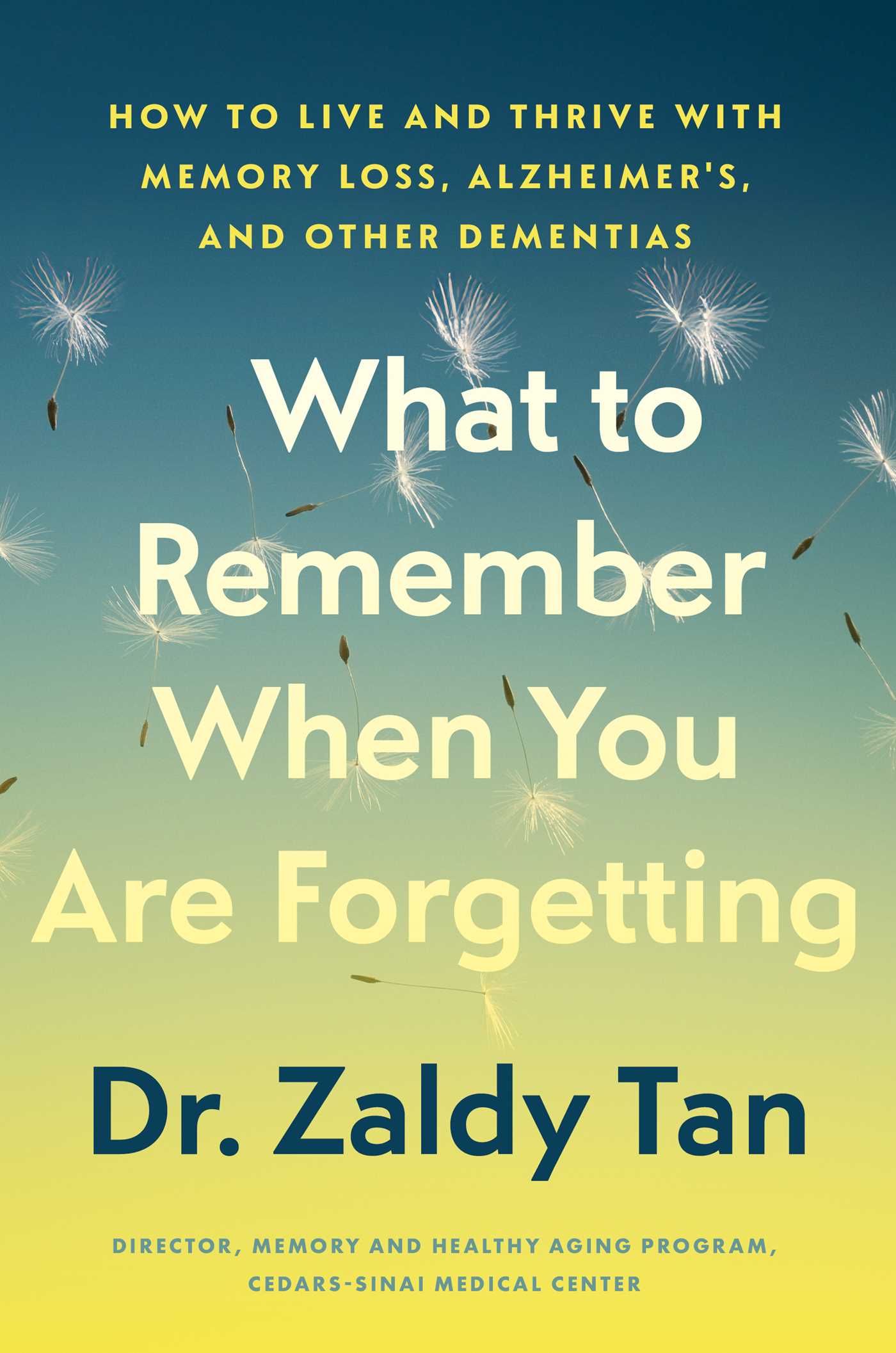
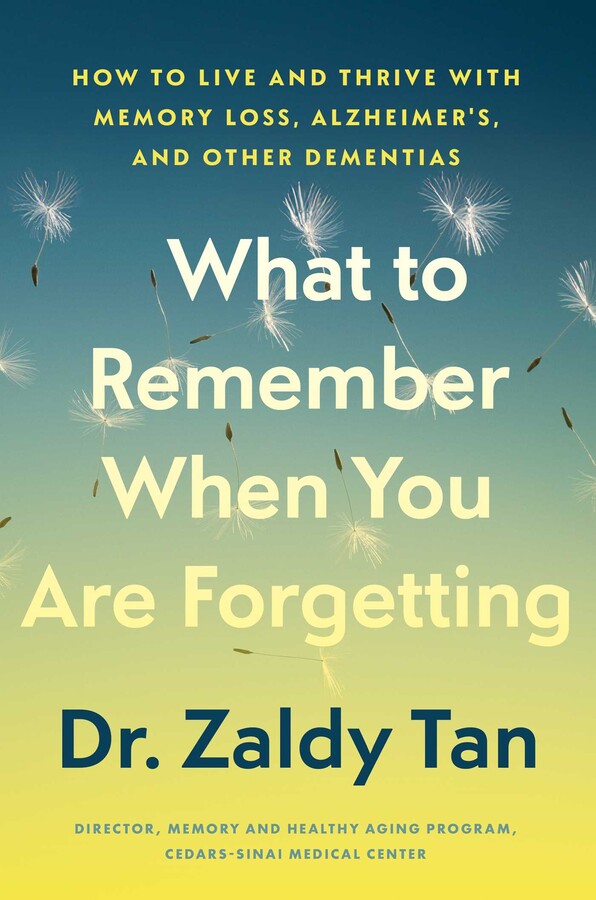
What to Remember When You Are Forgetting
How to Live and Thrive with Memory Loss, Alzheimer's, and Other Dementias
By Zaldy Tan
LIST PRICE $30.00
PRICE MAY VARY BY RETAILER
Free shipping when you spend $40. Terms apply.
Buy from Other Retailers
Table of Contents
About the Book
Media darling and director of Memory and Healthy Aging at Cedars-Sinai Medical Center, Dr. Zaldy Tan’s What to Remember When You Are Forgetting shares the definitive guide to thriving with dementia for the recently diagnosed and their caregivers.
What if a dementia diagnosis could be an invitation to live? What if the first phase of the disease could be a catalyst to embrace a long-forgotten dream? Or to finally resolve a festering family conflict? Or to make new friends and create new, cherished memories?
Renowned memory and Alzheimer’s disease specialist, researcher, educator, and author Dr. Zaldy Tan, the Harvard-trained director of the Cedars-Sinai Memory and Healthy Aging Program, shares the definitive guide to thriving with dementia.
On these pages, you’ll meet patients like Angela, who had worked as a singer in a Hollywood lounge before her children were born and dreamed of stardom. Instead, Angela put her dreams aside to raise her family. But after her diagnosis of early-onset dementia, instead of shutting down or continuing to prioritize others over herself, Angela embraced her career anew and traveled the country performing with a local singing group. You’ll also meet Marcel, who considered Alzheimer’s as a wake-up call to recalibrate his life priorities, and Mary-Louise, who didn’t have family nearby to rely on but found an advocate in a new friend she met in a writing group.
With an incredibly thorough and deeply comforting approach, Dr. Tan tackles everything from how to have a conversation with a person experiencing early memory loss, to how to prepare for an initial assessment for Alzheimer’s, and what accommodations and interventions are needed for every stage and type of dementia. He delves into the surprisingly hopeful research on new treatment and caregiving resources everyone should know, and reveals how other families and remarkable individuals he’s treated over the years have handled both difficult challenges and incredible triumphs after diagnosis.
What if a dementia diagnosis could be an invitation to live? What if the first phase of the disease could be a catalyst to embrace a long-forgotten dream? Or to finally resolve a festering family conflict? Or to make new friends and create new, cherished memories?
Renowned memory and Alzheimer’s disease specialist, researcher, educator, and author Dr. Zaldy Tan, the Harvard-trained director of the Cedars-Sinai Memory and Healthy Aging Program, shares the definitive guide to thriving with dementia.
On these pages, you’ll meet patients like Angela, who had worked as a singer in a Hollywood lounge before her children were born and dreamed of stardom. Instead, Angela put her dreams aside to raise her family. But after her diagnosis of early-onset dementia, instead of shutting down or continuing to prioritize others over herself, Angela embraced her career anew and traveled the country performing with a local singing group. You’ll also meet Marcel, who considered Alzheimer’s as a wake-up call to recalibrate his life priorities, and Mary-Louise, who didn’t have family nearby to rely on but found an advocate in a new friend she met in a writing group.
With an incredibly thorough and deeply comforting approach, Dr. Tan tackles everything from how to have a conversation with a person experiencing early memory loss, to how to prepare for an initial assessment for Alzheimer’s, and what accommodations and interventions are needed for every stage and type of dementia. He delves into the surprisingly hopeful research on new treatment and caregiving resources everyone should know, and reveals how other families and remarkable individuals he’s treated over the years have handled both difficult challenges and incredible triumphs after diagnosis.
Excerpt
Chapter 1: Is It Dementia or Alzheimer’s? CHAPTER 1 Is It Dementia or Alzheimer’s?
What’s a good memory worth? It’s being able to remember that unforgettable first encounter with someone special. Your child’s first words and steps. A loved one’s last words before passing. These priceless moments are memory’s greatest gifts, but they’re not its only purpose. It also keeps us safe and efficient: Swerving just in time to avoid the pothole that wrecked your car last week. Those precious minutes you save not having to search for your phone. Avoiding another trip to the grocery store on a stormy night to pick up that item you forgot.
Beyond the mundane task of recalling a grocery list, our memory makes up the essence of who and what we are—the basis of our identity, the defender of our convictions, the keeper of our dreams. Our memory enables us to find our way through the maze of the city. To recognize a friend’s face in a crowded room. Propel our minds to a cherished past upon hearing the first notes of a song. This is why when our memory starts to falter, we become fearful of losing our identity and our lived experiences.
The word dementia has its origins from the Latin word demens, which means “loss of mind.” This unfortunate term and the stigma that it carries have caused some people who start losing their memory to feel a sense of shame and dread. But a decline in one’s memory ability is certainly not tantamount to losing the entirety of one’s mind. Beyond memory, the mind is a symphony of other cognitive abilities—attention, impulse control, planning and sequencing, short-term recall, and procedural skills. In fact, many who have dementia can navigate the world with imperfect memories—living, loving, and thriving for many years even in the face of neurological adversities.
In this book you will find answers to questions you may have about memory loss and what to expect when someone gets diagnosed with Alzheimer’s disease or another form of dementia. But first, let’s start with the basics: How do you know if forgetfulness is just a sign of normal aging, or if it is the first sign of Alzheimer’s?
Anxious Andy and Forgetful Susie
Andy stared at the ceiling unable to sleep for the second night in a row. The summer night had been balmy, but it wasn’t the heat that kept him up. Lying next to him, Susie was snoring softly, oblivious to the distress that has haunted her husband of four decades. In his mind, Andy replayed Thanksgiving dinner, when Susie asked about her sister Julie’s new job for the third time that night. He convinced himself that it was just the wine talking and had even made a drinking gesture when Susie wasn’t looking that made Julie stifle a chuckle. Last summer, he’d been surprised when Susie started sticking copious Post-it notes around the house—“pick up milk,” “lock door,” “plumber coming tomorrow”—to remind herself of daily tasks. Andy would get mildly irritated whenever she asked him to help locate her cell phone, which she’d left in some odd places—in the pantry, under her pillow, in the car’s glove compartment.
Andy had initially blamed it on Susie’s chronic absentmindedness, then on her carelessness. But when she failed to show up at their daughter’s house to babysit earlier in the week and did not answer her phone, he was certain that something was amiss. Andy called the police, who found Susie in tears parked by the side of the road just a couple of blocks from their house. When she finally got home, Susie claimed that the main road to their daughter’s house had been closed and she had to take a detour, which got her hopelessly lost. She tried to call Andy but had forgotten to charge her phone the night before, so it ran out of battery. Andy accepted that the sum of the seemingly benign episodes that he had observed in the past year could no longer be ignored. But how was he going to talk to her about her memory? Doing so would almost certainly anger and scare his wife, who had cared for her mother during her last years with Alzheimer’s. “Just shoot me,” Susie had told him once. “If I ever got dementia, you know what to do.” Andy looked over at Susie sleeping and sighed.
The Earliest Signs of Memory Loss
Middle age—roughly the two decades between the ages of forty and sixty—is said to be the old age of youth and the youth of old age. For many it is the time of peaks of professional achievements and the troughs of personal losses. It is also the period in our lives when parts of our bodies that we never even gave a moment’s thought to start to demand our attention. For some the wake-up call comes subtly in the form of a sore back after a long drive or the weight gain of winter, and for others it’s the new diagnosis of an age-related condition like high blood pressure, diabetes, or cancer. But for many—especially those who take pride in their physical health, strong intellect, and optimal lifestyle—the call comes with that dreadful feeling of forgetting to show up for an important appointment, blanking on the name of a close friend, or losing a priceless heirloom.
When people with confirmed dementia are asked to describe the very first time their memory started failing, they will typically give a non-specific and vague response. The reason for this is that memory problems are like thieves in the night who steal one or two insignificant items each time. The loss is not detected for many months, or even years, until after a lot of things are gone. This is especially true for well-educated and smart people, just as a person who has many precious items in their home is likely to notice losses later than someone who only has a few. So how does one know whether forgetfulness is caused by aging or dementia?
Misplacing Things
Everyone has misplaced or lost something at some point in their lives—sunglasses, the TV remote control, pens, or even money. If our memories were infallible and limitless, this would not happen. But the fact is that our memories are imperfect and subject to distractions, which results in the common memory failure of misplacing or losing something. Misplacing an item may take the form of absentmindedly putting your phone atop the kitchen cabinet as you are replacing the lightbulb and then spending a frustratingly long time searching for it. More seriously, misplacing may also mean putting your keys in the refrigerator or your wallet in the pantry. While similar, the implications and causes of these two examples are not the same.
In the Misplaced Objects Tests, a person is asked by a psychologist to place pictures of ten common objects—keys, glasses, billfold, for example—on a board depicting the rooms of a house. The person is instructed that no more than two different items can be placed in a single room. After a few minutes, the person is then asked to recall the location of the articles. As one can surmise, people who have true memory loss will rapidly forget where they had “placed” the objects, while people with intact memories will remember the placement of most items accurately. Many people who claim they misplace items all the time in their real lives do well on this test. This is because in a controlled environment of a testing room, free of noise and distractions from our busy lives, our memory is optimized to be more efficient and effective.
The truth is, most people who occasionally misplace an item but eventually find it usually have normal memory. This is because our divided-attention abilities tend to decline with age, and when we’re distracted by extraneous things like the television or conversations, or even our own wandering and random thoughts, we’re more likely to forget where we set something down. However, when the episodes of misplacing or losing objects start becoming a regular occurrence, such as several times a week, it becomes more telling. Misplacing valuable items such as jewelry, money, credit cards, and keys is also more suggestive of a real memory issue than losing items of insignificant value like coins or glasses. Finally, when a person places objects in bizarre places, like loading their phone in the dishwasher, a memory evaluation may be prudent.
Repeating Questions or Conversations
One of the most common—and most distressing—symptoms of a failing memory is repeating conversations or asking the same questions that were recently answered to one’s satisfaction. This is typically caused by a failure of episodic memory, aggravated by a poor attention span and a tendency for easy distractibility. When a question is asked and an answer is provided, that new information must be stored in our memory banks and be available for retrieval when the same thought or query arises again. A person who has a memory or attention deficit will encounter difficulty absorbing and retaining new information, which then leads them to ask the same question minutes or hours later.
To be clear, forgetting details of a conversation or the response to a question happens even to people with normal memory. This is particularly common when the person asking the question or having the conversation is distracted, stressed, or anxious. A common situation nowadays is checking our smartphones while we’re having another conversation or processing our response to someone’s question. In these situations where we are “half listening” while multitasking, our mind is unable to form efficient memories and is more likely to fail. However, when a person regularly repeats questions or stories even when relaxed, paying attention, and not distracted, a primary failure of memory should be suspected.
Forgetting Names or Words
Word- and name-finding difficulty can be a sign of certain conditions that affect cognition, such as frontotemporal dementia, where language difficulty can precede even memory issues. In Alzheimer’s however, language difficulty tends to occur later in the course of the disease. That’s why pausing mid-sentence to recall a name or word may seem worrisome to some, but for most people it’s just a sign of normal cognitive aging. Delay in information retrieval, such as the name of an acquaintance, a movie, or a famous person, becomes more common as one gets older and does not necessarily signal an underlying memory problem.
When a person starts forgetting the names of people close to them, such as a good friend or one’s child, there may be a problem with language expression that requires a professional evaluation. Similarly, when a person starts forgetting common words such as watch or knife (in comparison to more formal and less frequently used words such as timepiece or cutlery), the suspicion of a cognitive problem becomes higher. Note that concerned loved ones tend to detect when someone forgets a word or name and will quickly say it to help them out. If you suspect a person is forgetting words or names, try not to correct or jump in too quickly. If they eventually remember on their own, it may just be a delay in information processing and not a true case of name or word forgetfulness.
In formal memory tests, a person will be shown a series of drawings or pictures of common objects or famous faces and will be asked to identify them. This task, known as confrontation naming, is important to establish if a person has true language and naming difficulty. If difficulty is present, further testing will be needed to determine if it is caused by a primary language problem (such as primary progressive aphasia), a silent stroke, Alzheimer’s disease, or another form of dementia. Note that testing should best be done in the person’s native or first spoken language to avoid a false positive test result due to a language barrier.
Getting Lost While Driving or Walking
Do you remember the last time you were on vacation and studied a map of an unfamiliar city to locate a landmark? Finding our way through the world around us requires good vision, spatial skills, and visual memory. Navigating unfamiliar streets to reach a new destination or locating the correct airport gate and the baggage claim carousel requires some effort even in people with normal cognition. A person with early memory change or dementia will frequently forget directions, miss landmarks, or misread street names, causing them to get lost and confused when trying to reach their destination. While losing one’s way to find a new place can happen to any person, getting lost in a place a person has been to many times before is not normal. This becomes more evident when someone visits an old friend’s or relative’s home or returns to a familiar place that they haven’t been to in a while.
Wandering and getting lost is a major risk for a person with memory loss. Families can spend hours looking for a missing loved one, and at times the police need to help locate a lost person. Typically, by the time this happens many other signs of a memory problem have been missed or dismissed by the person and their family.
Aging versus Dementia: The Gray Line
The hippocampus is a structure tucked in the underside of our brain, close to our ears. Shaped like a seahorse, this small part of the brain oversees one of its most important functions—short-term memory. Memory is typically divided into short-term (remembering things or events that happened a few seconds to a few days ago) and long-term (recalling things or events that happened several days to many years in the past). Without a functioning short-term memory there would be no long-term memory. The hippocampus acts like a sieve through which all memories must pass. Those that our minds deem to be important are then consolidated into long-term memories that remain accessible to us for months, years, or decades.
The aging brain experiences changes just like all the body’s organs. These changes include a decrease in its size and the accumulation of wear and tear—silent ministrokes and white matter changes—over time. These changes are easily seen in a brain MRI. Older brains look quite different from younger brains. Just as the brain’s structure changes with age, the mind’s efficiency and function also evolves with the passage of time. Large population-based experiments have shown that as we get older, our information-processing speed, working memory, short-term recall, and memory for space and directions all experience subtle declines.
These changes are detectable by formal neuropsychological testing but are not typically observable in the day-to-day life of an independent older person. Still, an eighty-year-old person cannot expect to be able to learn new things or recall an old memory as swiftly or effectively as they could when they were in their twenties. This is especially evident in times when one experiences stress, feels anxious, or is placed in an unfamiliar or uncomfortable situation.
The gray line that divides normal cognitive aging and early Alzheimer’s dementia can be faint, given that the sharpness or dullness of one’s memory in day-to-day life is subjective and can vary from time to time. The changes associated with early dementia may be so subtle that they can easily be missed or dismissed by family, friends, and the individual in question. Just as their minds start experiencing normal age-related changes, an older person with dementia will often experience more pronounced and more consequential changes in their thinking abilities. Not infrequently, these changes are blamed on aging, changes in sleep patterns, medications, life stressors, or other age-related factors.
There is a range of normal performance in each cognitive ability—including attention, memory, language, executive function. This range is primarily determined by a person’s age, gender, and educational attainment. During formal cognitive testing, a person with suspected dementia will be presented with a standardized test for each of these abilities. Their performance is then compared to a range of normal performance based on studies of large populations of similar age. To test language, for example, a person will be presented with pictures of animals and will be asked to name them—rhinoceros, hippopotamus, camel, kangaroo. If a person’s performance falls below these levels, the doctor will note the lower-than-expected score based on the person’s age, educational attainment, and other factors. Evaluating individual and composite scores in all cognitive abilities tested, along with studying the person’s patterns of forgetfulness and declining abilities, and their family’s history, can help arrive at a precise diagnosis of dementia.
Early Diagnosis of Memory Issues: Why Bother?
Visual, verbal, list, declarative, spatial, and procedural are memory types that can be affected by various factors, including vitamin deficiencies, mood or sleep disorders, and medication side effects. Though the causes may be different, the forgetfulness experienced is similar. Unfortunately, it’s still not possible to distinguish by symptom alone a potentially reversible cause of memory change from that caused by progressive neurological diseases that affect memory, like Alzheimer’s disease. But an early evaluation by a memory specialist can help identify benign causes of memory change that make early treatment possible. Take for example the deficiency of thiamine, vitamin B12, and folic acid. These vitamins and minerals are essential for the health of our brain and nerve cells. When levels of these become deficient due to insufficient dietary intakes or malabsorption of nutrients from our gut, we can become forgetful. In people who regularly consume alcohol in large amounts, the long-standing deficiency of these important nutrients can lead to irreversible memory loss. If the deficiency is caught early, the simple supplementation of these nutrients can reverse the forgetfulness.
Another example is normal pressure hydrocephalus or NPH for short. This neurological condition is caused by an overproduction of the fluid that naturally bathes, protects, and nourishes our brains. When there is too much of the cerebrospinal fluid, the brain tissue can get compressed and the cells within them can be damaged and die. If this is caught in the early stage, a device called a ventriculoperitoneal (VP) shunt drains the excess fluid from the brain and can reverse the memory loss. However, if NPH is not recognized till years later, the procedure will no longer be effective, and the condition becomes incurable.
Identifying and addressing reversible causes of memory loss, including depression, sleep apnea, and medication side effects, is the first step in helping a person experiencing forgetfulness. Should Alzheimer’s disease be the cause, identifying it early allows the administration of FDA-approved medications that can clear the toxic proteins that have accumulated in the brain and potentially slow down the progression of the memory loss. Whatever the cause, timely evaluation, diagnosis, and intervention are key.
Approaching the Forgetful: Proceed with Caution
We do not remember what we have forgotten. This statement rings very true for those experiencing the early stages of Alzheimer’s or another form of dementia. When a person repeats a story or calls a friend using the wrong name, they will only realize their error if somebody confronts them about it. Once reminded or corrected, they will either acknowledge the error, deny it, or dismiss it as a trivial lapse. In fact, their reaction when they realize or are reminded or confronted about a memory lapse determines how willing they will be to seek a memory evaluation from a health professional.
For many, the possibility of the existence of a memory problem elicits a fear of losing things that are important to them: their independence, their intellect, their job, their capacity to drive, and their ability to live alone. It is therefore no surprise that when confronted with a concern about their memory, many people will choose to deny it, trivialize it, or make up false excuses: I only remember things that are important to me. I never liked that person, so that’s probably why I forgot his name. I didn’t forget to show up for dinner; I just decided not to go. Reluctance to face the problem head on often results in the diagnosis being delayed until a disastrous event—a major car accident, home fire, or traumatic fall—occurs.
So what’s a good way to approach a person you suspect is becoming forgetful yet is in denial about it? First, ask yourself if you are the right person to initiate this conversation. Whether you consider yourself the person’s best friend, the favorite child, or a lifelong confidant, confronting someone with signs of a failing memory is a highly personal matter that is best done in private with a person who is trusted. It might be appropriate to ask other people—an adult child or a close friend—who interact with the person regularly whether they have noticed what you have. Perhaps they would be willing to join the conversation to make it less likely for the person to deny the existence of the problem. It may be prudent to write down and describe specific incidents of forgetting to demonstrate what observations have been most concerning to you. Make sure to use a tone that’s reassuring and supportive rather than accusatory. Finally, be sure to have the conversation when there is a clear plan as to where and how to seek a professional evaluation. Not having a clear plan could take away from your message’s urgency and leave them feeling overwhelmed or anxious about the future.
Choosing a Memory Doctor
Memory loss is a multifaceted condition that crosses several medical disciplines. Taking this into account, what’s the most appropriate type of medical professional that a person who is experiencing memory difficulties should seek consultation from? Well, it depends on a number of factors like age, symptoms, and what part of the country they live in. Whichever specialty of physician you choose, don’t wait: it can take six months to over a year to get an appointment with a competent memory doctor.
Primary Care Physician
Doctors who provide primary medical care to patients perform everything from health screenings to treatment of common medical ailments like high blood pressure, diabetes, and colds. These doctors are typically trained in internal medicine or family medicine, giving them a broad set of skills and knowledge to diagnose and treat many types of health conditions. Primary care physicians are also the type of doctors who are most available in smaller cities and rural areas where access to specialists may be somewhat limited. In general, a person who has a memory concern should start by speaking to their primary care physician about it. They will want to do a memory screen using standardized instruments such as the Montreal Cognitive Assessment (MoCA) or the Mini-Mental State Examination (MMSE). Based on a person’s performance in this assessment and the health practitioner’s level of suspicion of a true memory problem, a referral to a memory specialist may be the next step.
Memory Specialist: Geriatrician
Older people are more prone to certain age-related conditions like osteoporosis, arthritis, and dementia than younger people. Thus, people over the age of sixty-five who experience memory issues may be referred to a physician specializing in geriatric medicine. Geriatricians are skillful in the diagnosis and treatment of the most common types of dementias, such as Alzheimer’s disease and vascular dementia. They can also manage some of the common challenges associated with a dementia diagnosis, including gait instability and falls, behavioral changes, and delirium. The best geriatricians to see for a memory evaluation are those who have specialized training or interest in Alzheimer’s disease and other forms of dementia. Note, however, that geriatricians are in short supply in many areas of the country and some may not be taking on new patients.
Memory Specialist: Behavioral Neurologist
A neurologist is a physician who specializes in diseases that affect the brain and nervous system. Given that dementia affects the brain, neurologists can diagnose and treat conditions that affect the memory. However, not all neurologists have expertise in dementia, as some specialize in other neurological conditions such as Parkinson’s disease, multiple sclerosis, and stroke. A behavioral neurologist will be the best subspecialist in the field of neurology to evaluate a person with memory issues. This is especially true if the person is younger than sixty-five years old when the memory issues start and if there are signs of non-Alzheimer’s dementias such as Lewy body and frontotemporal dementias. Like geriatricians, behavioral neurologists are in short supply, and one may have to travel to a specialized memory center located in a major metropolitan city in order to see one.
Memory Specialist: Geriatric Psychiatrist
Psychiatrists treat depression, anxiety, schizophrenia, and other conditions that afflict the mind. These doctors tend to specialize in a specific area of psychiatry, like those who only see children or others who only see patients in a hospital. Geriatric psychiatrists have specialized training in age-related conditions such as late-life depression and dementia. Many geriatric psychiatrists perform comprehensive memory evaluations, but some only treat the behavioral and psychological symptoms of people already diagnosed with dementia. Make sure to inquire which aspect of the disease the health provider can manage before making an appointment.
The Intervention
Realizing he needed help, Andy arranged a dinner with their daughter, Kate, and Susie’s sister, Julie, after he confirmed that they too had noticed the changes in Susie’s memory. After a pleasant meal at their home, Andy invited the three women to the living room and started the conversation by stating how much they all loved Susie. He told his wife that in the past year he had noticed changes in her memory, using specific examples and citing incidents that caused him to worry. Susie attempted to brush off Andy’s concern, but their daughter, Kate, quickly supported Andy’s examples with her own observations. Julie was prepared with her examples too, having written down specific incidents of Susie’s memory gaps. But when Julie saw her sister’s eyes cast down to the floor, she knew it wasn’t necessary. Instead, Julie reminded Susie of the conversation they had when their mother’s memory began to falter, and how Susie had insisted that she get formally evaluated by a neurologist. Julie recalled the many wonderful trips and celebrations she and Susie had had with their mother since she received the diagnosis. Julie held Susie’s hand as Andy assured her that he would be with her every step of the way. Kate added that an early diagnosis and intervention is their best option. After a pause Susie nodded and conceded to an evaluation. Andy hugged his wife, who was tearful but seemed relieved to have her family’s support on the journey she must now take.
What’s a good memory worth? It’s being able to remember that unforgettable first encounter with someone special. Your child’s first words and steps. A loved one’s last words before passing. These priceless moments are memory’s greatest gifts, but they’re not its only purpose. It also keeps us safe and efficient: Swerving just in time to avoid the pothole that wrecked your car last week. Those precious minutes you save not having to search for your phone. Avoiding another trip to the grocery store on a stormy night to pick up that item you forgot.
Beyond the mundane task of recalling a grocery list, our memory makes up the essence of who and what we are—the basis of our identity, the defender of our convictions, the keeper of our dreams. Our memory enables us to find our way through the maze of the city. To recognize a friend’s face in a crowded room. Propel our minds to a cherished past upon hearing the first notes of a song. This is why when our memory starts to falter, we become fearful of losing our identity and our lived experiences.
The word dementia has its origins from the Latin word demens, which means “loss of mind.” This unfortunate term and the stigma that it carries have caused some people who start losing their memory to feel a sense of shame and dread. But a decline in one’s memory ability is certainly not tantamount to losing the entirety of one’s mind. Beyond memory, the mind is a symphony of other cognitive abilities—attention, impulse control, planning and sequencing, short-term recall, and procedural skills. In fact, many who have dementia can navigate the world with imperfect memories—living, loving, and thriving for many years even in the face of neurological adversities.
In this book you will find answers to questions you may have about memory loss and what to expect when someone gets diagnosed with Alzheimer’s disease or another form of dementia. But first, let’s start with the basics: How do you know if forgetfulness is just a sign of normal aging, or if it is the first sign of Alzheimer’s?
Anxious Andy and Forgetful Susie
Andy stared at the ceiling unable to sleep for the second night in a row. The summer night had been balmy, but it wasn’t the heat that kept him up. Lying next to him, Susie was snoring softly, oblivious to the distress that has haunted her husband of four decades. In his mind, Andy replayed Thanksgiving dinner, when Susie asked about her sister Julie’s new job for the third time that night. He convinced himself that it was just the wine talking and had even made a drinking gesture when Susie wasn’t looking that made Julie stifle a chuckle. Last summer, he’d been surprised when Susie started sticking copious Post-it notes around the house—“pick up milk,” “lock door,” “plumber coming tomorrow”—to remind herself of daily tasks. Andy would get mildly irritated whenever she asked him to help locate her cell phone, which she’d left in some odd places—in the pantry, under her pillow, in the car’s glove compartment.
Andy had initially blamed it on Susie’s chronic absentmindedness, then on her carelessness. But when she failed to show up at their daughter’s house to babysit earlier in the week and did not answer her phone, he was certain that something was amiss. Andy called the police, who found Susie in tears parked by the side of the road just a couple of blocks from their house. When she finally got home, Susie claimed that the main road to their daughter’s house had been closed and she had to take a detour, which got her hopelessly lost. She tried to call Andy but had forgotten to charge her phone the night before, so it ran out of battery. Andy accepted that the sum of the seemingly benign episodes that he had observed in the past year could no longer be ignored. But how was he going to talk to her about her memory? Doing so would almost certainly anger and scare his wife, who had cared for her mother during her last years with Alzheimer’s. “Just shoot me,” Susie had told him once. “If I ever got dementia, you know what to do.” Andy looked over at Susie sleeping and sighed.
The Earliest Signs of Memory Loss
Middle age—roughly the two decades between the ages of forty and sixty—is said to be the old age of youth and the youth of old age. For many it is the time of peaks of professional achievements and the troughs of personal losses. It is also the period in our lives when parts of our bodies that we never even gave a moment’s thought to start to demand our attention. For some the wake-up call comes subtly in the form of a sore back after a long drive or the weight gain of winter, and for others it’s the new diagnosis of an age-related condition like high blood pressure, diabetes, or cancer. But for many—especially those who take pride in their physical health, strong intellect, and optimal lifestyle—the call comes with that dreadful feeling of forgetting to show up for an important appointment, blanking on the name of a close friend, or losing a priceless heirloom.
When people with confirmed dementia are asked to describe the very first time their memory started failing, they will typically give a non-specific and vague response. The reason for this is that memory problems are like thieves in the night who steal one or two insignificant items each time. The loss is not detected for many months, or even years, until after a lot of things are gone. This is especially true for well-educated and smart people, just as a person who has many precious items in their home is likely to notice losses later than someone who only has a few. So how does one know whether forgetfulness is caused by aging or dementia?
Misplacing Things
Everyone has misplaced or lost something at some point in their lives—sunglasses, the TV remote control, pens, or even money. If our memories were infallible and limitless, this would not happen. But the fact is that our memories are imperfect and subject to distractions, which results in the common memory failure of misplacing or losing something. Misplacing an item may take the form of absentmindedly putting your phone atop the kitchen cabinet as you are replacing the lightbulb and then spending a frustratingly long time searching for it. More seriously, misplacing may also mean putting your keys in the refrigerator or your wallet in the pantry. While similar, the implications and causes of these two examples are not the same.
In the Misplaced Objects Tests, a person is asked by a psychologist to place pictures of ten common objects—keys, glasses, billfold, for example—on a board depicting the rooms of a house. The person is instructed that no more than two different items can be placed in a single room. After a few minutes, the person is then asked to recall the location of the articles. As one can surmise, people who have true memory loss will rapidly forget where they had “placed” the objects, while people with intact memories will remember the placement of most items accurately. Many people who claim they misplace items all the time in their real lives do well on this test. This is because in a controlled environment of a testing room, free of noise and distractions from our busy lives, our memory is optimized to be more efficient and effective.
The truth is, most people who occasionally misplace an item but eventually find it usually have normal memory. This is because our divided-attention abilities tend to decline with age, and when we’re distracted by extraneous things like the television or conversations, or even our own wandering and random thoughts, we’re more likely to forget where we set something down. However, when the episodes of misplacing or losing objects start becoming a regular occurrence, such as several times a week, it becomes more telling. Misplacing valuable items such as jewelry, money, credit cards, and keys is also more suggestive of a real memory issue than losing items of insignificant value like coins or glasses. Finally, when a person places objects in bizarre places, like loading their phone in the dishwasher, a memory evaluation may be prudent.
Repeating Questions or Conversations
One of the most common—and most distressing—symptoms of a failing memory is repeating conversations or asking the same questions that were recently answered to one’s satisfaction. This is typically caused by a failure of episodic memory, aggravated by a poor attention span and a tendency for easy distractibility. When a question is asked and an answer is provided, that new information must be stored in our memory banks and be available for retrieval when the same thought or query arises again. A person who has a memory or attention deficit will encounter difficulty absorbing and retaining new information, which then leads them to ask the same question minutes or hours later.
To be clear, forgetting details of a conversation or the response to a question happens even to people with normal memory. This is particularly common when the person asking the question or having the conversation is distracted, stressed, or anxious. A common situation nowadays is checking our smartphones while we’re having another conversation or processing our response to someone’s question. In these situations where we are “half listening” while multitasking, our mind is unable to form efficient memories and is more likely to fail. However, when a person regularly repeats questions or stories even when relaxed, paying attention, and not distracted, a primary failure of memory should be suspected.
Forgetting Names or Words
Word- and name-finding difficulty can be a sign of certain conditions that affect cognition, such as frontotemporal dementia, where language difficulty can precede even memory issues. In Alzheimer’s however, language difficulty tends to occur later in the course of the disease. That’s why pausing mid-sentence to recall a name or word may seem worrisome to some, but for most people it’s just a sign of normal cognitive aging. Delay in information retrieval, such as the name of an acquaintance, a movie, or a famous person, becomes more common as one gets older and does not necessarily signal an underlying memory problem.
When a person starts forgetting the names of people close to them, such as a good friend or one’s child, there may be a problem with language expression that requires a professional evaluation. Similarly, when a person starts forgetting common words such as watch or knife (in comparison to more formal and less frequently used words such as timepiece or cutlery), the suspicion of a cognitive problem becomes higher. Note that concerned loved ones tend to detect when someone forgets a word or name and will quickly say it to help them out. If you suspect a person is forgetting words or names, try not to correct or jump in too quickly. If they eventually remember on their own, it may just be a delay in information processing and not a true case of name or word forgetfulness.
In formal memory tests, a person will be shown a series of drawings or pictures of common objects or famous faces and will be asked to identify them. This task, known as confrontation naming, is important to establish if a person has true language and naming difficulty. If difficulty is present, further testing will be needed to determine if it is caused by a primary language problem (such as primary progressive aphasia), a silent stroke, Alzheimer’s disease, or another form of dementia. Note that testing should best be done in the person’s native or first spoken language to avoid a false positive test result due to a language barrier.
Getting Lost While Driving or Walking
Do you remember the last time you were on vacation and studied a map of an unfamiliar city to locate a landmark? Finding our way through the world around us requires good vision, spatial skills, and visual memory. Navigating unfamiliar streets to reach a new destination or locating the correct airport gate and the baggage claim carousel requires some effort even in people with normal cognition. A person with early memory change or dementia will frequently forget directions, miss landmarks, or misread street names, causing them to get lost and confused when trying to reach their destination. While losing one’s way to find a new place can happen to any person, getting lost in a place a person has been to many times before is not normal. This becomes more evident when someone visits an old friend’s or relative’s home or returns to a familiar place that they haven’t been to in a while.
Wandering and getting lost is a major risk for a person with memory loss. Families can spend hours looking for a missing loved one, and at times the police need to help locate a lost person. Typically, by the time this happens many other signs of a memory problem have been missed or dismissed by the person and their family.
Aging versus Dementia: The Gray Line
The hippocampus is a structure tucked in the underside of our brain, close to our ears. Shaped like a seahorse, this small part of the brain oversees one of its most important functions—short-term memory. Memory is typically divided into short-term (remembering things or events that happened a few seconds to a few days ago) and long-term (recalling things or events that happened several days to many years in the past). Without a functioning short-term memory there would be no long-term memory. The hippocampus acts like a sieve through which all memories must pass. Those that our minds deem to be important are then consolidated into long-term memories that remain accessible to us for months, years, or decades.
The aging brain experiences changes just like all the body’s organs. These changes include a decrease in its size and the accumulation of wear and tear—silent ministrokes and white matter changes—over time. These changes are easily seen in a brain MRI. Older brains look quite different from younger brains. Just as the brain’s structure changes with age, the mind’s efficiency and function also evolves with the passage of time. Large population-based experiments have shown that as we get older, our information-processing speed, working memory, short-term recall, and memory for space and directions all experience subtle declines.
These changes are detectable by formal neuropsychological testing but are not typically observable in the day-to-day life of an independent older person. Still, an eighty-year-old person cannot expect to be able to learn new things or recall an old memory as swiftly or effectively as they could when they were in their twenties. This is especially evident in times when one experiences stress, feels anxious, or is placed in an unfamiliar or uncomfortable situation.
The gray line that divides normal cognitive aging and early Alzheimer’s dementia can be faint, given that the sharpness or dullness of one’s memory in day-to-day life is subjective and can vary from time to time. The changes associated with early dementia may be so subtle that they can easily be missed or dismissed by family, friends, and the individual in question. Just as their minds start experiencing normal age-related changes, an older person with dementia will often experience more pronounced and more consequential changes in their thinking abilities. Not infrequently, these changes are blamed on aging, changes in sleep patterns, medications, life stressors, or other age-related factors.
There is a range of normal performance in each cognitive ability—including attention, memory, language, executive function. This range is primarily determined by a person’s age, gender, and educational attainment. During formal cognitive testing, a person with suspected dementia will be presented with a standardized test for each of these abilities. Their performance is then compared to a range of normal performance based on studies of large populations of similar age. To test language, for example, a person will be presented with pictures of animals and will be asked to name them—rhinoceros, hippopotamus, camel, kangaroo. If a person’s performance falls below these levels, the doctor will note the lower-than-expected score based on the person’s age, educational attainment, and other factors. Evaluating individual and composite scores in all cognitive abilities tested, along with studying the person’s patterns of forgetfulness and declining abilities, and their family’s history, can help arrive at a precise diagnosis of dementia.
Early Diagnosis of Memory Issues: Why Bother?
Visual, verbal, list, declarative, spatial, and procedural are memory types that can be affected by various factors, including vitamin deficiencies, mood or sleep disorders, and medication side effects. Though the causes may be different, the forgetfulness experienced is similar. Unfortunately, it’s still not possible to distinguish by symptom alone a potentially reversible cause of memory change from that caused by progressive neurological diseases that affect memory, like Alzheimer’s disease. But an early evaluation by a memory specialist can help identify benign causes of memory change that make early treatment possible. Take for example the deficiency of thiamine, vitamin B12, and folic acid. These vitamins and minerals are essential for the health of our brain and nerve cells. When levels of these become deficient due to insufficient dietary intakes or malabsorption of nutrients from our gut, we can become forgetful. In people who regularly consume alcohol in large amounts, the long-standing deficiency of these important nutrients can lead to irreversible memory loss. If the deficiency is caught early, the simple supplementation of these nutrients can reverse the forgetfulness.
Another example is normal pressure hydrocephalus or NPH for short. This neurological condition is caused by an overproduction of the fluid that naturally bathes, protects, and nourishes our brains. When there is too much of the cerebrospinal fluid, the brain tissue can get compressed and the cells within them can be damaged and die. If this is caught in the early stage, a device called a ventriculoperitoneal (VP) shunt drains the excess fluid from the brain and can reverse the memory loss. However, if NPH is not recognized till years later, the procedure will no longer be effective, and the condition becomes incurable.
Identifying and addressing reversible causes of memory loss, including depression, sleep apnea, and medication side effects, is the first step in helping a person experiencing forgetfulness. Should Alzheimer’s disease be the cause, identifying it early allows the administration of FDA-approved medications that can clear the toxic proteins that have accumulated in the brain and potentially slow down the progression of the memory loss. Whatever the cause, timely evaluation, diagnosis, and intervention are key.
Approaching the Forgetful: Proceed with Caution
We do not remember what we have forgotten. This statement rings very true for those experiencing the early stages of Alzheimer’s or another form of dementia. When a person repeats a story or calls a friend using the wrong name, they will only realize their error if somebody confronts them about it. Once reminded or corrected, they will either acknowledge the error, deny it, or dismiss it as a trivial lapse. In fact, their reaction when they realize or are reminded or confronted about a memory lapse determines how willing they will be to seek a memory evaluation from a health professional.
For many, the possibility of the existence of a memory problem elicits a fear of losing things that are important to them: their independence, their intellect, their job, their capacity to drive, and their ability to live alone. It is therefore no surprise that when confronted with a concern about their memory, many people will choose to deny it, trivialize it, or make up false excuses: I only remember things that are important to me. I never liked that person, so that’s probably why I forgot his name. I didn’t forget to show up for dinner; I just decided not to go. Reluctance to face the problem head on often results in the diagnosis being delayed until a disastrous event—a major car accident, home fire, or traumatic fall—occurs.
So what’s a good way to approach a person you suspect is becoming forgetful yet is in denial about it? First, ask yourself if you are the right person to initiate this conversation. Whether you consider yourself the person’s best friend, the favorite child, or a lifelong confidant, confronting someone with signs of a failing memory is a highly personal matter that is best done in private with a person who is trusted. It might be appropriate to ask other people—an adult child or a close friend—who interact with the person regularly whether they have noticed what you have. Perhaps they would be willing to join the conversation to make it less likely for the person to deny the existence of the problem. It may be prudent to write down and describe specific incidents of forgetting to demonstrate what observations have been most concerning to you. Make sure to use a tone that’s reassuring and supportive rather than accusatory. Finally, be sure to have the conversation when there is a clear plan as to where and how to seek a professional evaluation. Not having a clear plan could take away from your message’s urgency and leave them feeling overwhelmed or anxious about the future.
Choosing a Memory Doctor
Memory loss is a multifaceted condition that crosses several medical disciplines. Taking this into account, what’s the most appropriate type of medical professional that a person who is experiencing memory difficulties should seek consultation from? Well, it depends on a number of factors like age, symptoms, and what part of the country they live in. Whichever specialty of physician you choose, don’t wait: it can take six months to over a year to get an appointment with a competent memory doctor.
Primary Care Physician
Doctors who provide primary medical care to patients perform everything from health screenings to treatment of common medical ailments like high blood pressure, diabetes, and colds. These doctors are typically trained in internal medicine or family medicine, giving them a broad set of skills and knowledge to diagnose and treat many types of health conditions. Primary care physicians are also the type of doctors who are most available in smaller cities and rural areas where access to specialists may be somewhat limited. In general, a person who has a memory concern should start by speaking to their primary care physician about it. They will want to do a memory screen using standardized instruments such as the Montreal Cognitive Assessment (MoCA) or the Mini-Mental State Examination (MMSE). Based on a person’s performance in this assessment and the health practitioner’s level of suspicion of a true memory problem, a referral to a memory specialist may be the next step.
Memory Specialist: Geriatrician
Older people are more prone to certain age-related conditions like osteoporosis, arthritis, and dementia than younger people. Thus, people over the age of sixty-five who experience memory issues may be referred to a physician specializing in geriatric medicine. Geriatricians are skillful in the diagnosis and treatment of the most common types of dementias, such as Alzheimer’s disease and vascular dementia. They can also manage some of the common challenges associated with a dementia diagnosis, including gait instability and falls, behavioral changes, and delirium. The best geriatricians to see for a memory evaluation are those who have specialized training or interest in Alzheimer’s disease and other forms of dementia. Note, however, that geriatricians are in short supply in many areas of the country and some may not be taking on new patients.
Memory Specialist: Behavioral Neurologist
A neurologist is a physician who specializes in diseases that affect the brain and nervous system. Given that dementia affects the brain, neurologists can diagnose and treat conditions that affect the memory. However, not all neurologists have expertise in dementia, as some specialize in other neurological conditions such as Parkinson’s disease, multiple sclerosis, and stroke. A behavioral neurologist will be the best subspecialist in the field of neurology to evaluate a person with memory issues. This is especially true if the person is younger than sixty-five years old when the memory issues start and if there are signs of non-Alzheimer’s dementias such as Lewy body and frontotemporal dementias. Like geriatricians, behavioral neurologists are in short supply, and one may have to travel to a specialized memory center located in a major metropolitan city in order to see one.
Memory Specialist: Geriatric Psychiatrist
Psychiatrists treat depression, anxiety, schizophrenia, and other conditions that afflict the mind. These doctors tend to specialize in a specific area of psychiatry, like those who only see children or others who only see patients in a hospital. Geriatric psychiatrists have specialized training in age-related conditions such as late-life depression and dementia. Many geriatric psychiatrists perform comprehensive memory evaluations, but some only treat the behavioral and psychological symptoms of people already diagnosed with dementia. Make sure to inquire which aspect of the disease the health provider can manage before making an appointment.
The Intervention
Realizing he needed help, Andy arranged a dinner with their daughter, Kate, and Susie’s sister, Julie, after he confirmed that they too had noticed the changes in Susie’s memory. After a pleasant meal at their home, Andy invited the three women to the living room and started the conversation by stating how much they all loved Susie. He told his wife that in the past year he had noticed changes in her memory, using specific examples and citing incidents that caused him to worry. Susie attempted to brush off Andy’s concern, but their daughter, Kate, quickly supported Andy’s examples with her own observations. Julie was prepared with her examples too, having written down specific incidents of Susie’s memory gaps. But when Julie saw her sister’s eyes cast down to the floor, she knew it wasn’t necessary. Instead, Julie reminded Susie of the conversation they had when their mother’s memory began to falter, and how Susie had insisted that she get formally evaluated by a neurologist. Julie recalled the many wonderful trips and celebrations she and Susie had had with their mother since she received the diagnosis. Julie held Susie’s hand as Andy assured her that he would be with her every step of the way. Kate added that an early diagnosis and intervention is their best option. After a pause Susie nodded and conceded to an evaluation. Andy hugged his wife, who was tearful but seemed relieved to have her family’s support on the journey she must now take.
About the Author
Photograph by Michal Cialowicz
Dr. Zaldy Tan is the Director of the Memory & Healthy Aging Program at Cedars-Sinai Medical Center, ranked by the US News and World Report in 2024 as the best hospital on the US West Coast and among the top hospitals in the country. He holds the Carmen & Louis Warschaw Endowed Chair in Neurology and is a professor at the David Geffen School of Medicine, University of California Los Angeles. Dr. Tan was the founding director of the Memory Disorders Clinic at Harvard Medical School/Beth Israel Deaconess Medical Center. Dr. Tan performs aging and dementia research that has been covered by The New York Times, Time, CNN, The Wall Street Journal, NPR, The Washington Post, The Chicago Tribute, Reuters, ABC News, and NBC News. He regularly speaks at major national and international conferences and is the author of Age-Proof Your Mind and What to Remember When You Are Forgetting.
Product Details
- Publisher: Atria Books (September 15, 2026)
- Length: 336 pages
- ISBN13: 9781668093771
Browse Related Books
Raves and Reviews
"This thorough, practical examination of how to deal with memory loss and dementia for both patients and their support network is recommended for public libraries as well as academic libraries that collect aging-related materials."
– Library Journal
"Tan (Age-Proof Your Mind), director of the Memory and Healthy Aging Program at Cedars-Sinai Medical Center, delivers a practical and empowering road map for people with dementia and their family members... Wise and empathetic, this is essential for anyone impacted by memory loss."
– Publishers Weekly
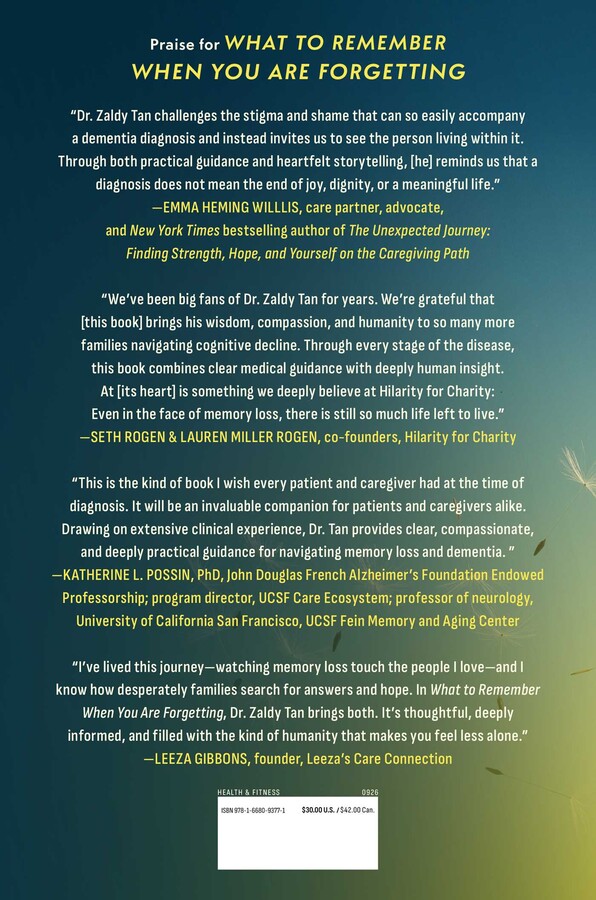
“I’ve lived this journey—watching memory loss touch the people I love—and I know how desperately families search for answers and hope. In What to Remember When You Are Forgetting, Dr. Zaldy Tanbrings both. It’s thoughtful, deeply informed, and filled with the kind of humanity that makes you feel less alone.”
– Leeza Gibbons, Founder, Leeza's Care Connection
“This is the kind of book I wish every patient and caregiver had at the time of diagnosis. Drawing on extensive clinical experience, Dr. Tan provides clear, compassionate, and deeply practical guidance for navigating memory loss and dementia. In my work as a researcher studying how to support families living with dementia, I see how essential it is to have information that is not only accurate, but truly usable in daily life—and this book delivers exactly that. It will be an invaluable companion for patients and caregivers alike.”
– Katherine L. Possin, PhD, John Douglas French Alzheimer's Foundation Endowed Professorship, Program Director, UCSF Care Ecosystem, Professor of Neurology, University of California San Franci
“We’ve been big fans of Dr. Zaldy Tan for years, and we’re grateful that What to Remember When You Are Forgetting brings his wisdom, compassion, and humanity to so many more families navigating cognitive decline. Through every stage of the disease, this book combines clear medical guidance with deeply human insight. At the heart of this book is something we deeply believe at Hilarity for Charity: even in the face of memory loss, there is still so much life left to live. What to Remember When You Are Forgetting is a reminder that while this journey may be difficult, no one has to face it alone.”
– Seth Rogen & Lauren Miller Rogen, Co-Founders, Hilarity for Charity
“Dr. Zaldy Tan challenges the stigma and shame that can so easily accompany a dementia diagnosis and instead invites us to see the person still very much living within it. Through both practical guidance and heartfelt storytelling, Dr. Tan reminds us that a diagnosis does not mean the end of joy, dignity, or a meaningful life.”
– Emma Heming Willis, care partner, advocate, and New York Times bestselling author of The Unexpected Journey: Finding Strength, Hope, and Yourself on the Caregiving Path
“In a well-written, well-organized, and sympathetic voice, Dr. Zaldy Tan’s What to Remember When You are Forgetting walks readers through the evaluation and care of people with Alzheimer disease and other dementias as if we were his patient.”
– Peter V. Rabins, MD, MPH, Professor Emeritus in Psychiatry and Medicine John Hopkins School of Medicine, and author of The 36-Hour Day
Resources and Downloads
High Resolution Images
-
Book Cover Image (jpg): What to Remember When You Are Forgetting
Hardcover 9781668093771
-
Author Photo (jpg): Zaldy Tan Photograph by Michal Cialowicz(0.1 MB)
Any use of an author photo must include its respective photo credit