
Plus, receive recommendations and exclusive offers on all of your favorite books and authors from Simon & Schuster.
Table of Contents
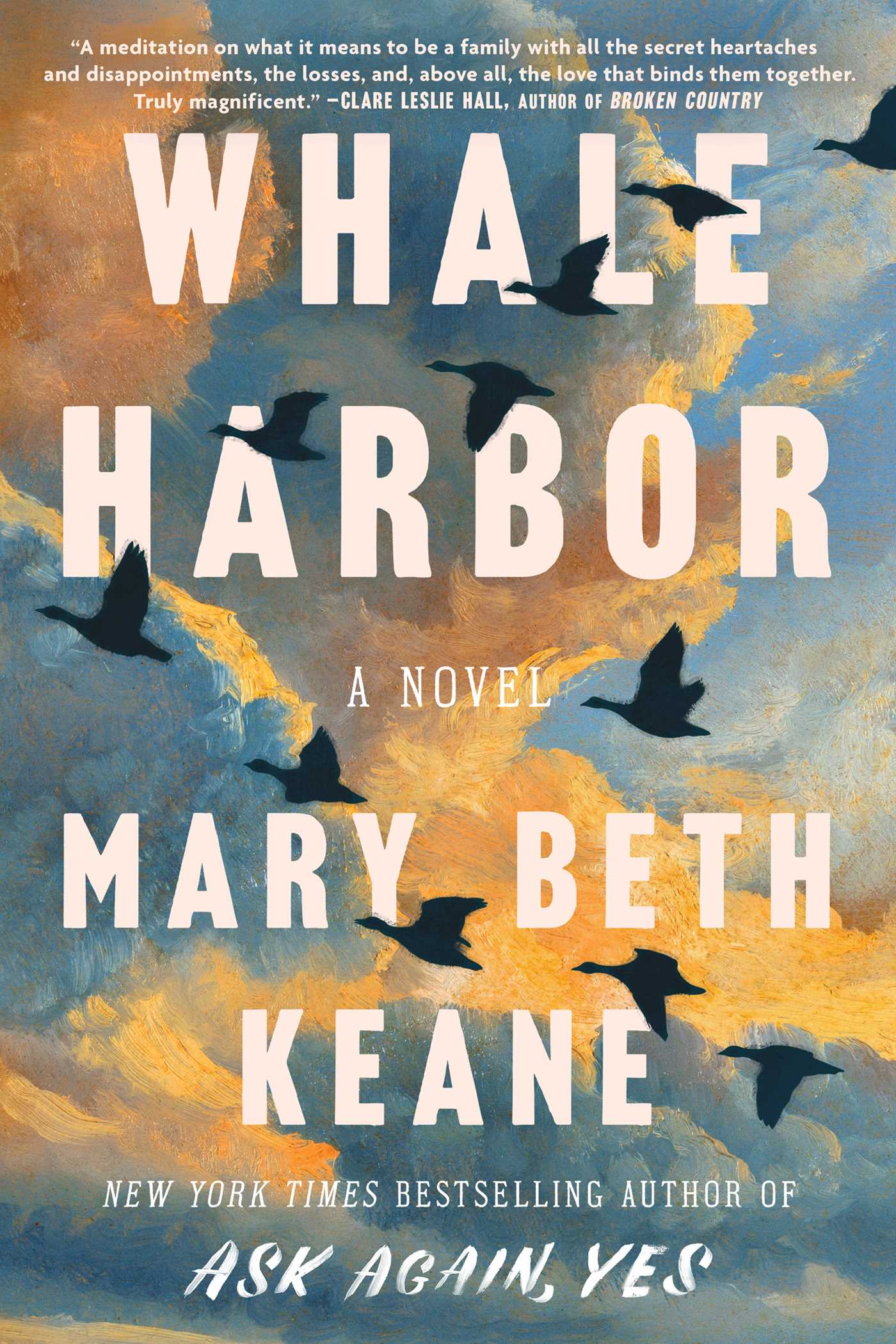
About the Book
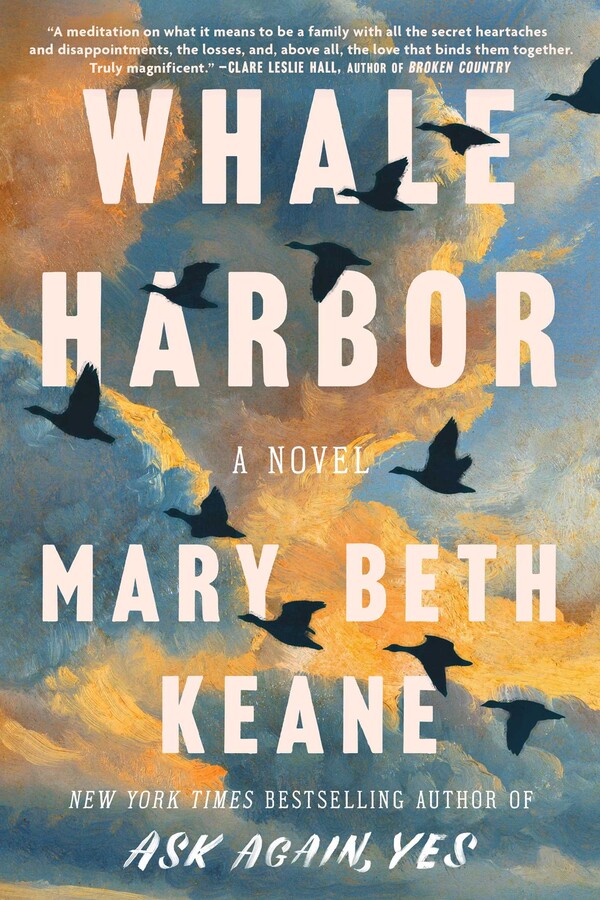
From New York Times bestselling author of the “magnificent” (Fresh Air), “propulsive” (People), and “profound” (Vogue) Ask Again, Yes, a sweeping multigenerational saga inspired by the author's own family history, following eleven brothers as they are set on different paths between Ireland, England, Montana, and New York.
1960s, Ireland. In the wake of tragedy, a father makes choices for his eleven grieving sons. The older brothers will emigrate to England for work, while the younger ones will stay behind. The second eldest, Macdara, is offered a job on a Montana cattle ranch and sets off. His spirited younger brother Rian begs to come along and Mac promises to bring Rian to America as soon as he’s old enough. But then one day Mac gets a call that Rian has gone missing. His disappearance will haunt Mac and his family across decades.
Spanning lifetimes and continents, Whale Harbor is “tender, immersive, and exquisitely written” (Florence Knapp, author of The Names) with award-winning author Mary Beth Keane’s signature wit, eloquence, and attention to the emotional resonance of family, brotherhood, and the choices that echo across generations.
1960s, Ireland. In the wake of tragedy, a father makes choices for his eleven grieving sons. The older brothers will emigrate to England for work, while the younger ones will stay behind. The second eldest, Macdara, is offered a job on a Montana cattle ranch and sets off. His spirited younger brother Rian begs to come along and Mac promises to bring Rian to America as soon as he’s old enough. But then one day Mac gets a call that Rian has gone missing. His disappearance will haunt Mac and his family across decades.
Spanning lifetimes and continents, Whale Harbor is “tender, immersive, and exquisitely written” (Florence Knapp, author of The Names) with award-winning author Mary Beth Keane’s signature wit, eloquence, and attention to the emotional resonance of family, brotherhood, and the choices that echo across generations.
Appearances
NOV 9
7:00PM
Barnes & Noble: Eastchester-Scarsdale
680 White Plains Rd
Scarsdale, NY 10583
NOV 10
7:00PM
The Wilton Library
137 Old Ridgefield Rd
Wilton, CT 06897
NOV 11
6:30PM
An Unlikely Story
111 South St
Plainville, MA 02762
NOV 12
7:00PM
In Person
In partnership with Maine Writers' and Publishers' Alliance. In conversation with Keziah Weir.
Learn MoreMaine Irish Heritage Center
34 Gray St
Portland, ME 04102
NOV 18
6:30PM
Parnassus Books
3900 Hillsboro Pike
#14
Nashville, TN 37215
NOV 19
7:00PM
Blue Willow Bookshop
14532 Memorial Dr
Houston, TX 77079
Excerpt
Chapter One ONE
“Macdara,” came a whisper, hot breath near Mac’s ear. “Dúisigh!”
It was morning. A bell in the distance. Mac’s body felt stiff, and he could tell by the light that it was later than he usually slept. Rian’s spot under the blanket was cold so he must have been up for a while. Prowling, no doubt. Exploring. Blackguarding, if such a thing was possible on the top of a mountain. If anyone could find trouble, Rian could. Down at the shore the tide would have pushed great knots of seaweed onto the beach and Mac and Rian’s brothers would have been sent to collect it. It was mid-May already. Fair Day was coming up soon and if Mac could figure a way there he’d have a great time, but his bicycle had been broken for weeks.
“Say it in English,” Mac mumbled to his younger brother. He didn’t want to move just yet—he needed a moment—but in those seconds he could feel the heat of Rian’s breath near his face again.
“Dúisigh,” Rian repeated as he shook his brother’s shoulder. It was just the two of them up in the booley house where their mother had slept during summers when she was a girl, back when cattle were driven into the mountains for the seasonal burst of grass. The booley had been neglected for a generation because no one kept more than a few head of cattle anymore, at least not in the Cuan where they were locked between mountains and sea and the only crop that appeared from the soil in abundance were stones. But as a young girl, their mother had stayed up in the booley for a few weeks each summer along with her mother, and her aunts, and all the other womenfolk in other booleys scattered over the mountains because the men couldn’t leave the sea. The small shelter had a packed dirt floor and a ring of stones marking the place to make a fire. The walls were just stands of carefully stacked bog oak built against one of the boulders that made up the landscape of wider Connemara and that Teacher said were all put there by a glacier, somehow. Outside, a battered ash tree gave some protection from the wind.
Rian gave up on Mac and stepped outside. Mac could hear him scrambling in the brush.
“Tar anseo!” he called eventually.
“English!” Mac called back.
RIAN WAS A TERRIBLE STUDENT, and English was his worst subject. It was puzzling to their mother because Rian was bright and tended to understand things quite quickly once they were explained to him. It was only that he couldn’t sit still. Last month, after a message sent home went unanswered (because Rian had crumpled the note and tossed it into the sea), Teacher walked all the way through the small village of Cuan an Mhíl Mhóir—everyone called it “the Cuan”—and up the narrow lane to let Cathal and Mary Joyce know that of the several Joyces he’d taught in his ten years as schoolteacher, this one was the worst. Rian talked nonstop, distracting the other children. He fought. He bragged. He was an all-around contrary child. The latest offense was that he refused to speak English when Teacher asked him to, and now the other children were copying him. Teacher stood by their fire while Rian and several of his brothers hid in the back room, mimicking the posh way Teacher had one foot turned out and one hand on his hip. They wondered if that’s how everyone who grew up in the city stood. With Rian leading them, they lifted their noses and repeated to one another every word Teacher said, except in whispers. Rian’s mother excused herself for a moment and chased the boys out the back door with the end of her broom.
Teacher reminded Cathal and Mary of what everyone in the village already knew, which was that if any local child wanted to get work one day he’d have to leave the area, and for that he’d have to know English. At age nine Rian should be in at least second class, if not third, but he was still in senior infants. And he wasn’t even ashamed!
“I don’t know much English myself,” Mary said.
“Why would you?” Cathal said, his tone telling her that if that was an apology there was no need.
“In school he has to at least try,” Teacher said. “I’m not saying he shouldn’t hold on to his own language. I’m only saying he needs to know English as well.”
Cathal crossed his arms and frowned, but Mary promised she’d sort him. She’d put his brother Macdara on the case.
“Now there’s a student,” Teacher said. “I’d have Macdara in school still, if it were up to me. I’d have him—”
“Ach,” Cathal said, waving the words away. He searched his pocket for his pipe.
“Now be telling us about your own little ones,” Mary said as she handed him a generous glass of store whiskey. To Cathal she handed a much smaller glass, and when he looked up at her with a complaint in his eyes she looked right back. She asked after Teacher’s new baby, his wife. Now that his official business was over with, he settled in and gave her all the news.
“And you, Mary?” he asked, somewhat awkwardly. “You’re feeling well? Do you think you’ll get a girl this time?”
Mary laughed. “Another boy. I know it.”
“Eleven sons,” Teacher said. “And King David couldn’t even get one. Do you ever wonder that God hasn’t given you a girl?”
“Oh, believe me,” she said. “I’ll raise the question when I meet him.”
But it was true what Teacher said about Rian needing English, needing to at least try, so after he left, Mary kept her eye on the road to catch Mac before he came inside. When she saw him approaching from the direction of the village she pulled on her shawl and walked out to meet him.
He was lost in his thoughts, she could see. But he was still boyish enough to blush when he was happy and when he saw her—unexpected at that time of day that she wouldn’t be standing at the stove—his cheeks flushed. She fell into step beside him and noted how tall he was now, how she needed a step and a half to match each of his.
“Are you missing your brother very much, Macdara?” she asked, surprising herself. It wasn’t what she’d intended to talk to him about, but it struck her as she saw him walking alone that a year earlier he would have been walking with Sean. The pair of them went everywhere together, but now Sean was in England, working. Mac, who was second eldest, would be next to go.
“I do miss him I suppose,” he said. “Don’t tell him.”
“Never.”
She described the teacher’s visit and asked him to practice English with Rian. “Lead him to it bit by bit,” she said. Of all his brothers, Rian admired Mac most. If there was anyone who could talk this stubborn child into learning, it was him.
“It’s only that he feels afraid,” she said.
“Afraid of what?” Mac asked.
“Of the feeling it gives him, learning English, knowing that the reason he has to learn is because he’ll leave one day.”
“Did he say that?”
“No,” Mary said. “But that’s what it is.”
Once again Mac marveled that his mother had a deep understanding of every possible feeling, even when the person himself might not know he was feeling it.
NOW, STANDING OUTSIDE THE BOOLEY house, Rian tilted his head back, cupped his hand around his mouth, and shouted “DÚISIGH!” as loud as he could. His voice echoed across the valley and rolled toward the sea.
“Did you hear that, Mac?” Rian asked, delighted. He shouted again, and again his voice echoed. “Do you think they heard that all the way at the schoolhouse?”
“Paul Evans is an ugly gowl!” Rian shouted before Mac could answer, and the words rolled down the mountain. Paul Evans was Teacher’s name. “Paul Evans wears his mammy’s knickers!”
Mac couldn’t help it, he laughed. Rian must have heard because he poked his head in and asked, “Are you up at last? Come see something.”
THERE WAS A STORY THEIR mother often told: Once, when the women were up on the mountain, an old hag appeared at the door. She was looking for food and shelter from the rain. It was strange that an old woman who was unknown to any of them should happen to be passing so far up the mountain, and they only had enough for themselves, but they gave her the best spot by the fire to dry off and something to keep her going on her journey. They were worried about her, being a great age and the mountain a rough place, but as soon as she ate and rested, she transformed into a hare and ran away.
“Is that true?” Mac asked very seriously the first time Mary told him the story. “Did you see her turn into a hare?” He was small at the time, alone at the killing stump with her as she held the tail of a cadóg in her left hand and with her right ran her knife down its back to remove the scales. It was a rare thing to be alone with his mother and that may be why for his whole life he remembered it. There was no doubt a baby in the cradle or in her belly or both but he couldn’t remember which one.
It happened before she was born, Mary admitted, but it was always talked about, and everyone knew that what might not seem possible in the village was certainly possible on the mountain. She wouldn’t dare doubt it and she warned Mac that he shouldn’t, either—only the most arrogant sort of person presumes to know the secrets nature holds. What would have become of them, she often wondered, had the women not given the crone a bit of bread, had they not given her a place by the fire. Mac shivered and wondered the same.
Mac and Rian were up the mountain this morning because Rian had gotten into a fight with a classmate, who, like Rian, was nine years old, and also from a family of brothers—except the Sullivans were all boxers. Mac asked what they fought over, but Rian wouldn’t say. Rian once fought over a spoon. Over whether it was raining outside or only spitting. Over whether a mule was smarter than a donkey. Someone once found a broken chain on the road, good for absolutely nothing, but Rian bloodied another boy’s nose to have it. This particular fight, Mac learned eventually, was about skimming stones. A group of them had been hanging around by the water when skimming stones turned into a contest and Rian claimed he got twelve hops. One of the Sullivan boys said it was only nine. They agreed to each have another go, the boy with the most hops would be the winner, and Rian lost. Then it turned into a fistfight, like all contests did, and Rian lost that, too, as anyone who took in the sizes of the two boys would have predicted. But at the moment of peak humiliation, with every student looking on, Rian said at least he had the courage to spend a night up the mountain by himself. It was rumored that this Sullivan boy still slept at the foot of his mammy’s bed.
“Why?” Macdara asked. “Of all things.”
“Because,” Rian said.
“Because why?”
“Because!” Rian said, growing red in the face with frustration. “Because I don’t have to be bigger than him to sleep up in the booley. I only have to be braver.”
Macdara had spent the day on the island helping his grandfather repair a collapsed well—the kind of careful, peaceful work he liked—and when the tide was finally low enough for him to walk across the rocks to the mainland and then home, he recognized Rian’s crouched form in the distance, waiting for him. He saw the bruise blooming on the side of his brother’s head, and knew he was about to be pestered for something. Rian begged Macdara to come with him up the mountain overnight, and to not tell a living soul.
“Barry will go,” Mac said once he’d heard it all. There were plenty of other brothers to choose from. Barry was fourteen. Macdara was gone sixteen, so this seemed below him. “Or Fearghal. Or both of them.” Fearghal was a year younger than Barry.
“They said they won’t.”
“Thomas then. There’ll be the pair of you in it.” Thomas was only six but seemed older because he was so serious. He had flame-red hair, redder than anyone else’s in the family, the reddest their mother claimed she’d ever seen, and people called him Thomas the Red. In the old days, their mother told them, people thought it was bad luck to see a redhead first thing in the morning, and if Thomas had lived in those days they’d be turning their backs to him as he walked to school.
“He said he’d be too scared,” Rian said to Mac. “There’s síóga up there and everyone knows it.”
Mac looked down at his brother. Vivid yellow furze lined the road on both sides, making a bright, beautiful tunnel leading home.
“You didn’t ask them. None of them.”
“They’ll tell everyone they were up there! I’m supposed to be going alone to prove I’m not scared.”
“But you are scared. You go looking for trouble, I swear.”
“I lost the fight! What could I do?”
Mac looked up at the fog-shrouded mountain and shivered. He wished Sean was still home. He wished he could ask his friend Martin to come along, but Martin was gone too. Mac thought they had a whole year more to discuss plans, but Martin’s brother PJ had come home from America for a visit, and next thing Martin was packed off to Montana with him when he left. The Lees lived up the road from the Joyces and no one from either family ever passed by the other’s house without stopping in with news.
“Macdara,” Rian’s small face twisted with distress. “Please.”
THEY GOT A BIT OF precious attention from their mother when they told her the plan. They didn’t need permission, exactly—their whereabouts had been their own business since the day they could be trusted to wander out of sight of the cottage and find their way back—but she’d worry if they were missing at night, especially with their father not at home. Two weeks earlier, she’d given birth to a new son, and as Rian explained to her that they were spending the night on the mountain, Mac noticed that she was swollen, exhausted. A moment later, when Rian scampered off to gather a few provisions and the baby began to stir, she said to Macdara, “You’re a good boy.” She reached for his dirty hand and brought it to her cheek. She pressed it there for a moment and then let go.
FINALLY, MAC KICKED OFF THE blanket and got up. He stepped outside. There were a dozen black-faced ewes milling around the booley, red marks at their shoulders. The day was blue but had a skinning wind. Rian was gesturing wildly for Mac to hurry, to come look at something. Ignoring him, Mac looked down at the valley below, the route they’d climbed the previous afternoon, and saw that the houses of their small village looked flat and insignificant, like there was no way they could hold all the people, and gossip, and worries that made up their days. He’d been up here many times before, and had looked down at the very same scene, but this time something about seeing home from so far above made his heart squeeze. Everything that was broken and weather-beaten and threadbare up close was mended from such a height, and he felt certain if he stood there long enough he might eventually glimpse himself making his way down the muck-drowned lane. Then he lifted his gaze just slightly and saw so much farther—the mountains, the water studded with small islands. It was astonishing, how beautiful it all was.
Mac looked out to the island where their grandfather lived and where their mother had grown up. It was called Illeaneeragh, but they only ever called it “the island.” Two small hops away from that one was Crow Island, where their father kept his still. No one lived on Crow Island.
“My god, would you ever hurry?” Rian said.
Their father had been mostly on Crow Island since the new baby arrived. After the last big batch of poitín, Macdara had helped him plug and sink the jugs in the bog. A few weeks later Cathal asked him along again to see how it was aging. By the light of the moon Cathal reached under the bog in exactly the right place and raised up the keg just enough to clear the water. He pulled the plug and took a long draft of it through the reed he’d plucked on their way. He offered the reed to Mac, and Mac took a sip, but he could barely even swallow.
Cathal slapped his thighs as he laughed at Mac, who was coughing and trying to rid the taste from his mouth.
By his eleventh child, and his eleventh time pulling this disappearing act, no one took much notice of Cathal’s routine. It was just part of a new baby arriving. He left the island to deliver the post, and that’s when he might pop out of a field near home to say hello to one of his sons or suddenly appear alongside them as they walked to school or Mass or wherever they might be headed. He appeared from behind the grocery one recent afternoon, his wild shock of hair even wilder from the elements. They often spotted him in the distance on his bicycle, his basket heaped to the brim with post and packages, and it took Mac until very recently to understand there were also poitín bottles clinking in the basket under the letters, and Cathal was delivering these as well. He’d take the paper money he got for the poitín and put it in the tin box he kept under the bed he shared with Mary. That’s the box he always went to when he gave something to the women who helped whenever a new baby was born. It was the box he went to when the family had balances to settle up in the Cuan. A new baby was always a time for fresh starts.
At home, Mac slept in the loft with the other oldests: Barry, Fearghal, Noel, and now that Sean was in England, Coleman, who’d been promoted. The next four, called collectively “the babies”—Rian, Thomas, Eamon, and Seamus—slept in the room below. Their parents had their own room and that’s where the new baby slept. Once the baby got too big for his cradle he’d move to the baby room and someone from the baby room would get moved up to the loft and someone from the loft—Mac—would have to go somewhere else.
But where? Sean was working at a railyard in Manchester and living in a rooming house with a dozen other Irishmen from his age all the way up to great ages like fifty and sixty. If he missed home he didn’t mention it in his letters. He only told them things that happened, and nothing about what he thought about those things. All emigrants seemed a little different when they returned home, but the main thing Mac noticed was when those who went to England came back they were never better for it. For all the good news reported in letters—the reliable money and the shops full of anything a person could want—none of it was evident. Billy Coyle was great fun before he left for London but when he came back for a visit he was so quiet. His body had become thin and he hunched his shoulders as if to make himself invisible. Maybe Sean had gotten like that and they didn’t even know.
Mac would prefer to stay in Ireland. But in photographs he’d seen in newspapers, the other parts of Ireland looked different. The people looked different, too: their clothes, their hair. In Connemara, it was said that nourishing grass was so scarce the sheep had to wear eyeglasses to find it. Children didn’t usually wear shoes until they went to school. It was almost impossible to make cattle fat enough for market, and the fisheries were all owned by people who lived in different parts. That Cathal had a government job as postman and that the job allowed him an easy way to sell his other wares on the side was what had kept them there, tied to the Cuan, for longer than so many other families. The problem was that the area only needed one postman, and the man had eleven sons.
Years ago, when their neighbor PJ Lee—Martin’s older brother—struck out for Montana instead of the usual places in America, Teacher took the opportunity to tell them about all the Irish in a Montana city called Butte, nicknamed the richest hill on Earth because of all the copper there. Someone joked in that case Butte would be a great place for the Joyces because they needed copper to make the worm for their still. Teacher ignored the comment but Mac felt his face get hot. A book went around, opened to a photograph of a famous graveyard in Butte, which had a lot of the same names etched onto the stones as they had right there in the Cuan. When Mac held the book he glanced quickly at the names but mostly he looked at the sky, at what little he could glimpse in the backdrop, to decide if it would feel terribly foreign to PJ when he got there.
When Mac arrived home from school that day and reported everything Teacher said about Montana, Cathal said that man knew so much he bet he could milk a duck. When Mac told him that there were a lot of Irish in Butte, Cathal said: “There’s Irish in Dublin, too, but you wouldn’t want to be there.”
AFTER BEING IN AMERICA FOR seven years, PJ returned for a visit, just before the eleventh Joyce baby was due. Macdara and Martin had a plan to take the bus to Galway to see the races, but that would have to be put off because PJ was coming home with an American wife who wasn’t from one of the cities on America’s East Coast—breeds they were familiar with—but a girl whose people had been in Montana for generations. Mac barely remembered PJ, but he was curious. He wrote to Sean to tell him and wished his brother were home to hear some of the stories. More than any other return Mac could remember, everyone in the Cuan wanted to catch a glimpse of PJ and hear about his life. Mary prayed that the baby stay put so she wouldn’t miss any of the fun.
PJ had left Ireland in a ship but to return home in 1963 he flew in an airplane to Shannon Airport. Instead of cramming themselves into the damp Lee cottage, he and his wife stayed in a hotel near Oughterard, a good forty minutes’ drive. They rented a car to get back and forth, and for two weeks Mac watched for that blue Ford and wondered what it would be like to sit inside. PJ let the small children pack in and then he drove them all around as they begged for a chance to turn the steering wheel, but Mac felt too old for that. From the garden, he could spot the car’s roof gliding along the narrow lanes up to the Lees’ place, no doubt the beautiful, gleaming paint etched with scratches from branches. PJ wore cowboy boots and had a belt with a huge silver-plated buckle. All the kids lined up to punch him in the buckle, to see how solid it was, and after each child took a shot PJ beat his chest and shouted “Who’s next?”
The Lees hosted a get-together for the neighbors near the end of PJ’s visit. Despite being heavily pregnant, Mary went up early to help Honnie and her girls. When Mac, Barry, and Fearghal walked up, the first person they encountered was their own three-year-old brother, Eamon, who’d climbed up on a stone wall, gotten his jumper snagged, and couldn’t jump back down.
Inside, chairs were for the elders. Most people leaned against walls or sat on the floor with their knees pulled to their chests. Mac felt like he hadn’t seen Martin in weeks and he had things to tell him. When he glanced around to find his friend he saw that Martin and his younger brother, Peter, were wearing startling white shoes with rubber bottoms. The Lee girls were wearing headbands and sleeveless blouses and when Patricia passed by she smelled of washing soap. Mac could see the gooseflesh on her arms.
“Hello, Patricia,” Mac said and blushed.
“Hello, yourself,” Patricia said.
“I like your—” But he didn’t know the word so he tapped his own head in the place where her headband sat.
“Jenny brought it for me from America,” she said, and then it was her turn to blush. Jenny was the tall woman standing in the corner with the bright blond hair. People said she was the image of Princess Grace and Mac had to admit he could see it.
“What kind of shoes is Martin wearing?”
“They’re tennis shoes.”
“Tennis shoes! They’re very…”
“White,” Patricia said and laughed.
Once, when they were thirteen, Mac asked Patricia if he could kiss her. Martin had robbed one beer and one cigarette for each of them from the stash his father kept in the turf shed. Patricia declined and it had been slightly awkward between them ever since.
Mary and Honnie were cutting cakes and arranging the slices onto plates. Cathal leaned against a wall, twisting his eyebrow and arguing with a neighbor about the pope’s recent announcement of dismay about the world scarcity of priests. Radio Éireann was playing a sponsored program about horses and once in a while the program would pause to play a ballad. The Lee girls made tea for the women and the men sipped whiskey from mugs while PJ’s book of photographs got passed around. There were a few pictures of Chicago, but mostly they were of horses, the frames of buildings and their progress as they were completed, mountains capped with snow. Quite a few were of a long, green car called a Chevrolet Impala, which PJ said he loved almost as much as he loved his girls.
“He has girls?” Mac whispered to Martin. He couldn’t help it. He looked over at Jenny. She didn’t seem like a woman who’d had babies yet.
“Two. My American nieces,” Martin said. “They stayed back in Montana with Jenny’s father.”
Kevin Lee, PJ and Martin’s father, described Montana with complete authority, even though he’d never left the west of Ireland. He told the crowded room that PJ had built a house for himself and his family in a place called Larkspur, named for the flower that was abundant there. Kevin told his neighbors that the sky was much higher in Larkspur. The animals were bigger, too, even the trout fished out of the lakes. Jenny, who was born and raised there, only looked amused.
“Tell them, PJ. Tell them about the seventy-pound trout. Tell them how big.”
The group looked skeptical when Kevin held his hands more than four feet apart to show them. They were interested, but they weren’t stupid. Trout didn’t come that size. PJ spotted Rian and told him to stand up.
“About that size,” PJ said. He told them about being in the audience when John F. Kennedy spoke to a group in Yellowstone County about conserving the land and the forests.
“Did you speak to him?” Mac asked.
PJ laughed. “There were seventeen thousand people in the audience. And I was in the back.”
“He’s coming here, you know,” someone said. “In June. I read it in the paper.”
“To Dublin you mean,” Cathal said.
“To Galway,” the man said. “He’ll speak in Eyre Square.”
Mac glanced over to catch Martin’s eye. That would be an adventure.
When Mac had eaten his cake and seen all the photos, when he figured Patricia would probably not agree to a kiss that night, either, he got up to leave. He had a small job lined up for the morning, odds and ends for the blacksmith, and he wanted to get to bed. He’d give Martin all the news once PJ went back to America and things went back to normal. When he heard steps behind him he assumed it was Rian following, but then he heard his name being called. He turned and found Martin, with Rian right behind him.
“Mac,” Martin said. “I meant to stop down earlier today but my mother needed help with the party.” He glanced down at Rian, who was waiting to hear what he’d say next.
“Did you have cake?” Martin asked Rian. Meaning: be gone with you.
“I did,” Rian said, not moving.
“He’s fine,” Mac said.
“All right. Well, I wanted to tell you—and it all came together very quickly, my head is spinning, actually—but I wanted to make sure you—”
“You’re leaving,” Mac said, and he immediately felt foolish for not predicting it.
“I’m leaving,” Martin confirmed.
“When?”
“I’ll go back with them. It’s a long way and it makes the most sense. PJ bought my ticket yesterday.”
“Huh,” Mac said. He had not been prepared for this and yet he wasn’t surprised. They’d all known from the moment of their births that they’d likely have to leave one day. He just didn’t expect that day to be tomorrow, or for his best friend to go all the way to Montana.
“You know,” Martin said. “PJ says there’s lots of work there. His father-in-law is sponsoring me and I’m sure he’d sponsor you, too, if you wanted to come. I know Sean is in England, but if you had a mind to try Americ—”
“I’m not going anywhere yet. Plenty of time for all that.”
“Is there? Will you not have to go when the new baby comes?”
Mac felt Rian studying him carefully as he said he didn’t know. No one had said anything yet and he was getting work most days. He’d been thinking lately maybe he wouldn’t have to go.
“And it’s all definite?” Mac asked. “It’s very fast, isn’t it?”
“Oh, I’d say they had a notion before PJ even got here. I’m the last to know.”
Mac frowned. That didn’t seem right.
“I don’t mind, honestly. If I have to go somewhere, I’d like to try Montana. I’ll visit though, Mac. You know I will.”
After seven whole years like your brother, Mac thought. The visit after that would be in twelve, then twenty. And when he visited, Mac would likely be in England. Martin said he was sorry to dump the news on him and then go but he had to be getting back. He said he’d stop round the following day to say goodbye.
“We should go too!” Rian said, as soon as Martin was out of earshot. “Did you hear what his father said about the trout?”
“You’re nine years old. You think you’d be good at sawing down trees thicker than a man lying down?”
“I’d be absolutely ferocious at it,” Rian said. “How is it spelled? Larkspur? I’m putting it in my book.”
That night after everyone had finally drifted off to sleep, even their mother, who sometimes sat up in the chair when the birth of a new baby was near, Rian crept to the foot of the sleeping loft’s ladder and whispered, “Macdara, are you awake? Are there grizzly bears in Montana, Macdara?”
But the others roared at him to be quiet, that he’d break their heads with his constant chatter, he should be sent to live with the tinkers, Jesus Christ, even they wouldn’t take him, between the fighting and the constant jabbering, he should simply be abandoned somewhere far away.
In response, Rian let crack an enormous fart and, laughing, dove into his bed.
THE NEXT MORNING, MARTIN CAME down the lane to say goodbye as promised, and Mary shook holy water on his head. The baby was coming; Mac could tell by the way she walked the floors early that morning and took deep breaths.
“Come on,” Martin said, wanting to get beyond so many sets of eyes to say his goodbyes. “Let’s walk into the Cuan.”
Mac hesitated. “My mother—”
“Go,” Mary said. Cathal was pulling at his eyebrow and asking if she was sure he shouldn’t go for the women yet.
Once they got past the holly bush where they normally met up, Martin shoved a handful of coins into Mac’s pocket. “Everyone’s giving me money so take some for the dances.”
“Would you stop,” Mac said, pushing them back at Martin. One coin fell onto the road and Rian, who’d followed Mac, pounced on it. The two older boys laughed, realizing they were acting like old men they’d seen.
“Who will I go to the dances with now?”
“You can’t be serious. You have no shortage of brothers.”
Mac laughed because it was true, but something would change. First Sean, now Martin. Barry and Fearghal were fun but they were only fourteen and thirteen. Since Martin told him, Mac felt a question on the tip of his tongue, but he just didn’t know how to ask it. He wanted to ask his friend if he had any fear of going, fear that he’d not come back, fear that he’d hate it or the people would be strange or anything at all. Fear of being lonely. But Martin would only say no.
“It got put together so fast. I didn’t even have time to get a few odds and ends to bring with me.”
“The shops in America will have everything you need.”
“They will, I suppose,” Martin said. The Sullivans’ dog barked at them and followed them for a while. Martin threw a stone at him to go home and Mac told him not to do that, he might hit the poor creature; the Sullivans weren’t good to it so it was probably only looking for company. Mac stopped to scratch its ears and Martin remembered when they were much smaller boys, how they saved a different one of the Sullivans’ dogs from falling through the blowhole near the cliff. Mac would miss his friend. They walked along the lane as far as the football pitch, looped around the farthest goalpost, and then headed home.
“Martin!” Rian said, catching up to them. “I just thought of something. Now that you’re out of the picture, does that mean Margaret Carroll is available?”
Martin and Margaret had a little romance going, the extent of which was Martin going over to her house one day to look at the record player her brother had sent their parents from England.
“Excuse me?” Martin asked.
“I mean, can I make my move once you’re gone.”
“She’s fifteen.”
“I know that.”
Martin looked at Mac and shook his head.
“Best of luck to you,” he said to Rian.
THE BABY STARTED COMING AROUND the time PJ’s rented car wound its way down the coast road toward the airport, Martin’s pale face in the back window where he was watching the Cuan retreat. Still, Mary said it wasn’t quite time to call the women. Finally, very early the following morning, Cathal climbed the ladder to the loft, grabbed hold of Mac’s foot to wake him, and told him to run to Honnie’s. The women arrived just after dawn and told the Joyce boys to be gone, to come back in a few hours. Honnie, sad after having said goodbye to two of her sons the day before, brought a sack of buns and told them to eat them down on the beach. It was cold at that hour, frost on the grass, so Mac made up a game where they hopped around like pats of butter on a hot skillet, and after a while his brothers’ cheeks flushed and they grew warm. Seamus, only two, was allowed to stay up in the house with the women, but Eamon cried that he was still cold so Mac took his little feet and put them under his own jumper to warm them against his belly. He taught him how to withdraw his arms from his sleeves and tuck his hands into the pocket of his underarms, where it was always warm. When the morning reached a respectable time to go calling, the older boys ran off to find their friends. Coleman, Rian, Thomas, and Eamon stayed with Macdara.
Just when Mac was thinking he’d have to get them more to eat, they heard a whistle.
“Hup!” Cathal shouted when he got within sight. “A brother!”
His younger brothers around him, Mac observed their father standing on the crest of seagrass, the light behind him, and wondered if he’d wait an hour until the baby settled or if he’d go right away. He’d no doubt taken a mug of whiskey out by the turf shed to wait for news. Last time, when Seamus was born, he’d made Mary a cup of tea, and then while the women were still fussing over her and the baby, he’d slipped out.
As they made their way home, Eamon on Mac’s back, Rian wondered aloud if their mother knew how to get the other kind of baby because who ever heard of eleven boys and no girls? When he looked up at Macdara and saw that he’d made his brother laugh, his face shone with joy.
“Go,” Mac said, setting Eamon down. “All of you. Run. Go on to meet him.” Someone would have to walk out to the island to tell their grandfather.
NOW, THE BABY WAS TWO weeks old and Cathal was still sleeping on Crow Island. From the door of the booley the slope of the mountain became abruptly steeper on the ascent, but it was possible to climb higher by grabbing hold of stones lodged into the earth, or roots that served as steps. “Would you ever hurry,” Rian said, as Mac finally joined him.
“All right now, look,” Rian said, pointing to something in the distance, something on the beach that was a short walk from their cottage and where they gathered seaweed most mornings. From where they stood, the beach was just a slash of yellow breaking up the greens and blues. But there was also a pale obstruction Mac couldn’t identify.
“What’s what?” Rian asked.
Mac squinted and saw there was movement—people gathering. Father Damien’s somber black Oldsmobile looked like a toy as it turned onto the coast road. What was it that was drawing them together? Grayish in color, maybe an enormous boulder had rolled down from somewhere above. He’d never heard of anything like that happening before. Maybe it was one of the Russian trawlers the men were always discussing when they stood outside Gafney’s smoking cigarettes. Sighted off Inisheer and bearing the red flags of the Soviet Union, the Soviets had four trawlers in the area, and two factory ships. The men said their plan was to take all the Irish fish back with them to their country. Their fisheries needed protection, the men said, something must be done.
Maybe one of the trawlers had made a mistake and turned into their small harbor and got stuck.
“Could it be a whale?” Rian asked.
Mac looked again at the outlines of the object, and the stir it caused.
“You know what, Rian? I believe it could.”
Rian, who always had a current of energy running through him, went totally still, serious down to his bones. “I knew it,” he said in a whisper. It was the biggest thing to happen in his life so far.
“If it’s a whale, there’s something wrong with it,” Macdara said.
“We have to see,” Rian said and scrambled back down to the booley to gather their few things.
“Slow down,” Mac shouted after him, but Rian was already running full speed down the mountain, blanket dragging along the ground, his dove-white ankles flashing in the sun.
“Macdara,” came a whisper, hot breath near Mac’s ear. “Dúisigh!”
It was morning. A bell in the distance. Mac’s body felt stiff, and he could tell by the light that it was later than he usually slept. Rian’s spot under the blanket was cold so he must have been up for a while. Prowling, no doubt. Exploring. Blackguarding, if such a thing was possible on the top of a mountain. If anyone could find trouble, Rian could. Down at the shore the tide would have pushed great knots of seaweed onto the beach and Mac and Rian’s brothers would have been sent to collect it. It was mid-May already. Fair Day was coming up soon and if Mac could figure a way there he’d have a great time, but his bicycle had been broken for weeks.
“Say it in English,” Mac mumbled to his younger brother. He didn’t want to move just yet—he needed a moment—but in those seconds he could feel the heat of Rian’s breath near his face again.
“Dúisigh,” Rian repeated as he shook his brother’s shoulder. It was just the two of them up in the booley house where their mother had slept during summers when she was a girl, back when cattle were driven into the mountains for the seasonal burst of grass. The booley had been neglected for a generation because no one kept more than a few head of cattle anymore, at least not in the Cuan where they were locked between mountains and sea and the only crop that appeared from the soil in abundance were stones. But as a young girl, their mother had stayed up in the booley for a few weeks each summer along with her mother, and her aunts, and all the other womenfolk in other booleys scattered over the mountains because the men couldn’t leave the sea. The small shelter had a packed dirt floor and a ring of stones marking the place to make a fire. The walls were just stands of carefully stacked bog oak built against one of the boulders that made up the landscape of wider Connemara and that Teacher said were all put there by a glacier, somehow. Outside, a battered ash tree gave some protection from the wind.
Rian gave up on Mac and stepped outside. Mac could hear him scrambling in the brush.
“Tar anseo!” he called eventually.
“English!” Mac called back.
RIAN WAS A TERRIBLE STUDENT, and English was his worst subject. It was puzzling to their mother because Rian was bright and tended to understand things quite quickly once they were explained to him. It was only that he couldn’t sit still. Last month, after a message sent home went unanswered (because Rian had crumpled the note and tossed it into the sea), Teacher walked all the way through the small village of Cuan an Mhíl Mhóir—everyone called it “the Cuan”—and up the narrow lane to let Cathal and Mary Joyce know that of the several Joyces he’d taught in his ten years as schoolteacher, this one was the worst. Rian talked nonstop, distracting the other children. He fought. He bragged. He was an all-around contrary child. The latest offense was that he refused to speak English when Teacher asked him to, and now the other children were copying him. Teacher stood by their fire while Rian and several of his brothers hid in the back room, mimicking the posh way Teacher had one foot turned out and one hand on his hip. They wondered if that’s how everyone who grew up in the city stood. With Rian leading them, they lifted their noses and repeated to one another every word Teacher said, except in whispers. Rian’s mother excused herself for a moment and chased the boys out the back door with the end of her broom.
Teacher reminded Cathal and Mary of what everyone in the village already knew, which was that if any local child wanted to get work one day he’d have to leave the area, and for that he’d have to know English. At age nine Rian should be in at least second class, if not third, but he was still in senior infants. And he wasn’t even ashamed!
“I don’t know much English myself,” Mary said.
“Why would you?” Cathal said, his tone telling her that if that was an apology there was no need.
“In school he has to at least try,” Teacher said. “I’m not saying he shouldn’t hold on to his own language. I’m only saying he needs to know English as well.”
Cathal crossed his arms and frowned, but Mary promised she’d sort him. She’d put his brother Macdara on the case.
“Now there’s a student,” Teacher said. “I’d have Macdara in school still, if it were up to me. I’d have him—”
“Ach,” Cathal said, waving the words away. He searched his pocket for his pipe.
“Now be telling us about your own little ones,” Mary said as she handed him a generous glass of store whiskey. To Cathal she handed a much smaller glass, and when he looked up at her with a complaint in his eyes she looked right back. She asked after Teacher’s new baby, his wife. Now that his official business was over with, he settled in and gave her all the news.
“And you, Mary?” he asked, somewhat awkwardly. “You’re feeling well? Do you think you’ll get a girl this time?”
Mary laughed. “Another boy. I know it.”
“Eleven sons,” Teacher said. “And King David couldn’t even get one. Do you ever wonder that God hasn’t given you a girl?”
“Oh, believe me,” she said. “I’ll raise the question when I meet him.”
But it was true what Teacher said about Rian needing English, needing to at least try, so after he left, Mary kept her eye on the road to catch Mac before he came inside. When she saw him approaching from the direction of the village she pulled on her shawl and walked out to meet him.
He was lost in his thoughts, she could see. But he was still boyish enough to blush when he was happy and when he saw her—unexpected at that time of day that she wouldn’t be standing at the stove—his cheeks flushed. She fell into step beside him and noted how tall he was now, how she needed a step and a half to match each of his.
“Are you missing your brother very much, Macdara?” she asked, surprising herself. It wasn’t what she’d intended to talk to him about, but it struck her as she saw him walking alone that a year earlier he would have been walking with Sean. The pair of them went everywhere together, but now Sean was in England, working. Mac, who was second eldest, would be next to go.
“I do miss him I suppose,” he said. “Don’t tell him.”
“Never.”
She described the teacher’s visit and asked him to practice English with Rian. “Lead him to it bit by bit,” she said. Of all his brothers, Rian admired Mac most. If there was anyone who could talk this stubborn child into learning, it was him.
“It’s only that he feels afraid,” she said.
“Afraid of what?” Mac asked.
“Of the feeling it gives him, learning English, knowing that the reason he has to learn is because he’ll leave one day.”
“Did he say that?”
“No,” Mary said. “But that’s what it is.”
Once again Mac marveled that his mother had a deep understanding of every possible feeling, even when the person himself might not know he was feeling it.
NOW, STANDING OUTSIDE THE BOOLEY house, Rian tilted his head back, cupped his hand around his mouth, and shouted “DÚISIGH!” as loud as he could. His voice echoed across the valley and rolled toward the sea.
“Did you hear that, Mac?” Rian asked, delighted. He shouted again, and again his voice echoed. “Do you think they heard that all the way at the schoolhouse?”
“Paul Evans is an ugly gowl!” Rian shouted before Mac could answer, and the words rolled down the mountain. Paul Evans was Teacher’s name. “Paul Evans wears his mammy’s knickers!”
Mac couldn’t help it, he laughed. Rian must have heard because he poked his head in and asked, “Are you up at last? Come see something.”
THERE WAS A STORY THEIR mother often told: Once, when the women were up on the mountain, an old hag appeared at the door. She was looking for food and shelter from the rain. It was strange that an old woman who was unknown to any of them should happen to be passing so far up the mountain, and they only had enough for themselves, but they gave her the best spot by the fire to dry off and something to keep her going on her journey. They were worried about her, being a great age and the mountain a rough place, but as soon as she ate and rested, she transformed into a hare and ran away.
“Is that true?” Mac asked very seriously the first time Mary told him the story. “Did you see her turn into a hare?” He was small at the time, alone at the killing stump with her as she held the tail of a cadóg in her left hand and with her right ran her knife down its back to remove the scales. It was a rare thing to be alone with his mother and that may be why for his whole life he remembered it. There was no doubt a baby in the cradle or in her belly or both but he couldn’t remember which one.
It happened before she was born, Mary admitted, but it was always talked about, and everyone knew that what might not seem possible in the village was certainly possible on the mountain. She wouldn’t dare doubt it and she warned Mac that he shouldn’t, either—only the most arrogant sort of person presumes to know the secrets nature holds. What would have become of them, she often wondered, had the women not given the crone a bit of bread, had they not given her a place by the fire. Mac shivered and wondered the same.
Mac and Rian were up the mountain this morning because Rian had gotten into a fight with a classmate, who, like Rian, was nine years old, and also from a family of brothers—except the Sullivans were all boxers. Mac asked what they fought over, but Rian wouldn’t say. Rian once fought over a spoon. Over whether it was raining outside or only spitting. Over whether a mule was smarter than a donkey. Someone once found a broken chain on the road, good for absolutely nothing, but Rian bloodied another boy’s nose to have it. This particular fight, Mac learned eventually, was about skimming stones. A group of them had been hanging around by the water when skimming stones turned into a contest and Rian claimed he got twelve hops. One of the Sullivan boys said it was only nine. They agreed to each have another go, the boy with the most hops would be the winner, and Rian lost. Then it turned into a fistfight, like all contests did, and Rian lost that, too, as anyone who took in the sizes of the two boys would have predicted. But at the moment of peak humiliation, with every student looking on, Rian said at least he had the courage to spend a night up the mountain by himself. It was rumored that this Sullivan boy still slept at the foot of his mammy’s bed.
“Why?” Macdara asked. “Of all things.”
“Because,” Rian said.
“Because why?”
“Because!” Rian said, growing red in the face with frustration. “Because I don’t have to be bigger than him to sleep up in the booley. I only have to be braver.”
Macdara had spent the day on the island helping his grandfather repair a collapsed well—the kind of careful, peaceful work he liked—and when the tide was finally low enough for him to walk across the rocks to the mainland and then home, he recognized Rian’s crouched form in the distance, waiting for him. He saw the bruise blooming on the side of his brother’s head, and knew he was about to be pestered for something. Rian begged Macdara to come with him up the mountain overnight, and to not tell a living soul.
“Barry will go,” Mac said once he’d heard it all. There were plenty of other brothers to choose from. Barry was fourteen. Macdara was gone sixteen, so this seemed below him. “Or Fearghal. Or both of them.” Fearghal was a year younger than Barry.
“They said they won’t.”
“Thomas then. There’ll be the pair of you in it.” Thomas was only six but seemed older because he was so serious. He had flame-red hair, redder than anyone else’s in the family, the reddest their mother claimed she’d ever seen, and people called him Thomas the Red. In the old days, their mother told them, people thought it was bad luck to see a redhead first thing in the morning, and if Thomas had lived in those days they’d be turning their backs to him as he walked to school.
“He said he’d be too scared,” Rian said to Mac. “There’s síóga up there and everyone knows it.”
Mac looked down at his brother. Vivid yellow furze lined the road on both sides, making a bright, beautiful tunnel leading home.
“You didn’t ask them. None of them.”
“They’ll tell everyone they were up there! I’m supposed to be going alone to prove I’m not scared.”
“But you are scared. You go looking for trouble, I swear.”
“I lost the fight! What could I do?”
Mac looked up at the fog-shrouded mountain and shivered. He wished Sean was still home. He wished he could ask his friend Martin to come along, but Martin was gone too. Mac thought they had a whole year more to discuss plans, but Martin’s brother PJ had come home from America for a visit, and next thing Martin was packed off to Montana with him when he left. The Lees lived up the road from the Joyces and no one from either family ever passed by the other’s house without stopping in with news.
“Macdara,” Rian’s small face twisted with distress. “Please.”
THEY GOT A BIT OF precious attention from their mother when they told her the plan. They didn’t need permission, exactly—their whereabouts had been their own business since the day they could be trusted to wander out of sight of the cottage and find their way back—but she’d worry if they were missing at night, especially with their father not at home. Two weeks earlier, she’d given birth to a new son, and as Rian explained to her that they were spending the night on the mountain, Mac noticed that she was swollen, exhausted. A moment later, when Rian scampered off to gather a few provisions and the baby began to stir, she said to Macdara, “You’re a good boy.” She reached for his dirty hand and brought it to her cheek. She pressed it there for a moment and then let go.
FINALLY, MAC KICKED OFF THE blanket and got up. He stepped outside. There were a dozen black-faced ewes milling around the booley, red marks at their shoulders. The day was blue but had a skinning wind. Rian was gesturing wildly for Mac to hurry, to come look at something. Ignoring him, Mac looked down at the valley below, the route they’d climbed the previous afternoon, and saw that the houses of their small village looked flat and insignificant, like there was no way they could hold all the people, and gossip, and worries that made up their days. He’d been up here many times before, and had looked down at the very same scene, but this time something about seeing home from so far above made his heart squeeze. Everything that was broken and weather-beaten and threadbare up close was mended from such a height, and he felt certain if he stood there long enough he might eventually glimpse himself making his way down the muck-drowned lane. Then he lifted his gaze just slightly and saw so much farther—the mountains, the water studded with small islands. It was astonishing, how beautiful it all was.
Mac looked out to the island where their grandfather lived and where their mother had grown up. It was called Illeaneeragh, but they only ever called it “the island.” Two small hops away from that one was Crow Island, where their father kept his still. No one lived on Crow Island.
“My god, would you ever hurry?” Rian said.
Their father had been mostly on Crow Island since the new baby arrived. After the last big batch of poitín, Macdara had helped him plug and sink the jugs in the bog. A few weeks later Cathal asked him along again to see how it was aging. By the light of the moon Cathal reached under the bog in exactly the right place and raised up the keg just enough to clear the water. He pulled the plug and took a long draft of it through the reed he’d plucked on their way. He offered the reed to Mac, and Mac took a sip, but he could barely even swallow.
Cathal slapped his thighs as he laughed at Mac, who was coughing and trying to rid the taste from his mouth.
By his eleventh child, and his eleventh time pulling this disappearing act, no one took much notice of Cathal’s routine. It was just part of a new baby arriving. He left the island to deliver the post, and that’s when he might pop out of a field near home to say hello to one of his sons or suddenly appear alongside them as they walked to school or Mass or wherever they might be headed. He appeared from behind the grocery one recent afternoon, his wild shock of hair even wilder from the elements. They often spotted him in the distance on his bicycle, his basket heaped to the brim with post and packages, and it took Mac until very recently to understand there were also poitín bottles clinking in the basket under the letters, and Cathal was delivering these as well. He’d take the paper money he got for the poitín and put it in the tin box he kept under the bed he shared with Mary. That’s the box he always went to when he gave something to the women who helped whenever a new baby was born. It was the box he went to when the family had balances to settle up in the Cuan. A new baby was always a time for fresh starts.
At home, Mac slept in the loft with the other oldests: Barry, Fearghal, Noel, and now that Sean was in England, Coleman, who’d been promoted. The next four, called collectively “the babies”—Rian, Thomas, Eamon, and Seamus—slept in the room below. Their parents had their own room and that’s where the new baby slept. Once the baby got too big for his cradle he’d move to the baby room and someone from the baby room would get moved up to the loft and someone from the loft—Mac—would have to go somewhere else.
But where? Sean was working at a railyard in Manchester and living in a rooming house with a dozen other Irishmen from his age all the way up to great ages like fifty and sixty. If he missed home he didn’t mention it in his letters. He only told them things that happened, and nothing about what he thought about those things. All emigrants seemed a little different when they returned home, but the main thing Mac noticed was when those who went to England came back they were never better for it. For all the good news reported in letters—the reliable money and the shops full of anything a person could want—none of it was evident. Billy Coyle was great fun before he left for London but when he came back for a visit he was so quiet. His body had become thin and he hunched his shoulders as if to make himself invisible. Maybe Sean had gotten like that and they didn’t even know.
Mac would prefer to stay in Ireland. But in photographs he’d seen in newspapers, the other parts of Ireland looked different. The people looked different, too: their clothes, their hair. In Connemara, it was said that nourishing grass was so scarce the sheep had to wear eyeglasses to find it. Children didn’t usually wear shoes until they went to school. It was almost impossible to make cattle fat enough for market, and the fisheries were all owned by people who lived in different parts. That Cathal had a government job as postman and that the job allowed him an easy way to sell his other wares on the side was what had kept them there, tied to the Cuan, for longer than so many other families. The problem was that the area only needed one postman, and the man had eleven sons.
Years ago, when their neighbor PJ Lee—Martin’s older brother—struck out for Montana instead of the usual places in America, Teacher took the opportunity to tell them about all the Irish in a Montana city called Butte, nicknamed the richest hill on Earth because of all the copper there. Someone joked in that case Butte would be a great place for the Joyces because they needed copper to make the worm for their still. Teacher ignored the comment but Mac felt his face get hot. A book went around, opened to a photograph of a famous graveyard in Butte, which had a lot of the same names etched onto the stones as they had right there in the Cuan. When Mac held the book he glanced quickly at the names but mostly he looked at the sky, at what little he could glimpse in the backdrop, to decide if it would feel terribly foreign to PJ when he got there.
When Mac arrived home from school that day and reported everything Teacher said about Montana, Cathal said that man knew so much he bet he could milk a duck. When Mac told him that there were a lot of Irish in Butte, Cathal said: “There’s Irish in Dublin, too, but you wouldn’t want to be there.”
AFTER BEING IN AMERICA FOR seven years, PJ returned for a visit, just before the eleventh Joyce baby was due. Macdara and Martin had a plan to take the bus to Galway to see the races, but that would have to be put off because PJ was coming home with an American wife who wasn’t from one of the cities on America’s East Coast—breeds they were familiar with—but a girl whose people had been in Montana for generations. Mac barely remembered PJ, but he was curious. He wrote to Sean to tell him and wished his brother were home to hear some of the stories. More than any other return Mac could remember, everyone in the Cuan wanted to catch a glimpse of PJ and hear about his life. Mary prayed that the baby stay put so she wouldn’t miss any of the fun.
PJ had left Ireland in a ship but to return home in 1963 he flew in an airplane to Shannon Airport. Instead of cramming themselves into the damp Lee cottage, he and his wife stayed in a hotel near Oughterard, a good forty minutes’ drive. They rented a car to get back and forth, and for two weeks Mac watched for that blue Ford and wondered what it would be like to sit inside. PJ let the small children pack in and then he drove them all around as they begged for a chance to turn the steering wheel, but Mac felt too old for that. From the garden, he could spot the car’s roof gliding along the narrow lanes up to the Lees’ place, no doubt the beautiful, gleaming paint etched with scratches from branches. PJ wore cowboy boots and had a belt with a huge silver-plated buckle. All the kids lined up to punch him in the buckle, to see how solid it was, and after each child took a shot PJ beat his chest and shouted “Who’s next?”
The Lees hosted a get-together for the neighbors near the end of PJ’s visit. Despite being heavily pregnant, Mary went up early to help Honnie and her girls. When Mac, Barry, and Fearghal walked up, the first person they encountered was their own three-year-old brother, Eamon, who’d climbed up on a stone wall, gotten his jumper snagged, and couldn’t jump back down.
Inside, chairs were for the elders. Most people leaned against walls or sat on the floor with their knees pulled to their chests. Mac felt like he hadn’t seen Martin in weeks and he had things to tell him. When he glanced around to find his friend he saw that Martin and his younger brother, Peter, were wearing startling white shoes with rubber bottoms. The Lee girls were wearing headbands and sleeveless blouses and when Patricia passed by she smelled of washing soap. Mac could see the gooseflesh on her arms.
“Hello, Patricia,” Mac said and blushed.
“Hello, yourself,” Patricia said.
“I like your—” But he didn’t know the word so he tapped his own head in the place where her headband sat.
“Jenny brought it for me from America,” she said, and then it was her turn to blush. Jenny was the tall woman standing in the corner with the bright blond hair. People said she was the image of Princess Grace and Mac had to admit he could see it.
“What kind of shoes is Martin wearing?”
“They’re tennis shoes.”
“Tennis shoes! They’re very…”
“White,” Patricia said and laughed.
Once, when they were thirteen, Mac asked Patricia if he could kiss her. Martin had robbed one beer and one cigarette for each of them from the stash his father kept in the turf shed. Patricia declined and it had been slightly awkward between them ever since.
Mary and Honnie were cutting cakes and arranging the slices onto plates. Cathal leaned against a wall, twisting his eyebrow and arguing with a neighbor about the pope’s recent announcement of dismay about the world scarcity of priests. Radio Éireann was playing a sponsored program about horses and once in a while the program would pause to play a ballad. The Lee girls made tea for the women and the men sipped whiskey from mugs while PJ’s book of photographs got passed around. There were a few pictures of Chicago, but mostly they were of horses, the frames of buildings and their progress as they were completed, mountains capped with snow. Quite a few were of a long, green car called a Chevrolet Impala, which PJ said he loved almost as much as he loved his girls.
“He has girls?” Mac whispered to Martin. He couldn’t help it. He looked over at Jenny. She didn’t seem like a woman who’d had babies yet.
“Two. My American nieces,” Martin said. “They stayed back in Montana with Jenny’s father.”
Kevin Lee, PJ and Martin’s father, described Montana with complete authority, even though he’d never left the west of Ireland. He told the crowded room that PJ had built a house for himself and his family in a place called Larkspur, named for the flower that was abundant there. Kevin told his neighbors that the sky was much higher in Larkspur. The animals were bigger, too, even the trout fished out of the lakes. Jenny, who was born and raised there, only looked amused.
“Tell them, PJ. Tell them about the seventy-pound trout. Tell them how big.”
The group looked skeptical when Kevin held his hands more than four feet apart to show them. They were interested, but they weren’t stupid. Trout didn’t come that size. PJ spotted Rian and told him to stand up.
“About that size,” PJ said. He told them about being in the audience when John F. Kennedy spoke to a group in Yellowstone County about conserving the land and the forests.
“Did you speak to him?” Mac asked.
PJ laughed. “There were seventeen thousand people in the audience. And I was in the back.”
“He’s coming here, you know,” someone said. “In June. I read it in the paper.”
“To Dublin you mean,” Cathal said.
“To Galway,” the man said. “He’ll speak in Eyre Square.”
Mac glanced over to catch Martin’s eye. That would be an adventure.
When Mac had eaten his cake and seen all the photos, when he figured Patricia would probably not agree to a kiss that night, either, he got up to leave. He had a small job lined up for the morning, odds and ends for the blacksmith, and he wanted to get to bed. He’d give Martin all the news once PJ went back to America and things went back to normal. When he heard steps behind him he assumed it was Rian following, but then he heard his name being called. He turned and found Martin, with Rian right behind him.
“Mac,” Martin said. “I meant to stop down earlier today but my mother needed help with the party.” He glanced down at Rian, who was waiting to hear what he’d say next.
“Did you have cake?” Martin asked Rian. Meaning: be gone with you.
“I did,” Rian said, not moving.
“He’s fine,” Mac said.
“All right. Well, I wanted to tell you—and it all came together very quickly, my head is spinning, actually—but I wanted to make sure you—”
“You’re leaving,” Mac said, and he immediately felt foolish for not predicting it.
“I’m leaving,” Martin confirmed.
“When?”
“I’ll go back with them. It’s a long way and it makes the most sense. PJ bought my ticket yesterday.”
“Huh,” Mac said. He had not been prepared for this and yet he wasn’t surprised. They’d all known from the moment of their births that they’d likely have to leave one day. He just didn’t expect that day to be tomorrow, or for his best friend to go all the way to Montana.
“You know,” Martin said. “PJ says there’s lots of work there. His father-in-law is sponsoring me and I’m sure he’d sponsor you, too, if you wanted to come. I know Sean is in England, but if you had a mind to try Americ—”
“I’m not going anywhere yet. Plenty of time for all that.”
“Is there? Will you not have to go when the new baby comes?”
Mac felt Rian studying him carefully as he said he didn’t know. No one had said anything yet and he was getting work most days. He’d been thinking lately maybe he wouldn’t have to go.
“And it’s all definite?” Mac asked. “It’s very fast, isn’t it?”
“Oh, I’d say they had a notion before PJ even got here. I’m the last to know.”
Mac frowned. That didn’t seem right.
“I don’t mind, honestly. If I have to go somewhere, I’d like to try Montana. I’ll visit though, Mac. You know I will.”
After seven whole years like your brother, Mac thought. The visit after that would be in twelve, then twenty. And when he visited, Mac would likely be in England. Martin said he was sorry to dump the news on him and then go but he had to be getting back. He said he’d stop round the following day to say goodbye.
“We should go too!” Rian said, as soon as Martin was out of earshot. “Did you hear what his father said about the trout?”
“You’re nine years old. You think you’d be good at sawing down trees thicker than a man lying down?”
“I’d be absolutely ferocious at it,” Rian said. “How is it spelled? Larkspur? I’m putting it in my book.”
That night after everyone had finally drifted off to sleep, even their mother, who sometimes sat up in the chair when the birth of a new baby was near, Rian crept to the foot of the sleeping loft’s ladder and whispered, “Macdara, are you awake? Are there grizzly bears in Montana, Macdara?”
But the others roared at him to be quiet, that he’d break their heads with his constant chatter, he should be sent to live with the tinkers, Jesus Christ, even they wouldn’t take him, between the fighting and the constant jabbering, he should simply be abandoned somewhere far away.
In response, Rian let crack an enormous fart and, laughing, dove into his bed.
THE NEXT MORNING, MARTIN CAME down the lane to say goodbye as promised, and Mary shook holy water on his head. The baby was coming; Mac could tell by the way she walked the floors early that morning and took deep breaths.
“Come on,” Martin said, wanting to get beyond so many sets of eyes to say his goodbyes. “Let’s walk into the Cuan.”
Mac hesitated. “My mother—”
“Go,” Mary said. Cathal was pulling at his eyebrow and asking if she was sure he shouldn’t go for the women yet.
Once they got past the holly bush where they normally met up, Martin shoved a handful of coins into Mac’s pocket. “Everyone’s giving me money so take some for the dances.”
“Would you stop,” Mac said, pushing them back at Martin. One coin fell onto the road and Rian, who’d followed Mac, pounced on it. The two older boys laughed, realizing they were acting like old men they’d seen.
“Who will I go to the dances with now?”
“You can’t be serious. You have no shortage of brothers.”
Mac laughed because it was true, but something would change. First Sean, now Martin. Barry and Fearghal were fun but they were only fourteen and thirteen. Since Martin told him, Mac felt a question on the tip of his tongue, but he just didn’t know how to ask it. He wanted to ask his friend if he had any fear of going, fear that he’d not come back, fear that he’d hate it or the people would be strange or anything at all. Fear of being lonely. But Martin would only say no.
“It got put together so fast. I didn’t even have time to get a few odds and ends to bring with me.”
“The shops in America will have everything you need.”
“They will, I suppose,” Martin said. The Sullivans’ dog barked at them and followed them for a while. Martin threw a stone at him to go home and Mac told him not to do that, he might hit the poor creature; the Sullivans weren’t good to it so it was probably only looking for company. Mac stopped to scratch its ears and Martin remembered when they were much smaller boys, how they saved a different one of the Sullivans’ dogs from falling through the blowhole near the cliff. Mac would miss his friend. They walked along the lane as far as the football pitch, looped around the farthest goalpost, and then headed home.
“Martin!” Rian said, catching up to them. “I just thought of something. Now that you’re out of the picture, does that mean Margaret Carroll is available?”
Martin and Margaret had a little romance going, the extent of which was Martin going over to her house one day to look at the record player her brother had sent their parents from England.
“Excuse me?” Martin asked.
“I mean, can I make my move once you’re gone.”
“She’s fifteen.”
“I know that.”
Martin looked at Mac and shook his head.
“Best of luck to you,” he said to Rian.
THE BABY STARTED COMING AROUND the time PJ’s rented car wound its way down the coast road toward the airport, Martin’s pale face in the back window where he was watching the Cuan retreat. Still, Mary said it wasn’t quite time to call the women. Finally, very early the following morning, Cathal climbed the ladder to the loft, grabbed hold of Mac’s foot to wake him, and told him to run to Honnie’s. The women arrived just after dawn and told the Joyce boys to be gone, to come back in a few hours. Honnie, sad after having said goodbye to two of her sons the day before, brought a sack of buns and told them to eat them down on the beach. It was cold at that hour, frost on the grass, so Mac made up a game where they hopped around like pats of butter on a hot skillet, and after a while his brothers’ cheeks flushed and they grew warm. Seamus, only two, was allowed to stay up in the house with the women, but Eamon cried that he was still cold so Mac took his little feet and put them under his own jumper to warm them against his belly. He taught him how to withdraw his arms from his sleeves and tuck his hands into the pocket of his underarms, where it was always warm. When the morning reached a respectable time to go calling, the older boys ran off to find their friends. Coleman, Rian, Thomas, and Eamon stayed with Macdara.
Just when Mac was thinking he’d have to get them more to eat, they heard a whistle.
“Hup!” Cathal shouted when he got within sight. “A brother!”
His younger brothers around him, Mac observed their father standing on the crest of seagrass, the light behind him, and wondered if he’d wait an hour until the baby settled or if he’d go right away. He’d no doubt taken a mug of whiskey out by the turf shed to wait for news. Last time, when Seamus was born, he’d made Mary a cup of tea, and then while the women were still fussing over her and the baby, he’d slipped out.
As they made their way home, Eamon on Mac’s back, Rian wondered aloud if their mother knew how to get the other kind of baby because who ever heard of eleven boys and no girls? When he looked up at Macdara and saw that he’d made his brother laugh, his face shone with joy.
“Go,” Mac said, setting Eamon down. “All of you. Run. Go on to meet him.” Someone would have to walk out to the island to tell their grandfather.
NOW, THE BABY WAS TWO weeks old and Cathal was still sleeping on Crow Island. From the door of the booley the slope of the mountain became abruptly steeper on the ascent, but it was possible to climb higher by grabbing hold of stones lodged into the earth, or roots that served as steps. “Would you ever hurry,” Rian said, as Mac finally joined him.
“All right now, look,” Rian said, pointing to something in the distance, something on the beach that was a short walk from their cottage and where they gathered seaweed most mornings. From where they stood, the beach was just a slash of yellow breaking up the greens and blues. But there was also a pale obstruction Mac couldn’t identify.
“What’s what?” Rian asked.
Mac squinted and saw there was movement—people gathering. Father Damien’s somber black Oldsmobile looked like a toy as it turned onto the coast road. What was it that was drawing them together? Grayish in color, maybe an enormous boulder had rolled down from somewhere above. He’d never heard of anything like that happening before. Maybe it was one of the Russian trawlers the men were always discussing when they stood outside Gafney’s smoking cigarettes. Sighted off Inisheer and bearing the red flags of the Soviet Union, the Soviets had four trawlers in the area, and two factory ships. The men said their plan was to take all the Irish fish back with them to their country. Their fisheries needed protection, the men said, something must be done.
Maybe one of the trawlers had made a mistake and turned into their small harbor and got stuck.
“Could it be a whale?” Rian asked.
Mac looked again at the outlines of the object, and the stir it caused.
“You know what, Rian? I believe it could.”
Rian, who always had a current of energy running through him, went totally still, serious down to his bones. “I knew it,” he said in a whisper. It was the biggest thing to happen in his life so far.
“If it’s a whale, there’s something wrong with it,” Macdara said.
“We have to see,” Rian said and scrambled back down to the booley to gather their few things.
“Slow down,” Mac shouted after him, but Rian was already running full speed down the mountain, blanket dragging along the ground, his dove-white ankles flashing in the sun.
Reading Group Guide
Get a FREE ebook by joining our mailing list today! Plus, receive recommendations for your next Book Club read.
By clicking 'Sign me up' I agree to the Terms of Use and acknowledge the Privacy Policy and Notice of Financial Incentive. Free ebook offer available to NEW US subscribers only. Offer redeemable at Simon & Schuster's ebook fulfillment partner. Must redeem within 90 days. See full terms and conditions and this month's choices.
Topics & Questions for Discussion
1. The story begins with Mac pushing his younger brother Rian to practice his English in place of Irish. What do these initial interactions tell you about the Cuan and its community?
2. How does meeting Professor Browne—who insists on being called Vincent—shape Mac and his ideas about his future in Ireland?
3. Discuss how Cathal’s character develops after their lives are upended. Recall how his presence around his sons changes, especially once he introduces the boys to Nuala.
4. After spending some time in Montana, Mac says he “stopped dreaming of [his brothers]—their nightly drownings and burnings, their cries for help” (page 117). How do you think Mac’s life would have been different had he stayed in Ireland?
5. On page 170, Mac learns that Cathal is now regarded as a more dependable, better neighbor than he once was. Instead of feeling proud or relieved about his father’s improved reputation, “all it did was bring to mind his mother, a baby in her arms . . . no doubt praying to glimpse her husband cycling toward home.” Why do you think Mac feels this way?
6. Mac often compares his time in Montana to the probable loneliness Rian felt after Mac left. How does this guilt shape his adulthood and future relationships?
7. When their brother Vincent arrives in New York, some of the Joyces resent the welcome he is given. Did you think this was justified?
8. While visiting Honnie on page 232, Mac asks if she feels lonely, to which she replies she couldn’t be lonesome in the place where she was from. How does Mac feel about the Cuan after so many years away? What does he think of as home?
9. How does the loss of Eamon affect the relationship between the Joyce brothers and reignite the search for Rian?
10. We see Mac’s daughter Mary grow up into a strong yet stubborn young woman. Discuss where she gets these traits and if you see any similarities between her and any other Joyce family members.
11. Do you think Cathal’s final conversation with Rian changed either of their perspectives about each other and their past?
12. Discuss the symbolism behind the eleven whales who appear at the end.
Enhance Your Discussion:
1. Read Mary Beth Keane’s novel Ask Again, Yes. Are there any similarities in the way the author writes about family and relationships?
2. Irish phrases and words appear throughout the book. What have you learned about how the Irish language differs from English?
1. The story begins with Mac pushing his younger brother Rian to practice his English in place of Irish. What do these initial interactions tell you about the Cuan and its community?
2. How does meeting Professor Browne—who insists on being called Vincent—shape Mac and his ideas about his future in Ireland?
3. Discuss how Cathal’s character develops after their lives are upended. Recall how his presence around his sons changes, especially once he introduces the boys to Nuala.
4. After spending some time in Montana, Mac says he “stopped dreaming of [his brothers]—their nightly drownings and burnings, their cries for help” (page 117). How do you think Mac’s life would have been different had he stayed in Ireland?
5. On page 170, Mac learns that Cathal is now regarded as a more dependable, better neighbor than he once was. Instead of feeling proud or relieved about his father’s improved reputation, “all it did was bring to mind his mother, a baby in her arms . . . no doubt praying to glimpse her husband cycling toward home.” Why do you think Mac feels this way?
6. Mac often compares his time in Montana to the probable loneliness Rian felt after Mac left. How does this guilt shape his adulthood and future relationships?
7. When their brother Vincent arrives in New York, some of the Joyces resent the welcome he is given. Did you think this was justified?
8. While visiting Honnie on page 232, Mac asks if she feels lonely, to which she replies she couldn’t be lonesome in the place where she was from. How does Mac feel about the Cuan after so many years away? What does he think of as home?
9. How does the loss of Eamon affect the relationship between the Joyce brothers and reignite the search for Rian?
10. We see Mac’s daughter Mary grow up into a strong yet stubborn young woman. Discuss where she gets these traits and if you see any similarities between her and any other Joyce family members.
11. Do you think Cathal’s final conversation with Rian changed either of their perspectives about each other and their past?
12. Discuss the symbolism behind the eleven whales who appear at the end.
Enhance Your Discussion:
1. Read Mary Beth Keane’s novel Ask Again, Yes. Are there any similarities in the way the author writes about family and relationships?
2. Irish phrases and words appear throughout the book. What have you learned about how the Irish language differs from English?
About the Author
Photograph by Jesse Dittmar
Mary Beth Keane is the author of five novels, including the New York Times bestseller Ask Again, Yes. She was awarded a John Simon Guggenheim Fellowship for fiction writing and has received citations from the National Book Foundation, PEN America, and the Hemingway Society. Born in the Bronx to parents from the west of Ireland, she lives in New York with her husband and two sons.
Product Details
- Publisher: Scribner (October 20, 2026)
- Length: 352 pages
- ISBN13: 9781668224632
Browse Related Books
Raves and Reviews
“With all the cadence and lyricism of an Irish ballad, Keane’s prose and dialogue sparkle with lightness, wit, and authenticity. Brimming with emotion, this charming yet psychologically complex family shines with tenderness, care, and loyalty. Keane’s characters express joy, wonder, and genuine love even as they grapple with hardship, grief, and loss.” —Booklist (starred review)
“Keane’s outstanding ability to encompass family feeling in fluid, translucent prose—as she did in Ask Again, Yes—shines once more in this saga of immigration and lifelong emotional bonds. Epic yet intimate, with a long, satisfying afterecho.” —Kirkus (starred review)
“A deeply insightful family saga… Keane evokes each setting beautifully… It’s a revelation.” —Publishers Weekly (starred review)
“Keane’s big-hearted novel wraps readers in the warm embrace of this multigenerational literary saga.” —Library Journal (starred review)
“Keane's prose deploys a light, luminous touch even as its plot ventures into heartbreaking territory... Keane is an exceptional storyteller... With richly descriptive prose and a deep understanding of ancestral roots, Whale Harbor reminds readers that when it comes to family, there are no neat and tidy endings.” —Shelf Awareness, Maximum Shelf
“Whale Harbor is a very special book, the kind that comes along rarely. It is epic in scope yet, at the same time, so intimate and immersive I could scarcely catch my breath as I read. A meditation on what it means to be a family with all the secret heartaches and disappointments, the losses, and above all, the love that binds them together. Truly magnificent.” —Clare Leslie Hall, author of Broken Country
“I picked up Whale Harbor and couldn't stop reading. The gang of brothers, the father, the daughter, the whole family, Ireland, everything—it's a great story, and beautifully written.” —Roddy Doyle
“Whale Harbor is a sweeping family saga which gets to the heart of the Irish immigrant experience, from Connemara to Montana to New York. Epic in scope and rich in detail, Whale Harbor understands the complex nature of family bonds, and the way that certain places never relinquish their hold on our imaginations.” —Roisín O'Donnell, author of Nesting
“Tender, immersive and exquisitely written, Whale Harbor is the story of a family that seems borne out of both the land and the sea—one that aches with regret and thrums with longing. Mary Beth Keane finds the quiet amongst the bustle of eleven brothers, to pore over their shared mythology and explore the loss, remorse, and fraternal bonds that follow each far into adulthood. I felt I knew the whole cast of characters intimately, as well as the landscapes—the Joyces' Connemara, Montana, and New York will remain etched in my mind. I missed this book whenever I wasn’t reading it. Mary Beth Keane is one of my favorite storytellers and here she’s at her finest. I adored it.” —Florence Knapp, author of The Names
“No one writes about the long arc of family—its loyalties, betrayals, and returns—like Mary Beth Keane. Whale Harbor is an expansive, beautiful novel about how time can reshape love and kinship in ways we'd never anticipate, and a reminder that every family contains a world.” —Kathy Wang, author of The Satisfaction Café
“Whale Harbor is an exquisite family epic. I was completely invested in the fates of all the Joyce brothers. The places and people were so expertly drawn, I felt like I walked beside them the whole way.” —Claire Lynch, author of A Family Matter
Resources and Downloads
High Resolution Images
-
Book Cover Image (jpg): Whale Harbor
Hardcover 9781668224632
-
Author Photo (jpg): Mary Beth Keane Photograph by Jesse Dittmar(0.1 MB)
Any use of an author photo must include its respective photo credit