Plus, receive recommendations and exclusive offers on all of your favorite books and authors from Simon & Schuster.
Published by High Road Books
Distributed by Simon & Schuster
LIST PRICE $19.95
PRICE MAY VARY BY RETAILER
Free shipping when you spend $40. Terms apply.
Buy from Other Retailers
Table of Contents
About the Book
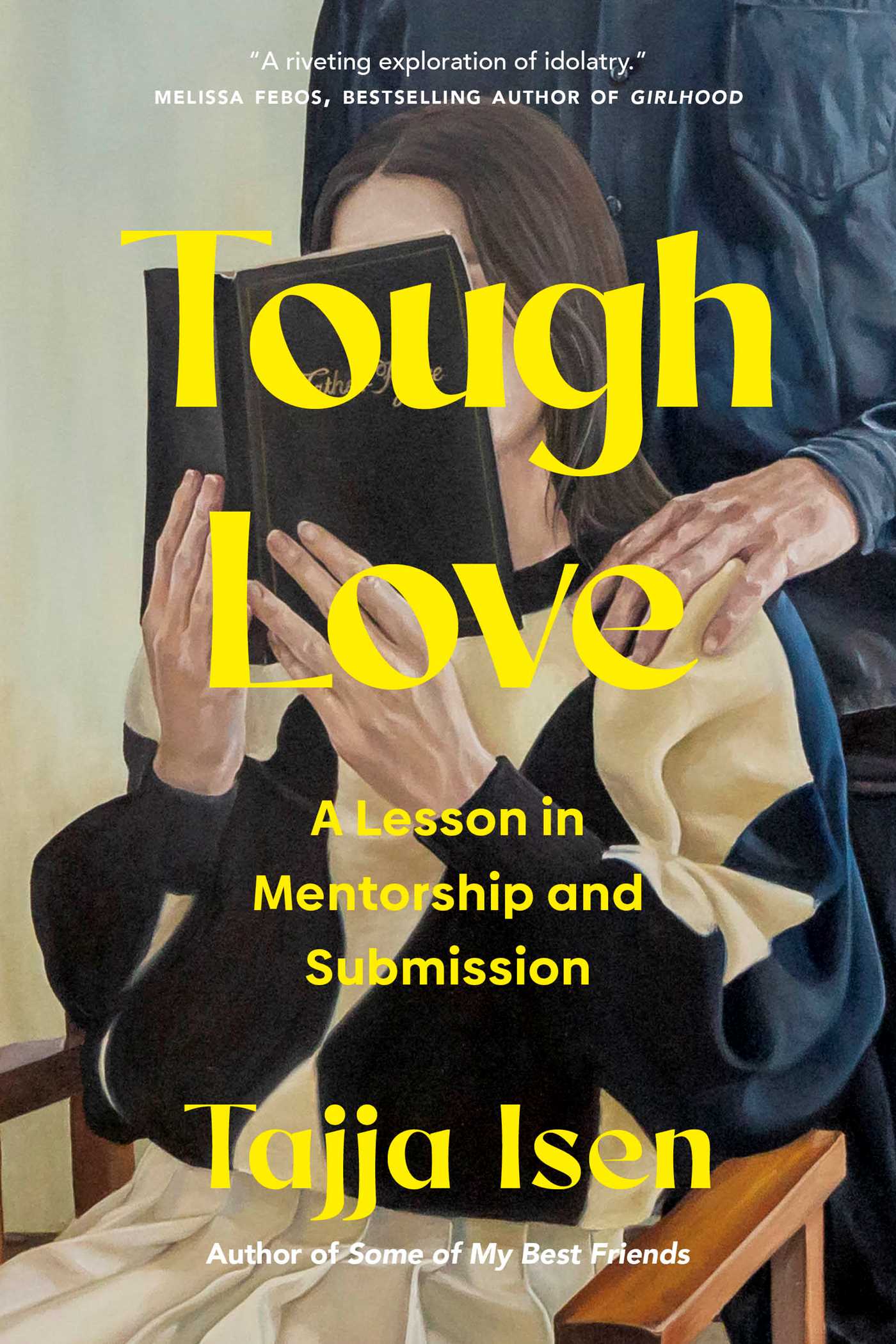
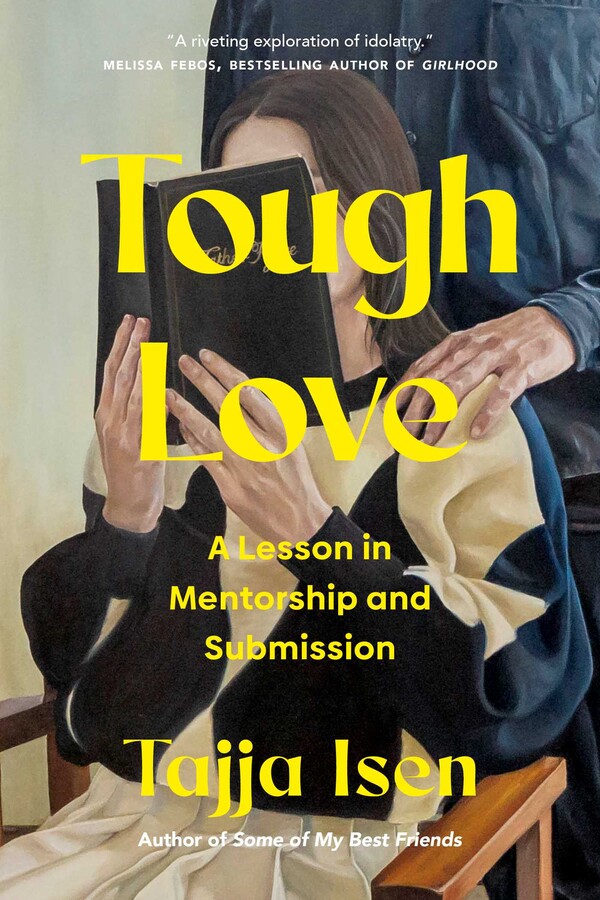
For fans of Melissa Febos and Leslie Jamison, this dazzling memoir probes the cultural myth of mentorship, the author’s pursuit of a series of domineering mentors, and what it took for her to break the cycle.
In this electric memoir, Tajja Isen recounts her artistic coming-of-age through the charged mentorships that defined it. Growing up, Isen was unusually susceptible to the idea that excellence depended on pleasing her superiors and submitting to their influence. Her taste and talent for obedience propelled her into situations that blurred desire, discipline, complicity, and coercion in the name of ambition. This pattern fueled her success as a child actor, her obsessive dedication as a student, and her eventual emergence as a writer—even when it did more harm than good.
With unflinching honesty and a forensic attention to power dynamics, Tough Love interrogates Isen’s attraction to authorities—the visionary directors, charismatic teachers, and hard-driving bosses—who seemed to hold the key to who she was, until she learned to step outside the seductive scripts of domination and submission. Entwining her journey with psychoanalytic theory and cultural criticism, Isen probes the places where mentorship intersects with desire, inequity, identity, kink, and labor to expose the anxiety and erotics of influence. The resulting memoir reckons with the boundaries that separate us from our mentors and the reasons why we might be tempted to cross them. Tough Love is a revelation for high achievers, people pleasers, former teacher's pets, and anyone who has ever been unsure of who they want to become.
Excerpt
THE PARENTS
The pediatrician had no openings that day. Instead, my mom got me an appointment with Willa, a doctor who worked in the same office block as my dad. The two of them weren’t friendly, but I couldn’t imagine Willa being anyone’s friend. She was cold and white and angular, like the unit where she worked, and she only saw patients who were adults. I took this to mean she must hate children and refused to even look at us, unless it was a favor for a colleague. This intrigued me. At seven years old, I vowed to be so perfectly obedient, she’d have to admit she was wrong. This was normally the sort of task I thrived on. But that afternoon, I was doubled over in pain.
The ache was there when I woke up that morning. It was low and urgent, like my dad’s voice when we had to catch an early flight, all the lights flicked on and his mouth by my ear: Wakey-wakey. When I moved, the pain moved with me, flaring and then sharpening to a point. In our house, pain, like most things, came with rules. If something hurt, you weren’t supposed to take a pill for it. You had to wait three days, as if you were in a riddle or a fairytale. If the pain changed within that time, it probably meant that you were getting better, so then what did you need the pill for?
This wasn’t cruelty, or it wasn’t meant to be. Just an instance of a different rule: There was the way most people got away with doing things. Then there was the way expected of me. But this symptom, a throb in my low belly, had launched my parents into action. They skipped the three-day rule and took me straight to the doctor. The speed of it made me uneasy. Too many of their decisions were unusual—to quickly hand me off to someone else. To share their power over me so easily. My parents’ rules, rigid and unwinnable, might unnerve me, but worse was the moment when they dropped away.
I lay back on the examination table. Willa plucked my shirt up by the edge and placed a hand on my stomach. I shivered at the chill. Willa. Her name was so gentle, like a soft plea for permission. I would never say it to her face. I only thought of her as Willa because that was what my dad called her. Out loud, to me, she was only Doctor.
Suddenly, without warning me or changing her expression, she pushed down hard enough to crease the paper underneath me. I gasped and kicked my legs out. She had done that knowing it would hurt. The bright, sterile room was suddenly shaded with danger. Willa, I realized, was like the cruel vet in Homeward Bound, a movie about three household pets who trek across California to reunite with their owners. As they wander through the wild, Chance, the impish American Bulldog voiced by Michael J. Fox, taunts a porcupine and winds up with a face full of quills. Later, when the animals get picked up and taken to a shelter, a doctor holds the dog down and extracts the needles while he whimpers in pain.
The image bored into my mind when I first saw the film. It slotted in next to the scene from The Rescuers: Down Under, when a giant albatross wakes after a crash-landing, tied up by a squad of medical mice who tell him, over his begging, that the coming suffering is for his own good. These moments electrified me, sparking a fear that contained an urge even more primal. For years, I made my friends and relatives re-enact the Homeward Bound scene with me. I would always play the dog and they the doctor. Even at the time, I could tell pretending to be an animal was good cover. I want to be a dog was so much more innocent than what I really wanted, which I knew better than to admit: to be held down. To squirm against a locked pair of arms. To pretend that someone else knew what was best for me and I had no choice but to let them do it.
This time, I wasn’t pretending. After a few more prods, Willa told me I could get down from the table. I slid off the paper and winced as I took the chair next to my mom. It was rare to have her all to myself, the way I did that day. She’d left my two younger siblings with someone else, possibly her own parents, while my dad saw patients in a different office. Being alone with my mom made me feel vaguely guilty. I didn’t mind that my siblings often got more of her than I did. But her attention was a gift I was meant to earn by doing well, not steal because something had gone wrong.
My eyes flicked between my mom and Willa, waiting for tension. Around other adults, my mom was serious and slow to smile—the opposite of how she was with anybody’s kids, not just her own. Like meetings with my teachers or encounters with our neighbors on the street, the doctor’s office was a place where she was often underestimated. She was thirty-one but looked twenty-one. Because she was young, people didn’t believe she had three kids. Because she was black and her husband was white, people didn’t believe we were hers.
Willa started running down a list of questions.
“Any loss of appetite?” She addressed this to my mom rather than to me.
“You can ask Tajja,” my mom said, neutrally.
There it was—Willa’s first mistake. Adults should talk to us like we were adults and we would treat them with the same respect. If my dad had been there, things would have been even more tense. Since he was a doctor, too, he liked to challenge other doctors even when he knew they might be right.
I told Willa no; my appetite was fine. My voice was bright. Now that I was off the table, I could relax. Even better, this was familiar ground: an adult was asking me questions and my job was to be articulate and well-behaved. I understood this as a trial and my answers my defense. If I did well, she would give me the cure and let me go. We went over my symptoms, my history, my digestion. I maintained eye contact and answered each question in full sentences and without saying um. I was in my element. I could go on forever, if she wanted.
“Okay,” Willa said, at last. “I’d like to do a blood test.”
I bristled with betrayal. My act slipped. “But I don’t want to.”
Up till then, I still believed the fix would be external. To let her into my body was an admission not just of my failure to be good, but that the problem might be serious—serious enough to set me on the mysterious, painful track I’d been planning to avoid by being articulate and well-behaved.
I was expecting her to override me. What else was a doctor’s power for, if not to make me do things that I ought to do but never would have chosen? This was the threat, and the thrill, of lying on the table.
“Fine,” she said, tightly. “We’ll skip it.”
In a single moment, I had torn down the image of myself I’d spent the whole appointment building up. I was flooded by a shame so consuming, the only way I thought I’d ever outlive it was if I wiped both her memory and mine. I’ll do it slipped out of me against my conscious will. I had come here hoping to be good; now, I’d been tricked into doing what I was most afraid of. But inside me something blazed; something deeper and keener and harder to bear than the ache at my core. An order left unfulfilled, by a person I understood to be superior, wounded my idea of myself to a degree I couldn’t stand. I would rather run towards the terror than leave a thing I had been told to do undone.
Like many things I feared, I understood this as a threshold. The moments that scared me the most also possessed the rare and precious power to brighten my pilot light. Even when somebody made me suffer, that same experience could make me feel unbearably alive, sharpened into a clarity I longed for when it wasn’t there.
I put my head in my mother’s lap and squinted up at the fluorescents. The door swung open and my fate walked in. Glass rattled on a metal tray; I smelled the tang of rubbing alcohol. I started howling as soon as the nurse’s hand appeared in my periphery. Something was about to happen. Everything could change.
Product Details
- Publisher: High Road Books (March 9, 2027)
- Length: 248 pages
- ISBN13: 9780826370709
Browse Related Books
Raves and Reviews
“A riveting exploration of idolatry—its alluring gifts and ultimate perils, told by an astute and sympathetic narrator. Tajja Isen is a phenomenal writer, and every page of Tough Love brims with intelligence, heart, and stunning prose.”
– Melissa Febos, bestselling author of The Dry Season and Girlhood, winner of the National Book Critics Circle Award
“Supple and precise, Tajja Isen’s Tough Love is a page-turner animated by the electricity of insight, tracing the contours of yearnings and pleasures not often plumbed with such depth: submitting to rules, surrendering to power and its capacity to outline the edges of a self, catching glimpses of our possible selves in the gazes of others. It bristles with the complexities of scene and situation, the striated layers of connection and friction that, in Isen’s gloriously lucid prose, get clarified into gleaming shards of wisdom. Tough Love renewed my faith in personal writing as a place of abundance, humility, and rigor, a form that—at its best—hums with the strange, reverberating music of being alive.”
– Leslie Jamison, New York Times bestselling author of Splinters and The Empathy Exams
“Tajja Isen’s Tough Love is a vivid and nuanced dissection of the mentor-mentee dynamic, written with remarkable lucidity and a generous refusal to preach, prescribe, or judge. With empathy, vulnerability, and tremendous insight, Isen examines ‘the protégée’ and her desire to ‘be good’ from every perspective, probing and excavating the messy, complex, erotic, painful, naïve and agency-granting dimensions of such desires. Tough Love is truly a rare achievement: as propulsive as it is profound. Isen is a writer of extraordinary talent.”
– Chloé Cooper Jones, author of Easy Beauty, a finalist for the Pulitzer Prize
“As a retired dominatrix, I know something about how power works in dyads. Isen nailed it. Tough Love made me think anew about every mentorship relationship I’ve had . . . I wish I’d read this before I went to high school and college and my first job. I hope my kid will read it.”
– Margo Steines, author of Brutalities: A Love Story
“If I wasn’t an Isen-head already, Tough Love would have launched me into full-on parasocial obsession. Tajja Isen excavates the psychosexual elements of mentorship with the precision of a surgeon and the voice of your funniest friend on their best day. I highlighted and annotated this book like I was going to be tested on it. Isen’s vulnerable portrait of herself as someone white-knuckling her way to excellence is the best kind of ouroboros: In creating this perfect book, she might be undercutting her message about letting go of perfection . . .”
– Ruth Madievsky, bestselling author of All-Night Pharmacy
“One of many things I admire about Tajja Isen’s writing is how deeply she trusts those who engage with it: never preaching or prescribing, but rather encouraging us to read and think alongside her. Sharp, funny, and unfailingly generous, Tough Love is both a page-turning personal narrative and an invitation to reflect on broader cultural questions of work, desire, fulfillment, and growth. This book is Isen at her absolute best.”
– Nicole Chung, author of A Living Remedy and All You Can Ever Know
“Tough Love is not merely a unique, incisive, and self-implicating memoir with relevance far more broadly, but also a rigorous, impassioned, original, and accessible study of power and desire. It holds up from start to finish and never flags. I can’t stop thinking about how brilliant it is and have already raved about it to friends who I know will love it.”
– Maud Newton, author of Ancestor Trouble
“Tough Love is a bracing, unflinching examination of mentorship as a site of power, desire, and self-construction. Tajja Isen writes with extraordinary clarity about the costs of excellence, and the quiet seductions of submission, offering language for experiences many readers have lived but never named.”
– Thao Hà, author of Love Letters to the Dirty South
Resources and Downloads
High Resolution Images
-
Book Cover Image (jpg): Tough Love
Trade Paperback 9780826370709