
Plus, receive recommendations and exclusive offers on all of your favorite books and authors from Simon & Schuster.
0:00 /
LIST PRICE $28.00
PRICE MAY VARY BY RETAILER
Free shipping when you spend $40. Terms apply.
Buy from Other Retailers
Table of Contents
About the Book
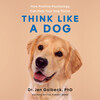
The surprising science that explains how and why your dog thinks and acts from Jen Golbeck, the “internet’s dog mom” behind the popular Golden Ratio Squad online community and the author of the “fascinating” (First for Women) The Purest Bond.
Do dogs’ brains work the same as humans? Are they capable of the same spectrum of emotions as us? Do they have a sense of self? What the heck is wrong with this crazy dog?
Like many of us, Jen Golbeck looked at her rescue golden retrievers and affectionately wondered what exactly was going on in their cute, fuzzy heads. But as a left-brained scientist, Golbeck set out to seek concrete answers—research and data—to back up the hunch that there’s a lot more going on beneath the surface of our pups’ funny looks and adorable, occasionally destructive, behaviors.
What she finds is a surprising relationship between positive psychology and how we might learn to think about how our dogs think in a whole new light. She introduces a mold-breaking concept that shifts our focus from solving problems and scolding “bad behavior” to building on strengths based on qualities like focus, vitality, and curiosity. Through fascinating case studies, real data, and paws-on-the-ground research and with Golbeck’s signature “encouraging” (Library Journal) prose, Think Like a Dog shows how to apply these ideas thoughtfully, consistently, and with compassion, to help our dogs not just behave better, but to truly thrive.
Excerpt
Chapter 1: The Science of Positive Psychology and Dogs CHAPTER 1 The Science of Positive Psychology and Dogs
For all their time and effort spent sniffing each other, dogs are incredibly smart. Depending on the breed, they can learn more than 150 words, count to four or five, do simple sums, and solve puzzles. There is also evidence they can anticipate the near future, trick others, operate mechanisms like door latches and light switches, and, in what was a surprise to me, even drive cars. In 2012 in New Zealand, Monty, then an eighteen-month-old giant schnauzer cross, Ginny, a one-year-old beardie whippet cross, and Porter, a gentle ten-month-old beardie, each successfully drove around a test track unaided in a modified Mini. What’s more, they were able to do this after just two months of training, which, if my driving lessons are anything to go by, is certainly speedier than some humans. All three pups were young rescues, and thanks to the Royal New Zealand Society for the Prevention of Cruelty to Animals, the fast and furious press stunt challenged misconceptions around dogs’ abilities, and perhaps even caused some to rethink their dogs’ worth.
At the time, the news dogs could be that intelligent made headlines around the world. But, if you love your dog with a passion and think they are the most amazing thing on the planet, there’s a good chance you’re thinking, “I bet mine could drive, too,” and probably fantasizing about them picking you up after happy hour in your minivan. You will already be convinced of your dog’s cleverness, just like you intimately know how well they cope with disappointment, their endless energy for learning, and, if their dinner arrives a little late, what absolute sticklers they are for routine. They will stare you down with such an urgent expression that it is as if they’re tapping at a tiny dog-wristwatch, huffing impatiently, and rolling their eyes.
Behaviors like these suggest our canine companions might embody many of the psychological traits humans have. In fact, they can indeed operate with something like a sense of fairness and empathy, be forgiving and resilient after enduring hardships, and even be present-minded. As with humans, not every dog embodies all the best qualities they’re capable of, and we might occasionally misinterpret what they are truly thinking (more on that later). But at least the science is crystal clear: dogs have remarkable, innate emotional and social intelligence and an enviable capacity for adaptation. Like I said, they’re smart.
As I share my life with some of the internet’s most beloved dogs (oh, and my husband, Ingo), I see these incredible humanlike qualities every day. From our out-of-the-way 1990s waterfront house perched on an old coral reef in the Florida Keys, we post about our rolling cast of six bighearted, high-drama, totally unique golden retrievers, each with their own quirks, backstories, and emotional needs. Some are goofy extroverts. Others arrived with deep fears and complicated pasts, and others have physical disabilities and impaired vision, even blindness. One thing they have in common? Each member of the Golden Ratio squad, as they have come to be known, has the ability to grow, heal, and bounce back from adversity.
As a scientist and academic, I’m also one of those very online people. In the aftermath of the 2016 presidential election, I noticed a change of tone on social media, and the data showed a worrying rise in animosity. To put it bluntly, everyone was angry, regardless of whom they had voted for. I needed a place online where I could dodge the trolls and escape the negativity.
Then, it came to me: What’s more wholesome and uplifting than a pack of golden retrievers? I started an account on what was then known as Twitter, @TheGoldenRatio4, and began posting group pics and sharing the real-life escapades of our squad. The Golden Ratio community grew from there and we’re now nearing one million followers strong, sharing stories, online events, and even real-life meetups. In 2019, we even had a sold-out live show at the Athenaeum Theatre in Chicago.
Rather than posting about our dogs as “rescues” or “seniors” (although many of them are), Ingo and I found we wanted to celebrate their personalities, emotional range, and surprising capacity for mischief. And we soon learned that rather than trying to fix all their many problems, which always seemed to put us on a back foot, things just flowed better if we focused on their strengths. With all their incredible intelligence, complex behaviors, and endless ability for jaw-dropping silliness, instead of wondering, “What the heck is wrong with this crazy dog?,” we tried to ask: “What strengths can we help this pup grow? What can we do to really help this dog thrive?” The idea for Think Like a Dog came out of years of precisely these questions, and backing up our experience with scientific research to supercharge a dog’s development and truly help them flourish.
It led me to explore studies and scans and systematic reviews that might unlock the mysteries hidden inside a dog’s mind. Why do our pups’ psychological capabilities so intriguingly reflect our own, and why, at times, do they seem to exceed them even? Above all, given that we can use science to identify and study these qualities, I wanted to know: Can we also use these findings to make our dogs’ lives better?
Although much knowledge can be gained through at-home observation, I needed evidence. I wanted to know exactly why Zola seems to bark when she is overexcited, the reason Remi gets upset when he sees Feta get a treat before Ella does, and why Guac can’t sleep unless he has a full body-size plushie shark clamped in his jaws, one leg swung over the tail. I also needed to know just how some of my dogs bounced back so brilliantly after enduring hardships like life-altering surgeries, abandonment, and abuse. Show me the receipts, as they say.
With six goofy test cases in front of me, and endless hours of anecdotal evidence and emergency vet adventures, I started to dig into the hard data to try to understand what I was seeing. I turned up a tangle of surprising and fascinating findings, evidence from human and canine psychology, neuroscience and functional MRI studies, animal cognition experiments, canid observations in the wild, plus insights from behaviorists and specialist trainers on how dogs think, feel, and ultimately thrive under the right circumstances.
After long hours of research, I stumbled on something that both pulled everything together and offered a way forward. Underlying everything I learned—flashing like a neon sign—was a school of human psychological thought that has become the bedrock of modern therapy and even contemporary ideas around self-care. Pioneered in the 1950s and ’60s, but only popular since the late 1990s, are the principles of Positive Psychology. Designed to explore human flourishing, identifying and revealing character strengths and learning how to develop them, Positive Psychology is arguably the most culturally influential type of psychology today.
I soon realized that many of the twenty-four traits Positive Psychology focuses on, the ones that lead to a fulfilling human life, map onto the almost exact same ones we love in our dogs. In fact, it gave me the framework to explore bigger, more hopeful questions about the emotional lives of our pups.
What’s more, these traits can be scientifically evidenced, strengthened, and practically applied in real life. The more I learned about this science of human flourishing, the more I saw it in my own dogs, not just the especially “good” ones, but even the wild, chaotic, eat-my-albuterol-inhaler ones (in fact, especially those ones). But could I really use human psychology to help my dogs? Isn’t that against the rules? The scientist in me bristled.
As author John Bradshaw, director of the Anthrozoology Institute at the University of Bristol in the UK, notes in his book Dog Sense, “Science has so far been unable to tell us how self-aware dogs are, much less whether they have anything like our conscious thoughts. This is not that surprising, since neither scientists nor philosophers can agree about what the consciousness of humans consists of, let alone that of animals.” At first glance, this uncertainty might seem like a reason to stop short. But living with dogs isn’t a philosophy class: we still have to interpret behavior, make training decisions, hand out mini meatballs, and respond to emotion in real time. In that messy, slobbery middle ground, borrowing carefully from human psychology is a workable way forward, rather than a bold claim that dogs are exactly like us.
After all, there are some important differences in how dogs and humans engage with the world. For example, when people interact with other people, our behavior is typically based on an implicit understanding that we are all able to think about each other in the moment, according to Bradshaw. By contrast, “dogs’ social intelligence seems to be driven by much simpler, though highly effective, processes, whereby they simply compare what is happening in the here-and-now with what has happened in similar situations in the past. What it does give them is an almost Zen-like detachment from the baggage of expectation.”
That’s not to say that dogs don’t possess some aspects of theory of mind—the ability to attribute intents, beliefs, desires, and emotions to others—because they absolutely do. It’s why dog owners often know exactly who their pups like less than others. Part of the reason for this might be found in a 2021 study in the journal Scientific Reports, where researchers at the University of Göttingen in Germany examined whether dogs are able to distinguish between people’s intentional and unintentional actions (in this case, the withholding of treats).
In a series of experiments, fifty-one dogs were each placed in a room, separated from a researcher by a glass partition. The dogs were taught the researcher could pass them a treat through a gap in the partition but also that they could walk around the partition to where the researcher was sitting. After getting the dogs used to this protocol, the researchers added variations to the experimenter’s behavior, such as intentionally withholding the treat by placing it in front of herself instead of giving it to the dog (while saying “ha-ha!”), clumsily dropping the treat (then saying “oops!”), or blocking the gap in the glass partition to make it impossible to pass the treat through it (and saying “oh!”). In each scenario, after not giving the treat to the dog, the experimenter placed it on the floor on her side of the glass partition. Researchers measured whether the dog chose to go around the glass partition to get the treat, and if so, how long the dog waited.
It turned out, the dogs behaved differently depending on whether the researcher’s actions were apparently intentional or unintentional. They waited significantly longer to approach the treat that had been intentionally withheld than one that had been dropped or blocked. In the intentional-withholding scenario, some of the dogs sat or laid down, which are often interpreted as calming signals dogs employ to appease the person with whom they’re interacting. Taken together, the findings suggest that dogs recognize the intentions behind people’s actions. This is high-level thinking.
One of the central ideas of Positive Psychology is that our strengths are not fixed. We are not born with a limited capacity for things like focus, resilience, kindness, and humor. This means they can be developed with practice and patience, and I just love that idea. It means we can all shore ourselves up, put effort into our mental and physical well-being, and feel good. So, if humans can hone their skills, maybe our pups can, too?
I ask this not without a little caution as we already have so many expectations on our dogs. We want them to be friendly, confident, calm in traffic, patient at the vet, playful but not too much, independent but affectionate, to poop here, not there. Sometimes we forget those behaviors aren’t necessarily baked in. They’re the result of thousands of small experiences, shaped by environment, temperament, breeding, social group, and, with the Golden Ratio squad, a lot of mini meatballs. That’s why reframing dog behavior through the lens of Positive Psychology, and identifying and developing their strengths, could be such a game changer! A way to focus on a dog’s few core strengths rather than treating them like they have a thousand little behaviors to be corrected constantly. That could lead to happier dogs and people.
Now, I realize it’s a potentially strange idea, to use human psychology to understand dogs, but science is often about making unexpected connections, right? But when I reach out to Dr. Sue Jackson, an experienced psychologist who uses Positive Psychology in her work with high-performance people (she’s also a onetime collaborator with a Positive Psychology rock star, the late, great Mihály Csíkszentmihályi, proponent of the “flow” state), I suddenly worry Florida Keys living might have gone to my head.
If you know a little about the Keys, you will be aware of its reputation for left-field thinking, oddballs, and roaming chickens, and it’s all true. The tiny tropical outpost is home to eccentric arts communities, Ernest Hemingway’s six-toed-cat colony, and a famously haunted doll named Robert. We even see in the new year in a unique way. Instead of a Times Square–style ball drop, us Conchs (as we call the long-term residents of the Keys) party around a giant high-heeled shoe in which Sushi, our beloved Keys drag queen, is slowly lowered to the ground from the balcony of the Bourbon St. Pub. I love it, and it is one of the only places I can think of where a scientist and her husband can indulge the whims of six golden retrievers with special needs, and no one bats an eyelid. So, with a little Conch spirit, I make the call.
If Sue thinks I’m crazy, she doesn’t show it. In fact, she’s delightful. We connect on video, and from her home in Brisbane, Australia, she listens intently while I try to sell her my idea. To my relief, she gets it. While she hasn’t made the connection between Positive Psychology and canine cognition herself (she’s a cat person), she’s pretty happy with my general thesis.
“I think it sounds like a great way to incorporate aspects of Positive Psychology that you’re seeing are relevant to this work. So, good on you for doing that,” she says, warmly. “I think that’s fantastic.”
“But, Sue,” I ask, “what might be the pitfalls in using a human-based psychological framework on dogs? Moving it over feels like it might be a radical thing to do…”
“I think it’s the only thing we can do, right?” says Sue. “Because we can’t take a dog’s perspective, so all we can do is take our own perspective and acknowledge that, [and know] there are going to be limitations to it.”
The data that powers Positive Psychology often relies on researchers communicating with their human subjects. Psychology is a notoriously talky discipline, and because dogs can’t verbally express their deepest thoughts and beliefs, there’s no way to know if they embody certain Positive Psychology character strengths, such as a sense of spirituality or humility. As Positive Psychology has twenty-four different strengths to identify and develop, don’t I need to consider them all, or is it okay to narrow them down?
“It’s a great question, Jen,” says Sue, generously. “I think the science of Positive Psychology doesn’t bring everything together at any one time. It’s like any area of research, you can’t put in every variable and only look at it if they’re all present, you know? So, I think it seems reasonable to choose the ones that are relevant.”
“As an example,” Sue continues, “my work in flow is one aspect of Positive Psychology, but I also acknowledge there are other aspects that I’m not taking into consideration when I’m doing my research or working with people.” I’m feeling encouraged, if not a little daunted by the task ahead: making my own dog-friendly Positive Psychology list of traits to dive into. Then, Sue signs off by giving me another little push.
“You’ve chosen to focus on this Positive Psychology area for good reason, right?” she says. “Because you see [these] attributes in dogs, and dogs interacting with humans, dogs interacting with other dogs, and dogs by themselves… In all those scenarios they’re displaying what we study in Positive Psychology.”
Buoyed up, I sharpen my focus and identify exactly which Positive Psychology character strengths I need for my big research study for Think Like a Dog. I land on focus, including self-regulation and truly being in the moment; and vitality, aka having a zest for life, and what play reveals about dogs’ sense of fairness, plus being an upstander through citizenship. Then, how to satisfy a dog’s curiosity, and how the love of learning might increase resilience and healthfulness; kindness and social intelligence; persistence and hope, and finally forgiveness, gratitude, and humor, aka lightening up (I’m convinced there must be evidence dogs can laugh, and I really hope I’m not proved otherwise).
Following me on this journey into Positive Psychology would be my primary observational subjects, my Golden Ratio squad. I should point out, we never planned to have six dogs. Six huge, gorgeous, bounding, hilarious, weird dogs. I mean, who does? My husband, Ingo, and I were more than happy with Hopper and Venkman, our fun-loving half sisters born just a year apart. We were a real family. Sometimes we would foster a third golden for a while. We had the resources, if not always the time, and it’s very nearly impossible to say no to a dog in need. “But we’re never going to permanently have three dogs, right?” I would say to Ingo, looking for his reassurance. Three was way too many, we agreed. But things sure changed quick.
By the time Maggie and Jasmine, two bonded goldens, showed up in 2016, we had already fostered a dozen dogs. But something just felt different with these two. They were wonderful and immediately seemed like part of the family. We just couldn’t let them go. But what am I going to do with four, I wondered? This is a ridiculous number of dogs! At that point, there was absolutely no thought of more. No way. Nada. And we knew the rescue group wouldn’t reach out to us because, really, who is going to offer you another dog when you already have so many? But, a year later, almost to the day, they did.
“We know you already have four dogs,” said the volunteer coordinator at the end of the line, “but there’s this poor thirteen-year-old and her people don’t want her anymore.” They told me about a lovely golden retriever who lived in the backyard of a big, fancy house out in one of the Washington, D.C., suburbs. Apparently, her owners wanted to start traveling. “They’re trying to get rid of her now,” the coordinator said, pausing for a moment, letting this poor dog’s plight take shape in my mind. “Will you take her?”
I remember calling Ingo up at work. “What do you think?” I asked. He thought for a moment and said, “Well, what’s the difference between four and five?” That’s a line we say a lot. What’s the difference between four and five, between five and six, six and seven? We’ve had seven goldens a couple of times. And just like that, Queso joined the family.
But it was Riley, our sixth, who changed everything. He allowed Ingo and me to truly experience how the power of community can help the vulnerable, and really feel—in the starkest terms—the ultimate responsibility we have toward our dogs; all dogs, in fact. Riley was well trained and well adjusted, and his owner had just passed away; he was just a foster and wasn’t supposed to be complicated. But, during some routine dental work, we discovered he had late-stage kidney failure. If you have been through this yourself as a dog owner, you’ll know this is a terrible, high-maintenance way to lose a dog; you must closely manage their medication and food, and sometimes cook for them, but they often don’t want to eat because they feel so bad. It’s tough. But he seemed so happy living with us all that we decided to keep him so he could live out his final months with us.
We found we coped well, and the experience gave us the confidence, and then the idea, to care for other dogs approaching the end of their life. We started fostering seniors and hospice cases, the dogs who had a hard time finding owners (who are usually looking for young, healthy pups) and started to post about them online. Riley changed the shape of our family.
Like Riley, every member of the Golden Ratio squad can truly surprise me. For a while now, our golden retriever puppy, Mozzarella (or Ella for short), has been able to operate door handles to open all the internal doors in our house. Of course, it was only a matter of time before she worked out the front door locks just like the internal ones. Recently, I woke up to Ingo yelling after her across the front yard, because she had cleverly opened the front door and had gone out for a stroll by herself. It was terrifying. She just doesn’t care. We tell her “No,” but her usual response is “Whatever, guys. Have a great day,” with an almost-human, teenager’s confidence.
In recent years, scientific evidence has shown that many characteristics we mistakenly think of as “uniquely human” are also present in our canine friends. Research has found, for example, that dogs are skilled at spotting the difference between happy and fearful facial expressions, in humans and in other dogs, and adjust their behavior accordingly. This is the essence of emotional and social intelligence: the awareness and understanding of others’ motives and feelings and how to alter your actions in different social situations.
Research by Peter F. Cook and colleagues at Emory University in Atlanta has looked for a potential neurological basis for some of these social and emotional qualities. Dogs were trained to lie still in magnetic resonance imaging (MRI) scanners so the researchers could look at what was happening inside the dogs’ brains when they were exposed to visual or olfactory stimuli that were designed to elicit specific emotions. Not only was there neurobiological evidence of positive emotions such as excitement in the dogs’ brains, but they also experienced activity in the brain’s caudate, an area that is rich in dopamine receptors (dopamine is the feel-good neurotransmitter that’s part of the brain’s “reward” system in both humans and dogs). In humans, the caudate plays a substantial role in the anticipation of food, love, money, and other things we just can’t get enough of. The researchers noted the similarities between anticipatory and reward processes in humans and dogs are striking, allowing us to deeply understand a dog’s inner desires, as they are so similar to our own.
Just as your dog might comfort you when you’re upset or in pain, they feel the same urge when one of their own is in trouble, too. A study by Mylène Quervel-Chaumette and colleagues at the Messerli Research Institute at the University of Vienna in Austria investigated whether dogs would respond with empathy-like behavior to recorded sounds of real canine distress (in the form of whines) versus acoustically similar control sounds. The answer was a big YES: the dogs exhibited greater alertness and more stress-related changes in their body language (including little adjustments in their tail, ear, and head position) when exposed to the sound of another dog’s whines, especially if it was the sound of a dog they were buddies with.
Studies have also shown that dogs have something close to a sense of fairness that helps them act cooperatively when playing with their pals. In fact, they experience what is called “inequity aversion.” They not only understand what is fair; they also really do not like it when other dogs (or humans) break the rules. Which seems perfectly reasonable, if you ask me.
Now that I have my sign-off from Dr. Sue Jackson, and my short list of seven character traits, my first stop is the hefty, 815-page tome I’ve had on my bookshelf for years titled Character Strengths and Virtues: A Handbook and Classification, by Christopher Peterson, PhD and Martin Seligman, PhD. Character Strengths and Virtues is considered the bible of the social scientific movement of Positive Psychology. The book, published in 2004, and the psychological genre it helped create are legendary. And the authors? They are the rock stars of their field.
Positive Psychology is dedicated to studying the character traits that help people thrive and flourish and at its heart is the belief that emotional well-being can be defined and measured, and most importantly, cultivated. In many ways, this approach is the opposite of what had come before. Previously, psychological tradition had been all about identifying dysfunction and how to get rid of it, rather than focusing on human potential. Seeking to improve our emotional lives through research, data analysis, and clever ideas, Positive Psychology encourages all of us to take responsibility for, maintain, and improve our own mental health.
In Character Strengths and Virtues, Peterson and Seligman begin by breaking it all down into twenty-four human character strengths that “make the good life possible.” Alongside my chosen traits—focus, vitality, fairness, curiosity, kindness, persistence, and humor—there are creativity, open-mindedness, love of learning, perspective, bravery, integrity, love, social intelligence, citizenship, leadership, forgiveness, humility, prudence, self-regulation, appreciation of beauty and excellence, gratitude, hope, and spirituality.
With its far-ranging interest in our best bits and impressive page count, Peterson and Seligman’s big book is the flip side to the DSM or Diagnostic and Statistical Manual of Mental Disorders (or a “Manual to the Sanities,” as the authors jokingly call it). Their focus is “on what is right about people,” rather than what is wrong, and they point out one crucial difference in their approach [from the DSM’s] is that “the domain of concern for us is not psychological illness but psychological health.” While these character strengths were identified in studies of humans, there is plenty of evidence from both everyday life, expert trainers and handlers, and scientific research that many of them also apply to dogs. For me, these qualities have paw prints all over them.
As I read on, it’s easy to see how Positive Psychology was preceded by the self-help and crystals craze of the 1970s and ’80s, but its focus has always been on empirical research rather than good vibes. It’s from this solid ground that the school of thought has had incredible influence and is considered the forebearer of contemporary ideals around wellness and “self-care,” right through to the potential viewpoint of your therapist or counselor.
Older key texts like Norman Peale’s mega-selling The Power of Positive Thinking, first published in 1952, added inspiration, alongside the work of American philosopher and psychologist William James (1842–1910). Brooklyn-born Abraham Maslow (1908–1970), who first used the term “positive psychology” in his book Motivation and Personality in 1954, is another major influence. In the 1960s and ’70s, the young, beads-wearing Seligman’s canine research on “learned helplessness,” with Steven Maier, turned him on to the concepts of persistence and resilience.
But it was in the mid-’90s when Seligman really pushed his positive approach with a more dogged determination. He was elected president of the American Psychological Association, and he chose Positive Psychology as the organization’s central theme. From that point on, the emerging movement leveled up; like all the most brilliant ideas, it seemed like a no-brainer. What’s better than expanding our thinking, focusing on prevention rather than cure, and using science to improve our character in the process?
“But what is character?” ask the authors of Character Strengths and Virtues as I dig deeper into the text, Zola napping on my feet. “For instance, is character defined by what someone does not do, or is there a more active meaning?” They go on to wonder: “How does character develop? Can it be learned? Can it be taught, and who might be the most effective teacher?”
My own dogs’ endless curiosity and capacity for learning always astonishes me, and I’ve often noticed how quickly they develop when they experience new things. That said, contrary to the adage, it is far easier to train older dogs rather than young ones for just about everything. I discover a news story from 2014: Bogotá specialist anti-narcotics police caught up with an alleged drug-trafficking gang. Following a successful operation including several arrests, they inherited a cute beagle cross with long floppy ears and a spotted Dalmatian-like coat known as “Pecas,” or Freckles. Pecas had been the personal guard dog to one of the alleged gang members, but the Bogotá police gave the old dog a second chance: they enrolled him in their canine police academy and retrained him for new tricks—search-and-rescue missions.
I first figured out this adaptability for myself, because Ingo and I were once asked to care for an older dog who had only ever lived outside and wasn’t housebroken. I remember thinking, “Oh, my God, I hate housebreaking so much!” But the rescue center assured us it would be fine. “No, no,” they said, “it only takes two days to housebreak an adult dog—if that.” I think I might have internally rolled my eyes, but in all my disbelief, I found this to be true. Older dogs already understand impulse control, and they often comprehend instructions as their brains are well developed; they just understand faster. Anyone who has the off-the-charts delightful but emotionally intense experience of puppies knows they don’t have a huge bladder capacity; it takes them a longer time to understand what you want. Sometimes they will make one squeaky sound and then pee on the floor. They know they aren’t supposed to, but they don’t yet know how to do it any differently.
Still, I’ve no doubt good character can be learned, and I have a hunch that most dogs’ true nature has many of Positive Psychology’s best traits already hardwired in, unless it’s short-circuited by negative experience.
“What roles are played by families, schools, peers, youth development programs, the media, religious institutions, and the larger culture?” ask Peterson and Seligman. I nod as I read this: thinking of Riley, I already know that a dog’s family, whether they are human or canine, at home or at daycare, plays an integral role in how their character is formed. It helps that a dog’s core instinct, unless they are scared, is to be friendly. Domestic dogs regularly exhibit prosocial behavior such as caring, cooperating, helping, and protecting others, thanks to their capacity for loyalty, empathy, gratitude, and trust; and they have a degree of social and psychological flexibility that’s rarely seen in other creatures. They are also our hairy, full-time emotional monitors and are especially good at reading human behavior, good or bad, which only reinforces their sense of connection with us—another way that Positive Psychology’s human focus can help us understand and support our dogs.
After thousands of years in very close proximity to humans, dogs are “more socially compatible with us than any other animal,” according to Gregory Berns, MD, PhD, a professor at Emory University who studies canine neuroscience. Humans and dogs have evolved to cooperate with each other. Studies suggest that “the key evolutionary event that turned wolves into dogs was an amplification of genes related to sociality,” notes Berns. “If that is true, dogs may hold the key to helping humans achieve what can often be a struggle: to be more social, more generous, more loving, more forgiving.”
Because my husband, Ingo, and I rescue senior and sick golden retrievers, we often end up with dogs that have experienced trauma, whether it’s from being malnourished, chained in a yard, dumped in the woods, or physically abused. They usually have a long road to recovery, and we’re usually successful, but sometimes they have enduring needs we just can’t meet. The most important thing? They have to be happy and so do all the other dogs. We always say, to take a dog into the family, they must get along perfectly with everyone. We just can’t have any tension, and sometimes—and this is vanishingly rare—a dog we foster might move on to another home. Those decisions are always incredibly difficult. That is, until we see how happy those dogs are with their new families. I might be stating the obvious, but six– or seven–golden retriever households aren’t for everyone.
Remoulade, for one, had lived his whole life chained outside. When he went blind from undiagnosed diabetes at age six, his owners instructed the vet to put him down. Instead, and I will always be thankful for this, the vet turned him over to a rescue organization and he eventually came to live with our Golden Ratio squad. Those early days with us were tough for Remi. Although he regained some of his vision, when he first arrived, his blindness was total. He had only ever known the tiniest universe, and although he had thoroughly mapped it in his mind, his rescue was stressful. All of a sudden, he was taken off that chain, found himself in an unfamiliar environment, and with other dogs he didn’t necessarily trust, and was running into things. Like many rescues, we don’t know how his people truly treated him, apart from his obvious neglect, so he had no reason to trust us, either. No surprise: he was incredibly anxious and kind of aggressive—not biting but barking—and if he ran into one of the other dogs and they would correct him, he would try to fight them.
Cheddar, then a ten-year-old blind golden retriever, came to us after being found on a back road in West Virginia. He had a broken nose and was covered with ticks and fleas, it was heartbreaking. I can’t imagine the pain and discomfort he was in and how scared he must have felt. What’s more, he arrived in the middle of a romantic crisis. Remi and another dog, Nacho, had become best friends until a fight had set them against each other, and Ingo and I had sent them to couples therapy with our trainer to try to fix it.
After collecting Cheddar, we had a two-day road trip from hell in our RV, heading home with seven tense dogs as our rowdy passengers, including the two fuming ex-lovers ready to spat at any moment, and all-around distrust of Cheddar. In the end, we had to separate them with a baby gate and, to top it off, while overnighting at a vacation rental, Nacho broke through the screen on the porch and ran off into the backwoods of South Carolina; I remember searching for him, full of fear, until we were reunited. Like I said, it was hellish.
With the benefit of some TLC and the squad’s camaraderie, both dogs recovered physically and emotionally and truly started to adapt to their new surroundings. But Remi still had a hard time managing his anxiety. Once he got agitated, he would start barking uncontrollably and would look around for toys to soothe himself; Cheddar is a very nice boy, but had his jerk moments, too, and Nacho was also struggling. The squad was unbalanced and, in the end, two dogs moved on—we found Nacho the perfect new home, and Cheddar also got adopted. They are both completely loved and much calmer with their new, smaller families. But I just can’t ignore these dogs’ resilient spirit: dogs have an unending capacity to love, trust, forgive, and find joy.
Seligman asks: “Is character socially constructed… or are there universals suggesting a more enduring basis?” In other words, is our character just a costume we wear, or are there timeless traits in us all? Here, I think about how our dogs’ characters are shaped by the spaces they inhabit, from the freedom of the backyard and dog park to the strict rules of the sidewalk, the office, the coffee shop. We all want our dogs to be safe, but sometimes our expectations for them to be “well behaved” are really requests for them to modify their natural behavior to fit into our human world, from keeping quiet and not barking when someone rings the doorbell to not jumping up on the couch.
So, it’s not just a privilege to support our dogs’ psychological well-being, it’s a responsibility we take on when we bring them into our lives. I’ve seen firsthand how, even in the most extreme of conditions, dogs have the capacity to change and mold their characters, and with so much overlap between human and canine emotion, I’m convinced that Positive Psychology, the scientific framework developed to understand and enhance human flourishing, can help dogs thrive in the same ways.
By going to work and gathering research studies and stories with those seven traits in mind, I’ll look at everything from the ways our dogs’ brains are like ours (and the ways they are not) to how we can develop their confidence and help them build new neurological pathways to really develop these incredible skills. By drawing the connection between Positive Psychology and these traits, we’ll see not only how dogs think to bring out their better natures, but also the way to bring out these qualities in ourselves.
To get there, I’ll go off leash on a yearlong journey, starting behind the scenes with the Golden Ratio squad at their Florida Keys HQ. I’ll belly-rub a canine detective just before he cracks a scent-trail and pay homage to a little brown dog in London who once sparked a culture war. Along the way, I’ll visit a pop-up vet clinic on Navajo Nation land in New Mexico and the iconic Westminster Dog Show in New York City, and gain unique training insights from The Seeing Eye, the world’s oldest guide-dog school. We’ll also meet world-class adventurer and musher, and my friend, Blair Braverman and her sled dogs to explore social dynamics. We’ll navigate dog chaos with a Flyball teamster, talk canine charisma with an award-winning comic and her little merle poodle, Top Chef, and even step into the wings with a Broadway animal trainer. And along the way, we’ll share stories from the wider Golden Ratio community.
The Positive Psychology mindset makes us look for the very best in our dogs, not the worst. From nurturing their curiosity, to helping them bounce back physically and emotionally, to supporting their self-regulation in a world full of noisy and deliciously stinky distractions. It gives us a practical, evidence-based, and compassionate pathway to transform the lives of our dogs. Just as important as what we can nurture in them through studying Positive Psychology is what they can teach us.
So many of us have brought new canine companions into our lives (there are currently 68 million dog-owning households in the United States, a figure that continues to rise) or seized the opportunity to spend more time with the dogs we already have. We have begun to tune in more deeply to our dogs’ inherent goodness. Dogs offer comfort, joy, and perhaps too much slobber, but besides that, I believe developing a greater awareness of your dog’s natural social and emotional skills can improve the way you relate to them and help you celebrate their unique gifts and character.
As we deepen our bond with dogs, not simply as pets but almost as emotional partners, it soon becomes clear their well-being is closely tied to our own. Positive Psychology gives us a science-backed framework to explore not just what helps people flourish, but what helps dogs live full and meaningful lives. It also shifts our focus from solving problems and scolding “bad behavior,” to building on strengths, fostering connection, and nurturing dog-joy. By applying these ideas thoughtfully, consistently, and with compassion, we can help our dogs thrive. And in doing so, we allow them to keep doing what they do so naturally: bringing out the very best in all of us.
About the Author
Photograph by Jen Golbeck
Jen Golbeck is the “internet’s dog mom” and creator of the social media sensation @TheGoldenRatio4. A professor at the University of Maryland’s College of Information Studies, she is a popular science communicator on issues related to her research on social media and dogs. Her TED Talks have been viewed by millions and she is a popular keynote speaker who has appeared on NPR, The 11th Hour, and more. Her writing has appeared in Slate, The Atlantic, Psychology Today, and Wired. She and her husband rescue golden retrievers who are senior or who have special medical needs and give them a safe and comfortable life.
Product Details
- Publisher: Atria Books (September 1, 2026)
- Length: 224 pages
- ISBN13: 9781668060735
Browse Related Books
Raves and Reviews
“[A]n enlightening exploration of what human psychology can teach about dog behavior… Golbeck’s love of dogs is palpable, and she elucidates hard science with accessible and entertaining storytelling. It’s a must-read for anyone eager to better understand their canine companions.” —Publishers Weekly
“[Golbeck] encourages kindness, consistency, and focus on the part of both humans and dogs, and it underscores the thought that we should stop worrying about what a dog is “doing wrong” instead of helping them do right. An instructive, smart treat for dog lovers.” —Kirkus Reviews
Resources and Downloads
High Resolution Images
-
Book Cover Image (jpg): Think Like a Dog
Hardcover 9781668060735
-
Author Photo (jpg): Jen Golbeck Photograph by Jen Golbeck(0.1 MB)
Any use of an author photo must include its respective photo credit