Plus, receive recommendations and exclusive offers on all of your favorite books and authors from Simon & Schuster.
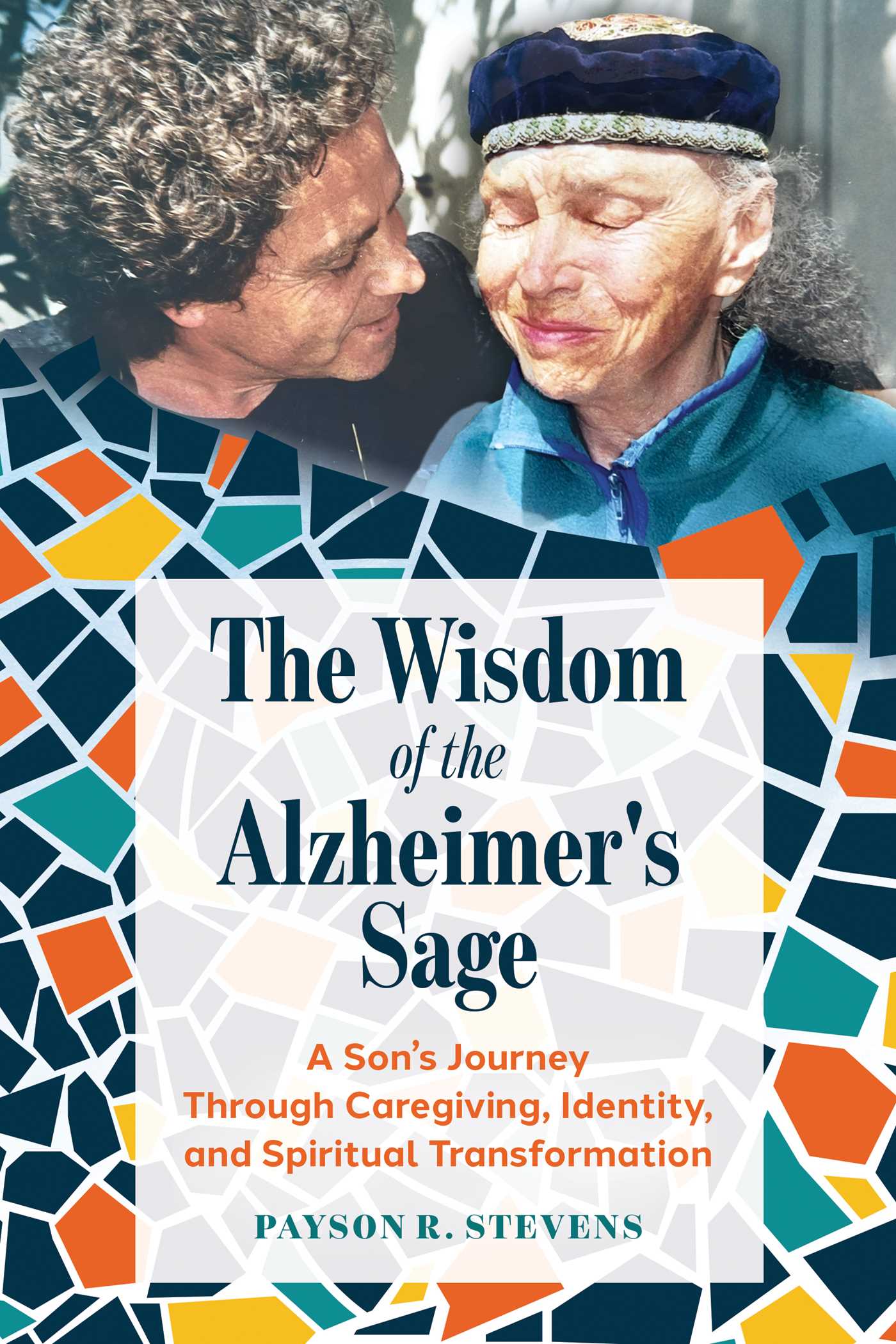
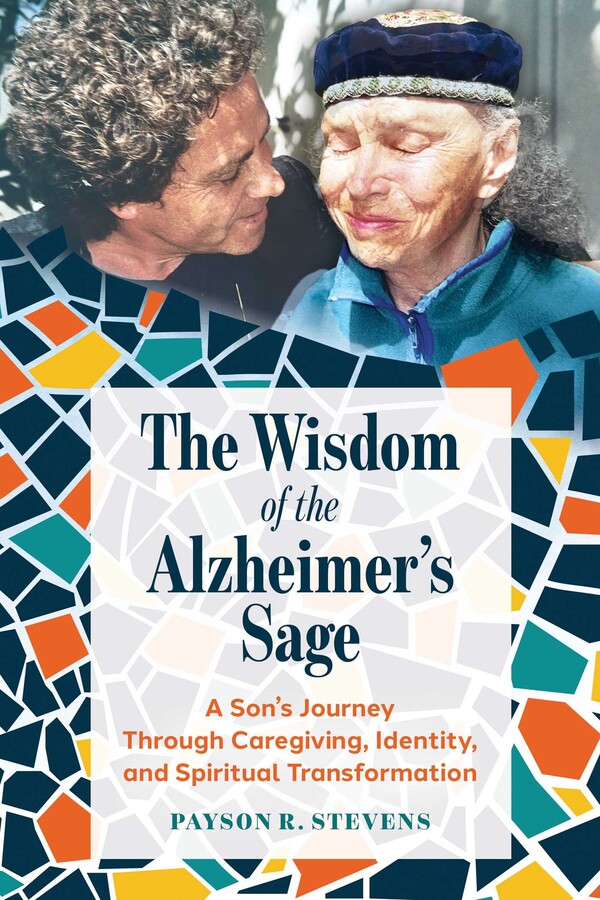
The Wisdom of the Alzheimer's Sage
A Son's Journey Through Caregiving, Identity, and Spiritual Transformation
Published by Park Street Press
Distributed by Simon & Schuster
LIST PRICE $18.99
PRICE MAY VARY BY RETAILER
Get 20% off with code SPOOKY plus free shipping on orders of $40 or more. Discount on physical products only. Terms apply.
Buy from Other Retailers
Table of Contents
About the Book
Reimagining Alzheimer’s as a path to unexpected love, transformation, and sacred insight
• Reframes Alzheimer’s as a spiritual journey of ego surrender, mirroring mystical traditions across cultures
• Uncovers “Alzheimer’s wisdom” through paradoxical clarity, humor, and unexpected grace
• Offers emotional support and practical guidance for caregivers navigating the complexities of dementia, including guidance on avoiding burnout
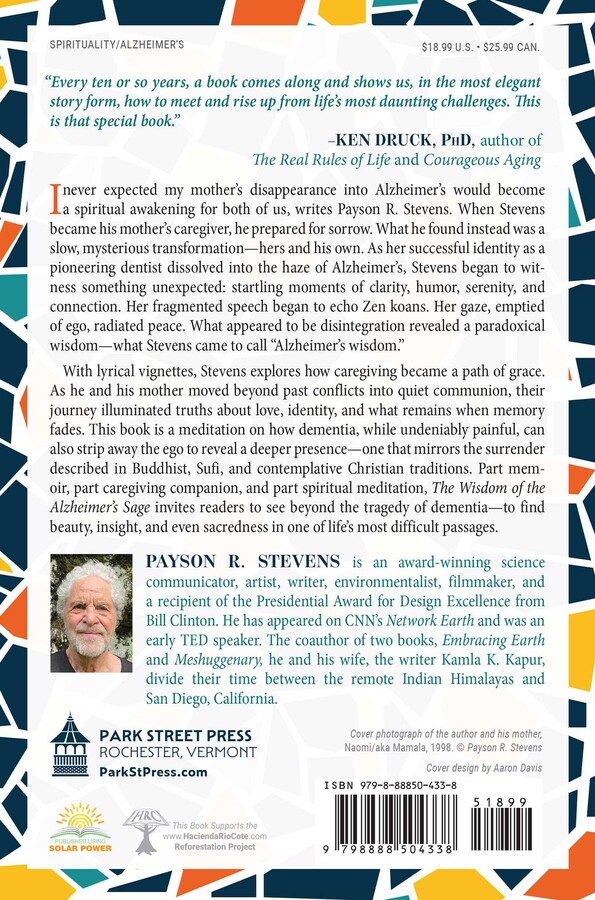
I never expected my mother’s disappearance into Alzheimer’s would become a spiritual awakening for both of us, writes Payson R. Stevens. When Stevens became his mother’s caregiver, he prepared for sorrow. What he found instead was a slow, mysterious transformation—hers and his own. As her successful identity as a pioneering dentist dissolved into the haze of Alzheimer’s, Stevens began to witness something unexpected: startling moments of clarity, humor, serenity, and connection. Her fragmented speech began to echo Zen koans. Her gaze, emptied of ego, radiated peace. What appeared to be disintegration revealed a paradoxical wisdom—what Stevens came to call “Alzheimer’s wisdom.”
With lyrical vignettes, Stevens explores how caregiving became a path of grace. As he and his mother moved beyond past conflicts into quiet communion, their journey illuminated truths about love, identity, and what remains when memory fades. This book is a meditation on how dementia, while undeniably painful, can also strip away the ego to reveal a deeper presence—one that mirrors the surrender described in Buddhist, Sufi, and contemplative Christian traditions. Part memoir, part caregiving companion, and part spiritual meditation, The Wisdom of the Alzheimer’s Sage invites readers to see beyond the tragedy of dementia—to find beauty, insight, and even sacredness in one of life’s most difficult passages.
• Reframes Alzheimer’s as a spiritual journey of ego surrender, mirroring mystical traditions across cultures
• Uncovers “Alzheimer’s wisdom” through paradoxical clarity, humor, and unexpected grace
• Offers emotional support and practical guidance for caregivers navigating the complexities of dementia, including guidance on avoiding burnout
I never expected my mother’s disappearance into Alzheimer’s would become a spiritual awakening for both of us, writes Payson R. Stevens. When Stevens became his mother’s caregiver, he prepared for sorrow. What he found instead was a slow, mysterious transformation—hers and his own. As her successful identity as a pioneering dentist dissolved into the haze of Alzheimer’s, Stevens began to witness something unexpected: startling moments of clarity, humor, serenity, and connection. Her fragmented speech began to echo Zen koans. Her gaze, emptied of ego, radiated peace. What appeared to be disintegration revealed a paradoxical wisdom—what Stevens came to call “Alzheimer’s wisdom.”
With lyrical vignettes, Stevens explores how caregiving became a path of grace. As he and his mother moved beyond past conflicts into quiet communion, their journey illuminated truths about love, identity, and what remains when memory fades. This book is a meditation on how dementia, while undeniably painful, can also strip away the ego to reveal a deeper presence—one that mirrors the surrender described in Buddhist, Sufi, and contemplative Christian traditions. Part memoir, part caregiving companion, and part spiritual meditation, The Wisdom of the Alzheimer’s Sage invites readers to see beyond the tragedy of dementia—to find beauty, insight, and even sacredness in one of life’s most difficult passages.
Excerpt
1
Changes Will Be True
During the last four years of my mother’s life, I periodically took care of her through the progression of Alzheimer’s disease. Once, she was a powerful person with a strong ego that enabled her to carve out her own path, a unique niche in the world. Naomi Miller Coval-Apel was first and best at everything she did. She helped usher in a new consciousness about women and their ability to be professionals who were equal to, if not better than, the men who used to define and control the work world after the 1940s. Naomi excelled in her career on her own terms, and traveled the world as the guest of international scientific societies to share her techniques and knowledge. She rarely stopped to reflect on her impact on others, nor did she examine her inner life. She was possessed with herself and her successes, and made no apologies. Naomi was a force of nature.
Her formidable ego-strength worked its wondrous and destructive ways for a lifetime, until the onset of Alzheimer’s disease. Naomi’s mind started to go; the grasp of the immediate present gradually faded along with personal history—her exotic travels, three marriages, professional triumphs, and her children’s lives. All that was left were a few emotional links to those she loved and those who loved her. All else was as ephemeral as a breaking wave, as permanent as an afternoon breeze.
A few times a year, I stayed with my mother for a month at a time while her husband, Bob, took a break from the enormous stresses of a primary caregiver and returned to his children in England. It was a full-time job as Naomi progressed from the early dementia stages, marked by endlessly repetitive questioning, to the advanced Alzheimer’s stages, characterized by extended periods of silence, blank stares, incontinence, and increasing long- and short-term memory loss. Yet, amid the cognitive failure that reduced life to fragments of her former self, a new person was emerging—a sweet woman relatively free of Naomi’s demanding persona. We called this gentler person “Mamala” (a Yiddish endearment) as she became a bewildering source of love and loss.
Like so many others caring for their elders with Alzheimer’s disease, I cannot begin to fully comprehend its greater significance: the pain, confusion, depression, anger, withdrawal, and even possibly the peace and release that results. When an Alzheimer’s victim stops communicating, it is almost impossible to know what she is thinking. Seeing someone you love slowly disappear—while remaining physically present—is an encounter with the inexplicable, existential dilemma of being and nothingness. And nothing can fully assuage the anguish one feels watching this dreadful disease dissolve a loved one.
My interactions with Mamala through her mental/physical decline felt like disconnected islands of consciousness, yet there were periods of extraordinary communication with what might be called Mamala’s “Alzheimer’s wisdom.” My mother’s strange and paradoxical statements were offerings from another kind of mind, and seemed to be connected to a greater mystical tradition and knowledge. By paying careful attention to her incomprehensible statements, I found deep insights in Mamala’s perplexing words. After a year of writing down and studying her words, I realized that messages of profound meaning were being offered. Her declarations were riddles, like one of her most memorable comments: “Make everything the same different and the changes will be true.” It didn’t make sense on a logical level, yet the words touched something familiar that had come from my decades of Eastern spiritual practice and readings, especially Zen Buddhism. The more I listened carefully to, wrote down, and reflected on her words, the more they seemed like the koans of Zen Buddhist practice—puzzling, often paradoxical statements or stories used as an aid to meditation and a means of gaining spiritual awakening. Like Mamala’s musings, koans demonstrate the inadequacy of logical reasoning to provoke enlightenment.
The Western philosophical habit of duality—good/bad, chaos/order, sense/nonsense, success/failure—does not easily embrace the paradoxes and contradictions of daily life. Yet, in seeing everything as the same different—including my mother in her last stage of life—I could appreciate the inherent oneness of life. With those words as a guide, the dualities of my own life began moving toward a strange harmony as an Alzheimer’s caregiver. Other truths emerged in my reactions to Mamala that at times were comical, surreal, and sublime, combined with those that were horrible and depressing. In all, they allowed me to shift my attitudes toward her and other family members, and to recognize the value of this altered, even new, frequently incomprehensible person, Mamala, who was still my mother.
Perhaps I was more open to hearing the wisdom of her words because I was at a point where letting go of conditioned, constant striving was becoming imperative. Having time rather than money and living more in the present rather than the future were important goals. I was moving away from the Western success paradigm, from “doing” to “being.” My ego was cooling down as the small details of everyday life became more fulfilling. Mamala’s “Zenheimer koans” helped guide me into greater mindfulness, much like the Buddhist practice of slowing down and cherishing the present moment. And many had the quality of a Zen master’s slap—startling and confusing but offering the possibility of momentary enlightenment.
My experiences with Mamala revealed one essential truth: The energy of love transcends the rational mind. Mamala no longer communicated verbally in a sensible way, but the smile on her face when her husband or children were present spoke volumes. As they say, people will forget what you said or what you did, but they rarely forget how you made them feel.
Mamala’s Alzheimer’s wisdom also had qualities similar to so-called “primitive” spiritual traditions and cultures. I learned to see her more like an Indigenous elder in the last stage of her earthly journey, imparting gifts of insight in a “crazy wise” poetry that deepened my appreciation of life. What could be more crazy-accurate to her condition (on all levels)—and even mine—than her statement: I’m looking for a window I can go through and get what I need out to the other side.
I moved beyond the apparent tragedy of Mamala’s circumstances into a subtle transcendence that allowed appreciation of the strange gift my mother was offering in the final stage of her life. These observations may not be relevant to everyone facing the challenges and suffering of Alzheimer’s disease, but I humbly offer them as potential clues toward a new way of understanding the mystery behind the misery of this increasingly common affliction—an illness that will spread through more lives as our population ages.
Seeing beyond the tragedy of Alzheimer’s may reveal wisdom—not only in the strange words and behaviors of the person living with it but also in the unexpected challenges faced by caregivers. This act of seeing differently bends our perception of reality and may help dementia caregivers experience a spiritual dimension of Alzheimer’s—one that embraces letting go, loving more deeply, and surrendering to the larger mystery of who we are. Although I was not able to fulfill my youthful promise to save my mother from losing her mind, I learned to look straight into the abyss of the ego loss that she so greatly feared . . . and I found something wondrous, personally liberating, and strangely healing.
Changes Will Be True
During the last four years of my mother’s life, I periodically took care of her through the progression of Alzheimer’s disease. Once, she was a powerful person with a strong ego that enabled her to carve out her own path, a unique niche in the world. Naomi Miller Coval-Apel was first and best at everything she did. She helped usher in a new consciousness about women and their ability to be professionals who were equal to, if not better than, the men who used to define and control the work world after the 1940s. Naomi excelled in her career on her own terms, and traveled the world as the guest of international scientific societies to share her techniques and knowledge. She rarely stopped to reflect on her impact on others, nor did she examine her inner life. She was possessed with herself and her successes, and made no apologies. Naomi was a force of nature.
Her formidable ego-strength worked its wondrous and destructive ways for a lifetime, until the onset of Alzheimer’s disease. Naomi’s mind started to go; the grasp of the immediate present gradually faded along with personal history—her exotic travels, three marriages, professional triumphs, and her children’s lives. All that was left were a few emotional links to those she loved and those who loved her. All else was as ephemeral as a breaking wave, as permanent as an afternoon breeze.
A few times a year, I stayed with my mother for a month at a time while her husband, Bob, took a break from the enormous stresses of a primary caregiver and returned to his children in England. It was a full-time job as Naomi progressed from the early dementia stages, marked by endlessly repetitive questioning, to the advanced Alzheimer’s stages, characterized by extended periods of silence, blank stares, incontinence, and increasing long- and short-term memory loss. Yet, amid the cognitive failure that reduced life to fragments of her former self, a new person was emerging—a sweet woman relatively free of Naomi’s demanding persona. We called this gentler person “Mamala” (a Yiddish endearment) as she became a bewildering source of love and loss.
Like so many others caring for their elders with Alzheimer’s disease, I cannot begin to fully comprehend its greater significance: the pain, confusion, depression, anger, withdrawal, and even possibly the peace and release that results. When an Alzheimer’s victim stops communicating, it is almost impossible to know what she is thinking. Seeing someone you love slowly disappear—while remaining physically present—is an encounter with the inexplicable, existential dilemma of being and nothingness. And nothing can fully assuage the anguish one feels watching this dreadful disease dissolve a loved one.
My interactions with Mamala through her mental/physical decline felt like disconnected islands of consciousness, yet there were periods of extraordinary communication with what might be called Mamala’s “Alzheimer’s wisdom.” My mother’s strange and paradoxical statements were offerings from another kind of mind, and seemed to be connected to a greater mystical tradition and knowledge. By paying careful attention to her incomprehensible statements, I found deep insights in Mamala’s perplexing words. After a year of writing down and studying her words, I realized that messages of profound meaning were being offered. Her declarations were riddles, like one of her most memorable comments: “Make everything the same different and the changes will be true.” It didn’t make sense on a logical level, yet the words touched something familiar that had come from my decades of Eastern spiritual practice and readings, especially Zen Buddhism. The more I listened carefully to, wrote down, and reflected on her words, the more they seemed like the koans of Zen Buddhist practice—puzzling, often paradoxical statements or stories used as an aid to meditation and a means of gaining spiritual awakening. Like Mamala’s musings, koans demonstrate the inadequacy of logical reasoning to provoke enlightenment.
The Western philosophical habit of duality—good/bad, chaos/order, sense/nonsense, success/failure—does not easily embrace the paradoxes and contradictions of daily life. Yet, in seeing everything as the same different—including my mother in her last stage of life—I could appreciate the inherent oneness of life. With those words as a guide, the dualities of my own life began moving toward a strange harmony as an Alzheimer’s caregiver. Other truths emerged in my reactions to Mamala that at times were comical, surreal, and sublime, combined with those that were horrible and depressing. In all, they allowed me to shift my attitudes toward her and other family members, and to recognize the value of this altered, even new, frequently incomprehensible person, Mamala, who was still my mother.
Perhaps I was more open to hearing the wisdom of her words because I was at a point where letting go of conditioned, constant striving was becoming imperative. Having time rather than money and living more in the present rather than the future were important goals. I was moving away from the Western success paradigm, from “doing” to “being.” My ego was cooling down as the small details of everyday life became more fulfilling. Mamala’s “Zenheimer koans” helped guide me into greater mindfulness, much like the Buddhist practice of slowing down and cherishing the present moment. And many had the quality of a Zen master’s slap—startling and confusing but offering the possibility of momentary enlightenment.
My experiences with Mamala revealed one essential truth: The energy of love transcends the rational mind. Mamala no longer communicated verbally in a sensible way, but the smile on her face when her husband or children were present spoke volumes. As they say, people will forget what you said or what you did, but they rarely forget how you made them feel.
Mamala’s Alzheimer’s wisdom also had qualities similar to so-called “primitive” spiritual traditions and cultures. I learned to see her more like an Indigenous elder in the last stage of her earthly journey, imparting gifts of insight in a “crazy wise” poetry that deepened my appreciation of life. What could be more crazy-accurate to her condition (on all levels)—and even mine—than her statement: I’m looking for a window I can go through and get what I need out to the other side.
I moved beyond the apparent tragedy of Mamala’s circumstances into a subtle transcendence that allowed appreciation of the strange gift my mother was offering in the final stage of her life. These observations may not be relevant to everyone facing the challenges and suffering of Alzheimer’s disease, but I humbly offer them as potential clues toward a new way of understanding the mystery behind the misery of this increasingly common affliction—an illness that will spread through more lives as our population ages.
Seeing beyond the tragedy of Alzheimer’s may reveal wisdom—not only in the strange words and behaviors of the person living with it but also in the unexpected challenges faced by caregivers. This act of seeing differently bends our perception of reality and may help dementia caregivers experience a spiritual dimension of Alzheimer’s—one that embraces letting go, loving more deeply, and surrendering to the larger mystery of who we are. Although I was not able to fulfill my youthful promise to save my mother from losing her mind, I learned to look straight into the abyss of the ego loss that she so greatly feared . . . and I found something wondrous, personally liberating, and strangely healing.
Product Details
- Publisher: Park Street Press (November 17, 2026)
- Length: 192 pages
- ISBN13: 9798888504338
Browse Related Books
Raves and Reviews
“If you know someone who is taking care of a loved one with Alzheimer’s disease, this book is a must-read! It shines a light in the darkness by providing insights that will help caregivers discover an inner journey of newfound wisdom and strength.”
– Daniel Burrus, author of the New York Times bestseller Flash Foresight
“Payson Stevens has given us a gift by sharing the story of his family’s grief and healing. It is a model for all of us in how to honor the process of aging, dying, and transformation.”
– Stephanie S. Covington, PhD, author of Helping Women Recover and Beyond Trauma
Resources and Downloads
High Resolution Images
-
Book Cover Image (jpg): The Wisdom of the Alzheimer's Sage
Trade Paperback 9798888504338