
Plus, receive recommendations and exclusive offers on all of your favorite books and authors from Simon & Schuster.
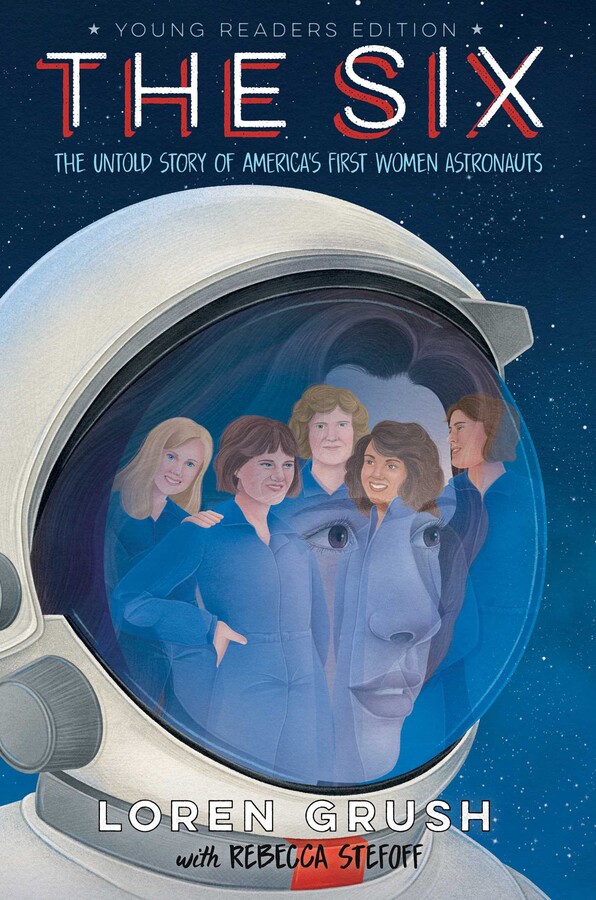
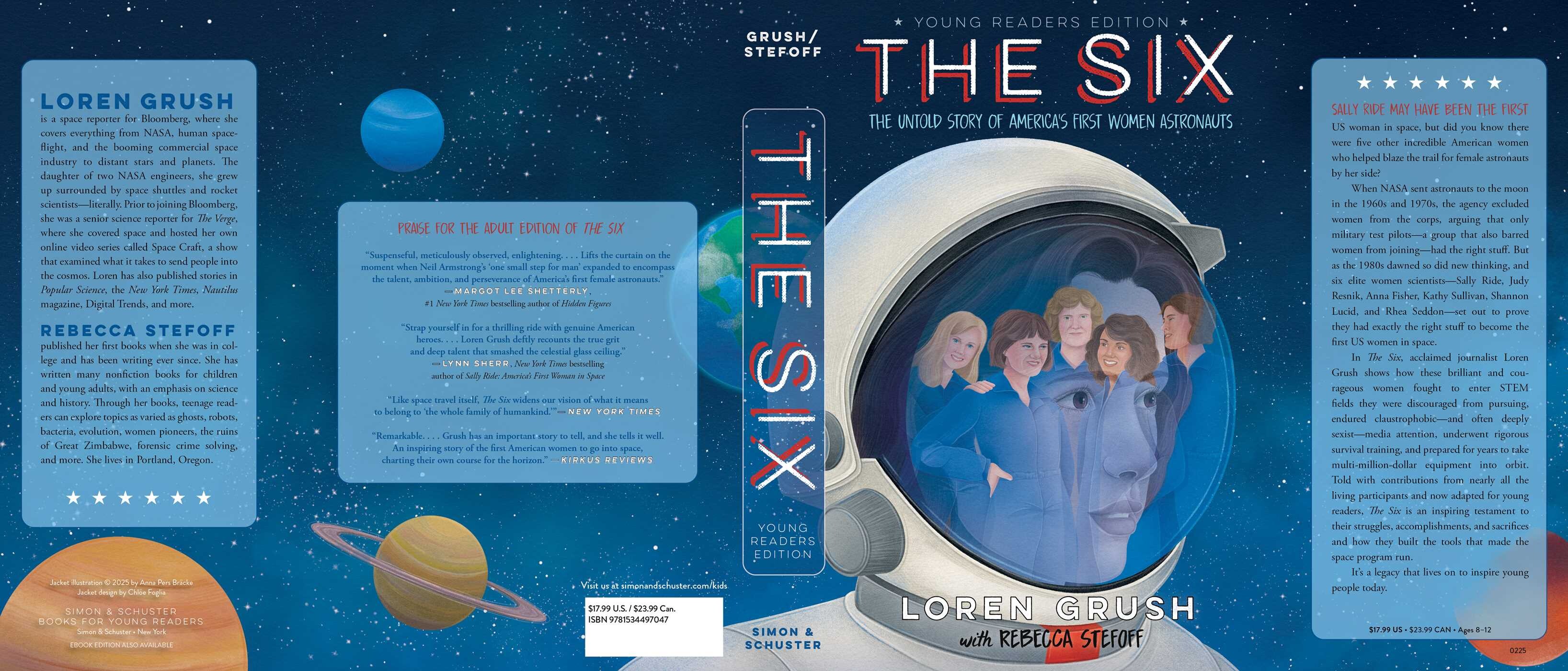
The Six -- Young Readers Edition
The Untold Story of America's First Women Astronauts
By Loren Grush
With Rebecca Stefoff
LIST PRICE $19.99
PRICE MAY VARY BY RETAILER
Get 20% off with code SPOOKY plus free shipping on orders of $40 or more. Discount on physical products only. Terms apply.
Buy from Other Retailers
Table of Contents
About the Book
Two starred reviews!
The “compelling and inspiring” (Kirkus Reviews, starred review) true story of America’s first female astronauts hailed as “suspenseful, meticulously observed, enlightening” by Margot Lee Shetterly, #1 New York Times bestselling author of Hidden Figures, now adapted for young readers.
Sally Ride may have been the first US woman in space, but did you know there were five other incredible American women who helped blaze the trail for female astronauts by her side?
When NASA sent astronauts to the moon in the 1960s and 1970s, the agency excluded women from the corps, arguing that only military test pilots—a group women were also aggressively barred from—had the right stuff. But as the 1980s dawned so did new thinking, and six elite women scientists—Sally Ride, Judith Resnik, Anna Lee Fisher, Kathy Sullivan, Shannon Lucid, and Rhea Seddon—set out to prove they had exactly the right stuff to become the first US women astronauts.
In The Six — Young Readers Edition, acclaimed journalist Loren Grush shows how these brilliant and courageous women fought to enter STEM fields they were discouraged from pursuing, endured claustrophobic—and often deeply sexist—media attention, underwent rigorous survival training, and prepared for years to take multi-million-dollar equipment into orbit.
Told with contributions from nearly all the living participants and now adapted for young readers, this book is an inspiring testament to their struggles, accomplishments, and sacrifices and how they built the tools that made the space program run. It’s a legacy that lives on to inspire young people today.
The “compelling and inspiring” (Kirkus Reviews, starred review) true story of America’s first female astronauts hailed as “suspenseful, meticulously observed, enlightening” by Margot Lee Shetterly, #1 New York Times bestselling author of Hidden Figures, now adapted for young readers.
Sally Ride may have been the first US woman in space, but did you know there were five other incredible American women who helped blaze the trail for female astronauts by her side?
When NASA sent astronauts to the moon in the 1960s and 1970s, the agency excluded women from the corps, arguing that only military test pilots—a group women were also aggressively barred from—had the right stuff. But as the 1980s dawned so did new thinking, and six elite women scientists—Sally Ride, Judith Resnik, Anna Lee Fisher, Kathy Sullivan, Shannon Lucid, and Rhea Seddon—set out to prove they had exactly the right stuff to become the first US women astronauts.
In The Six — Young Readers Edition, acclaimed journalist Loren Grush shows how these brilliant and courageous women fought to enter STEM fields they were discouraged from pursuing, endured claustrophobic—and often deeply sexist—media attention, underwent rigorous survival training, and prepared for years to take multi-million-dollar equipment into orbit.
Told with contributions from nearly all the living participants and now adapted for young readers, this book is an inspiring testament to their struggles, accomplishments, and sacrifices and how they built the tools that made the space program run. It’s a legacy that lives on to inspire young people today.
Excerpt
Chapter One: A New World on Its Way CHAPTER ONE A New World on Its Way
One October night in 1957, a nine-year-old girl named Rhea followed her father out of their Tennessee home. He directed her gaze up toward the dark, toward a tiny blip of light zooming through the night. That moving dot in space was a satellite called Sputnik. Though it was no bigger than a beach ball, Sputnik was making history at that moment. It was the first object that humans had ever sent into orbit around planet Earth.
“You are watching the beginning of a new era,” Rhea’s father told her. “It’s called the space age.” Rhea suddenly understood that a new world was on its way, but she had no idea of the role space would play in her life.
Two years before that, hundreds of miles away in Oklahoma, a twelve-year-old girl named Shannon made a thrilling discovery. She’d been obsessed with space and the idea of traveling through it ever since picking up a science-fiction book in the library. Then, in 1955, she read in a newspaper article that people might soon be sent into space on rockets in real life. Shannon’s excitement kicked into overdrive, and she decided to be part of that adventure. She’d found a way off the planet!
On a May morning in 1961, another nearly twelve-year-old girl, this one named Anna, sat on the dewy grass. She and her classmates were packed around a radio on the lawn of their school in Fort Campbell, on the Kentucky-Tennessee border. Her teacher had let them out of physical education class so they could listen to a fifteen-minute news broadcast.
That broadcast was the journey of Alan Shepard, the first American to travel into space. In Cape Canaveral, Florida, dressed in a silvery space suit and a white helmet, Shepard climbed into a capsule called Freedom 7 that sat on top of a huge rocket. The rocket’s engines fired, and it rose into the sky, launching the capsule into flight. At sixty-two miles above Earth’s surface, Freedom 7 crossed from the atmosphere into space. Before it splashed safely back down into the Atlantic Ocean, the capsule carried Shepard to one hundred sixteen miles above the surface.
Anna imagined it all as she drank in every scratchy word that came out of the little radio. “As he launched and I listened to him,” she recalled years later, “I decided at that moment that, if I ever had a chance, that’s what I wanted to do.”
Rhea’s Sputnik flight, Shannon’s newspaper article, and the Shepard mission that Anna heard on the radio were not just inspiration for girls who dreamed of space. They were part of a contest between two world powers. This contest, the space race, was both scientific and political.
For almost half a century after World War II ended in 1945, the United States competed for global influence with the Soviet Union. (The Soviet Union was centered in Russia and included neighboring states that later became independent nations.) Many American citizens and political leaders saw the Soviet Union as their country’s chief threat and rival. The Soviet Union and the United States never fought directly, but the decades of tension and conflict between them are known as the Cold War. The space race was one part of this war.
Both superpowers had learned during World War II that rockets had great importance in military operations. They also saw that rockets could advance the human presence into space. Neither superpower wanted to be outdone in scientific or technical achievements, and neither wanted the other to gain a military advantage by controlling space, so both the Soviet Union and the United States began to develop space programs. They planned to launch satellites, then probes and vessels with no crews, and eventually spacecraft that would carry travelers.
Sputnik, which Rhea saw from her yard as it crossed the night sky, was a Soviet satellite. While young Rhea gazed in wonder at the first human-made object to orbit Earth, many Americans had a different reaction. The Soviet Union had beaten the US into space, which filled people with fear. In response the United States beefed up science education in American schools and pushed ahead its own space program. In 1958 the US government created the National Aeronautics and Space Administration (NASA) to run the program.
NASA called the people training for future space travel “astronauts,” from Greek words meaning “star” and “sailor.” The Soviets called their future space travelers “cosmonauts,” or sailors of the universe. The Americans hoped to be the first to send a person into space, but the Soviets beat them there, too. Less than a month before Alan Shepard’s short flight, Soviet cosmonaut Yuri Gagarin became the first person to orbit Earth. Not until early 1962 did an American astronaut, John Glenn, orbit the planet.
But the space race was far from over. It would continue over the next several decades while America’s space program grew up—and so did the girls who dreamed of joining it.
Rhea, Shannon, and Anna were not the only ones with their eyes on the stars. A lawn in front of a California house became a space observatory for a science-loving girl named Sally after her parents gave her and her sister a small telescope. As a child Sally often set up the telescope for stargazing sessions under the night sky. She’d look at her favorite constellation, Orion, or the rings of Saturn. But like Rhea, Sally had no idea then that space would be part of her own future, or the important role she would play in the space race.
For two other young women, Judy and Kathy, the spark came later, but all six of these women shared a passionate drive to explore. They also shared a drive to stretch the limits of the possible, especially what people at the time believed was possible for women.
And they did stretch the limits. These six girls would grow up to become the first US women astronauts.
One of them would become the first American woman in space. Another would lose her life journeying there. One would become the first American woman to do a space walk; another would be the first mother to orbit Earth. Together all of the Six would make history not just high above Earth but on the ground. They would usher in another new era by breaking barriers, opening eyes, and showing the world what they could do.
One October night in 1957, a nine-year-old girl named Rhea followed her father out of their Tennessee home. He directed her gaze up toward the dark, toward a tiny blip of light zooming through the night. That moving dot in space was a satellite called Sputnik. Though it was no bigger than a beach ball, Sputnik was making history at that moment. It was the first object that humans had ever sent into orbit around planet Earth.
“You are watching the beginning of a new era,” Rhea’s father told her. “It’s called the space age.” Rhea suddenly understood that a new world was on its way, but she had no idea of the role space would play in her life.
Two years before that, hundreds of miles away in Oklahoma, a twelve-year-old girl named Shannon made a thrilling discovery. She’d been obsessed with space and the idea of traveling through it ever since picking up a science-fiction book in the library. Then, in 1955, she read in a newspaper article that people might soon be sent into space on rockets in real life. Shannon’s excitement kicked into overdrive, and she decided to be part of that adventure. She’d found a way off the planet!
On a May morning in 1961, another nearly twelve-year-old girl, this one named Anna, sat on the dewy grass. She and her classmates were packed around a radio on the lawn of their school in Fort Campbell, on the Kentucky-Tennessee border. Her teacher had let them out of physical education class so they could listen to a fifteen-minute news broadcast.
That broadcast was the journey of Alan Shepard, the first American to travel into space. In Cape Canaveral, Florida, dressed in a silvery space suit and a white helmet, Shepard climbed into a capsule called Freedom 7 that sat on top of a huge rocket. The rocket’s engines fired, and it rose into the sky, launching the capsule into flight. At sixty-two miles above Earth’s surface, Freedom 7 crossed from the atmosphere into space. Before it splashed safely back down into the Atlantic Ocean, the capsule carried Shepard to one hundred sixteen miles above the surface.
Anna imagined it all as she drank in every scratchy word that came out of the little radio. “As he launched and I listened to him,” she recalled years later, “I decided at that moment that, if I ever had a chance, that’s what I wanted to do.”
Rhea’s Sputnik flight, Shannon’s newspaper article, and the Shepard mission that Anna heard on the radio were not just inspiration for girls who dreamed of space. They were part of a contest between two world powers. This contest, the space race, was both scientific and political.
For almost half a century after World War II ended in 1945, the United States competed for global influence with the Soviet Union. (The Soviet Union was centered in Russia and included neighboring states that later became independent nations.) Many American citizens and political leaders saw the Soviet Union as their country’s chief threat and rival. The Soviet Union and the United States never fought directly, but the decades of tension and conflict between them are known as the Cold War. The space race was one part of this war.
Both superpowers had learned during World War II that rockets had great importance in military operations. They also saw that rockets could advance the human presence into space. Neither superpower wanted to be outdone in scientific or technical achievements, and neither wanted the other to gain a military advantage by controlling space, so both the Soviet Union and the United States began to develop space programs. They planned to launch satellites, then probes and vessels with no crews, and eventually spacecraft that would carry travelers.
Sputnik, which Rhea saw from her yard as it crossed the night sky, was a Soviet satellite. While young Rhea gazed in wonder at the first human-made object to orbit Earth, many Americans had a different reaction. The Soviet Union had beaten the US into space, which filled people with fear. In response the United States beefed up science education in American schools and pushed ahead its own space program. In 1958 the US government created the National Aeronautics and Space Administration (NASA) to run the program.
NASA called the people training for future space travel “astronauts,” from Greek words meaning “star” and “sailor.” The Soviets called their future space travelers “cosmonauts,” or sailors of the universe. The Americans hoped to be the first to send a person into space, but the Soviets beat them there, too. Less than a month before Alan Shepard’s short flight, Soviet cosmonaut Yuri Gagarin became the first person to orbit Earth. Not until early 1962 did an American astronaut, John Glenn, orbit the planet.
But the space race was far from over. It would continue over the next several decades while America’s space program grew up—and so did the girls who dreamed of joining it.
Rhea, Shannon, and Anna were not the only ones with their eyes on the stars. A lawn in front of a California house became a space observatory for a science-loving girl named Sally after her parents gave her and her sister a small telescope. As a child Sally often set up the telescope for stargazing sessions under the night sky. She’d look at her favorite constellation, Orion, or the rings of Saturn. But like Rhea, Sally had no idea then that space would be part of her own future, or the important role she would play in the space race.
For two other young women, Judy and Kathy, the spark came later, but all six of these women shared a passionate drive to explore. They also shared a drive to stretch the limits of the possible, especially what people at the time believed was possible for women.
And they did stretch the limits. These six girls would grow up to become the first US women astronauts.
One of them would become the first American woman in space. Another would lose her life journeying there. One would become the first American woman to do a space walk; another would be the first mother to orbit Earth. Together all of the Six would make history not just high above Earth but on the ground. They would usher in another new era by breaking barriers, opening eyes, and showing the world what they could do.
About the Author
Photograph by Christopher White
Loren Grush is a space reporter for Bloomberg, where she covers everything from NASA, human spaceflight, and the booming commercial space industry to distant stars and planets. The daughter of two NASA engineers, she grew up surrounded by space shuttles and rocket scientists—literally. Prior to joining Bloomberg, she was a senior science reporter for The Verge, where she covered space and hosted her own online video series called Space Craft, a show that examined what it takes to send people into the cosmos. Loren has also published stories in Popular Science, The New York Times, Nautilus magazine, Digital Trends, and more.
Product Details
- Publisher: Simon & Schuster Books for Young Readers (February 11, 2025)
- Length: 320 pages
- ISBN13: 9781534497047
- Grades: 3 - 7
- Ages: 8 - 12
- Fountas & Pinnell™ X These books have been officially leveled by using the F&P Text Level Gradient™ Leveling System
Browse Related Books
Raves and Reviews
"Remarkable....This is an inspiring source for readers to understand the grit and persistence needed to break barriers, and the way that determination can create a path for those that follow."
– BCCB, March 2025
"Thoroughly engaging...this will capture the attention of STEM-minded aspiring astronauts."
– Booklist, February 2025
* "What sets this work apart is its ability to weave personal struggles with broader social themes....Richly detailed and deeply human, this title serves as both an inspiring tribute to its subjects and a thought-provoking examination of the ongoing journey toward gender equity in STEM."
– School Library Journal, starred review, February 2025
* "Packed with emotion and heart, the work provides powerful insights into the astronauts’ hopes and ambitions as they broke incredible barriers themselves and paved the way for other women....This riveting account is an effortless and irresistible read that many young readers will find difficult to set down. A superbly executed account of women astronauts who achieved greatness despite overwhelming challenges."
– Kirkus Reviews, starred review, December 2025
"For explorers of all ages, this inspiring account is filled with stories of courage, perseverance, and aspiration. Through challenges, triumphs, and heartbreaks, The Six Young Readers Edition underscores the power of dreaming big and never giving up. The Six will leave you wanting to look up into the stars with wonder and to reach for your own fistful of space."
– Jennifer Willis, "Why We Look Up" columnist for Sky & Telescope magazine
Awards and Honors
- ALA Quick Picks for Reluctant Young Adult Readers
- CBC/NSTA Outstanding Science Trade Book
- CBC Best Children's Books of the Year
- CBC Librarian Favorites
Resources and Downloads
High Resolution Images
-
Book Cover Image (jpg): The Six -- Young Readers Edition
Hardcover 9781534497047
-
Author Photo (jpg): Loren Grush Photograph by Christopher White(0.1 MB)
Any use of an author photo must include its respective photo credit