
Plus, receive recommendations and exclusive offers on all of your favorite books and authors from Simon & Schuster.
0:00 /
The Secret to Belonging
LIST PRICE $10.99
PRICE MAY VARY BY RETAILER
Digital products purchased on SimonandSchuster.com must be read on the Simon & Schuster Books app. Learn more.
Get 20% off with code SPOOKY plus free shipping on orders of $40 or more. Discount on physical products only. Terms apply.
Buy from Other Retailers
Table of Contents
About the Book
Three starred reviews!
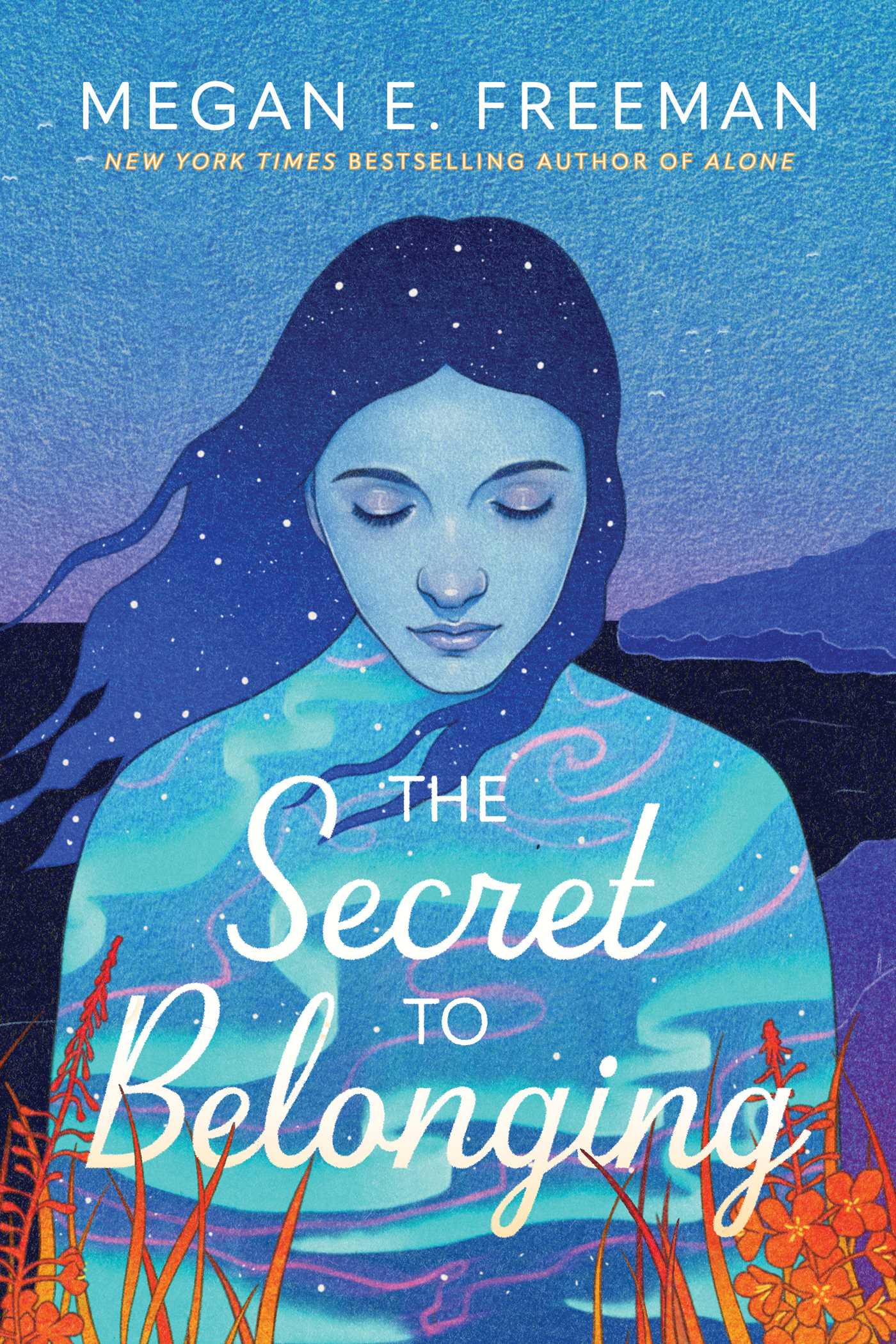
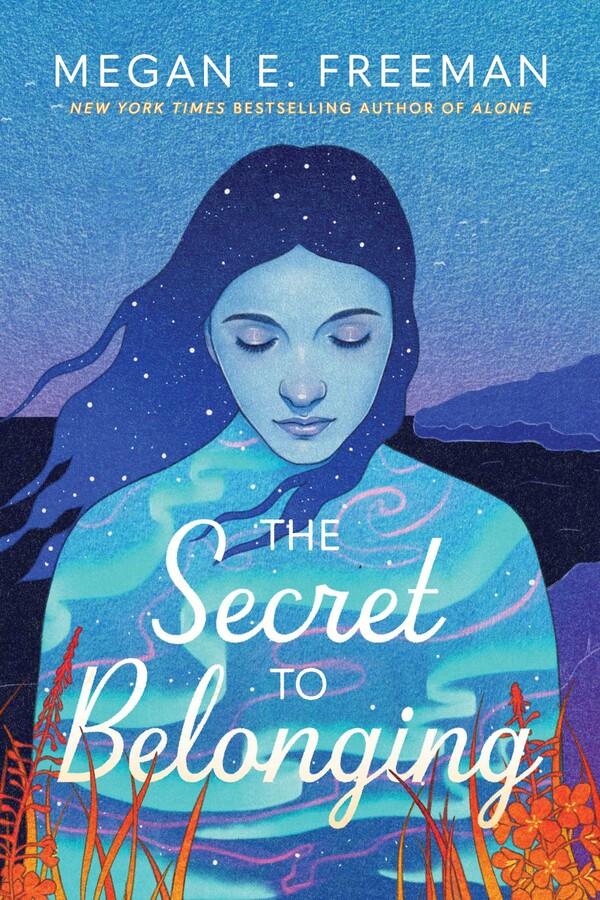
A neglected teen travels to Norway for a fresh start in this “lush…aching” (Publishers Weekly, starred review) coming-of-age novel in verse about longing, love, and the courage to create joy from the ashes of despair by award-winning and New York Times bestselling author Megan E. Freeman.
You are invisible in your own family. Your parents spend all their care and attention on your brother, who is addicted to drugs. Your dreams don’t matter to anyone but you.
Your only ticket out is a college fund left by your grandfather—until your parents use it to pay for your brother’s drug rehab.
Just when your future seems about to collapse, you are offered a lifeline: a scholarship to become an exchange student in a remote part of Norway. It’s an invitation to begin a new life in a new place with new people…a place where you might finally feel like you belong.
A neglected teen travels to Norway for a fresh start in this “lush…aching” (Publishers Weekly, starred review) coming-of-age novel in verse about longing, love, and the courage to create joy from the ashes of despair by award-winning and New York Times bestselling author Megan E. Freeman.
You are invisible in your own family. Your parents spend all their care and attention on your brother, who is addicted to drugs. Your dreams don’t matter to anyone but you.
Your only ticket out is a college fund left by your grandfather—until your parents use it to pay for your brother’s drug rehab.
Just when your future seems about to collapse, you are offered a lifeline: a scholarship to become an exchange student in a remote part of Norway. It’s an invitation to begin a new life in a new place with new people…a place where you might finally feel like you belong.
Reading Group Guide
Get a FREE ebook by joining our mailing list today! Plus, receive recommendations for your next Book Club read.
By clicking 'Sign me up' I agree to the Terms of Use and acknowledge the Privacy Policy and Notice of Financial Incentive. Free ebook offer available to NEW US subscribers only. Offer redeemable at Simon & Schuster's ebook fulfillment partner. Must redeem within 90 days. See full terms and conditions and this month's choices.
Reading Group Guide
The Secret to Belonging
By Megan E. Freeman
About the Book
A neglected teen travels to Norway for a fresh start in this “lush . . . aching” (Publishers Weekly, starred review) coming-of-age novel in verse about longing, love, and the courage to create joy from the ashes of despair by award-winning and New York Times bestselling author Megan E. Freeman.
Discussion Questions
1. The author uses free verse to tell the story. What is the impact of this style choice on the reading experience? How might the story feel different if it were written in prose (i.e., sentences and paragraphs)?
2. How does the second-person “you” voice impact how the reader relates to the protagonist? What do you notice about the voice and style of writing in the final chapter of the book?
3. The text has no identifying features by which a reader can recognize the protagonist or any of her family members. She has no name. Her family members have no names. There is no reference to the physicality of their home or their surroundings. How did this choice impact your experience of the story as you were reading?
4. Some of the themes throughout the book include addiction, mental health, enabling and codependency, unrealized dreams, friendship, betrayal, loss, grief, belonging, loneliness, denial, courage, hope, guilt, the need for acceptance, love, self-discovery, the struggle for independence, and familial responsibility. Which felt most dominant to you? Why? How would you describe this book to someone who hasn’t read it?
5. Every experience, every relationship, and every choice have both prices and prizes. According to the narrator, what are the prizes gained and the prices paid for being invisible? In what ways do these pros and cons of invisibility show up for her?
6. Consider the emotional struggles of isolation in the story. Have you ever felt dismissed or insignificant? Have you ever felt trapped with a sense of helplessness? By what or by whom? How did you address your feelings or situation?
7. What consequences result from the parents’ actions with their son and his addiction? In what ways do their behaviors help or hinder their son’s recovery?
8. Given the “dark cavern” her biological family occupies, do you find the narrator’s initial skepticism about her new host family to be understandable? Why might she be unable to trust the ease and lightheartedness she senses in her first impressions of them? How do you think you might react in similar circumstances?
9. What is the significance of the metaphor of the cupboard in the narrator’s chest? How does it change as the circumstances in her life change?
10. How does the protagonist grow and change over the course of the story?
11. What role does Alison play in the narrator’s life? What characterizes her personality? Why do you think the narrator chose Alison as a friend? What effects does this friendship have on the narrator? What effects does the friendship have on Alison? How does their relationship evolve throughout the story?
12. Were you surprised by Alison’s behavior with Espen? What hints did the author provide that foreshadowed her betrayal?
13. Why do you think the narrator gives Alison a second chance to prove herself as a loyal friend? Given a similar situation, would you forgive a friend who had betrayed you?
14. What is Maura’s role in the story? What qualities does she have that make her a good friend? What does Maura’s friendship mean to the narrator?
15. Maura counsels, “Their dysfunction belongs to them / not you.” (p. 291) What is the protagonist carrying that is not hers to carry? Maura continues, “You have a choice here / you always have a choice.” How does realizing she is not destined to continue the downward spiral of unhealed trauma and familial dysfunction affect the protagonist’s outlook? What positive steps does she take as a result?
16. What distinguishes Espen from anyone else the narrator has known so far? What insights does she gain about herself because of her relationship with him? What does she learn about trust? What does she learn about forgiveness? What does she learn about loyalty and love?
17. The narrator transcends multiple fears on her healing journey from a life in chaos to self-acceptance. Where and with whom did she find strength and courage? Where would you look to find the strength and courage you would need?
18. How is the art of weaving healing to the narrator? What does the significance of the completion of her pledd (woven blanket) suggest in her life story?
19. The narrator remains nameless throughout the story. When Espen asks about her name, she says it means “to strive . . . / to excel / to rival.” (p. 166) But then she says she is “always eclipsed.” What might she mean by this?
20. What role does forgiveness play in the story? Who learns to forgive? Who doesn’t?
21. With references to traditional Norwegian meals prepared and offered with love, the author involves the reader’s senses. What are some cultural traditions around food in your own family? Do you have any favorite family meals?
22. Which aspects of the story were most engaging to you? Which were the most disturbing? Which did you find most endearing or heartwarming? In what ways?
23. What does the narrator finally understand as the secret to belonging? Do you think she is ready to move forward and lead a fulfilling and meaningful life? Why or why not?
24. In your own personal life and experiences, what is your secret to belonging?
Extension Activities
1. The narrator found comfort in Broadway show tunes, as well as songs from more contemporary genres. Create a playlist that provides consolation or encouragement to you. Write a short paragraph about why you included each song and how they comfort or inspire you. Share your playlist with friends who may need reassurance or emotional support.
2. Choose a poem from the book and rewrite it using first-person and/or third-person voice. How does the choice of voice change the feeling, tone, or nature of the poem?
3. The narrator uses a koan to express her profound frustration with her family’s lack of support for or acknowledgment of her skills and accomplishments. Research the origins of koans and how they are used traditionally and in modern practice. What are some of the more well-known koans? Try your hand at writing one yourself.
4. The term friluftsliv or “open-air life” describes the Norwegian love for the outdoors. Combine this with the term allemannsretten or “the right to roam,” and give examples of how this belief in the importance of spending time in nature promotes physical and mental health.
5. The setting in northern Norway is essential to the story. Explore the Danish and Old Norse cultural art of hygge (“belonging to the moment and to each other”) and the Norwegian concept of kos (or the adjective koselig, “having a good time”), which suggests cozy contentment. Both offer feelings of warmth, safety, and comfort. In what ways do the narrator’s host family, Espen’s family, and the students and instructors at the art school exemplify these philosophies? How did these cultural concepts contribute to the narrator’s personal growth? What would you do to create more hygge or kos in your family home?
6. Research the geographical, environmental, and cultural aspects of life in the Land of the Midnight Sun. What might you enjoy about living above the Arctic Circle? What might be difficult?
7. Explore the Pygmalion effect. How does the idea that every one of us needs at least one person to believe in us relate to the story? Who can you trust to show up for you when you’re feeling vulnerable? Do you think you are or could be that person for someone else? In what ways?
This guide was prepared in 2026 by Judith Clifton, Educational Consultant, Chatham, MA.
This guide has been provided by Simon & Schuster for classroom, library, and reading group use. It may be reproduced in its entirety or excerpted for these purposes. For more Simon & Schuster guides and classroom materials, please visit simonandschuster.net/m/prek12-teachers-librarians/teaching-resources.
The Secret to Belonging
By Megan E. Freeman
About the Book
A neglected teen travels to Norway for a fresh start in this “lush . . . aching” (Publishers Weekly, starred review) coming-of-age novel in verse about longing, love, and the courage to create joy from the ashes of despair by award-winning and New York Times bestselling author Megan E. Freeman.
Discussion Questions
1. The author uses free verse to tell the story. What is the impact of this style choice on the reading experience? How might the story feel different if it were written in prose (i.e., sentences and paragraphs)?
2. How does the second-person “you” voice impact how the reader relates to the protagonist? What do you notice about the voice and style of writing in the final chapter of the book?
3. The text has no identifying features by which a reader can recognize the protagonist or any of her family members. She has no name. Her family members have no names. There is no reference to the physicality of their home or their surroundings. How did this choice impact your experience of the story as you were reading?
4. Some of the themes throughout the book include addiction, mental health, enabling and codependency, unrealized dreams, friendship, betrayal, loss, grief, belonging, loneliness, denial, courage, hope, guilt, the need for acceptance, love, self-discovery, the struggle for independence, and familial responsibility. Which felt most dominant to you? Why? How would you describe this book to someone who hasn’t read it?
5. Every experience, every relationship, and every choice have both prices and prizes. According to the narrator, what are the prizes gained and the prices paid for being invisible? In what ways do these pros and cons of invisibility show up for her?
6. Consider the emotional struggles of isolation in the story. Have you ever felt dismissed or insignificant? Have you ever felt trapped with a sense of helplessness? By what or by whom? How did you address your feelings or situation?
7. What consequences result from the parents’ actions with their son and his addiction? In what ways do their behaviors help or hinder their son’s recovery?
8. Given the “dark cavern” her biological family occupies, do you find the narrator’s initial skepticism about her new host family to be understandable? Why might she be unable to trust the ease and lightheartedness she senses in her first impressions of them? How do you think you might react in similar circumstances?
9. What is the significance of the metaphor of the cupboard in the narrator’s chest? How does it change as the circumstances in her life change?
10. How does the protagonist grow and change over the course of the story?
11. What role does Alison play in the narrator’s life? What characterizes her personality? Why do you think the narrator chose Alison as a friend? What effects does this friendship have on the narrator? What effects does the friendship have on Alison? How does their relationship evolve throughout the story?
12. Were you surprised by Alison’s behavior with Espen? What hints did the author provide that foreshadowed her betrayal?
13. Why do you think the narrator gives Alison a second chance to prove herself as a loyal friend? Given a similar situation, would you forgive a friend who had betrayed you?
14. What is Maura’s role in the story? What qualities does she have that make her a good friend? What does Maura’s friendship mean to the narrator?
15. Maura counsels, “Their dysfunction belongs to them / not you.” (p. 291) What is the protagonist carrying that is not hers to carry? Maura continues, “You have a choice here / you always have a choice.” How does realizing she is not destined to continue the downward spiral of unhealed trauma and familial dysfunction affect the protagonist’s outlook? What positive steps does she take as a result?
16. What distinguishes Espen from anyone else the narrator has known so far? What insights does she gain about herself because of her relationship with him? What does she learn about trust? What does she learn about forgiveness? What does she learn about loyalty and love?
17. The narrator transcends multiple fears on her healing journey from a life in chaos to self-acceptance. Where and with whom did she find strength and courage? Where would you look to find the strength and courage you would need?
18. How is the art of weaving healing to the narrator? What does the significance of the completion of her pledd (woven blanket) suggest in her life story?
19. The narrator remains nameless throughout the story. When Espen asks about her name, she says it means “to strive . . . / to excel / to rival.” (p. 166) But then she says she is “always eclipsed.” What might she mean by this?
20. What role does forgiveness play in the story? Who learns to forgive? Who doesn’t?
21. With references to traditional Norwegian meals prepared and offered with love, the author involves the reader’s senses. What are some cultural traditions around food in your own family? Do you have any favorite family meals?
22. Which aspects of the story were most engaging to you? Which were the most disturbing? Which did you find most endearing or heartwarming? In what ways?
23. What does the narrator finally understand as the secret to belonging? Do you think she is ready to move forward and lead a fulfilling and meaningful life? Why or why not?
24. In your own personal life and experiences, what is your secret to belonging?
Extension Activities
1. The narrator found comfort in Broadway show tunes, as well as songs from more contemporary genres. Create a playlist that provides consolation or encouragement to you. Write a short paragraph about why you included each song and how they comfort or inspire you. Share your playlist with friends who may need reassurance or emotional support.
2. Choose a poem from the book and rewrite it using first-person and/or third-person voice. How does the choice of voice change the feeling, tone, or nature of the poem?
3. The narrator uses a koan to express her profound frustration with her family’s lack of support for or acknowledgment of her skills and accomplishments. Research the origins of koans and how they are used traditionally and in modern practice. What are some of the more well-known koans? Try your hand at writing one yourself.
4. The term friluftsliv or “open-air life” describes the Norwegian love for the outdoors. Combine this with the term allemannsretten or “the right to roam,” and give examples of how this belief in the importance of spending time in nature promotes physical and mental health.
5. The setting in northern Norway is essential to the story. Explore the Danish and Old Norse cultural art of hygge (“belonging to the moment and to each other”) and the Norwegian concept of kos (or the adjective koselig, “having a good time”), which suggests cozy contentment. Both offer feelings of warmth, safety, and comfort. In what ways do the narrator’s host family, Espen’s family, and the students and instructors at the art school exemplify these philosophies? How did these cultural concepts contribute to the narrator’s personal growth? What would you do to create more hygge or kos in your family home?
6. Research the geographical, environmental, and cultural aspects of life in the Land of the Midnight Sun. What might you enjoy about living above the Arctic Circle? What might be difficult?
7. Explore the Pygmalion effect. How does the idea that every one of us needs at least one person to believe in us relate to the story? Who can you trust to show up for you when you’re feeling vulnerable? Do you think you are or could be that person for someone else? In what ways?
This guide was prepared in 2026 by Judith Clifton, Educational Consultant, Chatham, MA.
This guide has been provided by Simon & Schuster for classroom, library, and reading group use. It may be reproduced in its entirety or excerpted for these purposes. For more Simon & Schuster guides and classroom materials, please visit simonandschuster.net/m/prek12-teachers-librarians/teaching-resources.
About the Author
Photograph © Matt Crossley
Megan E. Freeman attended an elementary school where poets visited her classroom every week, and she has been a writer ever since. She writes middle grade and young adult fiction. Megan is also a Pushcart Prize–nominated poet. An award-winning teacher with decades of classroom experience, Megan taught multiple subjects across the arts and humanities to students of all ages. She divides her time between northern Colorado and the Texas Gulf Coast. Visit her online at MeganEFreeman.com.
Product Details
- Publisher: Atheneum Books for Young Readers (September 15, 2026)
- Length: 336 pages
- ISBN13: 9781665988421
- Grades: 7 and up
- Ages: 12 - 99
Browse Related Books
Raves and Reviews
* “[A] stunning novel . . . this arresting work’s themes of self-discovery and coming-of-age will resonate with modern teens feeling out of place in their own homes and making their way in the world.”
– Booklist, STARRED REVIEW
* “Written in a sparse, haunting second-person narrative . . . Freeman’s stream-of-consciousness style is raw and honest, refusing to sugarcoat the collateral damage of substance abuse. Readers will appreciate the exploration of the impossible choice between self-preservation and family loyalty. . . . A searing, character-driven exploration of family obligation and the pain of being left behind.”
– School Library Journal, STARRED REVIEW
* ”Spare yet powerful language relays sensate descriptions of the Norwegian backdrop and the cathartic, everyday pleasures the protagonist experiences during her retreat, which expertly juxtapose the profound isolation she feels at home. Restrained and condensed second-person narration cultivates a persuasive sense of immediacy throughout this aching exploration of heartbreak and hope.”
– Publishers Weekly, STARRED REVIEW
"Freeman’s novel in verse offers a hopeful story driven by self-determination. Well-paced and eloquently written . . . this emotional journey leaves a lasting impact and could be the perfect novel for a teen needing to imagine a kinder future beyond their heartache.”
– BCCB
“Freeman weaves rich details into short chapters that vividly establish the settings of both countries . . . A quick-moving, original, and poignant read.”
– Kirkus Reviews
Resources and Downloads
High Resolution Images
-
Book Cover Image (jpg): The Secret to Belonging
eBook 9781665988421
-
Author Photo (jpg): Megan E. Freeman Photograph © Matt Crossley(0.1 MB)
Any use of an author photo must include its respective photo credit