Plus, receive recommendations and exclusive offers on all of your favorite books and authors from Simon & Schuster.
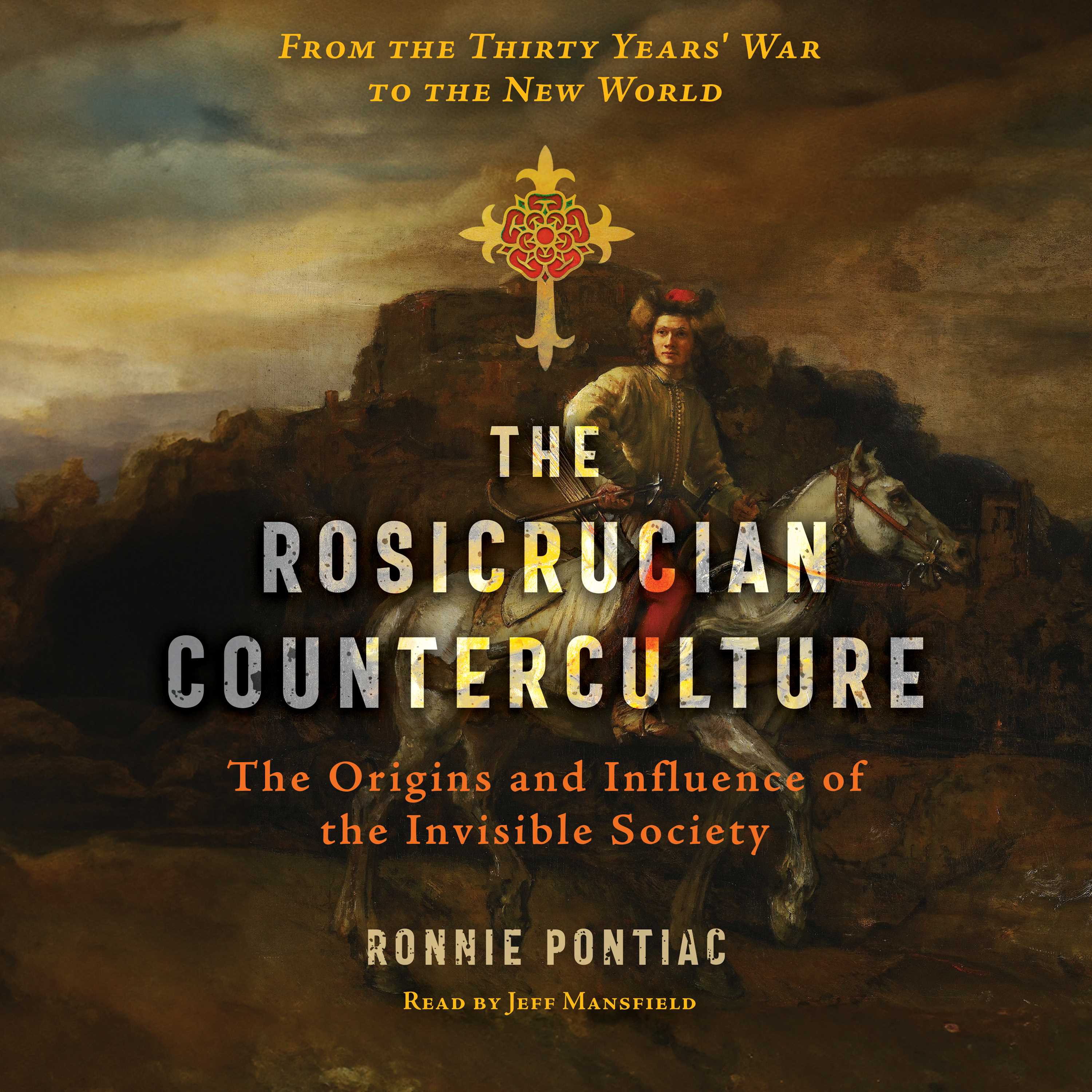
The Rosicrucian Counterculture
The Origins and Influence of the Invisible Society
Read by Jeff Mansfield
Published by Simon & Schuster/Inner Traditions
Distributed by Simon & Schuster
LIST PRICE $17.99
PRICE MAY VARY BY RETAILER
Digital products purchased on SimonandSchuster.com must be read on the Simon & Schuster Books app. Learn more.
Free shipping when you spend $40. Terms apply.
Buy from Other Retailers
Table of Contents
About The Book
• Examines the Rosicrucian involvement of figures like Rene Descartes, Robert Fludd, John Dee, Elias Ashmole, and the alchemist pirate Prince Rupert of the Rhine
• Traces the saga of Rudolf II, Holy Roman Emperor, and his countercultural successors Frederick and Elizabeth, who triggered the Thirty Years’ War
• Shows how Rosicrucianism inspired the English Revolution and explores the Rosicrucianism of John Winthrop the Younger, Connecticut’s founder
Since the appearance of Rosicrucian manuscripts in 17th-century Germany, historians have questioned the authorship, intent, and significance of this esoteric movement. In this book, Ronnie Pontiac shows how Rosicrucianism’s underground influence in the early-modern period continues to the present, providing the important historical context of this invisible society.
Pontiac looks at the esoteric culture around Holy Roman Emperor Rudolf II and his court, including figures like John Dee, Tycho Brahe, and Rabbi Loew, the legendary creator of the Golem of Prague. Despite occultists’ fascination with Rudolf ’s successors, Frederick and Elizabeth, at the start of the Thirty Years’ War—and Rosicrucian efforts to make Frederick the first Protestant Holy Roman Emperor—the esoteric renaissance in Bohemia was short-lived. However, this wasn’t the end of Rosicrucianism.
Pontiac explores the movement’s impact on Oliver Cromwell and the English Revolution as well as individuals such as Robert Fludd, René Descartes, Elias Ashmole, Moritz the Learned, Paracelsus, and William Shakespeare. He then details the movement’s arrival in the New World, including the Rosicrucian activities of Connecticut’s alchemist governor, John Winthrop the Younger. Looking to the present, Pontiac shows how both pop culture and the modern psychedelic counterculture are informed by Rosicrucian ideas, showing the enduring legacy of this esoteric movement.
• Traces the saga of Rudolf II, Holy Roman Emperor, and his countercultural successors Frederick and Elizabeth, who triggered the Thirty Years’ War
• Shows how Rosicrucianism inspired the English Revolution and explores the Rosicrucianism of John Winthrop the Younger, Connecticut’s founder
Since the appearance of Rosicrucian manuscripts in 17th-century Germany, historians have questioned the authorship, intent, and significance of this esoteric movement. In this book, Ronnie Pontiac shows how Rosicrucianism’s underground influence in the early-modern period continues to the present, providing the important historical context of this invisible society.
Pontiac looks at the esoteric culture around Holy Roman Emperor Rudolf II and his court, including figures like John Dee, Tycho Brahe, and Rabbi Loew, the legendary creator of the Golem of Prague. Despite occultists’ fascination with Rudolf ’s successors, Frederick and Elizabeth, at the start of the Thirty Years’ War—and Rosicrucian efforts to make Frederick the first Protestant Holy Roman Emperor—the esoteric renaissance in Bohemia was short-lived. However, this wasn’t the end of Rosicrucianism.
Pontiac explores the movement’s impact on Oliver Cromwell and the English Revolution as well as individuals such as Robert Fludd, René Descartes, Elias Ashmole, Moritz the Learned, Paracelsus, and William Shakespeare. He then details the movement’s arrival in the New World, including the Rosicrucian activities of Connecticut’s alchemist governor, John Winthrop the Younger. Looking to the present, Pontiac shows how both pop culture and the modern psychedelic counterculture are informed by Rosicrucian ideas, showing the enduring legacy of this esoteric movement.
Excerpt
INTRODUCTION
What Is a Rosicrucian?
A scattered dynasty of solitary men has changed the face of
the world. Their task continues.
Jorge Luis Borges
The many years of research that led to this book began when Manly Palmer Hall generously gave me his own copy of A. E. Waite’s The Brotherhood of the Rosy Cross. Reading it while working at the Philosophical Research Society meant I had access to artifacts of the history Waite wrote about. After I read his chapters on the Rosicrucian manifestos, in the PRS library vault I held in my hands the earliest editions. When Waite wrote about the alchemist Bacstrom, whose ocean voyages spanned the globe from Iceland to South Africa, I read Bacstrom’s handwritten journals, and studied his own copy of his Rosicrucian diploma. When Waite wrote about Robert Fludd, I gazed at the famous drawing of Fludd’s monochord in a book by him published during his lifetime. I was moved by the courage and creativity of these independent thinkers.
I’m not a PhD, I’m a storyteller. The stories in this book have been gathered from scholarly sources spanning the centuries, but especially from academic works from the last twenty years because they have revised our understanding of the Rosicrucian counterculture. After the publication of the Rosicrucian manifestos in the early seventeenth century, Europe trembled with anticipation but also fear at the possibility of a hermetic Holy Roman emperor and a universal reformation. A new mythology was born then that continues to influence Western culture, showing up in unexpected places even in the twentieth and twenty-first centuries.
In his classic shtick “Father Flotski’s Triumph” (1960), comedian Lenny Bruce has Dutch, his convict character, dismiss Flotski by accusing him of trying “to give me all that Rosicrucian jazz and all that other non-scheduled theologies there.”
The hit comedy show Second City Television (SCTV) in 1985 aired an episode of the old black-and-white western series The Cisco Kid. The comedians dubbed their own voices over the original dialogue. In one scene Cisco and his sidekick Pancho earnestly debated Rosicrucian ideas about the individuality of the soul.
In 2015, James Ellis wrote an article called “Shadows in the Shadows: The Rosicrucians, a Fake Secret Society, Had a Real Impact on the World” for the Newsweek special edition he curated: “Secret Societies: Infiltrating the Inner Circle” (Ellis 2015).
In her book Provocations: Collected Essays on Art, Feminism, Politics, Sex, and Education, Camille Paglia offered this definition: “The Rosicrucians, called Illuminati, claimed their esoteric order was founded in ancient Egypt and was brought to Europe by knightly crusaders; however, it probably dates from the seventeenth century. Its cabalistic and Hermetic imagery includes the Rose” (Paglia 2019, 450).
What does the rose cross symbolize? A question with many answers. Some scholars have written that the rosy color is the blood of Christ. Others that Jesus is the Rose of Sharon. Some have pointed out that the Rose of Sharon is the congregation, together and individually, tended by the Lord like roses in a garden. Another perspective tells us that the alchemists wrote about collecting a mysterious substance they used the Latin word ros (dew) to describe. Some called it celestial sweat, and the first matter, a distillation of cosmic energy. The purifying and healing power of the first matter was said to be the key to the philosopher’s stone. Others say it is the symbol of the purity every alchemist must attain before achieving the Great Work. The New Age interpretation equated the rose on the cross with the Hindu symbol of the jewel in the lotus. The rose and the jewel represent the soul; the cross and the lotus represent the body. It has been suggested more recently that the rosgathering Rosicrucians were practicing what might be called a tantric sexual discipline.
Rosicrucian is one of the most romanticized proper nouns in the esoteric world. A sometimes specifically defined creature but also a mirror in which many different reactions have been revealed—from the widespread panic of the French when they found posters put up overnight declaring the arrival of the Rosicrucians (probably a prank) to the admiration of English and colonial intellectuals, such as the celestial intelligencers of the seventeenth century, among whom the Rosicrucian ideal was synonymous with free medicine, protection of the oppressed, alchemy, early science, and a dedication to the betterment of society. Inspired by the Rosicrucians, people here and there lived exceptional lives; for example, John Winthrop the Younger, the alchemist who was a founding father of Connecticut.
The Rosicrucians have been described as Protestant Jesuits, but also the devil’s Jesuits, and even a trick of the Jesuits. They’ve also been revered as the ultimate example of Christian spiritual evolution. They have been blamed for throwing fuel on the fires that started the bloody Thirty Years’ War between Protestants and Catholics. That war, along with the plague and starvation it caused, killed roughly one out of ten Europeans. Some areas lost half their population. But what does any of that have to do with the relatively more recent public Rosicrucian groups that, alongside their esoteric studies, have practiced good citizenship through public service?
Our subject is complex. We’ll explore many lives and events before we are able to gain some understanding of context. Our protagonists will appear, disappear, and appear again, each time revealing more about themselves and history. We will move forward and backward in time, tracing the intricate patterns of many tributaries as though we were viewing them all from above and glancing where our curiosity leads us.
Inspired by recent research, the result of a significant evolution in esoteric studies in academia, the intent of this book is to provide historical context for the emergence of the Rosicrucians. Where did it happen? Who is most likely to have been behind it? What events inspired them to take such a radical stance? We will let them define themselves, and we will see how others defined them. More questions will be raised than answered.
This book is the third of a trilogy on counterculture. The first, American Metaphysical Religion: Esoteric and Mystical Traditions of the New World, presented a neglected lineage of spiritual pioneers, some fraudulent, some sincere, but frequently a combination of both—an important and constant influence on four hundred years of American history.
The second in the counterculture trilogy, The Magic of the Orphic Hymns: A New Translation for the Modern Mystic, coauthored with Tamra Lucid, examines a uniquely important source for not only esoteric but also literary, musical, and artistic countercultures throughout Western history, including connections with Rosicrucianism.
This, the third book in the series, explores the lives of three of the most influential people of their time: Holy Roman emperor, art collector, and occultist Rudolf II (1552–1612) and the often-romanticized royal couple Frederick V (1596–1632) , Elector Palatine, and his wife, Elizabeth Stuart (1596–1662), briefly the king and queen of Bohemia. She was also known as the Queen of Hearts. Many books have been written about her, but almost every author copied sources that were little more than propaganda, not to mention the sins of omission of generations of scholars who considered the letters of women unworthy of study or publication.
Beginning the research that became this book, I expected to share a romance between two esotericists who happened to be monarchs. I imagined them fostering the Rosicrucian movement. Twenty years of scholarship by Nadine Akkerman provides a richly detailed new vision of Elizabeth that contradicts the romantic ideal exemplified in a wonderful but sometimes inaccurate book by Frances Yates, The Rosicrucian Enlightenment.
Yates argued that it’s unlikely that either Father CRC (Christian Rosy Cross) or his secret Rosicrucian society ever existed. Instead, the movement was born from a loose-knit group of esotericists who were also social critics. But Yates sometimes proposed connections and organizations where they have not been found. A colleague of hers said she squared every circle. Yates did not have the benefit of the letters and other papers associated with Elizabeth that we now have thanks to the scholarship of Dr. Akkerman.
Some of the visions of the Rosicrucians have been realized. For example, the Invisible College—their ideal school that could be anywhere at any time without being physically present—has been achieved somewhat online. When all the knowledge in the world is online, we will have the realization of the Rosicrucian book M, which holds the keys of the world; M for mundi, Latin for “of the universe.” The Book of the Universe was found with other secret holy books in the vault where the founder of Rosicrucianism’s body was supposed to have been discovered perfectly preserved. Every aspect of the vault including its measurements symbolized cosmic harmony and truth.
What Is a Rosicrucian?
A scattered dynasty of solitary men has changed the face of
the world. Their task continues.
Jorge Luis Borges
The many years of research that led to this book began when Manly Palmer Hall generously gave me his own copy of A. E. Waite’s The Brotherhood of the Rosy Cross. Reading it while working at the Philosophical Research Society meant I had access to artifacts of the history Waite wrote about. After I read his chapters on the Rosicrucian manifestos, in the PRS library vault I held in my hands the earliest editions. When Waite wrote about the alchemist Bacstrom, whose ocean voyages spanned the globe from Iceland to South Africa, I read Bacstrom’s handwritten journals, and studied his own copy of his Rosicrucian diploma. When Waite wrote about Robert Fludd, I gazed at the famous drawing of Fludd’s monochord in a book by him published during his lifetime. I was moved by the courage and creativity of these independent thinkers.
I’m not a PhD, I’m a storyteller. The stories in this book have been gathered from scholarly sources spanning the centuries, but especially from academic works from the last twenty years because they have revised our understanding of the Rosicrucian counterculture. After the publication of the Rosicrucian manifestos in the early seventeenth century, Europe trembled with anticipation but also fear at the possibility of a hermetic Holy Roman emperor and a universal reformation. A new mythology was born then that continues to influence Western culture, showing up in unexpected places even in the twentieth and twenty-first centuries.
In his classic shtick “Father Flotski’s Triumph” (1960), comedian Lenny Bruce has Dutch, his convict character, dismiss Flotski by accusing him of trying “to give me all that Rosicrucian jazz and all that other non-scheduled theologies there.”
The hit comedy show Second City Television (SCTV) in 1985 aired an episode of the old black-and-white western series The Cisco Kid. The comedians dubbed their own voices over the original dialogue. In one scene Cisco and his sidekick Pancho earnestly debated Rosicrucian ideas about the individuality of the soul.
In 2015, James Ellis wrote an article called “Shadows in the Shadows: The Rosicrucians, a Fake Secret Society, Had a Real Impact on the World” for the Newsweek special edition he curated: “Secret Societies: Infiltrating the Inner Circle” (Ellis 2015).
In her book Provocations: Collected Essays on Art, Feminism, Politics, Sex, and Education, Camille Paglia offered this definition: “The Rosicrucians, called Illuminati, claimed their esoteric order was founded in ancient Egypt and was brought to Europe by knightly crusaders; however, it probably dates from the seventeenth century. Its cabalistic and Hermetic imagery includes the Rose” (Paglia 2019, 450).
What does the rose cross symbolize? A question with many answers. Some scholars have written that the rosy color is the blood of Christ. Others that Jesus is the Rose of Sharon. Some have pointed out that the Rose of Sharon is the congregation, together and individually, tended by the Lord like roses in a garden. Another perspective tells us that the alchemists wrote about collecting a mysterious substance they used the Latin word ros (dew) to describe. Some called it celestial sweat, and the first matter, a distillation of cosmic energy. The purifying and healing power of the first matter was said to be the key to the philosopher’s stone. Others say it is the symbol of the purity every alchemist must attain before achieving the Great Work. The New Age interpretation equated the rose on the cross with the Hindu symbol of the jewel in the lotus. The rose and the jewel represent the soul; the cross and the lotus represent the body. It has been suggested more recently that the rosgathering Rosicrucians were practicing what might be called a tantric sexual discipline.
Rosicrucian is one of the most romanticized proper nouns in the esoteric world. A sometimes specifically defined creature but also a mirror in which many different reactions have been revealed—from the widespread panic of the French when they found posters put up overnight declaring the arrival of the Rosicrucians (probably a prank) to the admiration of English and colonial intellectuals, such as the celestial intelligencers of the seventeenth century, among whom the Rosicrucian ideal was synonymous with free medicine, protection of the oppressed, alchemy, early science, and a dedication to the betterment of society. Inspired by the Rosicrucians, people here and there lived exceptional lives; for example, John Winthrop the Younger, the alchemist who was a founding father of Connecticut.
The Rosicrucians have been described as Protestant Jesuits, but also the devil’s Jesuits, and even a trick of the Jesuits. They’ve also been revered as the ultimate example of Christian spiritual evolution. They have been blamed for throwing fuel on the fires that started the bloody Thirty Years’ War between Protestants and Catholics. That war, along with the plague and starvation it caused, killed roughly one out of ten Europeans. Some areas lost half their population. But what does any of that have to do with the relatively more recent public Rosicrucian groups that, alongside their esoteric studies, have practiced good citizenship through public service?
Our subject is complex. We’ll explore many lives and events before we are able to gain some understanding of context. Our protagonists will appear, disappear, and appear again, each time revealing more about themselves and history. We will move forward and backward in time, tracing the intricate patterns of many tributaries as though we were viewing them all from above and glancing where our curiosity leads us.
Inspired by recent research, the result of a significant evolution in esoteric studies in academia, the intent of this book is to provide historical context for the emergence of the Rosicrucians. Where did it happen? Who is most likely to have been behind it? What events inspired them to take such a radical stance? We will let them define themselves, and we will see how others defined them. More questions will be raised than answered.
This book is the third of a trilogy on counterculture. The first, American Metaphysical Religion: Esoteric and Mystical Traditions of the New World, presented a neglected lineage of spiritual pioneers, some fraudulent, some sincere, but frequently a combination of both—an important and constant influence on four hundred years of American history.
The second in the counterculture trilogy, The Magic of the Orphic Hymns: A New Translation for the Modern Mystic, coauthored with Tamra Lucid, examines a uniquely important source for not only esoteric but also literary, musical, and artistic countercultures throughout Western history, including connections with Rosicrucianism.
This, the third book in the series, explores the lives of three of the most influential people of their time: Holy Roman emperor, art collector, and occultist Rudolf II (1552–1612) and the often-romanticized royal couple Frederick V (1596–1632) , Elector Palatine, and his wife, Elizabeth Stuart (1596–1662), briefly the king and queen of Bohemia. She was also known as the Queen of Hearts. Many books have been written about her, but almost every author copied sources that were little more than propaganda, not to mention the sins of omission of generations of scholars who considered the letters of women unworthy of study or publication.
Beginning the research that became this book, I expected to share a romance between two esotericists who happened to be monarchs. I imagined them fostering the Rosicrucian movement. Twenty years of scholarship by Nadine Akkerman provides a richly detailed new vision of Elizabeth that contradicts the romantic ideal exemplified in a wonderful but sometimes inaccurate book by Frances Yates, The Rosicrucian Enlightenment.
Yates argued that it’s unlikely that either Father CRC (Christian Rosy Cross) or his secret Rosicrucian society ever existed. Instead, the movement was born from a loose-knit group of esotericists who were also social critics. But Yates sometimes proposed connections and organizations where they have not been found. A colleague of hers said she squared every circle. Yates did not have the benefit of the letters and other papers associated with Elizabeth that we now have thanks to the scholarship of Dr. Akkerman.
Some of the visions of the Rosicrucians have been realized. For example, the Invisible College—their ideal school that could be anywhere at any time without being physically present—has been achieved somewhat online. When all the knowledge in the world is online, we will have the realization of the Rosicrucian book M, which holds the keys of the world; M for mundi, Latin for “of the universe.” The Book of the Universe was found with other secret holy books in the vault where the founder of Rosicrucianism’s body was supposed to have been discovered perfectly preserved. Every aspect of the vault including its measurements symbolized cosmic harmony and truth.
About The Reader
Product Details
- Publisher: Simon & Schuster/Inner Traditions (February 3, 2026)
- Runtime: 7 hours and 41 minutes
- ISBN13: 9781668145722
Browse Related Books
Raves and Reviews
“Ronnie Pontiac’s The Rosicrucian Counterculture brings to 21st-century life the most famous secret society that never existed. Who were the Rosicrucians? Not even René Descartes could find out. But when the mysterious Rosicrucian Manifestos turned up in a sleepy German town shortly after the great Hermes Trismegistus lost his street cred, an esoteric treasure hunt began with participants who are still at work today. Join in: you may discover that you were a Rosicrucian and didn’t know it.”
– Gary Lachman, author of Touched by the Presence, The Return of Holy Russia, and Maurice Nicoll
“Ronnie Pontiac vividly places the Rosicrucian phenomenon in the rich historical tapestry from which it emerged and traces its multiple reverberations up to modern times. The book covers a broad panorama with a lively and engaging style.”
– Christopher McIntosh, author of Occult Russia, Occult Germany, and The Call of the Old Gods
“Ronnie Pontiac’s history of the Rosicrucian movement is learned, engaging, and remarkably breezy reading. He has done an enormous service in sifting what can be known about the Rosicrucians from speculation and fancy.”
– Richard Smoley, author of A Theology of Love and Forbidden Faith
“Ronnie Pontiac’s remarkable talent for researching hidden history and esoteric secrets, combined with his passion for storytelling, really shines through in this masterwork! He takes us on a captivating journey through time, brilliantly demonstrating how Rosicrucian countercultural ideals have shaped civilizations for centuries and continue to influence contemporary culture today. This is a must-read that revolutionizes our understanding of our modern world by illuminating the invisible threads that connect our past and present.”
– Heather Diane Lauvia, translator of Etteilla’s The Seven Nuances of the Hermetic Philosophical
“This work is simply dazzling. It follows a single Rosicrucian thread to unfold a vast historical tapestry of people and events made real through a prose that sings with life. Ronnie Pontiac describes himself as a storyteller, and it is with this special gift that he invites the reader to step from the past into the present, bearing the blessings of the phoenix: counterculture itself.”
– Naomi Ozaniec, priestess of Isis, founder of The House of Life, and author of Becoming a Garment of
“Ronnie Pontiac’s The Rosicrucian Counterculture traces the deep and often overlooked roots of Rosicrucianism, following its flowering within the heart of the European intellectual tradition in the 16th and 17th centuries and its eventual diffusion across the Atlantic into early American culture. In doing so, he reveals how this esoteric current helped shape the often-hidden spiritual, artistic, and philosophical undercurrents that continue to resonate today. With both scholarly rigor and evocative storytelling, Pontiac illuminates the enduring legacy of a visionary tradition that is too often overlooked within European culture and its transatlantic inheritors.”
– Ian H. Gladwin, coauthor of Letters on the Royal Art and writer for the Rosicrucian and Hermetic Tra
“With The Rosicrucian Counterculture, Ronnie Pontiac has crafted a unique viewfinder for the tradition of Rosicrucianism, whose history has long been clouded by various interpretations, myths, and mystery. Expertly navigating the murky waters of the historical record, while remaining engaging, exciting and invigorating, The Rosicrucian Counterculture resuscitates Rosicrucianism for a modern audience. Pontiac’s meticulous research is woven into a literary cloth that reads part history, part novella, methodically leading the reader through a thicket of pre-Enlightenment haute culture and politics by way of an intriguing series of intersecting byways. Approaching the subject with palpable wonder, while remaining intellectually honest, Pontiac has given us an invaluable resource in the study of esotericism in western culture. Those interested not only in the history, but in the heart of the Rosicrucian phenomenon will find ample sustenance in these pages.”
– Ike Baker, author of Ætheric Magic and host of the Arcanvm Podcast
“Rather than offering tidy revelations, Pontiac invites readers into a more mature engagement with occult history, valuing context, discernment, and intellectual honesty as much as mystery itself. The Rosicrucian Counterculture is a wonderful resource for those seeking to better understand the historical underpinnings of this long-lasting esoteric movement.”
– Alanna Kali, Musing Mystical
Resources and Downloads
High Resolution Images
-
Book Cover Image (jpg): The Rosicrucian Counterculture
Unabridged Audio Download 9781668145722