

Plus, receive recommendations and exclusive offers on all of your favorite books and authors from Simon & Schuster.
Table of Contents
About The Book
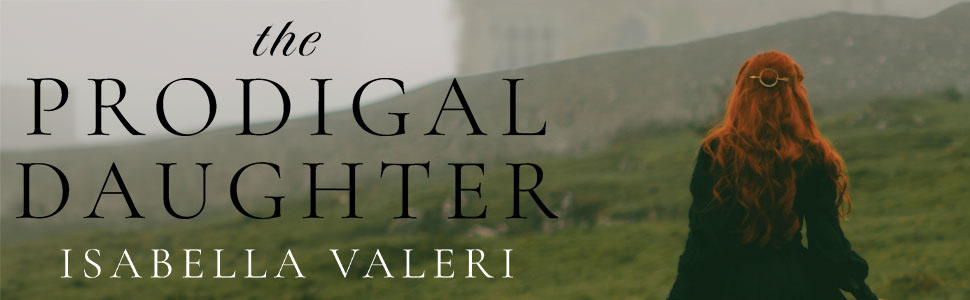
The youngest daughter of a secretive dynasty returns from a decade in exile, but will her ancestral home become her prison? The intoxicating follow-up to Isabella Valeri’s Letters from the Dead.
Now twenty-two years old, the only daughter of the sixteenth generation is abruptly recalled from her indolent life abroad to return to the isolated Alpine estate where she spent the first twelve years of her life. So many of her childhood memories have been savaged in her long absence. Her grandfather, the former patriarch of the family, is dead. “The Chairman,” her father, now rules the dynasty with a cold and clinical efficiency. Recalling his daughter was no accident. The dynasty has plans for the only “daughter of the line.”
She quickly finds herself engaged to an aristocratic playboy whom she does not love. A virtual prisoner and without so much as a sympathetic ear, she must begin to solve the mysteries her grandfather first hinted at; the enigmas of a 350-year-old secret society that she must untangle if she is to enlist those who might help her escape.
Her efforts to co-opt her father’s trusted aide seem inspired, but will her growing feelings for this handsome, former mercenary with a mysterious past compromise all her efforts, and can she ever be sure where his true loyalties lie?
Even worse, the shadowy forces intent on destroying her family grow ever bolder. With time running out, she must accept the lifetime of servitude that loyalty demands, or choose a dangerous path that could see her forever branded a traitor and cost those closest to her everything.
Now twenty-two years old, the only daughter of the sixteenth generation is abruptly recalled from her indolent life abroad to return to the isolated Alpine estate where she spent the first twelve years of her life. So many of her childhood memories have been savaged in her long absence. Her grandfather, the former patriarch of the family, is dead. “The Chairman,” her father, now rules the dynasty with a cold and clinical efficiency. Recalling his daughter was no accident. The dynasty has plans for the only “daughter of the line.”
She quickly finds herself engaged to an aristocratic playboy whom she does not love. A virtual prisoner and without so much as a sympathetic ear, she must begin to solve the mysteries her grandfather first hinted at; the enigmas of a 350-year-old secret society that she must untangle if she is to enlist those who might help her escape.
Her efforts to co-opt her father’s trusted aide seem inspired, but will her growing feelings for this handsome, former mercenary with a mysterious past compromise all her efforts, and can she ever be sure where his true loyalties lie?
Even worse, the shadowy forces intent on destroying her family grow ever bolder. With time running out, she must accept the lifetime of servitude that loyalty demands, or choose a dangerous path that could see her forever branded a traitor and cost those closest to her everything.
Excerpt
Chapter One: No Secret So Close CHAPTER ONE No Secret So Close
HE SENT ASHORE FIRST A SCOUTING party with two dozen men and, shortly after, a hundred more to serve as an advance guard and to secure a beachhead. The three-day passage had been both stealthy and uneventful and, at least with respect to their intentions, the element of surprise seemed intact. It was late afternoon by then, and the picturesque combination of brilliant blue skies and the darker cobalt of the waters must have seemed the best sort of omen for such a venture. The initial parties debarked and, with the supply line from the flotilla and the flanks thus protected, he was himself rowed ashore to make landfall on a stony beach ringed with palm trees.
He made his headquarters a bit farther inland, in an olive grove, and the band played as the campaign supplies, arms, and the remaining men (nearly one thousand of them), not to mention millions in gold bullion, were unloaded. Landing it all would take until the next morning, but that night a great crowd of people—some spontaneous amalgam of curious locals, fortune seekers, and worshippers attracted by the rumor that had scorched across the countryside like wildfire—flocked to the olive grove and, as the band played on, gave the entire affair an almost festive feel.
The nearest enemy fortification was seized by land and without bloodshed, though his first scouting party was captured in the initial attempt. By moonrise on the second evening, the troops formed up and marched—the advance guard of one hundred men screening the larger formation—in complete silence. But not before he ordered that those same seven ships that had borne him across deep blue waters to the sandy shores upon which he landed should weigh anchor and sail for the north. The Emperor, you see, could not afford to allow his men the hope of evacuation by sea.
I was only twelve years old when my tutor, Professor Dr. Dr. Jürgen Siegfried Lechner (certainly a candidate for the title of best raconteur I have ever known), told me the story of Napoleon’s landing near Golfe-Juan in the South of France. We had, weeks before, covered the rise to power of the famous Corsican, his mastery of strategy and the genius with which he deployed his novel military tactics (not to mention techniques of propaganda), his defeat in the War of the Sixth Coalition and, after the signing of the Treaty of Fontainebleau codifying the terms of his surrender, his exile to Elba.
Unlike those earlier lectures, however, on that particular spring day the Professor waited until the afternoon to begin our session. It was strange enough for him not to insist that we start first thing in the morning, but then he did something else rather unusual: He began his lesson by cautioning me that the tale he was about to tell was a rather maudlin bit of business. I remember thinking that there was real sadness in the way he issued that particular warning.
He had been pacing back and forth in his office—hands clasped behind his back in the way that gave the diminutive man his familiar, deliberate, rocking gait. It was his habit to do so as he spoke, though he stopped now and again to accentuate this point or that, to gesture with his hand like an orator of ancient Greece, or to look me in the eye and deliver, from memory, some famous quote or mantra germane to the assertion he was making. But, before the warning, he stopped mid-stride and froze for several seconds. Only then did he walk behind the antique desk next to the window in his office, sit down, run his hand through his white and habitually disheveled hair, and lean back in his chair to gaze out of his office windows into my mother’s rose gardens beyond.
I had taken my usual place at the conference table in his office. When he sat, I turned in my chair to look at him, but it was some time before he returned my gaze and, when he finally did, I found him wearing the most curious and sad expression. It embarrassed me somehow, this out-of-place show of emotion from my tutor, and I averted my eyes, focusing instead on a small bust of Cardinal Richelieu, a recent addition to his office that the Professor had taken from his private collection (and a piece I later learned was a study Bernini himself had crafted prior to his far more famous work of the same subject). I think I actually closed my eyes, because I can remember quite distinctly the scents of that office—old paper bound in leather, woodsmoke from the little fireplace, the peppery hints of my grandfather’s pipe tobacco—the sanctuary where I had been enthralled by so many similar lectures.
“It is ‘the Hundred Days,’?” Professor Lechner said. “The first chapter, I am afraid, of the Emperor’s final act that we must now see replayed.”
I remember being struck by that turn of phrase; that we should “see” the Emperor’s final act replayed. But I believe that the Professor’s choice of words was quite deliberate and, I had learned, entirely justified. After all, his lectures were not the dull rote of recitation, or the bland recounting of colorless facts and dates. Quite the contrary. He delivered to his audience of one passionate and vivid orations that would have just as easily enthralled an auditorium filled to capacity.
But I had no time to dwell on this nuance. The Professor’s voice was quieter than it had been and, when he used his handkerchief to remove a speck of dust from the corner of his eye, I could almost believe he might have shed a tear.
I was so struck by his behavior that I nearly stood and went to him, thinking to comfort him from some private woe. But there was never any question of us being equals in the way that would allow him to accept such consolation. I was his pupil, and, despite the great affection between us, in personal matters he held himself coolly aloof.
The moment slipped away and, with the tragic climax foreshadowed, the Professor stood once more and launched into his tale; a tale he imbued with such a sense of adventure and wonder that I was beyond mesmerized. And thus it was that I found myself holding my breath with every twist and turn of the master lecturer’s recitation of the history of the War of the Seventh Coalition.
Professor Lechner could deliver, entirely extemporaneously, the most captivating monologues on almost any period, and any category of strategy, international relations, warfare, or diplomacy. But Napoleon’s flight from his first exile on the island of Elba was the stuff of grand adventurism; histories from an era when great men could, of their own accord, alter the destinies of lands, kingdoms, and empires, and move (for good or for ill) the fortunes of millions of subjects. That the Professor chose such rich material with which to beguile me, rather an unlikely recipient of such knowledge as the youngest sibling of my generation and the only girl, was no accident. But that was another nuance I would not fully understand until many years after his death.
That afternoon in “Lechner Hall,” the room that for half a year was transformed into the center of my singularly unusual education, I imagined myself right there in that olive grove, not two miles east of Cannes, with Napoleon and his men. And then, over the next two days of sessions in the Professor’s cozy office, pictured myself as one of the Emperor’s loyal marshals; bound to his fate as he marched to the edge of the oblivion that awaited him at Waterloo, that final battle that the Duke of Wellington was compelled to describe as “… the nearest run thing you ever saw.”
When Professor Lechner ended the third and final lecture on the subject, it was with the most mournful description of Napoleon’s surrender aboard the HMS Bellerophon, one that left me in tears.
Years later, it was a chance glance at a calendar that gave the lie to a long-standing impression I held (and one I think the Professor worked hard to convey): that his lesson plans for me were only loosely organized and prone to wander along haphazard and meandering paths. When I thought back and recalled the lectures that had led up to his exegesis on the Hundred Days, I was shocked. They had given me all the prerequisite knowledge and background to appreciate even the most minute nuances of the Corsican’s last campaign. To have omitted even one of them would be to dramatically diminish the impact that the Professor’s tale of the Emperor’s end had upon me. Yet, and though he had never highlighted the fact, it was then that I realized that he had begun the tale at three o’clock on the afternoon of March 1, 1993. It was, to the minute, the 178th anniversary of Napoleon’s Golfe-Juan landing.
Now I recognize what amounted to his private celebration of that particular date as part and parcel of the elegance and class that so defined Professor Lechner, but I knew too little about my tutor at the time to guess at the cause of the moment’s sadness that he had let slip in my presence. I have since come to believe it was a function of his own experience; that his interactions with power and the powerful, his successes and failures in advising (and, indeed, creating) great men poised to consummate great deeds, had evoked in him some aesthetic sympathy for Napoleon despite the Professor’s nearly rabid streak of monarchism. How could he not shed a tear for the failure of such a grand and daring enterprise, no matter who was at the helm of the historic endeavor?
Long after, I had occasion to view at the Tate a painting by Sir William Quiller Orchardson. It depicts Napoleon aboard the Bellerophon wearing his signature greatcoat and two-pointed hat, gazing mournfully off into the distance as the vessel bears him, as a captive, away to England and, eventually, his final exile and death on Saint Helena. Behind him, at some remove and huddled in a cluster, his retinue and a curious British naval officer whisper amongst themselves, unable to take their eyes from the defeated Emperor as he watches, for the last time, the French coast slip into the sea behind the English ship of the line.
Seeing the painting brought back those days on the estate with Professor Lechner, and the dark concluding theme that the old master of the acquisition and maintenance of power had given to me when his tales of Napoleon were at an end:
Though he nearly conquered France with a starting force of only a thousand men; even with all his charisma, his guile, and the support of the French people who rallied to his side; and though any campaign is riddled with mistakes on both sides, the Emperor was powerless to overcome one decisive error. In the closing days of that final campaign, he allowed others to dictate when and where he would fight.
Viewing the Orchardson work at the Tate was the second time that particular warning had come back to me. The first was almost a decade after the Professor’s lecture, as the private jet Karl and I had boarded in Vienna banked and set up to land on my family’s private airstrip. For some reason, it was still ringing clearly in my head when, in the moments after we landed, but just before Karl opened the cabin door and extended the stairs, I began to wonder if abandoning Phoebe in Vienna, taking Karl’s hand, and boarding the jet—standing frozen as he closed the door and sealed the outside world away from me once more—had not been a terrible mistake.
After we landed but before I could deplane, a flash of memory, one that, despite the somber mood, almost coaxed from me a thin smile: the multiyear mini rivalry that simmered between Karl and Phoebe. They could not have been less alike, those two.
Karl, who had been my grandfather’s aide. Karl, the imposing figure who lurked in the background of almost every formative scene in my life. Karl, who—though I hated the terms and the paternalism they implied—had effectively served as my chaperone and bodyguard since my first exile. Karl, who, no matter the environment, seemed almost able to will himself visible or invisible as he preferred. Karl, who in all likelihood had murdered on behalf of my father and my grandfather before him. Perhaps even for my mother.
And, perhaps, some of those dear to me were among his victims.
It was little wonder that he should have clashed with Phoebe, my boarding school and then college roommate, the big sister I never had, my first lover and my first great love.
The sound of the cabin door opening broke my reverie and, moments after I descended the jet’s stairs and finally stood upon my ancestral lands once more, marked the end of my first exile. But though Napoleon’s had lasted only ten months, mine had endured nearly ten years. Moreover, the Emperor was a well-experienced forty-five years old when he landed at Golfe-Juan. I had just turned a painfully naïve twenty-one some weeks earlier, and did not have a thousand men or millions in gold bullion with which to launch a campaign. In fact, I had no support, no constituency, and no plan of any kind to find the answers to the lingering questions that had, in part at least, weakened my resolve and pulled me back into my family’s orbit.
Old dynasties (such as my family have ruled for hundreds of years) have their own weight, their own mass. Their influence, their gravitas, exerts force on everything around them. And, when it is focused on something (or someone) in particular, escape from my family’s “event horizon” is nearly impossible. In some ways, dynasties are sovereigns unto themselves.
Standing there on the tarmac, at a time and place that, to borrow from the Professor’s terms, had been dictated to me by others, I took in the first loamy scents of the forests around our little private airport. It caused me to remember another curious fact that Professor Lechner had revealed at the end of his final lecture on the dark end the Emperor eventually met.
The Great Powers had been in conference at the Congress of Vienna when news of Napoleon’s flight from exile arrived. Though he had not yet set foot on French soil and, given his stealthy carriage over the sea, they could not have known his intentions to be hostile, the Great Powers immediately declared him an outlaw. Even after his earlier defeat, Napoleon had never relinquished the title of Emperor. But by designating him an “outlaw,” the Great Powers stripped him of the protections normally afforded a fellow sovereign. And yet, no provision in the Treaty of Fontainebleau had actually forbidden Napoleon to leave Elba. He had, at the time of that rather preemptive and aggressive move by the Great Powers, not actually violated the Treaty of Fontainebleau at all.
The Professor had not spelled out for me the implications of this rather arbitrary act by the Great Powers. In fact, as the Professor died before he could finish my course of study, its import was one of many capstone pieces missing from the grand mosaic he had been assembling for me; a never-realized final synthesis of so many topics was, I am certain, among the Professor’s plans, intended to help crystallize a grander destiny that he and my grandfather had in mind for me. But only months after Professor Lechner’s demise, my grandfather, perhaps the only man who could have completed what he and Professor Lechner had begun, was killed. Together, their untimely deaths meant that I knew precious little about the potency of the forces arrayed against me, or the nuances of the dangerous power games they played, games that my darkly exotic education had been intended to arm me to compete in.
Given those unfortunate omissions, I could not have known it standing there on the tarmac that balmy morning in 2002, but it would not be long before I understood better than I ever wished to, and from personal experience, that the danger in making war on sovereigns is that they are apt to change the rules of the game whenever it suits them.
THE FLIGHT FROM Vienna had taken just over an hour, and the sun was rising when we landed. It had been years since I had seen our little airstrip, and a large hangar had since been built next to its smaller predecessor. As we taxied to a spot in front of the open hangar doors, I saw five newer jets all in my family’s traditional black and silver-trimmed livery tucked neatly away in the immaculate interior.
For years, I had had my family’s jets at my beck and call but, for some reason, seeing them lined up, rather than as luxurious air taxis to be summoned and quickly discarded, occasioned darker thoughts. Perhaps those shadowy impressions had to do with the fact that the last time I had seen the hangar itself had been when Karl left me alone on the plane that sped me to my long exile. Or perhaps, I hoped, the vague sense of foreboding I felt was a simple case of nerves.
I can only imagine how melodramatic and sentimental (perhaps even histrionic) must seem this description, but the most powerful feelings welled up in me when I finally stepped off the jet and, after nearly a decade, set foot back onto my family’s lands—my ancestral home. Even being anxious in my later years to shy away from my tendency to suspect the existence of the supernatural, I am hard-pressed to deny the almost charismatic hold the estate had over me. It was as if, after long years in hiding, I had returned to the insatiate embrace of some bewitching sect of an ancient secret society. And perhaps that was even truer than it seemed.
Of a sudden, a slew of memories struck me: my grandfather’s many anthropomorphisms of our lands—how, fighting to protect them, the founding patriarchs of our family had literally bled into the very soil beneath my feet. How, tied to this sacred land, their watchful ghosts brooded over their progeny, willing them to regard with reverence the traditions of old. I thought of the first time I sat in the East Salon, the smaller abode my grandfather had traded for his place in the Grand Study when he began to hand the torch over to my father.
Not even twelve years of age, I remember shrinking down in the high-backed visitor’s chair set before his desk, legs too short for my feet to reach the floor, caught under the gaze of the three backlit death masks carved from translucent stone and mounted on the wall above and behind my grandfather. Though they were almost certainly our ancient ancestors among the Helvetii, whom Caesar had conquered so long before, my grandfather had refused to name the figurines beyond the glib comment: Just some dead, old Romans.
It is a hand rising from our lands, he had said that same night, of the sapling branches I had noticed scratching against the window of the East Salon as the wind outside pulled them to and fro.
The hand of the dead beckons to us, he had added with a conspiratorial whisper and the raising of his white, bushy eyebrows. Or begs for admittance.
It had occasioned in me a frightful vision: skeletal fingers reaching up from the soil of our estate, desperate to touch us—the descendants of the founding patriarchs—eager to possess us and ensure that we would also fight to preserve the estate for all eternity.
With these fantastic thoughts in my head, I could not help but wonder if my return had been in response to some whispering and impossibly ethereal call.
I wanted to discount these childish notions (and perhaps I even succeeded after a fashion) but my grandfather wouldn’t have discarded them.
Of course I do, he had readily volunteered when I asked him if he believed in ghosts.
While I should like to imagine his mystical bravado nothing more than a bit of teasing directed at his favorite grandchild, to this day I am not at all certain he wasn’t entirely in earnest.
A light breeze slipped from the dark forests that surrounded the airstrip, creeping to me across the tarmac and bearing with it the fresh scent of the trees, the moss, the earth—the soil itself. The last mists of the evening fog still lingered in the trees beyond, and I could feel their hints on my cheeks.
The air about great rural estates is simply different than in the modern world and, though it had been so many years, I found that I had missed the clean, crisp scent and the feel of it. It occasioned a little shudder that ran from my cheeks and neck, where the breeze had first touched me, all the way down my back and legs.
Had something deeper pulled me back to the estate? Certainly, some part of the way I had been brought home felt coercive. True, to all outward appearances, I had chosen to board the jet of my own volition. Karl had not forced me, after all, only offered his hand. Or had he?
Do you want to keep your father waiting? he had said, and it struck me that it was likely no accident that this phrase was among the most likely to seduce me.
But when I hesitated, he had not stopped there.
Your exile is ended, he had added.
And that was compelling of itself. But while these lures might well have been enough, it was the thinly veiled threat that had ended all debate.
You lead her into harm’s way, he had warned.
It was not the first time he had uttered something like it. And that particular family of phrases had a murderous history.
Phoebe, I thought.
It was then that I noticed that, from across the tarmac, Karl was looking at me. Gazing into me, or perhaps through me, with those fathomless eyes.
Oh, Phoebe. What have I done?
Regret washed over me, and I could feel my thoughts slipping into horrible visions of beautiful Phoebe on the run, helpless in the face of the dark and relentless forces that pursued her, forces that I was responsible for unleashing.
You lead her into harm’s way.
The blades of a brand-new Eurocopter parked on our helipad started turning and, as the turbine wound up, it began to emit a shrill, keening whine. Jarring as it was, I was suddenly glad of those distractions, for when I looked at Karl again, I found his expression slowly changing from vague notice to the kind of curiosity that I knew would prompt him to action.
And that made my blood run cold.
With all my might, I willed my leaden feet to move, to step from the spot on our tarmac at the base of the jet’s stairs that I had first touched.
Thankfully, they yielded—though slowly at first—to my demands, and, chin held artificially high, I found myself affecting some species of counterfeit poise as I strode past Karl and toward the waiting helicopter.
AS WE CAME in to land at the helipad nearest the manor, our pilot slid the craft laterally from left to right at about fifteen feet over the concrete surface, converting the aircraft into an expensive, turbine-powered leaf blower, sweeping away any loose debris that might otherwise kick up into the blades or, worse, score the immaculate jet-black paint on the craft.
Lucas, my family’s head butler, was at the front door of the manor to greet the Land Rover that ferried us up from the helipad. There was a touch of thinning hair here and there and maybe a wrinkle or two more, but otherwise he seemed every bit the immaculate and officious terror he had always been. True to form, he proceeded to direct me without so much as a pregnant pause.
“Mademoiselle’s mother is taking her ease in the gardens of the Residence,” he said.
I could only shake my head and smile that, beneath the facade of formal courtesy, he could not resist slipping in the familiar insult that was his trademark with me: the use of that antiquated French salutation. Still, the implication was clear: I was expected to call on my mother without delay.
I was still wearing clothes from a night out in Vienna and I knew this would not escape comment. Sure enough, Lucas made a show of looking me over top to bottom with a sour expression on his face.
“Mademoiselle,” he said, turning up his nose as if scenting something foul, “will want to refresh her attire first.”
AFTER NEARLY A decade, I had no idea where my keys would have gotten to, but I found my apartments unlocked. The books I thought I remembered leaving out all those years before were in the same place on my reading table, but something else betrayed the appearance of inviolability as an illusion: Everything had been cleaned. Every surface buffed. Even the antique silver tea sets on my shelves had been recently polished. It was an eerie sort of timelessness: as if my apartments had been maintaining themselves in my absence, patiently awaiting the return of their mistress.
In my closets, I found that every stitch of clothing I had left behind was gone, replaced by what appeared to be an entirely new wardrobe. Some garments were off-the-rack, but other couture pieces must have been made to order. I sensed my mother’s hand, and I knew without trying them on that everything would fit perfectly.
When I made to undress, the necklace I had found years before hidden in Professor Lechner’s writing kit came to hand. I slipped off the long chain I wore double-looped around my neck and laid the piece on the side table next to my closet mirrors. The thought of the secret catch that opened the platinum lacework pendant and the pea-sized ruby hidden inside occasioned visions of secrets and mysteries yet unknown. I could not suppress a nostalgic smile.
Slowly, I peeled off my clothes and, under the half dozen shower nozzles in my bathroom, rinsed the remnants of Vienna away, then pressed my forehead against the cool tiles of the shower walls to dispel thoughts of Phoebe—would she follow my instructions and make her way to our flat in London? Would she use the cash to slip away for good? Would she remember the PIN code on my ATM card? How far could she get on the nearly half million British pounds left in my account? Even after I had shaken these worries, I was gripped by pangs of guilt over the way I had abandoned her.
Collecting myself, I put on a flowing white sundress before setting out to find my mother. I would only realize later how symbolic a choice of attire it had been, but that revelation only served to remind me that the guilt I had tried to bleach away, the past I had tried to forget, would hardly stay vanquished for very long.
THE SUN WAS far above the horizon by then and it was much warmer than it had been in Vienna. As I walked through the hedge garden and to “the Residence,” the section of the estate my mother considered her very own, there was a particular threshold after which the landscaping became just slightly more perfect, the edgings on the hedges just perceptibly crisper, and the flower beds just noticeably brighter, all signs of my mother’s discerning eye and deft touch.
I had wanted to be furious with her, or at least to somehow muster the courage to deliver a few cutting verbal barbs. For nearly half an hour before landing, I had practiced the scene in my head. But part of me knew that, rehearsal or not, I would be hard-pressed to challenge my mother so openly once I saw her. Perhaps, I hoped, I could at least manage a rude double entendre or three.
I thought myself prepared to overcome the shock of her charisma, but when I found her—clad in white linen under a wide-brimmed white hat, standing unattended in the rolling meadow near her gardens—her appearance completely disarmed me. There was a cool breeze coming down from the distant and snowcapped Alpine peaks, running waves through the fields of tall grass that surrounded the landscaping. Now and again the occasional tendril of her hair wandered from the shade under her hat and glowed translucently in the bright sun. She addressed a plein air easel atop which she had broken out her fountain pen and writing kit. It had long been her habit to write letters in this way (as if painting them while drawing inspiration from the view of the scenery beyond) to her many and mysterious correspondents.
She was as beautiful, as elegant, and as intimidating as I remembered. And, like so many others before me, in that moment I found myself completely in her thrall.
I had been ready to curtsy but instead she embraced me wordlessly. It was a breach of etiquette certainly; a surprisingly informal gesture that had a deeply calming effect on me. Against all my better instincts, I thought the act felt genuine (and so another part of me was suspicious of it immediately).
The unorthodox greeting ritual behind us, her attention fixated on her letters once again. At a total loss as to what to do with myself, I identified a flat spot a few feet from the three-legged easel and reclined in the grass there, silently watching the occasional cloud melt into the blue air and enjoying the unfamiliar serenity of my mother’s quiet presence as she “took her ease.” I had the impression that she had changed somehow; that, since I had last seen her, some victory had given her a measure of security that dulled the sharper edges of her personality.
Quite some time passed—nothing but silence between us—until, finally, paperweights securely stacked atop her correspondence, she walked over to where I lay. I noticed for the first time that she was barefoot, which was another oddly casual state for her. She smoothed the sides of her dress down with both hands, elegantly crossed her ankles, and with that natural grace that was uniquely hers, descended onto the grass next to me. It was a sort of curtsy that ended with her sitting, legs tucked neatly beneath her, almost as if that particular spot had been crafted for that very purpose.
“You will find that there are two sorts of youth,” she said after a moment. “Though I shouldn’t be surprised to learn that you have discovered this already, even in the barren airs of North America. There is the trivial, infantile youth, carefree and oblivious; and there is the youth of the feminine, of ageless perseverance. The former you must, as I quite think you have, dispel at an early age but the latter you must never, never lose.”
She looked at me with a distant sort of fondness, before inclining her head into the hint of a breeze that wafted over us just then, closing her eyes for a moment, and cryptically changing the subject.
A member of the estate staff appeared from somewhere and, only moments after my mother ordered Bellinis, they were conveyed to us on a silver tray. It was surreal, sitting in the grass and drinking with my mother as if we were merely old friends catching up.
“Are you comfortable?” she said after a time.
“I am. Thank you.”
“I must admit, I had my doubts, given what I heard about the state you were in when you arrived.”
“It took some doing to wash off the outside world,” I said.
It was exactly what she wanted to hear, and I only hoped I had delivered it with the appropriate amount of ennui to make it credible. It was a strange instinct I had then, that I was habitually deceiving her in some way. But the more I thought about it, the more I was content to be on the estate again.
“I know precisely what you mean,” she said. “I’ve quite missed you, as it happens. Now that you will be home again for a while, I hope you don’t mind if I say that I am looking forward to spending time with you.”
It was an unexpected, even novel sort of warmth from her. It took an enormous effort not to gawk at her, to search her expression for some sign of artifice, to divine the deception in her speech and uncover the intrigues she was architecting. But when I looked into her eyes I could find nothing untoward. Her bearing was so benign that I forgot for the moment the manner of my summoning.
“I would like that, Mother,” I said.
But no sooner had I uttered those words than I understood why my mother’s turn of phrase had so shaken me. They had once been Phoebe’s words.
All that matters to me is spending time with you, Phoebe had said, reaching across the table at the brick-oven pizza restaurant to squeeze my hand.
I had nearly broken down and confessed everything to Phoebe then, and had almost given in to that temptation again as I stood with her on the tarmac in Vienna. They came back to me: the fantasies that Phoebe might come to live with me on the estate, the visions of us together, culminating in the absurd picture of Phoebe and my mother sitting for afternoon tea in the Rose Salon.
This new demeanor of my mother’s sparked some faint hope that it all was not quite so impossible as I had believed. But then I realized that I had been staring at my mother for a long interval.
“What?” I said, coming back to myself.
“I asked if you are quite all right.”
Her glare was penetrating, and behind it was a suspicion, perhaps even a dark and possessive jealousy.
“Yes,” I said, much too urgently. “I am fine.” But that hardly mollified my mother. “Just the last vestiges of the outside world,” I insisted. “It—” I searched for the right words—“taints one.”
I feared that I had made a grave error. That I had shown her far more than I should have. Her dark gaze did not abate right away, and my imagination was eager to fill the abyss behind the limbal rings in her eyes with any number of horrible possibilities.
But finally, her expression softened and she gave me a thin smile.
“I think I understand,” she said.
I was not at all convinced she had so easily dismissed what she had seen; what I had let slip. Rather, I feared, I had given her a dangerous glimpse of my attachment to the world outside, to Phoebe, and that my clumsy effort to hide it had only compounded matters. Sinister visions began to intrude on the edges of my psyche: Phoebe walking home alone late at night, oblivious to the dark figure behind her, a figure drawing ever closer, destined to intercept her before she reached her front door. The estate would not, after all, tolerate a rival for my affections.
You lead her into harm’s way.
My mother’s smooth transformation from the casual, to suspicion, and back to courtesy was so easily effectuated that it terrified me; it was as if some decision had been made.
“There is plenty of time to treat yourself to a bit of spa before tonight’s formal reception,” she said. “Dinner in the Grand Dining Hall will follow. Attire will be white tie with decorations, but do not fret over your evening wear. I have selected something quite special for you. But before all that, I do hope you will join the family in the Rose Salon for informal lunch.”
And then, her commands delivered, and my momentary slip and overcompensating efforts to cover it up apparently forgotten, she gave me a warm smile, turned her chin up, and closed her eyes once more, letting the sun sneak under the brim of her hat so she could feel it on the fair skin of her face. A pair of swallows, just blurs really, chased each other in and out of the nearby tree before darting away in a chattering streak of birdsong that faded into the distance.
“Tell me,” my mother said, without lowering her chin or opening her eyes. “Now that your foray into the world is behind you, do you feel you took much from the experience?”
Unanswered, her question lingered in the air between us for a long time.
AFTER MY MOTHER dismissed me, I made my way back to my apartments, not a little upset that, even essentially knowing that it was happening to me, I had so easily fallen into her thrall. I daydreamed for a while, trying to understand whether her ability to effortlessly manipulate me was a function of some weakness on my part, or simply that she had attained total mastery of that particular skill. I spent a long time looking out at the beautiful weather, thinking about my mother’s suggestion that I take “a bit of spa” (and wondering what sort of nefarious purpose it might contain), before it occurred to me that it was a perfect day to go riding.
I rang down for a maid, intending to ask her to bring me some riding clothes, but when I saw the girl who presented herself at my doors the request caught in my throat. She was sixteen or seventeen and so familiar that my brain refused to process anything else until I recognized her.
“Cipriana?” I said.
“Yes, miss?” the girl said, curtsying a second time. My rude stare had obviously made her uncomfortable.
“But you don’t look a day older.”
She blanched and looked down at her feet. “You are thinking of my cousin, miss. We were both named for our grandmother.”
“Your cousin?”
“She was a maid here before me, some years ago.”
“Of course,” I said, regaining my composure. “She was my maid, you know.”
“No, miss, I didn’t. I’m sorry. She came here to the estate and ran away before I ever got to see her again.”
“Ran away?”
“Yes, miss. To California, I guess.”
“Why on earth would she do that?”
“She had a boyfriend, they say. We aren’t supposed to talk about it.”
I thought of Augustin, his hand around the young maid’s throat, then pushed the memory that threatened away; deep down somewhere I hoped it would stay.
“I remember her fondly,” I said. “She used to braid my hair sometimes.”
The young maid looked at her feet again and chanced a question.
“Do you think California is beautiful? I should very much like to see it sometime.”
“It is very beautiful,” I said. And then changed the subject.
“Well, Cipriana the Younger,” I said, and, though the name would obviously take some getting used to for both of us, that drew a smile from her. “Can you find some riding clothes about my size?”
She looked me over, nodded enthusiastically, curtsied, and vanished.
The breeches she brought back were perhaps a little tight, and the helmet had seen better days, but the riding shirt, jacket, and boots fit almost perfectly.
I paraded myself in front of her. Caught in the moment, she clapped her approval before casting her eyes to the floor.
“No.” I smiled, lifting her chin gently. “I’m glad you like it.”
I spun a little pirouette for her. She grinned again and that made me smile just a little.
I WAS SURPRISED TO find a new section had been added to the stables. When I looked more carefully, I saw why: The vast majority of the horses were field hunters. Stag hunts had been serious events when I was a girl, attracting guests from everywhere for the early morning gatherings. In my absence, my father had apparently taken up my grandfather’s famous patronage of the tradition.
It had been years since I rode, and the groom obviously hadn’t expected anyone that day, but, seeing me, he sprang to his feet and, after a formal bow, was all smiles.
“Milady, so wonderful to see you. It has been too long.”
“Then it is hello again, I suppose.”
“Come with me,” he said, sweeping an arm wide toward the box stalls.
He led me to a gorgeous Appaloosa, white with a riot of black spots that made her look like some wonderful cross between a zebra and a leopard.
“She’s beautiful,” I said. “What’s her name?”
“You should know. You named her.”
It took me a moment before I put it together.
“Verve?” I said, remembering my old horse, Vim’s foal.
“The very same,” the groom said with a broad smile.
She was already nosing at me before I took a couple of the apples from the stable bin and palmed them for her. And, just like that, we connected.
We rode down a winding path into the valley before looping across the ravine and back up through the beginnings of the foothills. The terrain and foliage were familiar to me, but I was wandering. Still, Verve knew where she wanted to go.
A little summer sun shower caught us early on, a solitary rain cloud that did little more than sprinkle us, but its wet gusts found their way down my shirt and inside the lapels of my riding jacket. I huddled down and close to Verve and let the reins loose. I wrapped my arms around her, pressed my cheek against her neck, and closed my eyes. The rhythm of Verve’s gallop and the pace of her breath were hypnotic, and I gripped her with my knees and let my mind wander until I saw myself from above, blending into the contours of the lands around me, blurred against the passing trees, melting into the estate until I was one with it all: the sky, the white clouds, and the bright green vegetation of the season.
It was more than enough to wash away the apprehension I had felt back at the airstrip, and many of the long-forgotten pangs of homesickness that had so plagued me during my early years of exile at Curie Hall resurfaced so as to be sated. To hear my mother tell it, my grandfather had kidnapped me and hidden me away from my own family at the curiously named all-girls boarding school on the East Coast during some manner of succession fight with my father. What truth could be found in that accusation I did not yet know, but it was certainly one of the questions I fully intended to have answered.
Whatever had passed before, deep down I had wanted to be welcome on the estate once again. And, though the tall trees cast long shadows across the forest and all around me, what I felt was only the seductive, familiar red of the warm sunlight filtering through my closed eyelids.
I felt Verve slow to a trot and emit a couple of quick snorts. When I sat up and opened my eyes, we were in a clearing I did not recognize. I had probably spent hundreds of hours on horseback exploring our lands, but it was an area atop a ridge to the south I had not frequented.
I dismounted and led Verve to the middle of the clearing and had something of an epiphany then: I had been invited back to the estate. It was the first time since I was a little girl that I felt truly welcome anywhere. Gone was the apprehension I had felt before: that the estate was a living, breathing thing, but somehow malevolent. There, under that big sky, warm sun on my face, and the wind whispering to me through the tree leaves, I almost imagined our lands themselves greeting me, a long-lost family member finally returned to them; no longer an alien body to be rejected.
I mounted Verve again and started toward the stables, but she tugged and worked her bit in protest, obviously not ready to go back. I gave her the rein she wanted, and she turned and took us deeper into the woods. Just as we crested a rise and stood looking across the incredible vista into the valley below, a whining roar from above shattered the peace of the forest and spooked Verve so badly that, to keep her from bolting, I had to rein her in after she reared up.
I looked skyward and saw the source of the noise: Flaps and gear down, hissing through the air, a white private jet was on approach to our airstrip. I leaned down and whispered in Verve’s ear to calm her and watched as the plane landed and taxied. We were much too far away to see who had deplaned, but I squinted to see regardless as they made their way to the helipad. The jet eventually parked next to four others on the tarmac, none of which had been there when we landed that morning, and none of which were adorned with our telltale black and silver livery.
I DON’T KNOW WHY I snuck back into the manor after riding. I suppose the experience had been so intensely personal I didn’t want to dilute it with small talk with whomever I might find in the Grand Foyer. After that, I only managed to walk a short way down the hall toward the back stairwells before I ran into a commotion of sorts. Half a dozen of the domestic staff milled around the double doors leading to one of the manor’s larger salons. They were trying to navigate a series of dishes and drinks either onto or off a wheeled serving cart. One of the senior members of the staff saw me out of the corner of her eye and cleared her throat. The commotion stopped in an instant and everyone turned to look at me.
“Good morning, miss,” the senior staffer said. Before I could answer, she turned and snapped at one of the other girls. “Elena, can’t you see milady is soaked? Run and fetch some more towels.”
“No, really,” I said, but it was too late. Elena had bolted around the corner and down the hall like a hare in flight.
“Well, well,” said a voice from right behind me. “It’s thinner than I remember…” Before I could turn around, there was a sharp stinging slap on my left buttock. “… but otherwise I’d know that tight little ass anywhere.”
I whirled around to face the speaker, ready to deck whoever had touched me. He was attired in black tie, but his hair was mussed up as if he had been wrestling with someone, and when I turned around, his face sank. Clearly, my assailant had been expecting someone else.
I recognized him immediately.
Yves Gaspard Böhm.
HE SENT ASHORE FIRST A SCOUTING party with two dozen men and, shortly after, a hundred more to serve as an advance guard and to secure a beachhead. The three-day passage had been both stealthy and uneventful and, at least with respect to their intentions, the element of surprise seemed intact. It was late afternoon by then, and the picturesque combination of brilliant blue skies and the darker cobalt of the waters must have seemed the best sort of omen for such a venture. The initial parties debarked and, with the supply line from the flotilla and the flanks thus protected, he was himself rowed ashore to make landfall on a stony beach ringed with palm trees.
He made his headquarters a bit farther inland, in an olive grove, and the band played as the campaign supplies, arms, and the remaining men (nearly one thousand of them), not to mention millions in gold bullion, were unloaded. Landing it all would take until the next morning, but that night a great crowd of people—some spontaneous amalgam of curious locals, fortune seekers, and worshippers attracted by the rumor that had scorched across the countryside like wildfire—flocked to the olive grove and, as the band played on, gave the entire affair an almost festive feel.
The nearest enemy fortification was seized by land and without bloodshed, though his first scouting party was captured in the initial attempt. By moonrise on the second evening, the troops formed up and marched—the advance guard of one hundred men screening the larger formation—in complete silence. But not before he ordered that those same seven ships that had borne him across deep blue waters to the sandy shores upon which he landed should weigh anchor and sail for the north. The Emperor, you see, could not afford to allow his men the hope of evacuation by sea.
I was only twelve years old when my tutor, Professor Dr. Dr. Jürgen Siegfried Lechner (certainly a candidate for the title of best raconteur I have ever known), told me the story of Napoleon’s landing near Golfe-Juan in the South of France. We had, weeks before, covered the rise to power of the famous Corsican, his mastery of strategy and the genius with which he deployed his novel military tactics (not to mention techniques of propaganda), his defeat in the War of the Sixth Coalition and, after the signing of the Treaty of Fontainebleau codifying the terms of his surrender, his exile to Elba.
Unlike those earlier lectures, however, on that particular spring day the Professor waited until the afternoon to begin our session. It was strange enough for him not to insist that we start first thing in the morning, but then he did something else rather unusual: He began his lesson by cautioning me that the tale he was about to tell was a rather maudlin bit of business. I remember thinking that there was real sadness in the way he issued that particular warning.
He had been pacing back and forth in his office—hands clasped behind his back in the way that gave the diminutive man his familiar, deliberate, rocking gait. It was his habit to do so as he spoke, though he stopped now and again to accentuate this point or that, to gesture with his hand like an orator of ancient Greece, or to look me in the eye and deliver, from memory, some famous quote or mantra germane to the assertion he was making. But, before the warning, he stopped mid-stride and froze for several seconds. Only then did he walk behind the antique desk next to the window in his office, sit down, run his hand through his white and habitually disheveled hair, and lean back in his chair to gaze out of his office windows into my mother’s rose gardens beyond.
I had taken my usual place at the conference table in his office. When he sat, I turned in my chair to look at him, but it was some time before he returned my gaze and, when he finally did, I found him wearing the most curious and sad expression. It embarrassed me somehow, this out-of-place show of emotion from my tutor, and I averted my eyes, focusing instead on a small bust of Cardinal Richelieu, a recent addition to his office that the Professor had taken from his private collection (and a piece I later learned was a study Bernini himself had crafted prior to his far more famous work of the same subject). I think I actually closed my eyes, because I can remember quite distinctly the scents of that office—old paper bound in leather, woodsmoke from the little fireplace, the peppery hints of my grandfather’s pipe tobacco—the sanctuary where I had been enthralled by so many similar lectures.
“It is ‘the Hundred Days,’?” Professor Lechner said. “The first chapter, I am afraid, of the Emperor’s final act that we must now see replayed.”
I remember being struck by that turn of phrase; that we should “see” the Emperor’s final act replayed. But I believe that the Professor’s choice of words was quite deliberate and, I had learned, entirely justified. After all, his lectures were not the dull rote of recitation, or the bland recounting of colorless facts and dates. Quite the contrary. He delivered to his audience of one passionate and vivid orations that would have just as easily enthralled an auditorium filled to capacity.
But I had no time to dwell on this nuance. The Professor’s voice was quieter than it had been and, when he used his handkerchief to remove a speck of dust from the corner of his eye, I could almost believe he might have shed a tear.
I was so struck by his behavior that I nearly stood and went to him, thinking to comfort him from some private woe. But there was never any question of us being equals in the way that would allow him to accept such consolation. I was his pupil, and, despite the great affection between us, in personal matters he held himself coolly aloof.
The moment slipped away and, with the tragic climax foreshadowed, the Professor stood once more and launched into his tale; a tale he imbued with such a sense of adventure and wonder that I was beyond mesmerized. And thus it was that I found myself holding my breath with every twist and turn of the master lecturer’s recitation of the history of the War of the Seventh Coalition.
Professor Lechner could deliver, entirely extemporaneously, the most captivating monologues on almost any period, and any category of strategy, international relations, warfare, or diplomacy. But Napoleon’s flight from his first exile on the island of Elba was the stuff of grand adventurism; histories from an era when great men could, of their own accord, alter the destinies of lands, kingdoms, and empires, and move (for good or for ill) the fortunes of millions of subjects. That the Professor chose such rich material with which to beguile me, rather an unlikely recipient of such knowledge as the youngest sibling of my generation and the only girl, was no accident. But that was another nuance I would not fully understand until many years after his death.
That afternoon in “Lechner Hall,” the room that for half a year was transformed into the center of my singularly unusual education, I imagined myself right there in that olive grove, not two miles east of Cannes, with Napoleon and his men. And then, over the next two days of sessions in the Professor’s cozy office, pictured myself as one of the Emperor’s loyal marshals; bound to his fate as he marched to the edge of the oblivion that awaited him at Waterloo, that final battle that the Duke of Wellington was compelled to describe as “… the nearest run thing you ever saw.”
When Professor Lechner ended the third and final lecture on the subject, it was with the most mournful description of Napoleon’s surrender aboard the HMS Bellerophon, one that left me in tears.
Years later, it was a chance glance at a calendar that gave the lie to a long-standing impression I held (and one I think the Professor worked hard to convey): that his lesson plans for me were only loosely organized and prone to wander along haphazard and meandering paths. When I thought back and recalled the lectures that had led up to his exegesis on the Hundred Days, I was shocked. They had given me all the prerequisite knowledge and background to appreciate even the most minute nuances of the Corsican’s last campaign. To have omitted even one of them would be to dramatically diminish the impact that the Professor’s tale of the Emperor’s end had upon me. Yet, and though he had never highlighted the fact, it was then that I realized that he had begun the tale at three o’clock on the afternoon of March 1, 1993. It was, to the minute, the 178th anniversary of Napoleon’s Golfe-Juan landing.
Now I recognize what amounted to his private celebration of that particular date as part and parcel of the elegance and class that so defined Professor Lechner, but I knew too little about my tutor at the time to guess at the cause of the moment’s sadness that he had let slip in my presence. I have since come to believe it was a function of his own experience; that his interactions with power and the powerful, his successes and failures in advising (and, indeed, creating) great men poised to consummate great deeds, had evoked in him some aesthetic sympathy for Napoleon despite the Professor’s nearly rabid streak of monarchism. How could he not shed a tear for the failure of such a grand and daring enterprise, no matter who was at the helm of the historic endeavor?
Long after, I had occasion to view at the Tate a painting by Sir William Quiller Orchardson. It depicts Napoleon aboard the Bellerophon wearing his signature greatcoat and two-pointed hat, gazing mournfully off into the distance as the vessel bears him, as a captive, away to England and, eventually, his final exile and death on Saint Helena. Behind him, at some remove and huddled in a cluster, his retinue and a curious British naval officer whisper amongst themselves, unable to take their eyes from the defeated Emperor as he watches, for the last time, the French coast slip into the sea behind the English ship of the line.
Seeing the painting brought back those days on the estate with Professor Lechner, and the dark concluding theme that the old master of the acquisition and maintenance of power had given to me when his tales of Napoleon were at an end:
Though he nearly conquered France with a starting force of only a thousand men; even with all his charisma, his guile, and the support of the French people who rallied to his side; and though any campaign is riddled with mistakes on both sides, the Emperor was powerless to overcome one decisive error. In the closing days of that final campaign, he allowed others to dictate when and where he would fight.
Viewing the Orchardson work at the Tate was the second time that particular warning had come back to me. The first was almost a decade after the Professor’s lecture, as the private jet Karl and I had boarded in Vienna banked and set up to land on my family’s private airstrip. For some reason, it was still ringing clearly in my head when, in the moments after we landed, but just before Karl opened the cabin door and extended the stairs, I began to wonder if abandoning Phoebe in Vienna, taking Karl’s hand, and boarding the jet—standing frozen as he closed the door and sealed the outside world away from me once more—had not been a terrible mistake.
After we landed but before I could deplane, a flash of memory, one that, despite the somber mood, almost coaxed from me a thin smile: the multiyear mini rivalry that simmered between Karl and Phoebe. They could not have been less alike, those two.
Karl, who had been my grandfather’s aide. Karl, the imposing figure who lurked in the background of almost every formative scene in my life. Karl, who—though I hated the terms and the paternalism they implied—had effectively served as my chaperone and bodyguard since my first exile. Karl, who, no matter the environment, seemed almost able to will himself visible or invisible as he preferred. Karl, who in all likelihood had murdered on behalf of my father and my grandfather before him. Perhaps even for my mother.
And, perhaps, some of those dear to me were among his victims.
It was little wonder that he should have clashed with Phoebe, my boarding school and then college roommate, the big sister I never had, my first lover and my first great love.
The sound of the cabin door opening broke my reverie and, moments after I descended the jet’s stairs and finally stood upon my ancestral lands once more, marked the end of my first exile. But though Napoleon’s had lasted only ten months, mine had endured nearly ten years. Moreover, the Emperor was a well-experienced forty-five years old when he landed at Golfe-Juan. I had just turned a painfully naïve twenty-one some weeks earlier, and did not have a thousand men or millions in gold bullion with which to launch a campaign. In fact, I had no support, no constituency, and no plan of any kind to find the answers to the lingering questions that had, in part at least, weakened my resolve and pulled me back into my family’s orbit.
Old dynasties (such as my family have ruled for hundreds of years) have their own weight, their own mass. Their influence, their gravitas, exerts force on everything around them. And, when it is focused on something (or someone) in particular, escape from my family’s “event horizon” is nearly impossible. In some ways, dynasties are sovereigns unto themselves.
Standing there on the tarmac, at a time and place that, to borrow from the Professor’s terms, had been dictated to me by others, I took in the first loamy scents of the forests around our little private airport. It caused me to remember another curious fact that Professor Lechner had revealed at the end of his final lecture on the dark end the Emperor eventually met.
The Great Powers had been in conference at the Congress of Vienna when news of Napoleon’s flight from exile arrived. Though he had not yet set foot on French soil and, given his stealthy carriage over the sea, they could not have known his intentions to be hostile, the Great Powers immediately declared him an outlaw. Even after his earlier defeat, Napoleon had never relinquished the title of Emperor. But by designating him an “outlaw,” the Great Powers stripped him of the protections normally afforded a fellow sovereign. And yet, no provision in the Treaty of Fontainebleau had actually forbidden Napoleon to leave Elba. He had, at the time of that rather preemptive and aggressive move by the Great Powers, not actually violated the Treaty of Fontainebleau at all.
The Professor had not spelled out for me the implications of this rather arbitrary act by the Great Powers. In fact, as the Professor died before he could finish my course of study, its import was one of many capstone pieces missing from the grand mosaic he had been assembling for me; a never-realized final synthesis of so many topics was, I am certain, among the Professor’s plans, intended to help crystallize a grander destiny that he and my grandfather had in mind for me. But only months after Professor Lechner’s demise, my grandfather, perhaps the only man who could have completed what he and Professor Lechner had begun, was killed. Together, their untimely deaths meant that I knew precious little about the potency of the forces arrayed against me, or the nuances of the dangerous power games they played, games that my darkly exotic education had been intended to arm me to compete in.
Given those unfortunate omissions, I could not have known it standing there on the tarmac that balmy morning in 2002, but it would not be long before I understood better than I ever wished to, and from personal experience, that the danger in making war on sovereigns is that they are apt to change the rules of the game whenever it suits them.
THE FLIGHT FROM Vienna had taken just over an hour, and the sun was rising when we landed. It had been years since I had seen our little airstrip, and a large hangar had since been built next to its smaller predecessor. As we taxied to a spot in front of the open hangar doors, I saw five newer jets all in my family’s traditional black and silver-trimmed livery tucked neatly away in the immaculate interior.
For years, I had had my family’s jets at my beck and call but, for some reason, seeing them lined up, rather than as luxurious air taxis to be summoned and quickly discarded, occasioned darker thoughts. Perhaps those shadowy impressions had to do with the fact that the last time I had seen the hangar itself had been when Karl left me alone on the plane that sped me to my long exile. Or perhaps, I hoped, the vague sense of foreboding I felt was a simple case of nerves.
I can only imagine how melodramatic and sentimental (perhaps even histrionic) must seem this description, but the most powerful feelings welled up in me when I finally stepped off the jet and, after nearly a decade, set foot back onto my family’s lands—my ancestral home. Even being anxious in my later years to shy away from my tendency to suspect the existence of the supernatural, I am hard-pressed to deny the almost charismatic hold the estate had over me. It was as if, after long years in hiding, I had returned to the insatiate embrace of some bewitching sect of an ancient secret society. And perhaps that was even truer than it seemed.
Of a sudden, a slew of memories struck me: my grandfather’s many anthropomorphisms of our lands—how, fighting to protect them, the founding patriarchs of our family had literally bled into the very soil beneath my feet. How, tied to this sacred land, their watchful ghosts brooded over their progeny, willing them to regard with reverence the traditions of old. I thought of the first time I sat in the East Salon, the smaller abode my grandfather had traded for his place in the Grand Study when he began to hand the torch over to my father.
Not even twelve years of age, I remember shrinking down in the high-backed visitor’s chair set before his desk, legs too short for my feet to reach the floor, caught under the gaze of the three backlit death masks carved from translucent stone and mounted on the wall above and behind my grandfather. Though they were almost certainly our ancient ancestors among the Helvetii, whom Caesar had conquered so long before, my grandfather had refused to name the figurines beyond the glib comment: Just some dead, old Romans.
It is a hand rising from our lands, he had said that same night, of the sapling branches I had noticed scratching against the window of the East Salon as the wind outside pulled them to and fro.
The hand of the dead beckons to us, he had added with a conspiratorial whisper and the raising of his white, bushy eyebrows. Or begs for admittance.
It had occasioned in me a frightful vision: skeletal fingers reaching up from the soil of our estate, desperate to touch us—the descendants of the founding patriarchs—eager to possess us and ensure that we would also fight to preserve the estate for all eternity.
With these fantastic thoughts in my head, I could not help but wonder if my return had been in response to some whispering and impossibly ethereal call.
I wanted to discount these childish notions (and perhaps I even succeeded after a fashion) but my grandfather wouldn’t have discarded them.
Of course I do, he had readily volunteered when I asked him if he believed in ghosts.
While I should like to imagine his mystical bravado nothing more than a bit of teasing directed at his favorite grandchild, to this day I am not at all certain he wasn’t entirely in earnest.
A light breeze slipped from the dark forests that surrounded the airstrip, creeping to me across the tarmac and bearing with it the fresh scent of the trees, the moss, the earth—the soil itself. The last mists of the evening fog still lingered in the trees beyond, and I could feel their hints on my cheeks.
The air about great rural estates is simply different than in the modern world and, though it had been so many years, I found that I had missed the clean, crisp scent and the feel of it. It occasioned a little shudder that ran from my cheeks and neck, where the breeze had first touched me, all the way down my back and legs.
Had something deeper pulled me back to the estate? Certainly, some part of the way I had been brought home felt coercive. True, to all outward appearances, I had chosen to board the jet of my own volition. Karl had not forced me, after all, only offered his hand. Or had he?
Do you want to keep your father waiting? he had said, and it struck me that it was likely no accident that this phrase was among the most likely to seduce me.
But when I hesitated, he had not stopped there.
Your exile is ended, he had added.
And that was compelling of itself. But while these lures might well have been enough, it was the thinly veiled threat that had ended all debate.
You lead her into harm’s way, he had warned.
It was not the first time he had uttered something like it. And that particular family of phrases had a murderous history.
Phoebe, I thought.
It was then that I noticed that, from across the tarmac, Karl was looking at me. Gazing into me, or perhaps through me, with those fathomless eyes.
Oh, Phoebe. What have I done?
Regret washed over me, and I could feel my thoughts slipping into horrible visions of beautiful Phoebe on the run, helpless in the face of the dark and relentless forces that pursued her, forces that I was responsible for unleashing.
You lead her into harm’s way.
The blades of a brand-new Eurocopter parked on our helipad started turning and, as the turbine wound up, it began to emit a shrill, keening whine. Jarring as it was, I was suddenly glad of those distractions, for when I looked at Karl again, I found his expression slowly changing from vague notice to the kind of curiosity that I knew would prompt him to action.
And that made my blood run cold.
With all my might, I willed my leaden feet to move, to step from the spot on our tarmac at the base of the jet’s stairs that I had first touched.
Thankfully, they yielded—though slowly at first—to my demands, and, chin held artificially high, I found myself affecting some species of counterfeit poise as I strode past Karl and toward the waiting helicopter.
AS WE CAME in to land at the helipad nearest the manor, our pilot slid the craft laterally from left to right at about fifteen feet over the concrete surface, converting the aircraft into an expensive, turbine-powered leaf blower, sweeping away any loose debris that might otherwise kick up into the blades or, worse, score the immaculate jet-black paint on the craft.
Lucas, my family’s head butler, was at the front door of the manor to greet the Land Rover that ferried us up from the helipad. There was a touch of thinning hair here and there and maybe a wrinkle or two more, but otherwise he seemed every bit the immaculate and officious terror he had always been. True to form, he proceeded to direct me without so much as a pregnant pause.
“Mademoiselle’s mother is taking her ease in the gardens of the Residence,” he said.
I could only shake my head and smile that, beneath the facade of formal courtesy, he could not resist slipping in the familiar insult that was his trademark with me: the use of that antiquated French salutation. Still, the implication was clear: I was expected to call on my mother without delay.
I was still wearing clothes from a night out in Vienna and I knew this would not escape comment. Sure enough, Lucas made a show of looking me over top to bottom with a sour expression on his face.
“Mademoiselle,” he said, turning up his nose as if scenting something foul, “will want to refresh her attire first.”
AFTER NEARLY A decade, I had no idea where my keys would have gotten to, but I found my apartments unlocked. The books I thought I remembered leaving out all those years before were in the same place on my reading table, but something else betrayed the appearance of inviolability as an illusion: Everything had been cleaned. Every surface buffed. Even the antique silver tea sets on my shelves had been recently polished. It was an eerie sort of timelessness: as if my apartments had been maintaining themselves in my absence, patiently awaiting the return of their mistress.
In my closets, I found that every stitch of clothing I had left behind was gone, replaced by what appeared to be an entirely new wardrobe. Some garments were off-the-rack, but other couture pieces must have been made to order. I sensed my mother’s hand, and I knew without trying them on that everything would fit perfectly.
When I made to undress, the necklace I had found years before hidden in Professor Lechner’s writing kit came to hand. I slipped off the long chain I wore double-looped around my neck and laid the piece on the side table next to my closet mirrors. The thought of the secret catch that opened the platinum lacework pendant and the pea-sized ruby hidden inside occasioned visions of secrets and mysteries yet unknown. I could not suppress a nostalgic smile.
Slowly, I peeled off my clothes and, under the half dozen shower nozzles in my bathroom, rinsed the remnants of Vienna away, then pressed my forehead against the cool tiles of the shower walls to dispel thoughts of Phoebe—would she follow my instructions and make her way to our flat in London? Would she use the cash to slip away for good? Would she remember the PIN code on my ATM card? How far could she get on the nearly half million British pounds left in my account? Even after I had shaken these worries, I was gripped by pangs of guilt over the way I had abandoned her.
Collecting myself, I put on a flowing white sundress before setting out to find my mother. I would only realize later how symbolic a choice of attire it had been, but that revelation only served to remind me that the guilt I had tried to bleach away, the past I had tried to forget, would hardly stay vanquished for very long.
THE SUN WAS far above the horizon by then and it was much warmer than it had been in Vienna. As I walked through the hedge garden and to “the Residence,” the section of the estate my mother considered her very own, there was a particular threshold after which the landscaping became just slightly more perfect, the edgings on the hedges just perceptibly crisper, and the flower beds just noticeably brighter, all signs of my mother’s discerning eye and deft touch.
I had wanted to be furious with her, or at least to somehow muster the courage to deliver a few cutting verbal barbs. For nearly half an hour before landing, I had practiced the scene in my head. But part of me knew that, rehearsal or not, I would be hard-pressed to challenge my mother so openly once I saw her. Perhaps, I hoped, I could at least manage a rude double entendre or three.
I thought myself prepared to overcome the shock of her charisma, but when I found her—clad in white linen under a wide-brimmed white hat, standing unattended in the rolling meadow near her gardens—her appearance completely disarmed me. There was a cool breeze coming down from the distant and snowcapped Alpine peaks, running waves through the fields of tall grass that surrounded the landscaping. Now and again the occasional tendril of her hair wandered from the shade under her hat and glowed translucently in the bright sun. She addressed a plein air easel atop which she had broken out her fountain pen and writing kit. It had long been her habit to write letters in this way (as if painting them while drawing inspiration from the view of the scenery beyond) to her many and mysterious correspondents.
She was as beautiful, as elegant, and as intimidating as I remembered. And, like so many others before me, in that moment I found myself completely in her thrall.
I had been ready to curtsy but instead she embraced me wordlessly. It was a breach of etiquette certainly; a surprisingly informal gesture that had a deeply calming effect on me. Against all my better instincts, I thought the act felt genuine (and so another part of me was suspicious of it immediately).
The unorthodox greeting ritual behind us, her attention fixated on her letters once again. At a total loss as to what to do with myself, I identified a flat spot a few feet from the three-legged easel and reclined in the grass there, silently watching the occasional cloud melt into the blue air and enjoying the unfamiliar serenity of my mother’s quiet presence as she “took her ease.” I had the impression that she had changed somehow; that, since I had last seen her, some victory had given her a measure of security that dulled the sharper edges of her personality.
Quite some time passed—nothing but silence between us—until, finally, paperweights securely stacked atop her correspondence, she walked over to where I lay. I noticed for the first time that she was barefoot, which was another oddly casual state for her. She smoothed the sides of her dress down with both hands, elegantly crossed her ankles, and with that natural grace that was uniquely hers, descended onto the grass next to me. It was a sort of curtsy that ended with her sitting, legs tucked neatly beneath her, almost as if that particular spot had been crafted for that very purpose.
“You will find that there are two sorts of youth,” she said after a moment. “Though I shouldn’t be surprised to learn that you have discovered this already, even in the barren airs of North America. There is the trivial, infantile youth, carefree and oblivious; and there is the youth of the feminine, of ageless perseverance. The former you must, as I quite think you have, dispel at an early age but the latter you must never, never lose.”
She looked at me with a distant sort of fondness, before inclining her head into the hint of a breeze that wafted over us just then, closing her eyes for a moment, and cryptically changing the subject.
A member of the estate staff appeared from somewhere and, only moments after my mother ordered Bellinis, they were conveyed to us on a silver tray. It was surreal, sitting in the grass and drinking with my mother as if we were merely old friends catching up.
“Are you comfortable?” she said after a time.
“I am. Thank you.”
“I must admit, I had my doubts, given what I heard about the state you were in when you arrived.”
“It took some doing to wash off the outside world,” I said.
It was exactly what she wanted to hear, and I only hoped I had delivered it with the appropriate amount of ennui to make it credible. It was a strange instinct I had then, that I was habitually deceiving her in some way. But the more I thought about it, the more I was content to be on the estate again.
“I know precisely what you mean,” she said. “I’ve quite missed you, as it happens. Now that you will be home again for a while, I hope you don’t mind if I say that I am looking forward to spending time with you.”
It was an unexpected, even novel sort of warmth from her. It took an enormous effort not to gawk at her, to search her expression for some sign of artifice, to divine the deception in her speech and uncover the intrigues she was architecting. But when I looked into her eyes I could find nothing untoward. Her bearing was so benign that I forgot for the moment the manner of my summoning.
“I would like that, Mother,” I said.
But no sooner had I uttered those words than I understood why my mother’s turn of phrase had so shaken me. They had once been Phoebe’s words.
All that matters to me is spending time with you, Phoebe had said, reaching across the table at the brick-oven pizza restaurant to squeeze my hand.
I had nearly broken down and confessed everything to Phoebe then, and had almost given in to that temptation again as I stood with her on the tarmac in Vienna. They came back to me: the fantasies that Phoebe might come to live with me on the estate, the visions of us together, culminating in the absurd picture of Phoebe and my mother sitting for afternoon tea in the Rose Salon.
This new demeanor of my mother’s sparked some faint hope that it all was not quite so impossible as I had believed. But then I realized that I had been staring at my mother for a long interval.
“What?” I said, coming back to myself.
“I asked if you are quite all right.”
Her glare was penetrating, and behind it was a suspicion, perhaps even a dark and possessive jealousy.
“Yes,” I said, much too urgently. “I am fine.” But that hardly mollified my mother. “Just the last vestiges of the outside world,” I insisted. “It—” I searched for the right words—“taints one.”
I feared that I had made a grave error. That I had shown her far more than I should have. Her dark gaze did not abate right away, and my imagination was eager to fill the abyss behind the limbal rings in her eyes with any number of horrible possibilities.
But finally, her expression softened and she gave me a thin smile.
“I think I understand,” she said.
I was not at all convinced she had so easily dismissed what she had seen; what I had let slip. Rather, I feared, I had given her a dangerous glimpse of my attachment to the world outside, to Phoebe, and that my clumsy effort to hide it had only compounded matters. Sinister visions began to intrude on the edges of my psyche: Phoebe walking home alone late at night, oblivious to the dark figure behind her, a figure drawing ever closer, destined to intercept her before she reached her front door. The estate would not, after all, tolerate a rival for my affections.
You lead her into harm’s way.
My mother’s smooth transformation from the casual, to suspicion, and back to courtesy was so easily effectuated that it terrified me; it was as if some decision had been made.
“There is plenty of time to treat yourself to a bit of spa before tonight’s formal reception,” she said. “Dinner in the Grand Dining Hall will follow. Attire will be white tie with decorations, but do not fret over your evening wear. I have selected something quite special for you. But before all that, I do hope you will join the family in the Rose Salon for informal lunch.”
And then, her commands delivered, and my momentary slip and overcompensating efforts to cover it up apparently forgotten, she gave me a warm smile, turned her chin up, and closed her eyes once more, letting the sun sneak under the brim of her hat so she could feel it on the fair skin of her face. A pair of swallows, just blurs really, chased each other in and out of the nearby tree before darting away in a chattering streak of birdsong that faded into the distance.
“Tell me,” my mother said, without lowering her chin or opening her eyes. “Now that your foray into the world is behind you, do you feel you took much from the experience?”
Unanswered, her question lingered in the air between us for a long time.
AFTER MY MOTHER dismissed me, I made my way back to my apartments, not a little upset that, even essentially knowing that it was happening to me, I had so easily fallen into her thrall. I daydreamed for a while, trying to understand whether her ability to effortlessly manipulate me was a function of some weakness on my part, or simply that she had attained total mastery of that particular skill. I spent a long time looking out at the beautiful weather, thinking about my mother’s suggestion that I take “a bit of spa” (and wondering what sort of nefarious purpose it might contain), before it occurred to me that it was a perfect day to go riding.
I rang down for a maid, intending to ask her to bring me some riding clothes, but when I saw the girl who presented herself at my doors the request caught in my throat. She was sixteen or seventeen and so familiar that my brain refused to process anything else until I recognized her.
“Cipriana?” I said.
“Yes, miss?” the girl said, curtsying a second time. My rude stare had obviously made her uncomfortable.
“But you don’t look a day older.”
She blanched and looked down at her feet. “You are thinking of my cousin, miss. We were both named for our grandmother.”
“Your cousin?”
“She was a maid here before me, some years ago.”
“Of course,” I said, regaining my composure. “She was my maid, you know.”
“No, miss, I didn’t. I’m sorry. She came here to the estate and ran away before I ever got to see her again.”
“Ran away?”
“Yes, miss. To California, I guess.”
“Why on earth would she do that?”
“She had a boyfriend, they say. We aren’t supposed to talk about it.”
I thought of Augustin, his hand around the young maid’s throat, then pushed the memory that threatened away; deep down somewhere I hoped it would stay.
“I remember her fondly,” I said. “She used to braid my hair sometimes.”
The young maid looked at her feet again and chanced a question.
“Do you think California is beautiful? I should very much like to see it sometime.”
“It is very beautiful,” I said. And then changed the subject.
“Well, Cipriana the Younger,” I said, and, though the name would obviously take some getting used to for both of us, that drew a smile from her. “Can you find some riding clothes about my size?”
She looked me over, nodded enthusiastically, curtsied, and vanished.
The breeches she brought back were perhaps a little tight, and the helmet had seen better days, but the riding shirt, jacket, and boots fit almost perfectly.
I paraded myself in front of her. Caught in the moment, she clapped her approval before casting her eyes to the floor.
“No.” I smiled, lifting her chin gently. “I’m glad you like it.”
I spun a little pirouette for her. She grinned again and that made me smile just a little.
I WAS SURPRISED TO find a new section had been added to the stables. When I looked more carefully, I saw why: The vast majority of the horses were field hunters. Stag hunts had been serious events when I was a girl, attracting guests from everywhere for the early morning gatherings. In my absence, my father had apparently taken up my grandfather’s famous patronage of the tradition.
It had been years since I rode, and the groom obviously hadn’t expected anyone that day, but, seeing me, he sprang to his feet and, after a formal bow, was all smiles.
“Milady, so wonderful to see you. It has been too long.”
“Then it is hello again, I suppose.”
“Come with me,” he said, sweeping an arm wide toward the box stalls.
He led me to a gorgeous Appaloosa, white with a riot of black spots that made her look like some wonderful cross between a zebra and a leopard.
“She’s beautiful,” I said. “What’s her name?”
“You should know. You named her.”
It took me a moment before I put it together.
“Verve?” I said, remembering my old horse, Vim’s foal.
“The very same,” the groom said with a broad smile.
She was already nosing at me before I took a couple of the apples from the stable bin and palmed them for her. And, just like that, we connected.
We rode down a winding path into the valley before looping across the ravine and back up through the beginnings of the foothills. The terrain and foliage were familiar to me, but I was wandering. Still, Verve knew where she wanted to go.
A little summer sun shower caught us early on, a solitary rain cloud that did little more than sprinkle us, but its wet gusts found their way down my shirt and inside the lapels of my riding jacket. I huddled down and close to Verve and let the reins loose. I wrapped my arms around her, pressed my cheek against her neck, and closed my eyes. The rhythm of Verve’s gallop and the pace of her breath were hypnotic, and I gripped her with my knees and let my mind wander until I saw myself from above, blending into the contours of the lands around me, blurred against the passing trees, melting into the estate until I was one with it all: the sky, the white clouds, and the bright green vegetation of the season.
It was more than enough to wash away the apprehension I had felt back at the airstrip, and many of the long-forgotten pangs of homesickness that had so plagued me during my early years of exile at Curie Hall resurfaced so as to be sated. To hear my mother tell it, my grandfather had kidnapped me and hidden me away from my own family at the curiously named all-girls boarding school on the East Coast during some manner of succession fight with my father. What truth could be found in that accusation I did not yet know, but it was certainly one of the questions I fully intended to have answered.
Whatever had passed before, deep down I had wanted to be welcome on the estate once again. And, though the tall trees cast long shadows across the forest and all around me, what I felt was only the seductive, familiar red of the warm sunlight filtering through my closed eyelids.
I felt Verve slow to a trot and emit a couple of quick snorts. When I sat up and opened my eyes, we were in a clearing I did not recognize. I had probably spent hundreds of hours on horseback exploring our lands, but it was an area atop a ridge to the south I had not frequented.
I dismounted and led Verve to the middle of the clearing and had something of an epiphany then: I had been invited back to the estate. It was the first time since I was a little girl that I felt truly welcome anywhere. Gone was the apprehension I had felt before: that the estate was a living, breathing thing, but somehow malevolent. There, under that big sky, warm sun on my face, and the wind whispering to me through the tree leaves, I almost imagined our lands themselves greeting me, a long-lost family member finally returned to them; no longer an alien body to be rejected.
I mounted Verve again and started toward the stables, but she tugged and worked her bit in protest, obviously not ready to go back. I gave her the rein she wanted, and she turned and took us deeper into the woods. Just as we crested a rise and stood looking across the incredible vista into the valley below, a whining roar from above shattered the peace of the forest and spooked Verve so badly that, to keep her from bolting, I had to rein her in after she reared up.
I looked skyward and saw the source of the noise: Flaps and gear down, hissing through the air, a white private jet was on approach to our airstrip. I leaned down and whispered in Verve’s ear to calm her and watched as the plane landed and taxied. We were much too far away to see who had deplaned, but I squinted to see regardless as they made their way to the helipad. The jet eventually parked next to four others on the tarmac, none of which had been there when we landed that morning, and none of which were adorned with our telltale black and silver livery.
I DON’T KNOW WHY I snuck back into the manor after riding. I suppose the experience had been so intensely personal I didn’t want to dilute it with small talk with whomever I might find in the Grand Foyer. After that, I only managed to walk a short way down the hall toward the back stairwells before I ran into a commotion of sorts. Half a dozen of the domestic staff milled around the double doors leading to one of the manor’s larger salons. They were trying to navigate a series of dishes and drinks either onto or off a wheeled serving cart. One of the senior members of the staff saw me out of the corner of her eye and cleared her throat. The commotion stopped in an instant and everyone turned to look at me.
“Good morning, miss,” the senior staffer said. Before I could answer, she turned and snapped at one of the other girls. “Elena, can’t you see milady is soaked? Run and fetch some more towels.”
“No, really,” I said, but it was too late. Elena had bolted around the corner and down the hall like a hare in flight.
“Well, well,” said a voice from right behind me. “It’s thinner than I remember…” Before I could turn around, there was a sharp stinging slap on my left buttock. “… but otherwise I’d know that tight little ass anywhere.”
I whirled around to face the speaker, ready to deck whoever had touched me. He was attired in black tie, but his hair was mussed up as if he had been wrestling with someone, and when I turned around, his face sank. Clearly, my assailant had been expecting someone else.
I recognized him immediately.
Yves Gaspard Böhm.
About The Author
Photograph by Isabella Valeri
Isabella Valeri is the author of Letters from the Dead, her debut novel, and the forthcoming sequel The Prodigal Daughter, the second book in the Letters from the Dead series. She is an avid markswoman, skier, equestrian, and pilot. She lives under an assumed name somewhere in the Alps. Visit Isabella Valeri’s website at Isabella-V.com, her Substack at @IsabellaValeri, or follow her on X @IsaGirl_V and Instagram @Isabella_Valeri_IG.
Product Details
- Publisher: Atria/Emily Bestler Books (July 7, 2026)
- Length: 496 pages
- ISBN13: 9781668065099
Browse Related Books
Raves and Reviews
“Valeri exhibits a formidable control of tone and mood, casting the action in near allegorical shades while maintaining taut suspense. Readers will eagerly await the sequel.”
– Publishers Weekly (starred review)
“Valeri's debut should do well with readers of thrillers, historical fiction, and family sagas.”
– Booklist
Resources and Downloads
High Resolution Images
-
Book Cover Image (jpg): The Prodigal Daughter
Hardcover 9781668065099
-
Author Photo (jpg): Isabella Valeri Photograph by Isabella Valeri(0.1 MB)
Any use of an author photo must include its respective photo credit