Plus, receive recommendations and exclusive offers on all of your favorite books and authors from Simon & Schuster.
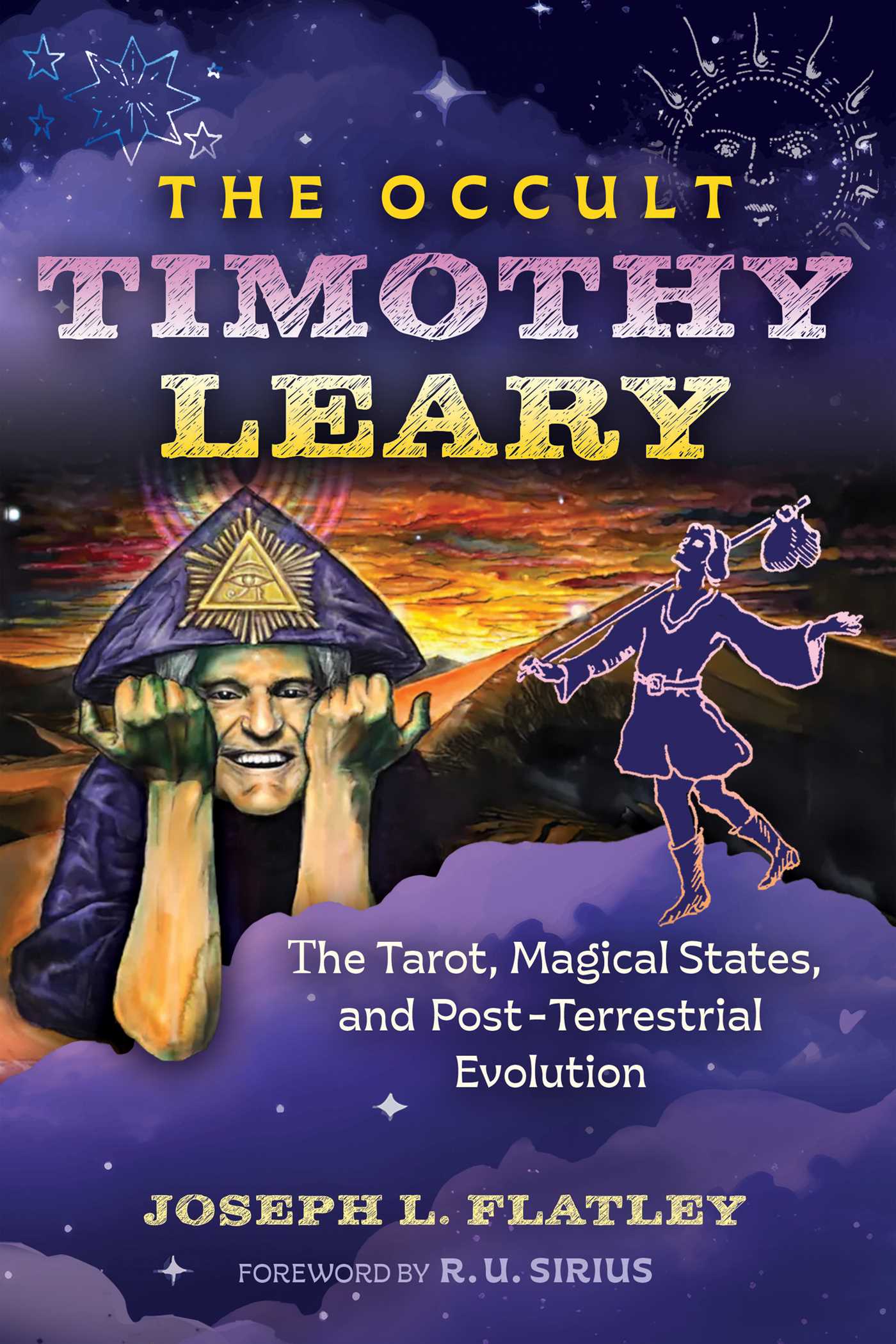
The Occult Timothy Leary
The Tarot, Magical States, and Post-Terrestrial Evolution
Foreword by R. U. Sirius
Published by Destiny Books
Distributed by Simon & Schuster
LIST PRICE $13.99
PRICE MAY VARY BY RETAILER
Digital products purchased on SimonandSchuster.com must be read on the Simon & Schuster Books app. Learn more.
Free shipping when you spend $40. Terms apply.
Buy from Other Retailers
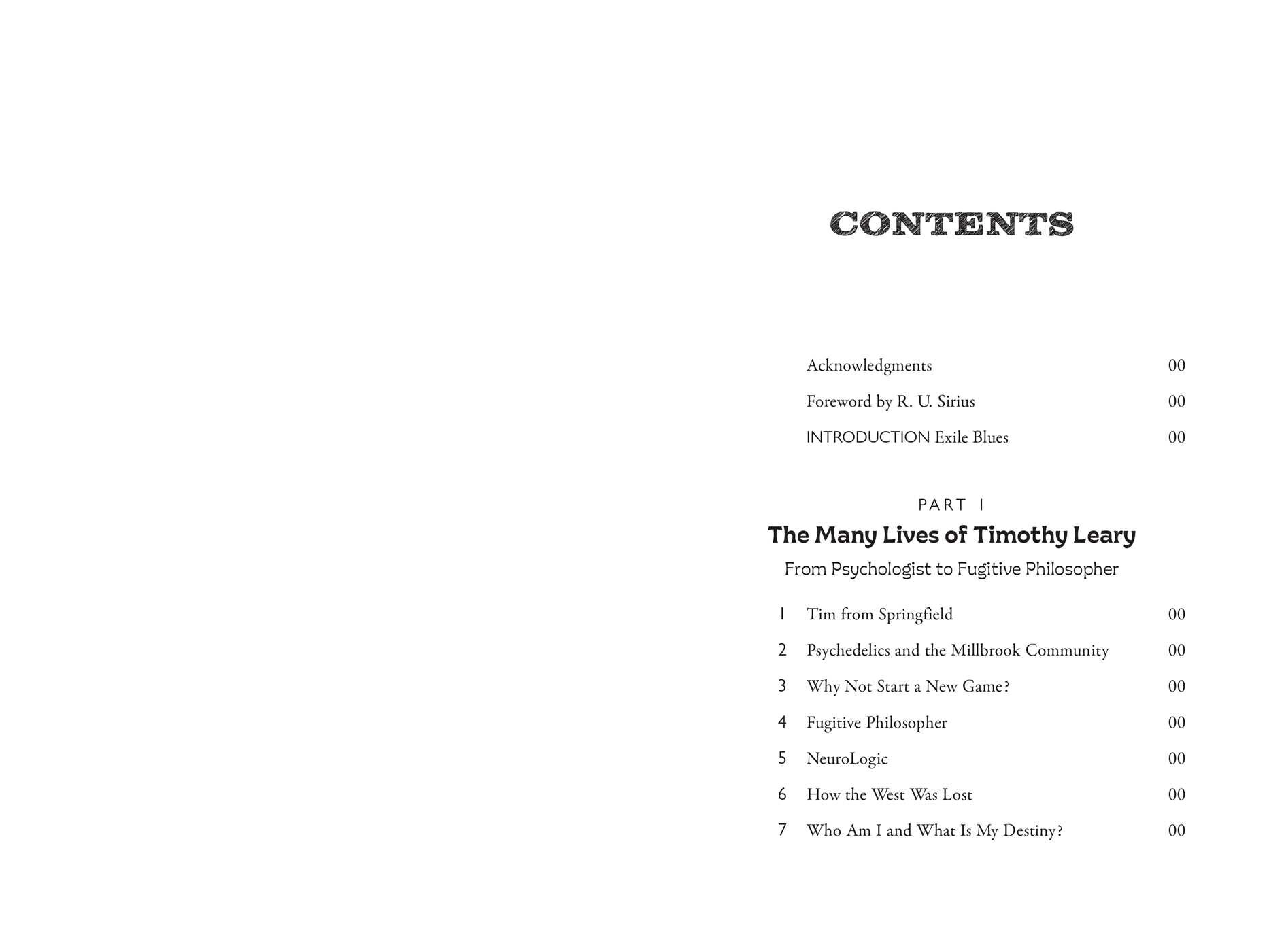
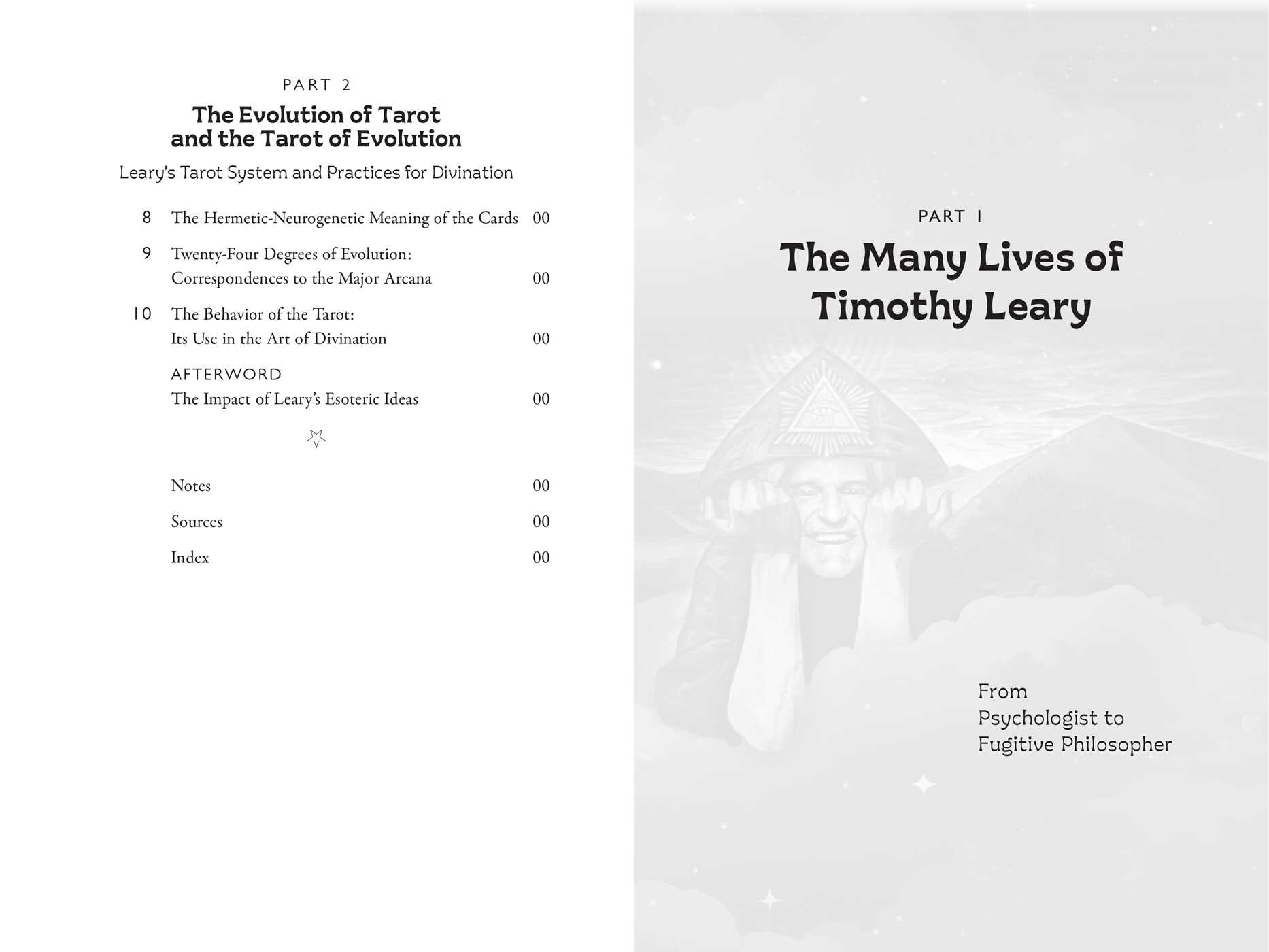
Table of Contents
About the Book
• Reveals Leary’s immersion in the Western occult tradition, his Eight Circuit Model of consciousness, and his theories on post-terrestrial human evolution
• Details Leary’s tarot deck by looking at its unique card order, astrological correspondences, and practical uses for divination
• Describes Leary’s encounters with figures such as Ram Dass and Robert Anton Wilson as well as revolutionary groups like the Weather Underground and the Black Panthers
Timothy Leary, American psychologist and countercultural icon, is well known for his advocacy of psychedelic drugs and controversial experiments on human consciousness. What is less well known is his deep interest in Western esotericism, a dimension that Joseph L. Flatley explores in-depth.
Flatley recounts Leary’s early life and career trajectory, highlighting the esoteric influences that informed his occult activities as well as his thoughts on reincarnation and his futuristic views of computers and human evolution. Readers will learn about Leary’s encounters with 20th-century groups and figures like Ram Dass, the Weather Underground, the Black Panthers, and Robert Anton Wilson, all of whom influenced his psychic explorations and the development of his eight-circuit model for understanding altered states of consciousness and the potential for transcendent experiences.
Flatley also details the role of the tarot in Leary’s life and philosophy, showing how Leary created his own version of the deck, which is featured in this book. Flatley then reveals the correspondences between Leary’s deck and his eight-circuit model of consciousness and guides readers on how to use this tarot for divination.
• Details Leary’s tarot deck by looking at its unique card order, astrological correspondences, and practical uses for divination
• Describes Leary’s encounters with figures such as Ram Dass and Robert Anton Wilson as well as revolutionary groups like the Weather Underground and the Black Panthers
Timothy Leary, American psychologist and countercultural icon, is well known for his advocacy of psychedelic drugs and controversial experiments on human consciousness. What is less well known is his deep interest in Western esotericism, a dimension that Joseph L. Flatley explores in-depth.
Flatley recounts Leary’s early life and career trajectory, highlighting the esoteric influences that informed his occult activities as well as his thoughts on reincarnation and his futuristic views of computers and human evolution. Readers will learn about Leary’s encounters with 20th-century groups and figures like Ram Dass, the Weather Underground, the Black Panthers, and Robert Anton Wilson, all of whom influenced his psychic explorations and the development of his eight-circuit model for understanding altered states of consciousness and the potential for transcendent experiences.
Flatley also details the role of the tarot in Leary’s life and philosophy, showing how Leary created his own version of the deck, which is featured in this book. Flatley then reveals the correspondences between Leary’s deck and his eight-circuit model of consciousness and guides readers on how to use this tarot for divination.
Excerpt
INTRODUCTION
EXILE BLUES
At this point we felt the first flicker of The Terror. The
exile blues. No passport. No money. No home.
Timothy Leary, Confessions of a Hope Fiend
One of my favorite Timothy Leary stories takes place in La Madrague, a sleepy port on the Mediterranean coast. Tim had some time to kill, and he killed it with a fellow called Joker, an American burnout with a marked resemblance to the Fool card of the tarot, and a Congolese hitchhiker named Oscar. At this point, Leary was already a worldfamous counterculture figure, and I think the story perfectly sets the tone for what follows. But before we go there, I need to tell you why Leary was present in this seaside town in Algeria, of all places.
On September 12, 1970, the forty-nine-year-old former Harvard professor escaped from the California Men’s Colony West in San Luis Obispo, California. He had been sentenced to twenty years for two roaches of marijuana found (or planted) in his car by law enforcement. It didn’t take long for him to realize that he’d rather be an exile than spend twenty years in prison.
The case was obviously political. Politics, Leary knew, is a complex expression of something innately human: “The instinct to imprison is genetic,” he wrote while on the run in Switzerland. Exile is a tactic employed by the system to “segregate the mutant seed.”1 The impulse to freedom, of course, is also genetic. Tim had been exiled from the United States by the forces of repression, by what Wilhelm Reich called “the emotional plague.”2
If life behind bars was primal, Tim’s escape was nothing less than heroic. Under a moonlit sky, inside a prison yard bathed in light, he scaled a tree and dropped onto the roof of the cell block. Hanging on to a utility cable for dear life, he shimmied across the yard, in full view of sharpshooters, jail guards in patrol cars, and a prison full of snitches. It was an arduous physical performance, but somehow, he made it: “From some inner reservoir of LIVE! LIVE! LIVE! SURVIVE! Came an energy flow and some erotic lightness,” he later wrote.3
After that, the rest of his plan—catching a ride with the Weather Underground; reuniting with his wife, Rosemary; shaving a bald spot into his hair; donning a tacky suit; and obtaining a passport under an assumed name; and then joining Eldridge Cleaver in Algeria—must have seemed almost easy. Cleaver, a prominent leader of the Black Panthers, had been charged with attempted murder after a shootout with cops in Oakland, California, in the wake of the Martin Luther King Jr. assassination. Rather than face prison time, he fled the country. Cuba was first, then Algeria. The former French colony had won its independence in 1962. Born out of anticolonial struggle, the new government there was revolutionary, socialist, and genial to American Leftists.
The relationship between Timothy Leary and the Black Panthers was never on a strong footing. Cleaver and the exiled Panthers were increasingly militant, and Leary could never make a convincing militant himself. By early 1971 it was clear that the Panthers saw Tim primarily as a source of revenue.
Joker, “the ultimate bedraggled, middle-aged hippie,” had been so alarmed by Tim’s revolutionary turn that he traveled to Algeria to convince him to disavow violence. Along the way he picked up a traveling companion, Oscar from the Congo, who was trying to get to America to enroll in college. Their introduction seemed like a cruel prank on the part of the Panthers, sticking Tim with the burnout and his weird sidekick.4
He was waiting for an advance on his next book. His task for the day was to take the bus to Port de la Madrague to see if money had arrived at the bank. By this time, Leary had made some very real contributions to the field of psychology, recorded a song with John Lennon, testified before the U.S. Congress, and appeared on TV and radio countless times. And here he was, running errands. This is the nature of exile—sometimes you’re penniless, sometimes you’re stuck on the bus with a couple of random hitchhikers.
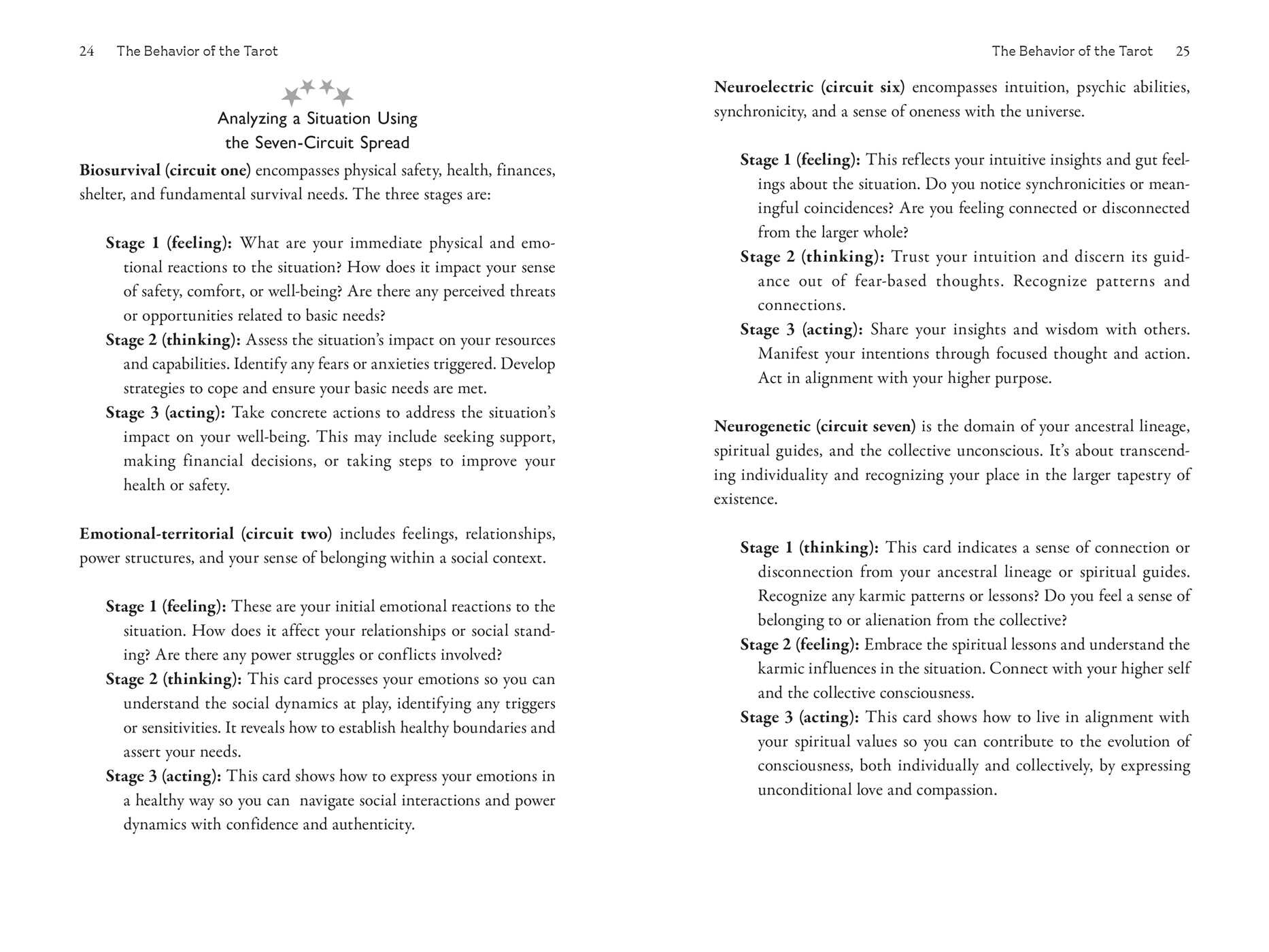
Oscar was strapped for cash. Leary wanted to help, but unfortunately the money didn’t arrive that day. He came up with a solution that was perfectly odd, perfectly Timothy Leary. With ten cents from Joker, he bought a notebook. On the first page he wrote, “Book for Oscar, by Timothy Leary, Algiers, January 1971.” Over the next quarter hour, Leary filled the notebook with information about his new psychological system, “diagrams and slogans about the seven visible revolutions and the seven internal liberations.”5
“When you arrive in Europe, look for a young American with long hair,” Leary told Oscar. “Tell him you have this book, which you can exchange for twenty-five dollars.” Oscar appeared skeptical, but he accepted the book. What other choice did he have? Book for Oscar eventually found its way into the collection of Los Angeles attorney Gerald Goldfarb, according to Tim’s annotated bibliography. Where it went from there is anybody’s guess.6
The seven visible revolutions and internal liberations had been much on Tim Leary’s mind over the last decade or so. They relate to the levels of consciousness that he explored while ingesting psychedelics and studying their effects while at Harvard and later at his commune in Millbrook, New York. As a sort of psychedelic guru, he had couched his work in the language of Eastern mysticism, and he referred to this idea as “the seven tongues of God.” But when he threw his lot in with militant groups such as the Weather Underground and the Black Panthers, the hippie language went out the window. He now referred to the seven “liberations”: genetic, neurological, sexual, cultural, economic, political, and lastly—only if necessary—armed struggle. In a letter from around this time, excerpted in the Berkeley Barb, he also referred to the seven drugs that unlock each level of consciousness (and revolution), including acid, grass, and stimulants. As for alcohol, “Booze is the political drug. Political means simplification. The political person reduces all the complexity of life to ‘for’ or ‘against’ ‘the party.’ Booze does exactly that to the nervous system . . . reduces it to black and white . . . which is what politics is all about . . . my race vs. your race.”7
Unlike Muhammad, the prophet who was visited by an angel in a cave near Mecca, or Paul the Apostle, who fell off his horse on the road to Damascus, Timothy Leary’s illumination was precipitated by eating sacred mushrooms in Cuernavaca, Mexico, in August 1960. Significantly, he specified that he ate seven mushrooms on that first trip.8
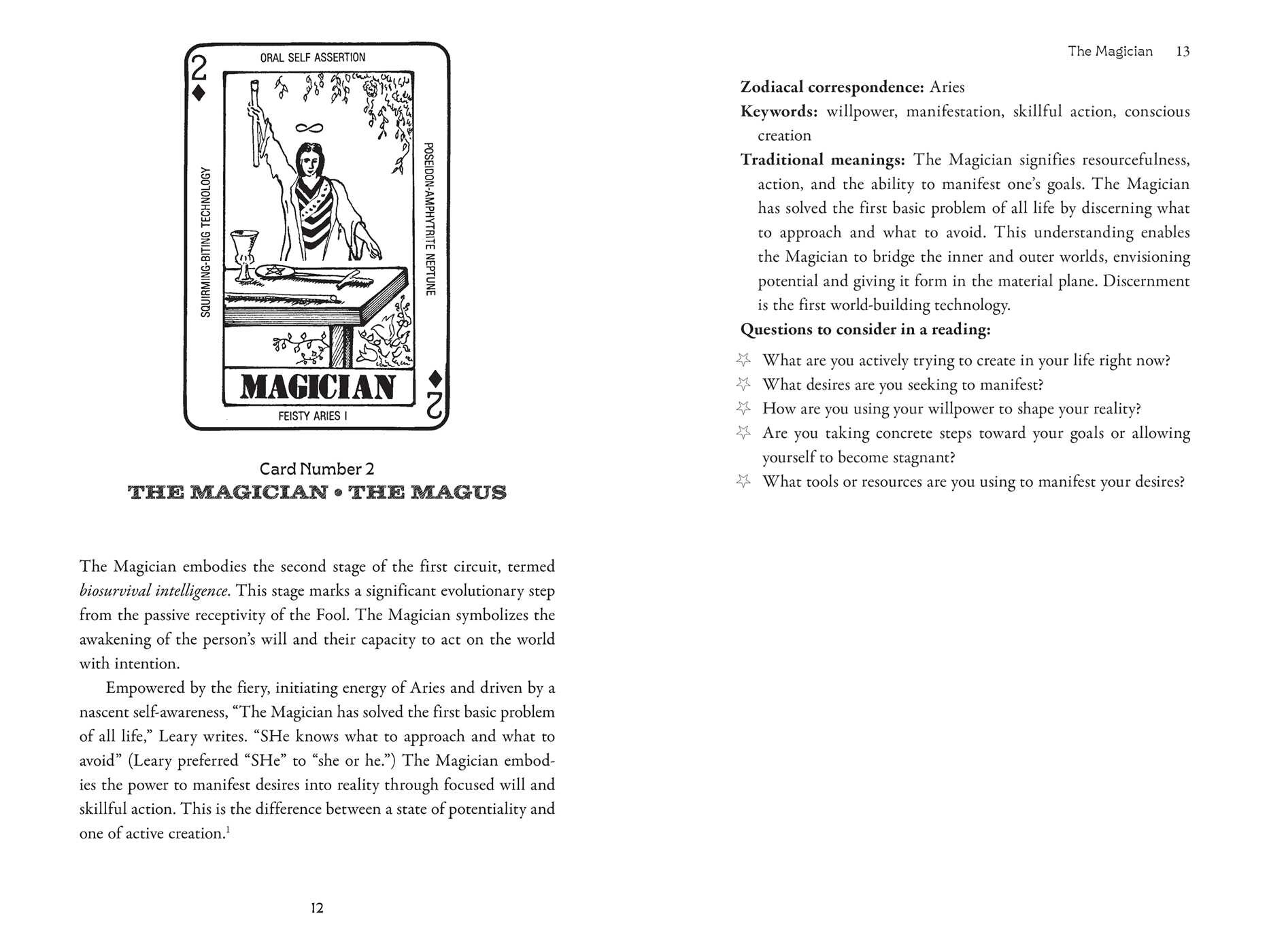
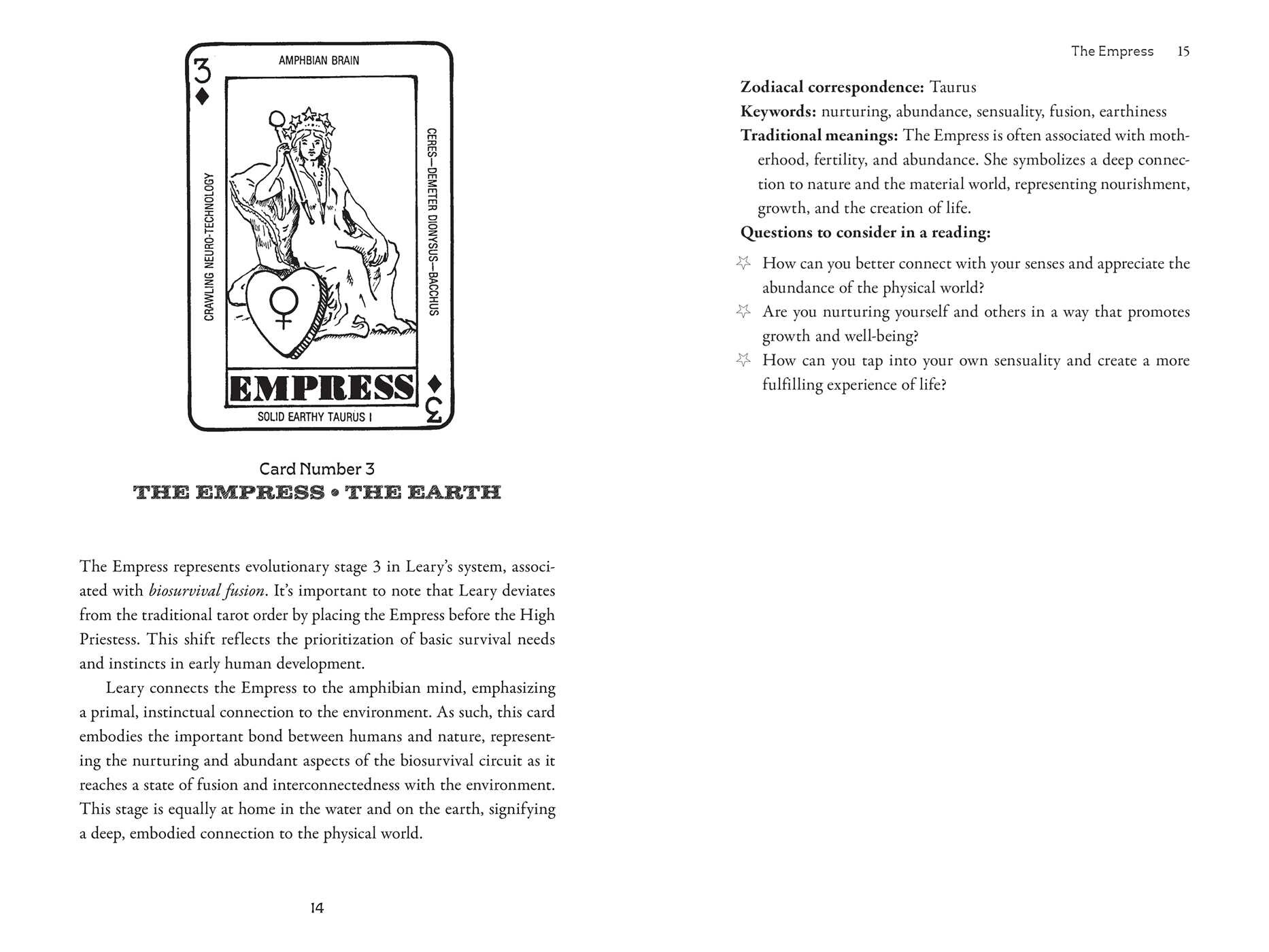
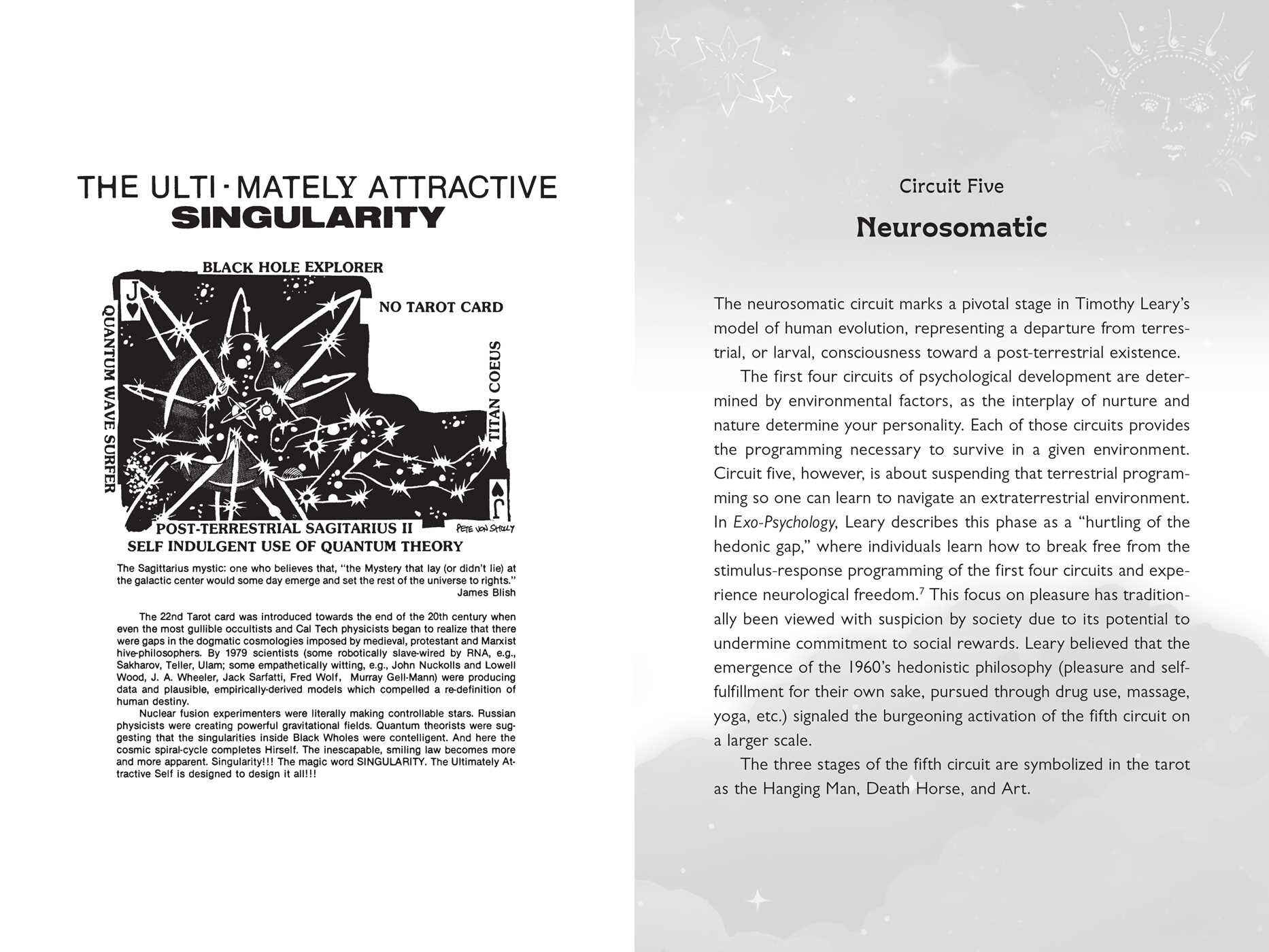
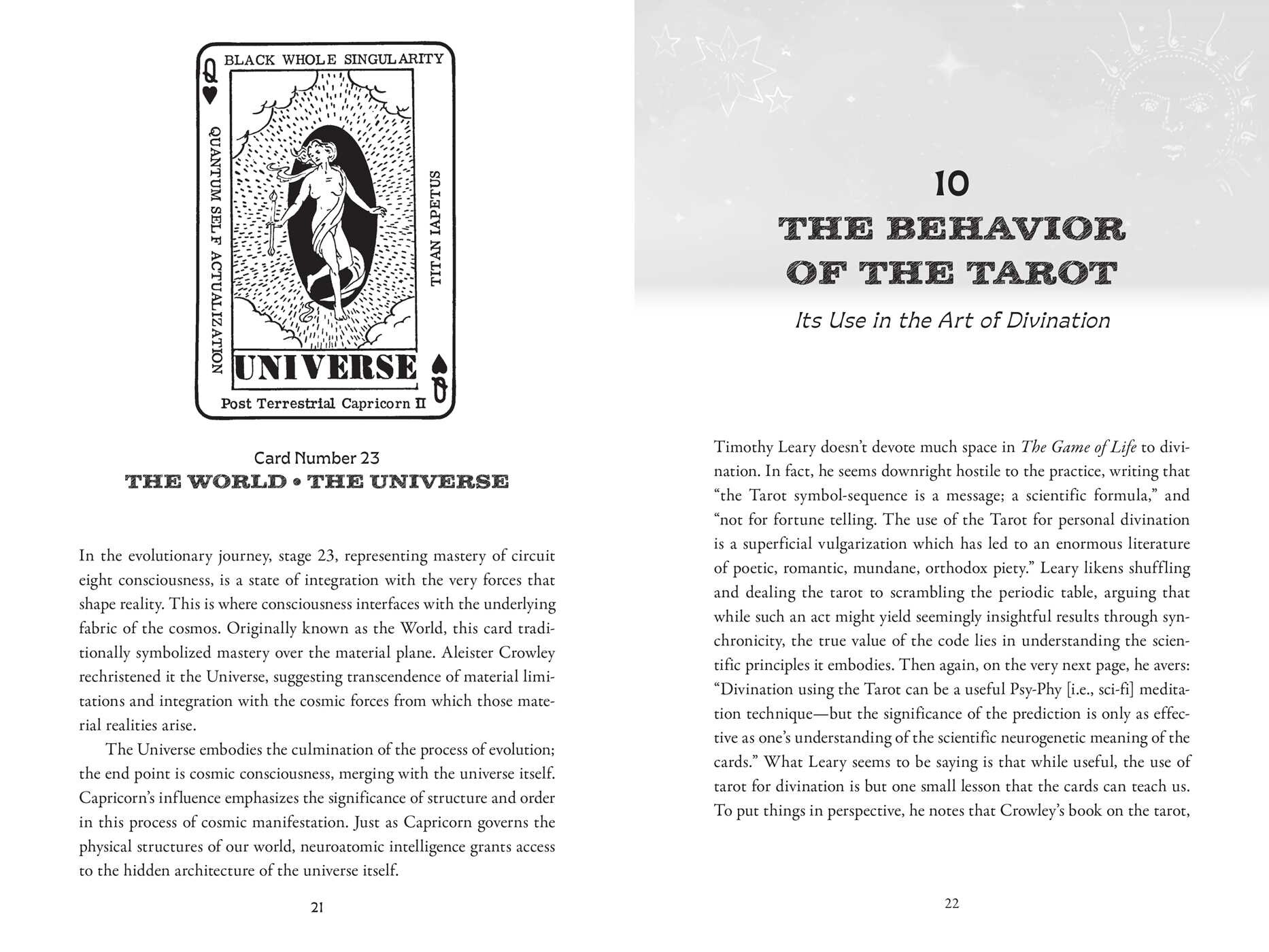
The book that you are now reading, The Occult Timothy Leary, examines Leary’s tarot deck, a twenty-four-page codex that reveals the origins of life in the stars and provides a road map to cosmic consciousness.
In part 1, “The Many Lives of Timothy Leary,” we will explore Leary’s early life and his work as a university professor and psychologist in the postwar period. I will demonstrate how Leary’s most far-out premises regarding psychedelics, magick, and space migration are all extensions of a long-term project that actually began in his childhood. This is most vividly revealed in Leary’s eight-circuit model of consciousness, a continuation and expansion of the research he first published as a psychologist in the 1950s.
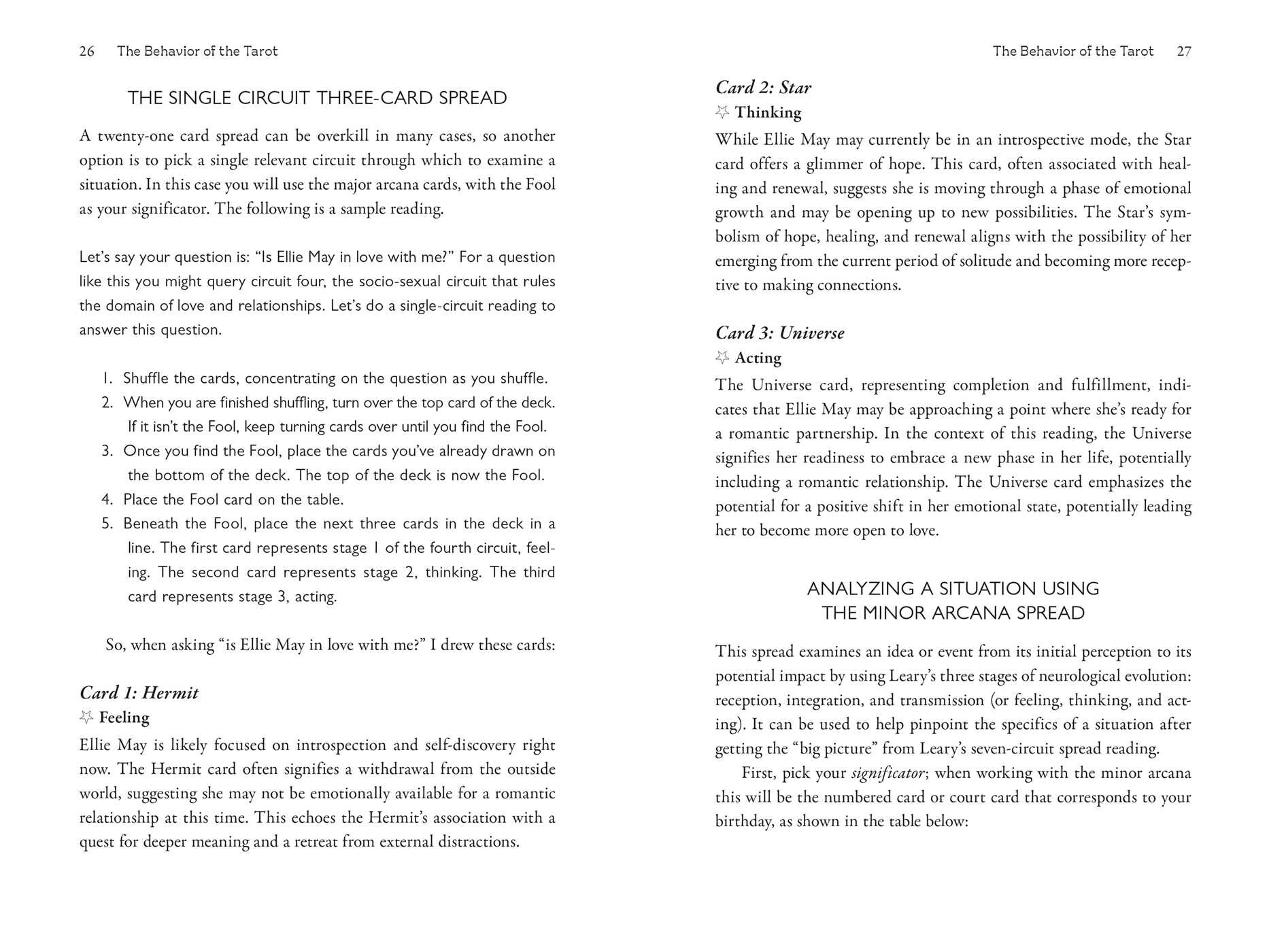
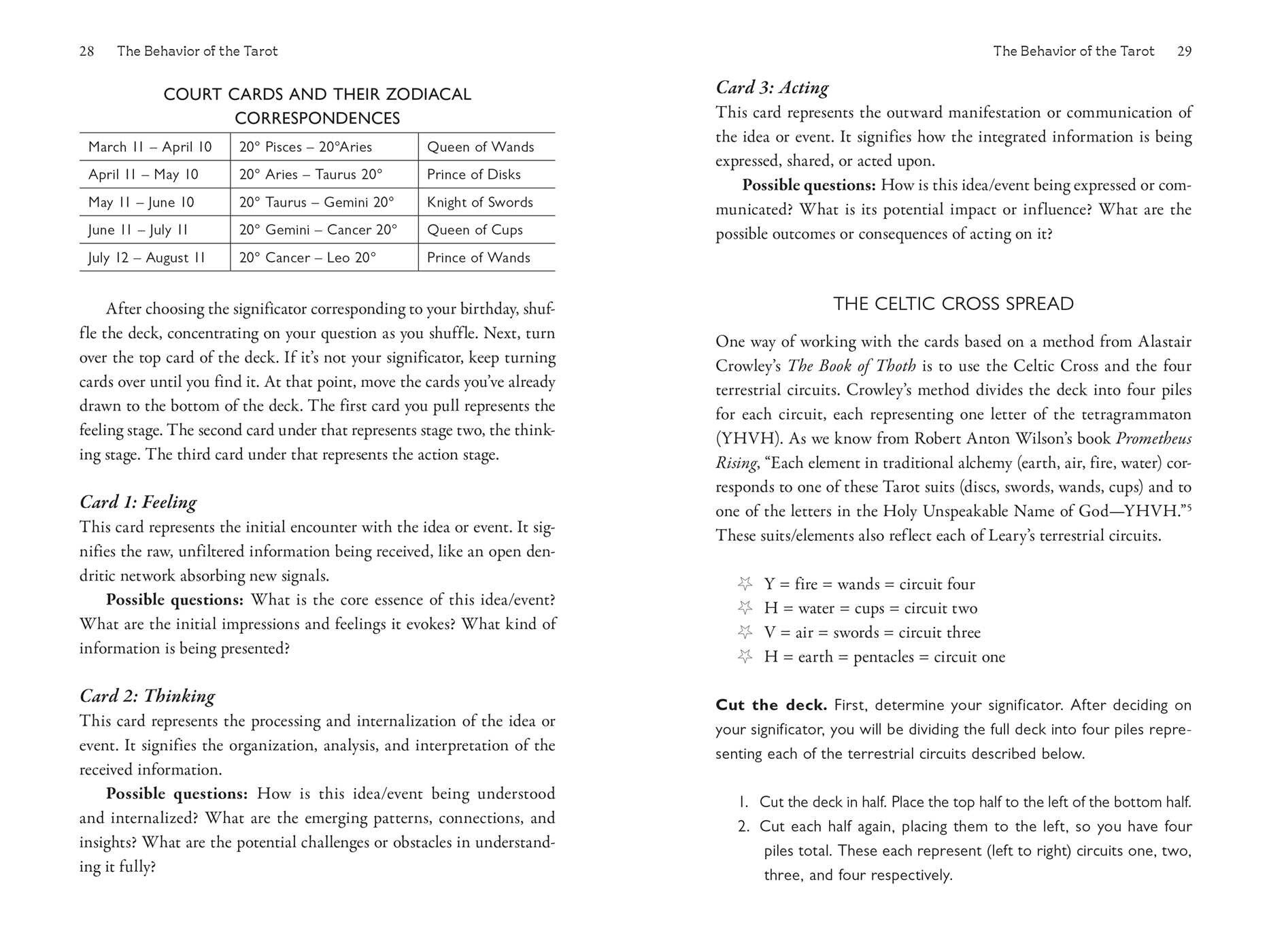
In part 2, “The Evolution of Tarot and the Tarot of Evolution,” we look at the tarot deck and see how a playing card game from European history came to be a useful magical tool, and how Leary found his most radical ideas encoded in the cards. Finally, this book offers a close examination of the cards through the lens of Leary’s theories and suggests how you can use the tarot to harness the wisdom of evolution in your life.
Leary’s deliberate use of wordplay and unconventional spellings were a means by which he hoped to break people out of ordinary thinking patterns. He believed that normal language kept people trapped in old habits and social rules, and that new ideas required new ways of speaking. His encounter with James Joyce’s experimental writing in Ulysses convinced him that playful, rule-breaking language could free the mind from conventional limitations and open up new possibilities for thought.
Throughout this book, readers will notice that I spell magick with a k, following Aleister Crowley’s practice of distinguishing willed consciousness expansion from stage magic tricks. The extra letter serves as a reminder that we’re talking about something much deeper than what you’d see at a magic show.
EXILE BLUES
At this point we felt the first flicker of The Terror. The
exile blues. No passport. No money. No home.
Timothy Leary, Confessions of a Hope Fiend
One of my favorite Timothy Leary stories takes place in La Madrague, a sleepy port on the Mediterranean coast. Tim had some time to kill, and he killed it with a fellow called Joker, an American burnout with a marked resemblance to the Fool card of the tarot, and a Congolese hitchhiker named Oscar. At this point, Leary was already a worldfamous counterculture figure, and I think the story perfectly sets the tone for what follows. But before we go there, I need to tell you why Leary was present in this seaside town in Algeria, of all places.
On September 12, 1970, the forty-nine-year-old former Harvard professor escaped from the California Men’s Colony West in San Luis Obispo, California. He had been sentenced to twenty years for two roaches of marijuana found (or planted) in his car by law enforcement. It didn’t take long for him to realize that he’d rather be an exile than spend twenty years in prison.
The case was obviously political. Politics, Leary knew, is a complex expression of something innately human: “The instinct to imprison is genetic,” he wrote while on the run in Switzerland. Exile is a tactic employed by the system to “segregate the mutant seed.”1 The impulse to freedom, of course, is also genetic. Tim had been exiled from the United States by the forces of repression, by what Wilhelm Reich called “the emotional plague.”2
If life behind bars was primal, Tim’s escape was nothing less than heroic. Under a moonlit sky, inside a prison yard bathed in light, he scaled a tree and dropped onto the roof of the cell block. Hanging on to a utility cable for dear life, he shimmied across the yard, in full view of sharpshooters, jail guards in patrol cars, and a prison full of snitches. It was an arduous physical performance, but somehow, he made it: “From some inner reservoir of LIVE! LIVE! LIVE! SURVIVE! Came an energy flow and some erotic lightness,” he later wrote.3
After that, the rest of his plan—catching a ride with the Weather Underground; reuniting with his wife, Rosemary; shaving a bald spot into his hair; donning a tacky suit; and obtaining a passport under an assumed name; and then joining Eldridge Cleaver in Algeria—must have seemed almost easy. Cleaver, a prominent leader of the Black Panthers, had been charged with attempted murder after a shootout with cops in Oakland, California, in the wake of the Martin Luther King Jr. assassination. Rather than face prison time, he fled the country. Cuba was first, then Algeria. The former French colony had won its independence in 1962. Born out of anticolonial struggle, the new government there was revolutionary, socialist, and genial to American Leftists.
The relationship between Timothy Leary and the Black Panthers was never on a strong footing. Cleaver and the exiled Panthers were increasingly militant, and Leary could never make a convincing militant himself. By early 1971 it was clear that the Panthers saw Tim primarily as a source of revenue.
Joker, “the ultimate bedraggled, middle-aged hippie,” had been so alarmed by Tim’s revolutionary turn that he traveled to Algeria to convince him to disavow violence. Along the way he picked up a traveling companion, Oscar from the Congo, who was trying to get to America to enroll in college. Their introduction seemed like a cruel prank on the part of the Panthers, sticking Tim with the burnout and his weird sidekick.4
He was waiting for an advance on his next book. His task for the day was to take the bus to Port de la Madrague to see if money had arrived at the bank. By this time, Leary had made some very real contributions to the field of psychology, recorded a song with John Lennon, testified before the U.S. Congress, and appeared on TV and radio countless times. And here he was, running errands. This is the nature of exile—sometimes you’re penniless, sometimes you’re stuck on the bus with a couple of random hitchhikers.
Oscar was strapped for cash. Leary wanted to help, but unfortunately the money didn’t arrive that day. He came up with a solution that was perfectly odd, perfectly Timothy Leary. With ten cents from Joker, he bought a notebook. On the first page he wrote, “Book for Oscar, by Timothy Leary, Algiers, January 1971.” Over the next quarter hour, Leary filled the notebook with information about his new psychological system, “diagrams and slogans about the seven visible revolutions and the seven internal liberations.”5
“When you arrive in Europe, look for a young American with long hair,” Leary told Oscar. “Tell him you have this book, which you can exchange for twenty-five dollars.” Oscar appeared skeptical, but he accepted the book. What other choice did he have? Book for Oscar eventually found its way into the collection of Los Angeles attorney Gerald Goldfarb, according to Tim’s annotated bibliography. Where it went from there is anybody’s guess.6
The seven visible revolutions and internal liberations had been much on Tim Leary’s mind over the last decade or so. They relate to the levels of consciousness that he explored while ingesting psychedelics and studying their effects while at Harvard and later at his commune in Millbrook, New York. As a sort of psychedelic guru, he had couched his work in the language of Eastern mysticism, and he referred to this idea as “the seven tongues of God.” But when he threw his lot in with militant groups such as the Weather Underground and the Black Panthers, the hippie language went out the window. He now referred to the seven “liberations”: genetic, neurological, sexual, cultural, economic, political, and lastly—only if necessary—armed struggle. In a letter from around this time, excerpted in the Berkeley Barb, he also referred to the seven drugs that unlock each level of consciousness (and revolution), including acid, grass, and stimulants. As for alcohol, “Booze is the political drug. Political means simplification. The political person reduces all the complexity of life to ‘for’ or ‘against’ ‘the party.’ Booze does exactly that to the nervous system . . . reduces it to black and white . . . which is what politics is all about . . . my race vs. your race.”7
Unlike Muhammad, the prophet who was visited by an angel in a cave near Mecca, or Paul the Apostle, who fell off his horse on the road to Damascus, Timothy Leary’s illumination was precipitated by eating sacred mushrooms in Cuernavaca, Mexico, in August 1960. Significantly, he specified that he ate seven mushrooms on that first trip.8
The book that you are now reading, The Occult Timothy Leary, examines Leary’s tarot deck, a twenty-four-page codex that reveals the origins of life in the stars and provides a road map to cosmic consciousness.
In part 1, “The Many Lives of Timothy Leary,” we will explore Leary’s early life and his work as a university professor and psychologist in the postwar period. I will demonstrate how Leary’s most far-out premises regarding psychedelics, magick, and space migration are all extensions of a long-term project that actually began in his childhood. This is most vividly revealed in Leary’s eight-circuit model of consciousness, a continuation and expansion of the research he first published as a psychologist in the 1950s.
In part 2, “The Evolution of Tarot and the Tarot of Evolution,” we look at the tarot deck and see how a playing card game from European history came to be a useful magical tool, and how Leary found his most radical ideas encoded in the cards. Finally, this book offers a close examination of the cards through the lens of Leary’s theories and suggests how you can use the tarot to harness the wisdom of evolution in your life.
Leary’s deliberate use of wordplay and unconventional spellings were a means by which he hoped to break people out of ordinary thinking patterns. He believed that normal language kept people trapped in old habits and social rules, and that new ideas required new ways of speaking. His encounter with James Joyce’s experimental writing in Ulysses convinced him that playful, rule-breaking language could free the mind from conventional limitations and open up new possibilities for thought.
Throughout this book, readers will notice that I spell magick with a k, following Aleister Crowley’s practice of distinguishing willed consciousness expansion from stage magic tricks. The extra letter serves as a reminder that we’re talking about something much deeper than what you’d see at a magic show.
Product Details
- Publisher: Destiny Books (April 7, 2026)
- Length: 256 pages
- ISBN13: 9798888500859
Browse Related Books
Raves and Reviews
“Timothy Leary was every bit as dangerous as Nixon and J. Edgar Hoover believed him to be, because he—the High Priest of LSD—could change people’s minds. Joseph L. Flatley’s The Occult Timothy Leary boils Leary’s lesser-known explorations of the Western esoteric tradition down to the good stuff. A volume like this has been long overdue!”
– Richard Metzger, author of Disinformation: The Interviews
“The Occult Timothy Leary is a dazzling and brilliant look into one of the most powerful scientific minds to ever focus attention on the tarot, mysticism, and the transformative healing power of psychedelics. And, at the same time, few books can take us on such a wild and satisfying ride into 1960s intellectual bohemianism, high international revolutionary adventure, and even higher explorations of consciousness than Joseph L. Flatley’s vision of this sensitive and super fun maverick. Here is the momentous retelling of a rebel’s luminary, tenacious adherence to his vision of where the human race is meant to go next.”
– Paul Wyld, author of Jim Morrison, Secret Teacher of the Occult
“Timothy Leary used to tell me he was the reincarnation of Aleister Crowley, which always confused me because Crowley only died after Leary was born. But The Occult Timothy Leary reveals how the conspiratorial thread braiding DNA and LSD (and probably the CIA and OTO) may be more magickal than mechanical, more spiritual than scientific. Here’s the alchemical underbelly of Timothy’s otherwise pharmacological biography, told with gusto and grace.”
– Douglas Rushkoff, author of Team Human, Survival of the Richest, and Program or Be Programmed
“Flatley’s writing is conversational, journalistic, and rigorously researched, with plenty of footnotes for the insatiably curious. In a world that is frequently reducing psychedelics to piffling microdoses and granular pharmacological research, it’s a truly welcome reprieve to read a book that reminds us of the core issue of psychedelics: magical consciousness and the promise of personal and cultural transformation. If you’d like to know about Leary, Crowley, Robert Anton Wilson, Discordianism, tarot, acid, or the minute details of the American resistance movement of the 1960s, this book has it. ‘Turn on, tune in, drop out’ was a magickal formula, a description of initiation. Dive in and do magick.”
– Eliott Edge, international lecturer, multidisciplinary artist, and author of 3 Essays on Virtual Rea
“Peering deep into the fractals that made Timothy Leary such a charismatic character, Flatley goes beyond the smile and into the hidden layers of what made Leary one of the most compelling countercultural figures of the 20th century. This biography carves Leary’s place in the Mt. Rushmore of modern occultists with fellow travelers William Burroughs and Robert Anton Wilson.”
– Steven Intermill, director of the Buckland Museum of Witchcraft & Magick, Cleveland, Ohio
“A major strength of The Occult Timothy Leary is its attention to Leary's spiritual and magical interests, especially his use of the Tarot. Books like this help recover the wisdom of a controversial man whose genius was often obscured by scandal. Flatley's well-researched book shows that behind the headlines stood a restless mind seeking the next stage of human possibility.”
– Lesley Crossingham, New Dawn Magazine
Resources and Downloads
High Resolution Images
-
Book Cover Image (jpg): The Occult Timothy Leary
eBook 9798888500859