Plus, receive recommendations and exclusive offers on all of your favorite books and authors from Simon & Schuster.
Published by Square One
Distributed by Simon & Schuster
LIST PRICE $15.95
PRICE MAY VARY BY RETAILER
Free shipping when you spend $40. Terms apply.
Buy from Other Retailers
Table of Contents
About The Book
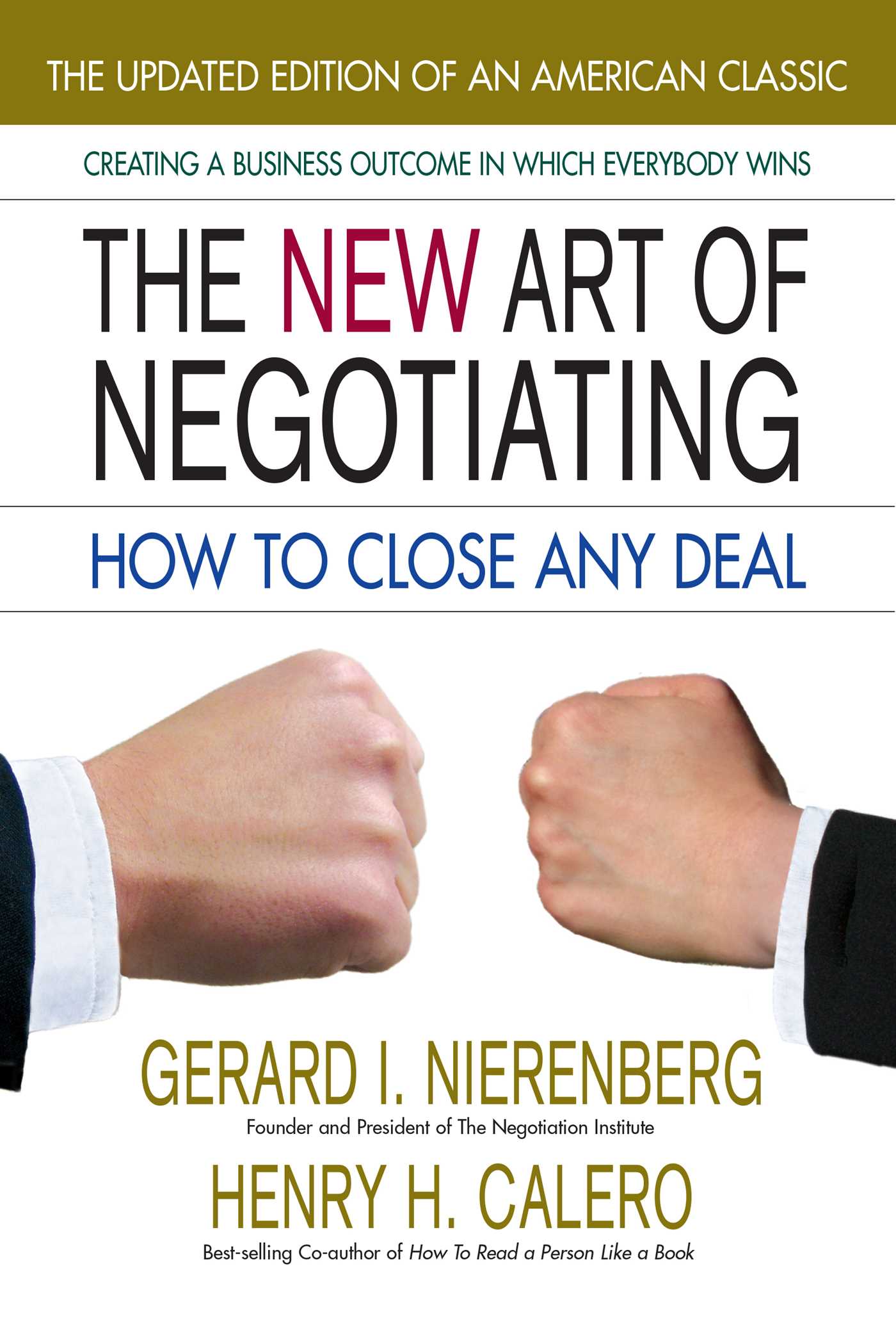
You negotiate every day of your life—whether asking your employer for a raise or persuading your child to do his homework. The New Art of Negotiating is an updated, expanded version of the million-copy bestseller that introduced us to the art of effective negotiation. You will learn how to analyze your opponent’s motivation, negotiate toward mutually satisfying terms, learn from your opponent’s body language, and much more. Throughout, the authors will guide you in successfully applying Nierenberg’s famous “everybody wins” tactics to the bargaining process.
Excerpt
Introduction
“Negotiating in the classic diplomatic sense assumes parties more anxious to agree than disagree.”
—Dean Acheson
Nearly every day of our lives—and, no doubt, your life, too—has involved some sort of negotiation, major or minor. We have long seen ourselves as problem-solvers. And from the moment we realized that every negotiation involves problem-solving, we have seen ourselves as negotiators, too. We believe that every obstacle that hinders negotiation, every issue of contention, is merely a problem that needs to be solved. And the best way to solve such problems, or negotiating issues, is to get all involved parties working together toward an “everybody wins” solution.
That cooperative spirit is one of the first fundamentals we highlight in The New Art of Negotiating. In Chapter 1, we introduce you to the way we understand and define “negotiation”—what characterizes that term. And approaching a negotiation not as a game but as a cooperative process or enterprise is a key concept. Chapter 2 is also important for a solid background on negotiating; it discusses why humans, in general, have a tendency to negotiate, and therefore why the skills of negotiating are so important to our species. With that solid background accomplished, we enter into a more detailed study of how to conduct a negotiation.
While you’re polishing your understanding of what it means to negotiate, why not polish your personal presentation? Chapter 3 brings us into the specifics, scrutinizing what makes a successful negotiator just that—from important skills to winning personality characteristics. Now what about the actual negotiation? It should start with great preparation. So Chapter 4 walks you through a step-by-step preparation agenda. That’s followed by Chapter 5’s discussion of effective techniques to use once the negotiation is underway. Included in that chapter is significant advice on how to break an impasse and how to avoid damaging assumptions.
If you are part of a negotiating team, then Chapter 6 is definitely for you. It analyzes the role of the chief negotiator or manager and then offers a section on team dynamics. Chapter 7 continues the focus on dealing with others, but delves into the psychology of how to read other people. This entertaining part of the book investigates such things as facial expressions, sounds and silence, gestures, and even gender tendencies. And finally, Chapter 8 gives you a few last words of advice, dispelling certain misconceptions that might prevent you from being the best negotiator you can be, and suggesting a battery of questions to ask as you perform a self-assessment of your work.
The material in this book has been gathered from our shared professional experiences and from the many seminars on negotiating that we have conducted over several decades. Everything we recommend has been tested by real people, including ourselves, and has proven effective. Throughout the chapters, we use quite a collection of humorous anecdotes and helpful examples. After all, we want you to enjoy the journey to becoming a successful negotiator. Take what you can from the pages of this book, and use it well. We applaud you for taking the step to developing more persuasive, more powerful, more artful negotiation skills.
“Negotiating in the classic diplomatic sense assumes parties more anxious to agree than disagree.”
—Dean Acheson
Nearly every day of our lives—and, no doubt, your life, too—has involved some sort of negotiation, major or minor. We have long seen ourselves as problem-solvers. And from the moment we realized that every negotiation involves problem-solving, we have seen ourselves as negotiators, too. We believe that every obstacle that hinders negotiation, every issue of contention, is merely a problem that needs to be solved. And the best way to solve such problems, or negotiating issues, is to get all involved parties working together toward an “everybody wins” solution.
That cooperative spirit is one of the first fundamentals we highlight in The New Art of Negotiating. In Chapter 1, we introduce you to the way we understand and define “negotiation”—what characterizes that term. And approaching a negotiation not as a game but as a cooperative process or enterprise is a key concept. Chapter 2 is also important for a solid background on negotiating; it discusses why humans, in general, have a tendency to negotiate, and therefore why the skills of negotiating are so important to our species. With that solid background accomplished, we enter into a more detailed study of how to conduct a negotiation.
While you’re polishing your understanding of what it means to negotiate, why not polish your personal presentation? Chapter 3 brings us into the specifics, scrutinizing what makes a successful negotiator just that—from important skills to winning personality characteristics. Now what about the actual negotiation? It should start with great preparation. So Chapter 4 walks you through a step-by-step preparation agenda. That’s followed by Chapter 5’s discussion of effective techniques to use once the negotiation is underway. Included in that chapter is significant advice on how to break an impasse and how to avoid damaging assumptions.
If you are part of a negotiating team, then Chapter 6 is definitely for you. It analyzes the role of the chief negotiator or manager and then offers a section on team dynamics. Chapter 7 continues the focus on dealing with others, but delves into the psychology of how to read other people. This entertaining part of the book investigates such things as facial expressions, sounds and silence, gestures, and even gender tendencies. And finally, Chapter 8 gives you a few last words of advice, dispelling certain misconceptions that might prevent you from being the best negotiator you can be, and suggesting a battery of questions to ask as you perform a self-assessment of your work.
The material in this book has been gathered from our shared professional experiences and from the many seminars on negotiating that we have conducted over several decades. Everything we recommend has been tested by real people, including ourselves, and has proven effective. Throughout the chapters, we use quite a collection of humorous anecdotes and helpful examples. After all, we want you to enjoy the journey to becoming a successful negotiator. Take what you can from the pages of this book, and use it well. We applaud you for taking the step to developing more persuasive, more powerful, more artful negotiation skills.
Product Details
- Publisher: Square One (September 15, 2008)
- Length: 208 pages
- ISBN13: 9780757003059
Browse Related Books
Resources and Downloads
High Resolution Images
-
Book Cover Image (jpg): The New Art of Negotiating
Revised Trade Paperback 9780757003059