Plus, receive recommendations and exclusive offers on all of your favorite books and authors from Simon & Schuster.
Published by Big Sky Publishing
Distributed by Simon & Schuster
LIST PRICE $17.99
PRICE MAY VARY BY RETAILER
Digital products purchased on SimonandSchuster.com must be read on the Simon & Schuster Books app. Learn more.
Free shipping when you spend $40. Terms apply.
Buy from Other Retailers
Table of Contents
About the Book
‘Peter Stanley has brilliantly brought to life what seems like a small wartime incident, demonstrating its effects on the participants at the time and for decades later. This is woven insightfully into the bigger story of the Anzac narrative and its legacy for Australia.’
— Daniel Reynaud, author, The Man the Anzacs Revered and Faith of the Anzacs
They survived Gallipoli, Pozières, Bullecourt and Passchendaele. Then, as they slept in a quiet village on the Somme, two German shells found them.
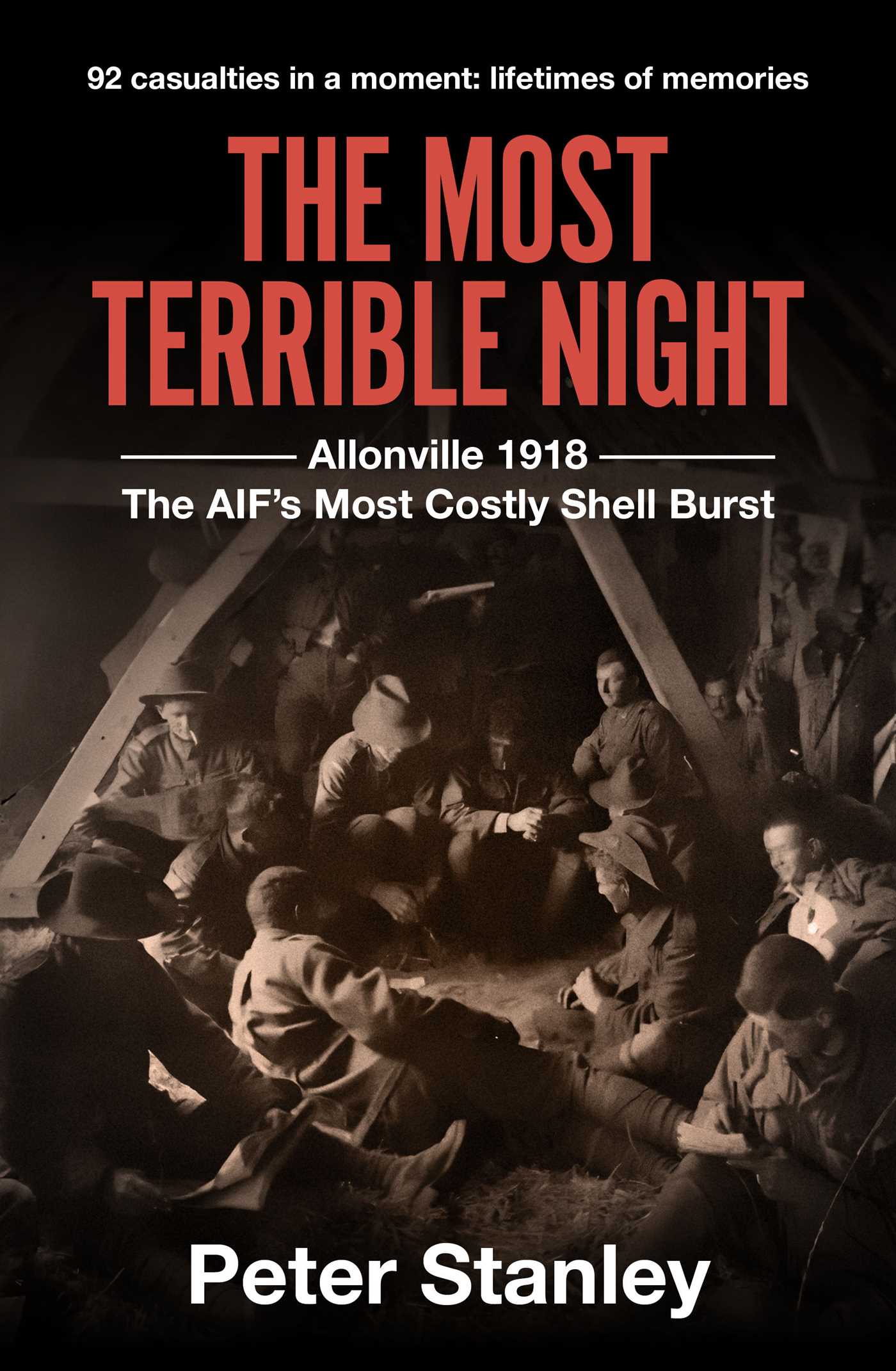
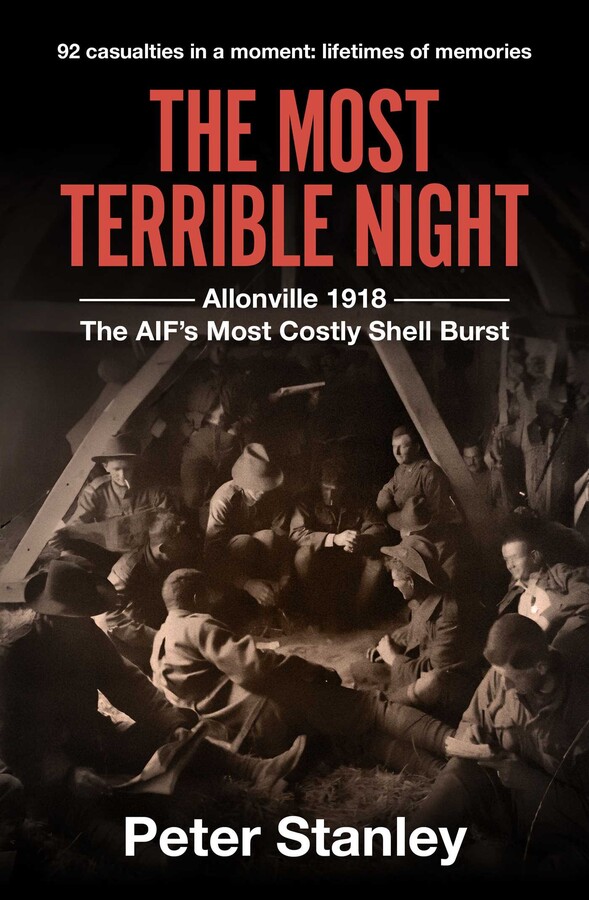
In the early hours of 31 May 1918, high-velocity shells struck two barns sheltering Australian soldiers at Allonville, behind the Western Front. The buildings collapsed onto the sleeping men of the 14th Battalion and exploded among the troops nearby. Ninety-two Australians were killed or wounded. Thirty-two died that night or from their injuries in the days that followed.
Official historian Charles Bean described the first strike as ‘the most costly shell burst in the history of the A.I.F.’ The battalion’s padre, Frank Rolland, recorded simply that it had been ‘the most terrible night’.
Yet the Allonville Disaster has remained little more than a footnote in Australia’s Great War history. Even Bean’s casualty figures were wrong. The men themselves became names on lists: killed, wounded, returned to duty or sent home.
In this remarkable work of historical reconstruction, acclaimed military historian Peter Stanley restores those men to the record. Drawing on Australian Imperial Force service files, unit records, Red Cross enquiries, hospital and Repatriation files, family papers and the memories of descendants, he traces who they were, how they came to be at Allonville and what happened when the shells struck.
Many had enlisted in 1914 and already survived years of combat. Some returned to the battalion. Others came home maimed, traumatised or permanently changed, carrying the effects of that night through marriages, working lives and old age.
The Most Terrible Night is both the definitive account of a little-known Australian wartime disaster and a powerful exploration of war’s long aftermath: not only how soldiers died, but how the wounded lived.
‘… an impressive feat of historical detective work.’
— Ian Hodges, author of He Belonged to Wagga
‘… yet another triumph for Australia’s foremost military historian.’
— Bruce Scates, author, Return to Gallipoli, A Place to Remember and World War One in 100 Stories
‘… meticulously researched and beautifully written.’
— Craig Deayton, author, Battle Scarred
— Daniel Reynaud, author, The Man the Anzacs Revered and Faith of the Anzacs
They survived Gallipoli, Pozières, Bullecourt and Passchendaele. Then, as they slept in a quiet village on the Somme, two German shells found them.
In the early hours of 31 May 1918, high-velocity shells struck two barns sheltering Australian soldiers at Allonville, behind the Western Front. The buildings collapsed onto the sleeping men of the 14th Battalion and exploded among the troops nearby. Ninety-two Australians were killed or wounded. Thirty-two died that night or from their injuries in the days that followed.
Official historian Charles Bean described the first strike as ‘the most costly shell burst in the history of the A.I.F.’ The battalion’s padre, Frank Rolland, recorded simply that it had been ‘the most terrible night’.
Yet the Allonville Disaster has remained little more than a footnote in Australia’s Great War history. Even Bean’s casualty figures were wrong. The men themselves became names on lists: killed, wounded, returned to duty or sent home.
In this remarkable work of historical reconstruction, acclaimed military historian Peter Stanley restores those men to the record. Drawing on Australian Imperial Force service files, unit records, Red Cross enquiries, hospital and Repatriation files, family papers and the memories of descendants, he traces who they were, how they came to be at Allonville and what happened when the shells struck.
Many had enlisted in 1914 and already survived years of combat. Some returned to the battalion. Others came home maimed, traumatised or permanently changed, carrying the effects of that night through marriages, working lives and old age.
The Most Terrible Night is both the definitive account of a little-known Australian wartime disaster and a powerful exploration of war’s long aftermath: not only how soldiers died, but how the wounded lived.
‘… an impressive feat of historical detective work.’
— Ian Hodges, author of He Belonged to Wagga
‘… yet another triumph for Australia’s foremost military historian.’
— Bruce Scates, author, Return to Gallipoli, A Place to Remember and World War One in 100 Stories
‘… meticulously researched and beautifully written.’
— Craig Deayton, author, Battle Scarred
Product Details
- Publisher: Big Sky Publishing (February 2, 2027)
- Length: 352 pages
- ISBN13: 9781923720527
Browse Related Books
Resources and Downloads
High Resolution Images
-
Book Cover Image (jpg): The Most Terrible Night
eBook 9781923720527