Plus, receive recommendations and exclusive offers on all of your favorite books and authors from Simon & Schuster.
LIST PRICE $23.00
PRICE MAY VARY BY RETAILER
Get 25% off with code GIFT26 plus free shipping on orders of $40 or more. Discount on physical products only. Terms apply.
Buy from Other Retailers
Table of Contents
About the Book
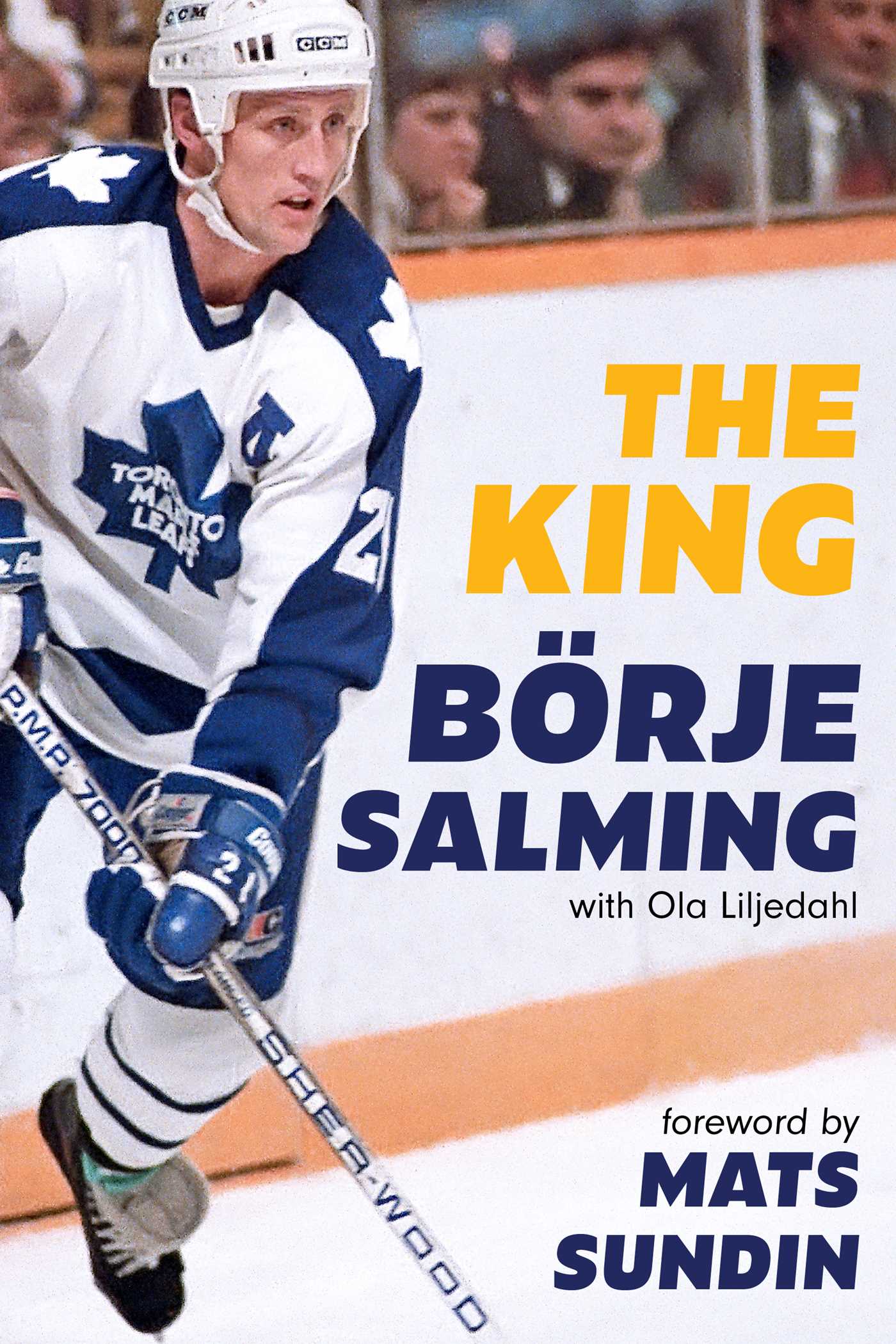
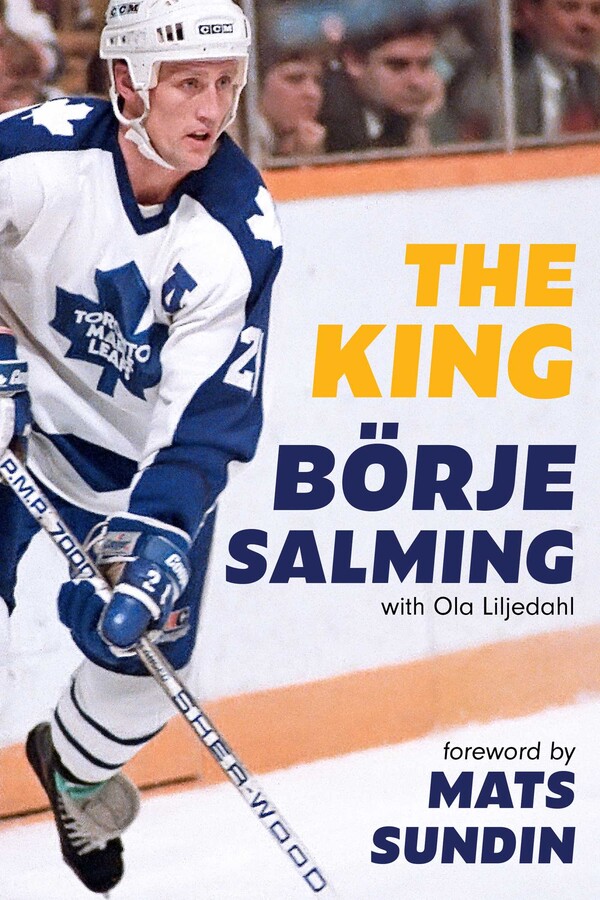
The true story of how Börje Salming—The King—changed hockey forever, silencing critics, earning the respect of some of hockey’s toughest competitors, and becoming one of the most influential players the game has ever known.
Börje Salming was more than a Toronto Maple Leafs legend—he was a trailblazer who transformed the NHL. As the first European player to establish himself as a true star in the league, Salming shattered long-held prejudices about European hockey players and paved the way for generations of international players. His success helped create opportunities for future stars such as Mats Sundin, Peter Forsberg, and countless others who followed in his footsteps.
On the ice, Salming redefined what a defenceman could be. Combining elite offensive instincts with exceptional defensive skill, strength, and fearlessness, he brought a dynamic style to the position that influenced players for decades. Alongside Leafs greats Darryl Sittler, Lanny McDonald, and Mike Palmateer, Salming became the cornerstone of Toronto’s exciting teams of the 1970s, making highlight-reel plays while never backing down from the physical battles that defined the era.
When Salming died of ALS in 2022, hockey lost not only an all-time great but also one of its most beloved ambassadors. Just weeks before his passing, he delivered a powerful and emotional farewell at Scotiabank Arena, raising his arm in defiance of his disease as Leafs Nation and fans around the world paid tribute to a living legend.
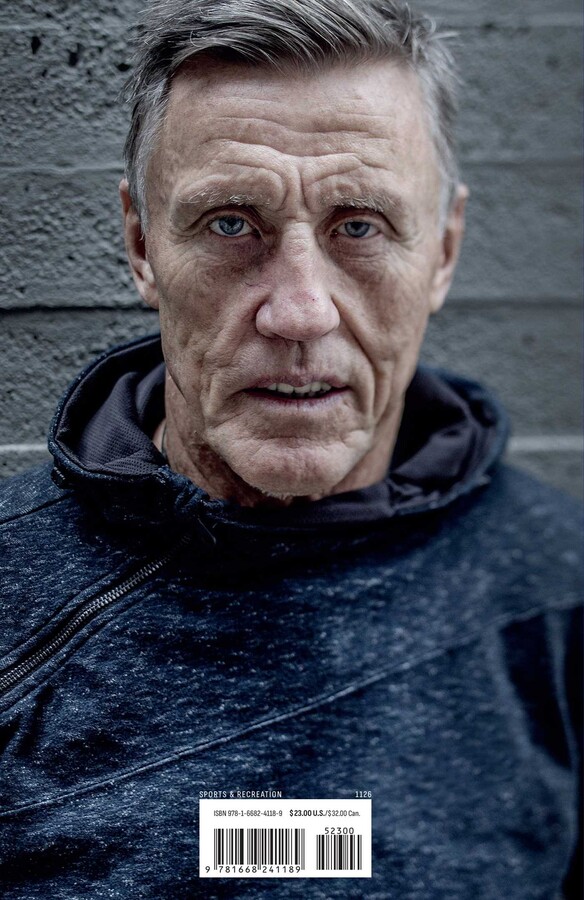
In The King, Salming shares his story in his trademark humble voice, with writer Ola Liljedahl. Filled with candid memories, behind-the-scenes stories, and reflections on a remarkable life, this is the definitive portrait of a player whose courage, talent, and character left an enduring mark on hockey and everyone who knew him.
Excerpt
Chapter 1: It Felt as If They Wanted to Kill Me 1 IT FELT AS IF THEY WANTED TO KILL ME
Throughout the 1970s, several teams facing the Toronto Maple Leafs built their strategy on trying to get me off the ice. Many players, including Philadelphia Flyers star Bobby Clarke, admitted years later that they were told to dump the puck into our corner for a chance to chase me down and hit me. I won’t say anything about that tactic.
With Brynäs IF before my NHL career, when my brother Stigge and I formed a defense pair, we met with the Finnish team IFK Helsinki a few times. They had a tough guy named Heikki Riihiranta whom we wanted to get to. Sometimes one of us would deliberately mispass so he would only just reach the puck. Then the other one of us came steaming in.
My first few years in the NHL, it sometimes felt like some teams were trying to kill me. Every team had some ugly goons who couldn’t play hockey and only went in to fight and harm. The Flyers were the worst at that time. The team had enjoyed great success thanks to their form of intimidation hockey. I have never encountered a team that played as dirty as the Philadelphia Flyers in the mid-’70s.
Dave Schultz, who holds the record for most penalty minutes in a season in the NHL (472, in the 1974–75 season), was the worst on their team, but there were several others. With some players, you could tell that they only got tough when protected by others; at least they could be managed. If you retaliated hard on a player like that, he’d quit. These players later became terrified when they went to other teams and found that the rest of us remembered what they had done during their time with the Flyers—and realized that they were no longer protected by their surroundings. It was sometimes fun to watch.
Like when Orest Kindrachuk, one of the Flyer tough guys who ended up with the Pittsburgh Penguins, looked terrified as we hung over the railing, yelling at him, and my buddy Dave “Tiger” Williams grinningly told him: “Not so tough now, eh, Kindrachuk? You don’t play with the Flyers anymore. You just wait and see. We’ll get you today.”
That happened a lot in the late 1970s and early 1980s. That was the reason why several old Philadelphia players soon retired after they joined new teams. But frankly, some were always dangerous. They were the ones to watch out for. Almost every shift, someone would try to spear me or drive a stick into my face in a melee. After a game against the Philadelphia Flyers, I was able to take off my clothes and count all the marks on my back from the sticks. Before those games, I might feel some nerves, like, Oh no, we’re going to meet those crazy people again. But you couldn’t back out. It took a lot of mental preparation before a game. I used to stand in front of the mirror, imagine that I saw a certain player, and promise myself that if that bastard hit me, I’d knock his head off.
Still, I knew I wasn’t allowed to do that. In practice, I was sometimes given tips on holding a player who was fighting, but I was also told time and again never to throw off the gloves and fight myself. But, I promise, it took self-control. Players threatening me was one thing. But even the coach of the Flyers, Fred Shero, yelled at me several times that he would kill me. I find that deplorable. Of course, it was at its worst in their home arena, where the crowd helped to incite the players to straight-out assault. During the warm-up, you could never stand close to the edge of the rink because the spectators would try to grab your shirt or hit you. If you stood a few meters in, they couldn’t reach you, and you could pretend to ignore all the screams and spitting. It was like the Wild West at times.
But even if you try to look unconcerned, you are, of course, affected by driving past a bench where twenty men, including coaches in suits, stand and shout your name and promise that they will kill, crush, run over, injure… not least when, in the aftermath, you sense that they mean business. It earned you respect to get up after a big hit, sit in the penalty box, and play the next shift. I noticed that as a kid at home in Kiruna, then at Brynäs IF, and decided to do it from day one of my first training camp with the Toronto Maple Leafs. As a player in the NHL, I tried not to show if it hurt, from the very first game. Knowing the importance of respect in North America and quickly realizing that I would be put in my place, the best response was to pretend that an opposing player’s big hit was barely noticeable. And most importantly, that you were not afraid of it.
It also became an image thing. When I broke my little finger at the World Championships in Prague in 1972, I was determined to keep playing. The doctor, Bo-Johan Norlén, managed, after many ups and downs, to get me to accept that it wasn’t possible. I laughed when a newspaper said that Norlén’s greatest achievement that year was to convince me. And I have to admit that when you are skating at full speed toward the boards, knowing that three 200-pound men are coming from behind to push you into them, well, it is an advantage to skate fast. If only to at least have time to turn around and see when the check comes.
So, after a while in the NHL, I resharpened my skates. I used to have a long skating surface, but the less skating surface you have, the faster you can turn. With 200-pound forwards chasing me, I needed to be able to turn and get away quickly. My pain threshold may be high. Or is it a matter of attitude? I don’t know what it is. But I do know that in many ways, I have my brother, Stigge, to thank for it. When I was a kid, I was glued to Stigge, and not only did I think he could do anything, I thought he could handle anything.
One such event that helped shape me happened when I was eight and Stigge was eleven. He and my grandfather went to get a cow and walked. My grandfather made coffee by a fire, but forgot about the pot of water. Stigge suddenly noticed it was boiling, ran over, and grabbed the pot. It was burning hot. He burned his hand deeply and badly, resulting in large blisters. Yet he walked twelve miles with the cow without complaining. But the strangest thing was that the next day, despite the blisters and probable pain, he rowed the boat again. But, as Stigge said, it had to be rowed.
I was very impressed. Not least because Stigge, like many others in the family up north, took pain and hardship for granted. That very much influenced you as a young boy. As a hockey player, it was a great advantage.
Product Details
- Publisher: Simon & Schuster (November 3, 2026)
- Length: 256 pages
- ISBN13: 9781668241189
Browse Related Books
Resources and Downloads
High Resolution Images
-
Book Cover Image (jpg): The King
Hardcover 9781668241189