
Plus, receive recommendations and exclusive offers on all of your favorite books and authors from Simon & Schuster.
0:00 /
The Great Good Thing
LIST PRICE $18.99
PRICE MAY VARY BY RETAILER
Free shipping when you spend $40. Terms apply.
Buy from Other Retailers
Table of Contents
About The Book
A storybook princess breaks the fourth wall and incites a new kind of adventure in this imaginative middle grade fantasy perfect for fans of Chris Colfer and Gail Carson Levine.
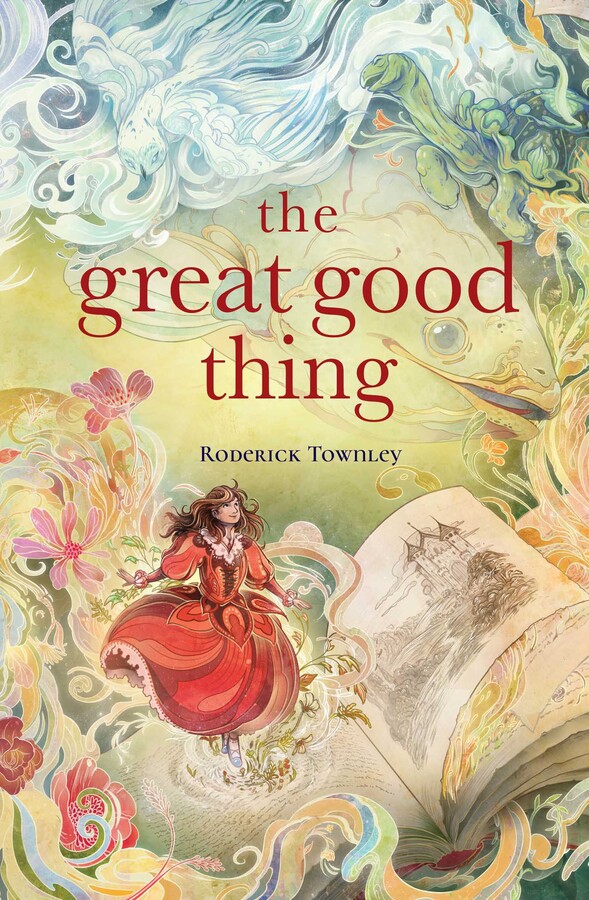
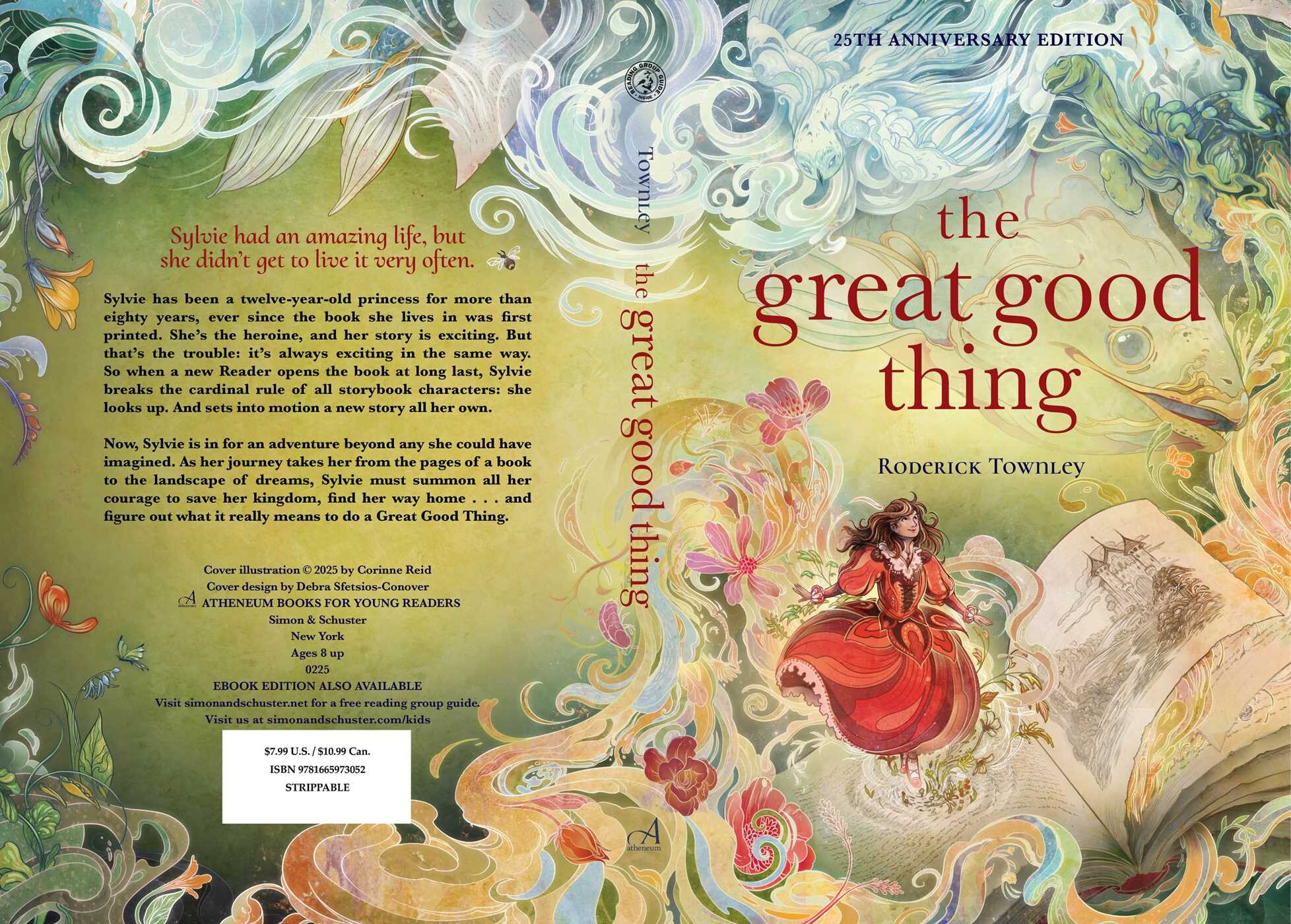
Sylvie had an amazing life, but she didn’t get to live it very often.
Sylvie has been a twelve-year-old princess for more than eighty years, ever since the book she lives in was first printed. She’s the heroine, and her story is exciting. But that’s the trouble: it’s always exciting in the same way. So when a new Reader opens the book at long last, Sylvie breaks the cardinal rule of all storybook characters: she looks up. And sets into motion a new story all her own.
Now, Sylvie is in for an adventure beyond any she could have imagined. As her journey takes her from the pages of a book to the landscape of dreams, Sylvie must summon all her courage to save her kingdom, find her way home, and figure out what it really means to do a Great Good Thing.
Sylvie had an amazing life, but she didn’t get to live it very often.
Sylvie has been a twelve-year-old princess for more than eighty years, ever since the book she lives in was first printed. She’s the heroine, and her story is exciting. But that’s the trouble: it’s always exciting in the same way. So when a new Reader opens the book at long last, Sylvie breaks the cardinal rule of all storybook characters: she looks up. And sets into motion a new story all her own.
Now, Sylvie is in for an adventure beyond any she could have imagined. As her journey takes her from the pages of a book to the landscape of dreams, Sylvie must summon all her courage to save her kingdom, find her way home, and figure out what it really means to do a Great Good Thing.
Excerpt
Chapter One
Sylvie had an amazing life, but she didn’t get to live it very often. What good were potions and disguises if no one came along to scare you or save you or kiss you behind the waterfall? Week after week nothing changed. Years went by. The sparkles on Sylvie’s dress began to fade, and a fine dust coated the leaves, turning the green woods gray.
Once in a while, it looked as though something might happen. The ground trembled slightly, then nothing more. People got used to these disturbances. King Walther scarcely noticed. He sat about playing cards with the goatherd. Even the wolves stopped lurking and just lay in the heat, panting like house dogs. It got so that one day Sylvie sat down on a stone at the edge of the lake and wept.
“Come on,” she whispered fiercely. “Come on! Something happen!”
At that moment, a fan of light began opening in a corner of the sky, sending flashes of color across the water. Sylvie wiped her eyes as the woods brightened. A breeze flew through the treetops, knocking against branches as it went.
“Rawwwwk! Reader! Reader!” cried an orange bird, bursting into the air.
“Booook open!” groaned a bullfrog. “Ooopen! Boook open!”
Sylvie sprang to her feet, excitement and fear catching in her throat. How far had she wandered? A distant trumpet sounded, and the forest echoed with clumping hooves, flapping wings, shouting knights, fluttering dowagers, all racing to get to their places.
Sylvie had the farthest to go—all the way to the next page—but she knew the shortcuts between descriptions and arrived, hot-cheeked, just as a shadow moved over the land and the face of an enormous child peered down on her.
She didn’t care for the look on that face—it was a boy with a pouty lip—but she could spare him no more than a glance. Her dialogue began right away.
“Father,” she said, “I cannot marry Prince Riggeloff.”
Her father was breathing hard. He’d had to run in heavy robes from the next chapter. “Not marry Riggeloff?” cried the king. Sweat stood on his pasty brow. “For heaven’s sake, child, he is handsome, rich…”
“Kind, brave,” continued Princess Sylvie. “Yes, I am aware of his qualities.”
“He has everything.”
“So have I,” the girl replied, dodging around an illustration.
“You don’t have a husband.”
“Nor want one. I don’t want anything,” she said, her green eyes flashing, “except—”
But Sylvie, who had arrived at the top of the next page, never got to say what it was she wanted. A gob of strawberry jam hurtled from the sky and landed with a splot, just two words in front of her, spattering her blue shoes. She looked up. The boy was biting into a peanut butter sandwich. He wasn’t even listening!
“Dumb story,” he humphed and, without bothering to wipe away the jam, he slammed the book shut and tossed it…. Well, Sylvie could only imagine that he tossed it, for she found herself and King Walther and all the courtiers spinning around, then bumping to a stop at a backward angle. They waited in darkness, but the boy did not reappear.
“Watch out!” came the high, scratchy voice of Pingree the Jester. “Get off of me, you lunk!”
“Sorry,” sounded the basso voice of the king’s chief councillor.
“If only you had as much wit as you have width!”
The backup lights buzzed and flickered and came on. The sky, a storybook blue, appeared through the castle window, and the ladies-in-waiting picked themselves off the floor and righted their chairs.
The king was rubbing his hip. “Are you all right, child?”
“I suppose so,” said Sylvie.
“One of these days we’ll get a real Reader.”
She gave him a doubtful look.
“We used to have them, lots of them,” he said.
“Father, we never had lots of Readers.”
“Well, we had good ones. They paid attention.”
Sylvie mumbled something.
“What was that, dear?”
“Nothing.”
“Don’t say that. This is a book. We have to say everything.”
“I said, maybe they found something better to do than read our silly story.”
Queen Emmeline had been gazing critically in a mirror, poking at her ruined hairdo. “Sylvie,” she said in her warning voice.
“Never mind,” said the king. “She knows it isn’t true. The sun shines. Readers read.”
Sylvie had heard all that before. It didn’t make her feel any better.
“We have a big responsibility,” the king went on.
“I know.”
“If it weren’t for us—”
“I know!” The princess smoothed the folds of her skirt and started toward the edge of the page. “I think I’ll take a nap, if nobody minds.”
Queen Emmeline glided up to her husband and laid her hand on his arm as Sylvie disappeared in the direction of the end of the chapter.
She found a comfy spot on the left-hand margin beside the sixth paragraph and rested her head on “grandiloquent,” the largest adjective in sight. As her head sank into the stuffing, the earlier thought returned: What if Readers really did have other lives, lives that had nothing to do with her world? The idea went against everything she’d been taught.
The sun shines. Readers read. She nestled down and yawned. Soon her breathing softened as she drifted into a dream about Chapter Four, in which she sets out on her quest to regain the stolen treasure. As always, the dream went pretty much the way the story was written. Following the thieves’ trail, she rode her donkey into the forest. In a clearing she came across a great tortoise—ten feet across—which local peasant boys had somehow overturned and left to die. Dark birds stared down from the trees. Sylvie tried to help, but the tortoise was too heavy. She used a long pole as a lever and tied a length of rope to her donkey. With her pushing and the donkey tugging, the tortoise finally thumped over onto its feet. It looked at her several long seconds with its great reptilian eyes, then disappeared in the undergrowth.
Sylvie traveled on. In the afternoon heat, she heard a high clicking sound and the beating of wings. Ahead, in a thornbush, a large snowy owl struggled. The more desperately it beat its wings, the deeper the thorns pierced its body. Bright red lines worked their way down the white feathers. Then Sylvie realized (as she always realized at this point in the story) that the bird’s eyes were white, too. It was blind!
“Shh,” Sylvie said in a soft voice. “Hush, little one.”
The owl grew calmer, and Sylvie was able to stroke its back. She held the quivering bird and gently pulled away the thorns. With a cry the owl exploded into the air, circled her once, and flew north.
At last, her petticoats hopelessly dusty, Sylvie arrived at the cliffs overlooking the Mere of Remind. The waters of the Mere were usually calm, but now something was churning up waves close to the shore. An enormous fish of some kind, she thought, trapped by the receding tide. She hurried down to the water.
“There, there, fish,” she said, extending her hand over the thrashing waves. “If you will calm down, I will help you.” She reached below the surface and felt the scaly back of a great sea creature.
She waded in, stroking the fish all the while. It blended so perfectly with the water, it seemed invisible. “Come,” she said. She bumped into the dorsal fin and gently pulled on it, guiding the fish to a place where it could wriggle over a sandbar and escape.
“Now!” she cried. The creature heaved itself up, and Sylvie pushed with all her strength while sand flew everywhere. In that moment, catching the last sunlight, the fish’s sand-covered body was briefly visible. “Why, you’re as big as a drawing room!” Sylvie gasped. Then it slammed back in the water and was gone.
She watched the flashing waves grow brighter and brighter, till she had to shield her eyes. The distant cliffs were turning transparent. What was happening? Then came the sound of screaming birds, and a low grumbling.
“Booook open! Oooopen!”
Sylvie woke from her dream in a panic. The page was flooded with light. She started running, already late. A face was peering down into the royal chamber, where the king was chewing on the end of his mustache and looking around anxiously.
“Father-I-cannot-marry-Prince-Riggeloff!” Sylvie gasped as she raced out onto the page.
“Not marry Riggeloff?” King Walther beamed, relieved to see her back in place. Then he caught himself and harrumphed. “For heaven’s sake, child, he is handsome, rich…”
Sylvie had to lean against the wall to catch her breath. Her hand rested on a suit of armor. “Kind, brave, yes, I…” The armor started to scrape along the wall. “Yes, I…”—she made a grab for it and missed—“know!” she cried as the armor, with a stupendous crash, landed on the stone floor. “No! No!”
One of the ladies-in-waiting fainted dead away.
Somewhere someone started giggling.
“He has—he has,” started the king. He cast a worried glance at the large woman lying on the floor.
The giggling grew louder.
“Everything, yes I know,” Sylvie said. “So do I.”
“And so do I!” her father exclaimed.
“Of course you do!” cried Sylvie. “You’re the king!”
“Where am I?” The lady-in-waiting, a round woman in a bulging ball gown, was struggling onto her elbow.
Pingree the Jester hid his face in his pointed hat.
“And you’re the princess!” shouted the king to Sylvie. He put his hand to his brow. “What am I saying?”
The laughter grew louder. Sylvie glanced up, just for a second, and saw a huge face in the sky. A girl, she realized, one she hadn’t seen before. “Ah-ha-ha-ha!” the girl boomed out, gripping the sides of the book till the castle shook.
The laughter died away. The new Reader had turned the page and found the next two pages stuck together. Sylvie forgot the number one rule of all storybook characters: Never look at the Reader. It was a rule she had broken before, but this time she just stared up at the Reader, a plain-looking girl a bit younger than herself, with short brown curls and a mouth too wide for her face. She was prying the pages apart.
“That Ricky!” the girl cried. Then she closed the book and left the courtiers in darkness.
“Oh!” King Walther sighed in despair.
“Disaster!” the jester groaned, flicking dust from his jingling cap.
“She may come back,” said the queen.
Sylvie and her father helped pull the lady-in-waiting to her feet as the backup lights sputtered and blinked on. No one spoke, or even looked at each other. Two disappointments in one day, after years of sitting on an undusted shelf. It was too much!
one
Sylvie had an amazing life, but she didn’t get to live it very often. What good were potions and disguises if no one came along to scare you or save you or kiss you behind the waterfall? Week after week nothing changed. Years went by. The sparkles on Sylvie’s dress began to fade, and a fine dust coated the leaves, turning the green woods gray.
Once in a while, it looked as though something might happen. The ground trembled slightly, then nothing more. People got used to these disturbances. King Walther scarcely noticed. He sat about playing cards with the goatherd. Even the wolves stopped lurking and just lay in the heat, panting like house dogs. It got so that one day Sylvie sat down on a stone at the edge of the lake and wept.
“Come on,” she whispered fiercely. “Come on! Something happen!”
At that moment, a fan of light began opening in a corner of the sky, sending flashes of color across the water. Sylvie wiped her eyes as the woods brightened. A breeze flew through the treetops, knocking against branches as it went.
“Rawwwwk! Reader! Reader!” cried an orange bird, bursting into the air.
“Booook open!” groaned a bullfrog. “Ooopen! Boook open!”
Sylvie sprang to her feet, excitement and fear catching in her throat. How far had she wandered? A distant trumpet sounded, and the forest echoed with clumping hooves, flapping wings, shouting knights, fluttering dowagers, all racing to get to their places.
Sylvie had the farthest to go—all the way to the next page—but she knew the shortcuts between descriptions and arrived, hot-cheeked, just as a shadow moved over the land and the face of an enormous child peered down on her.
She didn’t care for the look on that face—it was a boy with a pouty lip—but she could spare him no more than a glance. Her dialogue began right away.
“Father,” she said, “I cannot marry Prince Riggeloff.”
Her father was breathing hard. He’d had to run in heavy robes from the next chapter. “Not marry Riggeloff?” cried the king. Sweat stood on his pasty brow. “For heaven’s sake, child, he is handsome, rich…”
“Kind, brave,” continued Princess Sylvie. “Yes, I am aware of his qualities.”
“He has everything.”
“So have I,” the girl replied, dodging around an illustration.
“You don’t have a husband.”
“Nor want one. I don’t want anything,” she said, her green eyes flashing, “except—”
But Sylvie, who had arrived at the top of the next page, never got to say what it was she wanted. A gob of strawberry jam hurtled from the sky and landed with a splot, just two words in front of her, spattering her blue shoes. She looked up. The boy was biting into a peanut butter sandwich. He wasn’t even listening!
“Dumb story,” he humphed and, without bothering to wipe away the jam, he slammed the book shut and tossed it…. Well, Sylvie could only imagine that he tossed it, for she found herself and King Walther and all the courtiers spinning around, then bumping to a stop at a backward angle. They waited in darkness, but the boy did not reappear.
“Watch out!” came the high, scratchy voice of Pingree the Jester. “Get off of me, you lunk!”
“Sorry,” sounded the basso voice of the king’s chief councillor.
“If only you had as much wit as you have width!”
The backup lights buzzed and flickered and came on. The sky, a storybook blue, appeared through the castle window, and the ladies-in-waiting picked themselves off the floor and righted their chairs.
The king was rubbing his hip. “Are you all right, child?”
“I suppose so,” said Sylvie.
“One of these days we’ll get a real Reader.”
She gave him a doubtful look.
“We used to have them, lots of them,” he said.
“Father, we never had lots of Readers.”
“Well, we had good ones. They paid attention.”
Sylvie mumbled something.
“What was that, dear?”
“Nothing.”
“Don’t say that. This is a book. We have to say everything.”
“I said, maybe they found something better to do than read our silly story.”
Queen Emmeline had been gazing critically in a mirror, poking at her ruined hairdo. “Sylvie,” she said in her warning voice.
“Never mind,” said the king. “She knows it isn’t true. The sun shines. Readers read.”
Sylvie had heard all that before. It didn’t make her feel any better.
“We have a big responsibility,” the king went on.
“I know.”
“If it weren’t for us—”
“I know!” The princess smoothed the folds of her skirt and started toward the edge of the page. “I think I’ll take a nap, if nobody minds.”
Queen Emmeline glided up to her husband and laid her hand on his arm as Sylvie disappeared in the direction of the end of the chapter.
She found a comfy spot on the left-hand margin beside the sixth paragraph and rested her head on “grandiloquent,” the largest adjective in sight. As her head sank into the stuffing, the earlier thought returned: What if Readers really did have other lives, lives that had nothing to do with her world? The idea went against everything she’d been taught.
The sun shines. Readers read. She nestled down and yawned. Soon her breathing softened as she drifted into a dream about Chapter Four, in which she sets out on her quest to regain the stolen treasure. As always, the dream went pretty much the way the story was written. Following the thieves’ trail, she rode her donkey into the forest. In a clearing she came across a great tortoise—ten feet across—which local peasant boys had somehow overturned and left to die. Dark birds stared down from the trees. Sylvie tried to help, but the tortoise was too heavy. She used a long pole as a lever and tied a length of rope to her donkey. With her pushing and the donkey tugging, the tortoise finally thumped over onto its feet. It looked at her several long seconds with its great reptilian eyes, then disappeared in the undergrowth.
Sylvie traveled on. In the afternoon heat, she heard a high clicking sound and the beating of wings. Ahead, in a thornbush, a large snowy owl struggled. The more desperately it beat its wings, the deeper the thorns pierced its body. Bright red lines worked their way down the white feathers. Then Sylvie realized (as she always realized at this point in the story) that the bird’s eyes were white, too. It was blind!
“Shh,” Sylvie said in a soft voice. “Hush, little one.”
The owl grew calmer, and Sylvie was able to stroke its back. She held the quivering bird and gently pulled away the thorns. With a cry the owl exploded into the air, circled her once, and flew north.
At last, her petticoats hopelessly dusty, Sylvie arrived at the cliffs overlooking the Mere of Remind. The waters of the Mere were usually calm, but now something was churning up waves close to the shore. An enormous fish of some kind, she thought, trapped by the receding tide. She hurried down to the water.
“There, there, fish,” she said, extending her hand over the thrashing waves. “If you will calm down, I will help you.” She reached below the surface and felt the scaly back of a great sea creature.
She waded in, stroking the fish all the while. It blended so perfectly with the water, it seemed invisible. “Come,” she said. She bumped into the dorsal fin and gently pulled on it, guiding the fish to a place where it could wriggle over a sandbar and escape.
“Now!” she cried. The creature heaved itself up, and Sylvie pushed with all her strength while sand flew everywhere. In that moment, catching the last sunlight, the fish’s sand-covered body was briefly visible. “Why, you’re as big as a drawing room!” Sylvie gasped. Then it slammed back in the water and was gone.
She watched the flashing waves grow brighter and brighter, till she had to shield her eyes. The distant cliffs were turning transparent. What was happening? Then came the sound of screaming birds, and a low grumbling.
“Booook open! Oooopen!”
Sylvie woke from her dream in a panic. The page was flooded with light. She started running, already late. A face was peering down into the royal chamber, where the king was chewing on the end of his mustache and looking around anxiously.
“Father-I-cannot-marry-Prince-Riggeloff!” Sylvie gasped as she raced out onto the page.
“Not marry Riggeloff?” King Walther beamed, relieved to see her back in place. Then he caught himself and harrumphed. “For heaven’s sake, child, he is handsome, rich…”
Sylvie had to lean against the wall to catch her breath. Her hand rested on a suit of armor. “Kind, brave, yes, I…” The armor started to scrape along the wall. “Yes, I…”—she made a grab for it and missed—“know!” she cried as the armor, with a stupendous crash, landed on the stone floor. “No! No!”
One of the ladies-in-waiting fainted dead away.
Somewhere someone started giggling.
“He has—he has,” started the king. He cast a worried glance at the large woman lying on the floor.
The giggling grew louder.
“Everything, yes I know,” Sylvie said. “So do I.”
“And so do I!” her father exclaimed.
“Of course you do!” cried Sylvie. “You’re the king!”
“Where am I?” The lady-in-waiting, a round woman in a bulging ball gown, was struggling onto her elbow.
Pingree the Jester hid his face in his pointed hat.
“And you’re the princess!” shouted the king to Sylvie. He put his hand to his brow. “What am I saying?”
The laughter grew louder. Sylvie glanced up, just for a second, and saw a huge face in the sky. A girl, she realized, one she hadn’t seen before. “Ah-ha-ha-ha!” the girl boomed out, gripping the sides of the book till the castle shook.
The laughter died away. The new Reader had turned the page and found the next two pages stuck together. Sylvie forgot the number one rule of all storybook characters: Never look at the Reader. It was a rule she had broken before, but this time she just stared up at the Reader, a plain-looking girl a bit younger than herself, with short brown curls and a mouth too wide for her face. She was prying the pages apart.
“That Ricky!” the girl cried. Then she closed the book and left the courtiers in darkness.
“Oh!” King Walther sighed in despair.
“Disaster!” the jester groaned, flicking dust from his jingling cap.
“She may come back,” said the queen.
Sylvie and her father helped pull the lady-in-waiting to her feet as the backup lights sputtered and blinked on. No one spoke, or even looked at each other. Two disappointments in one day, after years of sitting on an undusted shelf. It was too much!
Reading Group Guide
Get a FREE ebook by joining our mailing list today! Plus, receive recommendations for your next Book Club read.
By clicking 'Sign me up' I agree to the Terms of Use and acknowledge the Privacy Policy and Notice of Financial Incentive. Free ebook offer available to NEW US subscribers only. Offer redeemable at Simon & Schuster's ebook fulfillment partner. Must redeem within 90 days. See full terms and conditions and this month's choices.
Reading Group Guide to
The Great Good Thing
By Roderick Townley
About the Book
Twelve-year-old Princess Sylvie lives in a storybook that hasn’t been read in years. She’s tired of the same old tale and longs for adventure beyond the boundaries of the book. So when a young girl named Claire begins reading The Great Good Thing, Sylvie makes her move. First, she disobeys the number one rule of storybook characters: Never Look at the Reader. Soon after that, she leaves the confines of the page to explore Claire’s dreams. But when the book is destroyed by fire, Sylvie, her family, and all the characters in the kingdom must take up permanent residence in Claire’s subconscious. There, adventure is assured; but it’s what Sylvie accomplishes on the outside that brings the greatest good, for herself and countless others. Publisher’s Weekly called Townley’s novel “clever and deftly written… as much a romantic paean to reading and writing as it is a good story.” Indeed, Townley’s fantastic journey renders the imagination real.
Discussion Topics
Please use examples from the text to support your answers.
1. As a storybook character Sylvie stays the same age despite the passage of time. What would be the advantages and disadvantages of staying the same age forever? If you could choose one age at which to remain the rest of your life, what would it be and why?
2. Claire’s brother Ricky mistreats her copy of The Great Good Thing. In what ways does he do this? Why does he handle the book disrespectfully? What happens to the characters of The Great Good Thing as a result?
3. Claire’s grandmother adored The Great Good Thing for a most personal reason. She passed it down to Claire, who in turn shared her love for the book with her daughter Lily. What are your favorite books? What books would you pass down to your children and grandchildren? What feelings or memories do you associate with the stories?
4. The way we treat others often comes back to haunt or help us. Think about three magical beasts: the blind owl (air), the tortoise (earth), and the invisible fish (water). What is Sylvie’s relationship to them, and what is their function in the story?
5. When King Walther confronts Sylvie about going outside the boundaries of the book, he says, “Without you… well our story wouldn’t make sense.” What does he mean by this? How would your favorite book be different without the main character? In what ways would the story change? What role do you play in your family’s story? How would your family members’ lives be different without you?
6. Fire forces the character in The Great Good Thing to inhabit a new setting. How do the characters change as a result of the move? What challenges do they face? Have you ever had to adjust to an unfamiliar setting? What helped you to feel more comfortable?
7. As she learns more about Claire’s mind Sylvie notices that distant memories are in danger of being forgotten forever. How does Sylvie help restore Claire’s memories? Are there certain triggers-like sights or smells-that bring up old memories for you? How do you retrieve memories? What helps you remember a poem or a math formula, for example?
8. Near the end of Chapter 11, Fangl tells Sylvie, “You can’t solve a problem from inside it.” He adds, “You’re the only one who can save the kingdom, because you’re the only one who can leave it.” What does he mean by this? Have you ever had problems or difficulties that you had to get “outside of” in order to solve?
9. Many young people have written the author to say that reading this book changed the way they look at things. Has the book changed the way you think of reading? If so, how?
Activities and Research
1. Dream symbolism appears throughout The Great Good Thing. In one dream Claire and Sylvie take flight after leaping from a stairway. In another Claire gives a speck “before a crowd of strangers…[in] her underwear.” What is the significance of these dreams? Keep a dream journal. Record your dreams each day for one week. Do you notice any themes? How do your dreams reflect what is happening in your waking life?
2. Queen Emmeline pressures Sylvie to marry Prince Riggeloff. “You’re twelve years old!” she says. “It’s time you think of marriage, not-adventure.” Why do you think Queen Emmeline wants her daughter to wed at such a young age? How have people’s beliefs about marriage changed over time and why?
3. Rewrite a well-known fairy tale, imagining what the characters do when the book is closed. Stage a public reading or class play to present your vision to others.
4. Claire brought her grandmother joy by reading to her. Share your love of books with younger students by being a Reading Buddy. Partner with another class to read to the children each week. Travel to their classroom or invite them to yours.
5. Interview the elders of your community (e.g., parents, grandparents, or neighbors) to find out what they loved as children. Are these books still available? Like the first version of The Great Good Thing, many may be out of print or hard to find. If so, write a letter to the publisher (ask a librarian for help locating this information).
6. Sylvie accomplishes a “great good thing” for future generations of readers when she helps Lily write a new version of The Great Good Thing. What “great good thing” could you do to enhance the quality of life in your family, school, or community? Work individually, in a small group, or as a class to accomplish your goal.
This guide has been provided by Simon & Schuster for classroom, library, and reading group use. It may be reproduced in its entirety or excerpted for these purposes.
The Great Good Thing
By Roderick Townley
About the Book
Twelve-year-old Princess Sylvie lives in a storybook that hasn’t been read in years. She’s tired of the same old tale and longs for adventure beyond the boundaries of the book. So when a young girl named Claire begins reading The Great Good Thing, Sylvie makes her move. First, she disobeys the number one rule of storybook characters: Never Look at the Reader. Soon after that, she leaves the confines of the page to explore Claire’s dreams. But when the book is destroyed by fire, Sylvie, her family, and all the characters in the kingdom must take up permanent residence in Claire’s subconscious. There, adventure is assured; but it’s what Sylvie accomplishes on the outside that brings the greatest good, for herself and countless others. Publisher’s Weekly called Townley’s novel “clever and deftly written… as much a romantic paean to reading and writing as it is a good story.” Indeed, Townley’s fantastic journey renders the imagination real.
Discussion Topics
Please use examples from the text to support your answers.
1. As a storybook character Sylvie stays the same age despite the passage of time. What would be the advantages and disadvantages of staying the same age forever? If you could choose one age at which to remain the rest of your life, what would it be and why?
2. Claire’s brother Ricky mistreats her copy of The Great Good Thing. In what ways does he do this? Why does he handle the book disrespectfully? What happens to the characters of The Great Good Thing as a result?
3. Claire’s grandmother adored The Great Good Thing for a most personal reason. She passed it down to Claire, who in turn shared her love for the book with her daughter Lily. What are your favorite books? What books would you pass down to your children and grandchildren? What feelings or memories do you associate with the stories?
4. The way we treat others often comes back to haunt or help us. Think about three magical beasts: the blind owl (air), the tortoise (earth), and the invisible fish (water). What is Sylvie’s relationship to them, and what is their function in the story?
5. When King Walther confronts Sylvie about going outside the boundaries of the book, he says, “Without you… well our story wouldn’t make sense.” What does he mean by this? How would your favorite book be different without the main character? In what ways would the story change? What role do you play in your family’s story? How would your family members’ lives be different without you?
6. Fire forces the character in The Great Good Thing to inhabit a new setting. How do the characters change as a result of the move? What challenges do they face? Have you ever had to adjust to an unfamiliar setting? What helped you to feel more comfortable?
7. As she learns more about Claire’s mind Sylvie notices that distant memories are in danger of being forgotten forever. How does Sylvie help restore Claire’s memories? Are there certain triggers-like sights or smells-that bring up old memories for you? How do you retrieve memories? What helps you remember a poem or a math formula, for example?
8. Near the end of Chapter 11, Fangl tells Sylvie, “You can’t solve a problem from inside it.” He adds, “You’re the only one who can save the kingdom, because you’re the only one who can leave it.” What does he mean by this? Have you ever had problems or difficulties that you had to get “outside of” in order to solve?
9. Many young people have written the author to say that reading this book changed the way they look at things. Has the book changed the way you think of reading? If so, how?
Activities and Research
1. Dream symbolism appears throughout The Great Good Thing. In one dream Claire and Sylvie take flight after leaping from a stairway. In another Claire gives a speck “before a crowd of strangers…[in] her underwear.” What is the significance of these dreams? Keep a dream journal. Record your dreams each day for one week. Do you notice any themes? How do your dreams reflect what is happening in your waking life?
2. Queen Emmeline pressures Sylvie to marry Prince Riggeloff. “You’re twelve years old!” she says. “It’s time you think of marriage, not-adventure.” Why do you think Queen Emmeline wants her daughter to wed at such a young age? How have people’s beliefs about marriage changed over time and why?
3. Rewrite a well-known fairy tale, imagining what the characters do when the book is closed. Stage a public reading or class play to present your vision to others.
4. Claire brought her grandmother joy by reading to her. Share your love of books with younger students by being a Reading Buddy. Partner with another class to read to the children each week. Travel to their classroom or invite them to yours.
5. Interview the elders of your community (e.g., parents, grandparents, or neighbors) to find out what they loved as children. Are these books still available? Like the first version of The Great Good Thing, many may be out of print or hard to find. If so, write a letter to the publisher (ask a librarian for help locating this information).
6. Sylvie accomplishes a “great good thing” for future generations of readers when she helps Lily write a new version of The Great Good Thing. What “great good thing” could you do to enhance the quality of life in your family, school, or community? Work individually, in a small group, or as a class to accomplish your goal.
This guide has been provided by Simon & Schuster for classroom, library, and reading group use. It may be reproduced in its entirety or excerpted for these purposes.
About The Author
Photo Credit:
Roderick Townley is a poet, literary critic, and author of children’s books. His Sylvie Cycle series includes The Great Good Thing, a Top Ten Book Sense Pick that Kirkus Reviews called “utterly winning”; Into the Labyrinth, which The New York Times called “a hopping fine read”; and The Constellation of Sylvie. Mr. Townley’s novel Sky was described by VOYA as “one hell of a book.” He has two children, Jesse and Grace, and is married to author Wyatt Townley. Visit him online at RoderickTownley.com.
Why We Love It
“The Great Good Thing is one of those rare books with the power to fundamentally reshape how you look at the world, at yourself, and at the very act of storytelling—all while transporting you to an immersive fantasy world with a brave, funny protagonist you can’t help cheering on. This excellent adventure is not to be missed.”
—Feather F., Editor, on The Great Good Thing
Product Details
- Publisher: Atheneum Books for Young Readers (January 21, 2025)
- Length: 224 pages
- ISBN13: 9781665973069
- Grades: 3 and up
- Ages: 8 - 99
Browse Related Books
Resources and Downloads
High Resolution Images
-
Book Cover Image (jpg): The Great Good Thing
Hardcover 9781665973069
-
Author Photo (jpg): Roderick Townley Photo Credit:(0.1 MB)
Any use of an author photo must include its respective photo credit