Plus, receive recommendations and exclusive offers on all of your favorite books and authors from Simon & Schuster.
Published by Healing Arts Press
Distributed by Simon & Schuster
LIST PRICE $29.99
PRICE MAY VARY BY RETAILER
Free shipping when you spend $40. Terms apply.
Buy from Other Retailers
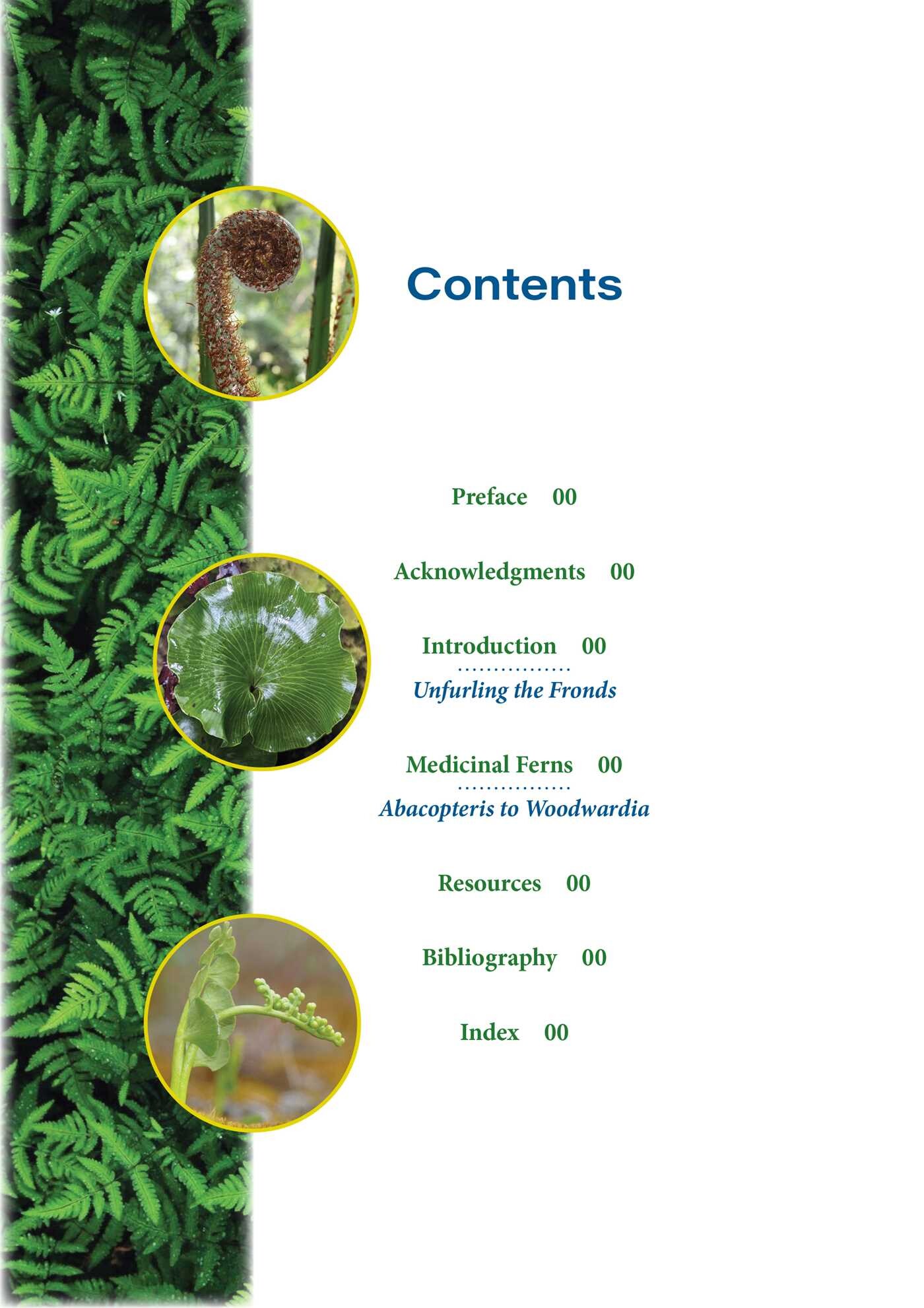
Table of Contents
About The Book
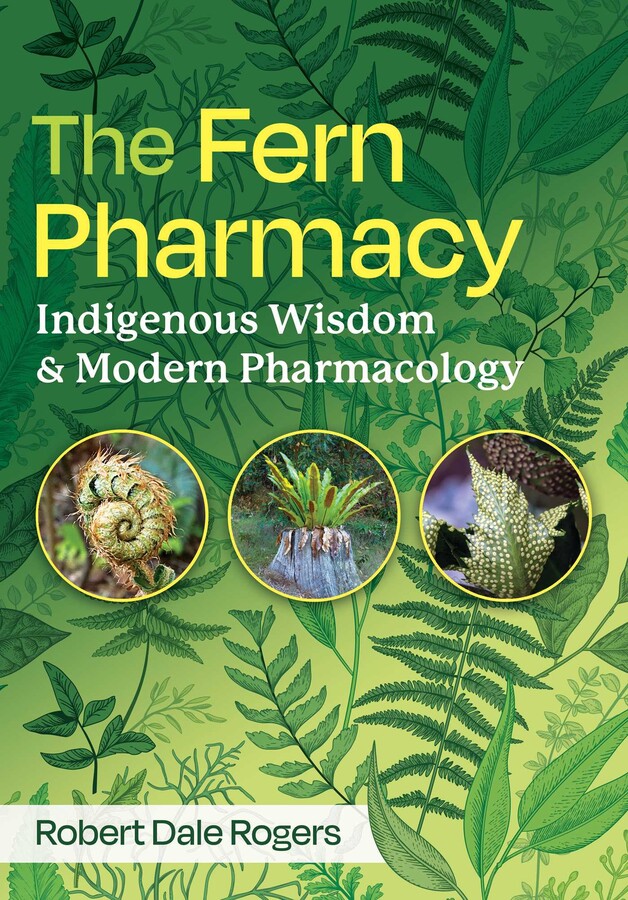
A comprehensive illustrated guide to medicinal ferns throughout the world
• Explores more than 500 species of ferns, alongside full-color photos
• Examines the Indigenous and folk uses of ferns for food and medicine throughout history
• Explains in detail the scientific research behind the potency of fern chemicals to heal many human conditions
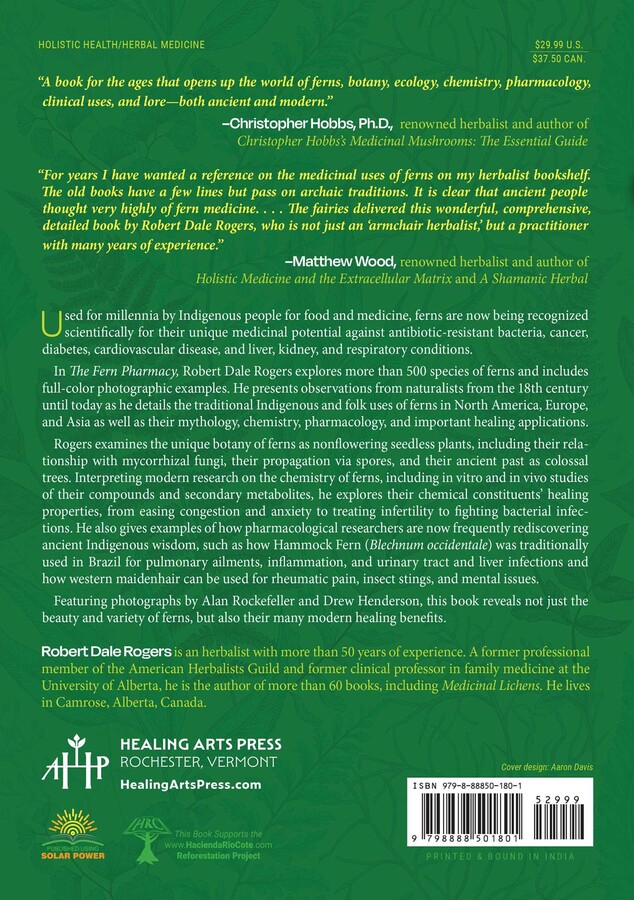
Used for millennia by Indigenous people for food and medicine, ferns are now being recognized scientifically for their unique medicinal potential against antibiotic-resistant bacteria, cancer, diabetes, cardiovascular disease, and liver, kidney, and respiratory conditions.
In The Fern Pharmacy, Robert Dale Rogers explores more than 500 species of ferns and includes full-color photographic examples. He presents observations from naturalists from the 18th century until today as he details the traditional Indigenous and folk uses of ferns in North America, Europe, and Asia as well as their mythology, chemistry, pharmacology, and important healing applications.
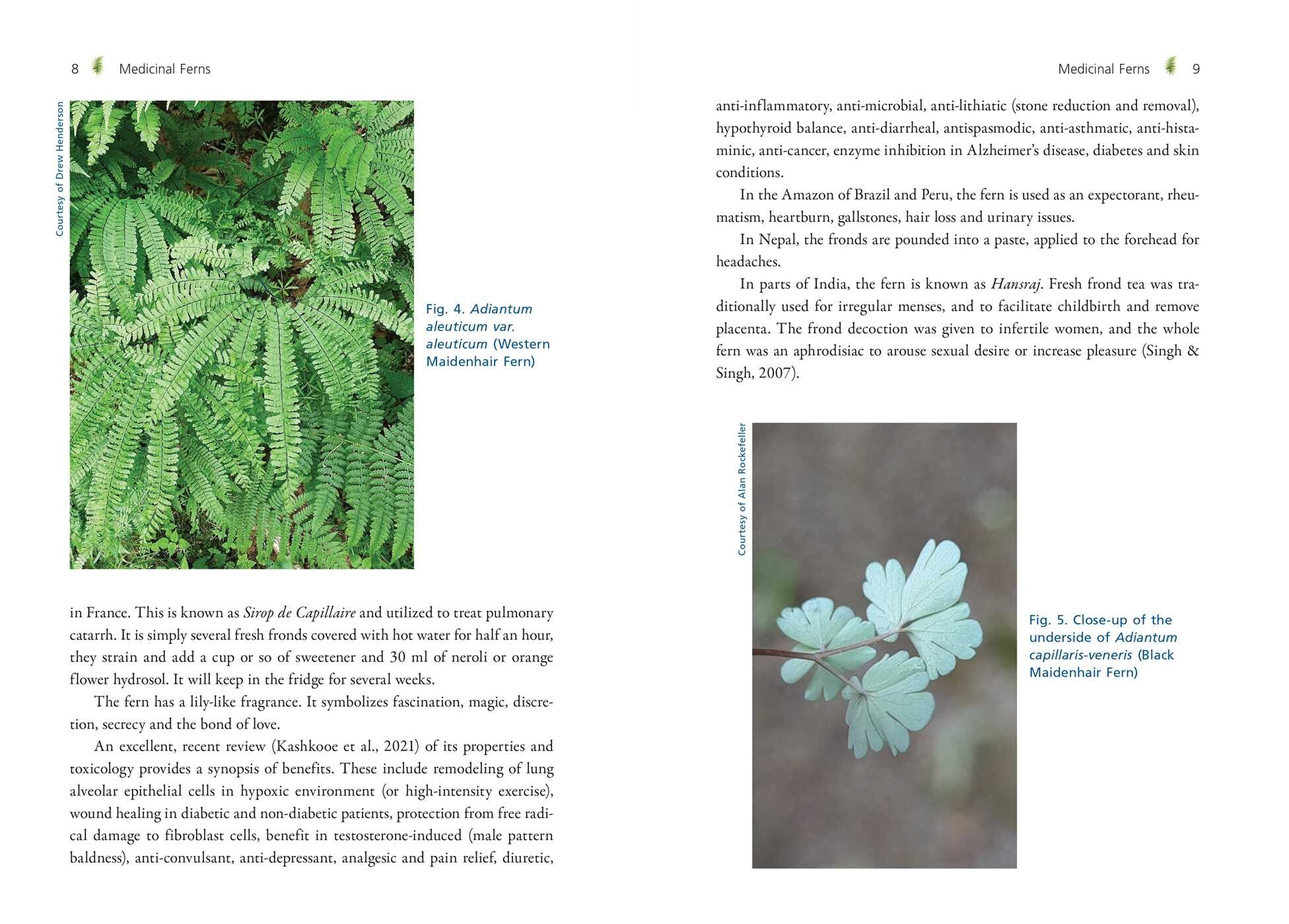
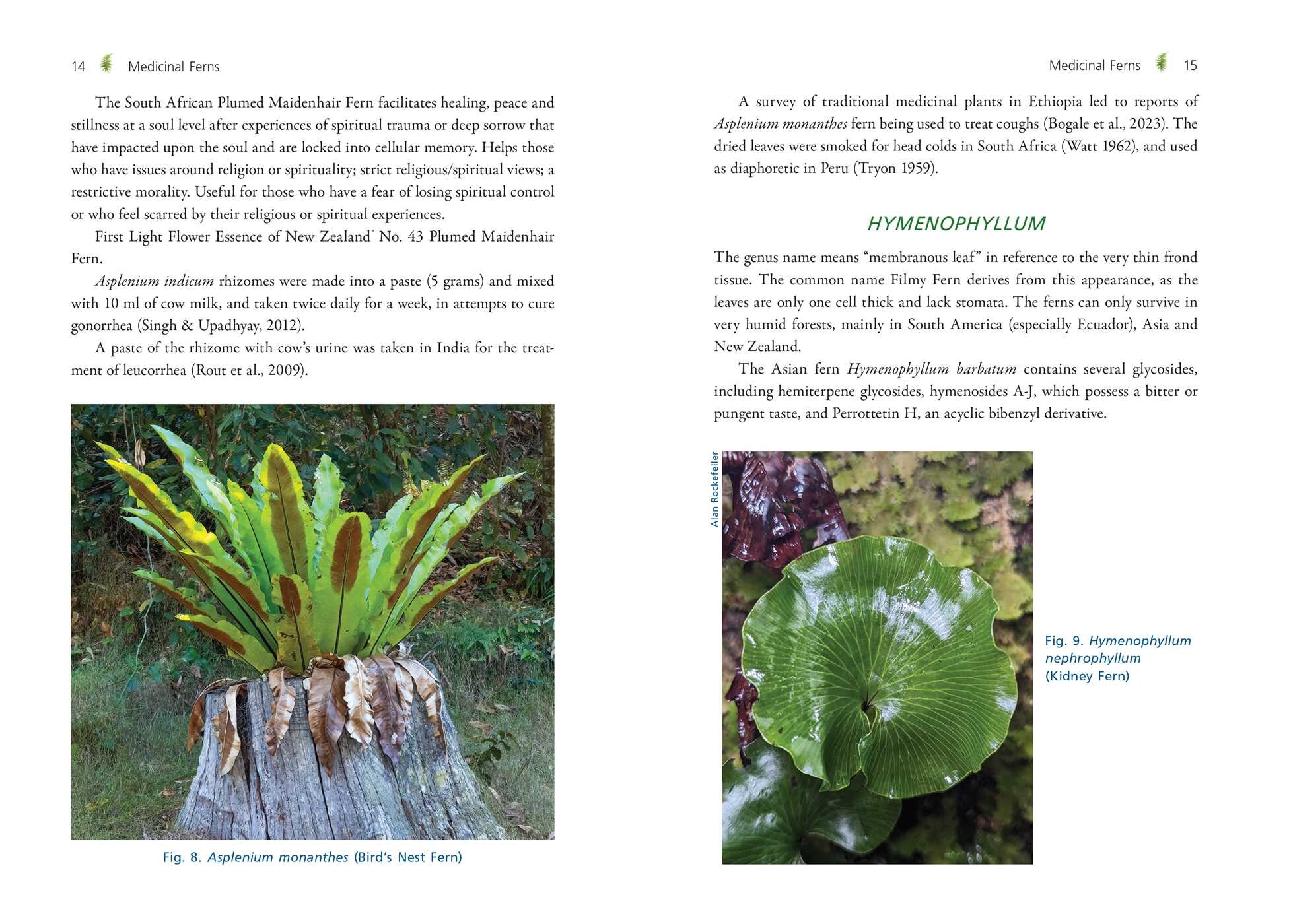
Rogers examines the unique botany of ferns as nonflowering seedless plants, including their relationship with mycorrhizal fungi, their propagation via spores, and their ancient past as colossal trees. Interpreting modern research on the chemistry of ferns, including in vitro and in vivo studies of their compounds and secondary metabolites, he explores their chemical constituents’ healing properties, from easing congestion and anxiety to treating infertility to fighting bacterial infections. He also gives examples of how pharmacological researchers are now frequently rediscovering ancient Indigenous wisdom, such as how Hammock Fern (Blechnum occidentale) was traditionally used in Brazil for pulmonary ailments, inflammation, and urinary tract and liver infections and how western maidenhair can be used for rheumatic pain, insect stings, and mental issues.
Featuring photographs by Alan Rockefeller and Drew Henderson, this book reveals not just the beauty and variety of ferns, but also their many modern healing benefits.
• Explores more than 500 species of ferns, alongside full-color photos
• Examines the Indigenous and folk uses of ferns for food and medicine throughout history
• Explains in detail the scientific research behind the potency of fern chemicals to heal many human conditions
Used for millennia by Indigenous people for food and medicine, ferns are now being recognized scientifically for their unique medicinal potential against antibiotic-resistant bacteria, cancer, diabetes, cardiovascular disease, and liver, kidney, and respiratory conditions.
In The Fern Pharmacy, Robert Dale Rogers explores more than 500 species of ferns and includes full-color photographic examples. He presents observations from naturalists from the 18th century until today as he details the traditional Indigenous and folk uses of ferns in North America, Europe, and Asia as well as their mythology, chemistry, pharmacology, and important healing applications.
Rogers examines the unique botany of ferns as nonflowering seedless plants, including their relationship with mycorrhizal fungi, their propagation via spores, and their ancient past as colossal trees. Interpreting modern research on the chemistry of ferns, including in vitro and in vivo studies of their compounds and secondary metabolites, he explores their chemical constituents’ healing properties, from easing congestion and anxiety to treating infertility to fighting bacterial infections. He also gives examples of how pharmacological researchers are now frequently rediscovering ancient Indigenous wisdom, such as how Hammock Fern (Blechnum occidentale) was traditionally used in Brazil for pulmonary ailments, inflammation, and urinary tract and liver infections and how western maidenhair can be used for rheumatic pain, insect stings, and mental issues.
Featuring photographs by Alan Rockefeller and Drew Henderson, this book reveals not just the beauty and variety of ferns, but also their many modern healing benefits.
Excerpt
INTRODUCTION
Unfurling the Fronds
Nature made ferns for pure leaves to see what she could do in that line.
Henry David Thoreau
The term fern is often misused. Examples of this are the unrelated asparagus fern (a flowering plant) and sweet fern (a flowering shrub of the Comptonia genus). Even a group of animals called hydrozoans, distantly related to jellyfish and coral, are named air ferns. Their skeletons are dried, dyed green, and falsely sold as a plant that lives on air.
Ferns are ancient plants, with fossils dating back to the Middle Devonian era, about 390 million years ago—several hundred million years before the emergence of flowering plants. The true ferns Polypodiales making up 80% of today’s ferns, arose about 180 million years ago.
The word fern may derive from the Anglo-Saxon contraction fepern or German Farn, both derived from Sanskrit parna, meaning "feather" or "wing." Some authors suggest it derives from farr (a bullock), from its use as livestock bedding. These words ultimately trace back to Proto-Germanic "farną," which is also related to the Latin "fērnum" and Ancient Greek "peron" or "pteron," all of which refer to ferns or fern-like plants.
THE LIFE OF FERNS
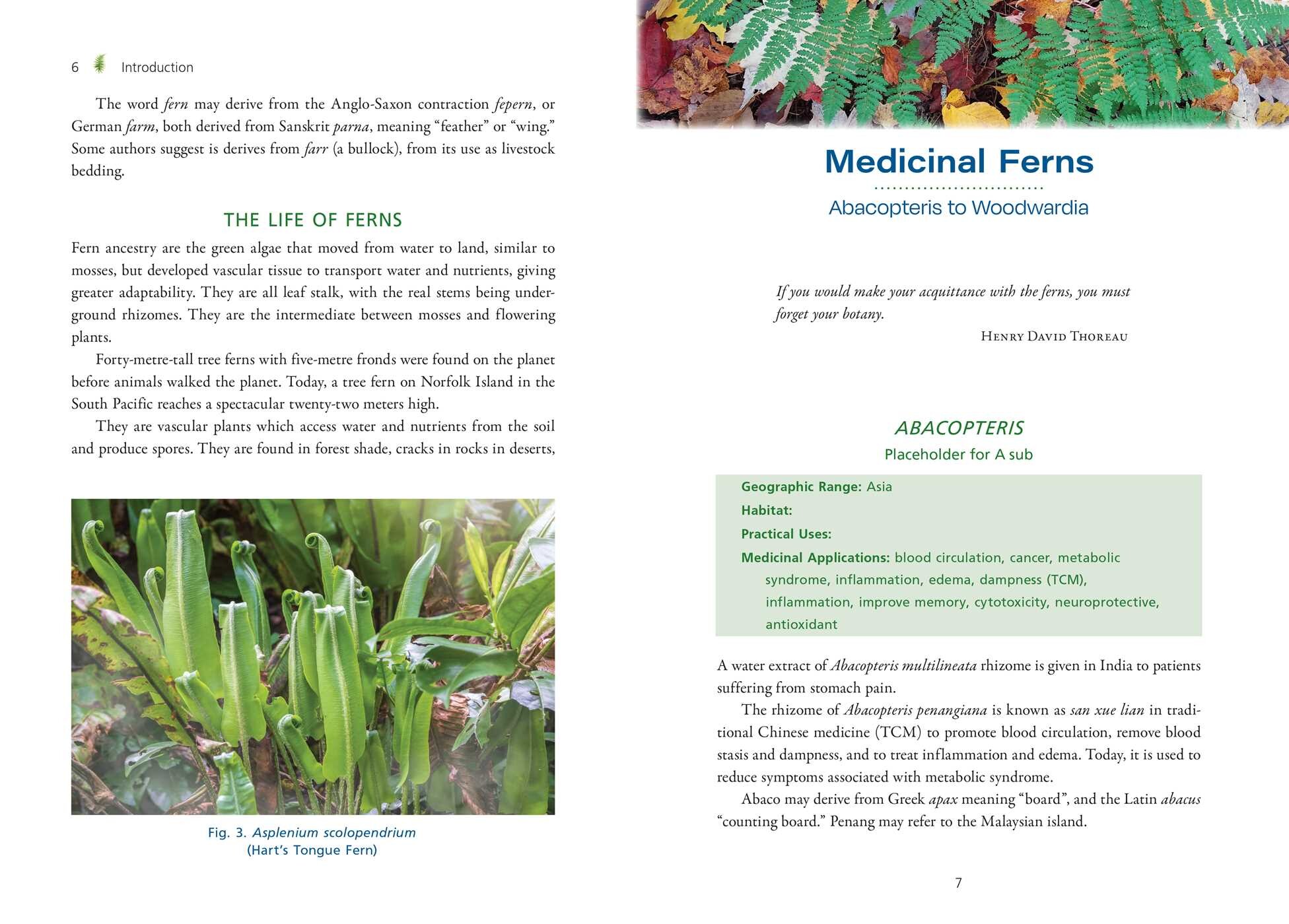
Fern ancestry is traced to the green algae that moved from water to land, similar to mosses. However, unlike mosses, ferns developed vascular tissue to transport water and nutrients, providing them with greater adaptability. Ferns consist mainly of a leaf stalk, with the real stems being underground rhizomes. They are the intermediate between mosses and flowering plants.
Forty-meter-tall tree ferns with five-meter fronds existed on Earth before animals evolved. Today, a tree fern on Norfolk Island in the South Pacific reaches a spectacular twenty-two meters in height.
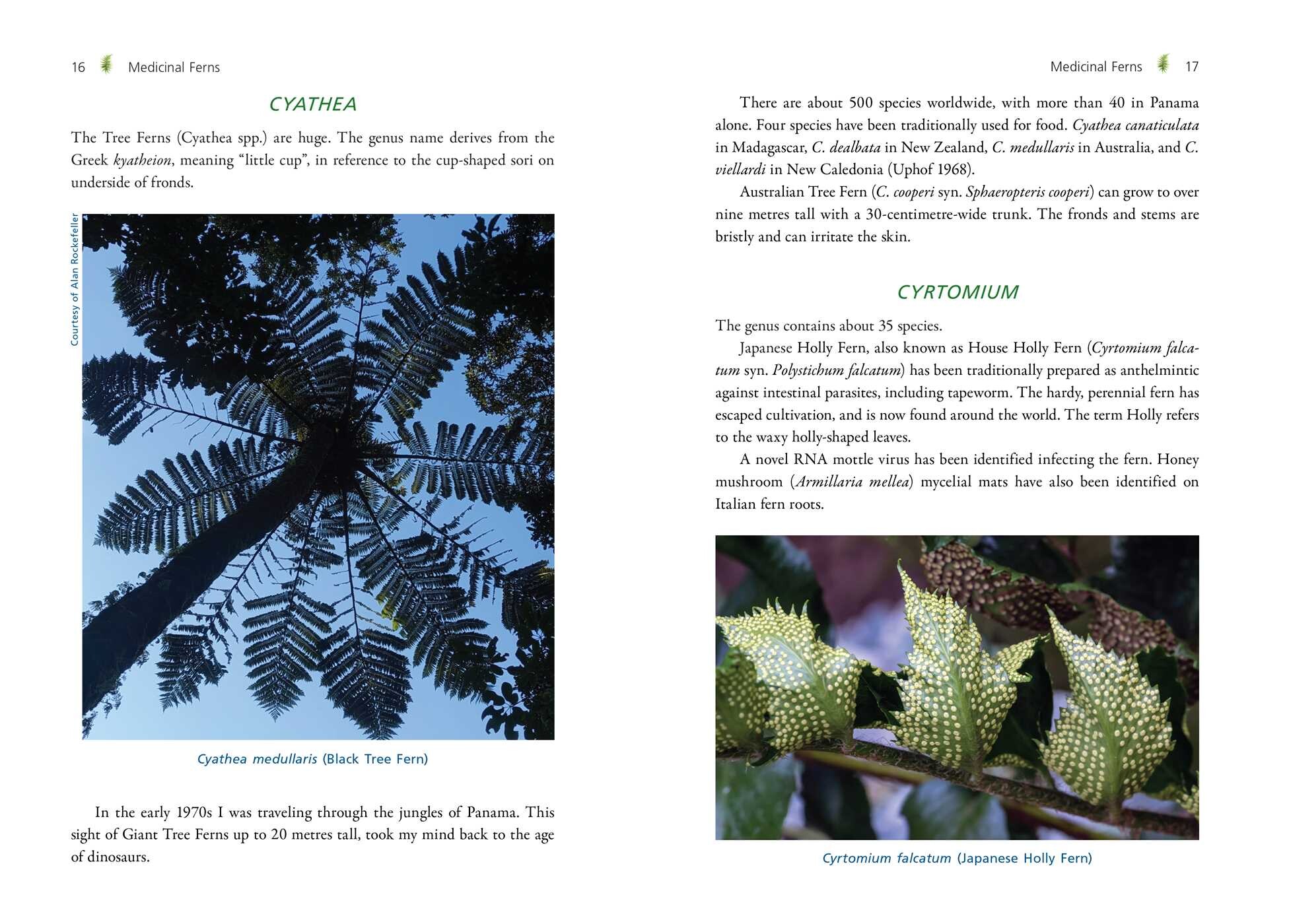
Ferns are vascular plants that access water and nutrients from the soil and produce spores. They are found in forest shade, cracks in rocks in deserts, floating in water, in acidic swamps, or twining up fifty-foot tree trunks. The scaly tree ferns of the Cyathea species can reach up to twenty meters (sixty-six feet) tall.
It is estimated that North American and European Stephanian-era coals may be composed of up to 75% ancient tree ferns. Many ferns associate with mycorrhizal fungi and can grow in a wide range of pH, from intensely acidic soils to those found on limestone.
Besides vascular tissue that allows ferns to draw up water and nutrients, they possess another unique property: thanks to horizontal gene transfer from hornworts (to be covered in my book on Moss Medicine), they possess a special red light-sensing protein called neochrome. Most plants can only detect blue light, but due to their shaded environment ferns can use the "leftover" lower energy red light for photosynthesis. This was possible due to germinating spores of hornworts and ferns picking up DNA, facilitating the leap from the bryophyte to modern ferns (Li et al. 2014).
Ferns don’t produce pollen, and are therefore not reliant on insects, birds, or bats for reproduction.
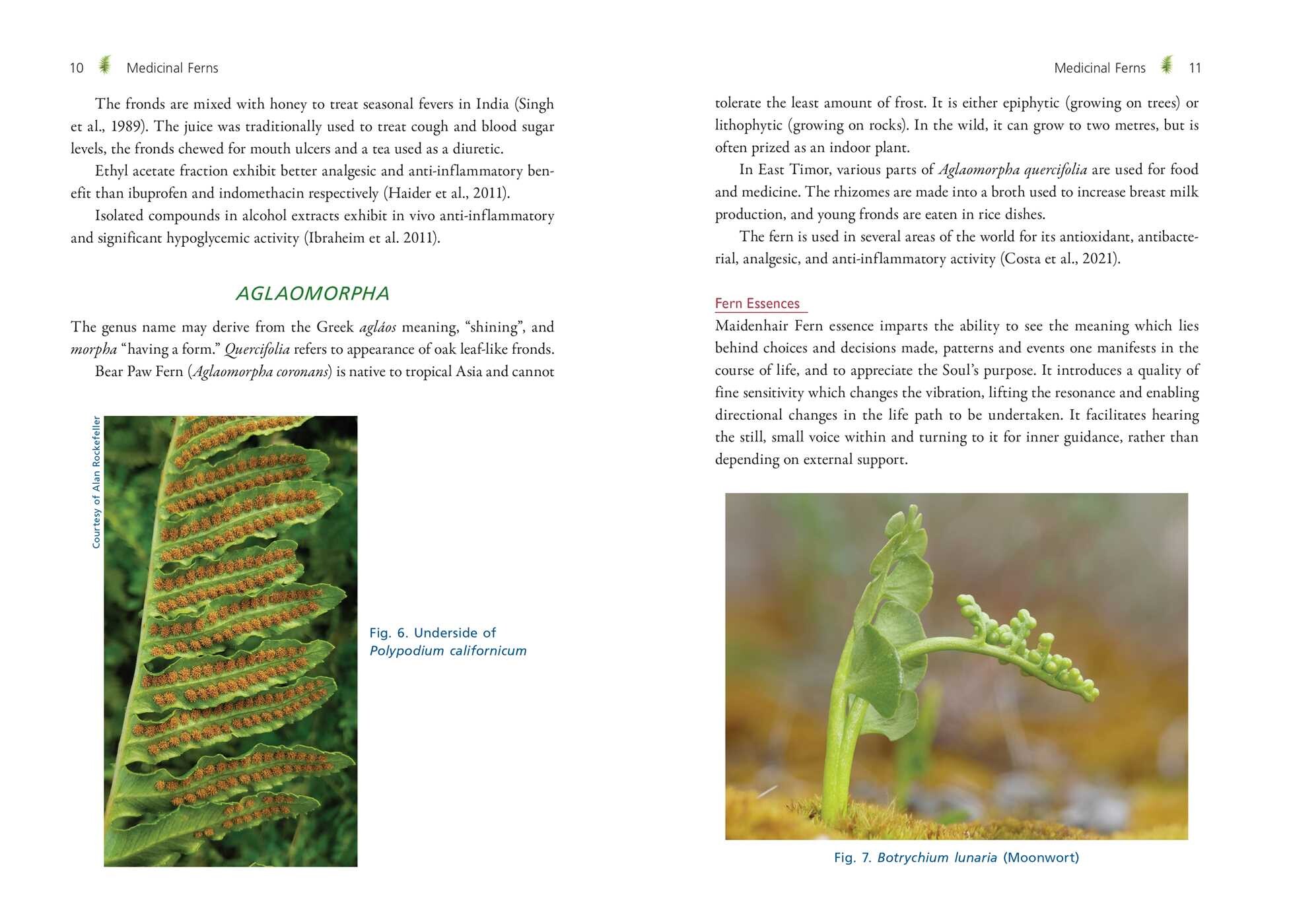
The life cycle of ferns is fascinating. When a spore lands in the right mixture of temperature, light, and moisture, it begins to germinate, forming a small green, heart-shaped leaf that looks nothing like a fern. This is called a prothallium and contains the sex organs of both male and female on its underside. An egg is fertilized by sperm (which has a whip-like flagellum) and grows into an embryo with roots, stems, and leaves. It takes three generations for a fern to create another fern. Note that flowering plants have sperm that lack flagella, making ferns more like humans in this respect.
Ferns associate with mycorrhizal fungi, sharing carbon and sugars in exchange for the transport of nutrients to their offspring (gametophytes) growing underground.
Grape fern (Botrychium sp.) and adder’s-tongue (Ophioglossum) produce gametophytes that develop underground without chlorophyll and depend upon exchange of nutrients from fungal networks. Spores released by adult ferns germinate into gametophytes living securely underground, preventing drying out, and then produce above-ground, photosynthesizing leaves after emerging from the soil.
Adult ferns nurture the "children" of neighboring ferns via fungal networks, suggesting cooperative breeding (Beerling 2019).
Because of sporulation, it is often believed that the sex life of ferns is simple. But consider this. The mobile and independent sex cell of a fern is attracted by malic acid and makes towards it when it "scents" it. Only 0.00000008th of a milligram is enough, a figure that even the most sophisticated scientific equipment would be hard pressed to identify. (Rogers 2014a)
There is another difference between ferns and flowering plants. The latter push out of the soil, with the leaf developing its tip first and parts of stem follow as the leaf grows larger. The frond, however, develops in the opposite direction. Rather than growing from below upward, it grows downward or from the inside out, as the part providing tissue is inside the center of the curled frond. If you watch carefully as it uncurls, it appears to be pushed down on the earth from above (Grohmann 1989).
Being a student of anthroposophy, Grohmann noted how Rudolf Steiner compared ferns with the first stage of a child’s development, when they say "I" for the first time. The frond is nature’s image of the "I" felt by children.
I am a huge fan of Steiner and his unique contributions to agriculture, education, and medicine. However, his statement suggests he believed ferns to be less developed or immature. In my opinion ferns developed their own evolutionary path and have been so successful that they continued along it. Why fix something that is not broken?
HISTORICAL POPULARITY
During the 1840s, pteridomania, or the Victorian fern craze, was popular. The name pteridomania is derived from the Greek pterido, meaning fern. The British botanical journal The Phytologist (1841) published newly discovered ferns, and the race was on.
John Smith (1868) documented 560 fern species in his Catalogue of the Ferns and Their Allies Cultivated in the Royal Gardens of Kew.
Charles Kingsley, in his book Glaucus; or, The Wonders of the Shore, coined the term pteridomania. The craze led people, particularly women, to collect unusual varieties of ferns, recording their sightings, and pressing them in their herbariums (or fernariums to be precise).
During this time in the United Kingdom, images of ferns were found on wallpaper, clothing, ironworks, printed paper, textiles, pottery, glass, metals, wood, ceramic sculptures, gravestones, and memorials. The obsession abated in the 1890s.
Kingsley (1890) wrote, "Since the ‘Lady-ferns’ and ‘Venus hair’ appeared; and that you could not help yourself looking now and then at the said ‘Venus’s hair’ and agreeing that Nature’s real beauties were somewhat superior to the ghastly woollen caricatures which they had superseded." After all, it was Victorian times of suppressed sexuality and female nether regions were not openly discussed.
Early terrariums, known as Wardian cases, were very popular at the time, resembling miniature greenhouses for indoor fern cultivation. Dr. Nathaniel Ward collected and observed moth cocoons in sealed glass bottles and noted that a male fern in one bottle lived for over four years until the seal broke and allowed toxic air pollution to enter. He continued to experiment and, in 1842, published On the Growth of Plants in Closely Glazed Cases.
His "discovery" led to the transplantation of live plants in British households and on long sea voyages. This enabled the transport of tea plants from China into India and the movement of rubber trees from Brazil to plantations in Sri Lanka (formerly Ceylon).
This historical practice of cultivating plants in controlled environments inspired my own interest, and I cultivated a moss/fern terrarium for a number of years when I was in my twenties.
FERN FOLKLORE
We have receipt of fern-seed, we walk invisible.
William Shakespeare, Henry IV
Ferns do not produce seeds; they reproduce via spores. Because ferns do not have seeds, the idea of a fern seed was purely mythical. This rarity of the so-called fern seed led to the belief that it had magical properties, specifically the power of invisibility. The logic follows that something so rare and unseen (since it doesn’t actually exist) would grant the power to become unseen or invisible.
Ben Ionson got into the act with his comedy The Nevv Inne, or The Light Heart (1631). A servant ordered to stay hidden explains to his master, "Because indeed I had no med’cine, Sir, to go invisible: No fern-seed in my pocket" (Act I, Scene VI).
Fern folklore also involves restoring sight. A Description of the Western Islands of Scotland by Martin Martin (1703) notes a remedy for "eyes that are blood-shot or become blind for some days." The recipe involved applying the blades of fern fronds mixed with egg whites to the face and brows of a patient lying on their back.
Other myths involved summoning the fairy Puck, a character from William Shakespeare’s play A Midsummer Night’s Dream written between 1590−96, entering a fairy world by stepping on a fern.
Unfurling the Fronds
Nature made ferns for pure leaves to see what she could do in that line.
Henry David Thoreau
The term fern is often misused. Examples of this are the unrelated asparagus fern (a flowering plant) and sweet fern (a flowering shrub of the Comptonia genus). Even a group of animals called hydrozoans, distantly related to jellyfish and coral, are named air ferns. Their skeletons are dried, dyed green, and falsely sold as a plant that lives on air.
Ferns are ancient plants, with fossils dating back to the Middle Devonian era, about 390 million years ago—several hundred million years before the emergence of flowering plants. The true ferns Polypodiales making up 80% of today’s ferns, arose about 180 million years ago.
The word fern may derive from the Anglo-Saxon contraction fepern or German Farn, both derived from Sanskrit parna, meaning "feather" or "wing." Some authors suggest it derives from farr (a bullock), from its use as livestock bedding. These words ultimately trace back to Proto-Germanic "farną," which is also related to the Latin "fērnum" and Ancient Greek "peron" or "pteron," all of which refer to ferns or fern-like plants.
THE LIFE OF FERNS
Fern ancestry is traced to the green algae that moved from water to land, similar to mosses. However, unlike mosses, ferns developed vascular tissue to transport water and nutrients, providing them with greater adaptability. Ferns consist mainly of a leaf stalk, with the real stems being underground rhizomes. They are the intermediate between mosses and flowering plants.
Forty-meter-tall tree ferns with five-meter fronds existed on Earth before animals evolved. Today, a tree fern on Norfolk Island in the South Pacific reaches a spectacular twenty-two meters in height.
Ferns are vascular plants that access water and nutrients from the soil and produce spores. They are found in forest shade, cracks in rocks in deserts, floating in water, in acidic swamps, or twining up fifty-foot tree trunks. The scaly tree ferns of the Cyathea species can reach up to twenty meters (sixty-six feet) tall.
It is estimated that North American and European Stephanian-era coals may be composed of up to 75% ancient tree ferns. Many ferns associate with mycorrhizal fungi and can grow in a wide range of pH, from intensely acidic soils to those found on limestone.
Besides vascular tissue that allows ferns to draw up water and nutrients, they possess another unique property: thanks to horizontal gene transfer from hornworts (to be covered in my book on Moss Medicine), they possess a special red light-sensing protein called neochrome. Most plants can only detect blue light, but due to their shaded environment ferns can use the "leftover" lower energy red light for photosynthesis. This was possible due to germinating spores of hornworts and ferns picking up DNA, facilitating the leap from the bryophyte to modern ferns (Li et al. 2014).
Ferns don’t produce pollen, and are therefore not reliant on insects, birds, or bats for reproduction.
The life cycle of ferns is fascinating. When a spore lands in the right mixture of temperature, light, and moisture, it begins to germinate, forming a small green, heart-shaped leaf that looks nothing like a fern. This is called a prothallium and contains the sex organs of both male and female on its underside. An egg is fertilized by sperm (which has a whip-like flagellum) and grows into an embryo with roots, stems, and leaves. It takes three generations for a fern to create another fern. Note that flowering plants have sperm that lack flagella, making ferns more like humans in this respect.
Ferns associate with mycorrhizal fungi, sharing carbon and sugars in exchange for the transport of nutrients to their offspring (gametophytes) growing underground.
Grape fern (Botrychium sp.) and adder’s-tongue (Ophioglossum) produce gametophytes that develop underground without chlorophyll and depend upon exchange of nutrients from fungal networks. Spores released by adult ferns germinate into gametophytes living securely underground, preventing drying out, and then produce above-ground, photosynthesizing leaves after emerging from the soil.
Adult ferns nurture the "children" of neighboring ferns via fungal networks, suggesting cooperative breeding (Beerling 2019).
Because of sporulation, it is often believed that the sex life of ferns is simple. But consider this. The mobile and independent sex cell of a fern is attracted by malic acid and makes towards it when it "scents" it. Only 0.00000008th of a milligram is enough, a figure that even the most sophisticated scientific equipment would be hard pressed to identify. (Rogers 2014a)
There is another difference between ferns and flowering plants. The latter push out of the soil, with the leaf developing its tip first and parts of stem follow as the leaf grows larger. The frond, however, develops in the opposite direction. Rather than growing from below upward, it grows downward or from the inside out, as the part providing tissue is inside the center of the curled frond. If you watch carefully as it uncurls, it appears to be pushed down on the earth from above (Grohmann 1989).
Being a student of anthroposophy, Grohmann noted how Rudolf Steiner compared ferns with the first stage of a child’s development, when they say "I" for the first time. The frond is nature’s image of the "I" felt by children.
I am a huge fan of Steiner and his unique contributions to agriculture, education, and medicine. However, his statement suggests he believed ferns to be less developed or immature. In my opinion ferns developed their own evolutionary path and have been so successful that they continued along it. Why fix something that is not broken?
HISTORICAL POPULARITY
During the 1840s, pteridomania, or the Victorian fern craze, was popular. The name pteridomania is derived from the Greek pterido, meaning fern. The British botanical journal The Phytologist (1841) published newly discovered ferns, and the race was on.
John Smith (1868) documented 560 fern species in his Catalogue of the Ferns and Their Allies Cultivated in the Royal Gardens of Kew.
Charles Kingsley, in his book Glaucus; or, The Wonders of the Shore, coined the term pteridomania. The craze led people, particularly women, to collect unusual varieties of ferns, recording their sightings, and pressing them in their herbariums (or fernariums to be precise).
During this time in the United Kingdom, images of ferns were found on wallpaper, clothing, ironworks, printed paper, textiles, pottery, glass, metals, wood, ceramic sculptures, gravestones, and memorials. The obsession abated in the 1890s.
Kingsley (1890) wrote, "Since the ‘Lady-ferns’ and ‘Venus hair’ appeared; and that you could not help yourself looking now and then at the said ‘Venus’s hair’ and agreeing that Nature’s real beauties were somewhat superior to the ghastly woollen caricatures which they had superseded." After all, it was Victorian times of suppressed sexuality and female nether regions were not openly discussed.
Early terrariums, known as Wardian cases, were very popular at the time, resembling miniature greenhouses for indoor fern cultivation. Dr. Nathaniel Ward collected and observed moth cocoons in sealed glass bottles and noted that a male fern in one bottle lived for over four years until the seal broke and allowed toxic air pollution to enter. He continued to experiment and, in 1842, published On the Growth of Plants in Closely Glazed Cases.
His "discovery" led to the transplantation of live plants in British households and on long sea voyages. This enabled the transport of tea plants from China into India and the movement of rubber trees from Brazil to plantations in Sri Lanka (formerly Ceylon).
This historical practice of cultivating plants in controlled environments inspired my own interest, and I cultivated a moss/fern terrarium for a number of years when I was in my twenties.
FERN FOLKLORE
We have receipt of fern-seed, we walk invisible.
William Shakespeare, Henry IV
Ferns do not produce seeds; they reproduce via spores. Because ferns do not have seeds, the idea of a fern seed was purely mythical. This rarity of the so-called fern seed led to the belief that it had magical properties, specifically the power of invisibility. The logic follows that something so rare and unseen (since it doesn’t actually exist) would grant the power to become unseen or invisible.
Ben Ionson got into the act with his comedy The Nevv Inne, or The Light Heart (1631). A servant ordered to stay hidden explains to his master, "Because indeed I had no med’cine, Sir, to go invisible: No fern-seed in my pocket" (Act I, Scene VI).
Fern folklore also involves restoring sight. A Description of the Western Islands of Scotland by Martin Martin (1703) notes a remedy for "eyes that are blood-shot or become blind for some days." The recipe involved applying the blades of fern fronds mixed with egg whites to the face and brows of a patient lying on their back.
Other myths involved summoning the fairy Puck, a character from William Shakespeare’s play A Midsummer Night’s Dream written between 1590−96, entering a fairy world by stepping on a fern.
Product Details
- Publisher: Healing Arts Press (September 23, 2025)
- Length: 416 pages
- ISBN13: 9798888501801
Browse Related Books
Raves and Reviews
“For years I have wanted a reference on the medicinal uses of ferns on my herbalist bookshelf. The old books have a few lines but pass on archaic traditions. It is clear that ancient people thought very highly of fern medicine. Their accounts are full of mysterious, magical, and fairy references. I have only ever used one fern for one thing—Osmunda regalis, a specific remedy for lumbago—but wow does it work! I wanted more. The fairies delivered this wonderful, comprehensive, detailed book by Robert Dale Rogers, who is not just an ‘armchair herbalist,’ but a practitioner with many years of experience.”
– Matthew Wood, author of Holistic Medicine and the Extracellular Matrix and A Shamanic Herbal
“As some of the most ancient and successful plants of Earth, ferns have long been integrated into traditional healing practices across the globe to treat a wide range of maladies. In The Fern Pharmacy, we find many practical ways to connect with these powerful plant allies. With its exhaustive survey of the bioactive compounds, ecological roles, agricultural applications, and health benefits of the world’s ferns—all interwoven with illuminating insights into the cultural impacts of these subtler plants—this tome provides an engaging and comprehensive survey of this overlooked corner of nature’s pharmacopeia. It is an excellent addition to the bookshelf of any herbalist, naturalist, or ethnologist wanting to integrate the powerful offerings of these understory elders into their practice or paradigm.”
– Peter McCoy, mycologist and author of Radical Mycology
“This book is a treasure! A comprehensive collection of the medicinal virtues of ferns that can’t be found anywhere else. Bravo to Robert Dale Rogers for gifting us this compendium of often forgotten botanical medicine.”
– Rosalee de la Forêt, author of Alchemy of Herbs and Wild Remedies
“It is a rare thing these days to find a book filled from cover to cover with knowledge conveyed by almost no other source, but The Fern Pharmacy is just that. This collection of history, lore, and science is made all the more valuable by the addition of Robert’s own understanding and insight.”
– Jim McDonald, herbalist
“A book for the ages that opens up the world of ferns, botany, ecology, chemistry, pharmacology, clinical uses, and lore—both ancient and modern.”
– Christopher Hobbs, Ph.D., renowned herbalist and author of Christopher Hobbs’s Medicinal Mushr
“The Fern Pharmacy by Robert Dale Rogers is a comprehensive and illustrated guide to medicinal ferns present throughout the world. Deftly exploring the more than 500 species of ferns (alongside full-color photos), and knowledgeably examining the Indigenous and folk uses of ferns for food and medicine throughout history, The Fern Pharmacy explains in extraordinary detail the scientific research behind the potency of fern chemicals to heal many human conditions.”
– Midwest Book Review
Resources and Downloads
High Resolution Images
-
Book Cover Image (jpg): The Fern Pharmacy
Trade Paperback 9798888501801