
Plus, receive recommendations and exclusive offers on all of your favorite books and authors from Simon & Schuster.
0:00 /
LIST PRICE $28.00
PRICE MAY VARY BY RETAILER
Get 20% off with code SPOOKY plus free shipping on orders of $40 or more. Discount on physical products only. Terms apply.
Buy from Other Retailers
Table of Contents
About the Book
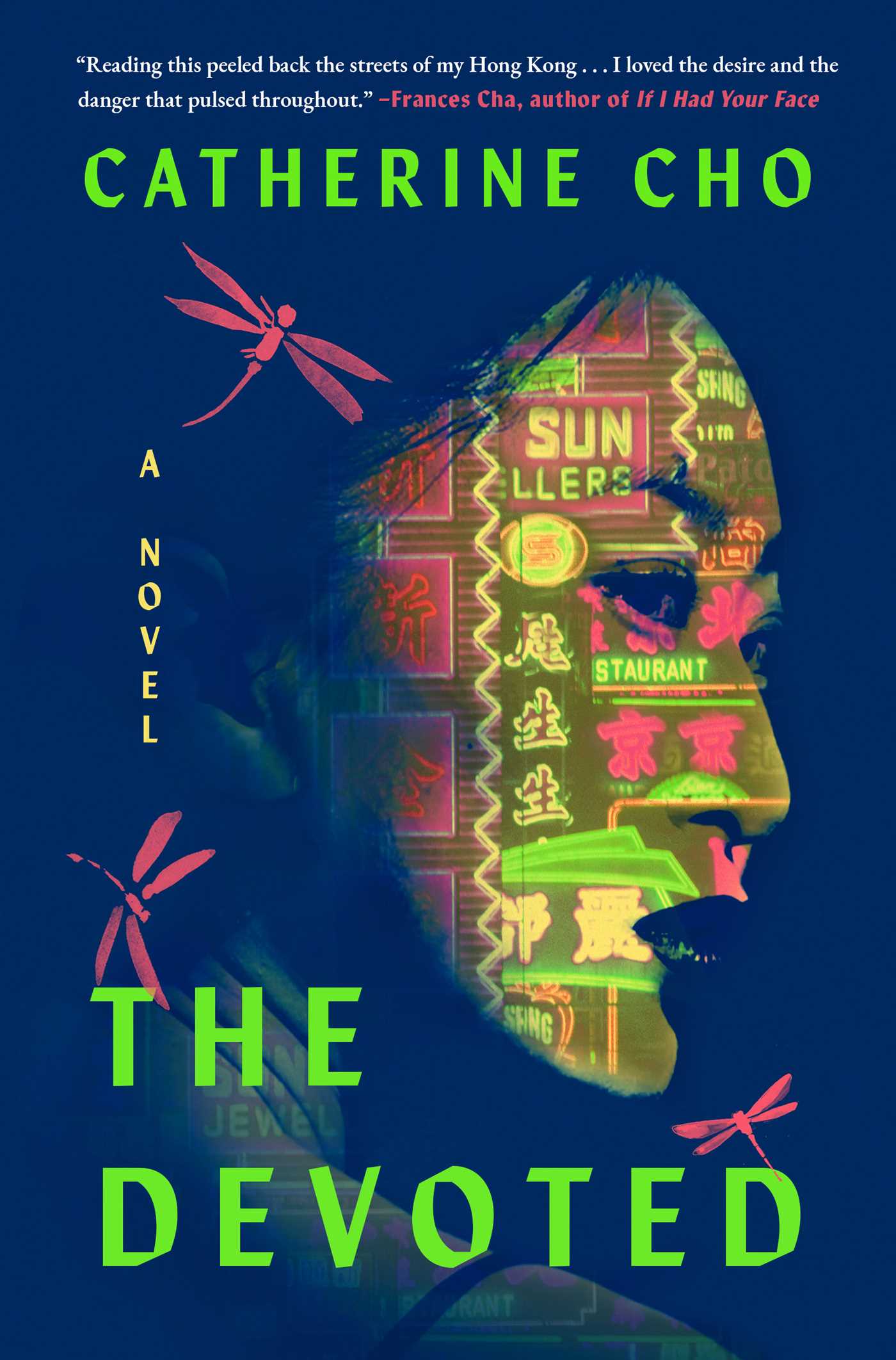
In this emotionally transportive literary debut about family and fate, a young Korean woman becomes entrenched in an infamous crime organization—and the dangerous world she once sought to escape.
Raised in Hong Kong by their Korean grandmother in a quiet village, Eunha and her brother Solomon live a sheltered life. Their father is a Dragon Head, a leader within the infamous criminal organization of the Triads. While their beloved grandmother does her best to shield the children from the constant hum of violence and fear that surrounds their father and his world, Eunha only has Solomon and their one permitted companion, a boy named Kai, for company.
But as Eunha grows up and marries into a supposedly respectable Hong Kong family, the veneer of her careful life begins to crack. When her young son is kidnapped, she is cast into the city’s criminal underground and back into the orbit of Kai, now a Dragon Head himself.
Will Eunha finally give in to the life she has strived so hard to rise above or was her future always fated?
The Devoted is at once a sweeping family drama, a moving account of forbidden love, and a story about a woman’s determination to choose her own destiny.
Raised in Hong Kong by their Korean grandmother in a quiet village, Eunha and her brother Solomon live a sheltered life. Their father is a Dragon Head, a leader within the infamous criminal organization of the Triads. While their beloved grandmother does her best to shield the children from the constant hum of violence and fear that surrounds their father and his world, Eunha only has Solomon and their one permitted companion, a boy named Kai, for company.
But as Eunha grows up and marries into a supposedly respectable Hong Kong family, the veneer of her careful life begins to crack. When her young son is kidnapped, she is cast into the city’s criminal underground and back into the orbit of Kai, now a Dragon Head himself.
Will Eunha finally give in to the life she has strived so hard to rise above or was her future always fated?
The Devoted is at once a sweeping family drama, a moving account of forbidden love, and a story about a woman’s determination to choose her own destiny.
Excerpt
Chapter 1 CHAPTER 1
My son, Minsuk, was my promise. When I was pregnant, my grandmother told me I would have a son—every woman in our family had a son for their first child. I imagined her saying the same thing to my mother before my brother, Solomon, was born. I didn’t know then that there was a second part to that legacy: that every woman in our family would lose her firstborn. Perhaps my grandmother thought that if she didn’t say it, if I didn’t know, then it wouldn’t come true.
By then, I was no longer the young daughter of a Dragon Head. I was a proper tai tai, living in an ocean-view apartment, many stories above the ground. I was married to Philip, a man who had never loved me.
It was the life my father had intended: a husband who was respectable, an apartment in South Bay, a membership to the Palm Club. It was a life of making polite conversation at parties, of days spent by the pool. A life away from darkness. A life without any edges.
I was good at playing the part of a tai tai, even if the women at the Palm Club knew I didn’t really belong with them. I sat at the tables of white linen, ate breakfasts of sliced grapefruit while shading my face from the sun. I wore the right clothes, I could play tennis, and I joined in the chatter about helpers. I knew when the latest sale was on at Lane Crawford, and I dutifully picked up the bill at lunch when it was my turn to treat. I think they appreciated that I didn’t try too hard, that I wasn’t climbing. These women could smell the desperation of the wives who were too forceful in their invitations, whose designer handbags and shoes were too new. I was living a life that had been sketched out for me, and I wasn’t sure it would ever feel like mine.
I knew I should feel lucky—even if Philip was mostly away, even if his sister could only look at me with contempt.
Some nights I opened the windows wide. I listened to the night and marveled at the stillness, at the endlessness of the horizon. It reminded me of looking out at the sea when I was a girl, at my father’s house by the cove. Although my view was different. The sea didn’t seem to move—it looked like it had been painted on. The apartment was so high that the sound of the waves was a whisper, and sometimes I felt tempted to scream, just to see if I could call the wind.
When we were children, Solomon told me there was a place where the sky and the ocean would meet. He said it was a place where the world was thin. If we could get to that place on the horizon, then we would find those who came before, he said.
It hadn’t made sense to me then, how he described the world as an echo, a circle of echoes. He gestured toward the endlessness of what had come before and what still lay ahead. If everything had already come before, if I had known what was to be, then perhaps I would have known to expect that the darkness would find me, that everything would change.
MY SON WAS taken at the harbor.
We had come to watch the preparations for the Mid-Autumn Festival. The harbor was decorated with trails of red streamers, colorful lanterns stamped with gold dragons and rabbits. We could hear the clamor of men chopping coconut to blend with ice, women shouting as they sold mooncakes and hand-twisted dumplings. There was a stall that sold lanterns to release to the sky with scraps of paper to write wishes on, and I thought of all the wishes I hadn’t made.
Around us, I could see young couples with their hands intertwined, families walking with their children. When Minsuk was a baby, I would take long walks on the harbor with him in a sling so that he would sleep, feeling the warmth of his cheek against my chest. And then when he was a toddler I watched him walk along the promenade, his hand outstretched, his delight at the sparkling colors of the stalls.
That day, Minsuk’s hand was in mine. He was three years old, looking more like a boy, his face losing its baby softness. It made my heart ache when I looked at him.
He’d insisted on wearing the light-up trainers I had bought him, as he always did. He loved to run instead of walk, running as hard as he could and laughing at the lights that blinked on his feet. He didn’t speak much yet, just in gestures.
I was wearing a new pair of flats with a rhinestone buckle. They weren’t something I would usually have worn, but my sister-in-law had given them to me. I was trying to break them in, and they were rubbing my ankles raw. Minsuk tugged on my hand again, trying to get me to keep up with him, and so I let him run ahead a little, despite the crowds. I would later ask myself what might have happened if I hadn’t worn those shoes. Maybe I would have held on to his hand. Maybe I would have been able to watch him more carefully.
I did not see the moment he was taken. He slipped ahead of me, running between people. I felt a sudden flash of apprehension—Minsuk had never been so far from me before. I called out to him to be careful, my voice swallowed by the crowd. The thrum of bodies pressed against me, and the lanterns above us seemed to sway ominously. I could see the faint lights of his shoes, flashing through the legs moving between us, and I pushed forward, trying to reach him.
When the crowd parted, he was no longer there. I shouted for him, waiting for him to appear. I thought he was hiding, that he would laugh and run toward me.
I was holding his backpack, the yellow one with a bauble key chain attached. If he had been wearing it, he would have been easier to spot. I tried to remember what he was wearing. Was his shirt blue or green? Was it his favorite one with a sailboat on the front?
A moment passed, and he didn’t come. I looked around the harbor and saw the hawkers selling trinkets on foldout tables. A group of children watched a man throw light-up toys that spun in the air, and I rushed toward them, feeling relieved, but Minsuk wasn’t there.
Panic flooded my body and I was shaking as I tried to remember what I was supposed to do: Was I meant to stay put, or was I supposed to search for him? Wasn’t he just ahead of me? I bent down, looking for the lights of his shoes. The crowds kept moving around me, jostling and impatient. He wouldn’t know how to ask for help. I had grown used to communicating with him in single words and gestures, and I felt desperation at my thoughtlessness. How could I have let go of his hand?
I ran along the path, pushing against bodies, looking for a boy standing by the railing. Perhaps he was gazing at the sea or waiting among the stalls. Perhaps he was somewhere in the crowd, being swept along by strangers. I imagined him staring up, his hand reaching for mine. I tried to listen for his voice, his cries, but I could only hear the shouts of the street vendors, the hum of people that was starting to feel like a roar.
I grabbed the shoulders of other children, pulling them toward me. Tears blurred my vision. I called for him, again and again, but he wasn’t there, and soon my voice became a scream.
I stopped a couple with a boy in a green shirt, thinking it was Minsuk, stammering as they cautiously stepped away. I found two policemen who came to stand next to me. A boy, I said. What was he wearing? I tried to remember again. Blue? Or was it green? I had a photo of him on my phone. I could feel their disapproval—a tai tai who couldn’t even manage to keep hold of her child without help.
I thought of calling Winnie, my sister-in-law, but I knew she would be hysterical. She hadn’t wanted us to come by ourselves. “It’s too crowded—why do you want to go where the crowds are? At least take the helper,” she’d said, and I’d ignored her as I usually did. Philip was on the mainland and I didn’t know if he would pick up my call.
So I called the only person I could think of.
I hadn’t spoken to my brother in months. As I held the phone, my hands trembling, I wondered if he would answer, but then I heard his voice, steady as it always was.
Solomon came to the harbor straightaway. He found me at one of the outside tables of a restaurant setting up for dinner. One of the workers had given me a cup of barley water, and the steam curled along my face. I kept pressing my palms against my eyes, then looking out at the stream of passersby. Willing Minsuk to be in front of me, for him to be pointing to me, running in my direction.
The voices around me sounded like a swarm. People stopped to look at the white buckets of shrimp and crabs placed by the tables. I wondered if they could sense my despair or if it was imperceptible to them.
From a distance, I saw a figure striding toward me, breaking the sunlight behind him. He walked like our father did. Solomon had a gray jacket over his shoulder. His shirtsleeves were rolled up to his elbows, his watch glinting at his wrist. There was a man with him, tall and heavyset with a shaved head. He introduced himself as Soo.
I tried to stand but I couldn’t. My body refused. Solomon sat down next to me. His face was grave as he asked me what had happened. He listened as I tried to speak between sobs. I didn’t think Minsuk had been taken. But Solomon must have known immediately.
Later, we would see the CCTV videos showing a man carrying Minsuk away. I felt like someone had struck me. It was wrong to see my son in the arms of a stranger. He wasn’t struggling. His body was limp against the man’s shoulder, and he looked as though he was sleeping. An injection or cloth, Solomon guessed.
I have studied the video so many times since then. The footage is grainy, taken at an old man’s corner shop from a camera that he had pointed toward his motorbike to keep it from being stolen. The video stops and starts in frames. The alleyway, the motorbike. Then the shadow of the man approaching. Then the man stepping past, my son on his shoulder. A blink—his back, my son’s hand dangling by his side. Another blink—and he is gone.
There is more camera footage of a gray van at the harbor. No license plates. Someone inside slides open the door. The engine starts and the van pulls away.
I imagine what the camera would show if it could turn to look behind in that moment: a woman running, stumbling across the pier, shouting—a yellow backpack in her hand. She would look as though her world was ending, and in a way, it was.
My son, Minsuk, was my promise. When I was pregnant, my grandmother told me I would have a son—every woman in our family had a son for their first child. I imagined her saying the same thing to my mother before my brother, Solomon, was born. I didn’t know then that there was a second part to that legacy: that every woman in our family would lose her firstborn. Perhaps my grandmother thought that if she didn’t say it, if I didn’t know, then it wouldn’t come true.
By then, I was no longer the young daughter of a Dragon Head. I was a proper tai tai, living in an ocean-view apartment, many stories above the ground. I was married to Philip, a man who had never loved me.
It was the life my father had intended: a husband who was respectable, an apartment in South Bay, a membership to the Palm Club. It was a life of making polite conversation at parties, of days spent by the pool. A life away from darkness. A life without any edges.
I was good at playing the part of a tai tai, even if the women at the Palm Club knew I didn’t really belong with them. I sat at the tables of white linen, ate breakfasts of sliced grapefruit while shading my face from the sun. I wore the right clothes, I could play tennis, and I joined in the chatter about helpers. I knew when the latest sale was on at Lane Crawford, and I dutifully picked up the bill at lunch when it was my turn to treat. I think they appreciated that I didn’t try too hard, that I wasn’t climbing. These women could smell the desperation of the wives who were too forceful in their invitations, whose designer handbags and shoes were too new. I was living a life that had been sketched out for me, and I wasn’t sure it would ever feel like mine.
I knew I should feel lucky—even if Philip was mostly away, even if his sister could only look at me with contempt.
Some nights I opened the windows wide. I listened to the night and marveled at the stillness, at the endlessness of the horizon. It reminded me of looking out at the sea when I was a girl, at my father’s house by the cove. Although my view was different. The sea didn’t seem to move—it looked like it had been painted on. The apartment was so high that the sound of the waves was a whisper, and sometimes I felt tempted to scream, just to see if I could call the wind.
When we were children, Solomon told me there was a place where the sky and the ocean would meet. He said it was a place where the world was thin. If we could get to that place on the horizon, then we would find those who came before, he said.
It hadn’t made sense to me then, how he described the world as an echo, a circle of echoes. He gestured toward the endlessness of what had come before and what still lay ahead. If everything had already come before, if I had known what was to be, then perhaps I would have known to expect that the darkness would find me, that everything would change.
MY SON WAS taken at the harbor.
We had come to watch the preparations for the Mid-Autumn Festival. The harbor was decorated with trails of red streamers, colorful lanterns stamped with gold dragons and rabbits. We could hear the clamor of men chopping coconut to blend with ice, women shouting as they sold mooncakes and hand-twisted dumplings. There was a stall that sold lanterns to release to the sky with scraps of paper to write wishes on, and I thought of all the wishes I hadn’t made.
Around us, I could see young couples with their hands intertwined, families walking with their children. When Minsuk was a baby, I would take long walks on the harbor with him in a sling so that he would sleep, feeling the warmth of his cheek against my chest. And then when he was a toddler I watched him walk along the promenade, his hand outstretched, his delight at the sparkling colors of the stalls.
That day, Minsuk’s hand was in mine. He was three years old, looking more like a boy, his face losing its baby softness. It made my heart ache when I looked at him.
He’d insisted on wearing the light-up trainers I had bought him, as he always did. He loved to run instead of walk, running as hard as he could and laughing at the lights that blinked on his feet. He didn’t speak much yet, just in gestures.
I was wearing a new pair of flats with a rhinestone buckle. They weren’t something I would usually have worn, but my sister-in-law had given them to me. I was trying to break them in, and they were rubbing my ankles raw. Minsuk tugged on my hand again, trying to get me to keep up with him, and so I let him run ahead a little, despite the crowds. I would later ask myself what might have happened if I hadn’t worn those shoes. Maybe I would have held on to his hand. Maybe I would have been able to watch him more carefully.
I did not see the moment he was taken. He slipped ahead of me, running between people. I felt a sudden flash of apprehension—Minsuk had never been so far from me before. I called out to him to be careful, my voice swallowed by the crowd. The thrum of bodies pressed against me, and the lanterns above us seemed to sway ominously. I could see the faint lights of his shoes, flashing through the legs moving between us, and I pushed forward, trying to reach him.
When the crowd parted, he was no longer there. I shouted for him, waiting for him to appear. I thought he was hiding, that he would laugh and run toward me.
I was holding his backpack, the yellow one with a bauble key chain attached. If he had been wearing it, he would have been easier to spot. I tried to remember what he was wearing. Was his shirt blue or green? Was it his favorite one with a sailboat on the front?
A moment passed, and he didn’t come. I looked around the harbor and saw the hawkers selling trinkets on foldout tables. A group of children watched a man throw light-up toys that spun in the air, and I rushed toward them, feeling relieved, but Minsuk wasn’t there.
Panic flooded my body and I was shaking as I tried to remember what I was supposed to do: Was I meant to stay put, or was I supposed to search for him? Wasn’t he just ahead of me? I bent down, looking for the lights of his shoes. The crowds kept moving around me, jostling and impatient. He wouldn’t know how to ask for help. I had grown used to communicating with him in single words and gestures, and I felt desperation at my thoughtlessness. How could I have let go of his hand?
I ran along the path, pushing against bodies, looking for a boy standing by the railing. Perhaps he was gazing at the sea or waiting among the stalls. Perhaps he was somewhere in the crowd, being swept along by strangers. I imagined him staring up, his hand reaching for mine. I tried to listen for his voice, his cries, but I could only hear the shouts of the street vendors, the hum of people that was starting to feel like a roar.
I grabbed the shoulders of other children, pulling them toward me. Tears blurred my vision. I called for him, again and again, but he wasn’t there, and soon my voice became a scream.
I stopped a couple with a boy in a green shirt, thinking it was Minsuk, stammering as they cautiously stepped away. I found two policemen who came to stand next to me. A boy, I said. What was he wearing? I tried to remember again. Blue? Or was it green? I had a photo of him on my phone. I could feel their disapproval—a tai tai who couldn’t even manage to keep hold of her child without help.
I thought of calling Winnie, my sister-in-law, but I knew she would be hysterical. She hadn’t wanted us to come by ourselves. “It’s too crowded—why do you want to go where the crowds are? At least take the helper,” she’d said, and I’d ignored her as I usually did. Philip was on the mainland and I didn’t know if he would pick up my call.
So I called the only person I could think of.
I hadn’t spoken to my brother in months. As I held the phone, my hands trembling, I wondered if he would answer, but then I heard his voice, steady as it always was.
Solomon came to the harbor straightaway. He found me at one of the outside tables of a restaurant setting up for dinner. One of the workers had given me a cup of barley water, and the steam curled along my face. I kept pressing my palms against my eyes, then looking out at the stream of passersby. Willing Minsuk to be in front of me, for him to be pointing to me, running in my direction.
The voices around me sounded like a swarm. People stopped to look at the white buckets of shrimp and crabs placed by the tables. I wondered if they could sense my despair or if it was imperceptible to them.
From a distance, I saw a figure striding toward me, breaking the sunlight behind him. He walked like our father did. Solomon had a gray jacket over his shoulder. His shirtsleeves were rolled up to his elbows, his watch glinting at his wrist. There was a man with him, tall and heavyset with a shaved head. He introduced himself as Soo.
I tried to stand but I couldn’t. My body refused. Solomon sat down next to me. His face was grave as he asked me what had happened. He listened as I tried to speak between sobs. I didn’t think Minsuk had been taken. But Solomon must have known immediately.
Later, we would see the CCTV videos showing a man carrying Minsuk away. I felt like someone had struck me. It was wrong to see my son in the arms of a stranger. He wasn’t struggling. His body was limp against the man’s shoulder, and he looked as though he was sleeping. An injection or cloth, Solomon guessed.
I have studied the video so many times since then. The footage is grainy, taken at an old man’s corner shop from a camera that he had pointed toward his motorbike to keep it from being stolen. The video stops and starts in frames. The alleyway, the motorbike. Then the shadow of the man approaching. Then the man stepping past, my son on his shoulder. A blink—his back, my son’s hand dangling by his side. Another blink—and he is gone.
There is more camera footage of a gray van at the harbor. No license plates. Someone inside slides open the door. The engine starts and the van pulls away.
I imagine what the camera would show if it could turn to look behind in that moment: a woman running, stumbling across the pier, shouting—a yellow backpack in her hand. She would look as though her world was ending, and in a way, it was.
About the Author
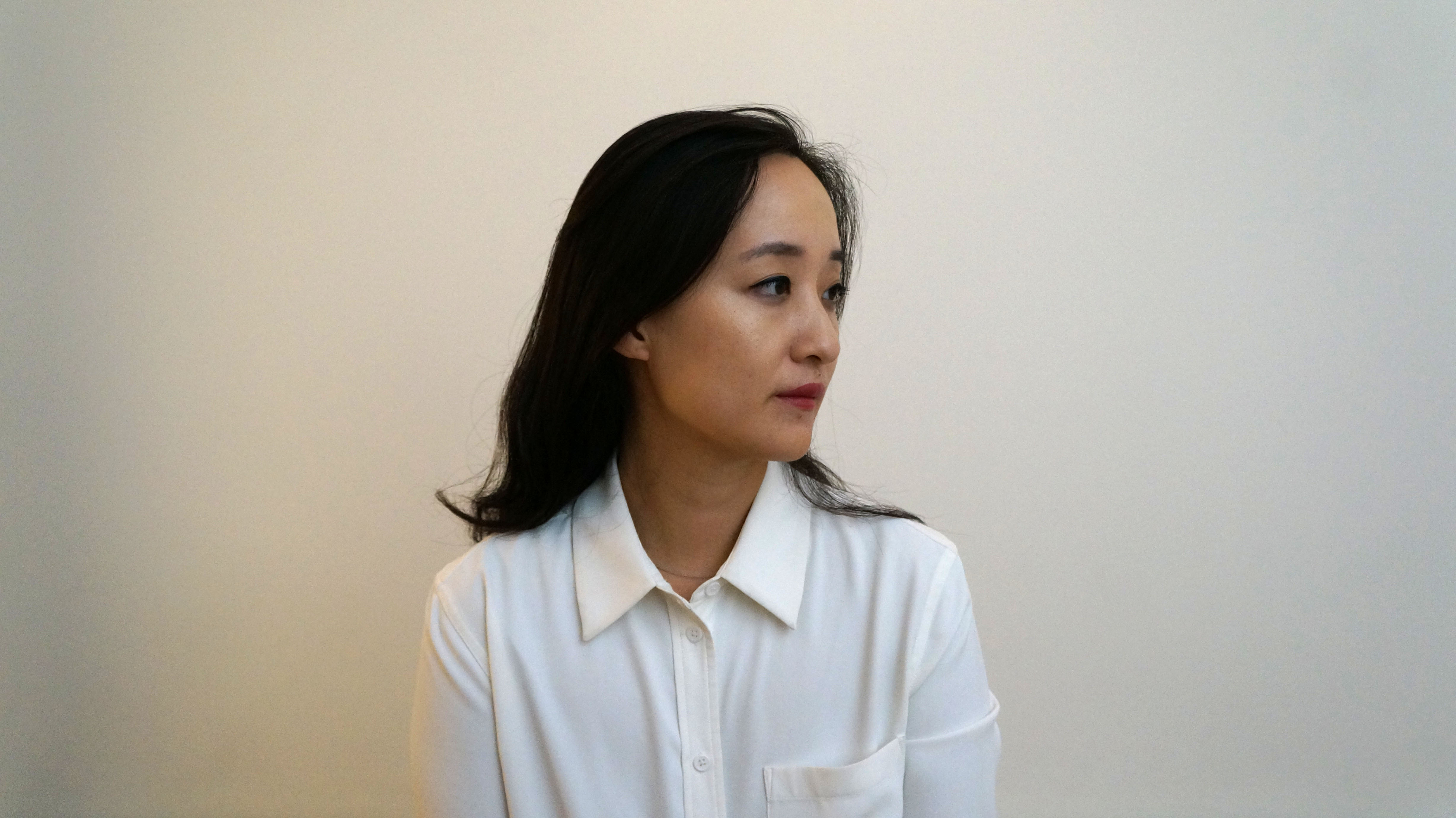
Photograph by James Choi
Catherine Cho is the acclaimed author of The Devoted and the memoir Inferno. She was shortlisted for The Sunday Times Young Writer of the Year 2020 and shortlisted for the Jhalak Prize. Catherine also runs her own literary agency Paper Literary. Originally from the United States, she now lives with her family in London.
Product Details
- Publisher: Washington Square Press (July 14, 2026)
- Length: 256 pages
- ISBN13: 9781668099469
Browse Related Books
Raves and Reviews
"Cho's writing is sensuous, with a transportive quality that draws readers into the world of her characters with immediacy. . . . A promising fiction debut for readers who appreciate Godfather-like relational storytelling with elements of criminality, romance, and grittiness.
—Library Journal (starred review)
"An aching, extraordinary epic exposing the crushing price, and immeasurable rewards, of defiant resilience."
—Booklist (starred review)
"Quietly devastating yet hugely atmospheric, this novel offers all the thrills of a binge-worthy box set delivered in bravura prose."
—Sara Collins, author of The Confessions of Frannie Langton
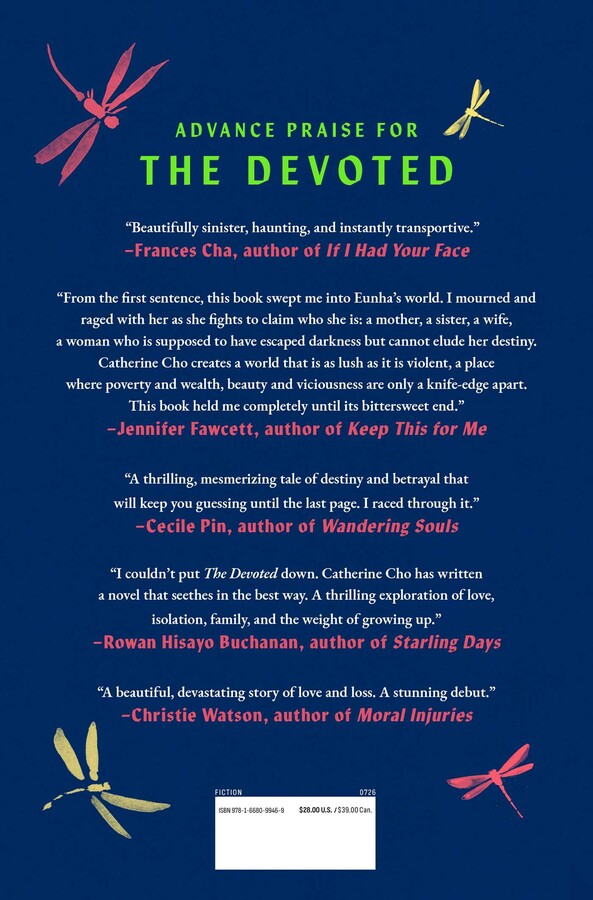
"From the first sentence, this book swept me into Eunha’s world. I mourned and raged with her as she fought to claim who she is, a mother, a sister, a wife, a woman who is supposed to have escaped darkness but cannot elude her destiny. Catherine Cho creates a world that is as lush as it is violent, a place where poverty and wealth, beauty and viciousness are only a knife-edge apart. This book held me completely until its bittersweet end."
—Jennifer Fawcett, author of Beneath the Stairs and Keep This for Me
“A beautiful, devastating story of love and loss. A stunning debut.” –Christie Watson, author of Moral Injuries
"I couldn’t put The Devoted down. Catherine Cho has written a novel that seethes in the best way. A thrilling exploration of love, isolation, family and the weight of growing up." –Rowan Hisayo Buchanan, author of Starling Days
“A thrilling, mesmerizing tale of destiny and betrayal that will keep you guessing until the last page. I raced through it.” –Cecile Pin, author of Wandering Souls
“Beautifully sinister, haunting, and instantly transportive. Reading this peeled back the streets of my Hong Kong childhood to reveal a shadow world that I've only ever known through whispered stories. I loved the desire and the danger that pulsed throughout.” –Frances Cha, author of If I Had Your Face
Resources and Downloads
High Resolution Images
-
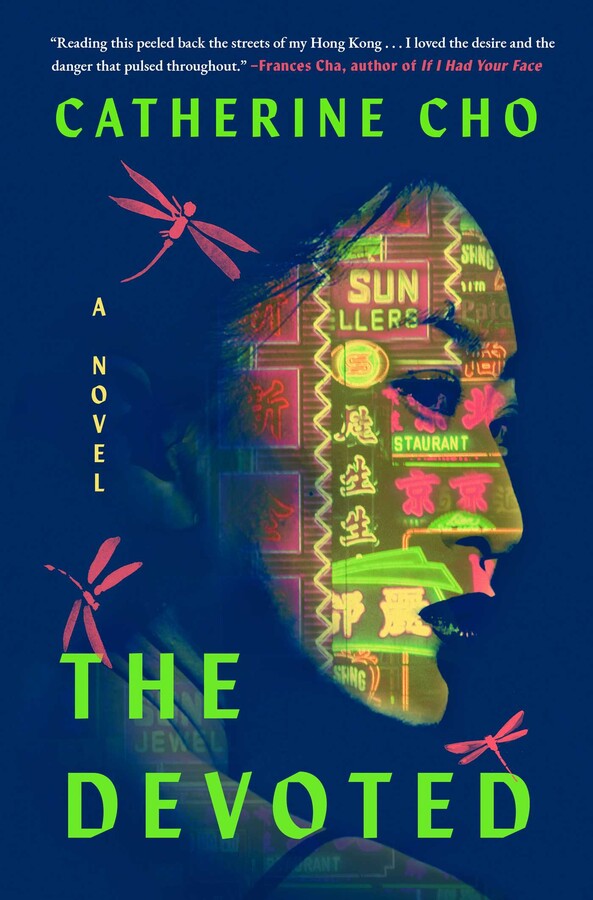
Book Cover Image (jpg): The Devoted
Hardcover 9781668099469
-
Author Photo (jpg): Catherine Cho Photograph by James Choi(0.1 MB)
Any use of an author photo must include its respective photo credit