Plus, receive recommendations and exclusive offers on all of your favorite books and authors from Simon & Schuster.
0:00 /
LIST PRICE $32.00
PRICE MAY VARY BY RETAILER
Free shipping when you spend $40. Terms apply.
Buy from Other Retailers
Table of Contents
About the Book
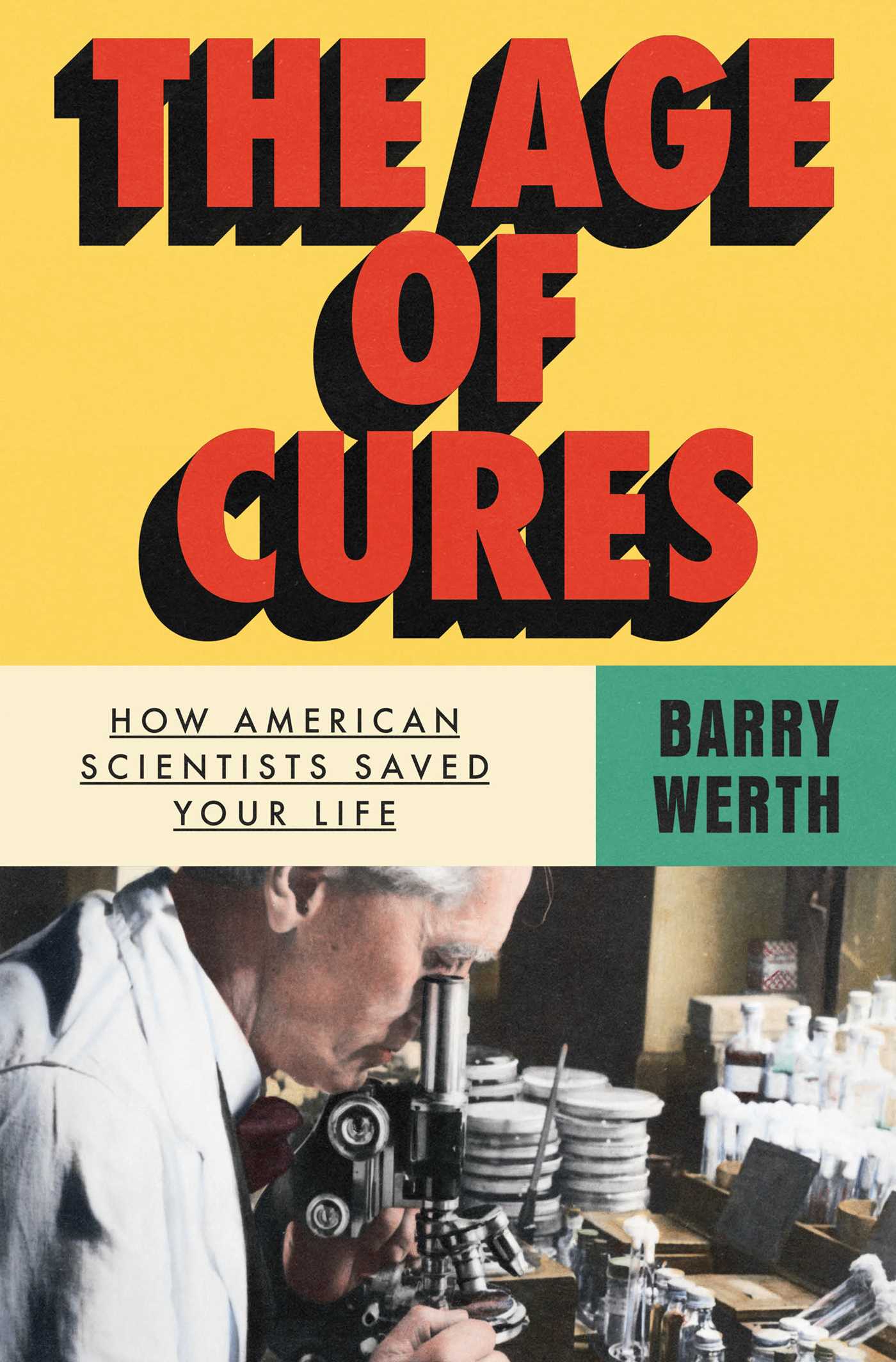
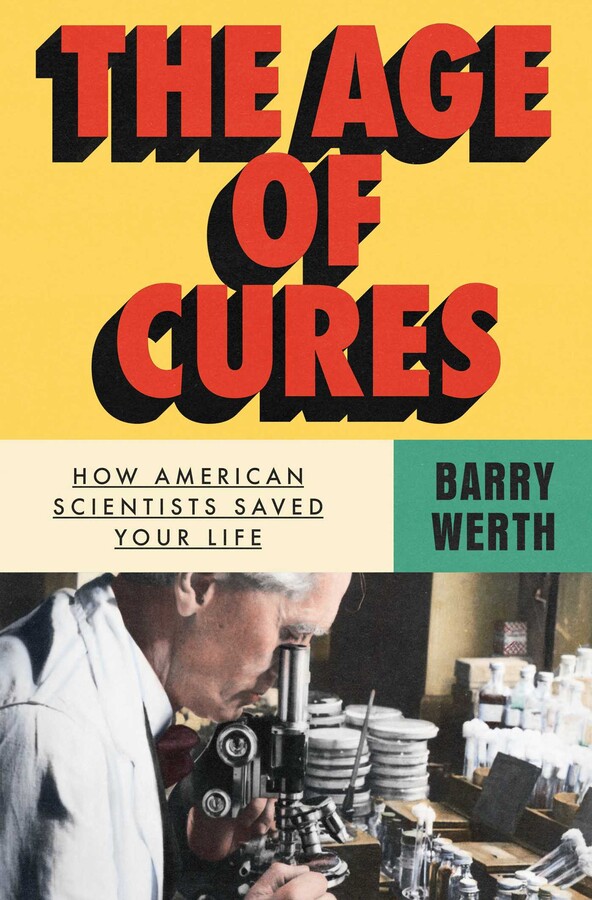
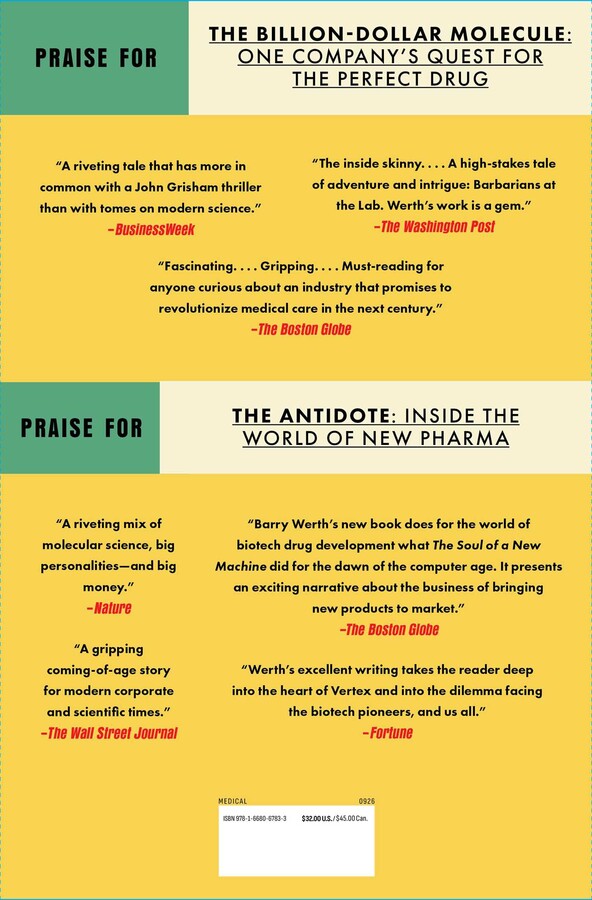
From the acclaimed author of Billion Dollar Molecule and The Antidote, a revisionist, passionate history of the pharmaceutical industry, detailing how the nascent industry ushered in an age of cures.
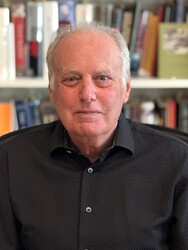
For the past thirty-five years, the acclaimed author Barry Werth has been covering one of the most consequential and underappreciated stories of our time—the rise of pharmaceutical companies, along with the science of drug research and the people who make it all happen. Now he delivers The Age of Cures, a fascinating, in-depth history of the birth of the pharmaceutical industry in the United States, and reveals how that industry created the “miracle drugs” that have saved billions of lives.
In the early part of the 20th century, patients routinely died from the flu, if they didn’t contract a deadlier disease such as rubella, mumps, or polio first. But with advances in technology, the young talent at universities across the country, and the significant investment from a federal government eager to prepare for a second world war, medicine exploded in the 1930s to the 1960s to finally meet the needs of a sick populace. Vitamins, penicillin, wide-spectrum antibiotics, cortisone, a polio vaccine, and cancer chemotherapy revolutionized health care.
Werth brings medicine’s unsung heroes—including Max Tishler, James Conant, George Merck, Alfred Newton Richards, Vannevar Bush, and Selman Waksman—to life in this impassioned and compelling chronicle of the golden age of scientific progress. He also shows us how this crucial investment in science modernized the United States, establishing a scientific powerhouse for decades to come.
A lively work of science history, The Age of Cures is a case study of the values that made American research a model for the world, and a reminder of how society relies on investments in its scientists.
For the past thirty-five years, the acclaimed author Barry Werth has been covering one of the most consequential and underappreciated stories of our time—the rise of pharmaceutical companies, along with the science of drug research and the people who make it all happen. Now he delivers The Age of Cures, a fascinating, in-depth history of the birth of the pharmaceutical industry in the United States, and reveals how that industry created the “miracle drugs” that have saved billions of lives.
In the early part of the 20th century, patients routinely died from the flu, if they didn’t contract a deadlier disease such as rubella, mumps, or polio first. But with advances in technology, the young talent at universities across the country, and the significant investment from a federal government eager to prepare for a second world war, medicine exploded in the 1930s to the 1960s to finally meet the needs of a sick populace. Vitamins, penicillin, wide-spectrum antibiotics, cortisone, a polio vaccine, and cancer chemotherapy revolutionized health care.
Werth brings medicine’s unsung heroes—including Max Tishler, James Conant, George Merck, Alfred Newton Richards, Vannevar Bush, and Selman Waksman—to life in this impassioned and compelling chronicle of the golden age of scientific progress. He also shows us how this crucial investment in science modernized the United States, establishing a scientific powerhouse for decades to come.
A lively work of science history, The Age of Cures is a case study of the values that made American research a model for the world, and a reminder of how society relies on investments in its scientists.
Appearances
OCT 21
12:00AM
In Person
Forbes Library
20 West Street
Northampton, MA 01060
Excerpt
Chapter 1: Burning Questions 1 BURNING QUESTIONS
Mankind shall have fire in spite of the tyrant who sits on the mountaintop.
—Prometheus, of Greek mythology
AUGUST 28, 1918
Ten weeks before the armistice that ended World War I, influenza broke out on the receiving ship at Commonwealth Pier in South Boston, an overcrowded processing depot for troops returning from Europe. Within a week, more than two dozen cases were reported at the facility. By mid-September, the misnamed Spanish flu (the first cases had appeared the previous spring at an army base in rural Kansas) had infected nearly 2,000 of the 21,000 sailors stationed in the Boston area. At Camp Devens, a hastily built, wildly unsanitary, tragically understaffed 45,000-man cantonment thirty-five miles northwest of the city, waves of battle-hardened young men began to show up at sick call with “the most vicious type of Pneumonia that has ever been seen,” a camp doctor recorded. “Two hours after admission they have the Mahogany spots over the cheekbones, and a few hours later you can see the Cyanosis extending from their ears and spreading all over the face, until it is hard to distinguish the coloured men from the white.”
Starved for oxygen, their blood turned blue, their skin cobalt. They coughed so violently it ruptured abdominal muscles and rib cartilage. Rumors spread that the illness wasn’t pneumonia at all but the Black Death, the pestilence that had killed up to half of all Europeans in the mid-fourteenth century and resurfaced periodically. “Blood was everywhere, on linens, clothes, pouring out of some men’s nostrils and even ears while others coughed it up,” wrote the author John M. Barry, the foremost chronicler of the contagion that over the next eighteen months would become the deadliest pandemic in human history and, more pointedly, “the first great collision between nature and modern science.”
Nearly fifty years into the technological transformation that had made America a beacon of progress—ever since the Civil War—US science was ascendant. People believed that the country was God’s instrument for revolutionizing and leading the world. Darwinian evolution—“survival of the fittest”—became a national creed. Cheap electricity and abundant carbon-based fuels propelled a great industrial power toward a dominant future. Telephones and radio brought the world into living rooms and kitchens. Inventions upon inventions—automobiles, airplanes, luxury ships, submarines, forensic X-rays—transported people farther and faster than ever before toward new realms of possibility, discovery, fantasy, and exploitation. Synthetic chemicals and gases were decisive in winning World War I, “the war to end all wars.”
Medical science was a different case. In the understanding and treatment of disease, the German Empire’s universities, institutes, medical schools, pharmaceutical laboratories, and chemical companies reigned supreme, far outpacing limited competition from Switzerland, England, France, Russia, and Japan. America’s unaffiliated elite facilities were nowhere in the picture. Scientists were isolated, dependent upon private funds and support to do their experiments.
As a frontier nation, not a fully settled one, the United States had neither the time nor the patience to build and manage a medical ecosystem. Its leading temples of science, Johns Hopkins University and Rockefeller University, drew top medical investigators and provided them with state-of-the-art resources, and affluent patients flocked to Baltimore and New York to find out what was making them sick. Regional private clinics and medical schools advanced the understanding of numerous diseases but had no rational, informed basis for how to treat or prevent them. Government activities in matters of public health were ad hoc, minuscule, misinformed; inevitably, they were too little, too late and often dead wrong.
City officials in Boston were caught off guard when three civilians died of influenza in early September. Drained of doctors and nurses doing wartime duty, the city at first kept schools open, reasoning that children would be safer in school, where trained nurses could examine them. By the end of the month, a thousand Bostonians were dead of influenza. Pharmacies remained open around the clock so that overwhelmed doctors could telephone in prescriptions, not that there were any effective remedies. Physicians prescribed aspirin for moderate symptoms, heroin for more severe ones. They stood helplessly as legions of their patients died before their eyes and could do nothing but don a surgical mask and pray. At Devens, bodies were stacked like cordwood until they could be removed. Quarantined civilians were rounded up into camps.
In Dorchester, the pharmacist Max Goldberg needed someone to help him package and deliver some of the medicines in highest demand: Epsom salts, castor oil, aspirin, and camphor, which people living in tenements sharing beds with sick and dying loved ones hoped might protect them. A physician recommended an elfin, studious twelve-year-old who also hawked newspapers at trolley stops before school and babysat the doctor’s child and answered his telephone. Even as a schoolboy, Max Tishler “worked all the time,” he would later say. Evenings and weekends now, while it felt as if all the city was dying, he stood at Goldberg’s side while the elderly chemist compounded the powders and solutions that Max then raced to deliver in time to be of help.
He dodged funeral processions and spent late nights doing his schoolwork on ill-lit trolleys clamoring up deserted streets. Posters spread the warning “SPIT SPREADS DEATH.” Bottle after bottle, Max ferried a proposition that a pill could fight illness and bring relief, even when nothing could. Often he arrived too late. He would remember the stricken faces of the people in the doorways decades into adulthood.
Tishler’s parents had migrated from Eastern Europe around 1870; his mother, Anna, was from Austria; his father, Samuel, was a cobbler from Romania. They had six children before Max’s father left home for reasons he “could never really understand.” The fifth child, Max, was four or five years old when Sam Tishler vanished, and all but Max and a younger sister soon left school to help support the family. “So we had a very bad background from the point of view of being able to eke out a living,” Tishler would later recall. “All of us had to work, including my mother. We managed. One of the things that came out of [it] was the desire on my part to get a higher education in college.”
A dedicated student, Tishler excelled in all his classes at Boston English High School. He continued to work for druggists, moved to a bigger store on Commonwealth Avenue, and earned enough to save for his studies. He read everything he could find on synthetic chemistry and thrilled to his teacher’s reenactments of classical experiments. As the pandemic receded quickly and forcefully into a realm of repressed trauma that no one seemed to want to remember or reflect on, Tishler considered pursuing something in the field of health. But when he entered Tufts University as a freshman in 1925, he declared a major in English. He loved verse and hoped to become a poet. When a professor advised him he had no writing talent, he turned to science and switched to premed.
Tufts was a semirural campus in suburban Medford, ten miles from Tishler’s job as a pharmacist in the Beachmont section of Revere, on Boston’s North Shore. Once he left his shoulder bag on a streetcar and rode and walked all night to track down the cache of assignments he was being paid extra to grade. Long before the advent of vending machines, he purchased boxes of candy bars wholesale at a pharmacy and supplied the lab workers at a neat profit. Crackling with energy and in constant motion, Max made time during his senior year to colaunch a German club and serve as its president.
Though he was a standout student, a professor warned him against a career in chemistry. “He said Jews had a hard time getting placed and I wouldn’t get anywhere,” Max recalled. It hadn’t occurred to him that that might be a problem, his family having lost any religious impulse or identification after his father had left. He briefly considered medical school, but within months of graduation, anticipating that he would soon qualify for his pharmacist’s license, meaning he could afford to pay his way through graduate school, he committed himself to a future in the lab. Another professor reassured him, “You’ll break ground and you’ll make things easier for people.”
By the time Tishler arrived in Professor Elmer Peter Kohler’s third-floor chemistry laboratory at Harvard University in late 1929 to begin his graduate studies at age twenty-three, he was all but licensed as a pharmacist. He entered Harvard just a few years after the most antisemitic episode in its history: revising its admission criteria expressly to reduce the proportion of Jews on campus. As a commuter, he would cling to the low rungs of the social order. But he expected to be welcomed as if he belonged, having earned his place by sheer will and murderous effort. He put in long hours in Widener Library, where as a teaching assistant he graded papers and prepared Professor Kohler’s lecture notes, then late nights at his workbench while he ran reactions for Kohler’s experiments and washed his glassware before leaving to cadge a few hours’ sleep, rent free, at the home of a pharmacist for whom he compounded prescriptions on weekends.
He would have preferred to train with James Bryant Conant, two floors below in Converse Laboratories, Harvard’s new ivyless chemistry facility. But when he approached Conant, the brilliant, kinetic Boston-bred wunderkind who by age thirty-seven had already done career-making work with chlorophyll synthesis—a challenge that had defied six or seven generations of chemists—he seemed indifferent. “He didn’t know me and he wasn’t very warm about saying, ‘Come and be in my group. I’ll be delighted to have you,’ ” Max would later recall. And so Tishler joined the cold, austere Kohler. “I’ll get a problem,” he told Tishler, “and if it works out all right maybe you can continue it.”
The sixty-four-year-old Kohler was renowned more for his tactics than for his strategies. He fetishized experimental rigor, the sacrificial determination to know by inference, at whatever cost, an elusive, unseen world. He terrified Max at first. Especially in the sciences, where nearly all the senior men had trained in Europe and strict hierarchical German mores dictated the social order, professors stood high atop pedestals, a caste apart. Kohler, born to stern Mennonite farmers during the last months of the Civil War, was an exacting investigator and inspiring classroom lecturer who refused to speak at scientific meetings. He had few friends even among fellow scientists and seldom socialized, a bachelor who took all his meals, frequently alone, at the faculty club. Once in a while he joined a game of billiards. Conant considered Kohler “almost pathologically shy,” earning him “the entirely undeserved reputation of being an academic snob” and thereby suffering “the fate of more than one shy person whose aloofness is attributed to pride.” But in the realm of his lab, and even among the college freshmen who took his famous introductory course, Chemistry A, he was a demigod.
Conant also had trained under Kohler and, as his lab assistant, witnessed him demonstrate the hazards of experimentation during a class on explosives. “A long lecture table was covered with samples of gunpowder,” Conant recalled, “mammoth pieces used in naval ordnance, open vessels of smaller grains used in army guns, samples of sporting powder.” A small man with a delicate frame, Kohler introduced his subject gently. “There is a common apprehension that when gunpowder is ignited it explodes,” he said. “But actually if lighted in the open it burns with a quiet flame.” He poured some black powder onto an asbestos sheet, struck a match, and lit it.
“The result was a flash along the entire table, a roar and heavy clouds of smoke; an old-fashioned chain reaction had taken place,” Conant recalled. “The students rushed for the fire escapes. Kohler, who had ducked down behind the table, emerged and held up his hand to quiet the incipient panic.” Barely visible from the back of the hall through the thick smoke, he announced, “I have sent for more gunpowder!” After the cheers and laughter subsided, Kohler performed the experiment “without mishap.” “You see it does burn with a quiet flame,” he said. “Class is dismissed.”
It was the earthshaking possibilities of organic chemistry—and the darkened faces of those dying Bostonians during the plague—that impelled Tishler to make a strong showing as a graduate student. Then as now, Harvard had the best academic program in the country. Headiness and superheated expectations ratcheted up the pressure to do something important. Outside that world within a world, Max discovered a larger, more complex life of ideas and human activity, a world besieged intellectually and challenged to the core by the Depression. During his second year, while still helping to support his mother and sister, he earned enough to share an apartment near campus with a roommate, an ordained minister and philosophy student named Ray Cope, which saved him from having to grade papers during midnight bus and trolley rides. Intellectual, opinionated, politically active, Cope exposed him to the humanities, social sciences, and religion, giving him European philosophy texts to read. Tishler devoured them during long hours sitting at his workbench.
Another student of Kohler, Joe Walker, was trying to make a “substituted” allene, a generic organic compound in which one carbon atom shares two pairs of electrons with two adjacent carbon nuclei. Such allenes exist in two identical forms that are mirror images of each other. Chemically speaking, the miracle of life derives from a single one of the 118 known elements, carbon, being able to bind to itself to create ever more complex, active, and useful molecules, and the structure of substituted allenes had long intrigued scientists. All but a few, however, regarded them as curiosities: synthetically useless, difficult to prepare and work with; interesting but not worth the time and effort. In 1910, a British chemist had claimed to have made one, but his proof was inconclusive. When Walker, fed up after years of trying and failing to repeat his work, threw in the towel, Kohler told him to write up his thesis, take his PhD, and move on. Later Kohler assigned Max, as his lab assistant, to clean out the basement cold room and dispose of materials no longer of any use.
“I went down and I discovered the Erlenmeyer flask filled with crystals left by Joe Walker,” Tishler would later recall. Under certain conditions organic molecules arrange themselves in a rigidified lattice, crystallizing into a repetitive matrix, like patterned wallpaper, from which they can be isolated and their composition determined. Max ran various reactions using different chemical reagents and managed to pull a minute amount of allenic acid from the flask’s residue; not an allene itself but an intermediate material.
The chase was on to isolate and characterize the first substituted allene. All but moving into the lab, Tishler tried various combinations of solvents: bicarbonates, alkalies, whatever was on the shelf. Nothing worked. Attempting to visualize and manipulate the molecular realm with no technology more sophisticated than an espresso machine, he choreographed a series of geometric transformations, rearranging the atoms stepwise like square dancers in a reel, until what was left was pure allene. Once he believed he had even a minuscule quantity, the only way to confirm his discovery was to break the molecule into known fragments, then reassemble them; that is, not only did you have to isolate a compound from its neighbors and purify it, you then had to take it apart and put it back together to prove that it was the same substance.
It was science by deduction, not great imaginative leaps, and most often it led to futility and despair. Chemists, even masters of the art, knew all too well that such a hunt could take a generation; the structure of morphine, for example, proposed in the 1920s, wasn’t verified until 1952. Here was the true Rubicon, the outer limit of what chemists could prove to themselves and thus contribute to science and society. Unless a molecule could be made in sufficient volume, Max discovered, it was useless, however intriguing it might be.
With the first resolution of allene, Tishler accomplished several goals at once. It was a landmark confirmation of organic chemical theory; he quickly wrote it up for his dissertation. He was on Kohler’s radar at last; their relationship warmed as they prepared to publish their findings. But racing at hyperspeed, Max crashed head-on with his “father in science” in a predictable, even necessary, coming-of-age. Decades later, he recalled his disappointment: “We should have been first to publish on an optically active allene but Kohler was a perfectionist. It would take him two or three months to write a paper. He would just go over it and rewrite it—in contrast to Conant.
“Conant would take a thesis, underline with a red crayon, cross out sections, add a sentence here and there, and have it typed up and practically all done. Kohler just sweated with every publication, but they were masterpieces when they were done. Every word was weighed.”
Conant, too, recognized Tishler’s promise and enjoyed his insightful conversation. After being named president of Harvard in early 1933 at age thirty-nine, only the second scientist in its three-hundred-year history, he invited Max to help him revise his popular organic chemistry textbook. Conant recognized that his career in chemistry was finished once he began running the university and that social demands and world events would soon subsume the joyous frustration of doing science—of being a scientist. Ascending to a leading role in American higher education just as Adolf Hitler came to power in Berlin and Franklin Delano Roosevelt was inaugurated in Washington, fracturing the faculty along political lines, he steered Harvard cautiously at first. He kept his lab going but was seldom able to slip away from his desk. Max mourned his absence. The prodigious steroid chemist Louis Fieser, a midwesterner who’d attended as an undergraduate and gotten his PhD under Conant, had been called to Harvard from Bryn Mawr, and he and his wife and collaborator, Mary, were ensconced on the second floor. For Tishler, a baffling bunker mentality seemed to prevail among—even within—the three labs.
“We rarely knew what was going on in the other groups unless we made it a point to find out,” he recalled. “I happened to have known pretty much what was going on in Fieser’s group because I got to know Fieser. I did some checking on organic synthesis for him. But one rarely knew what people in Kohler’s group were working on. This always bothered me.”
Converse Hall—notwithstanding the plight of Mary Fieser, who had to officially enroll in Radcliffe to take classes at Harvard, and was banned from several laboratories, forcing her to conduct her experiments unsupervised in the basement of a nearby building—was and would continue to be for many more decades a closed community of white men, resembling one of the undergraduate social clubs that were the school’s hallmark.
One afternoon Max was working for Kohler in a “tiny lab” off the group’s office. The door was closed, and he was heating sulfuric acid to use as a solvent. He grabbed a liter bottle of benzene, but his hands were wet and it slipped and fell to the floor. “I was just about ready to sop up the benzene with rags when the fire broke out,” he said later. “I was heating my sulfuric acid in the hood there and I guess that’s how it started. The room filled with smoke very quickly and blocked my exit. I couldn’t get out that way at all. The only way was through the casement window.”
Tishler was sprightly and agile—five feet, six inches tall, 135 pounds; his almost triangular face was sharply framed by a square chin, owlish ears, piercing brown eyes lidded by horn-rimmed glasses, a wide forehead, and a helmet of coarse, kinky, deep russet hair springing from a widow’s peak. His hands were sinewy, bearing the stigmata that the Italian writer Primo Levi called “The Mark of the Chemists”: “a small, professional highly specific scar… in the middle of what palm readers call the lifeline,” the result of pressing bent glass tubes into recalcitrant rubber stoppers in the days before standardized apparatus.
Max dangled from the window ledge above a courtyard, soot and smoke billowing above his head. Students in Fieser’s Chemistry II lab course spotted him, and Fieser “got up there quickly and tried to put out the fire. He said, ‘Where’s Max? Where’s Max?’ ” Tishler would later recall.
“I could hear him and I kept yelling but he couldn’t hear me.” Had there been mature ivy entangling the building, he might have found a way to climb down. Later, after air-conditioning was introduced and windows sealed shut, he might never have gotten out, a point he often reflected on in the years that followed. “I knew I was out there for at least five minutes. Finally, some students got some ladders and rescued me.
“What I think bothered me about the whole thing was the fact that I caused a fire, and we used up all the carbon dioxide extinguishers. I knew someone who filled these extinguishers and I insisted he come and get them and I would pay for them. The department wouldn’t hear of it, of course. But I was really afraid that I would be chastised. I did appreciate what an accident meant.”
So did Conant. Like Prometheus, the ancient Titan who stole fire from the gods and was sentenced to eternal torment for his transgressions, he, too, had been scorched by a blaze as a young researcher, tattooing a “permanent mark” on his character. Unlike Kohler and his father-in-law, T. R. Richards, who had founded Harvard’s physical chemistry department and become the first American chemist to win the Nobel Prize for his work in elucidating the weights of atoms, Conant cared far more, ultimately, about what a molecule did than what it was made of and how it was built. He considered teaching to be a noble profession, but not everyone could land a faculty post, even though all ambitious chemists, including Tishler, dreamed of nothing else—despite the onerous collegial duties and meager financial rewards. Conant hadn’t been raised in poverty like Tishler, but he hadn’t come from money as Richards had and was far more open than his predecessors to “the significance of scientific research for the prosperity of an industry,” as he politely put it.
In 1914, in his last year as a graduate student in Kohler’s lab, he and two friends hoped to make a quick bundle by launching a company to manufacture certain chemicals and drugs abruptly made unavailable by the outbreak of World War I. “On paper,” he wrote, “it was easy to calculate that vast profits were in store for those engaged in such an operation. Without building a large plant one could, in theory, prepare relatively simple organic chemicals in small batches and sell them without difficulty.” When he was hired by Harvard as an instructor, he left his partners and fraternity brothers Stanley Pennock and Chauncey Loomis to handle the manufacturing based on patentable chemistry he developed in his lab. He remained the company’s director of research.
L.P.C. (for Loomis, Pennock, and Conant) Laboratories leased and outfitted a single-story building in Queens, New York, to produce benzoic acid, a food preservative and antiseptic made chiefly in Germany. In August 1916, while Conant and Loomis scrambled to scale up production, a fire erupted, destroying the plant and forcing them to rebuild in an abandoned slaughterhouse outside Newark, New Jersey. With Conant departing for Harvard to teach, Pennock, a popular football star in college, took over the management of the operation. As they were preparing a trial run, a large vat of a combustible derivative turned volatile. “Loomis, who had been in the mixing room, shut down the machinery and raced to the top of the tank to close the main supply valve when, suddenly, the first blast occurred, hurling him from the building, his eyes and skin scorched by acid, his clothing in flames,” Conant’s biographer Jennet Conant, his granddaughter, wrote. Loomis survived, but Pennock, a plumber, and a pipe fitter died in the blaze.
Jim blamed himself. “I could not help feel I had deserted a post of danger,” he wrote. “The account Loomis gave me of what had actually happened showed that the procedure had been formulated erroneously, which was no one’s fault but my own.” Conant and Loomis divvied up their interests, paid off their shareholders with royalties from Conant’s patents, and went their separate ways, but in the back of his mind Conant’s “reckless foray into free enterprise,” Jennet Conant wrote, remained an indelible reminder of the combustibility of mixing science and capitalism. Though he and the company were cleared of any liability and his name was kept out of the papers, the stain of shame, guilt, and culpability was not easily washed off.
Conant didn’t withdraw for long. With the war in Europe raging and the question of whether America would enter the fray still undecided, he resolved that “teaching was no place for a young man in wartime” and prepared to enlist. In April 1917, after President Woodrow Wilson asked Congress for authority to declare war on Germany, half of Harvard’s student body signed up in a matter of days. Conant informed his alarmed parents that he was considering becoming a combat officer. An old friend and mentor, N. Henry Black, told him, “That’s all right for some, but not for you.”
Organic chemistry, the chemistry of carbon-based molecules, had abruptly and unexpectedly leapt from the periphery to the center of human affairs. Gas warfare—unleashed by the Germans two years earlier to try to break the bloody stalemate between entrenched land armies—had led to ever more lethal escalation, and increasingly “poison bombs” were considered decisive in combat. As a late entry, the United States was frantic to catch up. Conant, along with Kohler and Fieser, was quickly recruited to Washington to help develop chemical weapons so frightful that by merely threatening to use them, the United States and its allies might end the conflict before it destroyed all of Europe and its empires. Almost at once, Harvard Chemistry became, effectively, a subsidiary of the War Department.
“I am attempting (at times, it seems vainly) to help in this hideous business of beating the devil at his own game,” he wrote to his future wife, Grace “Patty” Richards, his light tone deceptive, “or more specifically, of ‘gassing’ the originators of ‘gas.’ My work is connected with an organic research laboratory which in outward appearance is not so different from the usual organic laboratory, but the substances we brew are a merry collection of devilishness.” (Decades later, he would comment, “To me the development of new and more effective gases seemed no more immoral than the manufacture of explosives and guns…. I did not see in 1917, and do not see in 1968, why tearing a man’s guts out by a high-explosive shell is to be preferred to maiming him by attacking his lungs or skin. All war is immoral.”)
Yet the “Chemists’ War,” as it was coming to be known, forever upended Conant and his profession, dragging them into the heaving maelstrom of society, conflict, sickness, death, patenting, money, politics, and ethics. The department in fact did discover numerous agents more toxic than mustard gas, the German blistering agent, none so secret or feared as lewisite, the so-called dew of death and “the deadliest poison ever known,” a single day’s production of which could “destroy the entire people of the United States.” Tests showed that lewisite passed through most rubber, neutralizing the enemy’s protective gear, and, when it came into contact with German gas masks, rendered the eyepieces opaque and impossible to see through. Conant, promoted to major at age twenty-five, headed scale-up and production, a fraught assignment that, given his previous disaster with applied chemistry, consumed and haunted him. “He would lie awake at night going over and over his design of the plant, especially the ventilation of the fumes,” Jennet Conant wrote. His unit was in pilot production when the armistice was announced in late 1918.
After mustering out, Conant returned to Cambridge and pure science, but the hopes and demands society placed on synthesizing powerful new carbon-based molecules had just begun, and the “successes” of chemical warfare were already being subsumed in the overall frustrating ignorance about how such compounds function among and within us. This unseen world was still all theories, rumors, glimpses, suppositions, and darkness. The 1918 influenza epidemic only went to show that in the realm of medicine, organic chemistry had scarcely more to offer than physics, mathematics, and basic biology, which could quantify and classify natural occurrences but were useless against disease.
“Science,” The New York Times scolded, “has failed us.” As was true of all infectious diseases and nearly every other illness, modern medicine remained “a profoundly ignorant occupation,” as Dr. Lewis Thomas later wrote. From the early 1920s, when Thomas watched his father, a general practitioner, make round-the-clock house calls, issuing diagnoses and writing his prescriptions in Latin, until he enrolled at Harvard Medical School in 1933, the job of the physician had barely changed. Scientific medicine, even at the most prestigious medical colleges, teaching hospitals, research institutes, and elite clinics, enabled doctors to explain to patients what ailed them, to categorize their symptoms, and to offer assurance, where possible, based on accumulated experience. They could name the problem but not fix it.
“The treatment of disease was the most minor part of the curriculum, almost left out altogether,” Thomas recalled. “There was, to be sure, a course in pharmacology in the second year, mostly concerned with the mode of action of a handful of everyday drugs: aspirin, morphine, various cathartics, bromides, barbiturates, digitalis, a few others. Vitamin B was coming into fashion as a treatment for delirium tremens…. But I can remember only three or four patients for whom the diagnosis resulted in the possibility of doing something to change the course of the illness, and each of these involved calling in the surgeons to do something—removal of a thyroid nodule, a gallbladder, an adrenal tumor. For the majority the disease had to be left to run its own course, for better or worse.”
Still, the pandemic had planted in Tishler “the feeling that I might want to do something in the line of disease,” a feeling that intensified after he lost a sister to tuberculosis. First, though, he needed a position. Under Conant’s leadership, Harvard managed to avoid furloughing any professors, but the Great Depression—five years on and still with no end in sight—had sundered higher education, especially in fields without obvious and urgent applications. “There just weren’t any jobs at all,” Max remembered. “In those days I wanted to go into academia very, very badly; there just weren’t any jobs. One didn’t have a chance to do a single interview or a single opportunity to apply for a job on the basis of an opening. So academia was out.”
Kohler, looking after him, arranged for Max to stay on at Harvard after he got his PhD, first as a research associate, then as an instructor in the chemistry department—then as now a pat on the back as the university seldom promoted from within, preferring to “call” the best men to campus after they’d proved themselves elsewhere, rather than try to nurture them through the ranks. Tishler was deeply grateful. In truth, he had no real idea what a career in chemistry would be like or even whether there was any point in having one, other than it being what he loved to do and was determined to keep at as long as he could. “I wondered why they would pay me to do chemistry,” he admitted later. “There was no sense to it. It was like mathematics. All you had to do was teach.”
Tishler had never had time for dating, but he looked up an old acquaintance, Elizabeth “Betty” Verveer, who’d been a freshman at Jackson, Tufts’ on-campus women’s affiliate, during his senior year. He’d been her lab instructor. They’d seen each other from time to time after Betty’s mother died during their second semester; then, a couple of years later, her father became ill and Betty, who had a degree in psychology, quit teaching at a private school to take care of him until he died some months later. She was an only child, and her father had left her a few rental units, enough to get by on. “I moved into a room with a family and I took a volunteer position for a half-day at Boston Psychopathic… and the rest of the day I took care of my father’s property,” she’d later recall. Their courtship was brisk, intense, unstoppable. A month later, Max and Betty were engaged.
In the fall of 1934, they moved to an apartment on a leafy street near Converse Labs. With their experiments requiring endless close attention, the domestic lives of chemists, especially those just starting out, invariably took a distant rear seat. Kohler, who never married, practically lived in his laboratory, bivouacking in various rooming houses and taking breakfast, lunch, and dinner on campus. After Conant and Patty married, they moved to the nearest house to his lab he could find; then he disappeared seven days a week, leaving her feeling frustrated and bitter. Having grown up with no home life to speak of or time for anyone else, Tishler resolved to do better. Betty, without parents or siblings, understood what to expect. “The first year or so after we married were critical to our future,” she said. “Max spent all of his time in the laboratory, with my blessing.”
It helped that he adored her and valued her independence. “That’s one thing about Max,” she would say, “he’s always gone along with me on anything I’ve been interested in.” Shorter than him, with sweet round features, gogglish eyeglasses, and a bushy black bob, she was the more outgoing of the two, introducing him to other young faculty couples. Their banter evoked the mismatch-made-in-heaven of the radio and film vaudevillians George Burns and Gracie Allen, the droll, taciturn Jewish straight man shrugging his shoulders and raising his eyebrows at the “illogical logic” of his Gentile wife and foil.
Not that Max didn’t have friends; he just had no time to spare for them. Ray Cope, his former roommate, was a notable exception. The minister of a freethinking Unitarian parish in Roslindale, Cope opened Max’s eyes to the nexus of philosophy, religion, morality, and politics. Before he met Ray, Max’s views had been “very provincial”; that quickly changed after Cope introduced him to the books of the British logician and social critic Bertrand Russell, a mathematician whose demand that knowledge rely on facts and data informed Tishler’s thinking as he began to develop an intellectual life beyond the lab. Occasionally on Sundays, Max attended Cope’s services, enthralled by his sermons, wherein almost everything—the setting, the people, the issues, the vocabulary—was foreign and new to him. “He believed in Christianity, but he had a feeling it was not practiced as Christ had preached it,” Tishler would later recall. “He had a deep philosophical approach to religion and the subject of God and the feeling that all of us are part of God, rather than that God was someone in Heaven to judge and do things with man as he saw fit…. He believed in fairness, the abolition of poverty, the abolition of racial discrimination.”
Tishler also kept in touch with Meyer Levin, whom he’d known since high school. They’d roomed together as Tufts seniors. Levin’s father, Coleman, a prominent Jewish philanthropist, owned a carpet-manufacturing company in Roxbury. After Coleman became ill and died, Meyer quit Harvard Law School to follow in his path. As the Tishlers settled into married life in Cambridge, he phoned Max with a referral. “There’s a man in my office and he rents books. Would you be interested?” Levin asked. Tishler had little time to read outside work, but Betty was an insatiable reader with a rich curiosity about people. Max often went home for lunch, occasionally bringing others from the lab. “Well,” he said, “send him out.”
The proprietor of the lending library, Sam Sandberg, arrived the next week in an old Buick loaded down with books. Needless to say, he made a very poor living. He looked hungry, and when Betty offered him lunch, Sandberg, a learned, talkative, part-time labor agitator, readily accepted. “He came in an old rattle-trap and he just seemed to have nothing,” Betty recalled. “I felt sorry for him.” Wanting to help, she began referring him to others, including Ray Cope and his wife, who were avid readers and could afford the six or seven cents per day that Sandberg charged for the most popular titles. The effervescent but threadbare Sandberg and his overburdened Buick reminded Cope of Parnassus on Wheels, Christopher Morley’s popular first novel about the owner of a traveling bookstore. In Greek myth, Mount Parnassus was the home of the muses.
Every couple of weeks when Sandberg came by to pick up old books and offer new ones, Betty asked him to stay for lunch. Scouring the Sunday book sections and prowling the bookstores in Harvard Square, she selected new titles, asking if he could get them, and often he returned a week later with the volume. She was impressed. Once he got to know her tastes, he suggested new authors, including, she later recalled, Mary Heaton Vorse, a journalist and novelist who wrote about labor protests among the women and girls who operated the looms in textile factories. New national legislation guaranteeing workers’ rights to organize unions and go on strike was just taking effect, arousing Betty’s curiosity. As time went on and she and Sandberg became friendly, she asked him about himself. He spoke of how difficult it was just to get by, much less ahead, and how he dreamt of opening a permanent book stall near a trolley stop.
“Finally it unfolded that he had definite communist affiliations,” she would later recall. Never having met a Communist before, Betty, “completely unconscious” about labor struggles but naturally sympathetic to victims of inequality and injustice, wanted to know more. Sandberg explained that he was a follower of the renegade Communist Party USA official Jay Lovestone. Within the worldwide Communist movement frequent clashes erupted over the relationship of national organizations to the Comintern, the international ruling body established soon after the Russian Revolution and dominated by the Kremlin. After opposing Joseph Stalin in 1929 at a conclave in Moscow, then escaping Russia before he could be arrested, Lovestone, a former head of the Communist Party USA, formed a splinter group, the Communist Party (Opposition), or CP(O). At its height, CP(O) membership—Lovestoneites—numbered fewer than five hundred. Sandberg’s own affection for Boston’s Democratic mayor James Michael Curley earned him the epithet “agent of the bourgeoisie” from mainstream Stalinists.
“Of course I just listened,” Betty said. “I was naïve about it. He would tell the various gains that had been made by having strong trade unions. To me that seemed very logical, but of course he didn’t hesitate to point out that there was bloodshed in order to make these gains. Having seen that the worker could benefit I was receptive to these arguments.”
Max, too, was intrigued by Sandberg, first by his ability to secure hard-to-get titles, then, over the course of months, by his unconventional political leanings. In the half dozen times they met, Tishler pressed him for more information about the Lovestoneites. “Here was a party of Communists who were in opposition to the controlling Communist Party in Russia,” Max explained. “In other words, they… had as a purpose the overthrow of Stalin’s Communist Party.” Connecting Cope’s views on social and racial justice with Lovestone’s rejection of a monolithic world order led by Moscow, Tishler, at Sandberg’s invitation, even took an afternoon off to attend a Boston rally in support of the Scottsboro Boys, the nine black teenagers falsely convicted in Alabama for raping two white women whose trial and appeals had created an international furor.
Betty phoned numerous friends recommending Sandberg’s service. She’d become “very, very pro-Roosevelt” and failed to see much distinction between the New Deal and Sandberg’s passionate assertions about workers’ rights. The more they talked, however, the more obscure and frustrating their discussions became. It was clear that left sectarianism wasn’t for her. “They were such fine points—almost hair-like—of difference,” she said. “One thing I observed is they worked themselves up to a wrath about tiny, tiny details.” Yet if Sandberg was on a mission, so was she. He’d opened up an “entire new world” for her, and she felt driven to understand it—and him. One day after lunch, she drove home with him to his barely furnished apartment in Chelsea, met his wife, and attended a trade union meeting. “It was very smoky: it was filled with men, and I don’t even know what the discussion was about,” she said. “It was so crowded and I was in the back. I couldn’t hear anything and I was just jammed. Everybody was excited.”
In June 1936, with summer approaching, Max and Betty planned to use the proceeds from his and Conant’s book to travel to Europe, but he developed appendicitis. “So part of the money went to have the appendix out,” Betty recalled, “and instead of that we took a trip to Puerto Rico, and from that point on I was very, very anxious to become pregnant. I don’t think I had much else on my mind.” She asked Sandberg for Gone with the Wind, the first edition of which had just been published and had sold out instantly in stores, and he promptly found her a copy while other faculty wives awaited back orders. After Max recovered from surgery, she again saw little of him, often only late at night when he shuffled in. She forgave him everything but his insistence, after finishing his own work, on washing Kohler’s “dishes.” “It used to get me so mad,” she said twenty years later, “it still gets me mad. He would give them sulfuric acid baths… and then his clothes would be ruined.”
By fall, Betty was pregnant. Two neighbors were also expecting, and the three of them spent their days learning about and discussing nutrition, childbirth, infant psychology, and almost nothing else. “I had no thought of politics,” she said. She stopped renting novels, and Sandberg, accordingly, had less and less occasion to stop by. After she returned her last book, he disappeared from her life. “I never heard from him,” she would later recall. “I never saw him or anything else. It was just a relationship that died dead, completely dead.”
With a child on the way Max redoubled his job search. Kohler, though he himself had no ties to business, urged him to interview for industry. Since the 1920s, Conant had traveled monthly to the research laboratories of the Delaware-based E. I. du Pont de Nemours and Company to consult with its chemists, and both he and Kohler recommended Tishler for a position there. Once the country’s leading explosives manufacturer, the firm had expanded into consumer products, recently having synthesized an organic glass called Lucite and the first man-made fiber, Nylon, which it expected to replace silk in women’s stockings. After Kohler wrote a letter saying that Max was the best chemist he’d ever had, Tishler waited for the company to respond. But nobody contacted him. “That didn’t work out very well,” he recalled five decades later. “DuPont wasn’t ready to take a Jewish chemist.”
He continued to collaborate not just with Kohler, Conant, and Fieser but with other “young Turks” who were expanding the boundaries of organic chemistry, including the recently naturalized Ukrainian American physical chemist George Kistiakowsky and twenty-year-old Robert Burns Woodward, whose singular ability to synthesize complex carbon-based molecules enabled him to fulfill all his undergraduate and PhD requirements at MIT in three and a half years. Conant had a project involving heats of hydrogenation, a chemical reaction involving adding pairs of hydrogen atoms to other elements. Max offered to make large-scale “ring compounds,” volatile precursors; he was conscious of certain dangers, blithely unaware of others. “I used a lot of diazomethane,” an extremely sensitive explosive yellow gas, he recalled much later; “made a lot of N-nitroso-N-methyl urethane,” a highly reliable cancer-causing and gene-mutating compound. “When people talk about the hazards of diazomethane and carcinogenesis I wonder why I’m still around!”
In his classes, Tishler conveyed “the importance of chemistry—the usefulness of chemistry.” Despite his own disappointment—an enthusiastic and tireless worker who couldn’t be doing any better within the country’s best department but, due to economic circumstances and religious biases beyond his control, couldn’t find a job—he wanted students to see that they could pursue “honorable and productive” careers in chemical research. “Chemistry is not just an intellectual challenge,” he told them. “It’s part of our society. It’s our welfare.”
In the winter of 1937, a former Princeton instructor and research associate, Randolph T. Major, visited Kohler on a swing through New England. A few years earlier, Major had left the classroom to join Merck and Company, Inc., a New Jersey–based manufacturer of fine chemicals and a leading supplier of narcotics and alkaloids, including morphine and cocaine. George W. Merck, the son of the founder, had majored in chemistry as a Harvard undergraduate, a housemate of Conant’s. He envisioned using the firm’s sales of commodity chemicals to finance a more innovative organization for discovering new products. In 1933, the company founded an industrial research laboratory, the Merck Institute, and put Major in charge of its Division for Pure Research. Though proprietorship and patenting were rapidly revolutionizing pharmaceuticals as companies invested more and more in research, Merck scientists were encouraged to publish their work, the lifeblood and essence of academic careers. Well over six feet tall, warm, personable, and confident, Major was scouting for new hires.
Kohler gave Tishler a journal article on vitamin B written by some young Merck chemists. “This excited me tremendously,” Max recalled. Vitamin B, soon to be called B1 after other essential nutrients found in trace amounts of natural foodstuffs were discovered and classified, was the first vitamin to be produced on a large scale. Its commercial promise and its benefit to human and animal health were expected to be vast. The Merck paper, describing a novel synthesis clear of European patents, was a first-rate piece of chemistry, allaying any concerns Max may have had about aligning with a US drug company.
No major industry in America was more divided in its history or more schizophrenic in its core precepts and goals—or, for that matter, totally eclipsed by its European counterparts, an inferiority George Merck in particular intended to show could be reversed through robust, targeted industrial research in conjunction with top-tier academic advisers such as Conant and innovative relations with institutions such as Harvard. Like the Nile, the nation’s pharmaceutical business emerged from the convergence of two disparate sources. For the past century, “patent medicines” had been secret formulas, mostly alcohol, brewed by amateurs and advertised directly to the gullible public anxious to try anything to feel better by unauthorized and unregulated hucksters: “toadstool millionaires.” “Ethical drugs,” conversely, were compounded in modern factories, purchased through a doctor’s prescription, and sold only in pharmacies. Until the early twentieth century, any notion of “ethical patenting” was an oxymoron.
Scientific medicine, still in its infancy, was upending the old order, but haltingly, in tiny increments; most often in theory only. While ethical drug firms started to aggressively patent their scientists’ discoveries, nearly twenty years after the Great War and the still unexplained pandemic, very few drugs of consequence had transformed the treatment of disease, and even George Merck’s beloved institute had “jogged in place” for several years until its first vitamin breakthrough, the social and economic value of which remained to be proved.
Conant urged Merck to hire Max. Guaranteed that he would be on an equal footing with academic chemists, Tishler eagerly took the job, starting in pure research under Major, who offered him $250 a month (equivalent to $5,100 today)—“not a bad salary, even though I had two years’ experience as a post-doc,” he recalled.
It was the only offer he got. What erased any doubt was the company’s success with vitamin B, not just its synthetic prowess but George Merck’s and R. T. Major’s academic-style commitment to publication—an open posture no other ethical American company would have taken, because it would have undercut its patenting strategy, a strategy that not many years before would have been abhorrent to horrified doctors, patients, and the confused public at large. “Up to those days, the only other people in the world who knew how to do that kind of thing were the Germans and the Swiss,” he said. “And then to see this paper written by young squirts, just kids.”
No sooner did Max and Betty find a rental near Merck’s Rahway lab than Conant asked George Merck to “loan” him back to Harvard for two months so that Tishler could edit the latest edition of their textbook. Meanwhile, as the world hurtled toward another cataclysmic war, industrial science yielded the most spectacular chemical conflagration yet. In May, as Max and Betty prepared to leave Cambridge with Peter, their six-week-old, the German passenger airship LZ 129 Hindenburg caught fire and exploded during an attempt to dock at a mooring mast in Lakehurst, New Jersey, sixty miles from Merck’s labs, marking the abrupt end of the airship era. Thirty-five people died in the crash. Newsreel footage of the world’s largest zeppelin—its football-shaped steel frame containing eighteen giant gas bags filled with volatile hydrogen, its tail and fuselage emblazoned with Nazi swastikas—exploding in a hellish fireball swept around the globe, vivifying like nothing before it the spiraling combustibility of the Molecular Age.
Mankind shall have fire in spite of the tyrant who sits on the mountaintop.
—Prometheus, of Greek mythology
AUGUST 28, 1918
Ten weeks before the armistice that ended World War I, influenza broke out on the receiving ship at Commonwealth Pier in South Boston, an overcrowded processing depot for troops returning from Europe. Within a week, more than two dozen cases were reported at the facility. By mid-September, the misnamed Spanish flu (the first cases had appeared the previous spring at an army base in rural Kansas) had infected nearly 2,000 of the 21,000 sailors stationed in the Boston area. At Camp Devens, a hastily built, wildly unsanitary, tragically understaffed 45,000-man cantonment thirty-five miles northwest of the city, waves of battle-hardened young men began to show up at sick call with “the most vicious type of Pneumonia that has ever been seen,” a camp doctor recorded. “Two hours after admission they have the Mahogany spots over the cheekbones, and a few hours later you can see the Cyanosis extending from their ears and spreading all over the face, until it is hard to distinguish the coloured men from the white.”
Starved for oxygen, their blood turned blue, their skin cobalt. They coughed so violently it ruptured abdominal muscles and rib cartilage. Rumors spread that the illness wasn’t pneumonia at all but the Black Death, the pestilence that had killed up to half of all Europeans in the mid-fourteenth century and resurfaced periodically. “Blood was everywhere, on linens, clothes, pouring out of some men’s nostrils and even ears while others coughed it up,” wrote the author John M. Barry, the foremost chronicler of the contagion that over the next eighteen months would become the deadliest pandemic in human history and, more pointedly, “the first great collision between nature and modern science.”
Nearly fifty years into the technological transformation that had made America a beacon of progress—ever since the Civil War—US science was ascendant. People believed that the country was God’s instrument for revolutionizing and leading the world. Darwinian evolution—“survival of the fittest”—became a national creed. Cheap electricity and abundant carbon-based fuels propelled a great industrial power toward a dominant future. Telephones and radio brought the world into living rooms and kitchens. Inventions upon inventions—automobiles, airplanes, luxury ships, submarines, forensic X-rays—transported people farther and faster than ever before toward new realms of possibility, discovery, fantasy, and exploitation. Synthetic chemicals and gases were decisive in winning World War I, “the war to end all wars.”
Medical science was a different case. In the understanding and treatment of disease, the German Empire’s universities, institutes, medical schools, pharmaceutical laboratories, and chemical companies reigned supreme, far outpacing limited competition from Switzerland, England, France, Russia, and Japan. America’s unaffiliated elite facilities were nowhere in the picture. Scientists were isolated, dependent upon private funds and support to do their experiments.
As a frontier nation, not a fully settled one, the United States had neither the time nor the patience to build and manage a medical ecosystem. Its leading temples of science, Johns Hopkins University and Rockefeller University, drew top medical investigators and provided them with state-of-the-art resources, and affluent patients flocked to Baltimore and New York to find out what was making them sick. Regional private clinics and medical schools advanced the understanding of numerous diseases but had no rational, informed basis for how to treat or prevent them. Government activities in matters of public health were ad hoc, minuscule, misinformed; inevitably, they were too little, too late and often dead wrong.
City officials in Boston were caught off guard when three civilians died of influenza in early September. Drained of doctors and nurses doing wartime duty, the city at first kept schools open, reasoning that children would be safer in school, where trained nurses could examine them. By the end of the month, a thousand Bostonians were dead of influenza. Pharmacies remained open around the clock so that overwhelmed doctors could telephone in prescriptions, not that there were any effective remedies. Physicians prescribed aspirin for moderate symptoms, heroin for more severe ones. They stood helplessly as legions of their patients died before their eyes and could do nothing but don a surgical mask and pray. At Devens, bodies were stacked like cordwood until they could be removed. Quarantined civilians were rounded up into camps.
In Dorchester, the pharmacist Max Goldberg needed someone to help him package and deliver some of the medicines in highest demand: Epsom salts, castor oil, aspirin, and camphor, which people living in tenements sharing beds with sick and dying loved ones hoped might protect them. A physician recommended an elfin, studious twelve-year-old who also hawked newspapers at trolley stops before school and babysat the doctor’s child and answered his telephone. Even as a schoolboy, Max Tishler “worked all the time,” he would later say. Evenings and weekends now, while it felt as if all the city was dying, he stood at Goldberg’s side while the elderly chemist compounded the powders and solutions that Max then raced to deliver in time to be of help.
He dodged funeral processions and spent late nights doing his schoolwork on ill-lit trolleys clamoring up deserted streets. Posters spread the warning “SPIT SPREADS DEATH.” Bottle after bottle, Max ferried a proposition that a pill could fight illness and bring relief, even when nothing could. Often he arrived too late. He would remember the stricken faces of the people in the doorways decades into adulthood.
Tishler’s parents had migrated from Eastern Europe around 1870; his mother, Anna, was from Austria; his father, Samuel, was a cobbler from Romania. They had six children before Max’s father left home for reasons he “could never really understand.” The fifth child, Max, was four or five years old when Sam Tishler vanished, and all but Max and a younger sister soon left school to help support the family. “So we had a very bad background from the point of view of being able to eke out a living,” Tishler would later recall. “All of us had to work, including my mother. We managed. One of the things that came out of [it] was the desire on my part to get a higher education in college.”
A dedicated student, Tishler excelled in all his classes at Boston English High School. He continued to work for druggists, moved to a bigger store on Commonwealth Avenue, and earned enough to save for his studies. He read everything he could find on synthetic chemistry and thrilled to his teacher’s reenactments of classical experiments. As the pandemic receded quickly and forcefully into a realm of repressed trauma that no one seemed to want to remember or reflect on, Tishler considered pursuing something in the field of health. But when he entered Tufts University as a freshman in 1925, he declared a major in English. He loved verse and hoped to become a poet. When a professor advised him he had no writing talent, he turned to science and switched to premed.
Tufts was a semirural campus in suburban Medford, ten miles from Tishler’s job as a pharmacist in the Beachmont section of Revere, on Boston’s North Shore. Once he left his shoulder bag on a streetcar and rode and walked all night to track down the cache of assignments he was being paid extra to grade. Long before the advent of vending machines, he purchased boxes of candy bars wholesale at a pharmacy and supplied the lab workers at a neat profit. Crackling with energy and in constant motion, Max made time during his senior year to colaunch a German club and serve as its president.
Though he was a standout student, a professor warned him against a career in chemistry. “He said Jews had a hard time getting placed and I wouldn’t get anywhere,” Max recalled. It hadn’t occurred to him that that might be a problem, his family having lost any religious impulse or identification after his father had left. He briefly considered medical school, but within months of graduation, anticipating that he would soon qualify for his pharmacist’s license, meaning he could afford to pay his way through graduate school, he committed himself to a future in the lab. Another professor reassured him, “You’ll break ground and you’ll make things easier for people.”
By the time Tishler arrived in Professor Elmer Peter Kohler’s third-floor chemistry laboratory at Harvard University in late 1929 to begin his graduate studies at age twenty-three, he was all but licensed as a pharmacist. He entered Harvard just a few years after the most antisemitic episode in its history: revising its admission criteria expressly to reduce the proportion of Jews on campus. As a commuter, he would cling to the low rungs of the social order. But he expected to be welcomed as if he belonged, having earned his place by sheer will and murderous effort. He put in long hours in Widener Library, where as a teaching assistant he graded papers and prepared Professor Kohler’s lecture notes, then late nights at his workbench while he ran reactions for Kohler’s experiments and washed his glassware before leaving to cadge a few hours’ sleep, rent free, at the home of a pharmacist for whom he compounded prescriptions on weekends.
He would have preferred to train with James Bryant Conant, two floors below in Converse Laboratories, Harvard’s new ivyless chemistry facility. But when he approached Conant, the brilliant, kinetic Boston-bred wunderkind who by age thirty-seven had already done career-making work with chlorophyll synthesis—a challenge that had defied six or seven generations of chemists—he seemed indifferent. “He didn’t know me and he wasn’t very warm about saying, ‘Come and be in my group. I’ll be delighted to have you,’ ” Max would later recall. And so Tishler joined the cold, austere Kohler. “I’ll get a problem,” he told Tishler, “and if it works out all right maybe you can continue it.”
The sixty-four-year-old Kohler was renowned more for his tactics than for his strategies. He fetishized experimental rigor, the sacrificial determination to know by inference, at whatever cost, an elusive, unseen world. He terrified Max at first. Especially in the sciences, where nearly all the senior men had trained in Europe and strict hierarchical German mores dictated the social order, professors stood high atop pedestals, a caste apart. Kohler, born to stern Mennonite farmers during the last months of the Civil War, was an exacting investigator and inspiring classroom lecturer who refused to speak at scientific meetings. He had few friends even among fellow scientists and seldom socialized, a bachelor who took all his meals, frequently alone, at the faculty club. Once in a while he joined a game of billiards. Conant considered Kohler “almost pathologically shy,” earning him “the entirely undeserved reputation of being an academic snob” and thereby suffering “the fate of more than one shy person whose aloofness is attributed to pride.” But in the realm of his lab, and even among the college freshmen who took his famous introductory course, Chemistry A, he was a demigod.
Conant also had trained under Kohler and, as his lab assistant, witnessed him demonstrate the hazards of experimentation during a class on explosives. “A long lecture table was covered with samples of gunpowder,” Conant recalled, “mammoth pieces used in naval ordnance, open vessels of smaller grains used in army guns, samples of sporting powder.” A small man with a delicate frame, Kohler introduced his subject gently. “There is a common apprehension that when gunpowder is ignited it explodes,” he said. “But actually if lighted in the open it burns with a quiet flame.” He poured some black powder onto an asbestos sheet, struck a match, and lit it.
“The result was a flash along the entire table, a roar and heavy clouds of smoke; an old-fashioned chain reaction had taken place,” Conant recalled. “The students rushed for the fire escapes. Kohler, who had ducked down behind the table, emerged and held up his hand to quiet the incipient panic.” Barely visible from the back of the hall through the thick smoke, he announced, “I have sent for more gunpowder!” After the cheers and laughter subsided, Kohler performed the experiment “without mishap.” “You see it does burn with a quiet flame,” he said. “Class is dismissed.”
It was the earthshaking possibilities of organic chemistry—and the darkened faces of those dying Bostonians during the plague—that impelled Tishler to make a strong showing as a graduate student. Then as now, Harvard had the best academic program in the country. Headiness and superheated expectations ratcheted up the pressure to do something important. Outside that world within a world, Max discovered a larger, more complex life of ideas and human activity, a world besieged intellectually and challenged to the core by the Depression. During his second year, while still helping to support his mother and sister, he earned enough to share an apartment near campus with a roommate, an ordained minister and philosophy student named Ray Cope, which saved him from having to grade papers during midnight bus and trolley rides. Intellectual, opinionated, politically active, Cope exposed him to the humanities, social sciences, and religion, giving him European philosophy texts to read. Tishler devoured them during long hours sitting at his workbench.
Another student of Kohler, Joe Walker, was trying to make a “substituted” allene, a generic organic compound in which one carbon atom shares two pairs of electrons with two adjacent carbon nuclei. Such allenes exist in two identical forms that are mirror images of each other. Chemically speaking, the miracle of life derives from a single one of the 118 known elements, carbon, being able to bind to itself to create ever more complex, active, and useful molecules, and the structure of substituted allenes had long intrigued scientists. All but a few, however, regarded them as curiosities: synthetically useless, difficult to prepare and work with; interesting but not worth the time and effort. In 1910, a British chemist had claimed to have made one, but his proof was inconclusive. When Walker, fed up after years of trying and failing to repeat his work, threw in the towel, Kohler told him to write up his thesis, take his PhD, and move on. Later Kohler assigned Max, as his lab assistant, to clean out the basement cold room and dispose of materials no longer of any use.
“I went down and I discovered the Erlenmeyer flask filled with crystals left by Joe Walker,” Tishler would later recall. Under certain conditions organic molecules arrange themselves in a rigidified lattice, crystallizing into a repetitive matrix, like patterned wallpaper, from which they can be isolated and their composition determined. Max ran various reactions using different chemical reagents and managed to pull a minute amount of allenic acid from the flask’s residue; not an allene itself but an intermediate material.
The chase was on to isolate and characterize the first substituted allene. All but moving into the lab, Tishler tried various combinations of solvents: bicarbonates, alkalies, whatever was on the shelf. Nothing worked. Attempting to visualize and manipulate the molecular realm with no technology more sophisticated than an espresso machine, he choreographed a series of geometric transformations, rearranging the atoms stepwise like square dancers in a reel, until what was left was pure allene. Once he believed he had even a minuscule quantity, the only way to confirm his discovery was to break the molecule into known fragments, then reassemble them; that is, not only did you have to isolate a compound from its neighbors and purify it, you then had to take it apart and put it back together to prove that it was the same substance.
It was science by deduction, not great imaginative leaps, and most often it led to futility and despair. Chemists, even masters of the art, knew all too well that such a hunt could take a generation; the structure of morphine, for example, proposed in the 1920s, wasn’t verified until 1952. Here was the true Rubicon, the outer limit of what chemists could prove to themselves and thus contribute to science and society. Unless a molecule could be made in sufficient volume, Max discovered, it was useless, however intriguing it might be.
With the first resolution of allene, Tishler accomplished several goals at once. It was a landmark confirmation of organic chemical theory; he quickly wrote it up for his dissertation. He was on Kohler’s radar at last; their relationship warmed as they prepared to publish their findings. But racing at hyperspeed, Max crashed head-on with his “father in science” in a predictable, even necessary, coming-of-age. Decades later, he recalled his disappointment: “We should have been first to publish on an optically active allene but Kohler was a perfectionist. It would take him two or three months to write a paper. He would just go over it and rewrite it—in contrast to Conant.
“Conant would take a thesis, underline with a red crayon, cross out sections, add a sentence here and there, and have it typed up and practically all done. Kohler just sweated with every publication, but they were masterpieces when they were done. Every word was weighed.”
Conant, too, recognized Tishler’s promise and enjoyed his insightful conversation. After being named president of Harvard in early 1933 at age thirty-nine, only the second scientist in its three-hundred-year history, he invited Max to help him revise his popular organic chemistry textbook. Conant recognized that his career in chemistry was finished once he began running the university and that social demands and world events would soon subsume the joyous frustration of doing science—of being a scientist. Ascending to a leading role in American higher education just as Adolf Hitler came to power in Berlin and Franklin Delano Roosevelt was inaugurated in Washington, fracturing the faculty along political lines, he steered Harvard cautiously at first. He kept his lab going but was seldom able to slip away from his desk. Max mourned his absence. The prodigious steroid chemist Louis Fieser, a midwesterner who’d attended as an undergraduate and gotten his PhD under Conant, had been called to Harvard from Bryn Mawr, and he and his wife and collaborator, Mary, were ensconced on the second floor. For Tishler, a baffling bunker mentality seemed to prevail among—even within—the three labs.
“We rarely knew what was going on in the other groups unless we made it a point to find out,” he recalled. “I happened to have known pretty much what was going on in Fieser’s group because I got to know Fieser. I did some checking on organic synthesis for him. But one rarely knew what people in Kohler’s group were working on. This always bothered me.”
Converse Hall—notwithstanding the plight of Mary Fieser, who had to officially enroll in Radcliffe to take classes at Harvard, and was banned from several laboratories, forcing her to conduct her experiments unsupervised in the basement of a nearby building—was and would continue to be for many more decades a closed community of white men, resembling one of the undergraduate social clubs that were the school’s hallmark.
One afternoon Max was working for Kohler in a “tiny lab” off the group’s office. The door was closed, and he was heating sulfuric acid to use as a solvent. He grabbed a liter bottle of benzene, but his hands were wet and it slipped and fell to the floor. “I was just about ready to sop up the benzene with rags when the fire broke out,” he said later. “I was heating my sulfuric acid in the hood there and I guess that’s how it started. The room filled with smoke very quickly and blocked my exit. I couldn’t get out that way at all. The only way was through the casement window.”
Tishler was sprightly and agile—five feet, six inches tall, 135 pounds; his almost triangular face was sharply framed by a square chin, owlish ears, piercing brown eyes lidded by horn-rimmed glasses, a wide forehead, and a helmet of coarse, kinky, deep russet hair springing from a widow’s peak. His hands were sinewy, bearing the stigmata that the Italian writer Primo Levi called “The Mark of the Chemists”: “a small, professional highly specific scar… in the middle of what palm readers call the lifeline,” the result of pressing bent glass tubes into recalcitrant rubber stoppers in the days before standardized apparatus.
Max dangled from the window ledge above a courtyard, soot and smoke billowing above his head. Students in Fieser’s Chemistry II lab course spotted him, and Fieser “got up there quickly and tried to put out the fire. He said, ‘Where’s Max? Where’s Max?’ ” Tishler would later recall.
“I could hear him and I kept yelling but he couldn’t hear me.” Had there been mature ivy entangling the building, he might have found a way to climb down. Later, after air-conditioning was introduced and windows sealed shut, he might never have gotten out, a point he often reflected on in the years that followed. “I knew I was out there for at least five minutes. Finally, some students got some ladders and rescued me.
“What I think bothered me about the whole thing was the fact that I caused a fire, and we used up all the carbon dioxide extinguishers. I knew someone who filled these extinguishers and I insisted he come and get them and I would pay for them. The department wouldn’t hear of it, of course. But I was really afraid that I would be chastised. I did appreciate what an accident meant.”
So did Conant. Like Prometheus, the ancient Titan who stole fire from the gods and was sentenced to eternal torment for his transgressions, he, too, had been scorched by a blaze as a young researcher, tattooing a “permanent mark” on his character. Unlike Kohler and his father-in-law, T. R. Richards, who had founded Harvard’s physical chemistry department and become the first American chemist to win the Nobel Prize for his work in elucidating the weights of atoms, Conant cared far more, ultimately, about what a molecule did than what it was made of and how it was built. He considered teaching to be a noble profession, but not everyone could land a faculty post, even though all ambitious chemists, including Tishler, dreamed of nothing else—despite the onerous collegial duties and meager financial rewards. Conant hadn’t been raised in poverty like Tishler, but he hadn’t come from money as Richards had and was far more open than his predecessors to “the significance of scientific research for the prosperity of an industry,” as he politely put it.
In 1914, in his last year as a graduate student in Kohler’s lab, he and two friends hoped to make a quick bundle by launching a company to manufacture certain chemicals and drugs abruptly made unavailable by the outbreak of World War I. “On paper,” he wrote, “it was easy to calculate that vast profits were in store for those engaged in such an operation. Without building a large plant one could, in theory, prepare relatively simple organic chemicals in small batches and sell them without difficulty.” When he was hired by Harvard as an instructor, he left his partners and fraternity brothers Stanley Pennock and Chauncey Loomis to handle the manufacturing based on patentable chemistry he developed in his lab. He remained the company’s director of research.
L.P.C. (for Loomis, Pennock, and Conant) Laboratories leased and outfitted a single-story building in Queens, New York, to produce benzoic acid, a food preservative and antiseptic made chiefly in Germany. In August 1916, while Conant and Loomis scrambled to scale up production, a fire erupted, destroying the plant and forcing them to rebuild in an abandoned slaughterhouse outside Newark, New Jersey. With Conant departing for Harvard to teach, Pennock, a popular football star in college, took over the management of the operation. As they were preparing a trial run, a large vat of a combustible derivative turned volatile. “Loomis, who had been in the mixing room, shut down the machinery and raced to the top of the tank to close the main supply valve when, suddenly, the first blast occurred, hurling him from the building, his eyes and skin scorched by acid, his clothing in flames,” Conant’s biographer Jennet Conant, his granddaughter, wrote. Loomis survived, but Pennock, a plumber, and a pipe fitter died in the blaze.
Jim blamed himself. “I could not help feel I had deserted a post of danger,” he wrote. “The account Loomis gave me of what had actually happened showed that the procedure had been formulated erroneously, which was no one’s fault but my own.” Conant and Loomis divvied up their interests, paid off their shareholders with royalties from Conant’s patents, and went their separate ways, but in the back of his mind Conant’s “reckless foray into free enterprise,” Jennet Conant wrote, remained an indelible reminder of the combustibility of mixing science and capitalism. Though he and the company were cleared of any liability and his name was kept out of the papers, the stain of shame, guilt, and culpability was not easily washed off.
Conant didn’t withdraw for long. With the war in Europe raging and the question of whether America would enter the fray still undecided, he resolved that “teaching was no place for a young man in wartime” and prepared to enlist. In April 1917, after President Woodrow Wilson asked Congress for authority to declare war on Germany, half of Harvard’s student body signed up in a matter of days. Conant informed his alarmed parents that he was considering becoming a combat officer. An old friend and mentor, N. Henry Black, told him, “That’s all right for some, but not for you.”
Organic chemistry, the chemistry of carbon-based molecules, had abruptly and unexpectedly leapt from the periphery to the center of human affairs. Gas warfare—unleashed by the Germans two years earlier to try to break the bloody stalemate between entrenched land armies—had led to ever more lethal escalation, and increasingly “poison bombs” were considered decisive in combat. As a late entry, the United States was frantic to catch up. Conant, along with Kohler and Fieser, was quickly recruited to Washington to help develop chemical weapons so frightful that by merely threatening to use them, the United States and its allies might end the conflict before it destroyed all of Europe and its empires. Almost at once, Harvard Chemistry became, effectively, a subsidiary of the War Department.
“I am attempting (at times, it seems vainly) to help in this hideous business of beating the devil at his own game,” he wrote to his future wife, Grace “Patty” Richards, his light tone deceptive, “or more specifically, of ‘gassing’ the originators of ‘gas.’ My work is connected with an organic research laboratory which in outward appearance is not so different from the usual organic laboratory, but the substances we brew are a merry collection of devilishness.” (Decades later, he would comment, “To me the development of new and more effective gases seemed no more immoral than the manufacture of explosives and guns…. I did not see in 1917, and do not see in 1968, why tearing a man’s guts out by a high-explosive shell is to be preferred to maiming him by attacking his lungs or skin. All war is immoral.”)
Yet the “Chemists’ War,” as it was coming to be known, forever upended Conant and his profession, dragging them into the heaving maelstrom of society, conflict, sickness, death, patenting, money, politics, and ethics. The department in fact did discover numerous agents more toxic than mustard gas, the German blistering agent, none so secret or feared as lewisite, the so-called dew of death and “the deadliest poison ever known,” a single day’s production of which could “destroy the entire people of the United States.” Tests showed that lewisite passed through most rubber, neutralizing the enemy’s protective gear, and, when it came into contact with German gas masks, rendered the eyepieces opaque and impossible to see through. Conant, promoted to major at age twenty-five, headed scale-up and production, a fraught assignment that, given his previous disaster with applied chemistry, consumed and haunted him. “He would lie awake at night going over and over his design of the plant, especially the ventilation of the fumes,” Jennet Conant wrote. His unit was in pilot production when the armistice was announced in late 1918.
After mustering out, Conant returned to Cambridge and pure science, but the hopes and demands society placed on synthesizing powerful new carbon-based molecules had just begun, and the “successes” of chemical warfare were already being subsumed in the overall frustrating ignorance about how such compounds function among and within us. This unseen world was still all theories, rumors, glimpses, suppositions, and darkness. The 1918 influenza epidemic only went to show that in the realm of medicine, organic chemistry had scarcely more to offer than physics, mathematics, and basic biology, which could quantify and classify natural occurrences but were useless against disease.
“Science,” The New York Times scolded, “has failed us.” As was true of all infectious diseases and nearly every other illness, modern medicine remained “a profoundly ignorant occupation,” as Dr. Lewis Thomas later wrote. From the early 1920s, when Thomas watched his father, a general practitioner, make round-the-clock house calls, issuing diagnoses and writing his prescriptions in Latin, until he enrolled at Harvard Medical School in 1933, the job of the physician had barely changed. Scientific medicine, even at the most prestigious medical colleges, teaching hospitals, research institutes, and elite clinics, enabled doctors to explain to patients what ailed them, to categorize their symptoms, and to offer assurance, where possible, based on accumulated experience. They could name the problem but not fix it.
“The treatment of disease was the most minor part of the curriculum, almost left out altogether,” Thomas recalled. “There was, to be sure, a course in pharmacology in the second year, mostly concerned with the mode of action of a handful of everyday drugs: aspirin, morphine, various cathartics, bromides, barbiturates, digitalis, a few others. Vitamin B was coming into fashion as a treatment for delirium tremens…. But I can remember only three or four patients for whom the diagnosis resulted in the possibility of doing something to change the course of the illness, and each of these involved calling in the surgeons to do something—removal of a thyroid nodule, a gallbladder, an adrenal tumor. For the majority the disease had to be left to run its own course, for better or worse.”
Still, the pandemic had planted in Tishler “the feeling that I might want to do something in the line of disease,” a feeling that intensified after he lost a sister to tuberculosis. First, though, he needed a position. Under Conant’s leadership, Harvard managed to avoid furloughing any professors, but the Great Depression—five years on and still with no end in sight—had sundered higher education, especially in fields without obvious and urgent applications. “There just weren’t any jobs at all,” Max remembered. “In those days I wanted to go into academia very, very badly; there just weren’t any jobs. One didn’t have a chance to do a single interview or a single opportunity to apply for a job on the basis of an opening. So academia was out.”
Kohler, looking after him, arranged for Max to stay on at Harvard after he got his PhD, first as a research associate, then as an instructor in the chemistry department—then as now a pat on the back as the university seldom promoted from within, preferring to “call” the best men to campus after they’d proved themselves elsewhere, rather than try to nurture them through the ranks. Tishler was deeply grateful. In truth, he had no real idea what a career in chemistry would be like or even whether there was any point in having one, other than it being what he loved to do and was determined to keep at as long as he could. “I wondered why they would pay me to do chemistry,” he admitted later. “There was no sense to it. It was like mathematics. All you had to do was teach.”
Tishler had never had time for dating, but he looked up an old acquaintance, Elizabeth “Betty” Verveer, who’d been a freshman at Jackson, Tufts’ on-campus women’s affiliate, during his senior year. He’d been her lab instructor. They’d seen each other from time to time after Betty’s mother died during their second semester; then, a couple of years later, her father became ill and Betty, who had a degree in psychology, quit teaching at a private school to take care of him until he died some months later. She was an only child, and her father had left her a few rental units, enough to get by on. “I moved into a room with a family and I took a volunteer position for a half-day at Boston Psychopathic… and the rest of the day I took care of my father’s property,” she’d later recall. Their courtship was brisk, intense, unstoppable. A month later, Max and Betty were engaged.
In the fall of 1934, they moved to an apartment on a leafy street near Converse Labs. With their experiments requiring endless close attention, the domestic lives of chemists, especially those just starting out, invariably took a distant rear seat. Kohler, who never married, practically lived in his laboratory, bivouacking in various rooming houses and taking breakfast, lunch, and dinner on campus. After Conant and Patty married, they moved to the nearest house to his lab he could find; then he disappeared seven days a week, leaving her feeling frustrated and bitter. Having grown up with no home life to speak of or time for anyone else, Tishler resolved to do better. Betty, without parents or siblings, understood what to expect. “The first year or so after we married were critical to our future,” she said. “Max spent all of his time in the laboratory, with my blessing.”
It helped that he adored her and valued her independence. “That’s one thing about Max,” she would say, “he’s always gone along with me on anything I’ve been interested in.” Shorter than him, with sweet round features, gogglish eyeglasses, and a bushy black bob, she was the more outgoing of the two, introducing him to other young faculty couples. Their banter evoked the mismatch-made-in-heaven of the radio and film vaudevillians George Burns and Gracie Allen, the droll, taciturn Jewish straight man shrugging his shoulders and raising his eyebrows at the “illogical logic” of his Gentile wife and foil.
Not that Max didn’t have friends; he just had no time to spare for them. Ray Cope, his former roommate, was a notable exception. The minister of a freethinking Unitarian parish in Roslindale, Cope opened Max’s eyes to the nexus of philosophy, religion, morality, and politics. Before he met Ray, Max’s views had been “very provincial”; that quickly changed after Cope introduced him to the books of the British logician and social critic Bertrand Russell, a mathematician whose demand that knowledge rely on facts and data informed Tishler’s thinking as he began to develop an intellectual life beyond the lab. Occasionally on Sundays, Max attended Cope’s services, enthralled by his sermons, wherein almost everything—the setting, the people, the issues, the vocabulary—was foreign and new to him. “He believed in Christianity, but he had a feeling it was not practiced as Christ had preached it,” Tishler would later recall. “He had a deep philosophical approach to religion and the subject of God and the feeling that all of us are part of God, rather than that God was someone in Heaven to judge and do things with man as he saw fit…. He believed in fairness, the abolition of poverty, the abolition of racial discrimination.”
Tishler also kept in touch with Meyer Levin, whom he’d known since high school. They’d roomed together as Tufts seniors. Levin’s father, Coleman, a prominent Jewish philanthropist, owned a carpet-manufacturing company in Roxbury. After Coleman became ill and died, Meyer quit Harvard Law School to follow in his path. As the Tishlers settled into married life in Cambridge, he phoned Max with a referral. “There’s a man in my office and he rents books. Would you be interested?” Levin asked. Tishler had little time to read outside work, but Betty was an insatiable reader with a rich curiosity about people. Max often went home for lunch, occasionally bringing others from the lab. “Well,” he said, “send him out.”
The proprietor of the lending library, Sam Sandberg, arrived the next week in an old Buick loaded down with books. Needless to say, he made a very poor living. He looked hungry, and when Betty offered him lunch, Sandberg, a learned, talkative, part-time labor agitator, readily accepted. “He came in an old rattle-trap and he just seemed to have nothing,” Betty recalled. “I felt sorry for him.” Wanting to help, she began referring him to others, including Ray Cope and his wife, who were avid readers and could afford the six or seven cents per day that Sandberg charged for the most popular titles. The effervescent but threadbare Sandberg and his overburdened Buick reminded Cope of Parnassus on Wheels, Christopher Morley’s popular first novel about the owner of a traveling bookstore. In Greek myth, Mount Parnassus was the home of the muses.
Every couple of weeks when Sandberg came by to pick up old books and offer new ones, Betty asked him to stay for lunch. Scouring the Sunday book sections and prowling the bookstores in Harvard Square, she selected new titles, asking if he could get them, and often he returned a week later with the volume. She was impressed. Once he got to know her tastes, he suggested new authors, including, she later recalled, Mary Heaton Vorse, a journalist and novelist who wrote about labor protests among the women and girls who operated the looms in textile factories. New national legislation guaranteeing workers’ rights to organize unions and go on strike was just taking effect, arousing Betty’s curiosity. As time went on and she and Sandberg became friendly, she asked him about himself. He spoke of how difficult it was just to get by, much less ahead, and how he dreamt of opening a permanent book stall near a trolley stop.
“Finally it unfolded that he had definite communist affiliations,” she would later recall. Never having met a Communist before, Betty, “completely unconscious” about labor struggles but naturally sympathetic to victims of inequality and injustice, wanted to know more. Sandberg explained that he was a follower of the renegade Communist Party USA official Jay Lovestone. Within the worldwide Communist movement frequent clashes erupted over the relationship of national organizations to the Comintern, the international ruling body established soon after the Russian Revolution and dominated by the Kremlin. After opposing Joseph Stalin in 1929 at a conclave in Moscow, then escaping Russia before he could be arrested, Lovestone, a former head of the Communist Party USA, formed a splinter group, the Communist Party (Opposition), or CP(O). At its height, CP(O) membership—Lovestoneites—numbered fewer than five hundred. Sandberg’s own affection for Boston’s Democratic mayor James Michael Curley earned him the epithet “agent of the bourgeoisie” from mainstream Stalinists.
“Of course I just listened,” Betty said. “I was naïve about it. He would tell the various gains that had been made by having strong trade unions. To me that seemed very logical, but of course he didn’t hesitate to point out that there was bloodshed in order to make these gains. Having seen that the worker could benefit I was receptive to these arguments.”
Max, too, was intrigued by Sandberg, first by his ability to secure hard-to-get titles, then, over the course of months, by his unconventional political leanings. In the half dozen times they met, Tishler pressed him for more information about the Lovestoneites. “Here was a party of Communists who were in opposition to the controlling Communist Party in Russia,” Max explained. “In other words, they… had as a purpose the overthrow of Stalin’s Communist Party.” Connecting Cope’s views on social and racial justice with Lovestone’s rejection of a monolithic world order led by Moscow, Tishler, at Sandberg’s invitation, even took an afternoon off to attend a Boston rally in support of the Scottsboro Boys, the nine black teenagers falsely convicted in Alabama for raping two white women whose trial and appeals had created an international furor.
Betty phoned numerous friends recommending Sandberg’s service. She’d become “very, very pro-Roosevelt” and failed to see much distinction between the New Deal and Sandberg’s passionate assertions about workers’ rights. The more they talked, however, the more obscure and frustrating their discussions became. It was clear that left sectarianism wasn’t for her. “They were such fine points—almost hair-like—of difference,” she said. “One thing I observed is they worked themselves up to a wrath about tiny, tiny details.” Yet if Sandberg was on a mission, so was she. He’d opened up an “entire new world” for her, and she felt driven to understand it—and him. One day after lunch, she drove home with him to his barely furnished apartment in Chelsea, met his wife, and attended a trade union meeting. “It was very smoky: it was filled with men, and I don’t even know what the discussion was about,” she said. “It was so crowded and I was in the back. I couldn’t hear anything and I was just jammed. Everybody was excited.”
In June 1936, with summer approaching, Max and Betty planned to use the proceeds from his and Conant’s book to travel to Europe, but he developed appendicitis. “So part of the money went to have the appendix out,” Betty recalled, “and instead of that we took a trip to Puerto Rico, and from that point on I was very, very anxious to become pregnant. I don’t think I had much else on my mind.” She asked Sandberg for Gone with the Wind, the first edition of which had just been published and had sold out instantly in stores, and he promptly found her a copy while other faculty wives awaited back orders. After Max recovered from surgery, she again saw little of him, often only late at night when he shuffled in. She forgave him everything but his insistence, after finishing his own work, on washing Kohler’s “dishes.” “It used to get me so mad,” she said twenty years later, “it still gets me mad. He would give them sulfuric acid baths… and then his clothes would be ruined.”
By fall, Betty was pregnant. Two neighbors were also expecting, and the three of them spent their days learning about and discussing nutrition, childbirth, infant psychology, and almost nothing else. “I had no thought of politics,” she said. She stopped renting novels, and Sandberg, accordingly, had less and less occasion to stop by. After she returned her last book, he disappeared from her life. “I never heard from him,” she would later recall. “I never saw him or anything else. It was just a relationship that died dead, completely dead.”
With a child on the way Max redoubled his job search. Kohler, though he himself had no ties to business, urged him to interview for industry. Since the 1920s, Conant had traveled monthly to the research laboratories of the Delaware-based E. I. du Pont de Nemours and Company to consult with its chemists, and both he and Kohler recommended Tishler for a position there. Once the country’s leading explosives manufacturer, the firm had expanded into consumer products, recently having synthesized an organic glass called Lucite and the first man-made fiber, Nylon, which it expected to replace silk in women’s stockings. After Kohler wrote a letter saying that Max was the best chemist he’d ever had, Tishler waited for the company to respond. But nobody contacted him. “That didn’t work out very well,” he recalled five decades later. “DuPont wasn’t ready to take a Jewish chemist.”
He continued to collaborate not just with Kohler, Conant, and Fieser but with other “young Turks” who were expanding the boundaries of organic chemistry, including the recently naturalized Ukrainian American physical chemist George Kistiakowsky and twenty-year-old Robert Burns Woodward, whose singular ability to synthesize complex carbon-based molecules enabled him to fulfill all his undergraduate and PhD requirements at MIT in three and a half years. Conant had a project involving heats of hydrogenation, a chemical reaction involving adding pairs of hydrogen atoms to other elements. Max offered to make large-scale “ring compounds,” volatile precursors; he was conscious of certain dangers, blithely unaware of others. “I used a lot of diazomethane,” an extremely sensitive explosive yellow gas, he recalled much later; “made a lot of N-nitroso-N-methyl urethane,” a highly reliable cancer-causing and gene-mutating compound. “When people talk about the hazards of diazomethane and carcinogenesis I wonder why I’m still around!”
In his classes, Tishler conveyed “the importance of chemistry—the usefulness of chemistry.” Despite his own disappointment—an enthusiastic and tireless worker who couldn’t be doing any better within the country’s best department but, due to economic circumstances and religious biases beyond his control, couldn’t find a job—he wanted students to see that they could pursue “honorable and productive” careers in chemical research. “Chemistry is not just an intellectual challenge,” he told them. “It’s part of our society. It’s our welfare.”
In the winter of 1937, a former Princeton instructor and research associate, Randolph T. Major, visited Kohler on a swing through New England. A few years earlier, Major had left the classroom to join Merck and Company, Inc., a New Jersey–based manufacturer of fine chemicals and a leading supplier of narcotics and alkaloids, including morphine and cocaine. George W. Merck, the son of the founder, had majored in chemistry as a Harvard undergraduate, a housemate of Conant’s. He envisioned using the firm’s sales of commodity chemicals to finance a more innovative organization for discovering new products. In 1933, the company founded an industrial research laboratory, the Merck Institute, and put Major in charge of its Division for Pure Research. Though proprietorship and patenting were rapidly revolutionizing pharmaceuticals as companies invested more and more in research, Merck scientists were encouraged to publish their work, the lifeblood and essence of academic careers. Well over six feet tall, warm, personable, and confident, Major was scouting for new hires.
Kohler gave Tishler a journal article on vitamin B written by some young Merck chemists. “This excited me tremendously,” Max recalled. Vitamin B, soon to be called B1 after other essential nutrients found in trace amounts of natural foodstuffs were discovered and classified, was the first vitamin to be produced on a large scale. Its commercial promise and its benefit to human and animal health were expected to be vast. The Merck paper, describing a novel synthesis clear of European patents, was a first-rate piece of chemistry, allaying any concerns Max may have had about aligning with a US drug company.
No major industry in America was more divided in its history or more schizophrenic in its core precepts and goals—or, for that matter, totally eclipsed by its European counterparts, an inferiority George Merck in particular intended to show could be reversed through robust, targeted industrial research in conjunction with top-tier academic advisers such as Conant and innovative relations with institutions such as Harvard. Like the Nile, the nation’s pharmaceutical business emerged from the convergence of two disparate sources. For the past century, “patent medicines” had been secret formulas, mostly alcohol, brewed by amateurs and advertised directly to the gullible public anxious to try anything to feel better by unauthorized and unregulated hucksters: “toadstool millionaires.” “Ethical drugs,” conversely, were compounded in modern factories, purchased through a doctor’s prescription, and sold only in pharmacies. Until the early twentieth century, any notion of “ethical patenting” was an oxymoron.
Scientific medicine, still in its infancy, was upending the old order, but haltingly, in tiny increments; most often in theory only. While ethical drug firms started to aggressively patent their scientists’ discoveries, nearly twenty years after the Great War and the still unexplained pandemic, very few drugs of consequence had transformed the treatment of disease, and even George Merck’s beloved institute had “jogged in place” for several years until its first vitamin breakthrough, the social and economic value of which remained to be proved.
Conant urged Merck to hire Max. Guaranteed that he would be on an equal footing with academic chemists, Tishler eagerly took the job, starting in pure research under Major, who offered him $250 a month (equivalent to $5,100 today)—“not a bad salary, even though I had two years’ experience as a post-doc,” he recalled.
It was the only offer he got. What erased any doubt was the company’s success with vitamin B, not just its synthetic prowess but George Merck’s and R. T. Major’s academic-style commitment to publication—an open posture no other ethical American company would have taken, because it would have undercut its patenting strategy, a strategy that not many years before would have been abhorrent to horrified doctors, patients, and the confused public at large. “Up to those days, the only other people in the world who knew how to do that kind of thing were the Germans and the Swiss,” he said. “And then to see this paper written by young squirts, just kids.”
No sooner did Max and Betty find a rental near Merck’s Rahway lab than Conant asked George Merck to “loan” him back to Harvard for two months so that Tishler could edit the latest edition of their textbook. Meanwhile, as the world hurtled toward another cataclysmic war, industrial science yielded the most spectacular chemical conflagration yet. In May, as Max and Betty prepared to leave Cambridge with Peter, their six-week-old, the German passenger airship LZ 129 Hindenburg caught fire and exploded during an attempt to dock at a mooring mast in Lakehurst, New Jersey, sixty miles from Merck’s labs, marking the abrupt end of the airship era. Thirty-five people died in the crash. Newsreel footage of the world’s largest zeppelin—its football-shaped steel frame containing eighteen giant gas bags filled with volatile hydrogen, its tail and fuselage emblazoned with Nazi swastikas—exploding in a hellish fireball swept around the globe, vivifying like nothing before it the spiraling combustibility of the Molecular Age.
About the Author
Barry Nigrosh
Barry Werth is an award-winning journalist and the author of eight books. His landmark first book, The Billion-Dollar Molecule, recounts the founding and early struggles of a startup pharmaceutical company, Vertex, in its quest for the perfect drug. His sequel, The Antidote, continues the story of Vertex as it emerges as a leader in delivering breakthrough medicines. The Age of Cures, the final book in his trilogy, introduces readers to the founding visionaries of the pharmaceutical revolution. Werth’s articles have appeared in The New Yorker, The New York Times Magazine, and GQ, among other publications. He has taught journalism and nonfiction writing at Smith College, Mount Holyoke College, and Boston University. He lives in Northampton, Massachusetts.
Product Details
- Publisher: Simon & Schuster (September 22, 2026)
- Length: 400 pages
- ISBN13: 9781668067833
Browse Related Books
Resources and Downloads
High Resolution Images
-
Book Cover Image (jpg): The Age of Cures
Hardcover 9781668067833
-
Author Photo (jpg): Barry Werth Barry Nigrosh(0.1 MB)
Any use of an author photo must include its respective photo credit