
Plus, receive recommendations and exclusive offers on all of your favorite books and authors from Simon & Schuster.
0:00 /
LIST PRICE $10.99
PRICE MAY VARY BY RETAILER
Digital products purchased on SimonandSchuster.com must be read on the Simon & Schuster Books app. Learn more.
Free shipping when you spend $40. Terms apply.
Buy from Other Retailers
Table of Contents
About the Book
A New York Times bestseller!
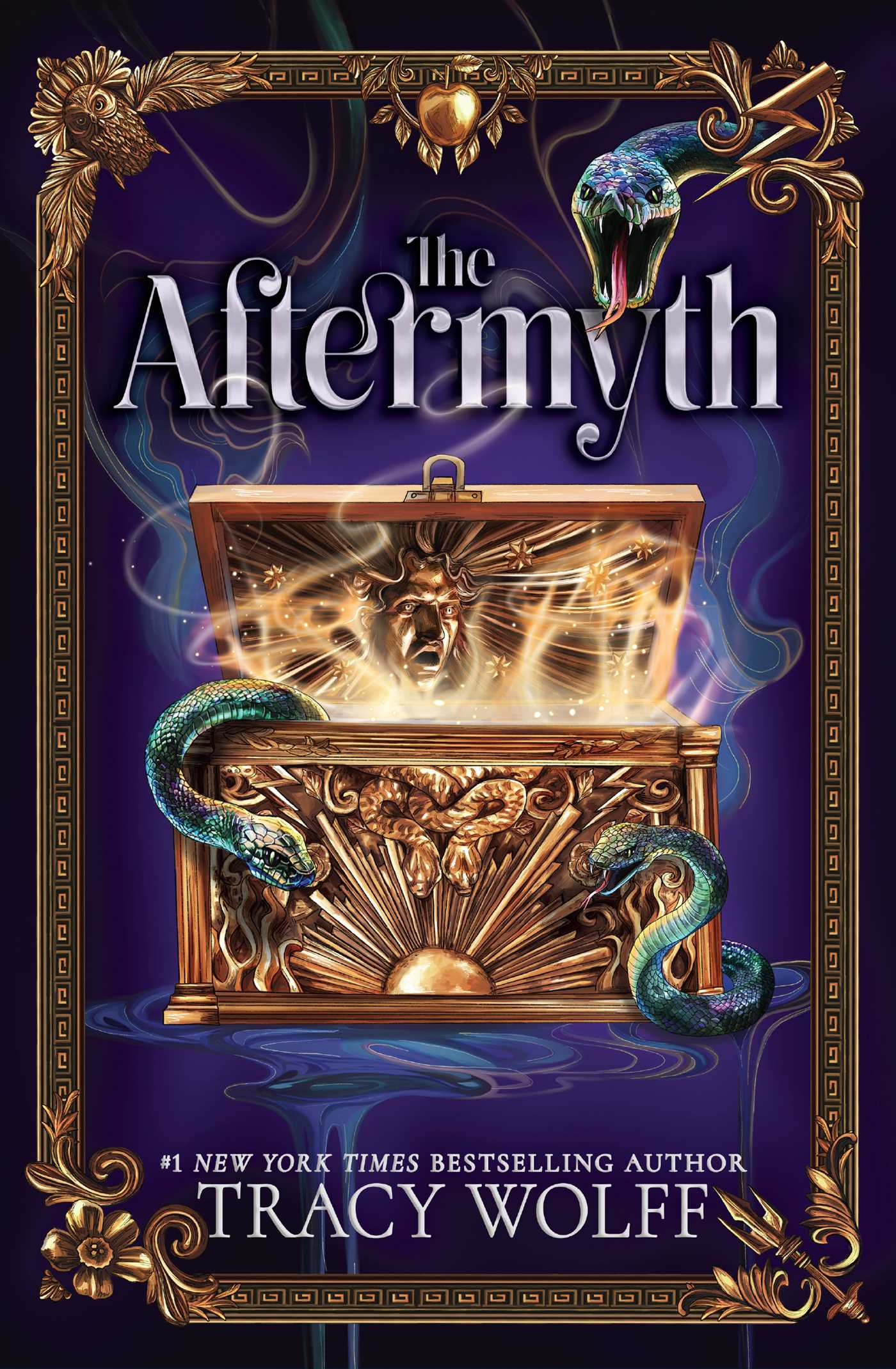
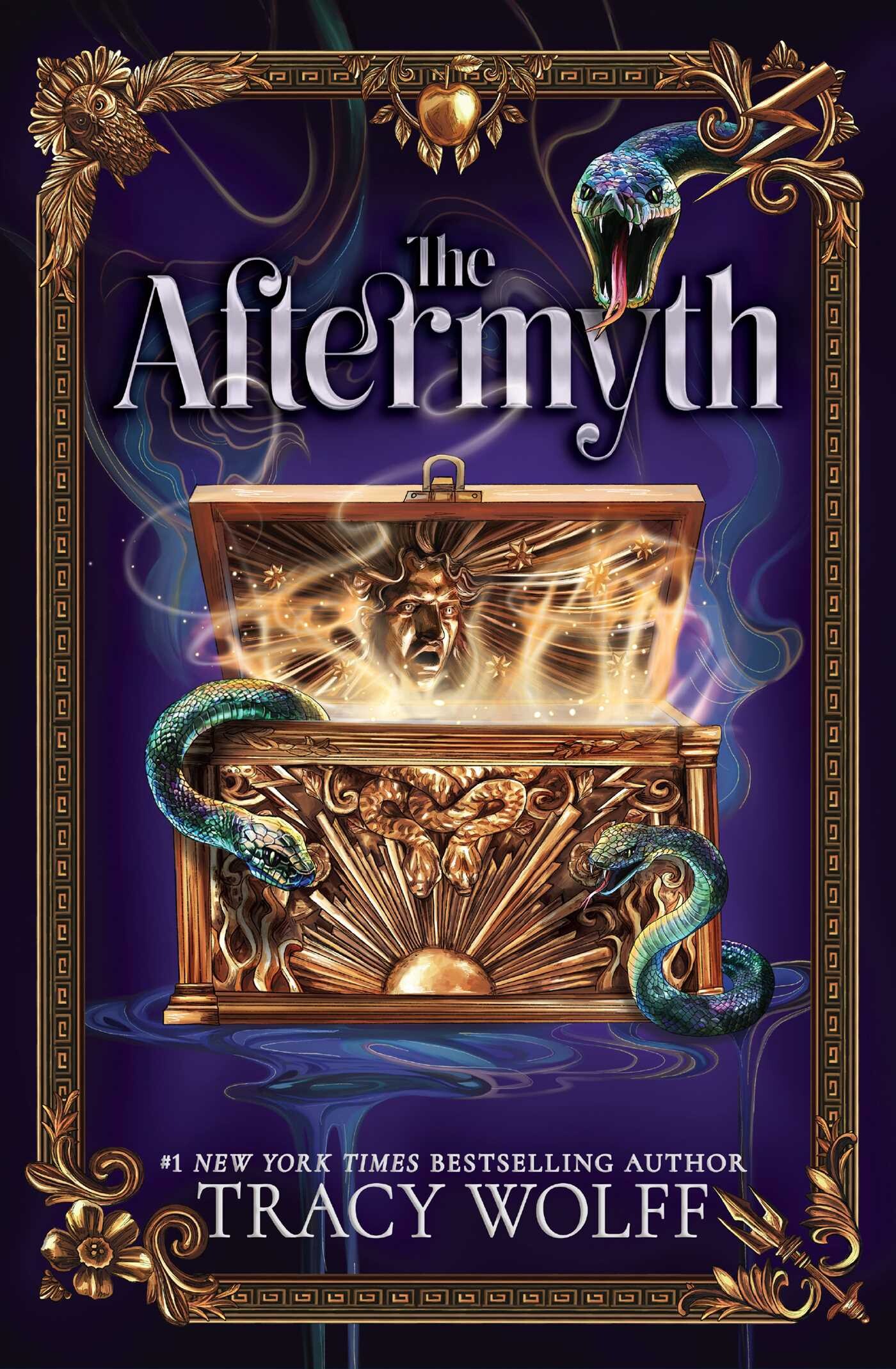
“For fans of Percy Jackson, this fresh…thrilling” (Booklist) first book in a dark academia fantasy middle grade series from #1 New York Times bestselling author of the Crave series, Tracy Wolff, follows a girl living in a world ruled by the tenets of Greek mythology whose fate is more than it appears.
What’s your myth?
Penelope Weaver has spent her whole life preparing to attend Anaximander’s Academy, where students learn how to bring to life the stories of Greek mythology as well as discover the Greek god whose principles they most embody. Penelope knows she’s an Athena—all smart, practical, and rule-following girls who take part in stories that matter are Athenas.
But when Penelope and her twin brother Paris arrive at Anaximander’s, it appears fate has other plans. Penelope isn’t placed with Athena but with students who are anything but practical and who prefer parties to rules. And that’s just the beginning. She’s given the world’s worst muse, her assigned tasks feel impossible, and the magic of Anaximander’s is overwhelming. Not to mention, there are two very different boys making her new life even more confusing.
But as things go from bad to dangerously worse, one thing becomes clear: in a world where everything is fated to happen a certain way, some stories need to be rewritten. As the world around her shifts and cracks, Penelope is asked to forget everything she thought she knew to help create a better story…even if that changes every plan and breaks every rule.
“For fans of Percy Jackson, this fresh…thrilling” (Booklist) first book in a dark academia fantasy middle grade series from #1 New York Times bestselling author of the Crave series, Tracy Wolff, follows a girl living in a world ruled by the tenets of Greek mythology whose fate is more than it appears.
What’s your myth?
Penelope Weaver has spent her whole life preparing to attend Anaximander’s Academy, where students learn how to bring to life the stories of Greek mythology as well as discover the Greek god whose principles they most embody. Penelope knows she’s an Athena—all smart, practical, and rule-following girls who take part in stories that matter are Athenas.
But when Penelope and her twin brother Paris arrive at Anaximander’s, it appears fate has other plans. Penelope isn’t placed with Athena but with students who are anything but practical and who prefer parties to rules. And that’s just the beginning. She’s given the world’s worst muse, her assigned tasks feel impossible, and the magic of Anaximander’s is overwhelming. Not to mention, there are two very different boys making her new life even more confusing.
But as things go from bad to dangerously worse, one thing becomes clear: in a world where everything is fated to happen a certain way, some stories need to be rewritten. As the world around her shifts and cracks, Penelope is asked to forget everything she thought she knew to help create a better story…even if that changes every plan and breaks every rule.
Reading Group Guide
Get a FREE ebook by joining our mailing list today! Plus, receive recommendations for your next Book Club read.
By clicking 'Sign me up' I agree to the Terms of Use and acknowledge the Privacy Policy and Notice of Financial Incentive. Free ebook offer available to NEW US subscribers only. Offer redeemable at Simon & Schuster's ebook fulfillment partner. Must redeem within 90 days. See full terms and conditions and this month's choices.
Reading Group Guide
The Aftermyth
By Tracy Wolff
About the Book
Penelope Weaver knows exactly who she is: an Athena girl. She’s serious, focused, organized, and hardworking. Penelope is sure that at mythology-based Anaximander’s Academy, she’ll be assigned to Athena Hall along with her twin brother, Paris. Imagine her shock when her magical placement is with Aphrodite: a class of frivolous, fashion-conscious, party-loving students. Among those is her exuberant new roommate and self-declared BFF, Fifi, who starts calling Penelope, “Ellie.” It’s all wrong!
And yet, maybe not. Penelope learns that the heart of Aphrodite Hall is “love, respect, kindness, friendship, joy.” Penelope especially needs her new Aphrodite friendships when strange adventures beset her—and only her—like a bridge transformed into snakes, the Greek legend Prometheus coming to life, and a terrifying trip to the Underworld. As she shows unexpected courage and even leadership, Penelope starts thinking of herself differently. She even starts to enjoy her own Aphrodite traits, following Fifi’s advice: “‘You’ve got to live a little.’”
[Find the designed guide in the Resources and Downloads tab below]
Discussion Questions
1. Describe Penelope’s family and background. What are her parents like? What is her social life like before the book opens? Why do she and Paris end up going to Anaximander’s Academy?
2. Why is Penelope uncomfortable when Fifi starts to call her Ellie? What is Penelope’s image of herself and why is it important to her? Why is she anxious when Fifi wants to decorate the apple in front of Aphrodite Hall?
3. How does Penelope grow throughout the story? Contrast her self-image and her values at the beginning of Aftermyth to how she is at the end.
4. What is Penelope’s relationship like with her twin brother, Paris? In what ways are they close? How are they alike, and how are they different? How does their relationship change during their time at Anaximander’s? Who is Rhea, what is she like, and what role does she play in the changes between Penelope and Paris?
5. What are some examples of Penelope’s courage and leadership? How does she deal with the eagle in Dr. Minthe’s class? Later, during that class, how does she help others when her group is looking for the key to the door? (Chapters 27–37)
6. What is the purpose of Anaximander’s Academy? Describe the five halls, the gods to which they are each dedicated, and how the halls are different in spirit. Which hall does Penelope hope and expect to join? Which one does she end up in?
7. On the way to Anaximander’s, Penelope and her family meet PT. What is he doing? How does he respond to Penelope blowing out the lantern fire? Who does PT turn out to be in Greek mythology? What is his role in the story about Pandora’s box? What effect do Penelope’s actions have on him and his story?
8. How does Penelope initially feel about Fifi? Why does Fifi become, according to Penelope, “the best friend I’ve ever had”? (Chapter 41) What do they have in common? How are they different? How do they help each other?
9. Describe Fifi’s personality and style. Discuss her statement about herself, “‘I’m not good at much except directions and people.’” (Chapter 20) What are examples that show she is right about her strengths? What else is she good at? When does she show leadership? Explain why Penelope thinks, “I’ve learned that Fifi is a force of nature.” (Chapter 38)
10. What role do muses serve at Anaximander’s? What is Fifi’s muse, Frankie, like? How do they get along? Contrast Frankie with Penelope’s muse, Calliope. What is Calliope like? What is her role in Greek mythology? When do the muses help their students?
11. What is the point of the list of labors? Describe the list Penelope got from Calliope. Why does it make her consider giving up and going home? Compare her list with the one Fifi received, both its appearance and the labors themselves. What are some of the labors each of them were assigned? How are their lists different? Which labors do they accomplish during the story?
12. When does Penelope first meet Kyrian? What is her impression of him? When does he appear next? What does she learn about him? Describe their interactions, including those in the Underworld. How does he help her and stick up for her? How do her feelings about him change?
13. Discuss Dr. Dione’s observation that Aphrodite and Aphrodite Hall students value “‘love, respect, kindness, friendship, joy.” Cite examples of those traits that Penelope experiences in Aphrodite Hall? Consider what you learn from Penelope’s comment that “these Aphrodites are way more concerned with people than my home full of Athenas ever has been.” (Chapter 16)
14. What does Penelope consider to be Athena traits? How does she fit that type herself? Discuss her comment that “planning stuff is pretty much my favorite thing in the world to do.” (Chapter 28) Contrast her attitude with Fifi’s and Arjun’s. When the three of them are walking toward the candy room, Fifi says, “‘Think of how many cool things you miss if you never stop to look,’” and Penelope thinks, “But fun only gets you so far.” (Chapter 38)
15. Why do the Athena Hall students consider themselves superior to the Aphrodite students? What are criticisms that the Aphrodites have of the Athenas? Describe some ways that the Aphrodites like to have fun.
16. Why does Fifi say to Penelope, “‘You’ve got to live a little’?” Paris also used to tell her to “‘stop worrying and live a little.’” (Chapter 24) Why is that hard for Penelope? What steps does she take to follow this advice?
17. When she enters the academy, Penelope views failure as a problem, and thinks “‘knowing everything was the point.’” Discuss Levi’s view that “‘you’re supposed to fail, and learn from that failure,’” and Charlie’s that “‘sometimes the goal isn’t really the point. Sometimes it’s how you get there that’s important.’” (Chapter 24)
18. Strange things happen to Ellie throughout the story, most of which her fellow students don’t see or experience, starting with the snakes on the bridge. Describe some of these events. Why do you think they happen to her? Discuss foreshadowing about potential dangers, such as when PT advises, “‘The answer is fire’” (Chapter 3) and Dr. Minthe warns, “‘There’s a lot here at Anaximander’s that is not quite as it seems.’” (Chapter 36)
19. Talk about the scavenger hunt related to Pandora’s box that Dr. Minthe presents. Review the list of the Path to Victory. (Chapter 36) How does Aphrodite Hall usually respond to the annual challenge? How does Penelope change that? Describe some of the ways that she helps win the challenge.
20. When you have finished reading the novel, go back and reread the prologue. What kind of atmosphere does it establish for the novel? How does it relate to Penelope and her story?
Extension Activities
1. Hail to Our Hall! Each hall—Athena, Aphrodite, Zeus, Poseidon, and Hades—has its own qualities and style. What makes each hall unique? What is enticing about each one? Working in pairs, pick a hall name randomly out of a hat, and create an interview describing that hall. Write questions and answers about the hall, and then record the interview to share, with one person asking the questions and the other answering. Consider bonus points for dressing in your hall colors!
2. Mythological Powers. The five halls at Anaximander’s Academy are each named for a major Greek god. Choose a different god, either from Greek mythology or another mythology such as Egyptian, Aztec, Chinese, Norse, and so on. Do research using trusted print and online sources, and then create a decorated poster that reflects the god’s imagined appearance, major powers, and other information you found interesting.
3. Gifts Galore. In chapter 52, students from each hall present gifts to their gods. Reread the description of their gifts. Then create an artistic gift for the god you researched, reflecting the god’s personality and special areas of power. Relate the style of the gift to the god as well, such as the glittery gifts for Aphrodite. Share the posters from the previous activity along with the gifts in a group display.
4. A Punny Time. The author had a good time choosing chapter titles, such as “Shiver Me Liver” and “You Snooze, You Muse.” Find five chapter titles that sound familiar to you. For each one, write a sentence about what you think the source is (“Shiver me timbers” is related to pirates). Write a few more sentences about how the chapter title and its source relate to the content of the chapter.
Guide written by Kathleen Odean, a long-time youth librarian and children’s literature instructor, who chaired the 2002 Newbery Award Committee.
This guide has been provided by Simon & Schuster for classroom, library, and reading group use. It may be reproduced in its entirety or excerpted for these purposes. For more Simon & Schuster guides and classroom materials, please visit https://www.simonandschuster.net/m/prek12-teachers-librarians/teaching-resources
For a designed version of this guide, please follow this link to view and download: https://d28hgpri8am2if.cloudfront.net/tagged_assets/27006853/9781665985468_as_aftermyth_reading_group%20guide.pdf
The Aftermyth
By Tracy Wolff
About the Book
Penelope Weaver knows exactly who she is: an Athena girl. She’s serious, focused, organized, and hardworking. Penelope is sure that at mythology-based Anaximander’s Academy, she’ll be assigned to Athena Hall along with her twin brother, Paris. Imagine her shock when her magical placement is with Aphrodite: a class of frivolous, fashion-conscious, party-loving students. Among those is her exuberant new roommate and self-declared BFF, Fifi, who starts calling Penelope, “Ellie.” It’s all wrong!
And yet, maybe not. Penelope learns that the heart of Aphrodite Hall is “love, respect, kindness, friendship, joy.” Penelope especially needs her new Aphrodite friendships when strange adventures beset her—and only her—like a bridge transformed into snakes, the Greek legend Prometheus coming to life, and a terrifying trip to the Underworld. As she shows unexpected courage and even leadership, Penelope starts thinking of herself differently. She even starts to enjoy her own Aphrodite traits, following Fifi’s advice: “‘You’ve got to live a little.’”
[Find the designed guide in the Resources and Downloads tab below]
Discussion Questions
1. Describe Penelope’s family and background. What are her parents like? What is her social life like before the book opens? Why do she and Paris end up going to Anaximander’s Academy?
2. Why is Penelope uncomfortable when Fifi starts to call her Ellie? What is Penelope’s image of herself and why is it important to her? Why is she anxious when Fifi wants to decorate the apple in front of Aphrodite Hall?
3. How does Penelope grow throughout the story? Contrast her self-image and her values at the beginning of Aftermyth to how she is at the end.
4. What is Penelope’s relationship like with her twin brother, Paris? In what ways are they close? How are they alike, and how are they different? How does their relationship change during their time at Anaximander’s? Who is Rhea, what is she like, and what role does she play in the changes between Penelope and Paris?
5. What are some examples of Penelope’s courage and leadership? How does she deal with the eagle in Dr. Minthe’s class? Later, during that class, how does she help others when her group is looking for the key to the door? (Chapters 27–37)
6. What is the purpose of Anaximander’s Academy? Describe the five halls, the gods to which they are each dedicated, and how the halls are different in spirit. Which hall does Penelope hope and expect to join? Which one does she end up in?
7. On the way to Anaximander’s, Penelope and her family meet PT. What is he doing? How does he respond to Penelope blowing out the lantern fire? Who does PT turn out to be in Greek mythology? What is his role in the story about Pandora’s box? What effect do Penelope’s actions have on him and his story?
8. How does Penelope initially feel about Fifi? Why does Fifi become, according to Penelope, “the best friend I’ve ever had”? (Chapter 41) What do they have in common? How are they different? How do they help each other?
9. Describe Fifi’s personality and style. Discuss her statement about herself, “‘I’m not good at much except directions and people.’” (Chapter 20) What are examples that show she is right about her strengths? What else is she good at? When does she show leadership? Explain why Penelope thinks, “I’ve learned that Fifi is a force of nature.” (Chapter 38)
10. What role do muses serve at Anaximander’s? What is Fifi’s muse, Frankie, like? How do they get along? Contrast Frankie with Penelope’s muse, Calliope. What is Calliope like? What is her role in Greek mythology? When do the muses help their students?
11. What is the point of the list of labors? Describe the list Penelope got from Calliope. Why does it make her consider giving up and going home? Compare her list with the one Fifi received, both its appearance and the labors themselves. What are some of the labors each of them were assigned? How are their lists different? Which labors do they accomplish during the story?
12. When does Penelope first meet Kyrian? What is her impression of him? When does he appear next? What does she learn about him? Describe their interactions, including those in the Underworld. How does he help her and stick up for her? How do her feelings about him change?
13. Discuss Dr. Dione’s observation that Aphrodite and Aphrodite Hall students value “‘love, respect, kindness, friendship, joy.” Cite examples of those traits that Penelope experiences in Aphrodite Hall? Consider what you learn from Penelope’s comment that “these Aphrodites are way more concerned with people than my home full of Athenas ever has been.” (Chapter 16)
14. What does Penelope consider to be Athena traits? How does she fit that type herself? Discuss her comment that “planning stuff is pretty much my favorite thing in the world to do.” (Chapter 28) Contrast her attitude with Fifi’s and Arjun’s. When the three of them are walking toward the candy room, Fifi says, “‘Think of how many cool things you miss if you never stop to look,’” and Penelope thinks, “But fun only gets you so far.” (Chapter 38)
15. Why do the Athena Hall students consider themselves superior to the Aphrodite students? What are criticisms that the Aphrodites have of the Athenas? Describe some ways that the Aphrodites like to have fun.
16. Why does Fifi say to Penelope, “‘You’ve got to live a little’?” Paris also used to tell her to “‘stop worrying and live a little.’” (Chapter 24) Why is that hard for Penelope? What steps does she take to follow this advice?
17. When she enters the academy, Penelope views failure as a problem, and thinks “‘knowing everything was the point.’” Discuss Levi’s view that “‘you’re supposed to fail, and learn from that failure,’” and Charlie’s that “‘sometimes the goal isn’t really the point. Sometimes it’s how you get there that’s important.’” (Chapter 24)
18. Strange things happen to Ellie throughout the story, most of which her fellow students don’t see or experience, starting with the snakes on the bridge. Describe some of these events. Why do you think they happen to her? Discuss foreshadowing about potential dangers, such as when PT advises, “‘The answer is fire’” (Chapter 3) and Dr. Minthe warns, “‘There’s a lot here at Anaximander’s that is not quite as it seems.’” (Chapter 36)
19. Talk about the scavenger hunt related to Pandora’s box that Dr. Minthe presents. Review the list of the Path to Victory. (Chapter 36) How does Aphrodite Hall usually respond to the annual challenge? How does Penelope change that? Describe some of the ways that she helps win the challenge.
20. When you have finished reading the novel, go back and reread the prologue. What kind of atmosphere does it establish for the novel? How does it relate to Penelope and her story?
Extension Activities
1. Hail to Our Hall! Each hall—Athena, Aphrodite, Zeus, Poseidon, and Hades—has its own qualities and style. What makes each hall unique? What is enticing about each one? Working in pairs, pick a hall name randomly out of a hat, and create an interview describing that hall. Write questions and answers about the hall, and then record the interview to share, with one person asking the questions and the other answering. Consider bonus points for dressing in your hall colors!
2. Mythological Powers. The five halls at Anaximander’s Academy are each named for a major Greek god. Choose a different god, either from Greek mythology or another mythology such as Egyptian, Aztec, Chinese, Norse, and so on. Do research using trusted print and online sources, and then create a decorated poster that reflects the god’s imagined appearance, major powers, and other information you found interesting.
3. Gifts Galore. In chapter 52, students from each hall present gifts to their gods. Reread the description of their gifts. Then create an artistic gift for the god you researched, reflecting the god’s personality and special areas of power. Relate the style of the gift to the god as well, such as the glittery gifts for Aphrodite. Share the posters from the previous activity along with the gifts in a group display.
4. A Punny Time. The author had a good time choosing chapter titles, such as “Shiver Me Liver” and “You Snooze, You Muse.” Find five chapter titles that sound familiar to you. For each one, write a sentence about what you think the source is (“Shiver me timbers” is related to pirates). Write a few more sentences about how the chapter title and its source relate to the content of the chapter.
Guide written by Kathleen Odean, a long-time youth librarian and children’s literature instructor, who chaired the 2002 Newbery Award Committee.
This guide has been provided by Simon & Schuster for classroom, library, and reading group use. It may be reproduced in its entirety or excerpted for these purposes. For more Simon & Schuster guides and classroom materials, please visit https://www.simonandschuster.net/m/prek12-teachers-librarians/teaching-resources
For a designed version of this guide, please follow this link to view and download: https://d28hgpri8am2if.cloudfront.net/tagged_assets/27006853/9781665985468_as_aftermyth_reading_group%20guide.pdf
About the Author
MAYRA G CALDERÓN
Tracy Wolff is the #1 New York Times, #1 internationally, #1 Wall Street Journal, and USA TODAY bestselling author of the Crave series as well as many other novels. A lover of mythology, vampires, and getting lost in a great book, she’s spent her whole life asking “what if” and “what happens next”—questions being a writer has helped her answer again and again. At six, she wrote her first short story—something with a rainbow, a unicorn, and a shapeshifting prince—and at seven, she forayed into the wonderful world of middle grade literature with her first Judy Blume novel. A one-time English professor, she now devotes all her time to writing fun, action-packed, romantic stories with fantastical worlds and characters who leap off the page. She has written all her seventy-plus novels from her home in Austin, Texas, which she shares with her partner, her sons, and their three adorable dogs.
Product Details
- Publisher: Aladdin (February 3, 2026)
- Length: 448 pages
- ISBN13: 9781665985482
- Grades: 3 - 7
- Ages: 8 - 12
Browse Related Books
Raves and Reviews
"A thrilling start to a series full of magic, mythology, and mystery that promises even greater adventures ahead."
–Booklist
"Readers looking for more Greek-myth inspired fiction in the vein of Percy Jackson or Shana Targosz’s River of Spirits will love this series starter."
– –School Library Journal
Resources and Downloads
High Resolution Images
-
Book Cover Image (jpg): The Aftermyth
eBook 9781665985482
-
Author Photo (jpg): Tracy Wolff MAYRA G CALDERÓN(0.1 MB)
Any use of an author photo must include its respective photo credit