Plus, receive recommendations and exclusive offers on all of your favorite books and authors from Simon & Schuster.
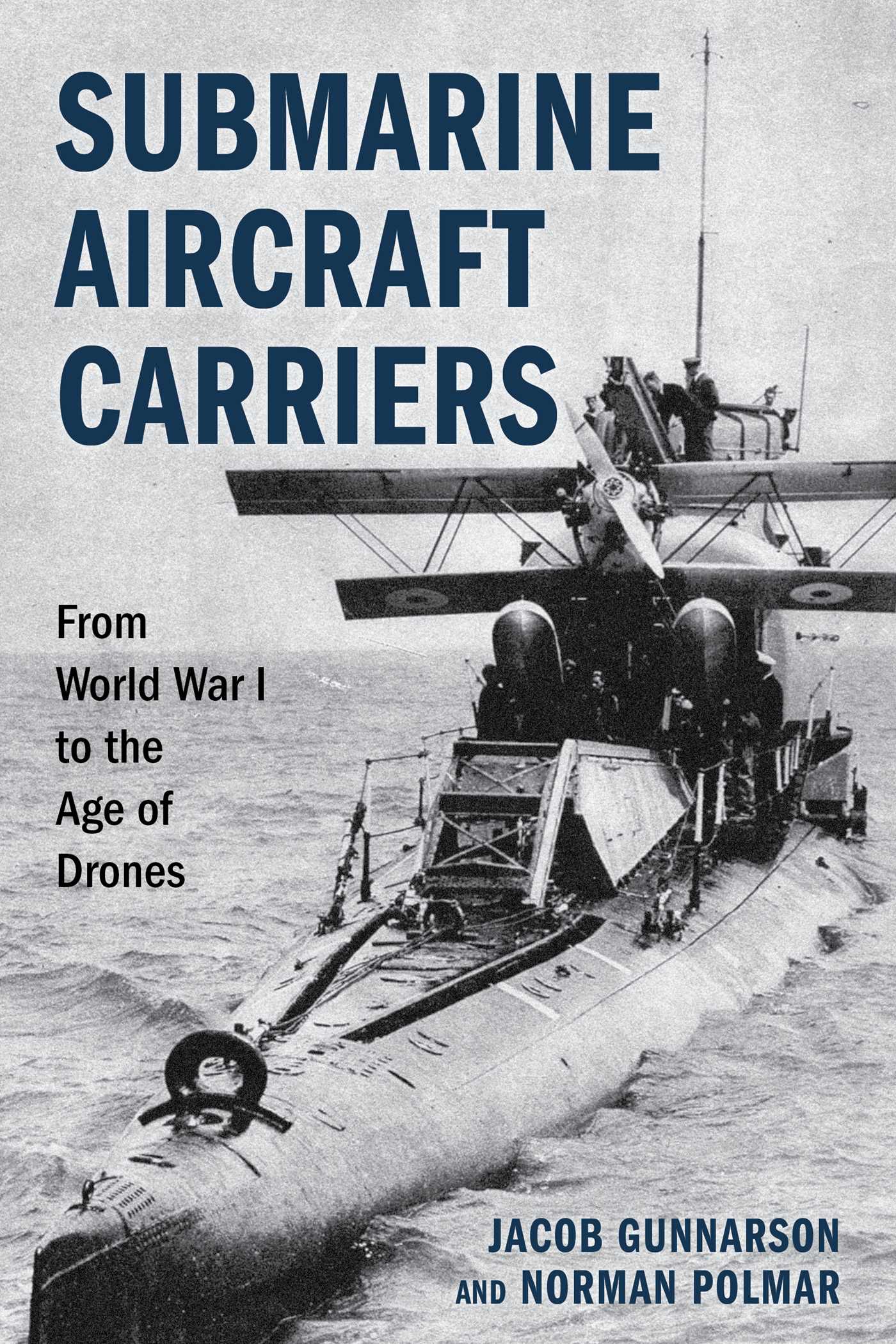
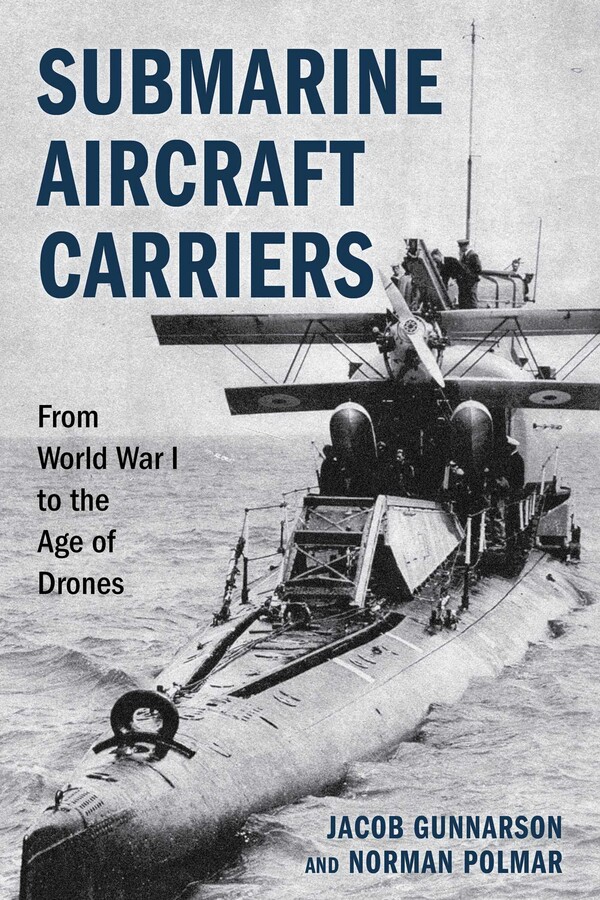
Submarine Aircraft Carriers
From World War I to the Age of Drones
By Jacob Gunnarson and Norman Polmar
Published by Stackpole Books
Distributed by Simon & Schuster
LIST PRICE $39.95
PRICE MAY VARY BY RETAILER
Free shipping when you spend $40. Terms apply.
Buy from Other Retailers
Table of Contents
About the Book
Two innovations in weaponry appeared at the beginning of the twentieth century and revolutionized warfare, turning it into a multidimensional contest: the modern diesel-powered submarine and the fixed-wing aircraft. Both saw extensive use during World War I, and the nations of the world soon developed mobile launching pads for planes during and after the war, first using surface ships and then submarines. The submarine aircraft carrier was born. Virtually nothing has been written about these weapons—until now, in this detailed narrative by one of the world’s leading naval experts.
Submarine aircraft carriers were pursued by all of the world’s major naval powers: the United States, Great Britain, Germany, France, Italy, Japan, and the Soviet Union. Germany led the way, and while its efforts did not put vessels into battle during World War I, rumors of such a submarine caused widespread panic in New York City in 1918. Despite concentrated efforts during the 1920s and 1930s, only Japan and France had seagoing submarine aircraft carriers when World War II erupted. France’s single such vessel disappeared at sea in 1942, but Japan built forty-seven, including three of its massive I-400 class, the largest submarines of World War II. Japanese submarine aircraft carriers launched the only aerial bombing of the contiguous United States, when a sub-based plane dropped bombs over Oregon. The three I-400s figured prominently in Japan’s never-realized plans to attack the Panama Canal, New York City, and Washington, DC, as well as in Operation Cherry Blossoms at Night, Japan’s last-ditch plan to spread bubonic plague and other pathogens to the coastal cities of California.
After World War II, both the United States and the Soviet Union pursued further development of submarine aircraft carriers as part of their nuclear strike capabilities—including some fanciful ideas for truly gigantic submarines launching bomber aircraft—but the advent of guided cruise missiles quickly ended interest in these vessels.
In this comprehensive and readable history, Jacob Gunnarson and Norman Polmar draws on more than sixty years of researching and writing about the world’s naval vessels to uncover the development of submarine aircraft carriers. Their story reveals much about twentieth-century naval strategy, tactics, and technology.
Submarine aircraft carriers were pursued by all of the world’s major naval powers: the United States, Great Britain, Germany, France, Italy, Japan, and the Soviet Union. Germany led the way, and while its efforts did not put vessels into battle during World War I, rumors of such a submarine caused widespread panic in New York City in 1918. Despite concentrated efforts during the 1920s and 1930s, only Japan and France had seagoing submarine aircraft carriers when World War II erupted. France’s single such vessel disappeared at sea in 1942, but Japan built forty-seven, including three of its massive I-400 class, the largest submarines of World War II. Japanese submarine aircraft carriers launched the only aerial bombing of the contiguous United States, when a sub-based plane dropped bombs over Oregon. The three I-400s figured prominently in Japan’s never-realized plans to attack the Panama Canal, New York City, and Washington, DC, as well as in Operation Cherry Blossoms at Night, Japan’s last-ditch plan to spread bubonic plague and other pathogens to the coastal cities of California.
After World War II, both the United States and the Soviet Union pursued further development of submarine aircraft carriers as part of their nuclear strike capabilities—including some fanciful ideas for truly gigantic submarines launching bomber aircraft—but the advent of guided cruise missiles quickly ended interest in these vessels.
In this comprehensive and readable history, Jacob Gunnarson and Norman Polmar draws on more than sixty years of researching and writing about the world’s naval vessels to uncover the development of submarine aircraft carriers. Their story reveals much about twentieth-century naval strategy, tactics, and technology.
Product Details
- Publisher: Stackpole Books (December 16, 2025)
- Length: 320 pages
- ISBN13: 9780811777292
Browse Related Books
Resources and Downloads
High Resolution Images
-
Book Cover Image (jpg): Submarine Aircraft Carriers
Paper Over Board 9780811777292