Plus, receive recommendations and exclusive offers on all of your favorite books and authors from Simon & Schuster.
Published by Park Street Press
Distributed by Simon & Schuster
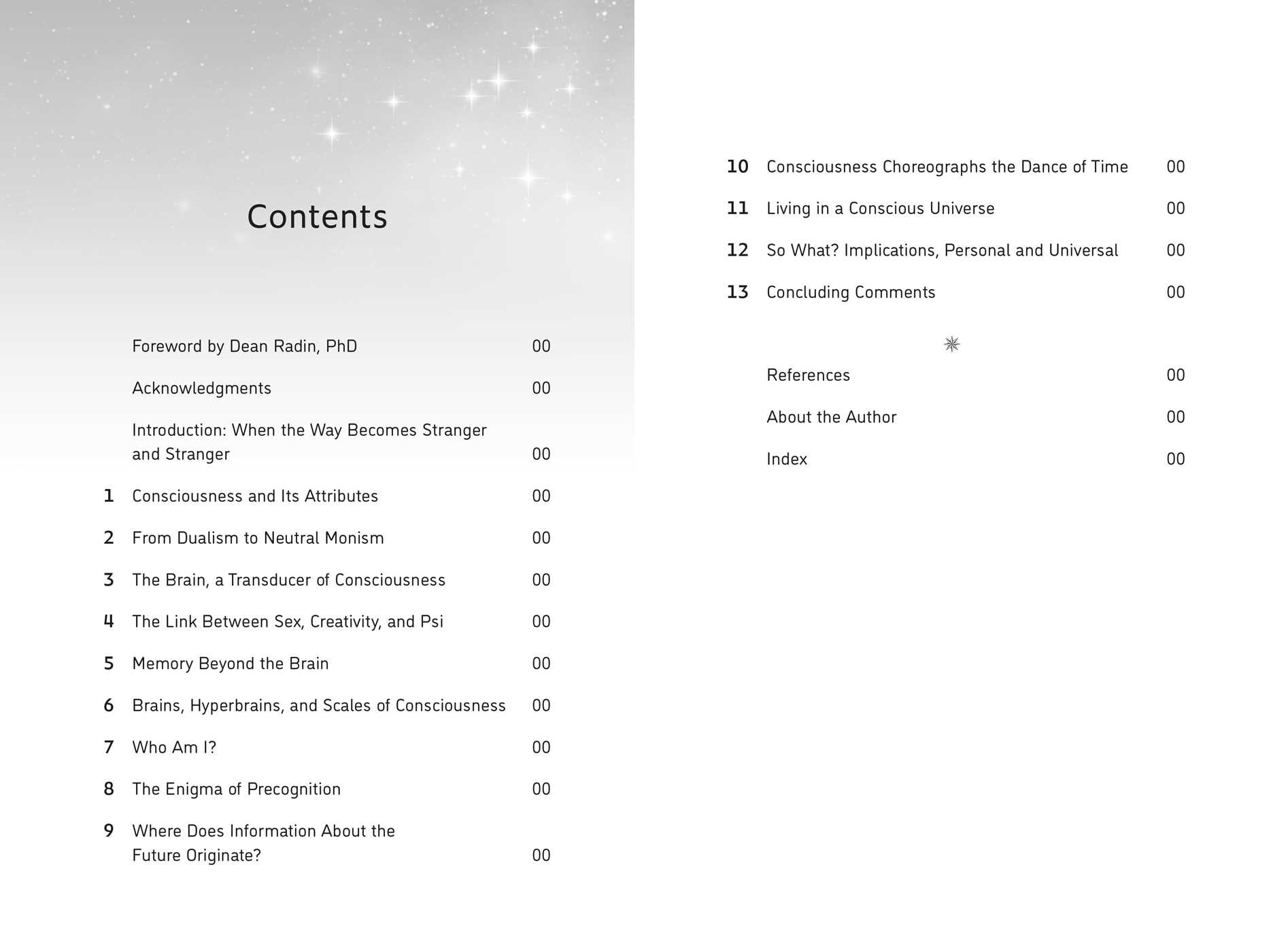
Table of Contents
About the Book
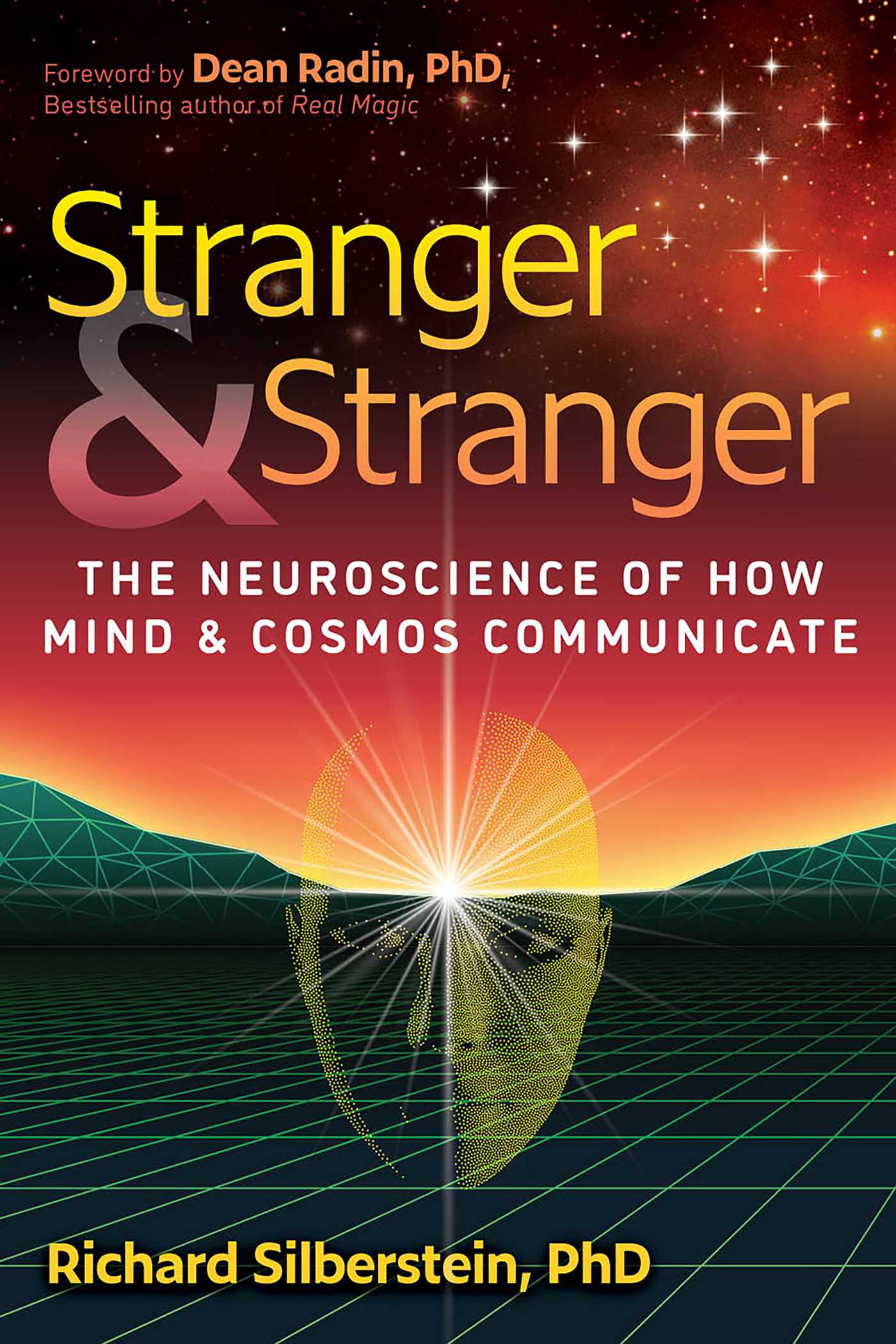
Reveals how psi abilities are real and can transform our world
• Shares groundbreaking research on telepathy, precognition, and other anomalous abilities of consciousness
• Explores the philosophy of neutral monism and the interconnected nature of consciousness and physical reality
• Demonstrates how focused intention and consciousness can shape the future
Exploring the growing overlap between neuroscience and psi research, cognitive neuroscientist Richard Silberstein provides an overview of experimental evidence that challenges the materialist view of consciousness. He has found that psi abilities, like telepathy and precognition, are not only real but can transform our world.
Sharing his own groundbreaking research, along other scientific and medical findings, Silberstein reveals the brain-consciousness relationship and the effects of intention and human thought on the physical world. He explains the philosophy of neutral monism, which states that physical reality and consciousness emerge from a single, deeper reality. Silberstein demonstrates how paranormal abilities are not only integral features of human consciousness but also offer great potential for transformative breakthroughs in the fields of mental health, conflict resolution, environmental stewardship, and collective decision-making.
Looking in depth at the scientific evidence for precognition, Silberstein reveals how consciousness can influence future events. He discusses the power of focused intention and collective consciousness to foster empathy and cooperation, as well as address a range of global issues.
• Shares groundbreaking research on telepathy, precognition, and other anomalous abilities of consciousness
• Explores the philosophy of neutral monism and the interconnected nature of consciousness and physical reality
• Demonstrates how focused intention and consciousness can shape the future
Exploring the growing overlap between neuroscience and psi research, cognitive neuroscientist Richard Silberstein provides an overview of experimental evidence that challenges the materialist view of consciousness. He has found that psi abilities, like telepathy and precognition, are not only real but can transform our world.
Sharing his own groundbreaking research, along other scientific and medical findings, Silberstein reveals the brain-consciousness relationship and the effects of intention and human thought on the physical world. He explains the philosophy of neutral monism, which states that physical reality and consciousness emerge from a single, deeper reality. Silberstein demonstrates how paranormal abilities are not only integral features of human consciousness but also offer great potential for transformative breakthroughs in the fields of mental health, conflict resolution, environmental stewardship, and collective decision-making.
Looking in depth at the scientific evidence for precognition, Silberstein reveals how consciousness can influence future events. He discusses the power of focused intention and collective consciousness to foster empathy and cooperation, as well as address a range of global issues.
Excerpt
1
Consciousness and Its Attributes
A small but growing body of rigorous scientific research on the nature of consciousness threatens to challenge some of the most basic assumptions in fields as diverse as medicine, cognitive science, neuroscience, and even physics. The research area is psi research, and it is rapidly identifying a range of consciousness-related phenomena that are anomalous in that science has not yet developed an explanatory model to account for them. As the reality of these phenomena is a fundamental part of the narrative I will be outlining, this chapter briefly reviews some current approaches to consciousness research before reviewing the evidence for the reality of the anomalous attributes of consciousness as well as the extent to which these phenomena are consistent with our current understanding of the laws of physics. Hint: They aren’t.
Consciousness Exiled and Its Tentative Return
The discipline of psychology emerged in the late nineteenth century with a principal focus of studying the psyche or consciousness. William James, the father of American psychology, considered the study of consciousness central to the discipline. Yet over the period of the first sixty years, the topic of consciousness was progressively marginalized to the point that it was effectively banished from academic psychology research in Western Europe and the USA. This was primarily a consequence of the rise of behaviorism, focusing on observable behaviors rather than subjective experiences. This approach, however, faced criticism for neglecting the study of mental processes. As a response, the cognitive revolution of the 1970s revitalized interest in mental processes, giving rise to the study of perception, memory, and decision-making, all of which contribute to our conscious experiences.
As the neural mechanisms that mediated various sensory and perceptual processes such as vision, sound, and touch became better understood, it was widely assumed that it would be only a matter of time before science finally understood how consciousness arises from brain activity. This eventually led to the return of the study of consciousness as a legitimate area of academic research.
The notion that consciousness is simply an emergent property of the brain is probably the most widely held view among neuroscience researchers. This view is often paraphrased as “consciousness is what the brain does.” While this view dominates neuroscience, and especially cognitive neuroscience, challenges have emerged from within the philosophy discipline. The most prominent of these challenges has emerged from the writings of the philosopher David Chalmers [10] in what he terms the hard problem of consciousness.
Chalmers considers that the scientific research approaches on consciousness can be summarized in two brief statements: “the easy problem of consciousness” and “the hard problem of consciousness.” The easy problem of consciousness is the understanding of the neural correlates of consciousness. In other words, when we hear and see a singing bird, what brain areas and networks are activated every time we perceive this event? By contrast, the hard problem of consciousness concerns the question of how neural activity in the brain gives rise to the subjective sense of being conscious.
What does being conscious mean? Philosophers and cognitive neuroscience researchers generally agree on a specific set of attributes that denote subjective consciousness. These include: a sense of self, perceptual experience or qualia (such as redness of a rose), cognition, and intent.
The hard problem is the subject of controversy, with some philosophers and researchers denying that it is even a problem. Of those who accept the premise of the argument, two broad philosophical approaches are apparent. One is that the hard problem will be solved given enough research funding and time. The other view, held by Chalmers and others, is that the hard problem is insoluble no matter how much research is undertaken into the neuroscience and physics of consciousness.
While outlining a detailed review of these approaches is beyond the scope of this book, a brief outline is included to provide context for the introduction of scientific findings and speculations in subsequent chapters.
The former approach is based on a fundamental assumption that consciousness is solely a consequence of brain activity. In turn, the brain being a physical system means that consciousness can be reduced to brain activity, and hence physics. This is what is termed a physicalist or materialist monist approach to the nature of consciousness. At the time of writing, two models of consciousness are considered the leading contenders for the physicalist monist view of consciousness. These are the Global Workspace Model [11] and the Integrated Information Theory (IIT) of consciousness [1, 42].
Panpsychism, an alternative approach, argues that consciousness cannot be reduced to physical, and hence, brain processes. Proponents of this approach account for the phenomenon of consciousness by proposing that consciousness is an intrinsic aspect of reality and that all physical systems (particles, fields, etc.) include an element of consciousness along with the usual physical attributes such as mass, charge, and momentum [12]. The attributes of consciousness described above are then thought to emerge when physical systems of sufficient complexity, such as the human brain, emerge. A major unanswered question for panpsychism is how the consciousness of each elementary particle in the brain somehow combines to yield the attributes of human consciousness [12].
with maintaining a stable physiological state (e.g., controlling blood pressure, blood oxygenation, etc.), we now know that there are a host of cognitive and emotional processes that we lack conscious awareness of yet have a powerful effect on our attitudes and behavior. Freud introduced the concept of the unconscious, and modern cognitive neuroscience research has confirmed the existence of an enormous array of cognitive and emotional processes below the level of awareness, and yet they have a profound effect on our thinking, feeling, and behavior.
The philosopher, neuroscientist, and psychiatrist Ian McGilchrist points out that our conscious experience of the world is determined by the left hemisphere [25]. By contrast, we are unaware of the perceptions and insights arising in the right hemisphere. While the role of these unconscious processes is an enormous topic and their proper consideration is well beyond the scope of this book, there is one aspect of this topic that warrants mention. This is the phenomenon of creativity. Creativity is discussed in more detail in chapter 4; however, one feature of creativity warrants specific mention: The actual process by which novel and useful ideas are generated is now recognized to be an unconscious process. We only become consciously aware of a creative idea when it enters our conscious awareness.
Going forward, when I use the term consciousness (designated by the lowercase Greek ψ), I include all of the cognitive and emotional processes that are subliminal or below our level of awareness. In other words, conscious awareness is a part of the larger phenomenon of consciousness or ψ.
Anomalous Attributes of Consciousness
While there is little argument as to the reality of the above four attributes of consciousness, over the last fifty years, a large body of research has pointed to a range of what have been termed anomalous attributes of consciousness. The term anomalous is typically used to indicate that these features are difficult to explain in terms of our current understanding of brain function and even physics.
I will briefly review a range of anomalous attributes of consciousness that have been validated by multiple replications conducted by independent research groups. The order in which these anomalous attributes are reviewed reflects my estimation of how plausible or reasonable these phenomena are to a well-informed member of the public who is unfamiliar with research in this area.
Mental Telepathy
Mental telepathy, or the transfer of information between individuals that does not involve any of the senses, has been a topic of scientific research for almost one hundred years. Numerous variants of this phenomenon have been examined over this period, starting in the 1930s with Joseph Rhine’s Zener cards. A Zener card pack consists of twenty-five cards, each displaying one of five simple geometric symbols, of either a circle, a square, a star, wavy lines, or the plus sign. Researchers subsequently introduced other paradigms designed to enhance the effect.
One approach that has been replicated most extensively is the Ganzfeld protocol introduced by Honorton [17]. As with all telepathy studies, this involves two people, a “sender” and a “receiver” in separate rooms. The receiver’s eyes are covered with halved ping pong balls, and white noise (such as static) is played through headphones to create a partial sensory isolation environment. In such a situation of sensory isolation, people typically begin to experience visual imagery or visual hallucinations. In a typical trial, the sender is asked to attend to a randomly selected target image and try to send this image to the receiver. At the end of the trial, the receiver is shown a number of possible target images (typically four to six) that include the actual target and is asked to rank the images by how similar they appeared to them. In some studies, a person unaware of the target image is also asked to verbally rank the similarity of the images to their mental imagery experienced while they were the receiver.
Since their introduction, over one hundred separate Ganzfeld studies have been conducted, and this has allowed for an overall analysis, or a meta-analysis of the findings [4, 8, 41]. Overall, this yielded a weak experimental effect size, but combining the results of all 108 studies published between 1987 and 2010 yields a probability (p) of this result occurring by chance (i.e., the null hypothesis) as p
An important point to make in considering telepathy experiments is that evidence for telepathic interaction has been shown to occur even when participants are separated by distances over one kilometer and also when one of the participants is in a Faraday cage, which blocks the transmission of any electromagnetic field [7].
Consciousness and Its Attributes
A small but growing body of rigorous scientific research on the nature of consciousness threatens to challenge some of the most basic assumptions in fields as diverse as medicine, cognitive science, neuroscience, and even physics. The research area is psi research, and it is rapidly identifying a range of consciousness-related phenomena that are anomalous in that science has not yet developed an explanatory model to account for them. As the reality of these phenomena is a fundamental part of the narrative I will be outlining, this chapter briefly reviews some current approaches to consciousness research before reviewing the evidence for the reality of the anomalous attributes of consciousness as well as the extent to which these phenomena are consistent with our current understanding of the laws of physics. Hint: They aren’t.
Consciousness Exiled and Its Tentative Return
The discipline of psychology emerged in the late nineteenth century with a principal focus of studying the psyche or consciousness. William James, the father of American psychology, considered the study of consciousness central to the discipline. Yet over the period of the first sixty years, the topic of consciousness was progressively marginalized to the point that it was effectively banished from academic psychology research in Western Europe and the USA. This was primarily a consequence of the rise of behaviorism, focusing on observable behaviors rather than subjective experiences. This approach, however, faced criticism for neglecting the study of mental processes. As a response, the cognitive revolution of the 1970s revitalized interest in mental processes, giving rise to the study of perception, memory, and decision-making, all of which contribute to our conscious experiences.
As the neural mechanisms that mediated various sensory and perceptual processes such as vision, sound, and touch became better understood, it was widely assumed that it would be only a matter of time before science finally understood how consciousness arises from brain activity. This eventually led to the return of the study of consciousness as a legitimate area of academic research.
The notion that consciousness is simply an emergent property of the brain is probably the most widely held view among neuroscience researchers. This view is often paraphrased as “consciousness is what the brain does.” While this view dominates neuroscience, and especially cognitive neuroscience, challenges have emerged from within the philosophy discipline. The most prominent of these challenges has emerged from the writings of the philosopher David Chalmers [10] in what he terms the hard problem of consciousness.
Chalmers considers that the scientific research approaches on consciousness can be summarized in two brief statements: “the easy problem of consciousness” and “the hard problem of consciousness.” The easy problem of consciousness is the understanding of the neural correlates of consciousness. In other words, when we hear and see a singing bird, what brain areas and networks are activated every time we perceive this event? By contrast, the hard problem of consciousness concerns the question of how neural activity in the brain gives rise to the subjective sense of being conscious.
What does being conscious mean? Philosophers and cognitive neuroscience researchers generally agree on a specific set of attributes that denote subjective consciousness. These include: a sense of self, perceptual experience or qualia (such as redness of a rose), cognition, and intent.
The hard problem is the subject of controversy, with some philosophers and researchers denying that it is even a problem. Of those who accept the premise of the argument, two broad philosophical approaches are apparent. One is that the hard problem will be solved given enough research funding and time. The other view, held by Chalmers and others, is that the hard problem is insoluble no matter how much research is undertaken into the neuroscience and physics of consciousness.
While outlining a detailed review of these approaches is beyond the scope of this book, a brief outline is included to provide context for the introduction of scientific findings and speculations in subsequent chapters.
The former approach is based on a fundamental assumption that consciousness is solely a consequence of brain activity. In turn, the brain being a physical system means that consciousness can be reduced to brain activity, and hence physics. This is what is termed a physicalist or materialist monist approach to the nature of consciousness. At the time of writing, two models of consciousness are considered the leading contenders for the physicalist monist view of consciousness. These are the Global Workspace Model [11] and the Integrated Information Theory (IIT) of consciousness [1, 42].
Panpsychism, an alternative approach, argues that consciousness cannot be reduced to physical, and hence, brain processes. Proponents of this approach account for the phenomenon of consciousness by proposing that consciousness is an intrinsic aspect of reality and that all physical systems (particles, fields, etc.) include an element of consciousness along with the usual physical attributes such as mass, charge, and momentum [12]. The attributes of consciousness described above are then thought to emerge when physical systems of sufficient complexity, such as the human brain, emerge. A major unanswered question for panpsychism is how the consciousness of each elementary particle in the brain somehow combines to yield the attributes of human consciousness [12].
with maintaining a stable physiological state (e.g., controlling blood pressure, blood oxygenation, etc.), we now know that there are a host of cognitive and emotional processes that we lack conscious awareness of yet have a powerful effect on our attitudes and behavior. Freud introduced the concept of the unconscious, and modern cognitive neuroscience research has confirmed the existence of an enormous array of cognitive and emotional processes below the level of awareness, and yet they have a profound effect on our thinking, feeling, and behavior.
The philosopher, neuroscientist, and psychiatrist Ian McGilchrist points out that our conscious experience of the world is determined by the left hemisphere [25]. By contrast, we are unaware of the perceptions and insights arising in the right hemisphere. While the role of these unconscious processes is an enormous topic and their proper consideration is well beyond the scope of this book, there is one aspect of this topic that warrants mention. This is the phenomenon of creativity. Creativity is discussed in more detail in chapter 4; however, one feature of creativity warrants specific mention: The actual process by which novel and useful ideas are generated is now recognized to be an unconscious process. We only become consciously aware of a creative idea when it enters our conscious awareness.
Going forward, when I use the term consciousness (designated by the lowercase Greek ψ), I include all of the cognitive and emotional processes that are subliminal or below our level of awareness. In other words, conscious awareness is a part of the larger phenomenon of consciousness or ψ.
Anomalous Attributes of Consciousness
While there is little argument as to the reality of the above four attributes of consciousness, over the last fifty years, a large body of research has pointed to a range of what have been termed anomalous attributes of consciousness. The term anomalous is typically used to indicate that these features are difficult to explain in terms of our current understanding of brain function and even physics.
I will briefly review a range of anomalous attributes of consciousness that have been validated by multiple replications conducted by independent research groups. The order in which these anomalous attributes are reviewed reflects my estimation of how plausible or reasonable these phenomena are to a well-informed member of the public who is unfamiliar with research in this area.
Mental Telepathy
Mental telepathy, or the transfer of information between individuals that does not involve any of the senses, has been a topic of scientific research for almost one hundred years. Numerous variants of this phenomenon have been examined over this period, starting in the 1930s with Joseph Rhine’s Zener cards. A Zener card pack consists of twenty-five cards, each displaying one of five simple geometric symbols, of either a circle, a square, a star, wavy lines, or the plus sign. Researchers subsequently introduced other paradigms designed to enhance the effect.
One approach that has been replicated most extensively is the Ganzfeld protocol introduced by Honorton [17]. As with all telepathy studies, this involves two people, a “sender” and a “receiver” in separate rooms. The receiver’s eyes are covered with halved ping pong balls, and white noise (such as static) is played through headphones to create a partial sensory isolation environment. In such a situation of sensory isolation, people typically begin to experience visual imagery or visual hallucinations. In a typical trial, the sender is asked to attend to a randomly selected target image and try to send this image to the receiver. At the end of the trial, the receiver is shown a number of possible target images (typically four to six) that include the actual target and is asked to rank the images by how similar they appeared to them. In some studies, a person unaware of the target image is also asked to verbally rank the similarity of the images to their mental imagery experienced while they were the receiver.
Since their introduction, over one hundred separate Ganzfeld studies have been conducted, and this has allowed for an overall analysis, or a meta-analysis of the findings [4, 8, 41]. Overall, this yielded a weak experimental effect size, but combining the results of all 108 studies published between 1987 and 2010 yields a probability (p) of this result occurring by chance (i.e., the null hypothesis) as p
An important point to make in considering telepathy experiments is that evidence for telepathic interaction has been shown to occur even when participants are separated by distances over one kilometer and also when one of the participants is in a Faraday cage, which blocks the transmission of any electromagnetic field [7].
Product Details
- Publisher: Park Street Press (October 6, 2026)
- Length: 248 pages
- ISBN13: 9798888504901
Browse Related Books
Raves and Reviews
“Richard Silberstein has produced a masterpiece, a book that will cause you to question everything you’ve ever known about the nature of reality, thought, and our human connection to each other and the cosmos. Read this book!”
– Thom Hartmann, host of The Thom Hartmann Program and author of The Last Hours of Ancient Sunlight, U
“I recommend Stranger and Stranger to anyone who wants to go deeper in their understanding of reality, because Silberstein so beautifully lays out the science of mystery and the mystery of science in equal measure. His mastery of neuroscience, psi, creativity, and consciousness research allows him to sculpt an understandable working model of how the brain, mind, and the universe interact to create reality. This is a mind- and heart-opening, paradigm-shifting book that makes the scientific basis of the phenomena popularized by the Telepathy Tapes podcast understandable.”
– Julia Mossbridge, PhD, author of Transcendent Mind and human potential research lead for the Telepat
“The most exciting, impactful advances come from a fearless examination of phenomena that the current paradigm does not predict or comfortably encompass. You can have no better guide to this domain than neuroscientist Richard Silberstein, whose remarkable book Stranger and Stranger not only covers but also provides fresh insights into areas where the next transformative discoveries are taking root. From hyperscanning of EEG activity to his work on creativity and the brain, Silberstein expertly weaves together state-of-the-art information with his fearless examination of current knowledge gaps. This is state-of-the-art neuroscience writ large as it relates to the broad human experience. I recommend this book most highly for its ability to expand the reader’s cognitive light cone to novel and critically important domains.”
– Michael Levin, PhD, Vannevar Bush professor, Department of Biology, and director of the Allen Discov
“Professor Silberstein graciously walks a fine line, bridging scientific rigor with a love of the unknown. Stranger and Stranger offers a rich combination of expertise and evidence that will inspire more academics to come out of their self-censoring closet and make what is strange less so.”
– Alex Gomez-Marin, PhD, associate professor of the Institute for Neuroscience, Alicante, Spain
“This book represents an unusually well-informed, determined, and engaging effort—by a highly regarded mainstream academic steeped in modern physics and cognitive neuroscience—to understand how the reality we inhabit may be structured so as to permit the existence of well-documented human capacities for supernormal or ‘psychic’ experiences of various kinds. A very welcome and highly recommended contribution!”
– Edward F. Kelly, PhD, professor in the Division of Perceptual Studies at the University of Virginia
“For those who are skeptical yet open-minded and curious, this book offers a fascinating journey into concepts as diverse as nested hierarchies of consciousness and retrocausality—while remaining grounded in genuine science. And who better to investigate these mysteries than Richard Silberstein? A former physics department chair, founder of a brain sciences research institute, and a researcher currently investigating nonsensory connections between identical twins, Silberstein brings a rare and compelling perspective to profound questions.”
– Paul Nunez, Professor Emeritus of Biomedical Engineering at Tulane University and author of Electric
“I have just now finished reading Stranger and Stranger, which I consider one of the most important books ever written.”
– Bill Harvey, cofounder and CEO of Research Measurement Technologies (RMT)
Resources and Downloads
High Resolution Images
-
Book Cover Image (jpg): Stranger and Stranger
Trade Paperback 9798888504901