Plus, receive recommendations and exclusive offers on all of your favorite books and authors from Simon & Schuster.
Schulz und Schulz, Deutsche Botschaft, Wien
Published by Edition Axel Menges
Distributed by Simon & Schuster
LIST PRICE $39.90
PRICE MAY VARY BY RETAILER
Get 20% off with code SPOOKY plus free shipping on orders of $40 or more. Discount on physical products only. Terms apply.
Buy from Other Retailers
Table of Contents
About the Book
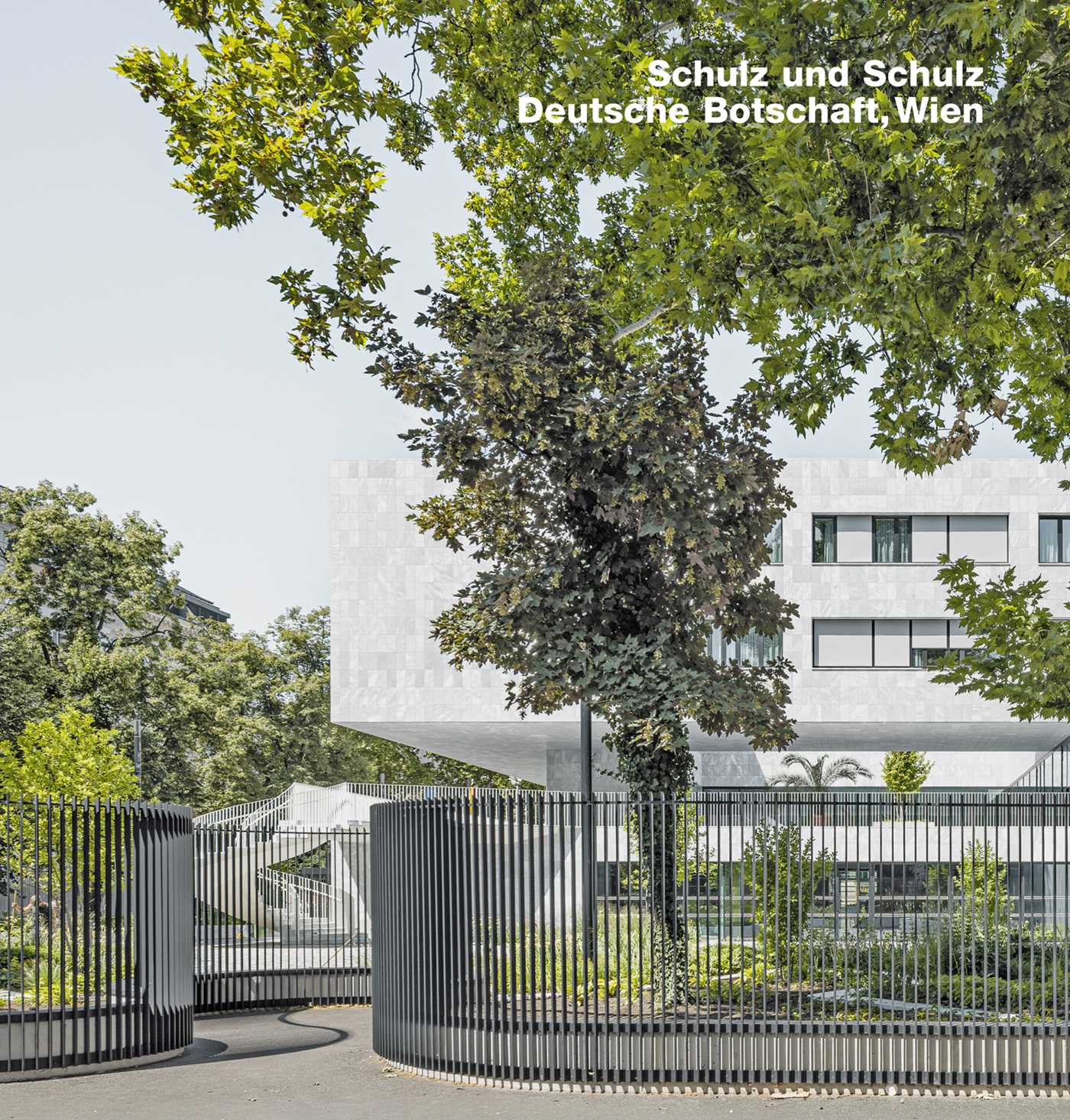
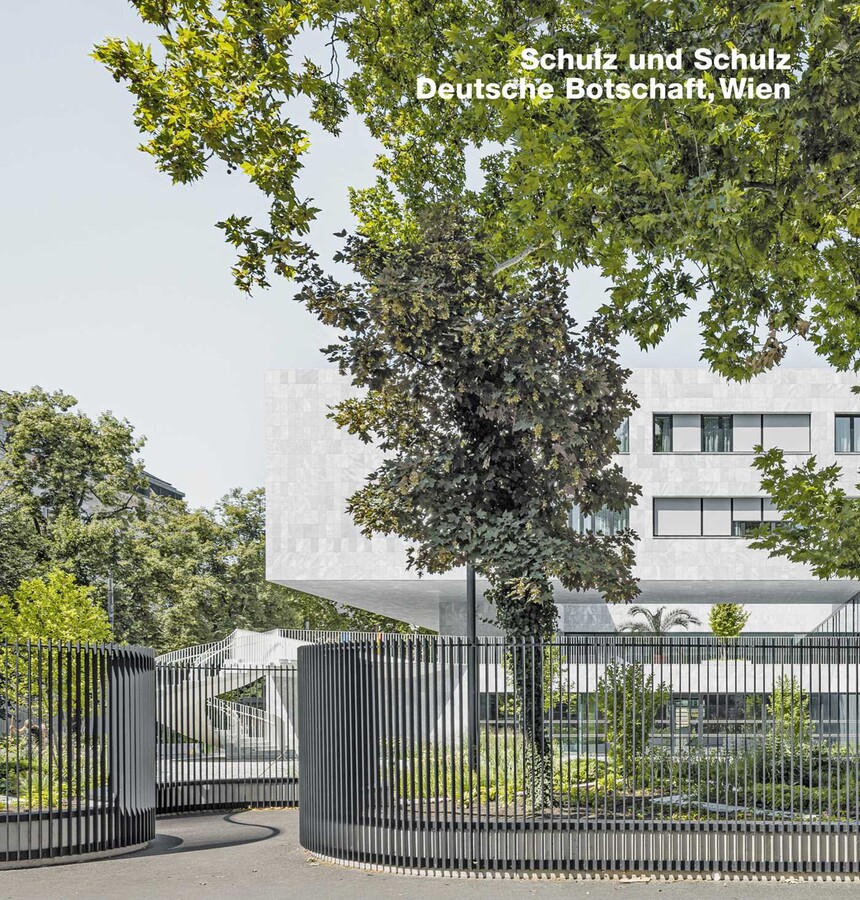
The Leipzig-based architects have designed a sharp-edged, almost abstracted standalone building that creates a stark contrast to the pleasing Gründerzeit buildings in the neigh-bourhood. It stands at the heart of the Austrian capital’s diplomatic quarter, on a plot, which is arguably the most prominent one in the area: the former gardens of Prince Metternich. Here, the development steps back from the perimeter of the block, making way for an open space, for a green area filled with valuable old trees, in which the embassy building appears almost like a contemporary palace.
There is scarcely a country where the relationship between architecture and democracy has been debated as intensely and persistently as in Germany. From the first tentative, still rather provisional buildings in Bonn to the countless major federal projects in Berlin following the relocation of the government, the question of the special role and aesthetic mandate of»democ-racy as a client« has been raised again and again. The aim has always been not merely to create square metres and fulfil functions, but also to convey political messages.
The new German Embassy in Vienna by Schulz und Schulz has also been »read« in this way. Yet it eludes any superficial symbolism.
The building is devoid of any historicising elements; the archi-tecture dispenses with any classical gesture of authority, developing asymmetrically, with no columns, no axes of symmetry, and no façade.
The Leipzig-based architects have designed a sharp-edged, almost abstracted standalone building that creates a stark contrast to the pleasing Gründerzeit buildings in the neigh-bourhood. It stands at the heart of the Austrian capital’s diplomatic quarter, on a plot, which is arguably the most prominent one in the area: the former gardens of Prince Metternich. Here, the development steps back from the perimeter of the block, making way for an open space, for a green area filled with valuable old trees, in which the embassy building appears almost like a contemporary palace.
There is scarcely a country where the relationship between architecture and democracy has been debated as intensely and persistently as in Germany. From the first tentative, still rather provisional buildings in Bonn to the countless major federal projects in Berlin following the relocation of the government, the question of the special role and aesthetic mandate of»democ-racy as a client« has been raised again and again. The aim has always been not merely to create square metres and fulfil functions, but also to convey political messages.
The new German Embassy in Vienna by Schulz und Schulz has also been »read« in this way. Yet it eludes any superficial symbolism.
The building is devoid of any historicising elements; the archi-tecture dispenses with any classical gesture of authority, developing asymmetrically, with no columns, no axes of symmetry, and no façade.
The Leipzig-based architects have designed a sharp-edged, almost abstracted standalone building that creates a stark contrast to the pleasing Gründerzeit buildings in the neigh-bourhood. It stands at the heart of the Austrian capital’s diplomatic quarter, on a plot, which is arguably the most prominent one in the area: the former gardens of Prince Metternich. Here, the development steps back from the perimeter of the block, making way for an open space, for a green area filled with valuable old trees, in which the embassy building appears almost like a contemporary palace.
Product Details
- Publisher: Edition Axel Menges (January 25, 2027)
- Length: 48 pages
- ISBN13: 9783932565892
Browse Related Books
Resources and Downloads
High Resolution Images
-
Book Cover Image (jpg): Schulz und Schulz, Deutsche Botschaft, Wien
Hardcover 9783932565892