

Plus, receive recommendations and exclusive offers on all of your favorite books and authors from Simon & Schuster.
0:00 /
LIST PRICE $10.99
PRICE MAY VARY BY RETAILER
Digital products purchased on SimonandSchuster.com must be read on the Simon & Schuster Books app. Learn more.
Free shipping when you spend $40. Terms apply.
Buy from Other Retailers
Table of Contents
About The Book
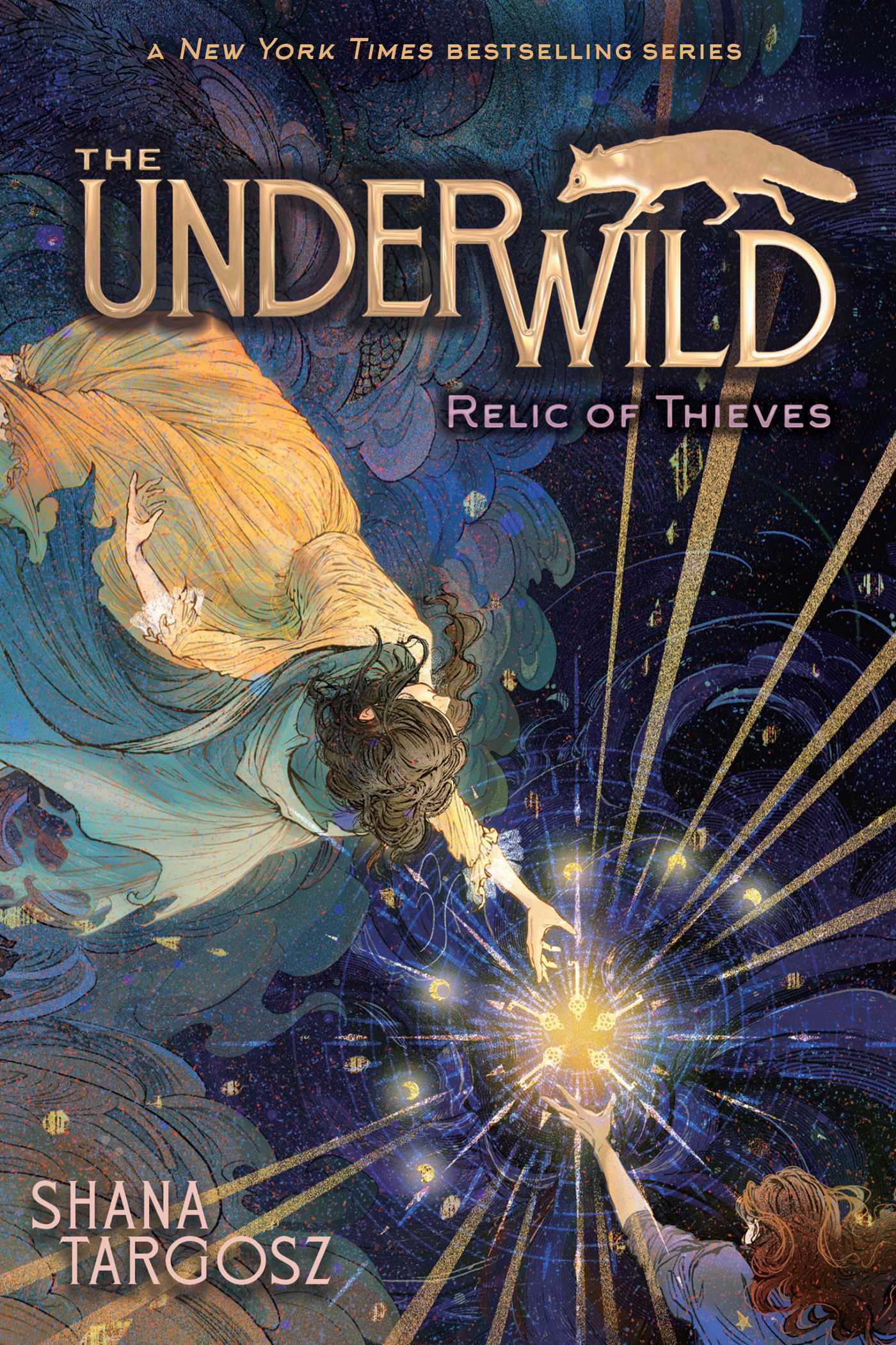
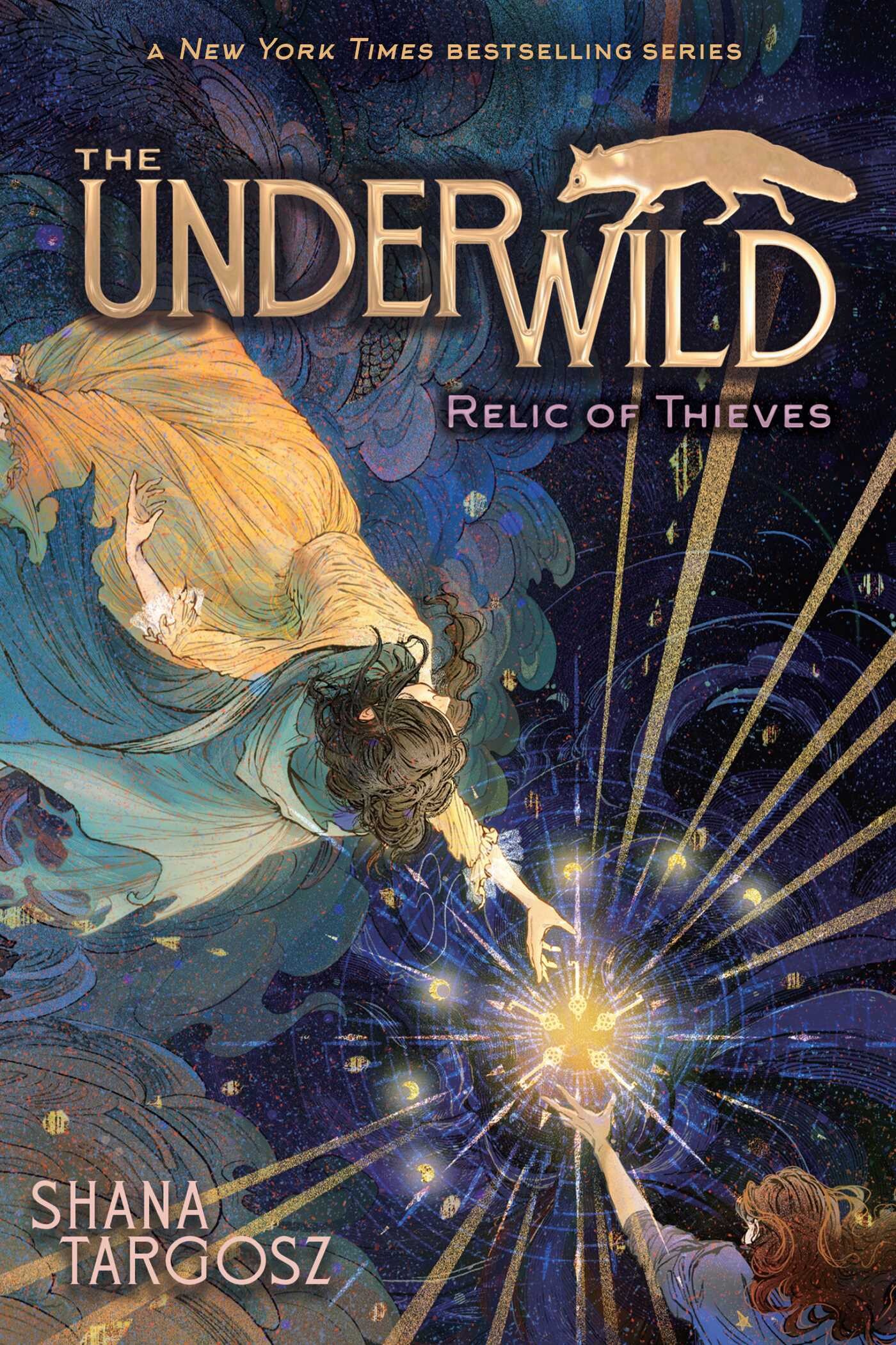
An ordinary girl’s longing to return to the way things were sets off a chain of events that lands her and her best friend in the Underwild in this “captivating” (Kirkus Reviews, starred review) second book in the New York Times bestselling middle grade fantasy series The Underwild.
The best ways Anya knows how to cope with the struggles life throws her way is to keep her head down, stay invisible, and stick close to her best friend, Lizzie. Lizzie has been Anya’s rock since second grade. Together, they pretend the world away. But when Lizzie moves out of state, Anya is left adrift and desperately lonely.
One day, Anya follows a strange girl home from school and is shocked to see her go into the home of the woman who everyone in town swears is a witch. As Anya spies on the pair, she realizes the woman really does have magic—including a set of magical keys that can deliver you anywhere you want to go…keys that could reunite Anya with Lizzie. Anya has seen all she needs to; as soon as she has the chance, she steals the keys.
But magic always has a price. The keys do bring Anya to Lizzie, but then the girls are transported to the dark and chaotic world of the Underwild. Before long, Lizzie is snatched away by a terrible creature! Now wracked with guilt and paralyzed by fear, Anya has no choice but to trust the odd girl from school, Senka, when she unexpectedly shows up and offers to help. But can Anya find the bravery locked away deep inside herself in time to rescue her friend?
The best ways Anya knows how to cope with the struggles life throws her way is to keep her head down, stay invisible, and stick close to her best friend, Lizzie. Lizzie has been Anya’s rock since second grade. Together, they pretend the world away. But when Lizzie moves out of state, Anya is left adrift and desperately lonely.
One day, Anya follows a strange girl home from school and is shocked to see her go into the home of the woman who everyone in town swears is a witch. As Anya spies on the pair, she realizes the woman really does have magic—including a set of magical keys that can deliver you anywhere you want to go…keys that could reunite Anya with Lizzie. Anya has seen all she needs to; as soon as she has the chance, she steals the keys.
But magic always has a price. The keys do bring Anya to Lizzie, but then the girls are transported to the dark and chaotic world of the Underwild. Before long, Lizzie is snatched away by a terrible creature! Now wracked with guilt and paralyzed by fear, Anya has no choice but to trust the odd girl from school, Senka, when she unexpectedly shows up and offers to help. But can Anya find the bravery locked away deep inside herself in time to rescue her friend?
Reading Group Guide
Get a FREE ebook by joining our mailing list today! Plus, receive recommendations for your next Book Club read.
By clicking 'Sign me up' I agree to the Terms of Use and acknowledge the Privacy Policy and Notice of Financial Incentive. Free ebook offer available to NEW US subscribers only. Offer redeemable at Simon & Schuster's ebook fulfillment partner. Must redeem within 90 days. See full terms and conditions and this month's choices.
Reading Group Guide
The Underwild #2: Relic of Thieves
By Shana Targosz
About the Book
For her whole life, Anya hasn’t felt loved or cared for, except by her best friend, Lizzie. When Lizzie and her family move away, Anya is devastated. After following a mysterious new classmate home from school, she learns that the girl lives with the witch goddess Hecate and that they have a magical set of keys that can transport a person to anywhere in the world. After Anya steals the keys to visit Lizzie, the two friends embark on an adventure that lands them in the Underworld, where Lizzie is captured by a terrifying beast. Anya soon learns that by stealing Hecate’s keys, she has become a wanted criminal in the realms of the gods. With the help of Senka, the ward of Charon, Anya faces a series of seemingly impossible tasks in order to rescue her friend and avoid being captured by the three Furies, who pursue her to face justice for her crime. Anya must summon the courage she needs to face down some of the most terrifying denizens of the Underwild; otherwise, she and her friends will be punished for eternity.
Discussion Questions
1. At the start of the story, readers learn that Anya is “perfectly happy remaining invisible” and thinks “invisibility means they won’t notice me at all.” (Chapter one) Why does Anya prefer to hide away from people? When she claims to be “perfectly happy,” do you think that’s true? Discuss situations in the story where Anya confronts her habit of hiding from people and situations that scare her or remind her of unpleasant memories. Discuss her realization in chapter thirty-three: “It isn’t worth trying to lose the bad memories if the good ones are stolen along with them.” What does this idea mean to you?
2. Anya considers herself a coward, although throughout the story she faces terrifying Underworld denizens and is placed in predicaments that test her courage. In chapter twenty-one, she confronts the Fury Alecto, demanding, “‘Leave them ALONE!’” How is the defense of another person one of the most noble acts of courage? Why do you think Anya was able to stand up to Alecto with such conviction? After the battle ends, why does Anya feel like her heart is “breaking through iron bars to grow five times bigger”? (Chapter twenty-two)
3. When readers first meet Anya, she is plagued with uncertainty and self-doubt. Over the course of the novel, how does Anya become more decisive? As her decisiveness grows, so does her courage. How are courage and decisiveness related?
4. Anya longs for someone to care for her and be proud of her accomplishments, such as the fictional stories she writes. Why is it so hard for her to believe that people, such as Senka and the Mormo Support Group, truly care about her?
5. Anya explains why she stole Hecate’s keys: “I’m terrified that if I don’t check the keys to see if there’s any truth to what Hecate claimed the keys can do, it would guarantee that I’ll never see Lizzie again.” (Chapter six) Do you think Anya made the right decision to steal the keys? According to the laws of the gods, stealing these keys is a crime that carries a horrible punishment: eternal banishment to Tartarus. Later in the story, Hades asks Zeus, “‘I’d like to know if you believe that all Law-breakers should be punished equally,’” to which Zeus replies, “‘Of course I do!’” (Chapter forty-six) Do you agree with Zeus? Why or why not?
6. Throughout the story, Anya alludes to traumatic family events that cause her to want to run and hide from anything remotely scary or anxiety-provoking, specifically how her brother verbally and physically abuses her. Discuss Anya’s conversation with Hephaestus, the god of craftsmen, in chapter thirty-three. How does the god’s willingness to share his traumatic family experience with his mother help Anya begin to face the pain of her own family situation? Discuss what Hephaestus means by his statement, “‘The terrible truth is, some people take their anger out on those around them. Especially the most vulnerable, who should be protected.’”
7. Senka wants to call on Charon to help them find Lizzie, but Anya refuses, and thinks, “I don’t want anyone else to know how badly I screwed up.” (Chapter nine) Why do you think Anya is so afraid of people knowing that she did something wrong or made a mistake? When you make a mistake, how do you usually handle it or try to make it right? What advice would you give to Anya?
8. Anya finds it difficult and scary to trust people. Discuss how she and Senka build their friendship over the course of the story, and how they learn to trust each other. In what other ways does Anya learn to trust?
9. Anya suffers from low self-esteem, although she is full of empathy. For a young person who feels uncared for, she has deep reservoirs of care for others. Discuss how Anya’s empathy, compassion, and care are revealed in the story.
10. As Senka and Anya forge a friendship, Anya begins to reveal her feelings and anxieties, sometimes inadvertently. When Anya gets upset over not being able to find Lizzie, she is gripped by a panic attack. Senka comforts her and Anya apologizes. Senka replies, “‘Don’t be sorry. You never have to be sorry for what you’re feeling.’” (Chapter sixteen) Put Senka’s remark into your own words. Why is it good advice?
11. Anya puts enormous pressure on herself for fear she will be blamed if she fails or something goes wrong. And despite these feelings, she shows remarkable courage in her efforts to find and rescue Lizzie. How do her actions begin to teach her to be kinder to herself?
12. The Mormo Support Group teaches Anya valuable lessons about what it means to be a family. Scourge says, “‘This is why the Mormo Support Group is so important, because we’re a family bound not by blood, but by something stronger.’” (Chapter twenty-one) What do you think is the “something stronger” Scourge is referring to? What is the “strange warmth” Anya feels when she realizes that she is not alone? (Chapter twenty-six)
13. Discuss why Anya feels personally connected to Hades. When Anya is inside his nightmare, she witnesses a conversation between Hades and his brother, Zeus. Zeus cruelly calls Hades miserable, to which he replies, “‘I am not miserable.’” (Chapter forty) This “lights a spark” within her. Why do you think she feels this way? How does Hades’s story mirror her own?
14. One of the themes in Relic of Thieves is the power of friendship. Discuss the various ways in which friendships grow and blossom over the course of the story, and how Anya learns to love herself by being a good friend and letting others be a friend to her. What does Anya mean when she says to Senka, “‘Your friendship saved me’?” (Chapter thirty-two)
Extension Activities
1. I Purple You. Lizzie wears a lavender heart pin inscribed with the word borahae on her denim jacket, a gift from Anya. In Korean, the word translates to “I purple you,” which is a phrase coined by a popular K-pop star that means “I’ll love you until the end of days.” (Chapter one) Think of a special person in your life. Design a pin that expresses something meaningful that you want to share with that person. It could be a simple word, a short phrase, or a word from a language other than your own, such as amie, the French word for “friend.” Choose a shape and color for your design that complements the word or has a symbolic meaning that relates.
2. D Is for Details. Anya is a writer, a storyteller. Writers pay attention to the world around them, gathering details that bring their stories to life. Spend one day carrying a journal and pen around with you: at home when you begin your day, at school, during after-school hours, and finally when you return home. Record the details of your surroundings. Look carefully, trying to notice the magical in the mundane. Use these recordings to inspire an original story. Be courageous and share your work with a friend, classmate, teacher, or trusted adult.
3. Keeper of the Keys. Anya observes Hecate’s keys up close:
They look like ordinary keys. Well, not like the keys my parents carry—these look older, and each one is a different shape. The first key is gold and has a detailed pattern within its oval head. The second one’s top is shaped like a diamond, and it sparkles like one too. The third key is thick, heavy-looking, and seems to be made of jet-black iron. The fourth key is a deep bronze color with a gear-shaped head, and the fifth key is silver, and looks as delicate as spun sugar. All of them gleam softly, like mirrors beneath starlight. Maybe not so ordinary, after all. (Chapter six)
Choose one of the keys from the description above. Imagine it more fully in your mind’s eye. Make a pencil sketch of the key as you imagine it. Add details if you wish. When you are satisfied with your design, sketch the key once more, but on an 11 x 14-inch sheet of white drawing paper. Use crayons, colored pencils, or watercolor paints to lay in color.
4. P Is for Parthenon. When Anya and Lizzie first land in the Underworld, Anya comments that the space reminds her of “‘old temples in documentaries, like when archaeologists talk about buildings in ancient Greece or something.’” (Chapter eight) Journey back in time to ancient Greece by researching its culture, including the temples and monuments they erected to their gods. To inspire your research, take this kid-friendly tour of Greek architecture: https://www.youtube.com/watch?v=5I0_EUcaU9Q
5. In Living Color. Walk through any major museum’s collection of Greek sculptures, and you’ll witness artistic marvels with at least one thing in common: they are made from white marble. What you learn in the story is that these sculptures were originally painted in vivid color to make them appear more lifelike. Explore this website from the Metropolitan Museum of Art’s exhibition: Chroma: Ancient Sculpture in Color: https://www.metmuseum.org/exhibitions/chroma/visiting-guide. Print out internet images of famous ancient sculptures. Apply color, inspired by the re-creations featured on the MMA website. Which version do you prefer?
Guide created by Colleen Carroll, literacy educator, content creator, children’s book author, and director of curriculum & instruction at an independent school in the New York metropolitan area. Learn more about Colleen at www.colleencarroll.us.
The websites referenced above are provided for informational purposes only and are not intended as an endorsement or promotion of any website. Simon & Schuster is not responsible for the functionality or content of any external website and expressly disclaims all responsibility and liability in connection therewith.
This guide has been provided by Simon & Schuster for classroom, library, and reading group use. It may be reproduced in its entirety or excerpted for these purposes. For more Simon & Schuster guides and classroom materials, please visit https://www.simonandschuster.net/m/prek12-teachers-librarians/teaching-resources
The Underwild #2: Relic of Thieves
By Shana Targosz
About the Book
For her whole life, Anya hasn’t felt loved or cared for, except by her best friend, Lizzie. When Lizzie and her family move away, Anya is devastated. After following a mysterious new classmate home from school, she learns that the girl lives with the witch goddess Hecate and that they have a magical set of keys that can transport a person to anywhere in the world. After Anya steals the keys to visit Lizzie, the two friends embark on an adventure that lands them in the Underworld, where Lizzie is captured by a terrifying beast. Anya soon learns that by stealing Hecate’s keys, she has become a wanted criminal in the realms of the gods. With the help of Senka, the ward of Charon, Anya faces a series of seemingly impossible tasks in order to rescue her friend and avoid being captured by the three Furies, who pursue her to face justice for her crime. Anya must summon the courage she needs to face down some of the most terrifying denizens of the Underwild; otherwise, she and her friends will be punished for eternity.
Discussion Questions
1. At the start of the story, readers learn that Anya is “perfectly happy remaining invisible” and thinks “invisibility means they won’t notice me at all.” (Chapter one) Why does Anya prefer to hide away from people? When she claims to be “perfectly happy,” do you think that’s true? Discuss situations in the story where Anya confronts her habit of hiding from people and situations that scare her or remind her of unpleasant memories. Discuss her realization in chapter thirty-three: “It isn’t worth trying to lose the bad memories if the good ones are stolen along with them.” What does this idea mean to you?
2. Anya considers herself a coward, although throughout the story she faces terrifying Underworld denizens and is placed in predicaments that test her courage. In chapter twenty-one, she confronts the Fury Alecto, demanding, “‘Leave them ALONE!’” How is the defense of another person one of the most noble acts of courage? Why do you think Anya was able to stand up to Alecto with such conviction? After the battle ends, why does Anya feel like her heart is “breaking through iron bars to grow five times bigger”? (Chapter twenty-two)
3. When readers first meet Anya, she is plagued with uncertainty and self-doubt. Over the course of the novel, how does Anya become more decisive? As her decisiveness grows, so does her courage. How are courage and decisiveness related?
4. Anya longs for someone to care for her and be proud of her accomplishments, such as the fictional stories she writes. Why is it so hard for her to believe that people, such as Senka and the Mormo Support Group, truly care about her?
5. Anya explains why she stole Hecate’s keys: “I’m terrified that if I don’t check the keys to see if there’s any truth to what Hecate claimed the keys can do, it would guarantee that I’ll never see Lizzie again.” (Chapter six) Do you think Anya made the right decision to steal the keys? According to the laws of the gods, stealing these keys is a crime that carries a horrible punishment: eternal banishment to Tartarus. Later in the story, Hades asks Zeus, “‘I’d like to know if you believe that all Law-breakers should be punished equally,’” to which Zeus replies, “‘Of course I do!’” (Chapter forty-six) Do you agree with Zeus? Why or why not?
6. Throughout the story, Anya alludes to traumatic family events that cause her to want to run and hide from anything remotely scary or anxiety-provoking, specifically how her brother verbally and physically abuses her. Discuss Anya’s conversation with Hephaestus, the god of craftsmen, in chapter thirty-three. How does the god’s willingness to share his traumatic family experience with his mother help Anya begin to face the pain of her own family situation? Discuss what Hephaestus means by his statement, “‘The terrible truth is, some people take their anger out on those around them. Especially the most vulnerable, who should be protected.’”
7. Senka wants to call on Charon to help them find Lizzie, but Anya refuses, and thinks, “I don’t want anyone else to know how badly I screwed up.” (Chapter nine) Why do you think Anya is so afraid of people knowing that she did something wrong or made a mistake? When you make a mistake, how do you usually handle it or try to make it right? What advice would you give to Anya?
8. Anya finds it difficult and scary to trust people. Discuss how she and Senka build their friendship over the course of the story, and how they learn to trust each other. In what other ways does Anya learn to trust?
9. Anya suffers from low self-esteem, although she is full of empathy. For a young person who feels uncared for, she has deep reservoirs of care for others. Discuss how Anya’s empathy, compassion, and care are revealed in the story.
10. As Senka and Anya forge a friendship, Anya begins to reveal her feelings and anxieties, sometimes inadvertently. When Anya gets upset over not being able to find Lizzie, she is gripped by a panic attack. Senka comforts her and Anya apologizes. Senka replies, “‘Don’t be sorry. You never have to be sorry for what you’re feeling.’” (Chapter sixteen) Put Senka’s remark into your own words. Why is it good advice?
11. Anya puts enormous pressure on herself for fear she will be blamed if she fails or something goes wrong. And despite these feelings, she shows remarkable courage in her efforts to find and rescue Lizzie. How do her actions begin to teach her to be kinder to herself?
12. The Mormo Support Group teaches Anya valuable lessons about what it means to be a family. Scourge says, “‘This is why the Mormo Support Group is so important, because we’re a family bound not by blood, but by something stronger.’” (Chapter twenty-one) What do you think is the “something stronger” Scourge is referring to? What is the “strange warmth” Anya feels when she realizes that she is not alone? (Chapter twenty-six)
13. Discuss why Anya feels personally connected to Hades. When Anya is inside his nightmare, she witnesses a conversation between Hades and his brother, Zeus. Zeus cruelly calls Hades miserable, to which he replies, “‘I am not miserable.’” (Chapter forty) This “lights a spark” within her. Why do you think she feels this way? How does Hades’s story mirror her own?
14. One of the themes in Relic of Thieves is the power of friendship. Discuss the various ways in which friendships grow and blossom over the course of the story, and how Anya learns to love herself by being a good friend and letting others be a friend to her. What does Anya mean when she says to Senka, “‘Your friendship saved me’?” (Chapter thirty-two)
Extension Activities
1. I Purple You. Lizzie wears a lavender heart pin inscribed with the word borahae on her denim jacket, a gift from Anya. In Korean, the word translates to “I purple you,” which is a phrase coined by a popular K-pop star that means “I’ll love you until the end of days.” (Chapter one) Think of a special person in your life. Design a pin that expresses something meaningful that you want to share with that person. It could be a simple word, a short phrase, or a word from a language other than your own, such as amie, the French word for “friend.” Choose a shape and color for your design that complements the word or has a symbolic meaning that relates.
2. D Is for Details. Anya is a writer, a storyteller. Writers pay attention to the world around them, gathering details that bring their stories to life. Spend one day carrying a journal and pen around with you: at home when you begin your day, at school, during after-school hours, and finally when you return home. Record the details of your surroundings. Look carefully, trying to notice the magical in the mundane. Use these recordings to inspire an original story. Be courageous and share your work with a friend, classmate, teacher, or trusted adult.
3. Keeper of the Keys. Anya observes Hecate’s keys up close:
They look like ordinary keys. Well, not like the keys my parents carry—these look older, and each one is a different shape. The first key is gold and has a detailed pattern within its oval head. The second one’s top is shaped like a diamond, and it sparkles like one too. The third key is thick, heavy-looking, and seems to be made of jet-black iron. The fourth key is a deep bronze color with a gear-shaped head, and the fifth key is silver, and looks as delicate as spun sugar. All of them gleam softly, like mirrors beneath starlight. Maybe not so ordinary, after all. (Chapter six)
Choose one of the keys from the description above. Imagine it more fully in your mind’s eye. Make a pencil sketch of the key as you imagine it. Add details if you wish. When you are satisfied with your design, sketch the key once more, but on an 11 x 14-inch sheet of white drawing paper. Use crayons, colored pencils, or watercolor paints to lay in color.
4. P Is for Parthenon. When Anya and Lizzie first land in the Underworld, Anya comments that the space reminds her of “‘old temples in documentaries, like when archaeologists talk about buildings in ancient Greece or something.’” (Chapter eight) Journey back in time to ancient Greece by researching its culture, including the temples and monuments they erected to their gods. To inspire your research, take this kid-friendly tour of Greek architecture: https://www.youtube.com/watch?v=5I0_EUcaU9Q
5. In Living Color. Walk through any major museum’s collection of Greek sculptures, and you’ll witness artistic marvels with at least one thing in common: they are made from white marble. What you learn in the story is that these sculptures were originally painted in vivid color to make them appear more lifelike. Explore this website from the Metropolitan Museum of Art’s exhibition: Chroma: Ancient Sculpture in Color: https://www.metmuseum.org/exhibitions/chroma/visiting-guide. Print out internet images of famous ancient sculptures. Apply color, inspired by the re-creations featured on the MMA website. Which version do you prefer?
Guide created by Colleen Carroll, literacy educator, content creator, children’s book author, and director of curriculum & instruction at an independent school in the New York metropolitan area. Learn more about Colleen at www.colleencarroll.us.
The websites referenced above are provided for informational purposes only and are not intended as an endorsement or promotion of any website. Simon & Schuster is not responsible for the functionality or content of any external website and expressly disclaims all responsibility and liability in connection therewith.
This guide has been provided by Simon & Schuster for classroom, library, and reading group use. It may be reproduced in its entirety or excerpted for these purposes. For more Simon & Schuster guides and classroom materials, please visit https://www.simonandschuster.net/m/prek12-teachers-librarians/teaching-resources
About The Author
Charlie Chu
Shana Targosz writes about magical girls, budding friendships, ghosts who may or may not be friendly, and fiercely held hope. She is an Oregon Literary Fellow and the 2021 recipient of the Edna L. Holmes Fellowship in Young Readers Literature. Shana is the author of The Underwild series, the first book of which was an instant New York Times bestseller. When not writing or reading through a stack of books, she spends her time playing Zelda with her son, designing solo journaling games, walking her domesticated monster disguised as a Labradoodle, and dreaming up different worlds.
Product Details
- Publisher: Aladdin (March 24, 2026)
- Length: 464 pages
- ISBN13: 9781665957687
- Grades: 3 - 7
- Ages: 8 - 12
Browse Related Books
Raves and Reviews
"This is a visually rich and emotionally driven fantasy that will appeal to readers who enjoy mythological worlds, high stakes, and character-focused storytelling."
– –School Library Journal
The stellar sequel returns readers to the same vibrant, unsettling (under)world, but the outsider’s perspective makes it feel fresh. . . . A fantastic follow-up that revels in the gift of found family and the power in taking control of your own story."
–Booklist
"A captivating exploration of found family and healing through Greek mythology."
– –Kirkus, Starred Review
Resources and Downloads
High Resolution Images
-
Book Cover Image (jpg): Relic of Thieves
eBook 9781665957687
-
Author Photo (jpg): Shana Targosz Charlie Chu(0.1 MB)
Any use of an author photo must include its respective photo credit