Plus, receive recommendations and exclusive offers on all of your favorite books and authors from Simon & Schuster.
Published by Western Horseman
Distributed by Simon & Schuster
LIST PRICE $21.95
PRICE MAY VARY BY RETAILER
Get 20% off with code JULY20 plus free shipping on orders of $40 or more. Discount on physical products only. Terms apply.
Buy from Other Retailers
Table of Contents
About The Book
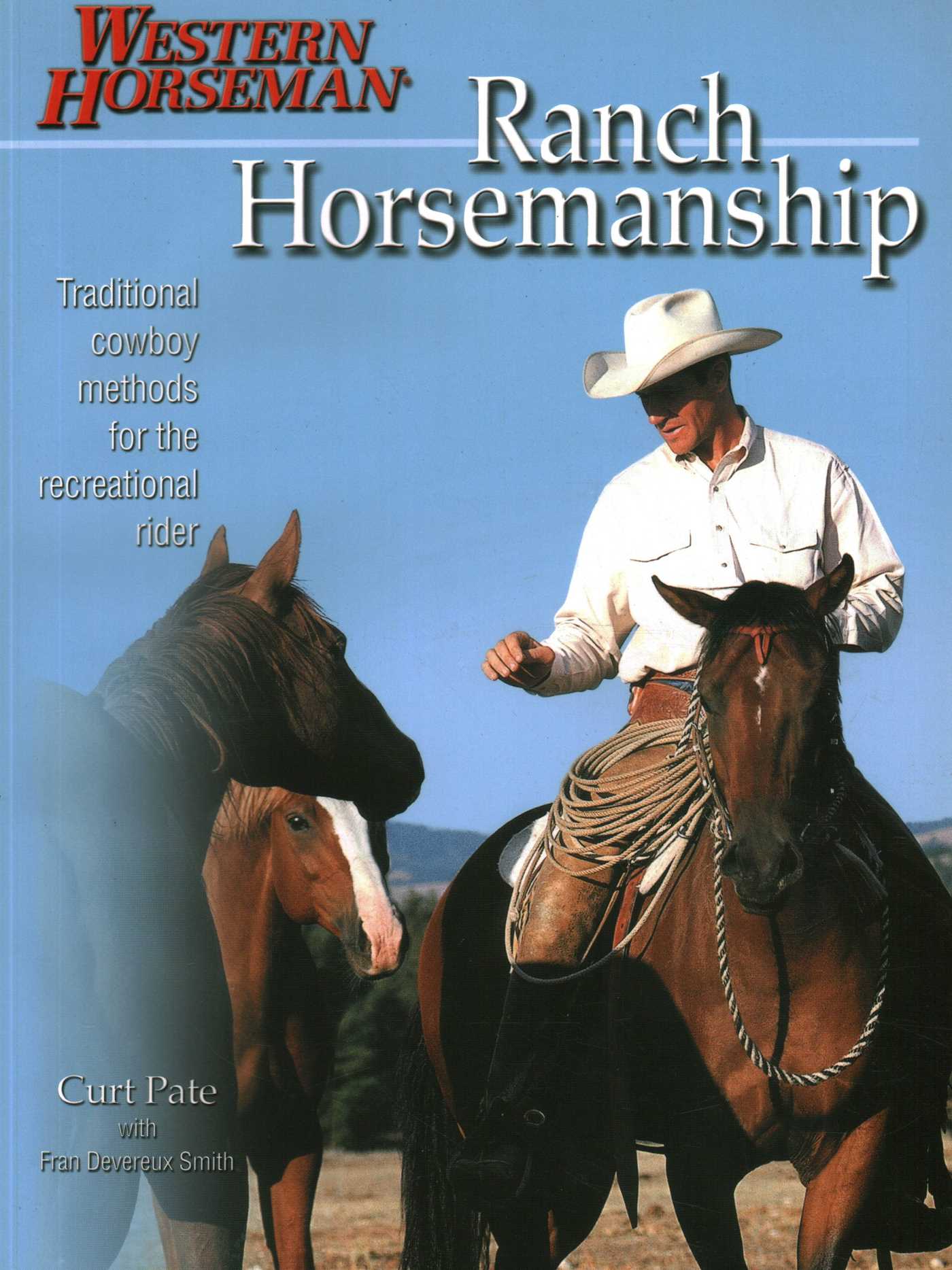
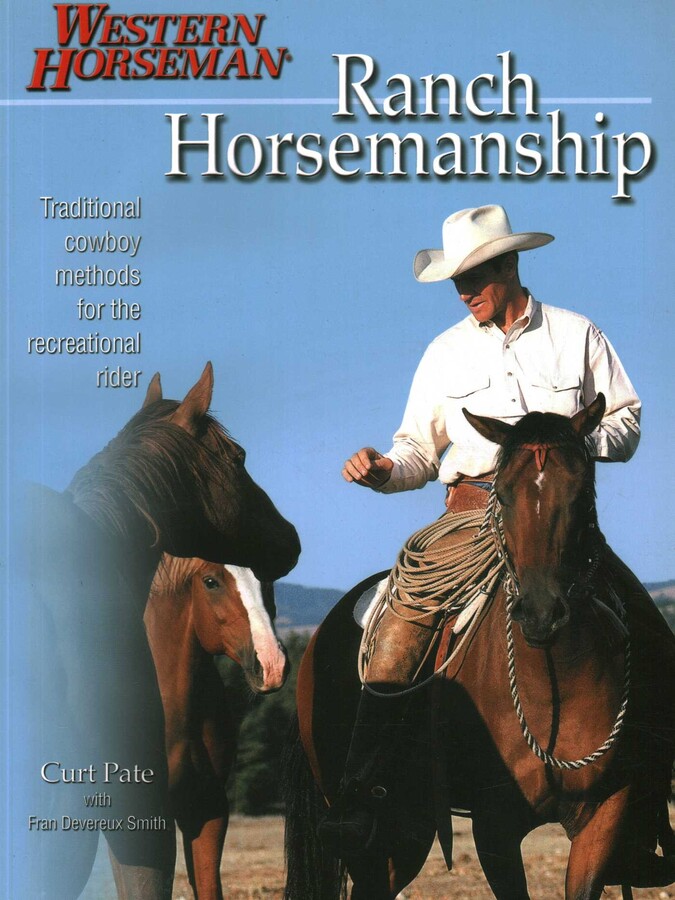
In Ranch Horsemanship with Curt Pate, the clinician, shows the reader how the working cowboy's methods develop a safer mount who's a pleasure to ride anywhere. His vitamin-C, rather penicillin, approach, Pate explains, is preventive horsemanship that helps riders prepare themselves and their horses step-by-step for whatever they might encounter in the round pen, arena, pasture and beyond. The starting point is an overview of the ranch horse's lifestyle, which provides a point of reference for the techniques that follow.
Part two addresses cowboy horsemanship and six important transitions. The ability to make upward and downward transitions, move the hindquarters left and right, and move the forehand left and right are the building blocks necessary to perform advanced maneuvers, such as rollbacks and lead changes. These six transitions also are the basis for maneuvering uphill and down through natural obstacles and for dealing with manmade obstacles, such a gates, bridges, and bikers, as addressed in "Practical Applications."
Next Pate helps the reader transfer his or her knowledge of working a horse afoot to cattle work. Even though he or she might never rope more than a bucket, Pate also walks them through rope-handling basics because that, too, is useful in developing a quiet, well-rounded mount.
The book's final selection relates how using these techniques can help children become safer, more confident riders and how cowboys use the same methods in ranch competitions. Do-it-yourself tips throughout the book give practical advice on adapting ranch-training techniques to the reader's acreage, whatever its size.
Part two addresses cowboy horsemanship and six important transitions. The ability to make upward and downward transitions, move the hindquarters left and right, and move the forehand left and right are the building blocks necessary to perform advanced maneuvers, such as rollbacks and lead changes. These six transitions also are the basis for maneuvering uphill and down through natural obstacles and for dealing with manmade obstacles, such a gates, bridges, and bikers, as addressed in "Practical Applications."
Next Pate helps the reader transfer his or her knowledge of working a horse afoot to cattle work. Even though he or she might never rope more than a bucket, Pate also walks them through rope-handling basics because that, too, is useful in developing a quiet, well-rounded mount.
The book's final selection relates how using these techniques can help children become safer, more confident riders and how cowboys use the same methods in ranch competitions. Do-it-yourself tips throughout the book give practical advice on adapting ranch-training techniques to the reader's acreage, whatever its size.
Product Details
- Publisher: Western Horseman (July 1, 2004)
- Length: 248 pages
- ISBN13: 9780911647655
Browse Related Books
Resources and Downloads
High Resolution Images
-
Book Cover Image (jpg): Ranch Horsemanship
1st Edition Trade Paperback 9780911647655