Plus, receive recommendations and exclusive offers on all of your favorite books and authors from Simon & Schuster.
Published by Zer0 Books
Distributed by Simon & Schuster
LIST PRICE $27.95
PRICE MAY VARY BY RETAILER
Get 20% off with code FALL26 plus free shipping on orders of $40 or more. Discount on physical products only. Terms apply.
Buy from Other Retailers
Table of Contents
About the Book
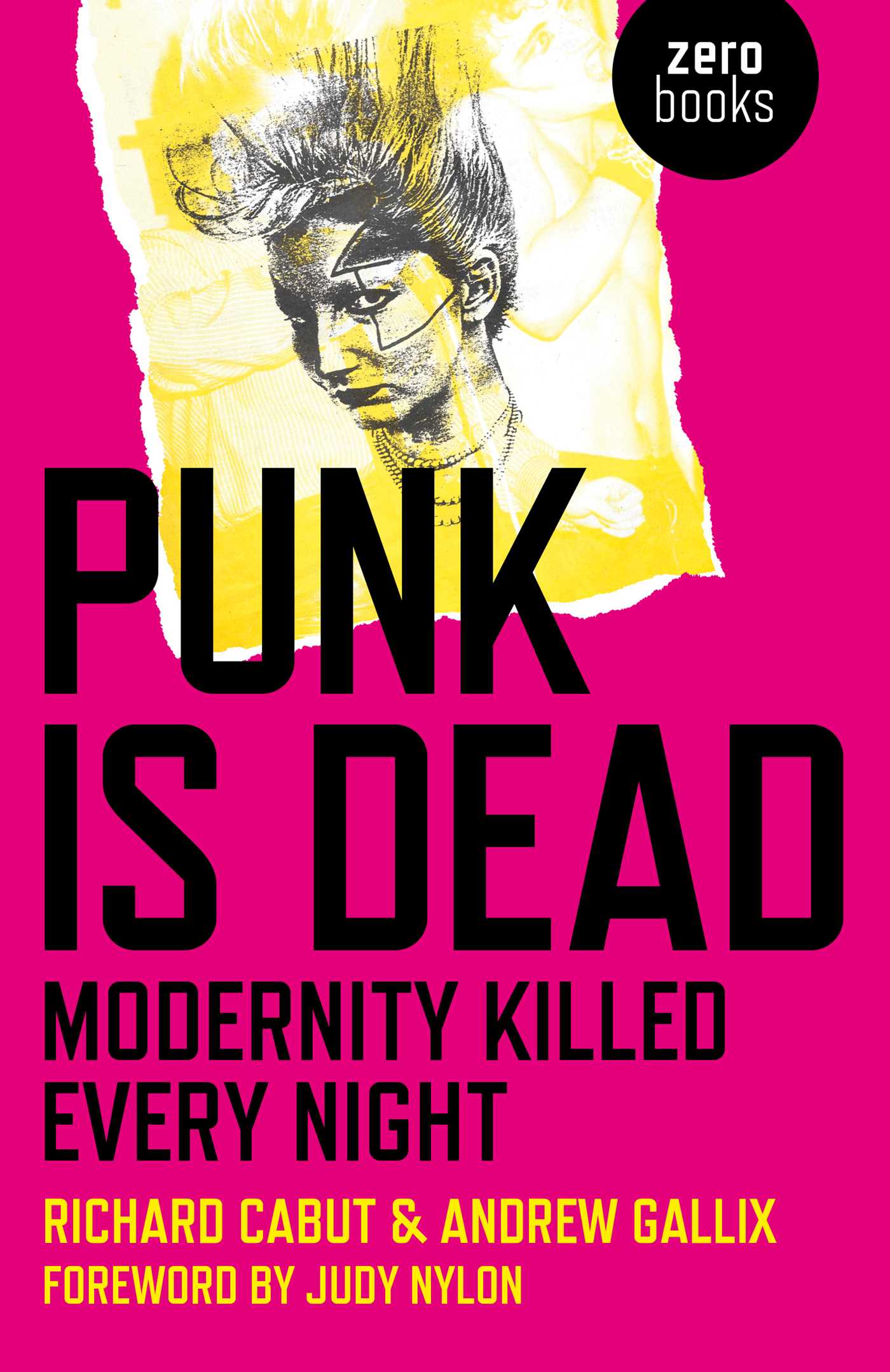
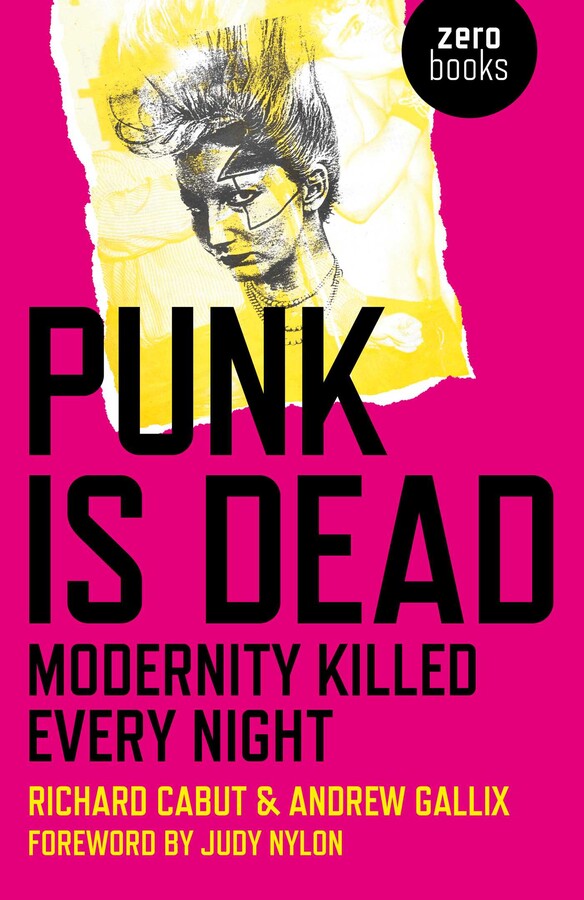
This original collection of insight, analysis and conversation charts the course of punk from its underground origins, when it was an un-formed and utterly alluring near-secret, through its rapid development. Punk is Dead: Modernity Killed Every Night takes in sex, style, politics and philosophy, filtered through punk experience, while believing in the ruins of memory, to explore a past whose essence is always elusive.
Product Details
- Publisher: Zer0 Books (October 27, 2017)
- Length: 336 pages
- ISBN13: 9781785353468
Browse Related Books
Raves and Reviews
This is a well-selected collection of essays about punk and its cultural impact, which mixes contemporary accounts with more academic reflective approaches (sometimes in the same chapter). This means it's quite uneven but that seems appropriate given its subject. You do come away with some kind of feel how exciting it must have been to be involved in what was happening in 1976 and 1977 and how quickly the excitement seems to have dissipated. A good companion to books like Jon Savage's England's Dreaming.
– Michael J, Netgalley
The book's title (Modernity Killed Every Night) quotes Jacques Vaché, friend to the surrealist André Breton. But Punk Is Dead isn't end-to-end cultural theory; there's a lot on clothes. Three strands unfurl - papers, essays and first-person accounts. Cabut and Gallix have included historical documents - such as Penny Rimbaud's 1977 essay, Banned from the Roxy, newly annotated by the Crass drummer - while Gallix argues that punk started ending when it acquired a name. Jon Savage is here, and Ted Polhemus and Vermorel. (...) As an interview with the punk turned philosopher Simon Critchley attests, punk unleashed ideas. It palpably changed suburban teenage futures, rather than ending them.
– Kitty Empire, The Observer
The specific purpose of the book is to celebrate that original evanescent wellspring of creativity when punk emerged as a "stylish boho response to the modern world of inertia and consumption" and retained the "innocence characteristic of childhood" of a movement yet to be frozen by being named or sullied by exposure to popular vitriol and acclaim alike.
– Colin Coulter, The Irish Times
Composed of essays, interviews, memoirs and manifestos by veterans of London's punk scene, Richard Cabut and Andrew Gallix's Punk is Dead is a nostalgic, intelligent homage to the brief, hazy era of “pure” London punk, before it was named, over-described and turned into another subcultural phenomenon. This golden age lasted somewhere between four and eighteen months, depending on who's recollecting, although most agree that by 1978, it was over. . . . A yearning for its own prelapsarian state was built into punk's ethos. As the punk musician-turned-philosopher Simon Critchley tells Gallix, “Because of the acute awareness of the fact that punk . . . would become a creature of the very music industry whose codes it subverted, we knew that it was going to be shortlived. And that was fine”The book is also a homage to youth and lost possibilities. In her foreword, Judy Nylon (formerly Niland) describes arriving in London in 1970 with an overnight bag and $250, wearing jean shorts and a black Borganza coat. . . . “Bands are necessarily approximations of the dreams that conjured them up”, Gallix writes in his essay “Unheard Melodies”. Punk is Dead shows the transmission of culture as a kind of lucid group dreaming. The accounts of its contributors capture the role that coincidence plays in history. Ideas can rarely be traced back to one person; they accrete and recur.. . . Gallix is eloquent in his defence of nostalgia against the cult of an amnesiac future. Punk might be not only the last great subculture in the rock and roll mode, but the most analysed and documented. Nevertheless, art and cultural histories are always reductive, and, as he writes, “the past is subtly rewritten, every nuance gradually airbrushed out of the picture”. Some of the contributors to Punk is Dead are professional writers and critics, although most of them are not. Cumulatively, their contributions evoke the texture, meaning and sensation of being young four decades ago in a now-unimaginably derelict London. They recall the smell of new vinyl records, beer, cigarettes and hair dye; the pointless squabbles with band mates; the composition of outfits; the eruption of street fights; the sweet taste of cherries picked outside a squat; and the ubiquitous brown packets of speed. . . . Some of the pieces are historical documents, while others appear for the first time in this anthology. Together, they capture the collective soul of an era.
– Chris Kraus, Times Literary Supplement
"I thoroughly enjoyed Punk is Dead: Modernity Killed Every Night (Zero Books). Edited by Richard Cabut and Andrew Gallix, this anthology of essays, interviews and personal recollections reflects on the ways in which punk was lived and experienced at the time. Gallix flips his finger at those who see nostalgia as an affliction and rightly attempts to promote the fragmented and contested legend of punk to "a summation of all the avant-garde movements of the 20th century . . . a revolution for everyday life"Deborah Levy has chosen Punk is Dead as one of her books of the year in the New Statesman
– Deborah Levy, Booker Prize-shortlisted novelist, New Statesman
Resources and Downloads
High Resolution Images
-
Book Cover Image (jpg): Punk Is Dead
Trade Paperback 9781785353468