Plus, receive recommendations and exclusive offers on all of your favorite books and authors from Simon & Schuster.
Published by Forma Edizioni
Distributed by Simon & Schuster
LIST PRICE $25.00
PRICE MAY VARY BY RETAILER
Get 20% off with code SPOOKY plus free shipping on orders of $40 or more. Discount on physical products only. Terms apply.
Buy from Other Retailers
Table of Contents
About the Book
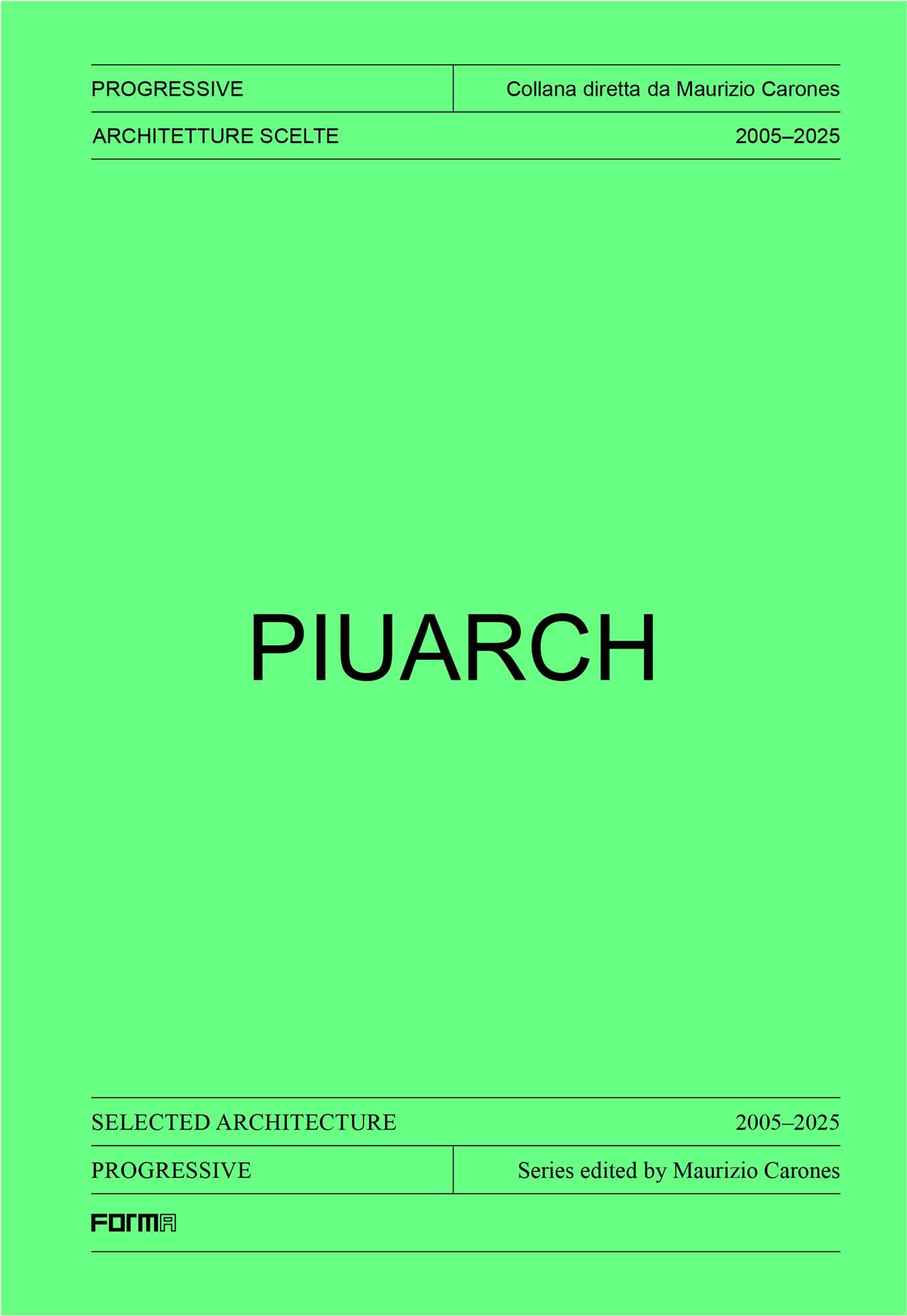
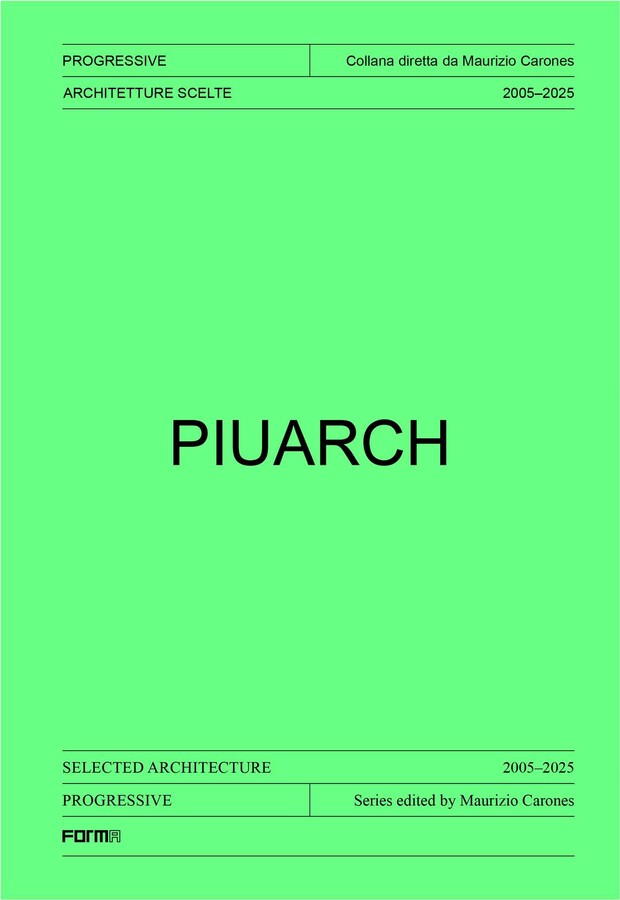
Architectural Identities, Contemporary Italian Architecture series - Piuarch
Forma Edizioni presents a new architecture series on contemporary architectural identities—a publishing project aimed at highlighting the richness and diversity of contemporary Italian architecture. The series offers
concise monographs on some of the most compelling Italian professionals, through a collection of bilingual volumes that showcase exemplary and thoughtful design work. Each book features essays, project sheets, and critical apparatuses, providing a concise yet structured overview of both research and professional practice.
“Architectural Identities – Contemporary Italian Architecture”reflects the intention to closely follow the evolution of Italian architecture, characterized by its deep-rooted connection to tradition and, at the same time, by its capacity to engage with a range of contemporary scenarios. This is fostered in part through international exchanges and dialogue, which generate renewed and relevant lines of inquiry.
In this sense, the sections on Italian architecture offer distinct perspectives—often partial—rooted in specific professional experiences, whether tied to a particular period of activity or focused on a specific theme. They are, in a way, progressive sections: technical representations used in road design, applied where a significant variation in linear development occurs.
Among the leading architectural firms in Milan and across Italy, Piuarch has built a reputation for designing spaces that are both contextually grounded and environmentally conscious. Their approach to architecture is defined by a deep sensitivity to place—whether urban or rural—and a commitment to sustainability that informs both form and function. Rather than imposing abstract gestures, their projects evolve from an attentive reading of context, materials, and user needs, resulting in works that are elegant, efficient, and socially engaged. This volume brings together a curated selection of Piuarch’s most significant projects, illustrating
the studio’s diverse output and coherent design philosophy. From the adaptive reuse of industrial heritage in the Gucci Headquarters—a landmark example of sustainable corporate architecture—to the refined spatial narratives of the Dolce & Gabbana boutiques, where materiality and atmosphere are elevated to an art form, each project reflects the firm’s ability to balance identity, innovation, and craft. Also featured is the new Snam Headquarters, a striking composition of staggered glass volumes and integrated greenery, setting a new standard for energy-conscious office design in Milan’s evolving Symbiosis district.
Through a variety of typologies—commercial spaces, corporate campuses, cultural venues, and public installations—Piuarch demonstrates a clear and consistent vision: architecture as a tool for improving the urban environment, enriching human experience, and stewarding the resources of the planet.
Forma Edizioni presents a new architecture series on contemporary architectural identities—a publishing project aimed at highlighting the richness and diversity of contemporary Italian architecture. The series offers
concise monographs on some of the most compelling Italian professionals, through a collection of bilingual volumes that showcase exemplary and thoughtful design work. Each book features essays, project sheets, and critical apparatuses, providing a concise yet structured overview of both research and professional practice.
“Architectural Identities – Contemporary Italian Architecture”reflects the intention to closely follow the evolution of Italian architecture, characterized by its deep-rooted connection to tradition and, at the same time, by its capacity to engage with a range of contemporary scenarios. This is fostered in part through international exchanges and dialogue, which generate renewed and relevant lines of inquiry.
In this sense, the sections on Italian architecture offer distinct perspectives—often partial—rooted in specific professional experiences, whether tied to a particular period of activity or focused on a specific theme. They are, in a way, progressive sections: technical representations used in road design, applied where a significant variation in linear development occurs.
Among the leading architectural firms in Milan and across Italy, Piuarch has built a reputation for designing spaces that are both contextually grounded and environmentally conscious. Their approach to architecture is defined by a deep sensitivity to place—whether urban or rural—and a commitment to sustainability that informs both form and function. Rather than imposing abstract gestures, their projects evolve from an attentive reading of context, materials, and user needs, resulting in works that are elegant, efficient, and socially engaged. This volume brings together a curated selection of Piuarch’s most significant projects, illustrating
the studio’s diverse output and coherent design philosophy. From the adaptive reuse of industrial heritage in the Gucci Headquarters—a landmark example of sustainable corporate architecture—to the refined spatial narratives of the Dolce & Gabbana boutiques, where materiality and atmosphere are elevated to an art form, each project reflects the firm’s ability to balance identity, innovation, and craft. Also featured is the new Snam Headquarters, a striking composition of staggered glass volumes and integrated greenery, setting a new standard for energy-conscious office design in Milan’s evolving Symbiosis district.
Through a variety of typologies—commercial spaces, corporate campuses, cultural venues, and public installations—Piuarch demonstrates a clear and consistent vision: architecture as a tool for improving the urban environment, enriching human experience, and stewarding the resources of the planet.
Product Details
- Publisher: Forma Edizioni (November 24, 2026)
- Length: 168 pages
- ISBN13: 9788855212335
Browse Related Books
Resources and Downloads
High Resolution Images
-
Book Cover Image (jpg): Piuarch
Trade Paperback 9788855212335