
Plus, receive recommendations and exclusive offers on all of your favorite books and authors from Simon & Schuster.
LIST PRICE $29.99
PRICE MAY VARY BY RETAILER
Digital products purchased on SimonandSchuster.com must be read on the Simon & Schuster Books app. Learn more.
Free shipping when you spend $40. Terms apply.
Buy from Other Retailers
Table of Contents
About the Book
A MOST ANTICIPATED BOOK FOR THE BOSTON GLOBE, COUNTRY LIVING, AND BOOKPAGE
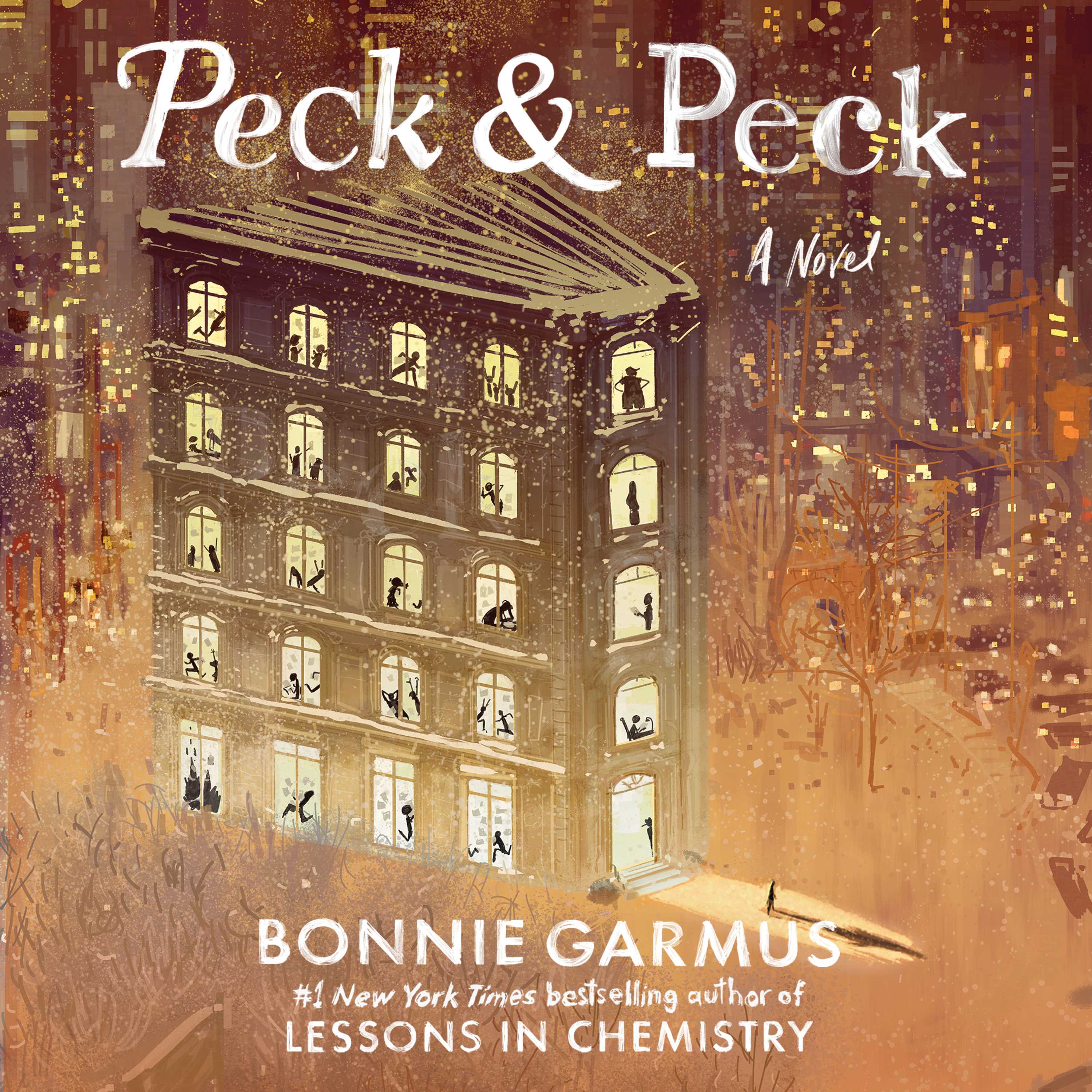
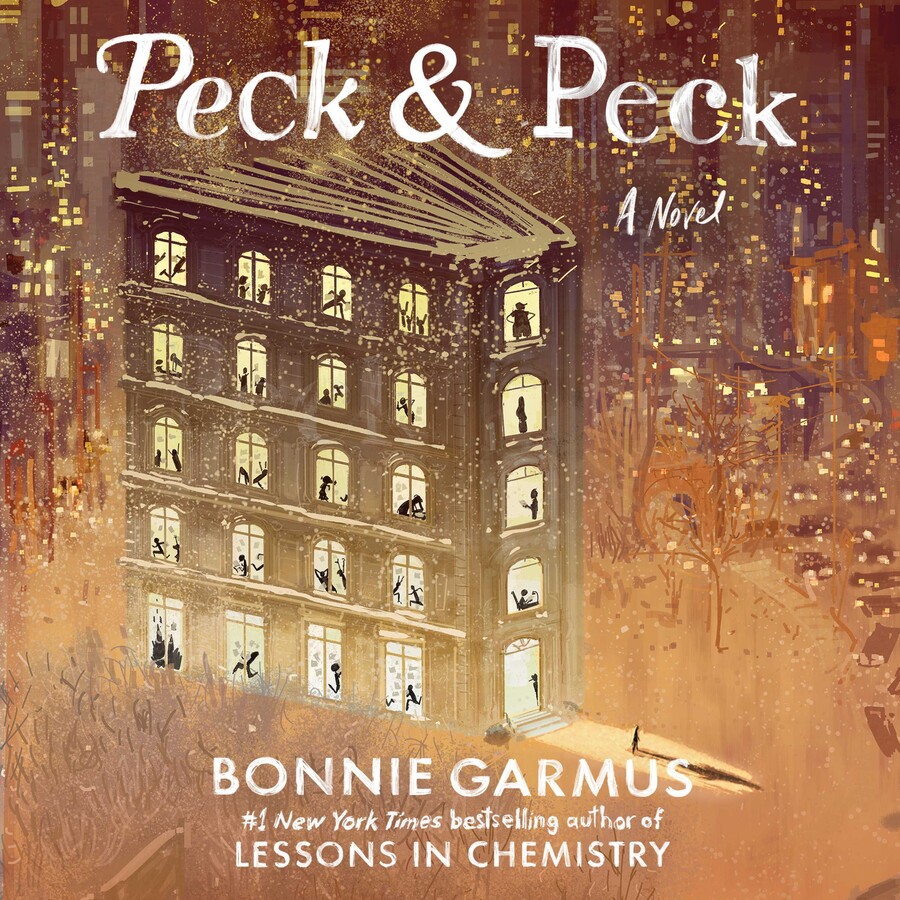
The #1 New York Times bestselling author of global sensation Lessons in Chemistry returns with an irresistible, delightful, and tender literary novel set in the publishing world of 1980s New York City about a young man whose life turns upside down when he is hired by the most prestigious, secretive, and dysfunctional poetry journal in the world: the renowned Peck & Peck.
Find originality. Reward creativity. Burn the rest.
It’s 1982, New York City. Crime is on the rise, muggings are in the streets, and Batter Gray, recent college graduate with a skill that no one wants—an “ear” for poetry—is worried about his future. While all of his friends have real jobs, he’s folding T-shirts at the Gap. As for love? No. Not unless you count Sallie Mae, the student loan tyrant. He hears from Sallie all the time.
But when Batter gets a dream job at Peck & Peck, the most prestigious poetry quarterly in the world, his life moves into the literary fast lane. Soon Batter is knee-deep in the secret war between the two Editors in Chief, the famous Peck brothers—twins and enemies—as well as being privy to the private affairs of their thirty-nine editors, whose professed mission is the same: Find originality. Reward creativity. Burn the rest.
And by burn, they mean incinerate. Because at Peck & Peck, “good” isn’t good enough, “interesting” doesn’t cut it, plagiarists aren’t tolerated, and parolees run the mailroom. Still want to submit your poem? Go with God.
Welcome to another dazzling and unforgettable novel from Bonnie Garmus. If you loved Lessons in Chemistry, you will love Peck & Peck.
The #1 New York Times bestselling author of global sensation Lessons in Chemistry returns with an irresistible, delightful, and tender literary novel set in the publishing world of 1980s New York City about a young man whose life turns upside down when he is hired by the most prestigious, secretive, and dysfunctional poetry journal in the world: the renowned Peck & Peck.
Find originality. Reward creativity. Burn the rest.
It’s 1982, New York City. Crime is on the rise, muggings are in the streets, and Batter Gray, recent college graduate with a skill that no one wants—an “ear” for poetry—is worried about his future. While all of his friends have real jobs, he’s folding T-shirts at the Gap. As for love? No. Not unless you count Sallie Mae, the student loan tyrant. He hears from Sallie all the time.
But when Batter gets a dream job at Peck & Peck, the most prestigious poetry quarterly in the world, his life moves into the literary fast lane. Soon Batter is knee-deep in the secret war between the two Editors in Chief, the famous Peck brothers—twins and enemies—as well as being privy to the private affairs of their thirty-nine editors, whose professed mission is the same: Find originality. Reward creativity. Burn the rest.
And by burn, they mean incinerate. Because at Peck & Peck, “good” isn’t good enough, “interesting” doesn’t cut it, plagiarists aren’t tolerated, and parolees run the mailroom. Still want to submit your poem? Go with God.
Welcome to another dazzling and unforgettable novel from Bonnie Garmus. If you loved Lessons in Chemistry, you will love Peck & Peck.
Appearances
OCT 3
12:00AM
IslandWood
4450 Blakely Ave NE
Bainbridge Island, WA 98110
OCT 13
6:00PM
Barnes & Noble: Union Square
33 E 17th St
New York, NY 10003
OCT 14
7:00PM
The Unitarian Universalist Congregation at Montcla
67 Church St
Montclair, NJ 07042
OCT 15
8:30PM
Toronto International Festival of Authors
93 Charles St W
Toronto, ON M5S 2C7
OCT 16
7:00PM
St. Louis County Library
1640 S Lindbergh Blvd
St. Louis, MO 63131
OCT 17
3:00PM
Books-A-Million
1810 Cumming Hwy
Suite 610
Canton, GA 30115
OCT 19
7:00PM
Calvary Presbyterian Church
2515 Fillmore St
San Francisco, CA 94115
OCT 21
7:00PM
Hanes Auditorium (Salem Academy & College)
601 S Church St
Winston-Salem, NC 27101
OCT 22
12:00AM
In Person
Keynote speaker at ASML Adult Author Series. In Conversation with Debby Applegate.
Learn MoreWilton Library Association at the Wilton Library G
137 Old Ridgefield Road
Wilton, CT 06897
OCT 23
7:00PM
Portsmouth Music Hall's Historic Theater
28 Chestnut St
Portsmouth, NH 03801
OCT 24
7:00PM
The First Parish in Cambridge
1446 Massachusetts Avenue
3 Church St Main Office
Cambridge, MA 02138
OCT 25
6:00PM
The JPT Film & Event Center
49 Touro St
Newport, RI 02840
OCT 26
7:00PM
First Unitarian Church of Philadelphia
2125 Chestnut S
Philadelphia, PA 19103
OCT 27
7:00PM
Lincoln Theatre
1215 U St NW
Washington, DC 20009
NOV 15
4:00PM
The University of San Diego
5555 Marian Way
San Diego, CA 92110
NOV 16
7:30PM
Writers Guild Theater
135 S Doheny Dr
Beverly Hills, CA 90211
NOV 17
6:00PM
First Baptist Church of Austin
901 Trinity St
Austin, TX 78701
NOV 18
7:00PM
All Souls Unitarian Church
2952 S Peoria Ave
Tulsa, OK 74114
NOV 19
6:30PM
The Langford Auditorium at Vanderbilt
2209 Garland Ave,
Nashville, TN 37232
NOV 20
7:00PM
AC Hotel Greenville
315 S Main St
Greenville, SC 29601
NOV 21
12:00AM
In Person
In conversation with Stacey Mindich (bundled)
The Miami Book Fair
300 NE Second Ave
Miami, FL 33132
NOV 23
7:00PM
Third Place Books
17171 Bothell Way NE
A200,
Lake Forest Park, WA 98155
Reading Group Guide
Get a FREE audiobook by joining our mailing list today! Plus, receive recommendations for your next Book Club read.
By clicking 'Sign me up' I agree to the Terms of Use and acknowledge the Privacy Policy and Notice of Financial Incentive. Free audiobook offer available to NEW US subscribers only. Offer redeemable at Simon & Schuster's audiobook fulfillment partner. Must redeem within 90 days. See full terms and conditions and this month's choices.
This reading group guide for PECK & PECK includes an introduction, discussion questions, and ideas for enhancing your book club. The suggested questions are intended to help your reading group find new and interesting angles and topics for your discussion. We hope that these ideas will enrich your conversation and increase your enjoyment of the book.
Introduction
Batter Gray, a recent college graduate with a skill that no one wants—an “ear” for poetry—is worried about his future. While his peers have settled on the tried-and-true—medicine, law, finance, engineering—Batter is still folding T-shirts at the Gap. Until he stumbles into a dream job at Peck & Peck, the most famous, prestigious, dysfunctional poetry quarterly in the world. Peck & Peck is everything Batter has ever wanted, but as he gets to know the company, tensions grow and political machinations rise to the surface. Caught in a web of deceit, money, power, and sibling rivalry, the quarterly seems to be taking a turn for the worse. But does it really matter? After all, it’s only poetry.
Or is it?
Topics and Questions for Discussion
1. Chapter 1 opens with “I’ve been called a thief, a rebel, an upstart, a traitor, and—maybe this one won’t come as a surprise based on the others—Prisoner 83A0956” (p. 1). How does this introduction affect your first impression of Batter’s character?
2. Rainey Gray, Batter’s mother, describes typefaces as “practical and emotional, a volatile combination that should only ever be handled by a trained professional” (p. 15). Why does Rainey believe type design is so important? Can a typeface really change minds or save lives, as she implies? How much thought do you give to the typeface you use?
3. Batter is an identical twin whose brother died at birth. How does his yearning for a brother he’s never met affect his feelings about himself? And had his twin lived, how does he imagine his life would have been different? All of us have an inner life, and some psychologists believe it’s a kind of twin we each carry inside. When you feel something “in your gut,” is that your inner twin speaking? Do you ever feel like you have an evil twin?
4. Many people believe twins always get along, but twin research proves otherwise. What causes sibling rivalry? And how does sibling rivalry affect others? A company is often compared to a family because its day-to-day activity is influenced by roles, alliances, and professional jealousies. As in a family, there is a pecking order. How much is your company like a family? How is it different?
5. When Batter goes to the Aviary for the first time, he observes the collection of eggs: “every egg is a calcified fortress, a citadel designed to withstand weight, weather, and wear. We consider them as fragile; they’re anything but” (p. 116). In other words, the eggshell, like several characters in the book, defies expectations. Which characters do the same, revealing themselves to be more than they seem? Do you think most people hide behind a shell?
6. Crime is a consistent theme throughout the book. Some crimes are committed for noble reasons—for example, when poets speak out against a fascist leader. But other crimes—bribes, plagiarism, accounting fraud—are typically byproducts of greed and/or desperation. Some believe today’s Generative AI platforms are an example of this latter type of crime because, like bribes, they make the end user complicit by promoting plagiarism as an acceptable way to get things done faster. AI is unregulated, which means none of us have a say in how it is built or used. What are your thoughts on AI regulation? Does Peck & Peck seem odd for insisting that the only way to protect a writer’s rejected work is to burn their copy? Given the way that AI scrapes without permission, does Peck & Peck seem ahead of its time? Is scraping justifiable in order for companies to form one source of knowledge? Is it okay to ignore copyright law? Finally, how do you protect what you do (e.g., research, law briefs, emails, essays, songs, books, voice, visual likenesses, family photos) from being used by AI without your permission? Is plagiarism the price of progress?
7. Batter and Paul, like Declonius and Salton, are complete opposites. Yet the brotherhood shared by Batter and Paul is a reminder that family isn’t always defined by blood. Despite their different life experiences, what makes Batter and Paul friends? And despite their common upbringing, what makes Declonius and Salton enemies? How are both pairs surprised by each other at the end?
8. Every edition of Peck & Peck is fronted by the poem “Come. Home.” Declonius explains it refers to a person’s knowledge of who they are and what they stand for—to “come home” is to return to your values. What values guide you? Do you ever feel like your values are threatened by the work you do? How well does your company, government, or school represent your values?
9. Batter is named after Batter the dog. What role do Rainey’s dog stories play in the book? And why is each story tied to a distinct psychological issue (anxiety, low self-esteem, narcissism, etc.)? Does she really suffer from “nerves,” or is it, as she says, just the opposite—that most people lack nerve? Why does she insist that Batman would be nothing without Alfred? Does every hero require help?
10. Batter proves that he has excellent first instincts, but his desire to do the right thing often puts him in harm’s way. As he says, “Doing the brave thing and doing the right thing were usually the same. But why was doing the right thing so hard?” (p. 191). Where do we see these instincts at play? What are some instances where Batter succeeds by trusting his gut?
11. The Peck & Peck building is a character in its own right. What does the building represent? Why are we drawn to things that aren’t carbon copies? Can you name a building you love?
12. Batter isn’t sure who he is, a problem, especially when money is tight. Have you ever felt like you’re waiting for your life to begin? What sorts of things keep you from knowing what you want to do? Do you think it’s harder to be a success in the humanities? What would happen if the humanities disappeared?
Enhance Your Book Club
1. Research the typefaces mentioned in the book. What is the history behind each? Do you have a favorite?
2. Choose one of the poets mentioned in the book and read five of their poems. Discuss which ones spoke to you (or didn’t) and why. Do you have a favorite poet?
3. Host your own Phone Book Party!
Introduction
Batter Gray, a recent college graduate with a skill that no one wants—an “ear” for poetry—is worried about his future. While his peers have settled on the tried-and-true—medicine, law, finance, engineering—Batter is still folding T-shirts at the Gap. Until he stumbles into a dream job at Peck & Peck, the most famous, prestigious, dysfunctional poetry quarterly in the world. Peck & Peck is everything Batter has ever wanted, but as he gets to know the company, tensions grow and political machinations rise to the surface. Caught in a web of deceit, money, power, and sibling rivalry, the quarterly seems to be taking a turn for the worse. But does it really matter? After all, it’s only poetry.
Or is it?
Topics and Questions for Discussion
1. Chapter 1 opens with “I’ve been called a thief, a rebel, an upstart, a traitor, and—maybe this one won’t come as a surprise based on the others—Prisoner 83A0956” (p. 1). How does this introduction affect your first impression of Batter’s character?
2. Rainey Gray, Batter’s mother, describes typefaces as “practical and emotional, a volatile combination that should only ever be handled by a trained professional” (p. 15). Why does Rainey believe type design is so important? Can a typeface really change minds or save lives, as she implies? How much thought do you give to the typeface you use?
3. Batter is an identical twin whose brother died at birth. How does his yearning for a brother he’s never met affect his feelings about himself? And had his twin lived, how does he imagine his life would have been different? All of us have an inner life, and some psychologists believe it’s a kind of twin we each carry inside. When you feel something “in your gut,” is that your inner twin speaking? Do you ever feel like you have an evil twin?
4. Many people believe twins always get along, but twin research proves otherwise. What causes sibling rivalry? And how does sibling rivalry affect others? A company is often compared to a family because its day-to-day activity is influenced by roles, alliances, and professional jealousies. As in a family, there is a pecking order. How much is your company like a family? How is it different?
5. When Batter goes to the Aviary for the first time, he observes the collection of eggs: “every egg is a calcified fortress, a citadel designed to withstand weight, weather, and wear. We consider them as fragile; they’re anything but” (p. 116). In other words, the eggshell, like several characters in the book, defies expectations. Which characters do the same, revealing themselves to be more than they seem? Do you think most people hide behind a shell?
6. Crime is a consistent theme throughout the book. Some crimes are committed for noble reasons—for example, when poets speak out against a fascist leader. But other crimes—bribes, plagiarism, accounting fraud—are typically byproducts of greed and/or desperation. Some believe today’s Generative AI platforms are an example of this latter type of crime because, like bribes, they make the end user complicit by promoting plagiarism as an acceptable way to get things done faster. AI is unregulated, which means none of us have a say in how it is built or used. What are your thoughts on AI regulation? Does Peck & Peck seem odd for insisting that the only way to protect a writer’s rejected work is to burn their copy? Given the way that AI scrapes without permission, does Peck & Peck seem ahead of its time? Is scraping justifiable in order for companies to form one source of knowledge? Is it okay to ignore copyright law? Finally, how do you protect what you do (e.g., research, law briefs, emails, essays, songs, books, voice, visual likenesses, family photos) from being used by AI without your permission? Is plagiarism the price of progress?
7. Batter and Paul, like Declonius and Salton, are complete opposites. Yet the brotherhood shared by Batter and Paul is a reminder that family isn’t always defined by blood. Despite their different life experiences, what makes Batter and Paul friends? And despite their common upbringing, what makes Declonius and Salton enemies? How are both pairs surprised by each other at the end?
8. Every edition of Peck & Peck is fronted by the poem “Come. Home.” Declonius explains it refers to a person’s knowledge of who they are and what they stand for—to “come home” is to return to your values. What values guide you? Do you ever feel like your values are threatened by the work you do? How well does your company, government, or school represent your values?
9. Batter is named after Batter the dog. What role do Rainey’s dog stories play in the book? And why is each story tied to a distinct psychological issue (anxiety, low self-esteem, narcissism, etc.)? Does she really suffer from “nerves,” or is it, as she says, just the opposite—that most people lack nerve? Why does she insist that Batman would be nothing without Alfred? Does every hero require help?
10. Batter proves that he has excellent first instincts, but his desire to do the right thing often puts him in harm’s way. As he says, “Doing the brave thing and doing the right thing were usually the same. But why was doing the right thing so hard?” (p. 191). Where do we see these instincts at play? What are some instances where Batter succeeds by trusting his gut?
11. The Peck & Peck building is a character in its own right. What does the building represent? Why are we drawn to things that aren’t carbon copies? Can you name a building you love?
12. Batter isn’t sure who he is, a problem, especially when money is tight. Have you ever felt like you’re waiting for your life to begin? What sorts of things keep you from knowing what you want to do? Do you think it’s harder to be a success in the humanities? What would happen if the humanities disappeared?
Enhance Your Book Club
1. Research the typefaces mentioned in the book. What is the history behind each? Do you have a favorite?
2. Choose one of the poets mentioned in the book and read five of their poems. Discuss which ones spoke to you (or didn’t) and why. Do you have a favorite poet?
3. Host your own Phone Book Party!
About the Author
Photograph by Moya Nolan
Bonnie Garmus is a coffee-dependent American novelist. Her debut novel, Lessons in Chemistry, was a Good Morning America Book Club Pick, a Goodreads Choice Best Book of the Year, spent nearly two years on the New York Times bestseller list and was named by Times readers as one of the top 100 books of the 21st century. Translated into over forty languages, Lessons in Chemistry was honored with sixteen international literary awards and made into an Apple TV limited series. Peck & Peck is her second novel.
About the Reader
Seth Numrich won the Evening Standard Award for Outstanding Newcomer for Sweet Bird of Youth at The Old Vic. Additional Broadway and Off-Broadway credits include: The Merchant of Venice (Broadhurst Theatre), War Horse (Vivian Beaumont), Golden Boy (Lincoln Center), Travesties (American Airlines), Orpheus Descending (Theatr Clwyd), and Fathers and Sons (Donmar Warehouse). Numrich starred in four seasons of the AMC drama Turn: Washington’s Spies and appeared opposite Daniel Radcliffe in the film Imperium.
Product Details
- Publisher: Simon & Schuster Audio (October 13, 2026)
- Runtime: 17 hours and 8 minutes
- ISBN13: 9781668193181
Browse Related Books
Resources and Downloads
High Resolution Images
-
Book Cover Image (jpg): Peck & Peck
Unabridged Audio Download 9781668193181
-
Author Photo (jpg): Bonnie Garmus Photograph by Moya Nolan(0.1 MB)
Any use of an author photo must include its respective photo credit