
Plus, receive recommendations and exclusive offers on all of your favorite books and authors from Simon & Schuster.
0:00 /
LIST PRICE $18.99
PRICE MAY VARY BY RETAILER
Digital products purchased on SimonandSchuster.com must be read on the Simon & Schuster Books app. Learn more.
Free shipping when you spend $40. Terms apply.
Buy from Other Retailers
Table of Contents
Listen To An Excerpt
0:00 /
About The Book
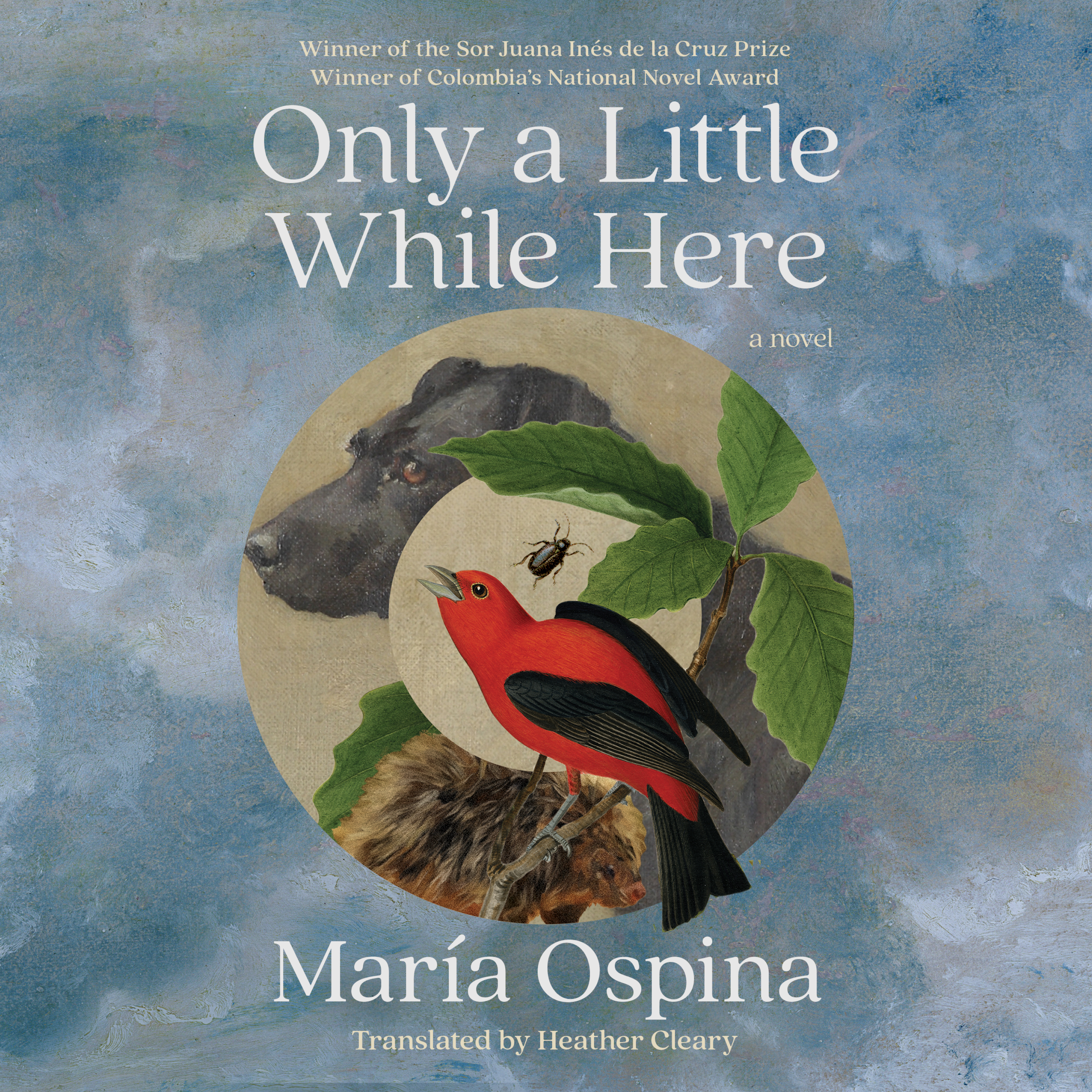
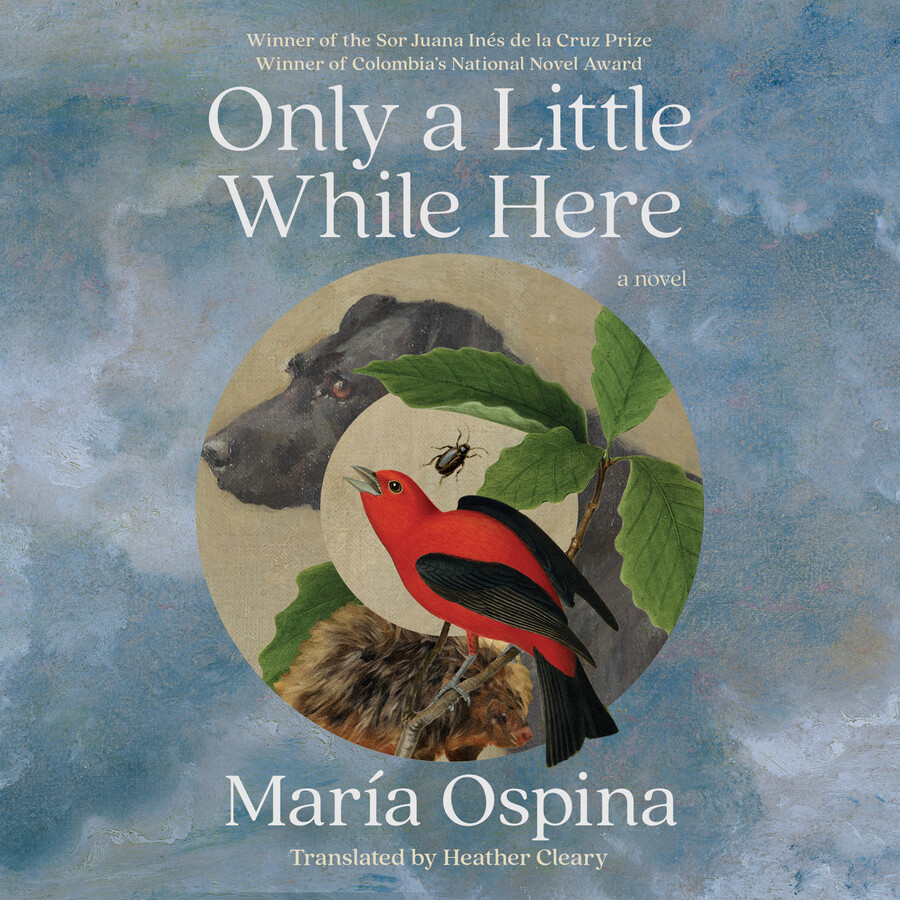
Winner of the Sor Juana Inés de la Cruz Prize • Winner of Colombia’s National Novel Award
This prizewinning novel interweaves four animal odysseys in a gripping, adventurous meditation on migration and displacement in the inextricable human and natural worlds.
In Only a Little While Here, award-winning author María Ospina evokes the gratification to be found through close, humble observation of nature. With characteristic precision and intensity, Ospina trains our attention on the lives of five creatures: a migratory songbird dazzled by city lights, an orphaned porcupine saved by kindness, two dogs grieving the loss of their human companions, and a determined beetle transported to a vast, unimaginable world. The surprising drama of their lives reveals the fragility and power of belonging, and what it means to create—or lose—a home. Along the way, our narrator models the attentiveness needed to mend the rift between humans and non-human creatures and celebrates animals’ often-overlooked status as witnesses of our shared world.
Alive with eagle-eyed curiosity, Only a Little While Here is ecological fiction at its most soul stirring.
This prizewinning novel interweaves four animal odysseys in a gripping, adventurous meditation on migration and displacement in the inextricable human and natural worlds.
In Only a Little While Here, award-winning author María Ospina evokes the gratification to be found through close, humble observation of nature. With characteristic precision and intensity, Ospina trains our attention on the lives of five creatures: a migratory songbird dazzled by city lights, an orphaned porcupine saved by kindness, two dogs grieving the loss of their human companions, and a determined beetle transported to a vast, unimaginable world. The surprising drama of their lives reveals the fragility and power of belonging, and what it means to create—or lose—a home. Along the way, our narrator models the attentiveness needed to mend the rift between humans and non-human creatures and celebrates animals’ often-overlooked status as witnesses of our shared world.
Alive with eagle-eyed curiosity, Only a Little While Here is ecological fiction at its most soul stirring.
Reading Group Guide
Get a FREE audiobook by joining our mailing list today! Plus, receive recommendations for your next Book Club read.
By clicking 'Sign me up' I agree to the Terms of Use and acknowledge the Privacy Policy and Notice of Financial Incentive. Free audiobook offer available to NEW US subscribers only. Offer redeemable at Simon & Schuster's audiobook fulfillment partner. Must redeem within 90 days. See full terms and conditions and this month's choices.
This reading group guide for Only a Little While Here includes an introduction, discussion questions, and ideas for enhancing your book club. The suggested questions are intended to help your reading group find new and interesting angles and topics for your discussion. We hope that these ideas will enrich your conversation and increase your enjoyment of the book.
Introduction
In Only a Little While Here, María Ospina trains our attention on the lives of five creatures: a migratory songbird dazzled by city lights, an orphaned porcupine saved by kindness, two dogs grieving the loss of their human companions, and a determined beetle transported to a vast, unimaginable world. The surprising drama of their lives reveals the fragility and power of belonging, and what it means to create—or lose—a home. Along the way, our narrator models the attentiveness needed to mend the rift between humans and non-human creatures and celebrates animals’ often-overlooked status as witnesses of our shared world.
Topics & Questions for Discussion
Only a Little While Here centers on a tanager, a porcupine, a beetle, and two dogs. Why do you think the author chose these animals specifically?
Pay attention to the language the narrator uses to present the perspectives of the animal characters. What does this language do? How does it capture the experience of the animals? When does the narrator eschew conditional language, and why?
The animals’ characters’ paths intersect with those of several humans. Consider the range of humans represented in this book. What conclusions did you draw about them? What conclusions are we meant to draw? Which humans are depicted in the most favorable light?
Hierarchy emerges as a theme. We see the human characters impose it on one another, we see humans impose it on animals, and we see it exist among the animals: “Certainly the june bug . . . will bequeath some of her vitality to the sharp song of the bird” (page 112). Discuss how hierarchy functions or is made to function.
How do these characters experience displacement? What are the emotional and physical effects of it?
When are the human characters and animal characters in kinship, and when are they at odds? What drives conflict between the two?
On page 44, one of the human characters considers how birds “erode his long-standing military faith in maps, machines, and orders.” How does nature shape space throughout the book? Physical space? Mental space?
On page 63, the scientist “will be sorry they can’t cross the border to measure his wild cashew”; the Emberá shaman “will be sorry he can’t run his hand over it fondly.” How do these approaches contrast, and what are the consequences of them? How are we meant to understand indigeneity throughout the book?
A human character believes that seeing a hummingbird in flight can “improve your fate” (page 67). How do the human characters in the book generate meaning from nature? How does this meaning generation serve them? Is anything lost amid it?
The narrator tells us that “the reciprocal coming and going between two lands isn’t a simple thing” (page 83). Discuss this line. How do borders factor into the narrative? What does freedom look like? Are birds—untethered to land, to one region—truly free?
The woman on page 165 looks at Kati and “remembers how admirable it is to relieve another living creature of its solitude.” Conversely, a different woman on page 77 “chides herself for assuming that this unfamiliar bird is begging for her help and remembers all the intrepid creatures who have escaped their cages.” In what ways do animals defy our presumptuousness?
Consider the woman who brought the porcupine to the rescue center after feeding it human breast milk, as well as the woman who adopted Kati from the kill shelter. How did their intervention shape these animals’ fates? Were they right to intervene? Does it matter?
Readers know the dogs as Kati and Mona, and Kati and Mona are renamed a couple of times: “The woman thinks to herself that Lady is a terrible name and decides to change it right away” (page 150). Why are their “original” names presented as inherent? How does knowing the dogs as “Kati” and “Mona” factor into our reaction to the dogs’ renamings?
This book features a chorus of epigraphs before each animal’s perspective. How do these epigraphs inform the rest of the text? Why do you think the author made the selections she did?
Analyze the title. How does this book invite us to perhaps think differently about existence on Earth?
Enhance Your Book Club
Think about current-event discourse surrounding migration. How might this book make you think about this discourse differently?
Write a short story from the perspective of one of the animals in your neighborhood.
Discuss other works you’ve encountered that are in conversation with this one. If you could add another entry to Ospina’s chorus of epigraphs, what would it be?
Introduction
In Only a Little While Here, María Ospina trains our attention on the lives of five creatures: a migratory songbird dazzled by city lights, an orphaned porcupine saved by kindness, two dogs grieving the loss of their human companions, and a determined beetle transported to a vast, unimaginable world. The surprising drama of their lives reveals the fragility and power of belonging, and what it means to create—or lose—a home. Along the way, our narrator models the attentiveness needed to mend the rift between humans and non-human creatures and celebrates animals’ often-overlooked status as witnesses of our shared world.
Topics & Questions for Discussion
Only a Little While Here centers on a tanager, a porcupine, a beetle, and two dogs. Why do you think the author chose these animals specifically?
Pay attention to the language the narrator uses to present the perspectives of the animal characters. What does this language do? How does it capture the experience of the animals? When does the narrator eschew conditional language, and why?
The animals’ characters’ paths intersect with those of several humans. Consider the range of humans represented in this book. What conclusions did you draw about them? What conclusions are we meant to draw? Which humans are depicted in the most favorable light?
Hierarchy emerges as a theme. We see the human characters impose it on one another, we see humans impose it on animals, and we see it exist among the animals: “Certainly the june bug . . . will bequeath some of her vitality to the sharp song of the bird” (page 112). Discuss how hierarchy functions or is made to function.
How do these characters experience displacement? What are the emotional and physical effects of it?
When are the human characters and animal characters in kinship, and when are they at odds? What drives conflict between the two?
On page 44, one of the human characters considers how birds “erode his long-standing military faith in maps, machines, and orders.” How does nature shape space throughout the book? Physical space? Mental space?
On page 63, the scientist “will be sorry they can’t cross the border to measure his wild cashew”; the Emberá shaman “will be sorry he can’t run his hand over it fondly.” How do these approaches contrast, and what are the consequences of them? How are we meant to understand indigeneity throughout the book?
A human character believes that seeing a hummingbird in flight can “improve your fate” (page 67). How do the human characters in the book generate meaning from nature? How does this meaning generation serve them? Is anything lost amid it?
The narrator tells us that “the reciprocal coming and going between two lands isn’t a simple thing” (page 83). Discuss this line. How do borders factor into the narrative? What does freedom look like? Are birds—untethered to land, to one region—truly free?
The woman on page 165 looks at Kati and “remembers how admirable it is to relieve another living creature of its solitude.” Conversely, a different woman on page 77 “chides herself for assuming that this unfamiliar bird is begging for her help and remembers all the intrepid creatures who have escaped their cages.” In what ways do animals defy our presumptuousness?
Consider the woman who brought the porcupine to the rescue center after feeding it human breast milk, as well as the woman who adopted Kati from the kill shelter. How did their intervention shape these animals’ fates? Were they right to intervene? Does it matter?
Readers know the dogs as Kati and Mona, and Kati and Mona are renamed a couple of times: “The woman thinks to herself that Lady is a terrible name and decides to change it right away” (page 150). Why are their “original” names presented as inherent? How does knowing the dogs as “Kati” and “Mona” factor into our reaction to the dogs’ renamings?
This book features a chorus of epigraphs before each animal’s perspective. How do these epigraphs inform the rest of the text? Why do you think the author made the selections she did?
Analyze the title. How does this book invite us to perhaps think differently about existence on Earth?
Enhance Your Book Club
Think about current-event discourse surrounding migration. How might this book make you think about this discourse differently?
Write a short story from the perspective of one of the animals in your neighborhood.
Discuss other works you’ve encountered that are in conversation with this one. If you could add another entry to Ospina’s chorus of epigraphs, what would it be?
About The Author
Photograph by Diego Lafuente
María Ospina was born in Bogotá, Colombia. She’s a professor of Latin American culture at Wesleyan University. Her first book of fiction, the short story collection Azares del cuerpo, was published in Colombia, Chile, and Spain, and was translated into Italian and English (Variations on the Body). Her stories have appeared in Colombian anthologies and in literary magazines in the United States. She has also written extensively about contemporary Colombian culture in light of legacies of extractivism, violence, and war, including the book Memory’s Conundrum: Literature, Film, and Testimony at the Beginning of the 21st Century. Only a Little While Here, winner of the Colombian National Novel Award (2024) and the Sor Juana Inés de la Cruz Prize for Literature (2023) is her first novel.
About The Reader
Product Details
- Publisher: Simon & Schuster Audio (March 31, 2026)
- Runtime: 5 hours and 9 minutes
- ISBN13: 9781668135112
Browse Related Books
Resources and Downloads
High Resolution Images
-
Book Cover Image (jpg): Only a Little While Here
Unabridged Audio Download 9781668135112
-
Author Photo (jpg): María Ospina Photograph by Diego Lafuente(0.1 MB)
Any use of an author photo must include its respective photo credit