
Plus, receive recommendations and exclusive offers on all of your favorite books and authors from Simon & Schuster.
0:00 /
LIST PRICE $30.00
PRICE MAY VARY BY RETAILER
Get 20% off with code JULY20 plus free shipping on orders of $40 or more. Discount on physical products only. Terms apply.
Buy from Other Retailers
Table of Contents
About The Book
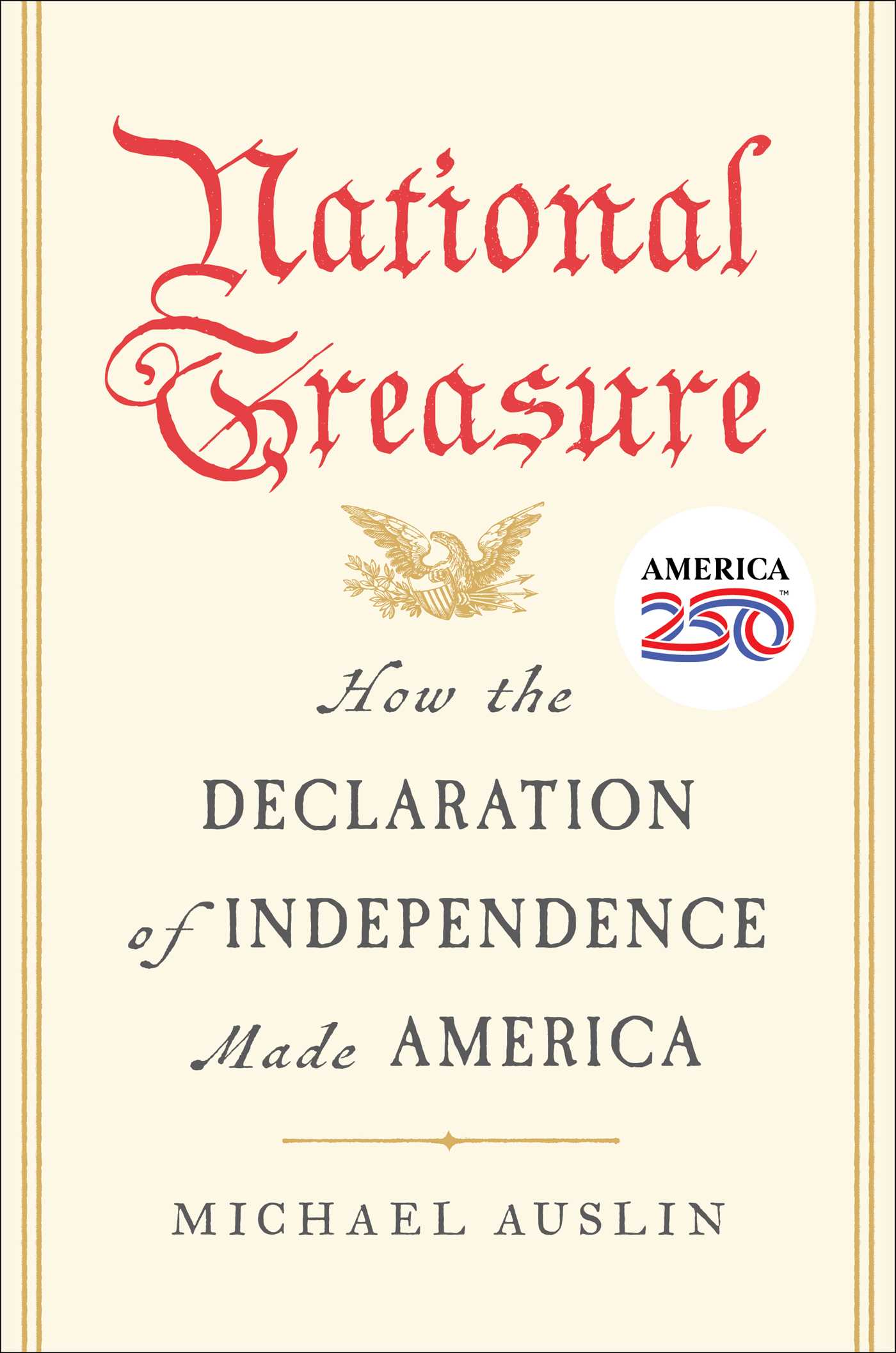
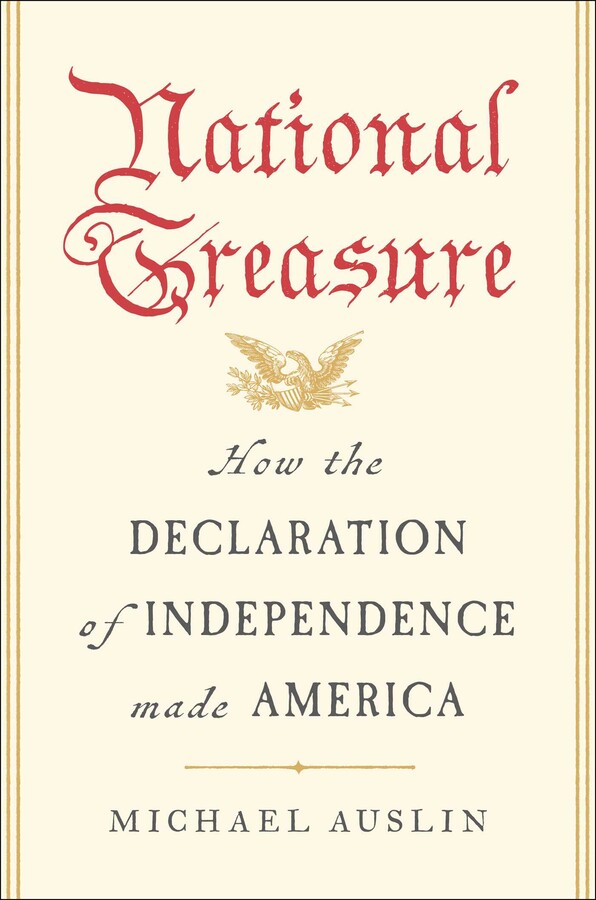
The first book ever to tell the complete story of the Declaration of Independence—from its drafting by Thomas Jefferson to its enshrinement in the National Archives—charting the many lives of a document that was neglected, mistreated, and only gradually became a national relic, uniting vastly different generations through war and crisis around its defiant ideals.
“A nimble, captivating view of the defiant 1,320 words that have knit themselves into every chapter of the last 250 years.” —Stacy Schiff * “Fascinating...weaves the glorious narrative of the Declaration from its inception to our day.” —Walter Isaacson * Scrupulously researched and beautifully written, this book reads like an adventure story...witty, fascinating, and never more relevant.” —Andrew Roberts
Quiet and politically untested, Thomas Jefferson was not the obvious choice to draft a statement of principles explaining why the American colonies were breaking ties with the King of England. Yet his soaring rhetoric, refined in small but indelible ways by Benjamin Franklin, would unite even the most bitter rivals around a common ideal. National Treasure is the inspiring story of our most revered founding document, as a physical object and a set of ideals that have made America what it is today.
We follow the Declaration as it is hauled out of a soon-to-be-burning Washington in 1814 (sadly not by Dolley Madison), hidden in a dank cellar, and brought back to a jubilant Washington after the war. By the time it turned 50, the Declaration, long neglected, had become a national treasure. In 1841 it would be mounted in the Patent Office alongside George Washington's commission as commander in chief. Auslin offers a bold new theory of what happened to the Declaration when the Patent Office was transformed into barracks and a makeshift hospital served by Walt Whitman in the Civil War. An inspiration to both Abraham Lincoln, who insisted he had "never had a feeling politically that did not spring from the sentiments embodied in the Declaration," and Jefferson Davis, who saw in its insistence on the consent of the governed a justification for secession, the Declaration has grown more important for each new generation. After the war, the Declaration became a hot commodity: printed on handkerchiefs, reproduced with elaborate illustrations, hung on classroom walls to teach civic values to the growing numbers of new citizens, and even used to flog insurance and hawk coal. In 1924, Herbert Putnam created the first "shrine" for the Declaration at the Library of Congress. Two years later, on its 150th birthday, Calvin Coolidge urged Americans to recommit to its foundational truths. In the 1940s, as FDR reminded Americans that their country was founded on a promise of freedom from tyranny, military officers lowered the precious parchment into a bunker at Fort Knox. After the war, its ink fading, the document was painstakingly preserved and protected.
Through it all, as the country has grown from 4 million to 40 million to 400 million, Jefferson’s words have inspired immigrants to become American and fueled implausibly varied causes, from abolitionists, suffragists, socialists and civil rights leaders to groups waging war on the US Government. Over time, as Jefferson hoped, the principles set forth in the Declaration became a beacon to the world. But what lessons should we take from them today? Can this statement of ideals in whose name the signers pledged their lives and sacred honor bring a fractured nation together? As we gather to celebrate the 250th anniversary of our bold experiment in democracy, Auslin reminds us that this enduring document was an eloquent statement of the principles that, for all our differences, still bind us together.
“A nimble, captivating view of the defiant 1,320 words that have knit themselves into every chapter of the last 250 years.” —Stacy Schiff * “Fascinating...weaves the glorious narrative of the Declaration from its inception to our day.” —Walter Isaacson * Scrupulously researched and beautifully written, this book reads like an adventure story...witty, fascinating, and never more relevant.” —Andrew Roberts
Quiet and politically untested, Thomas Jefferson was not the obvious choice to draft a statement of principles explaining why the American colonies were breaking ties with the King of England. Yet his soaring rhetoric, refined in small but indelible ways by Benjamin Franklin, would unite even the most bitter rivals around a common ideal. National Treasure is the inspiring story of our most revered founding document, as a physical object and a set of ideals that have made America what it is today.
We follow the Declaration as it is hauled out of a soon-to-be-burning Washington in 1814 (sadly not by Dolley Madison), hidden in a dank cellar, and brought back to a jubilant Washington after the war. By the time it turned 50, the Declaration, long neglected, had become a national treasure. In 1841 it would be mounted in the Patent Office alongside George Washington's commission as commander in chief. Auslin offers a bold new theory of what happened to the Declaration when the Patent Office was transformed into barracks and a makeshift hospital served by Walt Whitman in the Civil War. An inspiration to both Abraham Lincoln, who insisted he had "never had a feeling politically that did not spring from the sentiments embodied in the Declaration," and Jefferson Davis, who saw in its insistence on the consent of the governed a justification for secession, the Declaration has grown more important for each new generation. After the war, the Declaration became a hot commodity: printed on handkerchiefs, reproduced with elaborate illustrations, hung on classroom walls to teach civic values to the growing numbers of new citizens, and even used to flog insurance and hawk coal. In 1924, Herbert Putnam created the first "shrine" for the Declaration at the Library of Congress. Two years later, on its 150th birthday, Calvin Coolidge urged Americans to recommit to its foundational truths. In the 1940s, as FDR reminded Americans that their country was founded on a promise of freedom from tyranny, military officers lowered the precious parchment into a bunker at Fort Knox. After the war, its ink fading, the document was painstakingly preserved and protected.
Through it all, as the country has grown from 4 million to 40 million to 400 million, Jefferson’s words have inspired immigrants to become American and fueled implausibly varied causes, from abolitionists, suffragists, socialists and civil rights leaders to groups waging war on the US Government. Over time, as Jefferson hoped, the principles set forth in the Declaration became a beacon to the world. But what lessons should we take from them today? Can this statement of ideals in whose name the signers pledged their lives and sacred honor bring a fractured nation together? As we gather to celebrate the 250th anniversary of our bold experiment in democracy, Auslin reminds us that this enduring document was an eloquent statement of the principles that, for all our differences, still bind us together.
About The Author
Dellia Studio Photography
Michael Auslin is the Payson J. Treat Distinguished Research Fellow at Stanford University’s Hoover Institution. Prior to that, he was an associate professor of history at Yale. He wrote National Treasure as a Distinguished Visiting Scholar at the Library of Congress’s John W. Kluge Center and an American Heritage Partners Fellow at the Society of the Cincinnati’s American Revolution Institute. He writes a Substack, The Patowmack Packet, on Washington, DC, past and present, and lives in Virginia.
Product Details
- Publisher: Avid Reader Press/Simon & Schuster (May 5, 2026)
- Length: 368 pages
- ISBN13: 9781668214541
Browse Related Books
Raves and Reviews
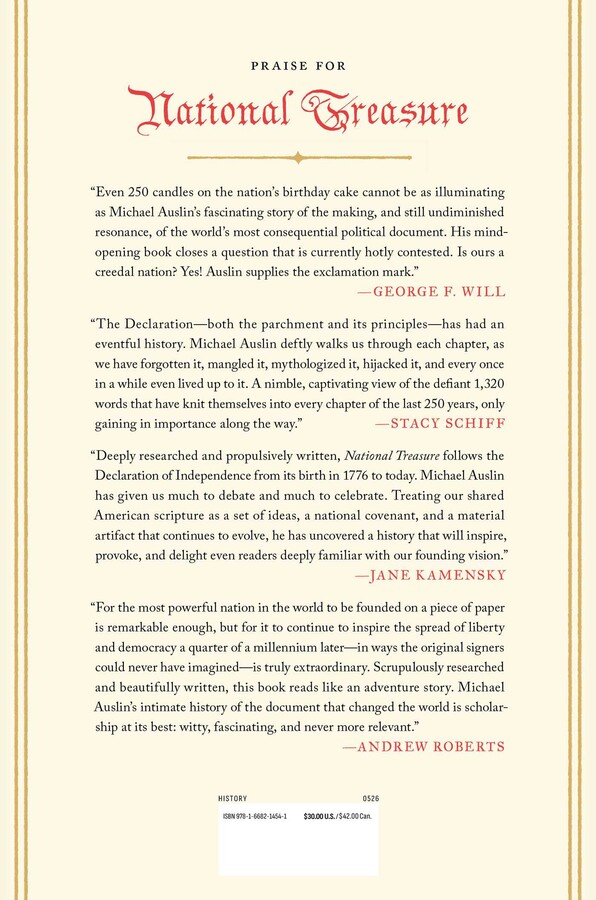
“Even 250 candles on the nation’s birthday cake cannot be as illuminating as Michael Auslin’s fascinating story of the making, and still undiminished resonance, of the world’s most consequential political document. His mind-opening book closes a question that is currently hotly contested. Is ours a creedal nation? Yes! Auslin supplies the exclamation mark.”
—George F. Will, author of American Happiness and Discontents
“For the most powerful nation in the world to be founded on a piece of paper is remarkable enough, but for it to continue to inspire the spread of liberty and democracy a quarter of a millennium later—in ways the original signers could never have imagined—is truly extraordinary. Scrupulously researched and beautifully written, this book reads like an adventure story. Michael Auslin’s intimate history of the document that changed the world is scholarship at its best: witty, fascinating, and never more relevant.”
—Andrew Roberts, author of Churchill and The Last King of America
“The Declaration—both the parchment and its principles—have had an eventful history. Michael Auslin deftly walks us through each chapter, as we have forgotten the document, mangled it, mythologized it, hijacked it, and every once in a while even lived up to it. A nimble, captivating view of the defiant 1,320 words that have knit themselves into every chapter of the last 250 years, only gaining in importance along the way.”
—Stacy Schiff, author of The Revolutionary
“Deeply researched and propulsively written, National Treasure follows the Declaration of Independence from its birth in 1776 to today. Michael Auslin has given us much to debate and much to celebrate. Treating our shared American scripture as a set of ideas, a national covenant, and a material artifact that continues to evolve, he has uncovered a history that will inspire, provoke, and delight even readers deeply familiar with our founding vision.”
—Jane Kamensky, President of Thomas Jefferson's Monticello
“Auslin describes how Americans came to revere the Declaration…. While one may think of its signing in 1776 as standing for a moment of national unity, he argues that the importance of both date and document developed over time… Much of the boldness of the Declaration’s meaning, and its ability to unite the country, has been constructed retroactively…. By tracing how the document has taken on such monumental status, he provides a history of the country itself…. Auslin’s account of the Declaration’s status as relic underscores its importance in the national imagination, certainly. But his story also underscores the document’s political as well as material fragility.”
—Financial Times
“Auslin recounts [this] riveting tale with clarity and verve…. Later generations took the Declaration as an inspiration for their own causes, from temperance to women’s rights and the abolition of slavery. . . . In the 20th century, Franklin Roosevelt tied it directly to the war against fascism, and the Cold War challenged Americans to live up to the Declaration’s principles. Far from seeming anachronistic, the author writes, the document had “inspired a new sense of what it meant to be American,” one that was embraced by immigrants from the great wave of the late 1800s, along with citizens from families that had been in the U.S. since its founding.”
—Wall Street Journal
“As we commemorate our nation’s 250th at a time of political division, we can strengthen our shared bonds by appreciating the profound story of our Declaration of Independence. In this fascinating and well-researched book, Michael Auslin weaves the glorious narrative of this document—as a piece of parchment, as a symbol of enduring principles, and as a cultural object—from its inception to our day. It’s a marvelous way to celebrate who we are, and who we should be.”
—Walter Isaacson, author of Benjamin Franklin and The Greatest Sentence Ever Written
“A fascinating history of the fortunes of liberty and equality in a country still seeking to fulfill [that] pledge....Jefferson’s prophetic understanding of the power and appeal of what he had written is at the heart of what makes Auslin’s book so special. [He] shows at every turn how the Declaration’s preamble... has haunted nearly every aspect of American history... It marched with Washington’s troops. It harried the Constitutional Congress, especially with regards to slavery.... It followed the country’s westward expansion… It animated the oratory of the Abolitionists. It put steel in Lincoln’s resolve to save the Union during the Civil War... It rallied Americans in the Great War [and] rallied them, again, in the Second World War against the tyrannical barbarism of Hitler and Mussolini.... It gave Americans the casus belli they needed to fight and win the Cold War. It irradiated the Civil Rights era. It gave the Bicentennial its unforgettable exuberance. It has latterly nurtured a new generation of patriotic, but never uncritical historians, of whom Auslin is admirably representative. . . . Auslin is right to argue that the preamble of Jefferson’s Declaration remains the country’s best rallying cry for unity. . . . Readers looking for a well-researched, well-written book to help celebrate the nation’s 250th birthday need look no further: National Treasure is itself a treasure.”
—City Journal
“One of the best books on American history you will read this year.”
—Washington Examiner
“Auslin's fine and immensely readable book…tells us the whole story of the Declaration's journey through the past 250 years—a history of its reception, if you like, but written for the educated general reader, not the specialized scholar—and how our readings of it at various times have both reflected and influenced those times, and yet left the document itself intact and inexhaustible…[It] is a story too, a kind of multigenerational treasure hunt, and it is not over…The book concludes with the hope that the Declaration, not only by virtue of its tenets of liberty and equality and self-rule, but also by virtue of its near-continuous presence through all of our national life, can be a unifying force in a fractious time.”
—Washington Free Beacon
Resources and Downloads
High Resolution Images
-
Book Cover Image (jpg): National Treasure
Hardcover 9781668214541
-
Author Photo (jpg): Michael Auslin Dellia Studio Photography(0.1 MB)
Any use of an author photo must include its respective photo credit