
Plus, receive recommendations and exclusive offers on all of your favorite books and authors from Simon & Schuster.
Published by Merkur Publishing
Distributed by Simon & Schuster
LIST PRICE $9.99
PRICE MAY VARY BY RETAILER
Digital products purchased on SimonandSchuster.com must be read on the Simon & Schuster Books app. Learn more.
Get 20% off with code JULY20 plus free shipping on orders of $40 or more. Discount on physical products only. Terms apply.
Buy from Other Retailers
Table of Contents
About The Book
Words are means by which people communicate, and the words can constitute a language. To communicate, you have to have an under¬standing of the words you use and that is where the problem arises. The meanings of most of the words we use were learned in context with other words, and from this we assume that we know the meaning of a word. When you do this, and your understanding of a word is the same as its real meaning, no problem arises. However, when what you assume the meaning of a word to be does not agree with the true meaning of the word, then misunderstanding is the result. It is most rewarding to understand the true meaning of words. The best sources for obtaining this information are dictionaries, encyclopaedias and dictionaries in other languages.
As an example, the word “principle” is often used. Have you ever looked it up in a dictionary to find out if your understanding of this word is the same as what it really means? Many times, of course, your understanding is correct, but be certain to avoid misunderstand¬ing. When you read this book, your understanding of all the words are of the utmost import¬ance.
The meaning or meanings of the word “principle” include: 1. Chief; 2. Beginning; 3. the Ultimate Source; 4. Origin; 5. The Law of nature by which a thing operates; 6. An Essential Element…..
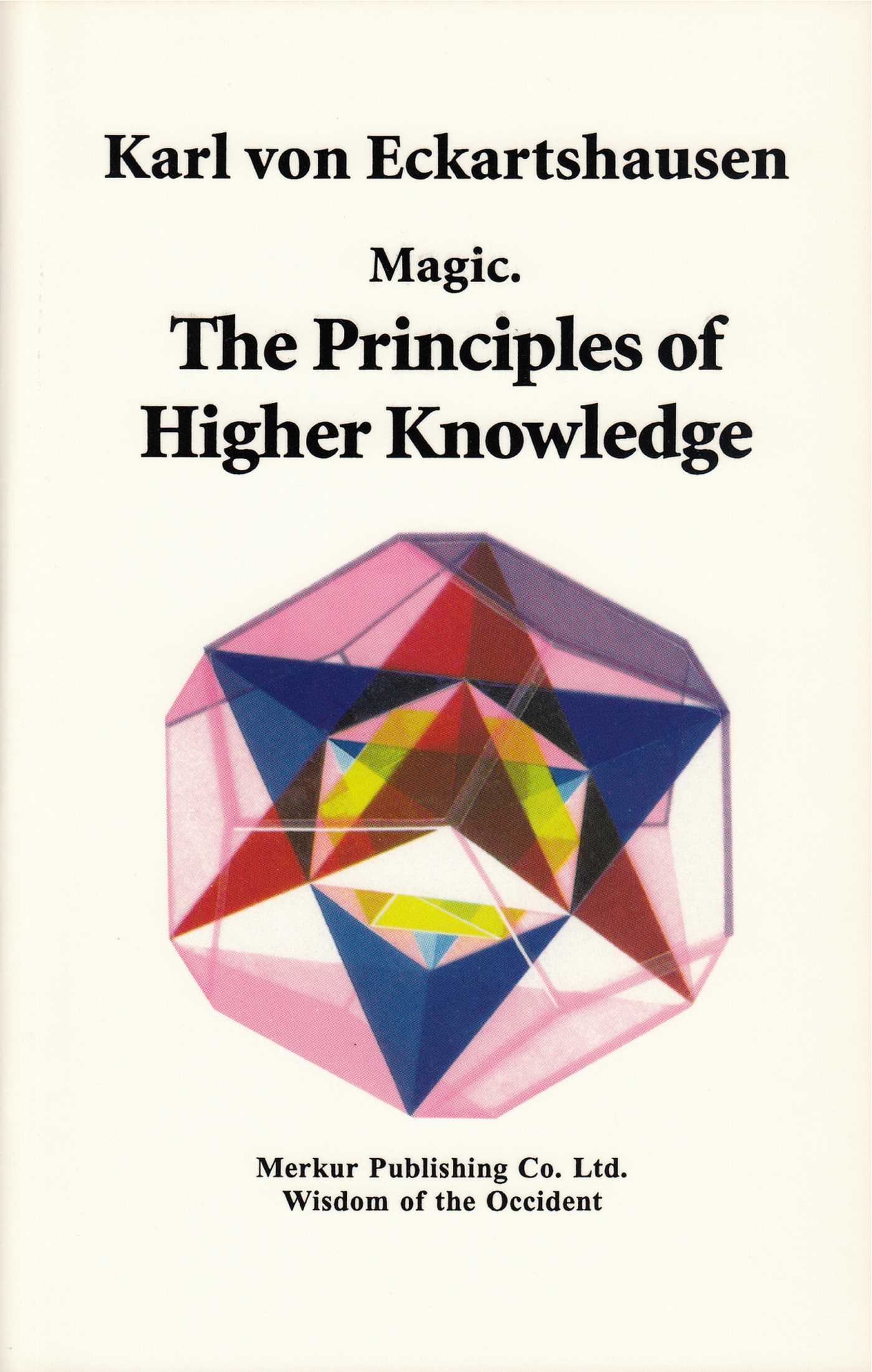
Many people in the old days believed in spirits, demons, angels, and so on. Even today some believe in this, while others do not. Primitive civilizations believed that thunder, storms and rain were caused by the gods. One question, however, always remains unan¬swered. In a laboratory experiment, ingredients have to be combined to achieve certain results. In a laboratory, this is done by people. Who does it in nature? These questions and more are all addressed by Karl von Eckartshausen (1752-1803) because universal truths and principles are timeless and do not change from century to century.
Words are means by which people communicate, and the words can constitute a language. To communicate, you have to have an under¬standing of the words you use and that is where the problem arises. The meanings of most of the words we use were learned in context with other words, and from this we assume that we know the meaning of a word. When you do this, and your understanding of a word is the same as its real meaning, no problem arises. However, when what you assume the meaning of a word to be does not agree with the true meaning of the word, then misunderstanding is the result. It is most rewarding to understand the true meaning of words. The best sources for obtaining this information are dictionaries, encyclopaedias and dictionaries in other languages.
As an example, the word “principle” is often used. Have you ever looked it up in a dictionary to find out if your understanding of this word is the same as what it really means? Many times, of course, your understanding is correct, but be certain to avoid misunderstand¬ing. When you read this book, your understanding of all the words are of the utmost import¬ance.
The meaning or meanings of the word “principle” include: 1. Chief; 2. Beginning; 3. the Ultimate Source; 4. Origin; 5. The Law of nature by which a thing operates; 6. An Essential Element…..
Many people in the old days believed in spirits, demons, angels, and so on. Even today some believe in this, while others do not. Primitive civilizations believed that thunder, storms and rain were caused by the gods. One question, however, always remains unan¬swered. In a laboratory experiment, ingredients have to be combined to achieve certain results. In a laboratory, this is done by people. Who does it in nature? These questions and more are all addressed by Karl von Eckartshausen (1752-1803) because universal truths and principles are timeless and do not change from century to century.
As an example, the word “principle” is often used. Have you ever looked it up in a dictionary to find out if your understanding of this word is the same as what it really means? Many times, of course, your understanding is correct, but be certain to avoid misunderstand¬ing. When you read this book, your understanding of all the words are of the utmost import¬ance.
The meaning or meanings of the word “principle” include: 1. Chief; 2. Beginning; 3. the Ultimate Source; 4. Origin; 5. The Law of nature by which a thing operates; 6. An Essential Element…..
Many people in the old days believed in spirits, demons, angels, and so on. Even today some believe in this, while others do not. Primitive civilizations believed that thunder, storms and rain were caused by the gods. One question, however, always remains unan¬swered. In a laboratory experiment, ingredients have to be combined to achieve certain results. In a laboratory, this is done by people. Who does it in nature? These questions and more are all addressed by Karl von Eckartshausen (1752-1803) because universal truths and principles are timeless and do not change from century to century.
Words are means by which people communicate, and the words can constitute a language. To communicate, you have to have an under¬standing of the words you use and that is where the problem arises. The meanings of most of the words we use were learned in context with other words, and from this we assume that we know the meaning of a word. When you do this, and your understanding of a word is the same as its real meaning, no problem arises. However, when what you assume the meaning of a word to be does not agree with the true meaning of the word, then misunderstanding is the result. It is most rewarding to understand the true meaning of words. The best sources for obtaining this information are dictionaries, encyclopaedias and dictionaries in other languages.
As an example, the word “principle” is often used. Have you ever looked it up in a dictionary to find out if your understanding of this word is the same as what it really means? Many times, of course, your understanding is correct, but be certain to avoid misunderstand¬ing. When you read this book, your understanding of all the words are of the utmost import¬ance.
The meaning or meanings of the word “principle” include: 1. Chief; 2. Beginning; 3. the Ultimate Source; 4. Origin; 5. The Law of nature by which a thing operates; 6. An Essential Element…..
Many people in the old days believed in spirits, demons, angels, and so on. Even today some believe in this, while others do not. Primitive civilizations believed that thunder, storms and rain were caused by the gods. One question, however, always remains unan¬swered. In a laboratory experiment, ingredients have to be combined to achieve certain results. In a laboratory, this is done by people. Who does it in nature? These questions and more are all addressed by Karl von Eckartshausen (1752-1803) because universal truths and principles are timeless and do not change from century to century.
Product Details
- Publisher: Merkur Publishing (May 1, 2021)
- Length: 316 pages
- ISBN13: 9781885928368
- Ages: 22 - 99
Browse Related Books
Resources and Downloads
High Resolution Images
-
Book Cover Image (jpg): Magic
eBook 9781885928368