Plus, receive recommendations and exclusive offers on all of your favorite books and authors from Simon & Schuster.
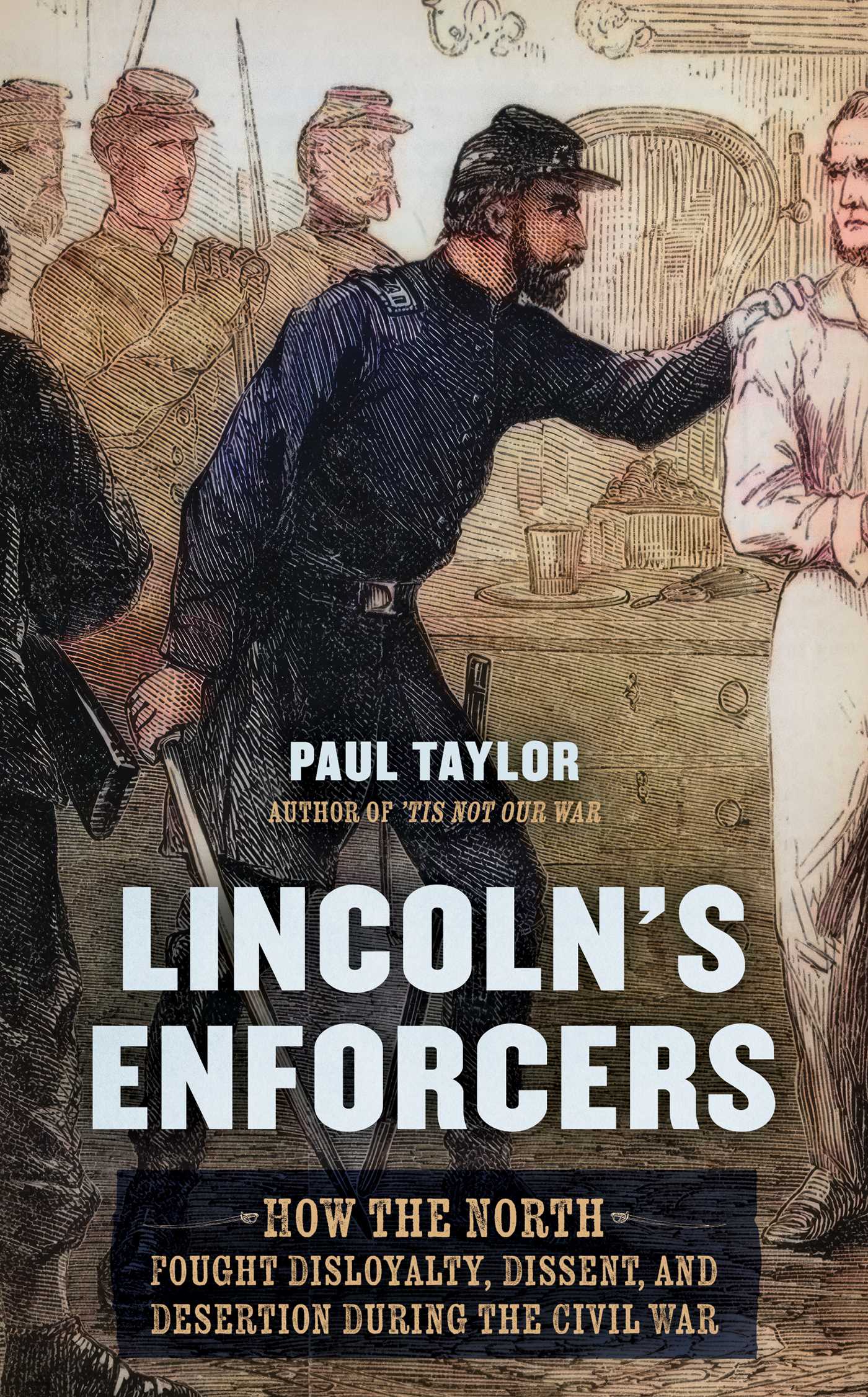
Lincoln's Enforcers
How the North Fought Disloyalty, Dissent, and Desertion During the Civil War
By Paul Taylor
Published by Stackpole Books
Distributed by Simon & Schuster
LIST PRICE $34.95
PRICE MAY VARY BY RETAILER
Free shipping when you spend $40. Terms apply.
Buy from Other Retailers
Table of Contents
About the Book
Midnight arrests, imprisonment without trial, infringement of free speech, invasions of privacy, loyalty oaths— the Union government carried out all of these and more against its citizens in an effort to combat disloyalty, dissent, and desertion during the Civil War. The uniformed soldiers of the Bureau of the Provost Marshal General had virtually unchecked authority to conduct their mission on the Northern home front, an effort that sent at least 10,000 and as many as 35,000 Americans to prison. Exposing the dark side of the Union war effort, Lincoln’s Enforcers carefully details these actions as they unfolded in the cities and towns of the North and set dangerous precedents for the future.
From the very beginning, it was clear that the Civil War created a unique set of challenges behind the front lines, and the Lincoln administration wasted little time in addressing real and potential threats to the Union war effort. Within two weeks of Fort Sumter, Lincoln suspended the writ of habeas corpus, enabling the government to arrest and detain citizens without trial, and over the next two years, a series of enforcement organizations—federal police and secret detectives—evolved to find and arrest citizens who could undermine the war effort.
The Provost Marshals were officially born in the crucible of war in 1862, as the North began to institute a controversial draft amidst a grave manpower crisis and as Lincoln issued his potentially inflammatory Emancipation Proclamation. Staffed largely by loyal Republican partisans and supervised by the War Department, the Provost Marshals hit the home front like a thunderclap. Marshals fanned out across the North to enforce the draft, ferret out deserters and bounty jumpers, recover stolen government property, and suppress speech and other acts that they deemed disloyal. They placed spies amongst the population, encouraged civilians to inform on their neighbors, read the mail, demanded loyalty oaths, and tossed suspected traitors into military prisons without charge. Occasionally, violence resulted when citizens resisted, but for the most part, the people of the North—like the Lincoln administration and Congress— accepted these constitutionally questionable actions as a military necessity to confront a serious national emergency and ensure the success of Union arms.
Product Details
- Publisher: Stackpole Books (June 1, 2027)
- Length: 264 pages
- ISBN13: 9798256602178
Browse Related Books
Resources and Downloads
High Resolution Images
-
Book Cover Image (jpg): Lincoln's Enforcers
Paper Over Board 9798256602178