

Plus, receive recommendations and exclusive offers on all of your favorite books and authors from Simon & Schuster.
Legally Yours, Violet Lopez
By Elba Luz
LIST PRICE $19.99
PRICE MAY VARY BY RETAILER
Free shipping when you spend $40. Terms apply.
Buy from Other Retailers
Table of Contents
About the Book
A serious and studious teen reluctantly agrees to defend her elite private school’s lazy golden boy in this young adult rom-com with courtroom intrigue, an opposites attract romance, and witty banter.
Violet Lopez has planned exactly how her life will go: She’ll graduate valedictorian, attend Harvard, and become a big shot lawyer, all so that her injury-prone single dad can finally take a break.
As a member of her elite private school’s law society, Violet is proud to hold a near-perfect record of defending students against the disciplinary board. But when the popular and infuriatingly charming Theo Hudson is accused of a prank he swears he didn’t commit, Violet recuses herself from his case on the grounds of despising the school’s privileged golden boy, and not even a couple classmates’ offer of a four-figure payout to purposely tank his trial can change her mind.
Then Theo uncovers a secret Violet wants to keep under wraps and blackmails her into representing him. Sick of being pushed around by rich kids, Violet decides she can get sweet revenge on the arrogant jock and some much-needed cash at the same time. She’ll twist his alibi, lose key evidence, mislead witnesses—all while playing the perfect lawyer on the surface. Theo goes down, and Violet gets paid.
But the closer Violet gets to Theo, the more she sees beneath his devil-may-care attitude to someone caring and surprisingly sensitive…who she’s been planning to sabotage. Is it too late to change her mind? And even if she does, would Theo ever forgive her?
Violet can object to falling in love all she wants, but her heart overrules every time.
Excerpt
Chapter 1 CHAPTER 1
My mom used to say: Your mind is your weakest muscle. There are no rest days. Don’t use it, and it’ll weaken.
A direct opposite perspective from my dad, who often countered with: We live on a floating rock. I think we’re allowed to take it easy.
I used to think I was a sweet balance of them both. That it’s better to slow down before burnout, catching warning signs of fatigue before they get worse, and it’s just as important to work hard—harder than everyone else—because the world is only kind to the successful.
Which is why I didn’t panic when I missed school. For the first four days. Then a full week passed, and no amount of at-home studying made my withering brain feel like it was being put to good use. This panic lit through me, starting at my chest and burning through every muscle under my skin, branching off until it spread to every part of my body, and now I knew I was more like Mom.
My off-brand smartwatch vibrates against my wrist, sending my heart into a panicked high gear. It’s set to go off every ten minutes to keep me on track, reminding me that if I spend any longer on a problem, I cut off time for another. A domino effect that will ruin the quick math I did when I scanned the number of questions on the test.
It’s my own fault I’m sloppy here. I should have drank another energy drink last night and combed through my best friend’s notes on the Industrial Revolution.
But it also doesn’t help that Lexie’s notes drifted off to her trailing thoughts, moving from helpful, detailed accounts from the teacher to playing tic-tac-toe with herself or listing meal ideas for dinner, so I wasn’t too inclined to sort through them all night. It would have been better if she had typed notes on a Word doc because her sloppy handwriting gave me a headache, but most teachers don’t allow laptops for fear of cheating or AI use.
A bead of sweat pools at the base of my neck. I’m losing my focus.
I suck in a breath, hold it for four seconds, then let it out. At my exhale, I reread the question, trying to separate the actual problem from the wordy paragraph the teacher must have padded to confuse us all.
If the question simply boils down to how the spinning jenny affected the textile industry, then we didn’t need five whole run-on sentences before that introducing us to the inventor of it and their life story. Why can’t Mr. Curtis keep his questions succinct?
Waste of time, you’re wasting more time.
My pen digs too deeply into the paper, and the ink blots too much ink. I slap my hand, loosen my grip, and write out my answer.
My heart sinks as I reach the next question. Another mass of unnecessary words that hides what’s actually being asked.
This time, I save my criticism of Mr. Curtis’s long-windedness and lock in. My watch hasn’t alerted me of another failed checkpoint, so I need to make up time here. Luckily, it’s a question from last week, a lecture I took my own notes on and studied between taking care of my father.
My handwriting grows sloppy at the tail end of my paragraph, but I make it just before my watch goes off. A sigh of relief soothes me only a moment before I slice through it—no time to relax. Five more questions remain.
By the time I reach the end, my long bangs cling to the side of my face—they’ve grown too long from the time I hastily chopped them off when they kept falling over my eyes as I tried to study. I rub my palm against my chest to help remind my heart of the rhythm it’s supposed to follow.
“All right, kids,” Mr. Curtis says from behind his mahogany desk. “Pens and pencils down, packets flipped over. If I see anyone writing anything more, I’m docking points from the test.”
My pen isn’t even in my hands and my stomach still turns over at the threat.
“Simon, that’s two points off,” Mr. Curtis snaps. “Another two if you finish that eye roll.”
Again, not directed at me, but my body stills. No sudden movements means no accusations thrown my way. I’d rather the teacher shave my head bald than take off any points.
The bell rings. Everyone hurriedly shuffles out. I take my time getting ready for study hall. I close my eyes, pull the sleeve of my blazer, and wipe the sweat from my face.
When I open them, I catch a hand, a thick silver band wrapped around the pinkie, dropping a small golden-wrapped candy on the edge of my desk. My gaze scans their back, but a group of girlfriends rushes through the aisle and blocks my vision.
Maybe my classmate Amy? I let her borrow my notes last week.
I take the gift, unwrapping its contents, and plop the candy into my mouth. It’s minty and sweet, and the shock of sweetness helps clear a little of the residual nausea my test anxiety wrapped around me.
By the time I make it out of class and let myself into my secret sanctuary—an always-empty classroom during my study hall period—the mint is almost completely gone.
Immediately, I get comfortable at a desk near the windows, pull out my iPad, and scan through my notes for another upcoming test.
“Hello to the second-prettiest girl I know,” Lexie says as she enters. (The first is herself, of course.)
I don’t look up from my notes. “Hello to the number one most-egotistical girl I know.”
The chair beside me squeaks as Lexie makes herself comfortable, as per our routine. She immediately turns on music—at a low decibel, as she knows not to distract me—and I comb through the notes I’ve revised three times and rewrote three more times because repetition helps the brain remember things.
After an uninterrupted twenty minutes of studying, my eyelids start to grow heavy, so I dunk my hands into my pocket and pull out the thin packet of coffee powder I’m halfway through. A mistake, because the crinkle of noise catches Lexie’s attention.
Her long, manicured fingers snatch the packet before I bring it to my now pouting lips. “I let you have half of this, but I can’t allow you to ruin your digestive system further.” She winks at me, her heart-shaped face always appearing much more innocent thanks to her soft features, hiding the constant mischief she tends to shower on others. She shoves it into her blazer pocket, then continues, adding beads to the thin wire she’s been working on.
Lexie picks up interests easily and frequently. Last week she picked up rock climbing; this month, she’s been obsessed with making friendship bracelets.
My fingers reach under my blazer, running over the smooth beads on the seven bracelets she already made me. “If I fall asleep during this exam, you’ll owe me more than a DIY set of jewelry.”
She stops, closing the tin kit holding all the tiny craft pieces, then turns to face me fully. Her brown eyes—a color like autumn leaves before winter steals them—glisten from the panels of sunlight pouring in from the wide windows. They’re just a shade lighter than her perfectly parted and styled hair, pinned in a half-up, half-down situation, a pink bow clipped at the top of it.
Her eyes narrow as she looks at me. “You could ace this exam in your sleep.” I sigh and she reaches over and drops a hand on my thigh. “When’s the last time you slept? I thought you said your dad was better?”
My gaze lands on her palm, resting on my blue-plaid skirt uniform. This kind of closeness is why everyone at school, and everyone who sees us for more than thirty seconds, thinks we’re dating and not the platonic soulmates we deemed each other one grief-filled and oddly hilarious day four years ago when Lexie’s aunt died and I found her crying in class, sitting in my seat. I asked her to move, not to get tears on the table, and she called me a string of curse words that got her kicked out anyway.
Then she found me after class and demanded an apology for being insensitive after her aunt had died. And, struck and awkward and not knowing what to say next, I replied, “Why? It’s not like I killed her.”
And we both burst out laughing. We went out for ice cream, and Lexie told me memories of her aunt, and I listened for hours. Instant best friends.
“He is, but I kept getting nervous that another disc would slip and I wouldn’t be awake to help.”
She pats my leg. “I wish he changed his schedule.”
“Third shift pays double,” I repeat for the millionth time in the tone of my father’s thick accent. “And private school is expensive.”
My scholarship pays for my tuition, but the uniform, books, and any necessary activities that pad my résumé are all out-of-pocket.
“It’s a good thing you’re getting a full ride to Harvard. You’ll be able to pay him back as soon as you become America’s best corporate lawyer.”
A smile fills my face. I don’t need extra assurance. I also have zero doubt about that; I believe in myself more than anyone. But the sincerity Lexie says it with feels like sitting out in the sun.
I look back down at my work, fighting the small smile on my face. “Not if I keep mixing up the formula to find the vertex of a quadratic function with the one for finding x-intercepts.”
“You sure can make boring words sound pretty.”
“That’s because you love me too much,” I say, shutting my journal in one loud slap. “All right, I’m going to get there early to find a seat at the front.”
I leave her to her crafts. I move through the halls of high ceilings and wood panels waxed so well that the parallel stained-glass windows reflect rainbows against them in tiny puddles of light.
This place always felt comforting and intimidating to me, like a church and an academic battlefield that smelled of perfumes with seven-syllable names.
“Lopez!”
The familiar-yet-unfamiliar voice makes my dingy white shoes pause on the ground.
I turn and catch my classmate—Theo Hudson—jogging toward me. His long legs quickly propel him to me, easy to do when I’m frozen in confusion. I don’t think I’ve ever had more than a single conversation with him before, certainly not one where I agreed for him to call me by my last name.
I know little else besides his name and his reputation. Lexie is my only friend, and in the couple of classes we share, I sit in the front and him in the back. He only speaks when spoken to, after he’s late, sleeping, or clicking his pen too much and getting chastised.
This close, I spot a tiny galaxy cluster of freckles over his slightly crooked nose—at an angle, I think he must have broken it painfully. His eyes, framed by thick lashes I have to layer two coats of mascara on to get, glow like hazel gems as he smiles at me—the face of Bell-Haven’s most sought-after date.
I frown. “Can I help you?”
“As friendly as I was told,” he says, rubbing a thumb against his jaw. His shirt is loosely buttoned, and his tie is missing in a way that will surely flag him for a dress violation. “What’s up? How are you doing this magnificent day?”
“What do you want?”
“I’m doing good, too; thanks for first responding to my question and then politely inquiring the same.”
“We’ve never spoken before,” I say. So why are you talking to me now?
“I know we’re not exactly close or anything—”
“We’re not anything at all.”
“Well.” He crosses his arms against his chest. “We won’t ever be with that attitude.”
“I want to get to my class before the bell rings,” I tell him. The halls will be flooded soon, and Peter Macintosh, who is ranked eighteenth in our grade and purposely asks questions he knows the answers to so he can slow down the lessons, always takes my favorite seat if I’m not quick enough. “So, pick someone else to converse with.”
I try to move around him, but he matches my pace. “We can walk and talk.”
“No thanks.” I quicken my step.
He speeds up. “All right, no-nonsense, I like that. I’ll cut to the chase. Represent me for my mock trial.”
“No.” I turn the corner toward my next class.
I glance toward him and see him visibly swallow down his annoyance, as if he isn’t bothering me. “Look, you’re the student’s champion. You’ve never lost a case before, so I need you.”
When I’m with Lexie, everything in me eases. A rippleless current flows through me. An easy-to-fall-into comfort I don’t ever feel myself sliding into until I’m wrenched from it by the presence of other people, like right now.
My muscles stiffen, and irritation floods me. If he makes me late, then I won’t be able to scan my notes one last time before the exam.
At my silence, he adds, “Isn’t this your thing? Don’t you want to add another tally to your wins?”
“I’m already ahead of the juniors.” I pause. “With a cushion for a total of thirty-seven points accumulating from freshman year. I’m good for it.”
Bell-Haven’s Law Society is only available to the top twenty students in their grade.
The club is the singular reason I dedicated my entire childhood to studying. Recess spent reading books Mom kept from high school. Free time at home forcing my dad to hold up index cards while I studied for the SAT pre–high school to show my talent and ambition.
Two things needed to not only get into Bell-Haven but to be the recipient of the single scholarship provided by the private school. I started drinking coffee at the age of thirteen so I didn’t waste time sleeping when I could be studying. When that didn’t work, I chewed jalapeños so the spice woke me up.
The club’s main focus is helping members stoke their passion for a career in law. We do that by being available to fellow students who are facing minor disciplinary actions—nothing too major. That’s for the people with actual authority. But missed absences? Nonviolent arguments? Defacing school property? Small mishaps. Either the student requests representation or Ms. Cortez or Mr. Moore—the club’s two advisors—assigns us cases and places us as defenders or prosecutors.
Then we have mock trials that simulate court cases. Members become lawyers, and we use witnesses and have three rotating judges to prove our case to. Winning a case by proving innocence wins us one point; lightening the students’ sentence gives us half.
By senior year, the student with the highest tally is awarded a special letter of recommendation to a local law office for a summer internship, where I plan to network, build my résumé, and begin my seven-year plan toward Harvard. I’ll head to undergrad, work as an intern until I graduate, and then head straight to my dream university.
Five points ahead in the middle of junior year is a nice cushion, but my academic ranking is at risk since I fell behind while taking care of my dad after his fall. I need to dedicate my time to studying while I have a lead.
Theo steps in front of me, blocking my path. “Look, I heard you were offered the case and dropped it, but I swear I didn’t do it. Why the hell would I deface the founder’s statue? I have better things to do with my time, I promise.”
Ms. Cortez, the English teacher and one of the Law Society’s advisors, brought me the case earlier this morning. Though Theo Hudson is vexing to teachers because of a “careless attitude,” he’s an excellent student, ranked seventh in the junior class despite accumulating enough absences to warrant a suspension. His current punishment is too harsh.
I could tell she was disappointed when I said I didn’t want the case, but I don’t have the same soft spot for popular jocks with mischievous eyes and charming grins. As if I’d care much about some golden boy without a worry in the world getting one thing taken from him. I’m pretty sure his life is perfect enough that this will barely be a concern for him in a couple of months from now.
“That doesn’t matter to me,” I say, moving around him and continuing on my way. It’s true—it doesn’t matter. I’ve won cases where the student was absolutely guilty.
“Shouldn’t it? Aren’t lawyers supposed to be just?”
“I’m not a real lawyer,” I say, “and it’s not about being ‘just.’ It’s about winning whatever side you represent, and I’m not repping you.”
“Come on, why not?”
I suck my teeth at the continued interruption. “I don’t have the time to do it.”
He moves and blocks my path again. “Why not?”
I blow out a harsh breath of air. “Because I need to study.”
He snorts, then asks, “Wait, you’re serious?” Of course that kind of reasoning would sound like nothing to someone who probably has given all of five seconds of thought to his own future.
I cross my arms over my chest. “Yes, Theo, I need to study. I have to maintain a 4.0 every semester, so when I’m not talking with strangers, I’m doing just that.”
He cocks his head to the side. “Stranger feels harsh.”
“Are we done here?”
He lets out a low chuckle that sends a mix of frustration and a fluttering sensation I’m not too familiar with through me. “You are hard to talk to. Has anyone ever told you that?” When I don’t do anything but glare, he says, “I get it’s a two-month case. I don’t know why they spaced it out so much, but we don’t have to meet that often.”
Theo—unsurprisingly—doesn’t understand how much actually goes into these cases.
I have to go through all the school guidelines and code of conduct and figure out which ones are relevant. There’s also all the time I need to build my evidence and find a solid foundation for whatever argument I decide to proceed with for the case. I also have to find witnesses, calculate what the opposing party is going forward with, figure out how to counter that, and so much more—all things I don’t feel like explaining to someone I have no ties to. Not to mention the mock trials include filling out so many documents, contracts, motions, and pleadings.
“No,” I say.
“I’ll help you study; that way, you won’t fall behind.”
Now I snort. “Please, you’ve spent more time asleep than awake in class.”
He smirks, and a dimple on the left side of his chin appears. “So you’ve noticed me?”
I run a frustrated hand through my wavy hair. “Look, I’m sure whoever takes your case will do fine.”
The bell rings, and in an instant, chatter and footsteps join us in echoes as students leave their rooms for the next.
Theo drops down onto his knees, grabs my hands in both of his, and pulls his face into the most pathetic, big-eyed pleading expression I’m sure would bring any girl to their knees too. I mean, even mine do a little buckle—I am a girl with working eyes.
“Please,” he says so dramatically as people walk by and take in the scene. “Trust me, whoever ends up taking over will not do as good a job as you. They’re trying to kick me off the basketball team; I need a guarantee. I need you.”
People start snickering, and a quick scan around us reveals a rapt audience and a few phones to record the ordeal.
I try to pull my hand away, but his squeezes tighter. “Let go,” I hiss.
“Say yes.”
“People are going to think you’re proposing.”
“Is that what it’ll take?” Theo says. “Because Violet Lopez, I would be honored if you—”
I manage to yank my hand away. “Have some dignity, you moron,” I snap before walking around him and pushing myself through the crowd, ignoring the few “Mrs. Hudson” comments following me as I hurry into class.
When I finally make it, Peter Macintosh is sitting in my seat.
I hate Theo Hudson.
About the Author
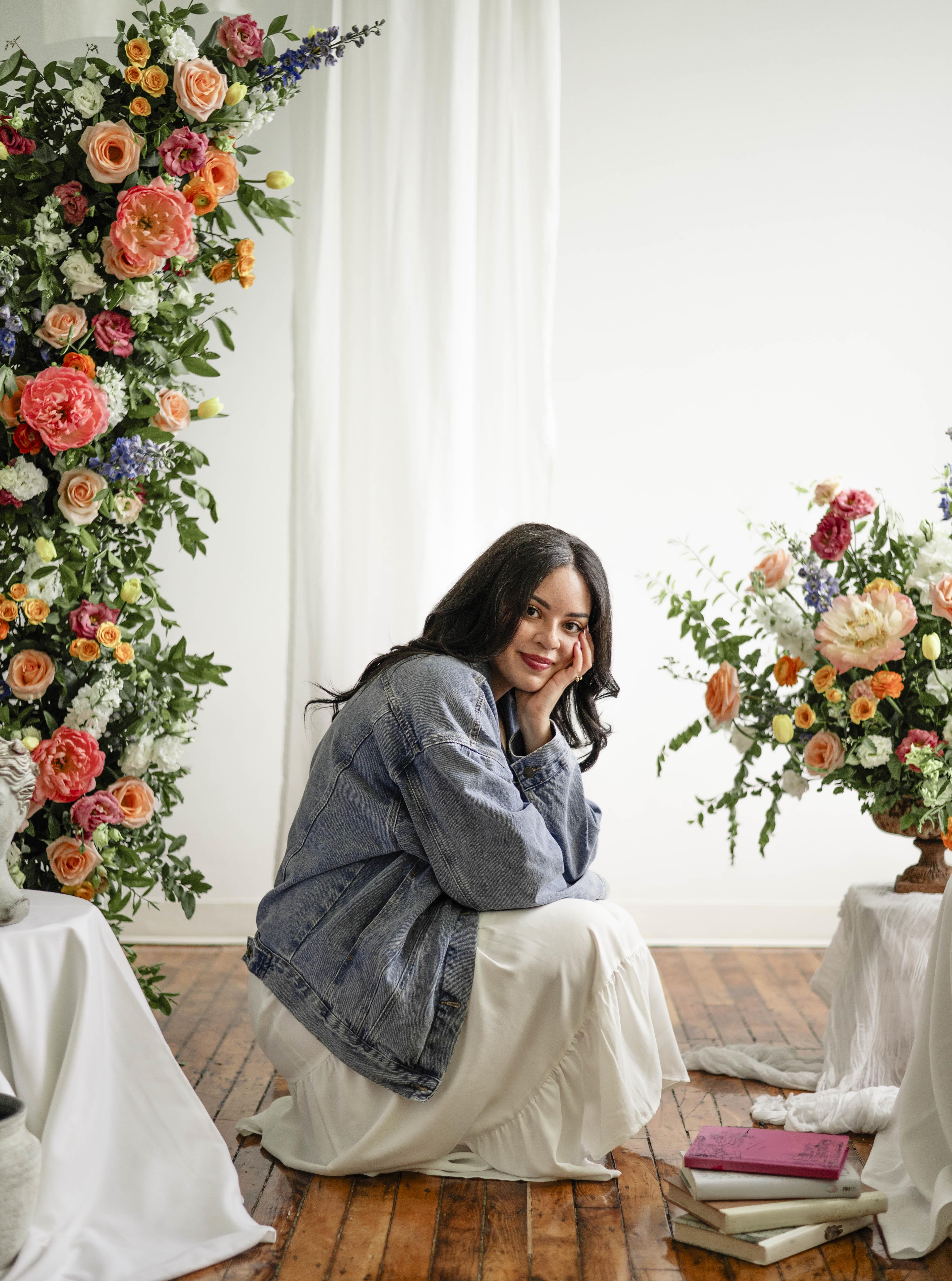
Photograph © Liv D Photography
Elba Luz is a Puerto Rican author and a lover of stories, whether in the form of anime, manga, video games, or, of course, books. Speaking of books, she should be writing her own. Instead, you’ll probably find her replaying Final Fantasy, listening to classical music, or cuddling up with her adorable pit bull, Stormy.
Product Details
- Publisher: Simon & Schuster Books for Young Readers (October 20, 2026)
- Length: 272 pages
- ISBN13: 9781665942546
- Grades: 7 and up
- Ages: 12 - 99
Browse Related Books
Resources and Downloads
High Resolution Images
-
Book Cover Image (jpg): Legally Yours, Violet Lopez
Hardcover 9781665942546
-
Author Photo (jpg): Elba Luz Photograph © Liv D Photography(0.1 MB)
Any use of an author photo must include its respective photo credit