
Plus, receive recommendations and exclusive offers on all of your favorite books and authors from Simon & Schuster.
0:00 /
LIST PRICE $29.99
PRICE MAY VARY BY RETAILER
Get 20% off with code SPOOKY plus free shipping on orders of $40 or more. Discount on physical products only. Terms apply.
Buy from Other Retailers
Table of Contents
About the Book
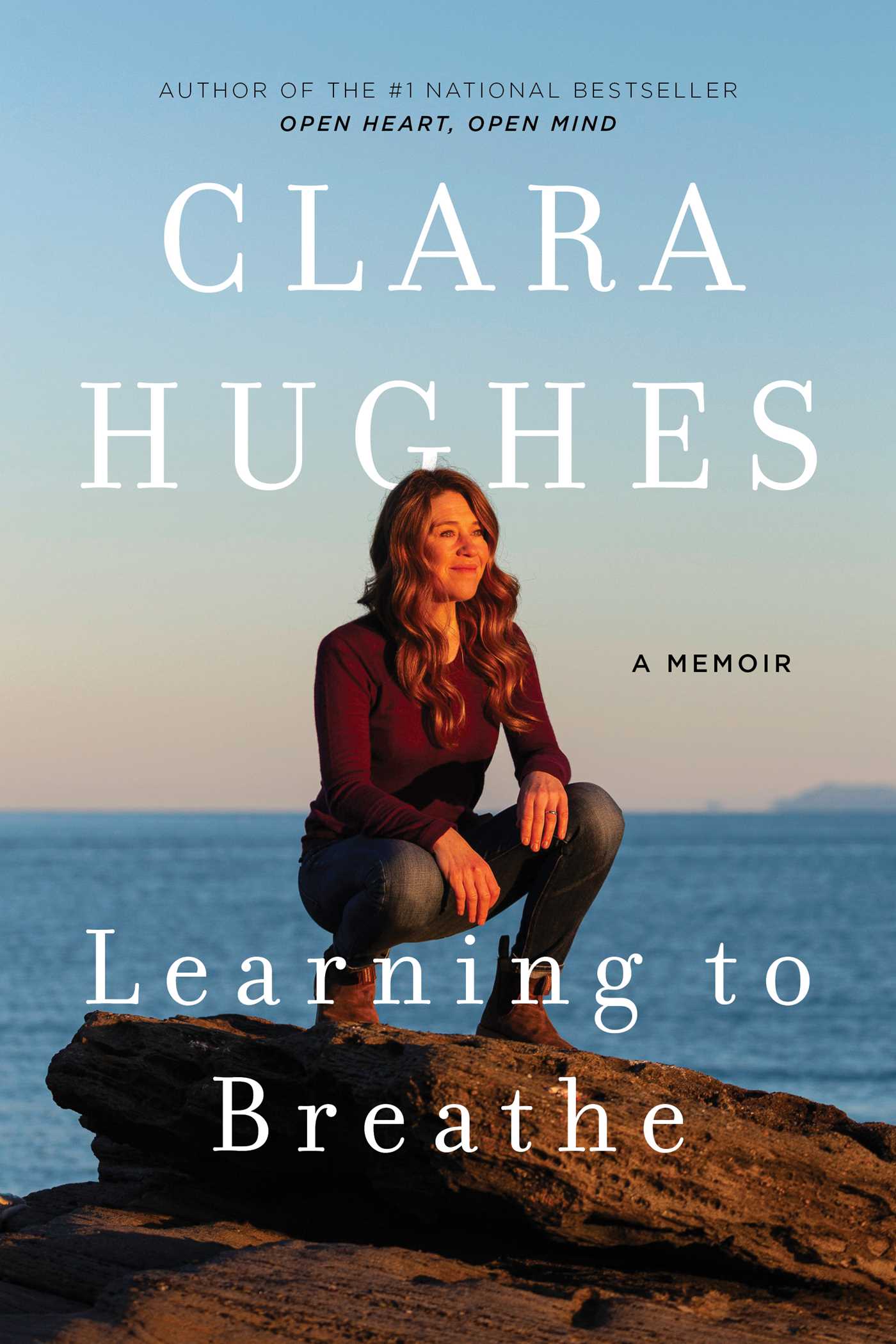
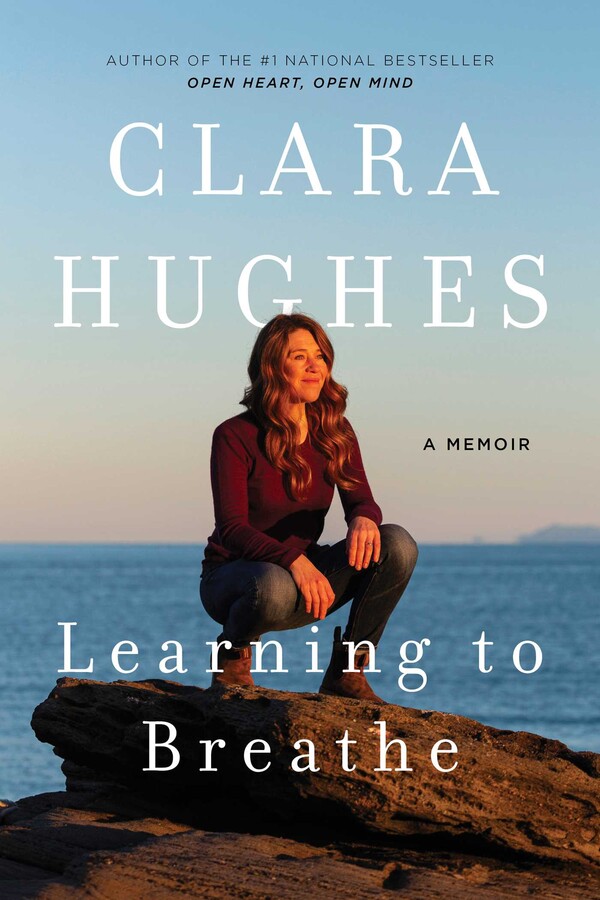
From Clara Hughes, the six-time Olympic medalist, celebrated humanitarian, and bestselling author of Open Heart, Open Mind: A story of healing and transformation in midlife.
As an elite athlete—the only person who has won multiple medals in both the Summer and Winter Olympic Games—Clara Hughes thrived on powering through pain, with profound consequences for her body and mind. Following her retirement from sport, the mantra ‘‘movement as medicine’’ fueled her public advocacy for mental health and her personal healing journey. However, Clara’s attraction to extremes persisted: grueling months-long hikes and bike-packing trips began to take a toll. In 2021, a catastrophic knee injury coincided with menopausal hot flashes and dizzying mood swings, forcing her into stillness, and her depression, kept at bay for years, loomed larger than ever.
How do you move forward when the body you’ve always relied on doesn’t bounce back like it used to, when you feel like a stranger to yourself, and the punishing voice in your head won’t stop? Clara sought help through traditional avenues, but after realizing how little support there is for people in menopause, she turned to a different kind of medicine. Enter the world of psychedelic-assisted therapy.
Through guided experiences—some hilarious, some alarming, and some mind-expanding—Clara begins a winding trip back to herself, and to a deeper awareness of the roots of the inner pain she’d suppressed through sport. Along the way, she forges new relationships; begins the work of repairing old ones; and faces long-held fears.
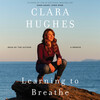
Learning to Breathe is a vulnerable, funny, wise and fascinating memoir about one human’s healing journey, the terrors and joys of midlife change, and the potential for new beginnings at any stage.
As an elite athlete—the only person who has won multiple medals in both the Summer and Winter Olympic Games—Clara Hughes thrived on powering through pain, with profound consequences for her body and mind. Following her retirement from sport, the mantra ‘‘movement as medicine’’ fueled her public advocacy for mental health and her personal healing journey. However, Clara’s attraction to extremes persisted: grueling months-long hikes and bike-packing trips began to take a toll. In 2021, a catastrophic knee injury coincided with menopausal hot flashes and dizzying mood swings, forcing her into stillness, and her depression, kept at bay for years, loomed larger than ever.
How do you move forward when the body you’ve always relied on doesn’t bounce back like it used to, when you feel like a stranger to yourself, and the punishing voice in your head won’t stop? Clara sought help through traditional avenues, but after realizing how little support there is for people in menopause, she turned to a different kind of medicine. Enter the world of psychedelic-assisted therapy.
Through guided experiences—some hilarious, some alarming, and some mind-expanding—Clara begins a winding trip back to herself, and to a deeper awareness of the roots of the inner pain she’d suppressed through sport. Along the way, she forges new relationships; begins the work of repairing old ones; and faces long-held fears.
Learning to Breathe is a vulnerable, funny, wise and fascinating memoir about one human’s healing journey, the terrors and joys of midlife change, and the potential for new beginnings at any stage.
Appearances
OCT 16
6:30PM
In Person
Clara Hughes
EVENT - Ottawa International Writers Festival, In Conversation with Séan McCann
Learn MoreOttawa International Writers Festival
414 Sparks Street
Christ Church Cathedral
Ottawa, ON K1A 0N4
OCT 18
6:30PM
In Person
Clara Hughes
EVENT - CFUW X Different Drummer, In Conversation with Annette Hamm
Learn MorePort Nelson United Church
3132 South Drive
Burlington, ON L7N 1H7
OCT 18
12:00PM
In Person
Clara Hughes
EVENT - National Menopause Show, In Conversation with Dr. Ariane Ouellet-Decoste
Learn MoreNational Menopause Show
6900 Airport Road
The International Centre
Mississauga, Ontario L4V 1E8
OCT 19
6:00PM
In Person
Clara Hughes
EVENT - Rotman @ the University of Toronto, In Conversation with Nam Kiwanuka
Learn MoreUniversity of Toronto, Rotman School of Management
105 St. George Street
Toronto, ON M5S 3E6
OCT 20
7:00PM
gritLIT: Hamilton's Readers and Writers Festival
177 Sherman Avenue North
Playhouse Cinema
Hamilton, Ontario L8L 6M8
OCT 23
6:30PM
In Person
Clara Hughes
EVENT - Cafe Books X Canmore Public Library, In Conversation with Beckie Scott
Learn MoreCanmore Public Library
101-700 Railway Avenue
Canmore, AB T1W 1N9
OCT 25
10:00AM
In Person
Clara Hughes
FESTIVAL - Vancouver Writers Fest, In Conversation with Joanna Cheek
Learn MoreVancouver Writers Festival
1218 Cartwright Street
Performance Works
Vancouver, BC V6H 3R8
OCT 27
7:00PM
Bolen Books
111 1644 Hillside Avenue, Hillside Centre
Victoria, BC V8T 2C5
NOV 7
3:15PM
In Person
Clara Hughes
FESTIVAL - Whistler Wristers Festival with Wiley Wei-Chiun Ho and the WIBA Winner. Moderated by Leslie Anthony
Learn MoreWhistler Writers Festival
4599 Chateau Blvd
Fairmont Chateau Whistler
Whistler, BC V8E 1G1
Excerpt
Chapter One Chapter ONE
It was like riding in an elevator whose cables suddenly snapped. This was August 2021. I was alone, hiking north on the Vancouver Island Trail, which runs through Vancouver Island like a knobbly spine. With 760 kilometres behind me and only forty left to go, the enormous downed log I was walking on suddenly gave way. One second it was there, the next it was dust. I heard a whoosh, but that sound was lost in my scream as I plummeted to the ground. (Was that the sound of a tree falling that usually nobody heard?)
When the elevator stopped, I was lying folded over my left knee, which was bent sideways. You’ve finally done it, Clara, I thought, you have fully fucked yourself.
Most hikers who tackle this portion of the Vancouver Island Trail—VIT for short—pay attention to the warning on its website about its “logistical difficulties.” Sane people take a shortcut, hiring a water taxi in Port Hardy (the northernmost town on the VIT), which drops them gently at Shushartie Bay, the trailhead of the VIT’s final leg, which is also known as the North Coast Trail.
I am nothing if not stubborn, and competitive even with myself. So I had decided to walk the logistical difficulty instead—a sixty-kilometre slog along “logging roads [that] branch repeatedly and become increasingly disused and grown-in” (that’s from the website, still trying to dissuade me). The last half-kilometre “is not a sanctioned, established BC Parks trail.”
This was a glorious understatement. The last half-kilometre is a hiker’s hellscape of a bushwhack, a solid sea of salal, the dense, multi-stemmed evergreen shrub that starts close to the ground and grows upward in thick mats. Indigenous Peoples traditionally eat its dark-purple berries and make medicine from its glossy green leaves. But to walk on it, you must push through its branches, which squeeze your thighs and grab hold of your pant legs; you can practically hear it cackle “Told you so!” as it trips you.
Typically, salal grows a half-metre to three metres tall. This salal was taller, nearly four metres, reaching way above my head. I was swimming in it. I’m a well-prepared hiker—I had safety gear and my inReach GPS device on me, which would activate a rescue if I put out an SOS. My husband, Peter, knew roughly where I was, and I knew which way to go (mostly). But I also knew that if something happened to me here, I might never be found.
I had decided that walking on the raised floor of criss-crossed, downed trees within the salal made sense. Gingerly, I’d made my way forward, pushing aside moss and branches with my hiking poles. The log looked old, but I was confident it would hold. That is, until I found myself in a mess of wood chips, buckled in half.
As a competitive athlete, I am accustomed to pain. I had taught myself to welcome pain. In elite-level sport, pain is not an obstacle, it’s a goal, because an athlete needs to learn how to push herself to overcome it. During a bike or skating race, your legs are screaming at you to stop. Your heart and lungs, every follicle of hair on your head, every fingernail is telling you to stop. That’s when you go harder.
I’d powered through a lot of hurt in my athletic career. On a steep descent during a bike race in New Zealand in 1997, I crashed into a tangle of fallen riders. I vaulted over my handlebars headfirst and landed smack on a racer from South Africa. I thought I was okay until I saw a puddle of blood forming at my feet—and realized it was coming from me. My glasses had sliced open my left upper cheek from my nose to the outside of my eye. I was in shock, but instead of freezing, I fled. I straightened the handlebars, got back in the saddle, and finished the stage.
In 1993, in Bisbee, Arizona, I crashed into a guardrail doing seventy kilometres per hour. My front wheel ripped in half; the road rash on my sides, back, and knees made me look like meat on a butcher’s counter. But I kept racing—walking, carrying my bike—until a mechanic stopped and gave me a spare wheel. I not only finished that race, I raced for the next two days, barely able to lift my arms, the bedsheets sticking to me when I tried to sleep at night. Then I flew to France, started another stage race, and crashed again, just as the earlier wounds were beginning to heal.
Long track speed skating is tame by comparison; it’s not the Roller Derby on ice you see in short track. However, I did injure my back in 2003. I had to get physiotherapy at the airport just to be able to sit on the plane to the Netherlands for the World Cup. Another morning, at the Olympic Oval in Calgary, I tripped myself doing easy training laps. When I took my left skate off, I saw that my right blade had somehow ripped the fibreglass bottom from the skate, and I had essentially stabbed my own left foot. The doctor at the walk-in clinic I hobbled to said I didn’t need stitches, so I went back to train again that afternoon.
The pain from the fallen tree was different: It made me nauseous, and scared, and also furious at myself, because this wasn’t my first knee injury. It had taken me years to blow out my knee.
I’d given it a pounding as an athlete, of course. Then, in 2017, during a gentle walk on Haida Gwaii, I slid in mud and got my left foot stuck between a log and a large rock. As I fell over, I heard BAM BAM, like two gunshots: My left ACL, torn completely, would require reconstructive surgery.
After seven months’ recovery, I’d healed myself—or so I believed then—by walking. A lot. In three years, from 2017 to 2020, I hiked for five or six months a year, thousands of kilometres, often fifty to seventy kilometres per day. I hiked the 4,000-plus kilometres of the Pacific Crest Trail—the trail Cheryl Strayed wrote about in her memoir Wild—in under a hundred days (most people take four to six months). Three weeks after doing that, I went to Death Valley to hike the Lowest to Highest Route. It starts at Badwater Basin—the lowest point in North America, eighty-six metres below sea level—then runs up and down 3,000-metre-high mountain ranges; across arid, trailless valleys; and ends atop Mount Whitney, the highest peak in the lower forty-eight states, soaring over 4,400 metres. After hiking from Mexico to Canada for 137 days on the Continental Divide Trail—about 4,700 kilometres—I hitchhiked home and just four weeks later set off again, on the 1,300-kilometre Arizona Trail, which wends from Utah to Mexico: down from plateaus of ponderosa pine forest, deep into the belly of the Grand Canyon, and out into the magical cactus jungle of the Sonoran Desert.
Was I also walking away from something? Yes. Searing hot flashes, as if a dragon were breathing fire on me, and also from within me. Mood swings that gave me emotional whiplash. Boiling rages—I would hear myself screaming at Peter, who is the kindest person I know; I would hear how terrible I was being, but I couldn’t stop. I was desperately logging those kilometres hoping that movement would do what it had always done: make me feel better. This might be hard to believe, since I was in my late forties, but I didn’t even put it together that what I was experiencing was the beginning of menopause. Then, in April 2021, I reinjured myself in the most ridiculous way, doing the Red River Jig in my kitchen in Canmore, Alberta, showing off for my husband during a pandemic Zoom dance party.
When travelling became possible again, Peter went back to Vancouver Island, as he has most summers since 2006. He could no longer hike—he’s eleven years older than I am, and his knees can’t take the heavy packs—but ocean kayaking had become his new love. I FaceTimed him one midday as he was resupplying in Port Hardy to head back out onto the Goletas Channel. He was glowing, his eyes lit up in a way I hadn’t seen in a while. For my career, I either travel to give talks to companies and organizations, or I work remotely at my desk. I loved Canmore—the Bow River warbled in front of our house and Ha Ling Peak boomed behind it. Our backyard fed directly into provincial forest. We had friends we loved nearby when we wanted their company, and an instant escape to the wilderness we revered when we needed it. However, there was nothing else holding me in Alberta. The words “We could move to Vancouver Island, you know,” popped out of my mouth. “We could change everything.”
The best way for me to ponder such a major move was, of course, to do another hike. I think best when I’m in motion, and though I’m not a conventionally spiritual person, I feel a deep invitation to be out under the sky. I push myself, but I also connect with myself. This might sound counterintuitive, but after three decades of living in the public eye as an athlete and speaker, it’s my way of slowing down.
On trail, I have no outside influences demanding things from me or celebrating me; I don’t have to perform a version of myself that might not even be true anymore. Out there, no one cares or even knows if you’re a brain surgeon or a teacher or an ex-convict. You’re a hiker, and you share with your fellow hikers a common experience that is hard and rich and beautiful.
For my “Should we move?” hike, I decided to traverse 1,000 kilometres of the Great Divide Trail, starting at the Montana-Alberta border, moving up the Continental Divide between Alberta and British Columbia, and ending at Mount Robson. It’s wilderness terrain with iffy mapping and hairy river crossings; navigation and survival skills are a must. I made it to the end, but my knee barked the whole way.
And I kept on ignoring it. When Peter and I rented a cabin on Vancouver Island to see if we liked it, I set off to bicycle there from Canmore, 1,600 kilometres off-road. My knee screeched with every revolution of the pedals, but again, I didn’t listen.
Turns out we loved Vancouver Island life. We are lucky to have a unique kind of freedom. We live like we’re semi-retired, working when we want, doing our own thing. People often say to me, “You must be so busy,” as if being busy is the measure of a person’s worth. Peter and I joke about that a lot: “Yes, so busy! So important!”
We found an ideal house that sits back from a bay, with a wide front lawn. It’s surrounded by trees: a Douglas fir forest, a Garry oak grove, a cluster of arbutus. The trees shade us from the harsh southwest sun and shelter us from the wind. They hold us. And they call the birds in. There are so many birds around our home, always. I have a special relationship with birds. Long-distance hikers acquire trail names, and mine is Red Feather. Birds have sung for me at so many key life moments. Immediately, Peter and I could picture our lives in that house: We’ll build an office hut back here, a firepit there. We’ll tuck benches into spots where we can pause, breathe, move slowly across our days with the sun.
I went back to Canmore to prepare our house for sale. I had fallen into a worrying pattern: On trail, I barely stopped moving; back home, I barely moved at all. These sedentary periods would last for weeks and leave me feeling pathetic. Then I’d shame myself into exercising aggressively, without proper buildup. In Canmore, I went from total listlessness to doing two online barre classes a day, upstairs in our little workout room. During a jump squat—where you squat deeply with your legs hip-width apart, then push upright and jump your legs together, then repeat—my left knee caved in.
Now, this was not a live class—it was prerecorded—and I was alone in my home with no one watching. But did I stop? You can guess the answer, and also surmise that I was still too stubborn to consult a doctor.
So on the day that log evaporated under me in Shushartie Bay, I took a few deep breaths, crawled for a bit, then stood up and clawed my way out of the salal tangle, emerging at last into the open. No one was around, so I let myself scream: cries of joy that I’d made it out, but also cries of pain.
I’d heard a lot about this last section of the trail. You begin on glorious, untamed beaches where you see tracks left by bears and wolves, and actual eagles, sea lions, seals, sea otters. This wild, abundant life. If you’re really lucky, you might hear a whale blow, or see one breach from afar. When the shoreline becomes too rocky and clifflike to traverse, you move inland, where you’re absorbed into the bowels of Mother Earth, grabbing at the branches and vines of her intestines. Flowers grow on plants growing on trees growing on other trees, a thousand shades of green. You can’t miss this part, I told myself. Forty more kilometres. You can’t quit when you’ve come so far.
On the first beach, I let myself take a peek at my knee. It was the size of a cantaloupe. Honestly, I marvelled at how swollen it was. I could have texted on my inReach for a water taxi. But I told myself I could walk out the inflammation.
The next day, I reached the trail’s end at the Cape Scott Lighthouse. You can’t camp there, so I backtracked about three kilometres to Guise Bay beach. It felt tropical—white sand soft and warm underfoot, teal waters sparkling in the sunshine. I found a spot where previous hikers had stacked driftwood into a makeshift chair and table and pitched my tent against a backdrop of stalky grasses, with a small ocean of sand dunes behind. I took a nap, then woke up ravenous.
You should never cook in your tent. Don’t do it! It’s not smart! I cooked in my tent. Ramen noodles, boiled in my cook pot over my little camp stove… without a lid. As I reached for the pot, it tipped, and scalding water flooded over my right foot. I sat there for a minute watching the skin on my instep sizzle and blister. There was nothing to do but smear it with Polysporin, swaddle it with medical tape, and cover that with duct tape. It’s like a second layer of skin, I told myself. This will work fine.
The next morning, I walked twenty more kilometres to a parking lot at San Josef Bay, making sure to arrive before noon. I knew that a shuttle driver, John, came every day in his beat-up van, held together by duct tape, to ferry hikers back to Port Hardy. (John also carries bags of peanuts to feed “his” Steller’s jays, and pulls over along the way to impart local history.) My foot, weirdly, felt fine. My knee was another story.
I’m detailing all this information because my capacity for denial, my keen ability to look anywhere but at the thing I most need to look at, is the trailhead for this book. Pushing things away, pushing through—physically, but more importantly, emotionally—that worked really, really well for me for fifty years. Okay, maybe it wasn’t working for my creeping emotional distress. Maybe that glass of wine I was having at dinner was more than just one, every night. But I wasn’t admitting that. I was walking it off.
On those hikes I mentioned, I was aware that I was compacting my windows of sleep tighter and tighter. I was setting off in the morning dark, walking for hours into the rising sun and continuing well past dusk, deep into the black-velvet night—until I was sure that when I lay down, I would sleep. Day after day, I would exhaust myself to the point at which I no longer had to feel. Movement was my lifeline, and I clung to it.
Until it snapped. A month after that log felled me, I tried to jog and couldn’t. Something was really wrong.
We hadn’t found a family physician on the Island yet, so I contacted Dr. Mark Heard in Banff, who had done my ACL surgery in 2017. A world-class whitewater kayaker, he understands that the goal of active people is to get back to sport ASAP.
On the day of my appointment, I had thrown out my back so badly that I could barely walk into his office to show him what my knee was doing. I’m only realizing as I write this that it was also almost exactly one year to the day since my last menstrual cycle. My body, which had been such a machine that I could override any pain, was finally giving out, screaming “No more,” and also, wicked joker that it was, “Welcome to menopause.”
I paid out-of-pocket for an expedited MRI, and reviewed the results with Dr. Heard. Oof. You know the meniscus, the C-shaped cushion of knee cartilage that serves as stabilizer and shock absorber between the thigh and shin bones? My left leg didn’t have one anymore. I’d severed it from its root. All that frantic activity I’d been doing was akin to driving a jalopy with no shocks on a gnarly dirt road, metal grinding on metal.
I needed two major surgical procedures: a high tibial osteotomy, where the surgeon saws into the top of the tibia, changing its angle to shift weight away from the damaged knee, then secures it with a plate and screws; and a meniscal root repair, where a hole is drilled in the tibia, then the meniscus is pulled back into place and tethered through the hole. Together they took about three hours.
That night in the hospital, my first nurse was new on the job. As the clock ticked past the hour for my next painkiller, I started to feel a kind of pain that opened a larger ache inside me, one I’d been sensing dimly and pushing aside for a long, long time. Someone will come, I kept telling myself. But no one did.
I didn’t want to bother anyone with my pain. I never had. That was a lifelong habit. It took everything inside of me to push the call button, to summon a different nurse, who got me the dose I’d missed.
I’d been taught, and I had taught myself, to believe that I didn’t deserve care. I was The Strong One in my family—father, mother, older sister—and they needed me to be strong. Sport had been an amazing vessel for me to be strong in. It let me believe that if I trained past pain, I could anticipate and control all variables, all wounds. After I stopped competing, I turned hiking into the next arena to be strong in. Because if I wasn’t strong—vigilantly so—everything and everyone around me would disintegrate like that log.
That night in the hospital, I began a different fight: the fight to allow myself to ask for and receive care. That’s the journey of this book.
I stayed awake during the surgery, by the way. I asked to. I wanted to look inside my knee, to hear the sawing. I wanted to witness the damage I had done to myself by pushing so relentlessly. To see, finally, how self-destructive it was to ignore what I needed to face.
It was like riding in an elevator whose cables suddenly snapped. This was August 2021. I was alone, hiking north on the Vancouver Island Trail, which runs through Vancouver Island like a knobbly spine. With 760 kilometres behind me and only forty left to go, the enormous downed log I was walking on suddenly gave way. One second it was there, the next it was dust. I heard a whoosh, but that sound was lost in my scream as I plummeted to the ground. (Was that the sound of a tree falling that usually nobody heard?)
When the elevator stopped, I was lying folded over my left knee, which was bent sideways. You’ve finally done it, Clara, I thought, you have fully fucked yourself.
Most hikers who tackle this portion of the Vancouver Island Trail—VIT for short—pay attention to the warning on its website about its “logistical difficulties.” Sane people take a shortcut, hiring a water taxi in Port Hardy (the northernmost town on the VIT), which drops them gently at Shushartie Bay, the trailhead of the VIT’s final leg, which is also known as the North Coast Trail.
I am nothing if not stubborn, and competitive even with myself. So I had decided to walk the logistical difficulty instead—a sixty-kilometre slog along “logging roads [that] branch repeatedly and become increasingly disused and grown-in” (that’s from the website, still trying to dissuade me). The last half-kilometre “is not a sanctioned, established BC Parks trail.”
This was a glorious understatement. The last half-kilometre is a hiker’s hellscape of a bushwhack, a solid sea of salal, the dense, multi-stemmed evergreen shrub that starts close to the ground and grows upward in thick mats. Indigenous Peoples traditionally eat its dark-purple berries and make medicine from its glossy green leaves. But to walk on it, you must push through its branches, which squeeze your thighs and grab hold of your pant legs; you can practically hear it cackle “Told you so!” as it trips you.
Typically, salal grows a half-metre to three metres tall. This salal was taller, nearly four metres, reaching way above my head. I was swimming in it. I’m a well-prepared hiker—I had safety gear and my inReach GPS device on me, which would activate a rescue if I put out an SOS. My husband, Peter, knew roughly where I was, and I knew which way to go (mostly). But I also knew that if something happened to me here, I might never be found.
I had decided that walking on the raised floor of criss-crossed, downed trees within the salal made sense. Gingerly, I’d made my way forward, pushing aside moss and branches with my hiking poles. The log looked old, but I was confident it would hold. That is, until I found myself in a mess of wood chips, buckled in half.
As a competitive athlete, I am accustomed to pain. I had taught myself to welcome pain. In elite-level sport, pain is not an obstacle, it’s a goal, because an athlete needs to learn how to push herself to overcome it. During a bike or skating race, your legs are screaming at you to stop. Your heart and lungs, every follicle of hair on your head, every fingernail is telling you to stop. That’s when you go harder.
I’d powered through a lot of hurt in my athletic career. On a steep descent during a bike race in New Zealand in 1997, I crashed into a tangle of fallen riders. I vaulted over my handlebars headfirst and landed smack on a racer from South Africa. I thought I was okay until I saw a puddle of blood forming at my feet—and realized it was coming from me. My glasses had sliced open my left upper cheek from my nose to the outside of my eye. I was in shock, but instead of freezing, I fled. I straightened the handlebars, got back in the saddle, and finished the stage.
In 1993, in Bisbee, Arizona, I crashed into a guardrail doing seventy kilometres per hour. My front wheel ripped in half; the road rash on my sides, back, and knees made me look like meat on a butcher’s counter. But I kept racing—walking, carrying my bike—until a mechanic stopped and gave me a spare wheel. I not only finished that race, I raced for the next two days, barely able to lift my arms, the bedsheets sticking to me when I tried to sleep at night. Then I flew to France, started another stage race, and crashed again, just as the earlier wounds were beginning to heal.
Long track speed skating is tame by comparison; it’s not the Roller Derby on ice you see in short track. However, I did injure my back in 2003. I had to get physiotherapy at the airport just to be able to sit on the plane to the Netherlands for the World Cup. Another morning, at the Olympic Oval in Calgary, I tripped myself doing easy training laps. When I took my left skate off, I saw that my right blade had somehow ripped the fibreglass bottom from the skate, and I had essentially stabbed my own left foot. The doctor at the walk-in clinic I hobbled to said I didn’t need stitches, so I went back to train again that afternoon.
The pain from the fallen tree was different: It made me nauseous, and scared, and also furious at myself, because this wasn’t my first knee injury. It had taken me years to blow out my knee.
I’d given it a pounding as an athlete, of course. Then, in 2017, during a gentle walk on Haida Gwaii, I slid in mud and got my left foot stuck between a log and a large rock. As I fell over, I heard BAM BAM, like two gunshots: My left ACL, torn completely, would require reconstructive surgery.
After seven months’ recovery, I’d healed myself—or so I believed then—by walking. A lot. In three years, from 2017 to 2020, I hiked for five or six months a year, thousands of kilometres, often fifty to seventy kilometres per day. I hiked the 4,000-plus kilometres of the Pacific Crest Trail—the trail Cheryl Strayed wrote about in her memoir Wild—in under a hundred days (most people take four to six months). Three weeks after doing that, I went to Death Valley to hike the Lowest to Highest Route. It starts at Badwater Basin—the lowest point in North America, eighty-six metres below sea level—then runs up and down 3,000-metre-high mountain ranges; across arid, trailless valleys; and ends atop Mount Whitney, the highest peak in the lower forty-eight states, soaring over 4,400 metres. After hiking from Mexico to Canada for 137 days on the Continental Divide Trail—about 4,700 kilometres—I hitchhiked home and just four weeks later set off again, on the 1,300-kilometre Arizona Trail, which wends from Utah to Mexico: down from plateaus of ponderosa pine forest, deep into the belly of the Grand Canyon, and out into the magical cactus jungle of the Sonoran Desert.
Was I also walking away from something? Yes. Searing hot flashes, as if a dragon were breathing fire on me, and also from within me. Mood swings that gave me emotional whiplash. Boiling rages—I would hear myself screaming at Peter, who is the kindest person I know; I would hear how terrible I was being, but I couldn’t stop. I was desperately logging those kilometres hoping that movement would do what it had always done: make me feel better. This might be hard to believe, since I was in my late forties, but I didn’t even put it together that what I was experiencing was the beginning of menopause. Then, in April 2021, I reinjured myself in the most ridiculous way, doing the Red River Jig in my kitchen in Canmore, Alberta, showing off for my husband during a pandemic Zoom dance party.
When travelling became possible again, Peter went back to Vancouver Island, as he has most summers since 2006. He could no longer hike—he’s eleven years older than I am, and his knees can’t take the heavy packs—but ocean kayaking had become his new love. I FaceTimed him one midday as he was resupplying in Port Hardy to head back out onto the Goletas Channel. He was glowing, his eyes lit up in a way I hadn’t seen in a while. For my career, I either travel to give talks to companies and organizations, or I work remotely at my desk. I loved Canmore—the Bow River warbled in front of our house and Ha Ling Peak boomed behind it. Our backyard fed directly into provincial forest. We had friends we loved nearby when we wanted their company, and an instant escape to the wilderness we revered when we needed it. However, there was nothing else holding me in Alberta. The words “We could move to Vancouver Island, you know,” popped out of my mouth. “We could change everything.”
The best way for me to ponder such a major move was, of course, to do another hike. I think best when I’m in motion, and though I’m not a conventionally spiritual person, I feel a deep invitation to be out under the sky. I push myself, but I also connect with myself. This might sound counterintuitive, but after three decades of living in the public eye as an athlete and speaker, it’s my way of slowing down.
On trail, I have no outside influences demanding things from me or celebrating me; I don’t have to perform a version of myself that might not even be true anymore. Out there, no one cares or even knows if you’re a brain surgeon or a teacher or an ex-convict. You’re a hiker, and you share with your fellow hikers a common experience that is hard and rich and beautiful.
For my “Should we move?” hike, I decided to traverse 1,000 kilometres of the Great Divide Trail, starting at the Montana-Alberta border, moving up the Continental Divide between Alberta and British Columbia, and ending at Mount Robson. It’s wilderness terrain with iffy mapping and hairy river crossings; navigation and survival skills are a must. I made it to the end, but my knee barked the whole way.
And I kept on ignoring it. When Peter and I rented a cabin on Vancouver Island to see if we liked it, I set off to bicycle there from Canmore, 1,600 kilometres off-road. My knee screeched with every revolution of the pedals, but again, I didn’t listen.
Turns out we loved Vancouver Island life. We are lucky to have a unique kind of freedom. We live like we’re semi-retired, working when we want, doing our own thing. People often say to me, “You must be so busy,” as if being busy is the measure of a person’s worth. Peter and I joke about that a lot: “Yes, so busy! So important!”
We found an ideal house that sits back from a bay, with a wide front lawn. It’s surrounded by trees: a Douglas fir forest, a Garry oak grove, a cluster of arbutus. The trees shade us from the harsh southwest sun and shelter us from the wind. They hold us. And they call the birds in. There are so many birds around our home, always. I have a special relationship with birds. Long-distance hikers acquire trail names, and mine is Red Feather. Birds have sung for me at so many key life moments. Immediately, Peter and I could picture our lives in that house: We’ll build an office hut back here, a firepit there. We’ll tuck benches into spots where we can pause, breathe, move slowly across our days with the sun.
I went back to Canmore to prepare our house for sale. I had fallen into a worrying pattern: On trail, I barely stopped moving; back home, I barely moved at all. These sedentary periods would last for weeks and leave me feeling pathetic. Then I’d shame myself into exercising aggressively, without proper buildup. In Canmore, I went from total listlessness to doing two online barre classes a day, upstairs in our little workout room. During a jump squat—where you squat deeply with your legs hip-width apart, then push upright and jump your legs together, then repeat—my left knee caved in.
Now, this was not a live class—it was prerecorded—and I was alone in my home with no one watching. But did I stop? You can guess the answer, and also surmise that I was still too stubborn to consult a doctor.
So on the day that log evaporated under me in Shushartie Bay, I took a few deep breaths, crawled for a bit, then stood up and clawed my way out of the salal tangle, emerging at last into the open. No one was around, so I let myself scream: cries of joy that I’d made it out, but also cries of pain.
I’d heard a lot about this last section of the trail. You begin on glorious, untamed beaches where you see tracks left by bears and wolves, and actual eagles, sea lions, seals, sea otters. This wild, abundant life. If you’re really lucky, you might hear a whale blow, or see one breach from afar. When the shoreline becomes too rocky and clifflike to traverse, you move inland, where you’re absorbed into the bowels of Mother Earth, grabbing at the branches and vines of her intestines. Flowers grow on plants growing on trees growing on other trees, a thousand shades of green. You can’t miss this part, I told myself. Forty more kilometres. You can’t quit when you’ve come so far.
On the first beach, I let myself take a peek at my knee. It was the size of a cantaloupe. Honestly, I marvelled at how swollen it was. I could have texted on my inReach for a water taxi. But I told myself I could walk out the inflammation.
The next day, I reached the trail’s end at the Cape Scott Lighthouse. You can’t camp there, so I backtracked about three kilometres to Guise Bay beach. It felt tropical—white sand soft and warm underfoot, teal waters sparkling in the sunshine. I found a spot where previous hikers had stacked driftwood into a makeshift chair and table and pitched my tent against a backdrop of stalky grasses, with a small ocean of sand dunes behind. I took a nap, then woke up ravenous.
You should never cook in your tent. Don’t do it! It’s not smart! I cooked in my tent. Ramen noodles, boiled in my cook pot over my little camp stove… without a lid. As I reached for the pot, it tipped, and scalding water flooded over my right foot. I sat there for a minute watching the skin on my instep sizzle and blister. There was nothing to do but smear it with Polysporin, swaddle it with medical tape, and cover that with duct tape. It’s like a second layer of skin, I told myself. This will work fine.
The next morning, I walked twenty more kilometres to a parking lot at San Josef Bay, making sure to arrive before noon. I knew that a shuttle driver, John, came every day in his beat-up van, held together by duct tape, to ferry hikers back to Port Hardy. (John also carries bags of peanuts to feed “his” Steller’s jays, and pulls over along the way to impart local history.) My foot, weirdly, felt fine. My knee was another story.
I’m detailing all this information because my capacity for denial, my keen ability to look anywhere but at the thing I most need to look at, is the trailhead for this book. Pushing things away, pushing through—physically, but more importantly, emotionally—that worked really, really well for me for fifty years. Okay, maybe it wasn’t working for my creeping emotional distress. Maybe that glass of wine I was having at dinner was more than just one, every night. But I wasn’t admitting that. I was walking it off.
On those hikes I mentioned, I was aware that I was compacting my windows of sleep tighter and tighter. I was setting off in the morning dark, walking for hours into the rising sun and continuing well past dusk, deep into the black-velvet night—until I was sure that when I lay down, I would sleep. Day after day, I would exhaust myself to the point at which I no longer had to feel. Movement was my lifeline, and I clung to it.
Until it snapped. A month after that log felled me, I tried to jog and couldn’t. Something was really wrong.
We hadn’t found a family physician on the Island yet, so I contacted Dr. Mark Heard in Banff, who had done my ACL surgery in 2017. A world-class whitewater kayaker, he understands that the goal of active people is to get back to sport ASAP.
On the day of my appointment, I had thrown out my back so badly that I could barely walk into his office to show him what my knee was doing. I’m only realizing as I write this that it was also almost exactly one year to the day since my last menstrual cycle. My body, which had been such a machine that I could override any pain, was finally giving out, screaming “No more,” and also, wicked joker that it was, “Welcome to menopause.”
I paid out-of-pocket for an expedited MRI, and reviewed the results with Dr. Heard. Oof. You know the meniscus, the C-shaped cushion of knee cartilage that serves as stabilizer and shock absorber between the thigh and shin bones? My left leg didn’t have one anymore. I’d severed it from its root. All that frantic activity I’d been doing was akin to driving a jalopy with no shocks on a gnarly dirt road, metal grinding on metal.
I needed two major surgical procedures: a high tibial osteotomy, where the surgeon saws into the top of the tibia, changing its angle to shift weight away from the damaged knee, then secures it with a plate and screws; and a meniscal root repair, where a hole is drilled in the tibia, then the meniscus is pulled back into place and tethered through the hole. Together they took about three hours.
That night in the hospital, my first nurse was new on the job. As the clock ticked past the hour for my next painkiller, I started to feel a kind of pain that opened a larger ache inside me, one I’d been sensing dimly and pushing aside for a long, long time. Someone will come, I kept telling myself. But no one did.
I didn’t want to bother anyone with my pain. I never had. That was a lifelong habit. It took everything inside of me to push the call button, to summon a different nurse, who got me the dose I’d missed.
I’d been taught, and I had taught myself, to believe that I didn’t deserve care. I was The Strong One in my family—father, mother, older sister—and they needed me to be strong. Sport had been an amazing vessel for me to be strong in. It let me believe that if I trained past pain, I could anticipate and control all variables, all wounds. After I stopped competing, I turned hiking into the next arena to be strong in. Because if I wasn’t strong—vigilantly so—everything and everyone around me would disintegrate like that log.
That night in the hospital, I began a different fight: the fight to allow myself to ask for and receive care. That’s the journey of this book.
I stayed awake during the surgery, by the way. I asked to. I wanted to look inside my knee, to hear the sawing. I wanted to witness the damage I had done to myself by pushing so relentlessly. To see, finally, how self-destructive it was to ignore what I needed to face.
About the Author
Photograph © Simon Baker
Six-time Olympic medalist Clara Hughes became the only athlete to win multiple medals in both the Summer and Winter Games. She is a member of the Order of Manitoba and an officer of the Order of Canada, has received a star on Canada’s Walk of Fame, and was inducted into Canada’s Sports Hall of Fame. Clara was Canada’s flag bearer for the 2010 Olympic Winter Games. She was the founding spokesperson for Bell Canada’s Let’s Talk initiative, a campaign dedicated to breaking down the stigma of mental health. In 2014, she was awarded the Meritorious Service Cross, which recognizes those whose outstanding personal commitment has brought honour to Canada. In 2022, she was named an Olympian for Life in recognition of her making the world a better place by promoting the Olympic Values at every stage of her life. Clara lives with her husband, Peter, on Vancouver Island, and continues to enjoy bike touring and hiking.
Product Details
- Publisher: Simon & Schuster (October 13, 2026)
- Length: 288 pages
- ISBN13: 9781668200759
Browse Related Books
Raves and Reviews
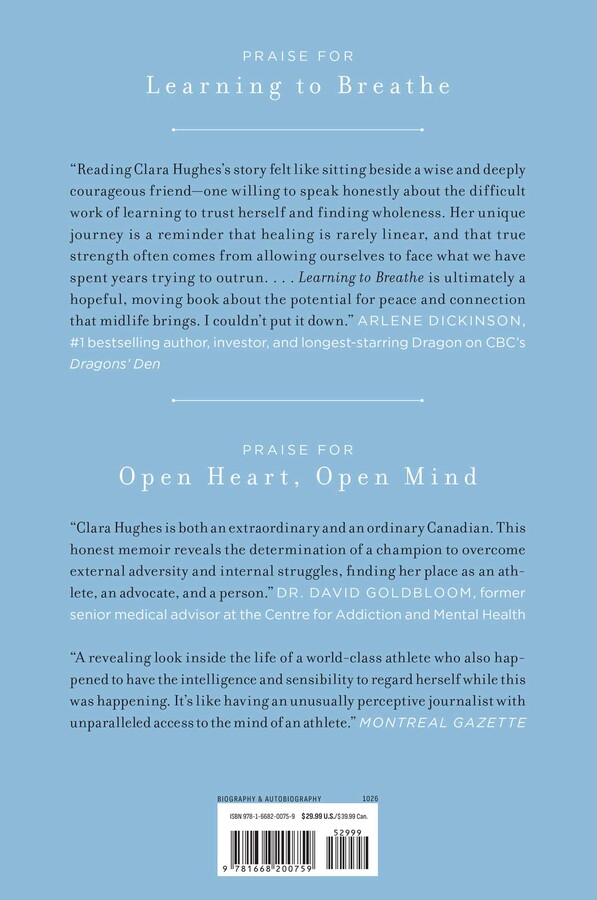
“Clara Hughes is both an extraordinary and an ordinary Canadian. This honest memoir reveals the determination of a champion to overcome external adversity and internal struggles, finding her place as an athlete, an advocate, and a person.”
—DR. DAVID GOLDBLOOM, Senior Medical Advisor, Centre for Addiction and Mental Health
“Clara’s story is just like her: It is energetic, strong, full of character, and very powerful. You really feel the determination within her and you cannot fail to wish you could award her another gold medal for the way she turned her life around and makes it her duty to help others.”
—GAETAN BOUCHER, speed skating Olympic medalist
“Clara brings us along on her journey from childhood to her incredible Olympic success, through her victories and her failures, all while dealing with her own personal torment. I now believe Clara to be superhuman, not for her incredible Olympic success and athletic feats, but for her dogged battle against depression, first for herself and now for the rest of us through her advocacy work. I couldn’t stop reading.”
— JOHANN KOSS, CEO, Right to Play International
“Her book puts us on the handlebars and rides us headlong into a childhood tainted by her father’s alcoholism, a multi-generational addiction pattern that affected herself and both her grandfathers as well. […] With the same stealth and fight that brought her gold, Clara Hughes is talking, sharing and learning. […] She’s unstoppable, even in the off-season.”
— Vancouver Sun
“…honest and courageous.”
— Guelph Mercury
“... a fine, honest book, a revealing look inside the life of a world-class athlete who also happened to have the intelligence and sensibility to regard herself while this was happening. It’s like having an unusually perceptive journalist with unparalleled access to the mind of an athlete."
—Montreal Gazette
Praise for Open Heart, Open Mind
“An amazing athlete, a great person, and a wonderful motivating example for all!”
—JOE JUNEAU, ice hockey Olympic medalist and former NHL player
Resources and Downloads
High Resolution Images
-
Book Cover Image (jpg): Learning to Breathe
Hardcover 9781668200759
-
Author Photo (jpg): Clara Hughes Photograph © Simon Baker(0.1 MB)
Any use of an author photo must include its respective photo credit