
Plus, receive recommendations and exclusive offers on all of your favorite books and authors from Simon & Schuster.
0:00 /
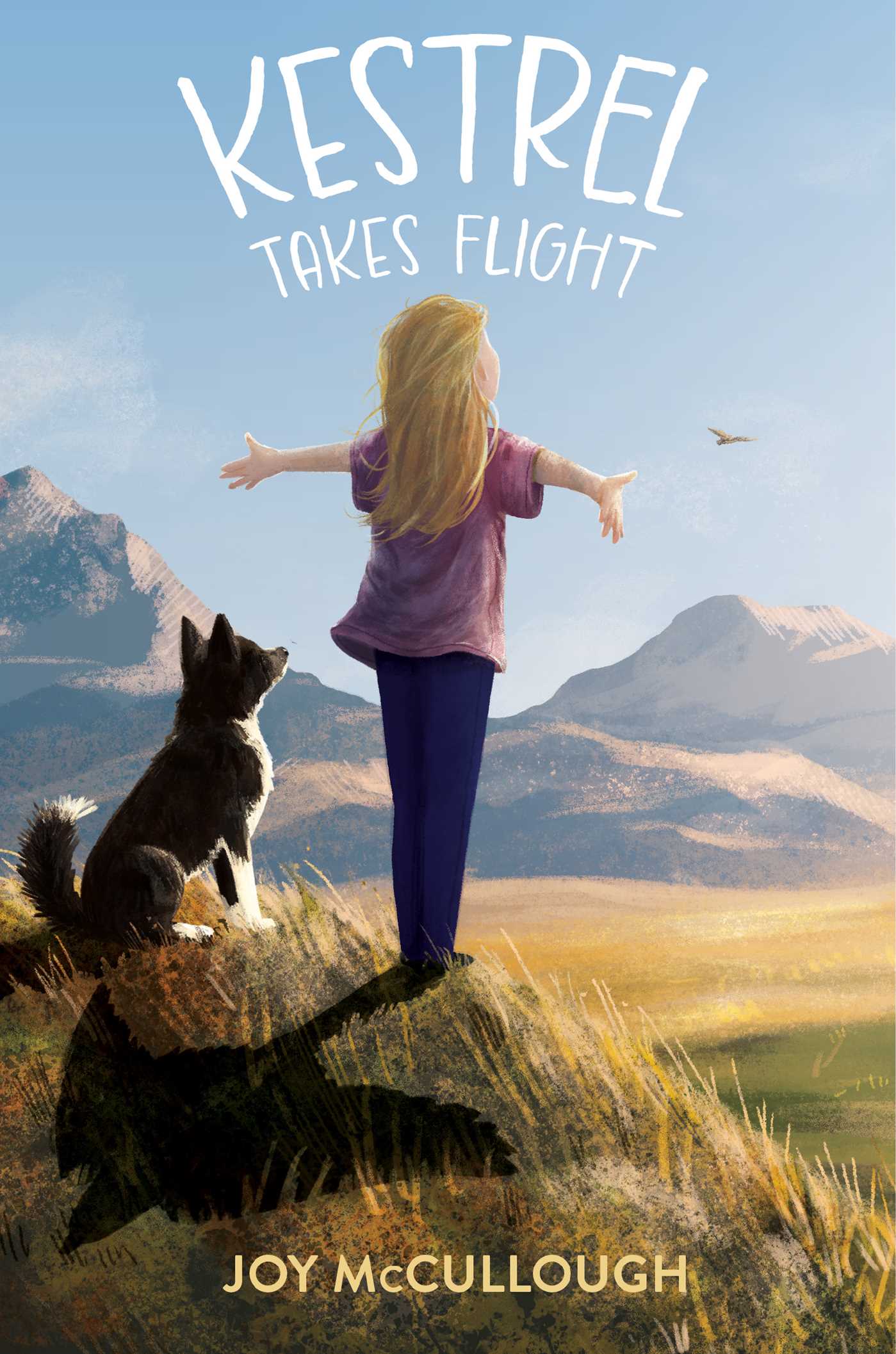
Kestrel Takes Flight
LIST PRICE $17.99
PRICE MAY VARY BY RETAILER
Get 20% off with code JULY20 plus free shipping on orders of $40 or more. Discount on physical products only. Terms apply.
Buy from Other Retailers
Table of Contents
About The Book
Two starred reviews!
A girl learns to stand up for herself and embrace the true meaning of home against the backdrop of the Montana wilderness in this heartfelt novel in verse by acclaimed author Joy McCullough that is a “quietly powerful exploration of courage, chosen family, and learning to trust yourself” (Booklist).
A kestrel
is the smallest
bird of prey
in North America.
Kestrel doesn’t feel much like the fierce bird for which she is named. Not after being rushed away from her grandfather’s strict church community to the wilds of Montana. Her mother has gotten a job at a conservation institute, where she’ll work with a special breed of dog to help make interactions between humans and bears safer.
At first, Kes is terrified of the dogs and angry at her mother for ripping her from the only world she’s known. But with some distance from her grandfather, she starts to understand how badly his bark hurt. In this new terrain, can Kestrel discover a safe place to spread her wings and soar?
A girl learns to stand up for herself and embrace the true meaning of home against the backdrop of the Montana wilderness in this heartfelt novel in verse by acclaimed author Joy McCullough that is a “quietly powerful exploration of courage, chosen family, and learning to trust yourself” (Booklist).
A kestrel
is the smallest
bird of prey
in North America.
Kestrel doesn’t feel much like the fierce bird for which she is named. Not after being rushed away from her grandfather’s strict church community to the wilds of Montana. Her mother has gotten a job at a conservation institute, where she’ll work with a special breed of dog to help make interactions between humans and bears safer.
At first, Kes is terrified of the dogs and angry at her mother for ripping her from the only world she’s known. But with some distance from her grandfather, she starts to understand how badly his bark hurt. In this new terrain, can Kestrel discover a safe place to spread her wings and soar?
Reading Group Guide
Get a FREE ebook by joining our mailing list today! Plus, receive recommendations for your next Book Club read.
By clicking 'Sign me up' I agree to the Terms of Use and acknowledge the Privacy Policy and Notice of Financial Incentive. Free ebook offer available to NEW US subscribers only. Offer redeemable at Simon & Schuster's ebook fulfillment partner. Must redeem within 90 days. See full terms and conditions and this month's choices.
Reading Group Guide
Kestrel Takes Flight
By Joy McCullough
About the Book
Kestrel doesn’t understand why her life is being uprooted in the middle of the night. One minute, she and Mom are living with Grandpa in San Diego, and the next, Mom’s dragging her onto a plane heading to rural Montana. Her mom has taken a job training special dogs to keep bears and humans safely apart. Kestrel’s mom is excited for a fresh start, but Kestrel struggles with how different things are in their new home. She longs for the predictability of her grandpa’s home, with its strict rules and quiet order. Worse yet, the dogs terrify her. Kestrel feels nothing like the bold, powerful bird for which she was named.
As the weeks pass, however, Kestrel starts to realize that maybe life with Grandpa was not as perfect as she once thought. And maybe, just maybe, this strange new place holds the possibility of something more. Can she find the courage to spread her wings and discover who she really is?
Discussion Questions
1. Why do you think Kestrel’s mom decides to move them to Montana without consulting her daughter? How does Kestrel feel about the move initially? Have your parents ever made a big decision about your life without consulting you? What did it feel like?
2. Why does Kestrel describe Montana as “another planet”? How is it different from her life in San Diego?
3. How does Doc treat Kestrel when they first meet? What do you think about Doc’s approach?
4. Why is Kestrel so resistant to becoming friends with Nico? How does their relationship change over the course of the book? Have you ever become friends with someone that you didn’t like at first? Describe how that friendship developed.
5. Have you ever experienced a big change like a move or a new school? How did it feel, and what helped you adjust?
6. After they’ve been in Montana for a while, Kestrel thinks, “Maybe there’s some freedom in the unfamiliar.” What does she mean? Do you agree?
7. Why does Kestrel’s mom lie about how long they’ll be gone from Grandpa’s house? How does Kestrel react when she finds out?
8. Why does Kestrel trust her grandpa more than her mom at the beginning of the book? How do her feelings about her grandpa change over time? What causes that change?
9. Grandpa calls Kestrel’s mom a “walking disaster.” Do you think that is fair? Why or why not?
10. Why do you think Doc is so supportive and kind to Kestrel and her mom? Has someone you didn’t know well ever done you a major kindness?
11. Grandpa says some things are “of the world.” What does he mean, and how does this belief shape Kestrel’s life?
12. Kestrel says that “Grandpa pays the bills / so it seems fair to me / that he makes the rules.” (p. 29) Do you agree? Why or why not?
13. What do phrases like “Grandpa’s bark hurt” and Grandpa “growls / a warning / raised hackles / teeth bared” tell us about him? (p. 104) Do you think words can be as harmful as actions?
14. In the author’s note, the author describes Grandpa’s behavior as emotional abuse. What exactly is emotional or verbal abuse? What are some warning signs you see in the story? What should someone do if they notice this in real life?
15. Think about Kestrel’s two bird names—her given name and Grandpa’s nickname for her, Chickadee. What is each bird like? Which name fits Kestrel best at different points in the story?
16. The first and last poems in the book both have the same title: A Kestrel. How are the poems similar and different? What do they show about how Kestrel has changed over the course of the story?
17. What does it mean literally and metaphorically to “take flight”? Why is Kestrel Takes Flight a good title for the book?
18. Kes says, “Home is where I’m free / to speak my mind. / Where people care what I think / and love me even / when I mess up.” (p. 225) What is home to you?
19. Have you heard of Karelian bear dogs before? While reading this book, what did you learn about them and about how they help prevent human-bear interactions? What other ways have you seen or heard of dogs helping humans?
20. How does Kestrel feel about the dogs when she and her mom first arrive in Montana? How do Kestrel’s feelings about the dogs change over time? What causes that change?
21. Why do you think Doc invites Kestrel on the scenting drive, and what happens there? How does her life change afterward?
22. How do Kestrel’s letters to her grandpa change over time? What does that show about her growth?
23. What happens when Kestrel’s grandpa shows up at the Bear Institute? Did this turn of events surprise you? Why or why not?
24. Why do you think the author chose to tell this story as a series of poems? What did you like about reading a story told in verse? How was this format either challenging or more accessible compared to a story written in prose?
25. What is Kestrel’s idea to make money for the Rocky Mountain Bear Institute after they lose their funding? In what way is this idea a combination of her old and new lives?
26. The main character of this book, Kestrel, is named after a small bird of prey. When does Kestrel relate to the creature that inspired her name? If you were an animal, what animal would you be, and why?
Extension Activities
1. Human-Wildlife Interactions and Conflicts. Create a slideshow or video presentation about conflicts between a specific animal species and humans. Some examples include bears in the Rocky Mountains, like those in Kestrel Takes Flight, jaguars in Central America, elephants in Sri Lanka, or baboons in Namibia. Be sure to include:
a. Why these animals and humans come into contact.
b. What happens when they intrude on each other’s space.
c. What humans can do or already are doing to decrease these encounters.
d. If you’d like, also include information comparing approaches in different regions (Montana vs. Alaska, for example).
2. Catalog of Working Dogs. The Karelian dogs in this story are working dogs, trained to do a specific job to help humans. Working dogs can be trained to do many different jobs, from wildlife management to helping with medical needs. Create a catalog of different kinds of working dogs. For each job, include pictures of a dog doing that job, information about what work the dog does, and how the dog’s work helps humans.
3. Debate: Balancing Community Needs. Imagine you live in a town where bears have been getting into people’s yards, smashing chicken coops and bird feeders, and stealing garbage. In small groups, have a debate about how the town should handle this situation. Each member of your group should take on a different role and present that person’s point of view. Be sure to consider: When humans and wild animals compete for the same space, how should we handle it? Whose needs should be prioritized? Roles can include:
● A conservationist
● A local resident who has had their yard wrecked by bears
● A farmer/rancher who is worried about his animals
● A wildlife biologist
4. Poetry Analysis. Choose one poem in Kestrel Takes Flight that brought up strong emotions or especially stood out for you. What about this poem appealed to you? Analyze how the author uses language (e.g., imagery, metaphors, word choice) and structure (line length, line breaks, different types of print, poem length, etc.) to convey ideas and feelings. How does this poem contribute to the story as a whole?
5. Write Your Own Story in Verse. Kestrel Takes Flight is written entirely in non-rhyming verse, or poetry. Write a story in verse about an emotional or challenging time in your own life. Use vivid language and structure your poem(s) to help your reader understand what you were thinking and feeling during that experience.
6. Character Profile. Create a character profile for Kestrel. First, create an image of her, using any medium you’d like: colored pencils, paints, collage, or online drawing tools, for example. Then list her strengths, fears, challenges she needs to overcome, and how she grows and changes over the course of the story.
Chris Clark is a writer and reading teacher who lives with her family in coastal Maine.
This guide has been provided by Simon & Schuster for classroom, library, and reading group use. It may be reproduced in its entirety or excerpted for these purposes. For more Simon & Schuster guides and classroom materials, please visit simonandschuster.net/m/prek12-teachers-librarians/teaching-resources.
Kestrel Takes Flight
By Joy McCullough
About the Book
Kestrel doesn’t understand why her life is being uprooted in the middle of the night. One minute, she and Mom are living with Grandpa in San Diego, and the next, Mom’s dragging her onto a plane heading to rural Montana. Her mom has taken a job training special dogs to keep bears and humans safely apart. Kestrel’s mom is excited for a fresh start, but Kestrel struggles with how different things are in their new home. She longs for the predictability of her grandpa’s home, with its strict rules and quiet order. Worse yet, the dogs terrify her. Kestrel feels nothing like the bold, powerful bird for which she was named.
As the weeks pass, however, Kestrel starts to realize that maybe life with Grandpa was not as perfect as she once thought. And maybe, just maybe, this strange new place holds the possibility of something more. Can she find the courage to spread her wings and discover who she really is?
Discussion Questions
1. Why do you think Kestrel’s mom decides to move them to Montana without consulting her daughter? How does Kestrel feel about the move initially? Have your parents ever made a big decision about your life without consulting you? What did it feel like?
2. Why does Kestrel describe Montana as “another planet”? How is it different from her life in San Diego?
3. How does Doc treat Kestrel when they first meet? What do you think about Doc’s approach?
4. Why is Kestrel so resistant to becoming friends with Nico? How does their relationship change over the course of the book? Have you ever become friends with someone that you didn’t like at first? Describe how that friendship developed.
5. Have you ever experienced a big change like a move or a new school? How did it feel, and what helped you adjust?
6. After they’ve been in Montana for a while, Kestrel thinks, “Maybe there’s some freedom in the unfamiliar.” What does she mean? Do you agree?
7. Why does Kestrel’s mom lie about how long they’ll be gone from Grandpa’s house? How does Kestrel react when she finds out?
8. Why does Kestrel trust her grandpa more than her mom at the beginning of the book? How do her feelings about her grandpa change over time? What causes that change?
9. Grandpa calls Kestrel’s mom a “walking disaster.” Do you think that is fair? Why or why not?
10. Why do you think Doc is so supportive and kind to Kestrel and her mom? Has someone you didn’t know well ever done you a major kindness?
11. Grandpa says some things are “of the world.” What does he mean, and how does this belief shape Kestrel’s life?
12. Kestrel says that “Grandpa pays the bills / so it seems fair to me / that he makes the rules.” (p. 29) Do you agree? Why or why not?
13. What do phrases like “Grandpa’s bark hurt” and Grandpa “growls / a warning / raised hackles / teeth bared” tell us about him? (p. 104) Do you think words can be as harmful as actions?
14. In the author’s note, the author describes Grandpa’s behavior as emotional abuse. What exactly is emotional or verbal abuse? What are some warning signs you see in the story? What should someone do if they notice this in real life?
15. Think about Kestrel’s two bird names—her given name and Grandpa’s nickname for her, Chickadee. What is each bird like? Which name fits Kestrel best at different points in the story?
16. The first and last poems in the book both have the same title: A Kestrel. How are the poems similar and different? What do they show about how Kestrel has changed over the course of the story?
17. What does it mean literally and metaphorically to “take flight”? Why is Kestrel Takes Flight a good title for the book?
18. Kes says, “Home is where I’m free / to speak my mind. / Where people care what I think / and love me even / when I mess up.” (p. 225) What is home to you?
19. Have you heard of Karelian bear dogs before? While reading this book, what did you learn about them and about how they help prevent human-bear interactions? What other ways have you seen or heard of dogs helping humans?
20. How does Kestrel feel about the dogs when she and her mom first arrive in Montana? How do Kestrel’s feelings about the dogs change over time? What causes that change?
21. Why do you think Doc invites Kestrel on the scenting drive, and what happens there? How does her life change afterward?
22. How do Kestrel’s letters to her grandpa change over time? What does that show about her growth?
23. What happens when Kestrel’s grandpa shows up at the Bear Institute? Did this turn of events surprise you? Why or why not?
24. Why do you think the author chose to tell this story as a series of poems? What did you like about reading a story told in verse? How was this format either challenging or more accessible compared to a story written in prose?
25. What is Kestrel’s idea to make money for the Rocky Mountain Bear Institute after they lose their funding? In what way is this idea a combination of her old and new lives?
26. The main character of this book, Kestrel, is named after a small bird of prey. When does Kestrel relate to the creature that inspired her name? If you were an animal, what animal would you be, and why?
Extension Activities
1. Human-Wildlife Interactions and Conflicts. Create a slideshow or video presentation about conflicts between a specific animal species and humans. Some examples include bears in the Rocky Mountains, like those in Kestrel Takes Flight, jaguars in Central America, elephants in Sri Lanka, or baboons in Namibia. Be sure to include:
a. Why these animals and humans come into contact.
b. What happens when they intrude on each other’s space.
c. What humans can do or already are doing to decrease these encounters.
d. If you’d like, also include information comparing approaches in different regions (Montana vs. Alaska, for example).
2. Catalog of Working Dogs. The Karelian dogs in this story are working dogs, trained to do a specific job to help humans. Working dogs can be trained to do many different jobs, from wildlife management to helping with medical needs. Create a catalog of different kinds of working dogs. For each job, include pictures of a dog doing that job, information about what work the dog does, and how the dog’s work helps humans.
3. Debate: Balancing Community Needs. Imagine you live in a town where bears have been getting into people’s yards, smashing chicken coops and bird feeders, and stealing garbage. In small groups, have a debate about how the town should handle this situation. Each member of your group should take on a different role and present that person’s point of view. Be sure to consider: When humans and wild animals compete for the same space, how should we handle it? Whose needs should be prioritized? Roles can include:
● A conservationist
● A local resident who has had their yard wrecked by bears
● A farmer/rancher who is worried about his animals
● A wildlife biologist
4. Poetry Analysis. Choose one poem in Kestrel Takes Flight that brought up strong emotions or especially stood out for you. What about this poem appealed to you? Analyze how the author uses language (e.g., imagery, metaphors, word choice) and structure (line length, line breaks, different types of print, poem length, etc.) to convey ideas and feelings. How does this poem contribute to the story as a whole?
5. Write Your Own Story in Verse. Kestrel Takes Flight is written entirely in non-rhyming verse, or poetry. Write a story in verse about an emotional or challenging time in your own life. Use vivid language and structure your poem(s) to help your reader understand what you were thinking and feeling during that experience.
6. Character Profile. Create a character profile for Kestrel. First, create an image of her, using any medium you’d like: colored pencils, paints, collage, or online drawing tools, for example. Then list her strengths, fears, challenges she needs to overcome, and how she grows and changes over the course of the story.
Chris Clark is a writer and reading teacher who lives with her family in coastal Maine.
This guide has been provided by Simon & Schuster for classroom, library, and reading group use. It may be reproduced in its entirety or excerpted for these purposes. For more Simon & Schuster guides and classroom materials, please visit simonandschuster.net/m/prek12-teachers-librarians/teaching-resources.
About The Author
Photograph © Joy McCullough-Carranza
Joy McCullough writes books and plays from her home in the Seattle area, where she lives with her husband and two children. She is the author of the middle grade novels Across the Pond, A Field Guide to Getting Lost, Not Starring Zadie Louise, Code Red, Kestrel Takes Flight, and Basil & Dahlia, as well as the middle grade series Team Awkward, and the picture books Harriet’s Ruffled Feathers, Champ and Major: First Dogs, and The Story of a Book. Her debut novel Blood Water Paint was longlisted for the National Book Award and was a William C. Morris Debut Award Finalist. Visit her at JoyMcCullough.com.
Product Details
- Publisher: Atheneum Books for Young Readers (May 26, 2026)
- Length: 304 pages
- ISBN13: 9781665972659
- Grades: 5 and up
- Ages: 10 - 99
Browse Related Books
Raves and Reviews
* “McCullough’s skillful use of contrast between Kestrel’s past and present drives the novel’s powerful poetic imagery. . . Fans of Jamie Sumner’s Deep Water and Megan E. Freeman’s Alone will likely admire Kestrel’s bravery.”
– Shelf Awareness, STARRED REVIEW
* “McCullough’s moving verse novel elegantly holds space for Kestrel’s conflicting emotions as the summer progresses. Kestrel’s spare, honest first-person narration lays bare the intensity and complexity of her feelings. . . . Well-realized secondary characters (including canine ones) support Kestrel as she moves from fear (of dogs, of freedom, of Grandpa) to belief in herself and what she’s capable of.”
– Horn Book, STARRED REVIEW
"In this tender verse novel, Joy McCullough explores complications of love and loyalty, reminding us that—with great courage and true friends—we have the power to redefine ourselves, our homes, and the kinds of families we want to create."
– Megan E. Freeman, bestselling author of Alone
"What a beautiful story, and what a subtle unraveling of a young girl's understanding of abuse and what home should really feel like."
– Nicole Melleby, author of Lambda Literary finalist Hurricane Season
"A layered story about found family, the desire to be understood and valued, and how nature can help us find the courage to soar."
– Rajani LaRocca, Newbery Honor-winning author of Red, White, and Whole
“McCullough chronicles one tween’s reckoning with religious faith and overcoming fear in this empowering verse novel. . . . Accessible text portrays the protagonist’s shift from frightened nervousness to steadfast self-confidence, resulting in a deeply introspective offering.”
– Publishers Weekly
“McCollough offers a tender look at a girl and her mother as they slowly begin to build a life outside the shadow of an emotionally manipulative elder. Kestrel’s relationship with her grandfather is handled thoughtfully, showing the complicated mix of love, loyalty, and fear that can exist in families. . . . An accessible and heartfelt story about emotional control, resilience, and finding a path forward.”
– School Library Journal
"The sparse verse effectively conveys Kestrel’s anxiety and gradual realization . . . An accessible and appealing exploration of coercion, autonomy, and finding one’s voice.”
– Kirkus Reviews
Awards and Honors
- Junior Library Guild Gold Standard Selection
Resources and Downloads
High Resolution Images
-
Book Cover Image (jpg): Kestrel Takes Flight
Hardcover 9781665972659
-
Author Photo (jpg): Joy McCullough Photograph © Joy McCullough-Carranza(0.1 MB)
Any use of an author photo must include its respective photo credit