Plus, receive recommendations and exclusive offers on all of your favorite books and authors from Simon & Schuster.
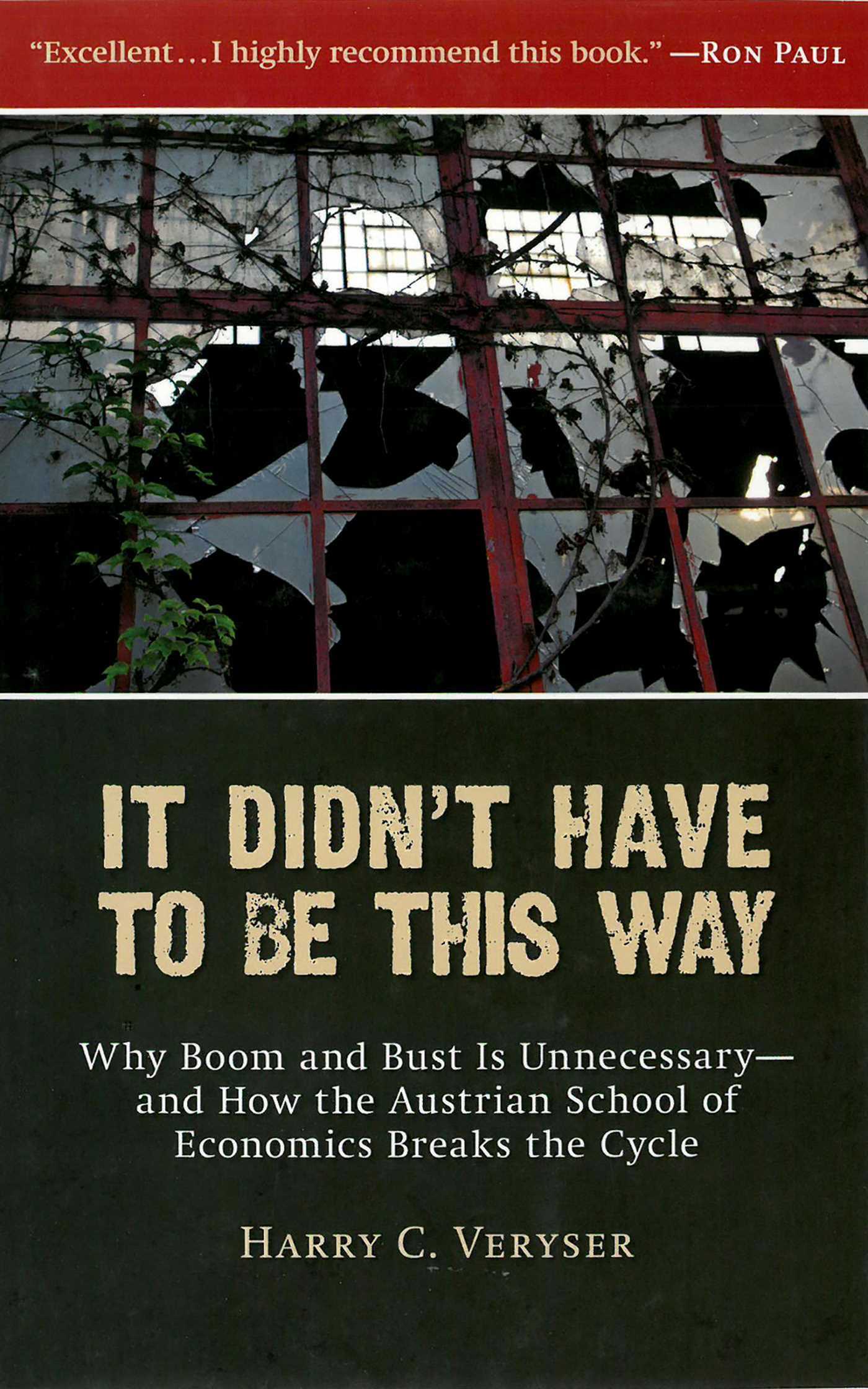
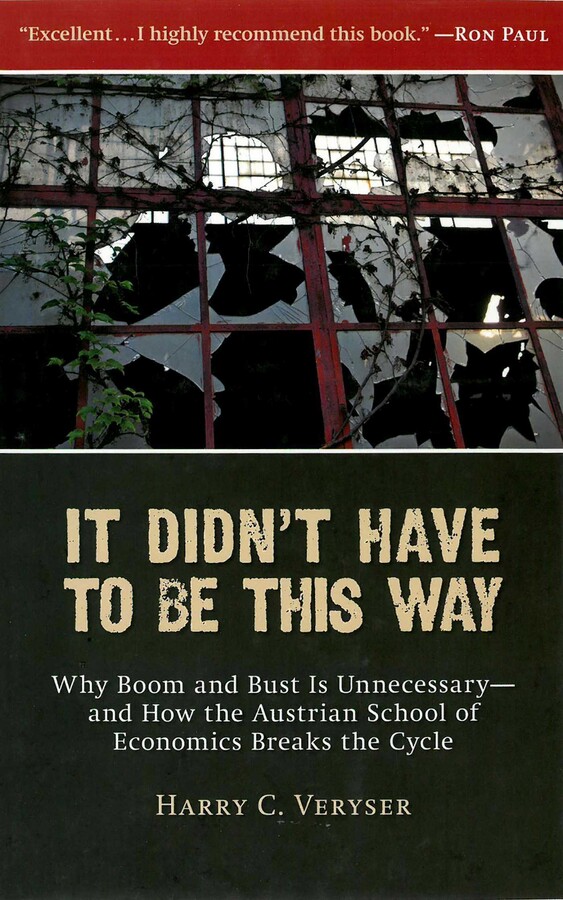
It Didn't Have to Be This Way
Why Boom and Bust Is Unnecessary—and How the Austrian School of Economics Breaks the Cycle
Published by Regnery Gateway
Distributed by Simon & Schuster
LIST PRICE $14.99
PRICE MAY VARY BY RETAILER
Digital products purchased on SimonandSchuster.com must be read on the Simon & Schuster Books app. Learn more.
Free shipping when you spend $40. Terms apply.
Buy from Other Retailers
Table of Contents
About the Book
"Excellent . . . I highly recommend this book." —RON PAUL
Why is the boom-and-bust cycle so persistent? Why did economists fail to predict the economic meltdown that began in 2007—or to pull us out of the crisis more quickly? And how can we prevent future calamities?
Mainstream economics has no adequate answers for these pressing questions. To understand how we got here, and how we can ensure prosperity, we must turn to an alternative to the dominant approach: the Austrian School of economics.
Unfortunately, few people have even a vague understanding of the Austrian School, despite the prominence of leading figures such as Nobel Prize winner F. A. Hayek, author of The Road to Serfdom. Harry C. Veryser corrects that problem in this powerful and eye-opening book. In presenting the Austrian School’s perspective, he reveals why the boom-and-bust cycle is unnatural and unnecessary.
Veryser tells the fascinating (but frightening) story of how our modern economic condition developed. The most recent recession, far from being an isolated incident, was part of a larger cycle that has been the scourge of the West for a century—a cycle rooted in government manipulation of markets and currency. The lesson is clear: the devastation of the recent economic crisis—and of stagflation in the 1970s, and of the Great Depression in the 1930s—could have been avoided. It didn’t have to be this way.
Too long unappreciated, the Austrian School of economics reveals the crucial conditions for a successful economy and points the way to a free, prosperous, and humane society.
Product Details
- Publisher: Regnery Gateway (December 12, 2023)
- Length: 328 pages
- ISBN13: 9781684516773
Browse Related Books
Raves and Reviews
u201cHarry Veryser provides an excellent introduction to the Austrian School of economics and an excellent account of the economic history of the twentieth century, chronicling the rise, fall, and (hopefully) rebirth of classical liberalism or libertarianism. I highly recommend this book to the growing number of Americans interested in learning more about sound economics.u201d—RON PAUL, bestselling author of End the Fed and Liberty Defined
u201cHarry Veryser provides an excellent introduction to the Austrian School of economics and an excellent account of the economic history of the twentieth century, chronicling the rise, fall, and (hopefully) rebirth of classical liberalism or libertarianism. I highly recommend this book to the growing number of Americans interested in learning more about sound economics.u201d—RON PAUL, bestselling author of End the Fed and Liberty Defined
u201cI am blown away by how much ground Harry Veryser covers in this important book, and how skillfully he covers it. This book will give you a quick yet solid grounding in the recent financial crisis, U.S. and world economic history, the history of economic thought, and more. I strongly recommend it.u201dmdash;THOMAS E. WOODS JR., bestselling author of Meltdown, senior fellow of the Ludwig von Mises Institute
u201cI am blown away by how much ground Harry Veryser covers in this important book, and how skillfully he covers it. This book will give you a quick yet solid grounding in the recent financial crisis, U.S. and world economic history, the history of economic thought, and more. I strongly recommend it.u201dmdash;THOMAS E. WOODS JR., bestselling author of Meltdown, senior fellow of the Ludwig von Mises Institute
u201cToo much of mainstream economics is rooted in dubious presumptions and outright error; at the same time it’s adorned with equations that provide a thin veneer of mathematical precision. If the insights of the Austrian School had come to dominate the profession in the past century as I expect they will in the future, many calamities could have been avoided. Harry Veryser has given us a book that not only tells all of us what we need to learn but also provides economists with truths they should never have forgotten.u201dmdash;LAWRENCE W. REED, president of the Foundation for Economic Education
u201cToo much of mainstream economics is rooted in dubious presumptions and outright error; at the same time it’s adorned with equations that provide a thin veneer of mathematical precision. If the insights of the Austrian School had come to dominate the profession in the past century as I expect they will in the future, many calamities could have been avoided. Harry Veryser has given us a book that not only tells all of us what we need to learn but also provides economists with truths they should never have forgotten.u201dmdash;LAWRENCE W. REED, president of the Foundation for Economic Education
u201cHarry Veryser has written an excellent book not only on Austrian economics but also on a century and a half of economic history. His is a penetrating analysis of the most recent economic crisis. Professor Veryser’s careful analysis of the case for the gold standard is, in itself, outstanding scholarship.u201dmdash;LEWIS E. LEHRMAN, cofounder of the Gilder Lehrman Institute of American History, author of The True Gold Standard
u201cHarry Veryser has written an excellent book not only on Austrian economics but also on a century and a half of economic history. His is a penetrating analysis of the most recent economic crisis. Professor Veryser’s careful analysis of the case for the gold standard is, in itself, outstanding scholarship.u201dmdash;LEWIS E. LEHRMAN, cofounder of the Gilder Lehrman Institute of American History, author of The True Gold Standard
u201cProfessor Harry Veryser is in the forefront of teaching sound economics in the tradition of the Austrian School. In this much-anticipated book, he powerfully demonstrates how much further advanced the United States and the world would be if our leaders had followed the grand principles of sound money and free markets. I love every page of this book.u201dmdash;MARK SKOUSEN, editor of Forecasts Strategies, author of Investing in One Lesson
u201cProfessor Harry Veryser is in the forefront of teaching sound economics in the tradition of the Austrian School. In this much-anticipated book, he powerfully demonstrates how much further advanced the United States and the world would be if our leaders had followed the grand principles of sound money and free markets. I love every page of this book.u201dmdash;MARK SKOUSEN, editor of Forecasts Strategies, author of Investing in One Lesson
Resources and Downloads
High Resolution Images
-
Book Cover Image (jpg): It Didn't Have to Be This Way
eBook 9781684516773