
Plus, receive recommendations and exclusive offers on all of your favorite books and authors from Simon & Schuster.
0:00 /
LIST PRICE $19.00
PRICE MAY VARY BY RETAILER
Get 25% off with code GIFT26 plus free shipping on orders of $40 or more. Discount on physical products only. Terms apply.
Buy from Other Retailers
Table of Contents
About the Book
A USA TODAY BESTSELLER!
A BEST BOOK OF SUMMER FOR THE NEW YORK TIMES, OPRAH DAILY, AND TOWN AND COUNTRY
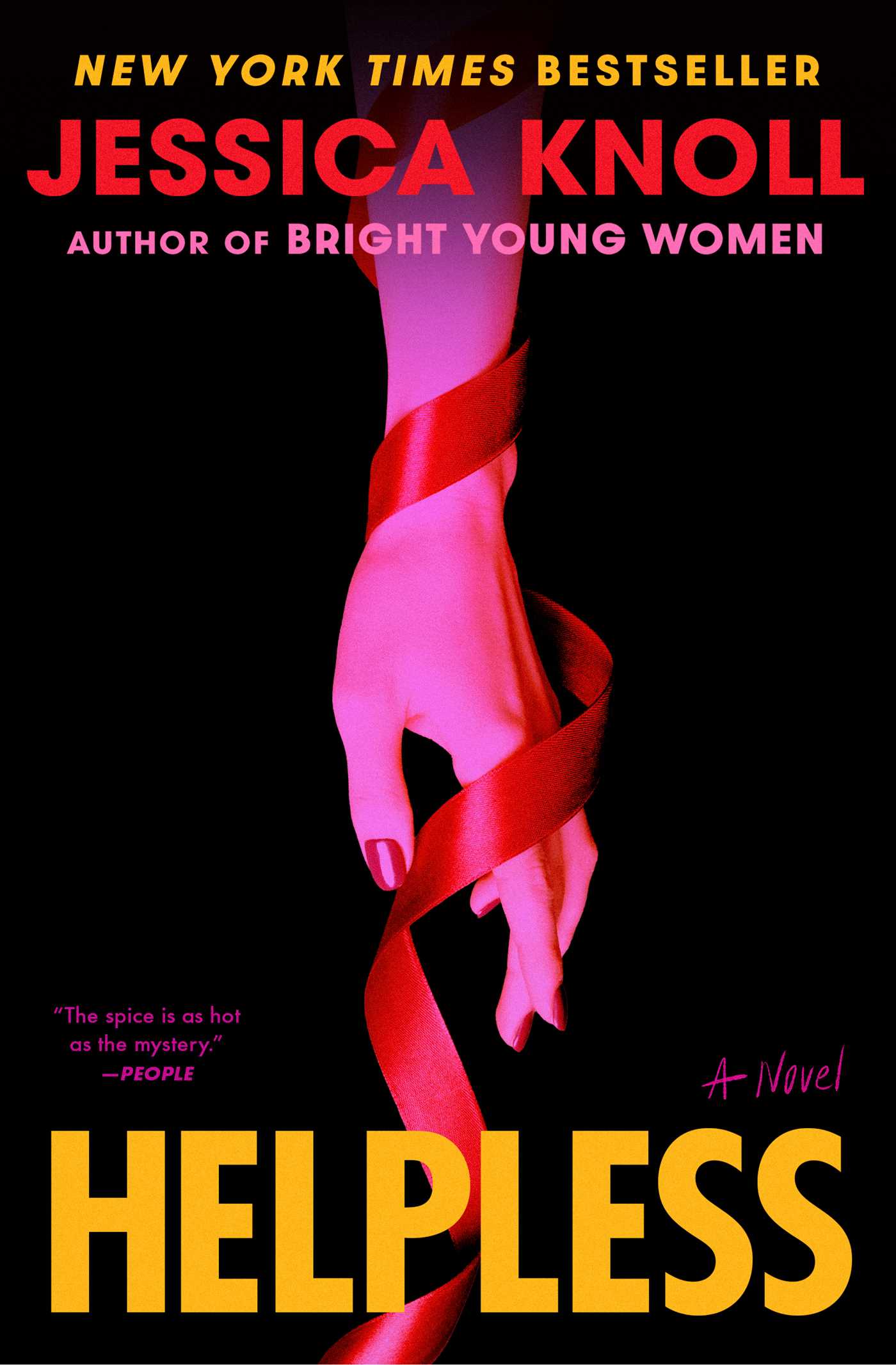
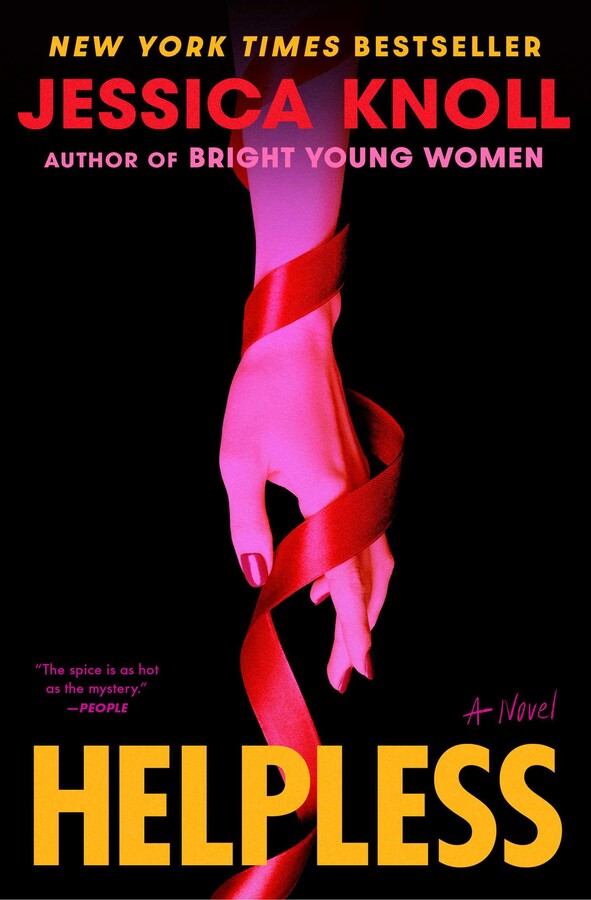
From the New York Times bestselling author of Luckiest Girl Alive and Bright Young Women comes a "smart thriller" (The New York Times) full of shameless sex and page-turning twists about a woman kidnapped by the man who once knew her best—and the devastating secret that could destroy them both.
Faye Heron has an enviable life. Her work on an acclaimed television show built professional bridges and burned personal ones. Now, she’s one half of a power-producing duo with her Hollywood husband. Beautiful, rich, and successful, Faye has spent years believing her version of the past and using it as material for her writing.
Then, her former film professor passes away, and the funeral brings her back to her college campus and face to face with the man she barely escaped.
Henry Spalding was Faye’s first love, whose presence still looms large in her mind. Their connection was obsessive, intoxicating, impossible to replicate. Because Henry is one of a kind.
The kind who delivers a hypnotic apology for the way things ended. The kind who suggests they go back to the hotel for a drink. The kind who drugs and kidnaps her.
When Faye wakes up bound and imprisoned in Henry’s isolated mountain cabin, she’s forced to confront a terrifying possibility: this may not be about revenge. As the days pass, Faye begins to chip away at the truth. What was the real cause of her professor’s death? And could it have something to do with why Henry has brought her here? Most jarring of all—what really happened all those years ago with Henry? Is it possible her version of the past cannot be trusted?
With every revelation, the walls close in. As Faye and Henry are pulled back into the toxic, magnetic bond that nearly destroyed them once before, a sprawling, years-old mystery begins to take shape, rewriting history as Faye remembers it and forcing her to reckon with her most complicated and thrilling desires.
Excerpt
Chapter 1 Chapter 1
I arrive late to the funeral, wearing black linen and the ugliest ballet flats money can buy. Fellow stragglers crowd the vestibule, heads bowed, listening to a muffled version of the service behind chapel doors. I slip sideways between polyester shoulders, mouthing Sorry, and press close to the rose window above a bench dedicated to a student who died in the Civil War. Inside are disguised figures, washed violet by the Gothic glass, but I know it is him up there delivering the eulogy. The sound of his voice still makes me feel like I’ve sat on a stick of dynamite.
I go out into the courtyard with my hair gathered in my fist, fanning the back of my neck. It’s the third week of April and eighty-seven delirious degrees in the Finger Lakes region of New York state, two hundred miles closer to Toronto than Manhattan. There are no direct flights from Los Angeles to the town where I attended college twelve years ago, and the hypervigilance required for this day is now mazed with jet lag. I am digging through my bag for sunglasses, debating whether to walk or drive to the repast, when someone grabs me from behind. I do not scream. I’m told there is no such thing as normal, but how else to describe myself other than not?
“Hey, asshole.” I turn and shove Campbell in the chest. A boy with red hair stands solemnly by his side. Four years old? Six? I can never tell the ages of children.
“Tookie,” Campbell says. “This is Daddy’s friend Faye, and she’s on TV, so she’s allowed to use bad words.”
“I’m in the movies too, Tookie.”
Tookie gives me a tentative smile. He has small teeth that don’t touch, and he’s wearing linen pants that are too long and too tight, creased around the crotch from sweat. Silently, he slips his hand into his father’s and crosses his legs at the ankles like he needs a bathroom.
Overhead, the chapel bell tolls like a rebuke. “I missed most of the service,” I admit. “I got delayed for two hours in Detroit.”
Campbell grimaces. “Brutal, Faye.” He reaches out and relieves me of my shoulder bag, slinging it over his own. Campbell was assembled in a factory that trademarked 1950s male Americana—block jaw, dimpled chin, a shiny pat of blond hair parted neatly on the side. The manufacturers chipped him with chivalry too, right before they shipped him off for some lucky little girl to unwrap on Christmas morning.
“How did that go?” I tip my head toward the chapel.
“Oh, ” Campbell answers with a sigh, “it was definitely a funeral.” He bends his head, scuffs his shoe on the pavement, loosening a pebble caught in the treads. When he looks at me again I am startled to find him gray-faced and unguarded.
“It’s really good to see you,” I say, staring riveted at the replacement grief has made of my oldest friend.
“Kind of can’t believe you came.” Campbell knocks my shoulder gently with his own.
“Not many people I’d take a multi-leg commercial flight for.” I say this with a straight face and a spike of panic. It is Campbell’s uncle who passed away. He does not need a reason to be here, but I occupy a nebulous realm. If only I could say I came all this way to honor the profound impact that my former film professor had on my life and leave it at that.
“The studio couldn’t spring for a PJ?” Campbell grins, squints up one eye handsomely in the sun.
“Doing my part to minimize carbon emissions.”
A breeze off the lake parts the flowering dogwoods, dusting us with pollen, and Tookie sneezes twice into the crook of his elbow.
“Bless you,” I say to him.
“Thank you,” he whispers back with red eyes.
“We snuck out early to meet the caterers at the house,” Campbell says. He tugs Tookie’s hand and turns to go. “I’ll walk you to your car.”
Behind me the doors to Saint Thomas the Apostle open. People begin to file out of the limestone tower, to tighten around us like a public stoning. “That’s okay,” I say, trying to keep my voice bright. He could be anywhere. “I’m down the street in the opposite direction.”
“You sure?” Campbell reluctantly returns my bag to me. I can tell it goes against every well-bred bone in his body to allow a woman to walk to her car alone, even on a street lined with hydrangeas.
“I’ll see you in a few.” I find my small black sunglasses and walk briskly to the rental car before anyone else can grab me.
I drive through campus with the air-conditioning blasting, trying to get my skin to stop buzzing. On the lawn of the last standing fraternity house, two shirtless guys toss a lacrosse ball back and forth, feet sliding around in battered brown leather flip-flops. I slow in front of the small yellow house where I lived my senior year with a group of girls who always felt more like colleagues than friends, then come to a complete stop when I see the front door open. One brunette, one blonde, their hair in matching high ponytails, come bounding down the stairs with tennis rackets strapped to their backs, laughing and bumping hips in a way that more or less foretells their future. They’ll be roommates in a moldy prewar building in Back Bay, maids of honor three or four Septembers after, then, by the time I’m forty, they’ll be gifting each other the most expensive item off their baby registries, the white oak crib or the NASCAR stroller, whatever the in-laws didn’t snap up first. It’s not longing with which I watch them. I would not be who I am now if I were able to trade affection so easily, and I happen to like who I am.
I turn right at the President’s House, a stereotypical white stately thing, and coast alongside the deepest and largest of the Finger Lakes, the water so clean you can open your eyes four feet deep and see the kelp swaying like worshippers. A single sailboat ruffles the gray-blue surface, and on the dock a couple of girls are sunbathing with their shirts thrown over their faces. Aside from the sign posted at the water’s edge that provides the number for a suicide and crisis hotline, everything is as I remembered it when Campbell called me last week with the news.
I was finishing a late lunch with another writer (I write and direct the movies too, Tookie) when I glanced at my phone to see two missed calls from Campbell and a text. Call me when you can. Few things more ominous than that.
I excused myself and went into the bar garden, where phone calls are permitted, but both couches with the green botanical print were claimed, and in the smoking garden, people were smoking, so I went outside on the street by the valet and called Campbell back from there. The whole time I was running through the possible scenarios of what could have happened. Campbell is one of the few people I’ve stayed in touch with from the colleges, and we do not speak that often. Technically my alma mater is a women’s college that merged with the men’s campus down the hill around the time the Nineteenth Amendment was ratified, and so everyone refers to it as the colleges, though doing so makes me feel like an awful poseur. I wondered if Campbell was calling about the scholarship student whose script I had agreed to read in what can only be described as a full-circle moment, because I attended the colleges on the same writing scholarship. My former professor had emailed me about it last week, and because the former professor is also Campbell’s uncle, and because Campbell is still involved in the happenings at the colleges, it seemed conceivable it could have something to do with that, until Campbell picked up the phone and I heard the worn-out quality of his voice, like I was the fifth or maybe tenth person he’d had to terrible-text today to get them to call him back.
“Sorry,” he said. “I hate to send a message like that.”
“What’s going on?”
Campbell cleared his throat, started to speak, and had to clear it again. “PT passed away two nights ago.”
“Campbell,” I gasped. I was pacing the street, and I had just pivoted and was facing the valet, where Melanie Griffith was getting out of her car. It struck me as fitting, that I would hear about PT’s death while watching a Hollywood legend fish through her bag for her car keys. Professor Toner, or PT as I would come to know him, was the reason I was a member of this members-only club in West Hollywood that requires guests to cover the camera lens on their phones with branded stickers so that people like Melanie Griffith can eat their chop salad without fear of being photographed with their mouths open and one eye closed. People like me too, I suppose.
“What happened?” I asked in a high, nasal voice.
“It looks like he had a heart attack at some point Sunday evening. The house cleaner found him Monday morning.”
Vaguely, I recalled that PT had some sort of inherited heart condition, and this is why he walked everywhere and avoided red meat and, though it took great effort, eventually kicked the Pall Malls. He was tall and trim, and he looked like he belonged in Los Angeles, which he tried out for a few years before his prodigal return to the East Coast to inaugurate the film department at the colleges. When I made it here myself, I found tons of other industry people, just like him, who were fastidious about their health but would never turn down a light.
“I’m so sorry, Campbell.” I was trying to picture PT lying dead on a bathroom floor. In what, a robe? Pajamas? Death seemed beneath him somehow. I don’t think I ever saw the man wearing anything but a slim-fitting black T-shirt, even at his cabin on the lake during the summer. I used to see PT all the time in the summer, because Campbell’s family has a cabin on the same lake and so does his cousin, Henry Spalding, who is the one with the voice that makes me feel like I’ve sat on a stick of dynamite.
“I’m sorry too,” Campbell said back. “I know what he meant to you.”
My nose felt peppery. “Yeah” was all I said.
“You two were in touch about the scholarship student, right?”
I groaned. “He sent me her script a week ago, and I never even wrote him back. In my defense, she turned it in a week late.”
“Don’t beat yourself up, Faye. You’ve got a lot going on.” I could picture the kindness in Campbell’s face as he said this. Though it goes against every rule in Central Casting, Campbell is as decent a human being as he is handsome. In college, he remembered that orange was my favorite flavor of Gatorade, and he got a husband pillow because I had one, and we would fester on the floor together watching marathons of Project Runway. When I broke up with Henry—not just Campbell’s cousin but his constant companion since they were in diapers—he sent me a text: I love him but I get it.
“Have you made any of the funeral arrangements yet?”
“This weekend. At the chapel on campus. I was wondering… if you might be willing to speak?”
A warm, buttery feeling enveloped me. I was always on the periphery at a place like the colleges. Even after I became a frequent guest in PT’s home, I would suffer lashes of self-consciousness, wondering if I was only included because I was dating Henry. Fame has done an all right job of soothing my fears that I don’t matter to the people who matter to me, but having your name listed on the funeral program of a person who loved you the way your parents should is more of the elixir I’m after. “You want me to do the eulogy?” I said, touched.
“Sorry,” Campbell said, because I’d misunderstood. “Not the eulogy. Henry and I are doing that.”
“Oh.” Melanie Griffith had found her car keys, and she was laughing with the valet, something about how she’d lose her head if it weren’t attached to her body, probably.
“I think we are going to do some sort of ceremony on the dock the day after the funeral. He wanted to be cremated and have his ashes spread in the lake where Sarah is.”
I had dipped my head, swallowed hard, the totality of the tragedy summed up neatly in one sentence. PT had a wife who drowned herself in the lake just before I graduated. She had wanted children, noise, mess, chaos, and instead her life became too quiet to tolerate.
“I was thinking you could speak at that,” Campbell said, and when I didn’t respond right away, he spoke to the thing that we both knew was giving me pause. “I know it’s awkward with Henry being there, but he’s coming with his wife and kids, and honestly he’s, like, a totally different person now.”
A pleasant electricity lifted the soft blond hairs on my forearms, thinking about seeing Henry again. Besides my head, my eyebrows, and my lashes, grown thick and dark with one of those serums that is probably also making me blind, my forearms are the only place left on me with hair. This was the year I got everything lasered, vanquished. You could slip me on like a cashmere glove and my husband has no idea.
“But…,” I said. “The show.” I played a small but zeitgeisty role on the first season of a show created by a thirty-year-old sitcom star who had enough of reading canned lines set to a laugh track. People liked me enough that my role went from recurring to regular. In the third season, I wrote and directed an episode based on my breakup with Henry that made a viral, career-making splash.
“Faye, he didn’t watch it.”
I didn’t think he would have, but put so bluntly I was instantly reminded that there was a whole world out there that did not give a shit about me, that I could disappear into thin air and it would be news for about a week. “But he must know what it was all about.”
“He has two under four. He’s underwater.”
In theory, I understand that children are a cover for everything. It’s just that I do not aspire to understand in practice. I had looked down at my nails, realized I needed a manicure. Did I have enough time to get my eyebrows done before I left? It didn’t matter that Henry and I were both married to other people now. We had shattered each other. We would be checking, inspecting, merciless in our appraisal. “Okay,” I agreed.
We spoke for another minute or two and said goodbye. Inside, at reception, Melanie Griffith was spelling the last name of her guest for a staff member in a green-piped blazer. She put her hand on my elbow as I walked by and told me in her sweet, seductive voice that she was a fan.
Reading Group Guide
Get a FREE ebook by joining our mailing list today! Plus, receive recommendations for your next Book Club read.
By clicking 'Sign me up' I agree to the Terms of Use and acknowledge the Privacy Policy and Notice of Financial Incentive. Free ebook offer available to NEW US subscribers only. Offer redeemable at Simon & Schuster's ebook fulfillment partner. Must redeem within 90 days. See full terms and conditions and this month's choices.
This reading group guide for HELPLESS includes an introduction, discussion questions, and ideas for enhancing your book club. The suggested questions are intended to help your reading group find new and interesting angles and topics for your discussion. We hope that these ideas will enrich your conversation and increase your enjoyment of the book.
Introduction
It’s been twelve years since Faye Heron broke Henry Spalding’s heart. Henry was her college boyfriend, her first love, but Faye was in danger of being subsumed by him and the intensity of their connection. Now, Faye is one half of a Hollywood power producing duo. Henry is a married father running the family business. On the surface, both of their lives have essentially gone to plan.
When a former beloved college professor suddenly passes away, Faye and Henry find themselves back on campus for the funeral, circling something old and dangerous. But when Henry drugs and kidnaps Faye, all bets are off. As Henry’s wanton demands intensify, Faye finds herself pulled back into his irresistible gravity. Faye and Henry spiral into their old dynamic and a sprawling, years-old mystery begins to take shape—one that will rewrite history as Faye remembers it and reveal an astounding, cataclysmic truth.
Topics and Questions for Discussion
How has Faye and Henry’s relationship evolved over time? How is their relationship now different from how it was in college?
Despite their time apart, Henry and Faye quickly fall back into their old dynamics, even though they are married to other people. What do their relationships with their current spouses tell us about their characters?
When PT picks up Faye to take her to the airport after Henry breaks down, he tells her “Don’t be afraid to write about this one day” (page 144). How did his mentorship shape her career? In what ways did it impact her relationship with Henry?
Faye is extremely successful and driven in her career. How does her success impact her relationships? How does it shape her interactions with Emma?
On page 129, Faye stabs Campbell in order to escape. How does this impact your perception of her character?
Do Henry and Faye’s power dynamics ever flip? Where do you see this happen?
There are a lot of twists and turns in this story. Which was the most surprising, and why?
We learn that Henry struggles with anxiety and panic attacks. How does this affect your view of him? Does it excuse or explain any of his behavior? Why or why not?
What was your understanding of the ending? Did Faye’s experiences in the book happen as written, or were they all part of her script?
Enhance Your Book Club
Write out one of your own fantasies as a screenplay and read it back. What felt rewarding about it? Why were you drawn to what you wrote about?
Plan a trip to the Finger Lakes region of New York. Virtually explore the scenery and activities in the area.
Explore Jessica Knoll’s earlier works, such as Luckiest Girl Alice and Bright Young Women. Can you pinpoint any common themes in her books?
About the Author
Sabrina Lantos
Jessica Knoll is the New York Times bestselling author of Bright Young Women, The Favorite Sister, and Luckiest Girl Alive—now a major motion picture from Netflix starring Mila Kunis. She has been a senior editor at Cosmopolitan and the articles editor at Self. She lives in New York City with her family.
Product Details
- Publisher: Scribner (April 6, 2027)
- Length: 320 pages
- ISBN13: 9781668062319
Browse Related Books
Raves and Reviews
“Knoll is the author of really unsettling thrillers… [Helpless] is like Misery but with your ex.” —New York Times Book Review
“[A] smart thriller… This is the book to grab if you’re craving a prickle of fear. Be forewarned, the ending is a doozy.” —New York Times Book Review
“[A] taut contemporary tale of the explosive reunion of two former lovers… Knoll's twisty tale of psychological suspense, with its exploration of a nuanced relationship with elements of submission and control, will get readers talking.” —Booklist
"Knoll is a master of ambitious, cool-headed heroines who know exactly how to package their pain. But in Helpless, she lets one of them get seriously hot and bothered... Unapologetically kinky and almost diabolically twisty, this thriller keeps making you rethink who is using whom, and why. Also: Your book club will need at least two meetings to unpack the ending." —Oprah Daily
“Knoll is back with a vengeance… This twisty and twisted story of college love, adult success, and the complex ways in which people’s pasts are written into their futures is perfect for fans of Gillian Flynn’s Gone Girl and other psychological thrillers where women’s sociosexual desires are presented in prismatic, shifting ways.” —Library Journal
“True to form, [Knoll] absolutely goes there in this novel, offering a nuanced and unapologetic portrait of an unconventional relationship without judgment. Puts the ‘erotic’ back in ‘erotic thriller.’" —Kirkus
"A sexy new thriller." —New York Post
“Jessica Knoll is one of my favorite writers and Helpless is her at her best. A fearless, powerful and completely original thriller.” —Laura Dave, #1 New York Times bestselling author of The Last Thing He Told Me and The First Time I Saw Him
“A dark, twisty and addictive read that you will struggle to put down.” —Lisa Jewell, bestselling author of Don’t Let Him In
“I will read anything Jessica Knoll writes - her voice is inimitable, propulsive, and utterly addictive.” —Louise O’Neill, bestselling author of Only Ever Yours and Asking For It
“Slick, sexy and dripping in delicious suspense. This is Jessica Knoll at the very top of her game.” —Katy Brent, bestselling author of How to Kill Men and Get Away With It
“If Jessica Knoll writes it, I'll read it. The pages of her books seem to crackle with electricity and she's an utterly fearless writer. Perhaps never more so than in HELPLESS, a dark, daring, sexy tension-fest with head-spinning twists, which roars Knoll's refusal to ever write the same book twice.” —Catherine Ryan Howard, bestselling author of 56 Days
"Dark, twisty, and wildly addictive. Helpless is Jessica Knoll at her boldest and most unsettling." —Jeneva Rose, #1 New York Times bestselling author of The Perfect Marriage and The Perfect Divorce
"Few writers are able to capture human nature as well as Jessica Knoll. In Helpless, she crafts a razor-sharp thriller with a riveting cast of characters. Dark, daring and deliciously sexy, it takes an unflinching look at power and privilege, and the ways in which we efface ourselves for those in control." —Kia Abdullah, author of What Happens in the Dark
"Jessica Knoll has made a specialty of dark, compulsively readable stories about women trapped in other people’s narratives. Helpless sharpens that obsession into a relationship thriller with teeth." —Oprah Daily, “31 Most Anticipated Books of 2026”
Resources and Downloads
High Resolution Images
-
Book Cover Image (jpg): Helpless
Trade Paperback 9781668062319
-
Author Photo (jpg): Jessica Knoll Sabrina Lantos(0.1 MB)
Any use of an author photo must include its respective photo credit