Plus, receive recommendations and exclusive offers on all of your favorite books and authors from Simon & Schuster.
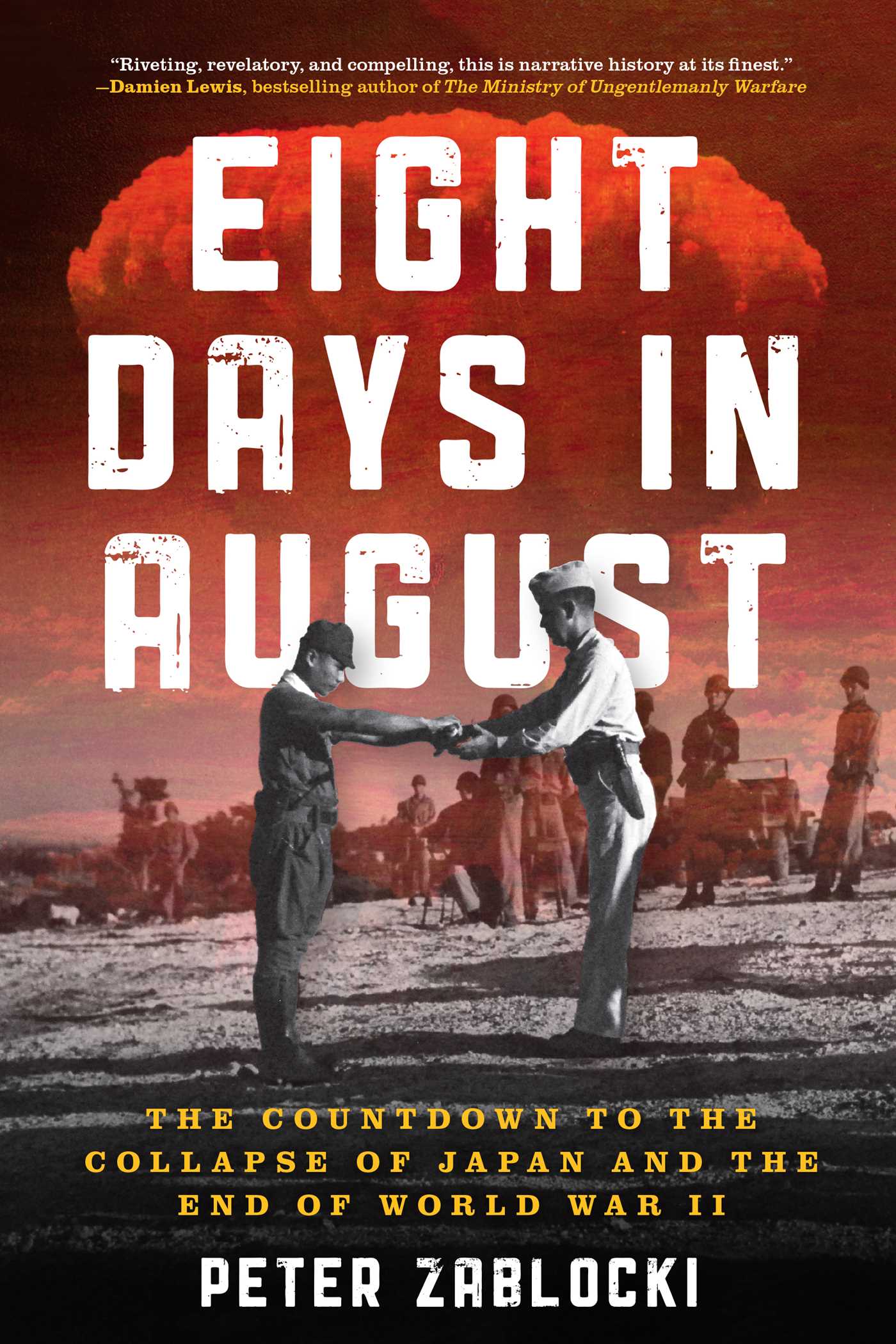
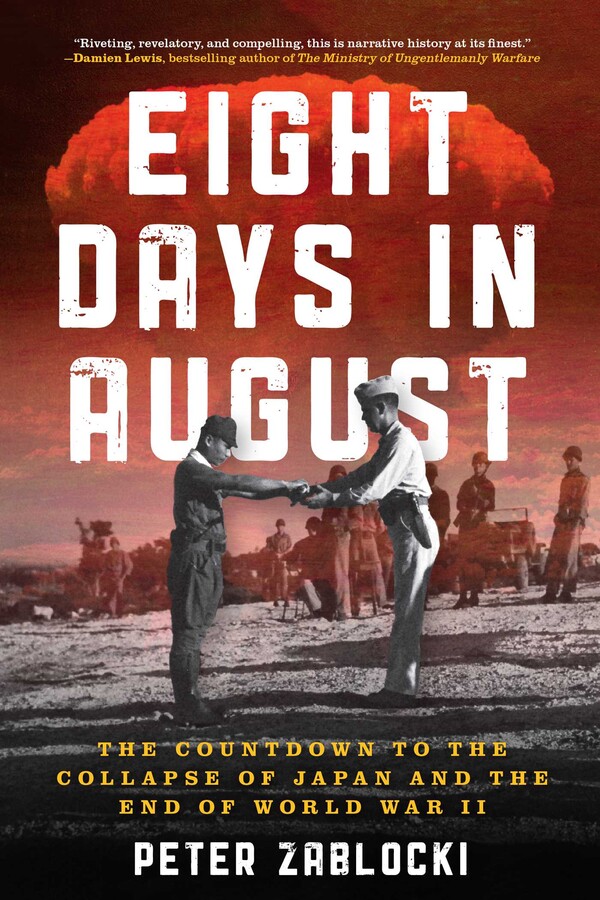
Eight Days in August
The Countdown to the Collapse of Japan and the End of World War II
Published by Stackpole Books
Distributed by Simon & Schuster
Table of Contents
About the Book
The final week of World War II unfolded like a political thriller—with millions of lives hanging in the balance.
By early August 1945, Japan had been chased across the Pacific, hemmed in on the Asian mainland, and isolated by the fall of Nazi Germany. But it did not surrender. Even after an atomic bomb destroyed Hiroshima, Japan held on – and seemed prepared to fight to the last man. For Japan to raise the white flag, it would take another atomic blast, a Soviet attack, and a failed coup by Japanese militarists. Carefully researched history that unfolds like a political thriller, Eight Days in August chronicles the dramatic series of events that led to the end of World War II with Japan.
The story opens on August 8, 1945, with Japan still reeling two days after Hiroshima. On the island of Tinian, American B-29 Superfortress Bockscar flies a practice run for dropping a second atomic bomb. In Moscow, the Soviet foreign minister hands the Japanese ambassador a declaration of war. The next day, setting in motion a week of high-stakes diplomacy and tense debate, a nuclear fireball incinerates Nagasaki, and the Red Army rolls into Japanese-held Manchuria in northeastern China.
In Washington, Truman and his cabinet debate softening the demand for unconditional surrender and allowing the Japanese emperor to remain. Planning continues for the invasion of Japan, an operation expected to cost hundreds of thousands of American and millions of Japanese casualties. Officials warily watch the Soviets in Manchuria, knowing that the deeper the Red Army drives, the graver the threat to the postwar world. The clock is ticking. The U.S. sends Japan a note proposing a way out for the emperor.
In Tokyo, the war cabinet is split between surrender and war to the death. Emperor Hirohito comes to favor peace, but a group of radical militarists demands to fight on, even if it means violating the godlike emperor’s will and toppling the government, even if it means destroying Japan. The coup fails, a wave of suicides follows, and on August 15, the emperor’s surrender message is broadcast to a people who have never before heard their leader’s voice.
Eight Days in August is a day-by-day – at times minute-by-minute – narrative of how Japan finally surrendered. While covering the sweep of grand events – the Manhattan Project, the causes and course of World War II in the Pacific, the origins of the Cold War in Asia – the book never loses sight of the individuals caught up in the war’s last gasp: the victims of Nagasaki, the crew who dropped the bomb, the Japanese general caught between loyalty to the emperor and his sense of military honor. Millions of lives hung in the balance, and Eight Days in August captures all the tension and drama of this world-defining moment.
By early August 1945, Japan had been chased across the Pacific, hemmed in on the Asian mainland, and isolated by the fall of Nazi Germany. But it did not surrender. Even after an atomic bomb destroyed Hiroshima, Japan held on – and seemed prepared to fight to the last man. For Japan to raise the white flag, it would take another atomic blast, a Soviet attack, and a failed coup by Japanese militarists. Carefully researched history that unfolds like a political thriller, Eight Days in August chronicles the dramatic series of events that led to the end of World War II with Japan.
The story opens on August 8, 1945, with Japan still reeling two days after Hiroshima. On the island of Tinian, American B-29 Superfortress Bockscar flies a practice run for dropping a second atomic bomb. In Moscow, the Soviet foreign minister hands the Japanese ambassador a declaration of war. The next day, setting in motion a week of high-stakes diplomacy and tense debate, a nuclear fireball incinerates Nagasaki, and the Red Army rolls into Japanese-held Manchuria in northeastern China.
In Washington, Truman and his cabinet debate softening the demand for unconditional surrender and allowing the Japanese emperor to remain. Planning continues for the invasion of Japan, an operation expected to cost hundreds of thousands of American and millions of Japanese casualties. Officials warily watch the Soviets in Manchuria, knowing that the deeper the Red Army drives, the graver the threat to the postwar world. The clock is ticking. The U.S. sends Japan a note proposing a way out for the emperor.
In Tokyo, the war cabinet is split between surrender and war to the death. Emperor Hirohito comes to favor peace, but a group of radical militarists demands to fight on, even if it means violating the godlike emperor’s will and toppling the government, even if it means destroying Japan. The coup fails, a wave of suicides follows, and on August 15, the emperor’s surrender message is broadcast to a people who have never before heard their leader’s voice.
Eight Days in August is a day-by-day – at times minute-by-minute – narrative of how Japan finally surrendered. While covering the sweep of grand events – the Manhattan Project, the causes and course of World War II in the Pacific, the origins of the Cold War in Asia – the book never loses sight of the individuals caught up in the war’s last gasp: the victims of Nagasaki, the crew who dropped the bomb, the Japanese general caught between loyalty to the emperor and his sense of military honor. Millions of lives hung in the balance, and Eight Days in August captures all the tension and drama of this world-defining moment.
Product Details
- Publisher: Stackpole Books (September 15, 2026)
- Length: 328 pages
- ISBN13: 9780811778220
Browse Related Books
Raves and Reviews
“[Author Peter] Zablocki’s well-researched and highly readable book seeks to bring into focus the drama and political intrigue left out of the textbooks. He illuminates the conflict between the wary Allies of Russia and the U.S. as well as the internal power struggles of Japan’s leaders and the suffering of its people in those final momentous days of the war.”
– Warfare History Network
"Riveting, revelatory, and compelling, this is narrative history at its finest."
– Damien Lewis, bestselling author of The Ministry of Ungentlemanly Warfare
“History rises up off the page in Peter Zablocki’s Eight Days in August. The high level of research and blow-by-blow telling of this amazing story make for absolutely riveting history.”
– Martin Dugard, #1 New York Times-bestselling author of Taking London and the Killing series
“Well-researched and crisply written, Peter Zablocki delivers a gripping, character-driven account of the dramatic final days of World War II in the Pacific. Eight Days in August unfolds like a high-stakes political thriller, chronicling the tense days between the atomic bombing of Nagasaki on August 9, 1945, and Japan’s surrender.”
– Patrick K. O’Donnell, New York Times-bestselling author of The Unvanquished and Revolutionary Snipers
“A searing testament of the end of days. Exhaustively researched and wonderfully written, Eight Days in August tells of the final, desperate death throes of Japan, which ushered in the end of WWII. Riveting, revelatory, and compelling, this is narrative history at its finest. Bravo!”
– Damien Lewis, Sunday Times-bestselling author of The Ministry of Ungentlemanly Warfare
“Zablocki gives a riveting, haunting, multi-perspective account of one of the most consequential eight-day periods in human history--an important addition to our understanding of the end of WWII and the balance of the century.”
– Douglas Brunt, New York Times-bestselling Author of The Lost Empire of Emanuel Nobel
“Zablocki’s well-researched and highly readable Eight Days in August seeks to bring into focus the drama and political intrigue left out of the textbooks. He illuminates the conflict between the wary Allies of Russia and the U.S., as well as the internal power struggles of Japan's leaders and the suffering of its people in those final momentous days of the war.”
– Kevin Seabrooke, WWII History magazine
Resources and Downloads
High Resolution Images
-
Book Cover Image (jpg): Eight Days in August
Hardcover 9780811778220