

Plus, receive recommendations and exclusive offers on all of your favorite books and authors from Simon & Schuster.
0:00 /
Table of Contents
About the Book
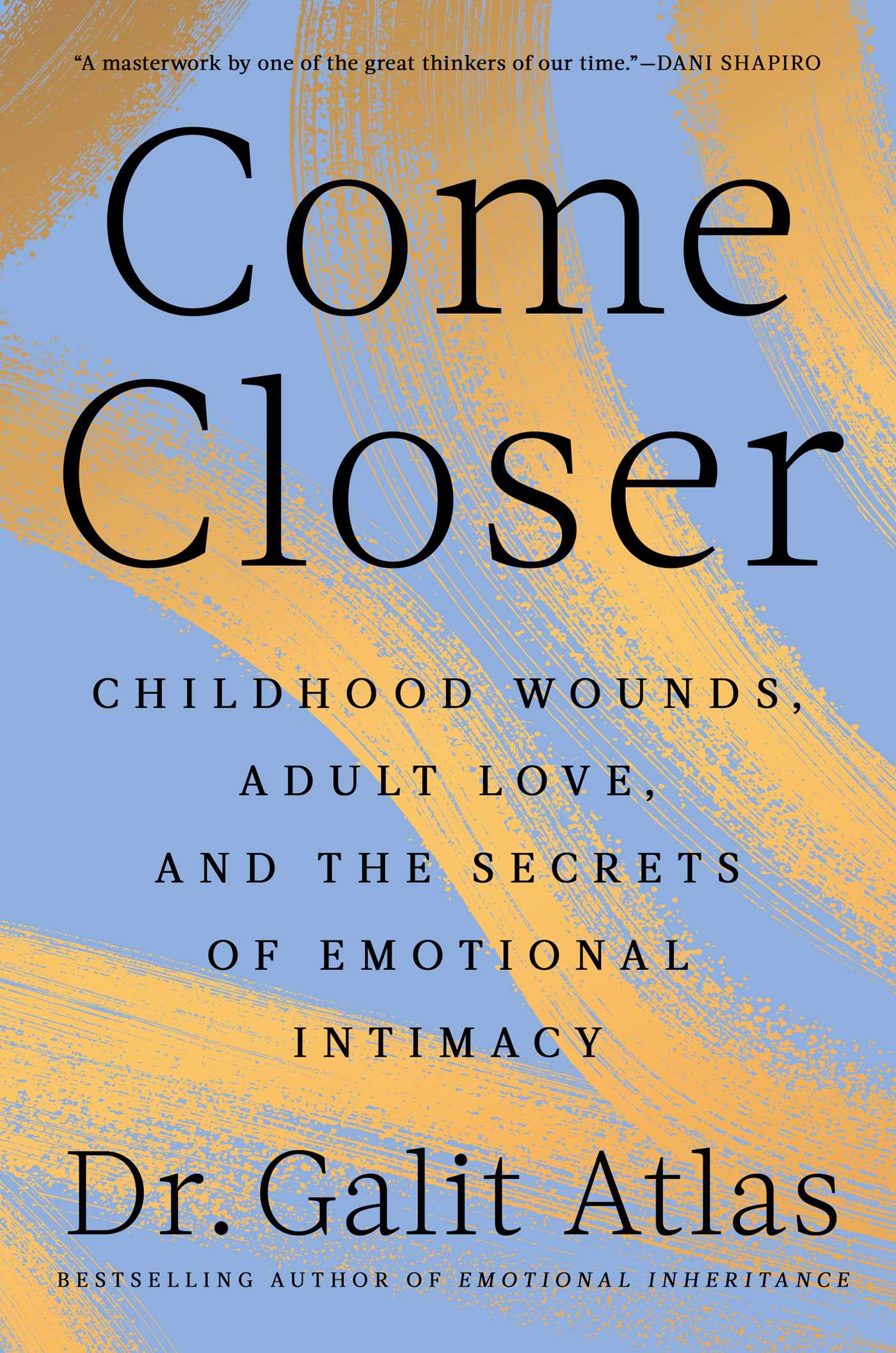
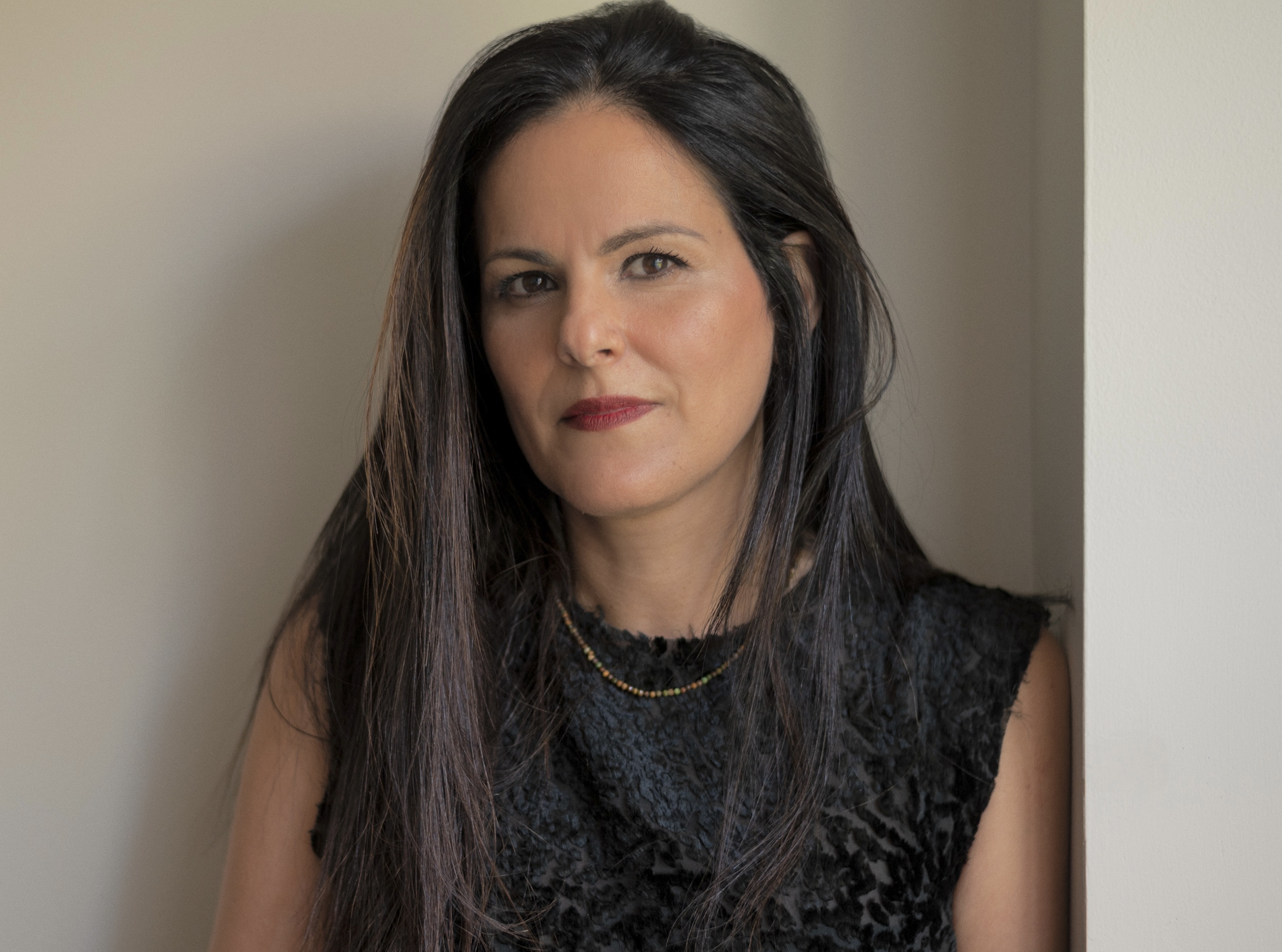
For readers of Irvin D. Yalom, Esther Perel, and Oliver Sacks, a profound and “deeply humane” (Meghan O’Rourke, bestselling author of The Invisible Kingdom) book by psychoanalyst and internationally bestselling author of Emotional Inheritance Dr. Galit Atlas that reveals how our childhood wounds hold the key to understanding our adult relationships.
What is the secret of emotional intimacy? How can understanding our childhood experiences give us the insights we need to be close to others in a truly satisfying, longer-lasting, and more meaningful way?
In Come Closer, Galit Atlas invites us inside the private lives of her patients—and into her own—to offer new, life-changing answers to these important questions. Atlas has identified six child archetypes—the frightened child, the melancholic child, the ashamed child, the invisible child, the guilty child, and the chosen child—and in these pages, she shows how each childhood wound plays out in our adult relationships.
In remarkably compelling and dramatic stories of both therapist and patient, Atlas illustrates how the child within us drives our love lives, forming patterns we repeat without awareness. Each narrative will have you on the edge of your seat, living the mystery alongside Atlas and her patients, uncovering roots, drawing parallels, and reaching insights and revelations, just as they do.
No one who reads this eye-opening and “stunning” (Ramani Durvasula, psychologist and New York Times bestselling author of It’s Not You) book will ever see their relationships—or themselves—the same way again.
What is the secret of emotional intimacy? How can understanding our childhood experiences give us the insights we need to be close to others in a truly satisfying, longer-lasting, and more meaningful way?
In Come Closer, Galit Atlas invites us inside the private lives of her patients—and into her own—to offer new, life-changing answers to these important questions. Atlas has identified six child archetypes—the frightened child, the melancholic child, the ashamed child, the invisible child, the guilty child, and the chosen child—and in these pages, she shows how each childhood wound plays out in our adult relationships.
In remarkably compelling and dramatic stories of both therapist and patient, Atlas illustrates how the child within us drives our love lives, forming patterns we repeat without awareness. Each narrative will have you on the edge of your seat, living the mystery alongside Atlas and her patients, uncovering roots, drawing parallels, and reaching insights and revelations, just as they do.
No one who reads this eye-opening and “stunning” (Ramani Durvasula, psychologist and New York Times bestselling author of It’s Not You) book will ever see their relationships—or themselves—the same way again.
Excerpt
Chapter 1: The Frightened Child 1 The Frightened Child
Danger, Safety, and the Risk of Closeness
THE FRIGHTENED CHILD is ambivalent about closeness. From a young age, she learns that the people she loves and is dependent on can hurt her. Therefore, later in life, one of the main characteristics of the frightened child is the simultaneous wish for and fear of being close; she never stops longing for intimacy, and at the same time tries to protect herself from its dangers.
The frightened child’s caregiver is usually scary, scared, or both. Her childhood often involves ongoing relational trauma, a sense of danger, helplessness, or distress. Closeness triggers fear and activates a survival mechanism that may manifest as emotional dissociation, withdrawal, numbness, fawning, or impulsive outbursts and irritability.
As frightened children, we live with an internal conflict; dysregulated by closeness and upset by distance, aroused by danger, and overwhelmed by tenderness. We are activated by fear of abandonment and betrayal, often feeling flooded by both positive and negative emotions, and struggling to trust, feel secure, and be present with others. Since we identify with our parents and often internalize their beliefs about us, we live with shame and negative feelings about ourselves. We constantly worry that others are upset or angry with us, tend to blame ourselves for our suffering, and are filled with self-doubt and underlying self-hate.
In adult relationships, we may find ourselves in volatile and painful situations, trying to convince difficult people to treat us well and to love us. Alternatively, in an effort to feel safe, we avoid conflict altogether, prioritize harmony, and focus on pleasing others. We are often drawn to emotionally unavailable partners who don’t overwhelm us with too much closeness. Choosing security may leave us with compromised relationships, while deep down we keep longing for love, for new beginnings, and for forgiveness.
How can we negotiate the tension between the need to be close to others and the fear of being hurt again? Can we stay fully present without pushing our loved ones away or deadening our relationships? Can we take the risk of intimacy?
ZOE DOESN’T KNOW how it happened. She can’t explain what went wrong, where it all started. Maybe it was the hard time they had getting pregnant, or the years of fertility treatments that made her feel desperate and resentful. Maybe it was the loneliness of finally being a mother that created distance. Or maybe that’s just who she is, she concludes. Her bad nature. Her greediness. Her inability to enjoy what she has.
I watch Zoe squeeze her eyes shut as she tries not to cry. Even as a young girl, she tells me, she used to fight her tears by biting her lower lip and keeping her eyes from blinking. She didn’t want her parents to see her crying. She never understood why.
And now, in my office, Zoe struggles to hold back her tears, to manage the feelings that I’m gradually invited to know.
In our first session, Zoe told me that she got off the subway on Fourteenth Street and found my building right away. She took the elevator to the fifth floor, gently pressed the doorbell bearing my name, and waited.
What if she’s not there? she thought when I didn’t answer.
She wondered if she was supposed to hear a ring when she pressed the button.
Maybe the bell isn’t working?
She stood at my door, not knowing what to do, asking herself if she should buzz again and this time push the button harder.
But what if it had worked the first time and her second ring would be too impatient, too intrusive? What if I just needed more time before I opened the door? She didn’t want me to get annoyed before I even met her. Maybe she should call me, or just leave and say that she changed her mind.
She pressed the button again. This time she heard the bell.
“I’m sorry I’m a few minutes late,” Zoe said when I opened the door. “I was here.”
I looked at the slight woman in her thirties, her piercing blue eyes filling with tears.
Later, I would learn how painful that moment was for her, standing outside like a little girl who is worried that she did something wrong, embarrassed by her need to be liked and by her longing for my help.
IT WAS ZOE’S husband, Eric, who suggested that she start seeing a therapist. He was worried that she was depressed. Zoe didn’t think she was, but she didn’t mind his worry. She certainly preferred that to him finding out her concerns about their marriage.
“Eric is kind. This is the quality I cherish most about him. He has a good temperament, as they say,” Zoe tells me, adding that Eric never gets upset or blames her for being bad or wrong. In fact, he often seems surprised when she blames herself.
“I don’t know what you’re talking about. You were great,” he would assert on their way back from a dinner party when Zoe asked if he thought she was rude.
“Did I talk too much?” She tried to revise the question.
“You never talk too much, Zo. You’re great.” He would repeat himself, but she wouldn’t be convinced. She thought he was just trying to make her feel better.
Zoe settles on the couch, and I see her thinking. Her fear that she must have done something wrong leaves me wondering whose voice she has internalized. Whose voice once accused her of being bad, and is now adopted as her own?
“I have no reason to be unhappy with Eric,” Zoe continues. “He is so devoted. His father left the family when he was a child, and he promised himself that when he grew up, he would be a steady family man. And he really is. I’m the one who’s the problem,” she mutters. “I’m just a miserable person. I don’t think I was ever happy.”
Zoe lifts her head and briefly glances at me. “I’ve read somewhere that Freud thought the goal of therapy is to help the patient feel ‘ordinary unhappiness.’ I would settle for that.” She smiles, and I know she is telling me that she’s here because her unhappiness doesn’t feel ordinary. She feels damaged.
“Have you ever found yourself listening to people and realizing they’ve all experienced something that you never did? And it makes you feel like an outsider to life itself, like you didn’t get the memo, and something is wrong with you?” She asks and doesn’t wait for my answer. “I had that with sex, for example. It took me years to figure out why it was such a big deal for people. I really didn’t get it. I thought it was the biggest lie in history, like either everyone around me was faking it, or that I was just an alien.”
Zoe shifts anxiously on the couch. “I remember when that changed. It was with my ex-boyfriend, Don.” She nods. “Here’s the crazy thing: Don and I had the worst relationship. We used to have horrible fights that made me want to die. He’d say these really nasty things, and I would just lose it completely. I’m so embarrassed to tell you how insane I was. I was just trying to defend myself, you know? I’d sob and scream and feel so desperate. Even now, just talking about it, I can feel my heart racing.”
I watch Zoe take a deep breath. Her blue eyes start scanning the room as if she’s trying to keep me from looking into her.
“Oh, I’m sure you’ll hear plenty more about Don,” she says, rushing through the words. “It’s been years, and I still can’t get some of those scenes out of my head.”
She interrupts herself and looks at me. “Wait, do people actually do that? Does everyone replay stuff over and over in their heads? Like arguments where you imagine finally winning, or coming up with the perfect thing to say that you didn’t think of at the time? I mean, I hate that I do this. I still think about Don and what I could’ve done differently, and we broke up like ten years ago. That’s insane, right? I’ve never told anyone about this. I really hope this isn’t too weird or creepy.” She leans back, her body sinking into the couch.
I hear Zoe’s ambivalence, her shame and worry that something is wrong with her, and that she might be taking me into a forbidden zone that no one has visited before.
“We would fight so badly,” she says quietly, and then closes her eyes and falls into a long silence.
“What did you think of just now?” I ask when she looks at me again.
“About this ritual I can’t stop replaying in my head,” she says. “After every fight, when I was completely destroyed—emotionally, physically drained—Don would pull me close and hold me really tight. His voice would go soft, almost tender. He’d touch me so gently, and everything in my body would just calm down. The pain would dissolve and turn into something else.” Zoe shrugs in discomfort. “He was the best lover I ever had,” she says, and I follow her into the land where pleasure is born of emotional pain, where there is a link between getting hurt and being taken care of.
“When we made love, Don would whisper, ‘See, when you stop fighting me, everything is easy.’ And I thought he was right, that I’m too angry. Why couldn’t I just be nice? Somehow, when I stopped resisting him, it worked.”
Zoe puts both her hands on her chest as if protecting her heart.
“With Don, it was kind of toxic, if you know what I mean. And with Eric… with Eric, I feel like something is missing.”
She turns to gaze out the window.
I KNOW THAT ZOE has just told me something important about her life—about two intimate relationships that seem so different, perhaps the opposite of each other: one volatile, the other numb. I wonder which one is her emotional homeland. I don’t know much about her childhood yet, but I’m aware of the human tendency to either run away from our original homes, or find ourselves back inside them, even if they were filled with demons.
We are attracted to the familiar, not only because it is known and predictable but also because in it lies the hope for reparation. Again and again, the human unconscious brings us to the place where things went wrong, with the wish to do it all over. We repeat and try to achieve delayed mastery over events that left us undone, that we couldn’t protect ourselves against, or that we felt ashamed of and guilty for. In our repetition compulsion, we wish to relive, and this time do things better, do it right, gain control over the most helpless moments of our lives.
I think about Zoe’s replay of scenes from her past, of the urge to revisit, master, and change the ending. What is it that haunts Zoe? I wonder, trying to imagine the sad girl she tells me about.
“Do you have any good memories from your childhood?” I ask, mapping the range of her emotional landscape.
Zoe turns her gaze from the window and looks at me.
“I remember one day I came back from a friend’s house with a piece of chocolate cake that her mother baked. That felt good. She wrapped it for me in tinfoil so I could take it home and eat it after dinner.”
She pauses and puts her hand over her mouth. “I used to absolutely dread our family dinners,” she says through her fingers, and I watch her good memory turn dark right before my eyes. “Me, my parents, my sister, Anna—we’d all sit around the kitchen table. My mother would serve everyone a plate of whatever she’d made that day, and my father would compliment her and say that hers was the best food, even better than anything a chef in a restaurant would make.
“Maybe he was right, but I didn’t have any appetite. I would sit at the table, put small portions on my fork, and move it toward my mouth in slow motion. I would play a game with myself, trying to see how long I could hold the food in my mouth. I was able to get to four minutes between each bite before I would force myself to swallow it.
“ ‘Why are you eating like a bird?’ my mother would comment.
“That was usually a signal for my father to intervene.
“ ‘Stop playing with your food,’ he would say firmly. ‘Your mother worked all day to make you this food. Swallow it already.’
“I didn’t say a word. I knew there was nothing I could say that would stop him from commanding that I couldn’t leave my chair until I finished everything on my plate. I felt frozen. Somehow, my body didn’t let me eat.
“They would all finish and leave the table, and I’d keep sitting there in front of my plate, trapped in my seat, knowing that I’d spend hours there before my mother would come back to the kitchen, grab my plate, and signal that I could leave.”
Zoe crosses her legs on the couch. She looks straight into my eyes.
“On that day, I made up my mind to finish everything on my plate so I could have the chocolate cake for dessert,” she says. I notice her expression turning wooden.
“Everyone was eating in silence. I didn’t move my eyes from my plate, eating as fast as I could, trying to ignore my father’s stares and the exchanges of looks between him and my mother.
“ ‘I finished everything,’ I announced.
“His face was serious, as though he thought I was lying.
“I lifted my plate and handed it to him. ‘I finished,’ I said again, this time louder.
“ ‘Did you thank your mother for the food?’ His tone was accusing.
“ ‘Thank you, Mom,’ I immediately answered.
“ ‘That was not a grateful thank-you.’ His face was angry, and he pointed his finger at me.
“ ‘Sorry,’ I said briefly. ‘Thank you, Mom.’ I looked at her and added, ‘Can I have the chocolate cake now?’
“That was clearly a mistake. My dad stood up quickly, banging both hands on the table. He stomped to the kitchen counter, grabbed the chocolate cake, unwrapped the tinfoil, and then threw the cake forcefully into the garbage.
“ ‘What’s the problem with saying thank you?’ His lips were trembling. ‘Why can’t you ever be grateful? I’m trying to make you a decent human being, but you insist on being rude and disrespectful.’
“He left the kitchen.
“That was one of the only times I remember crying,” Zoe says, and I see tears filling her eyes. For a moment, we don’t speak. I feel my heart pounding and notice myself biting my lower lip, the way Zoe does. I hold back my own tears.
“My parents were not bad people,” Zoe adds in a low voice. “They were just ‘old-school,’ and as you can see, I was provocative. It was a bad match.”
SELF-BLAME IS ROOTED in the fantasy that if we just change and become good, we’ll finally be loved the way we desperately need to be.
At a young age, we depend on our parents, and what they give us is the only care we know. When painful things happen, we believe that it must be our fault. We protect ourselves from the awareness that the people we need for our survival can hurt us. We identify with the aggressors, joining them in believing that we deserve their anger and punishment, and clinging to the forms of love they offer.
Zoe tells me that things changed as she grew up. She left her parents’ house, and her relationship with them shifted. She got married to Eric, had twin boys, and those childhood memories now seem foreign, disconnected from her present life, only the recollections of a little girl whom we are slowly learning to know. A girl who felt hurt, degraded, misunderstood. A frightened child who was trying to be strong, but often felt too sensitive, trapped in her urge to protect herself, to make sure no one would ever treat her that way again; no one would ever attack her, or force her to swallow food spiced with humiliation.
In his book Toxic Nourishment, American psychoanalyst Michael Eigen writes about the confusing blend of love and nourishment with toxicity; a mix that becomes inseparable, where poisons are ingrained in the very nourishment we receive.
Eigen argues that unhealthy sustenance is always part of what parents provide their children: anxious control, self-hate, survivor’s guilt, death dread, shame, and more. But while ruptures in nourishment and a mix of good and bad are normal, in some families, the two are fused and confused, with no way to differentiate between them.
Toxic families are those marked by the victory of destructive urges: when love is infected with excessive hate, when envy becomes stronger than gratitude, and when the wish to demolish, control, and hurt defeats generosity, compassion, and the urge to care. When emotional fragility eclipses the ability to feel empathy, we become toxic.
Parents are especially confusing when they present their destructive behaviors as acts of love, when they dress up sadism as good intentions or humor, and feel no remorse. As children, we are unable to recognize when our caregivers’ nurturance is unhealthy or when it comes laced with aggression. We have to adapt and digest what we get, which leaves us puzzled and filled with self-doubt.
The early parent-child bond—the blend of nourishment and toxicity, of need and fear—is what we carry with us; what we relive and try to repair in our later intimate relationships.
In therapy, it is always the inner child that leads us back to the traumas that shaped our fears, to the shelters that became our prisons, and to the survival strategies that dictate the patterns of our later relationships.
Our session ends. Zoe leaves, and I feel a catch in my throat.
I know that our journey is only just beginning.
“DO YOU HAVE kids?” Zoe opens our next session with a hesitant question. “I don’t mean to be intrusive, but I was thinking about it after I left your office last week.”
I pause and reflect on Zoe’s question.
Historically, the therapeutic frame required the therapist to remain neutral and avoid revealing their feelings, beliefs, or personal life to the patient. The principle was that to understand the patient’s internal reality, the therapist should serve as a blank screen, allowing the patient to fill the empty space with their own fantasies, ideas, wishes, and expectations.
Neutrality is a psychoanalytic ideal that has been challenged by changes in technology. In fact, while twenty years ago I would have analyzed the dynamics that led a patient to search for me online, now I would wonder why they didn’t. Most patients come to their first session already knowing at least something about their future therapist. When they look me up, they can easily find not only my picture, professional affiliations, and publications, but also details about my personal life: my age, my birthplace, my children’s names, the announcements of my life partner Lew’s death in 2019, and of my new marriage.
Whereas in the past our goal as therapists was to remain objective and make sure our patients knew nothing about us, not even hints from our office decor, we now work with the information people inevitably have about us, searching for the unique meaning this holds for each patient.
In therapy, as in life itself, healing happens in the charged zone where two hearts and two minds meet, in the delicate space between feeling safe and being brave.
I HEAR ZOE’S QUESTION and think about Emma, Yali, and Mia, my three children. I feel a wave of warmth, aware that it would be easy for me to answer her, to nod and say nonchalantly, “Yes, I have kids.”
Maybe she would lean back on the couch, and I wouldn’t add anything else. I wouldn’t tell her that I, too, have twins, and how sending them to college filled me with both pleasure and profound grief. I wouldn’t tell her that when my twins were about the age of her kids, I had another baby girl who, to this day, loves to tease them that she had my belly all to herself. I wouldn’t tell her that I know how hard, and joyful, and painful like nothing else it is to be a mother; how it stretches you, opens your heart, and breaks you. That it takes you to new emotional places that you didn’t even know existed, and to old dark places that you didn’t want to remember.
I won’t tell her any of that, but wonder what it is that she wanted to know about me. Is she asking if I can understand her? Is she afraid that if I don’t have children, I will judge her, feel envious or resentful, the way she used to feel toward other women who seemed too preoccupied with their children?
“I don’t know, I was just wondering,” Zoe adds quietly, as if wanting to take her question back, but then answering it herself. “Somehow, I think you are a mother.”
I notice the relief on her face when I smile and nod.
I know that in some unconscious way, Zoe is also asking if she could be my daughter. She wants to know if I could be a better mother to her than her traumatized mother was. Will I be able to see her goodness, tolerate her distress and anger? Will I be able to protect her, and love her even when she hates herself?
“I imagine that you have daughters.” Zoe laughs.
I smile. “Like your mother.”
“Right,” she says. “She had me, and then Anna. Thank God I didn’t have girls.” She shakes her head. “I was really hoping for boys. I knew having a girl could be too complicated.”
Zoe was afraid that a baby girl would force her to look into the mirror of her own childhood, to see herself in her daughter: a girl she didn’t like.
“It was easier for you to raise children who weren’t you,” I say. “It allowed you to avoid all the negative feelings you had about yourself as a child; to leave the girl you used to be outside of your new family.”
“Yes!” Zoe sounds excited. “I wanted my own family. And I’ll tell you, I remember the exact moment I knew I’d made it. I was on the operating table. The C-section had just ended. The boys were already out, and an oxygen mask was still on my face. I wasn’t afraid. I wasn’t in pain. My body was numb from the anesthesia. The whole thing felt like an out-of-body experience. I was there, but not really there.”
Zoe closes her eyes briefly. “Minutes earlier, I felt the doctors moving my body. Someone asked me if I was okay, and I nodded. ‘All good.’
“There was this strong pressure in my stomach. I looked at the ceiling, thinking that I should just be patient, that this would end soon. I was looking at myself from above, feeling nothing.
“I heard them talking. ‘Is the baby crying?’ I asked. I knew that the baby’s cry is a good sign.
“They handed me twin A: Julian. His face was so tiny. He was the smallest baby I’d ever seen. And then I was holding Ian. And I remember this clear thought: ‘That’s it, Zoe. From now on, you’ll never be alone.’ I felt happy and overwhelmed and worried about my premature babies, and I started crying hysterically, and I didn’t know why.”
I’m aware that Zoe doesn’t mention Eric.
In her numbness, on that operating table, looking at herself from above, she felt hope.
Creating her babies’ lives was the beginning of the new life she wanted for herself. If she could only march forward and leave that which she couldn’t change behind. If she could only transform the dark feelings that haunted her into something beautiful.
AS WITH MANY of us, Zoe’s hope lies in the fantasy of a new beginning.
She tells me that she wanted to forget the girl she used to be so that she could start all over again, and this time make things work. She longed to have the family she imagined other people had, to be the parent she wished she’d had. She was determined to protect her children from the negative and toxic feelings that were so damaging to her as a child, but she wasn’t sure those feelings didn’t still live inside her as part of who she was.
I realize that the fantasy of a new beginning required muting the frightened child, silencing her voice, and creating what Zoe believed was a safe new family.
Zoe tried to erase the past, but as always, our past travels with us and colors our future. Her wish to run away from her familiar home made her return to it through the back door. She was all alone again, fighting those bad feelings about herself, worried that if she let that girl in, everything would be ruined.
Like Hansel and Gretel, Zoe and I start searching for the way back to her childhood home, collecting crumbs of memories, often soaked with dread and tears. On our way, we will meet the people she loved, those who fed her harmful truths, who scared her and taught her to despise herself. We will meet her dark secrets and her fear that if anyone finds out who she really is, they will have no other choice but to hate her.
I picture Zoe lying on the operating table, hoping to hear her babies crying, as I hear her own silent cry from afar. She is inviting me into the land of mothers and babies, where a cry is a sign of life, where new possibilities are born.
I ASK ZOE TO tell me her first childhood memory.
She pauses. I watch her thinking for a long minute.
“What an interesting question,” she says. “You know how sometimes you can’t tell if a memory is actually real, or if it’s just a story someone told you, or maybe a picture from some family album that you think you remember? I have one of those.
“In my memory, I’m maybe five years old, holding this balloon shaped like a hand. My parents took a picture of me outside some hospital with that balloon, so maybe it’s not even a real memory, just me remembering the picture I’ve seen.”
“A hospital,” I repeat, slipping an invisible question mark into my words.
“I’m not sure what the whole story is,” Zoe answers. “I think I climbed on the living room table and my dad got mad and tried to get me down. Maybe he pushed me too hard, and my mouth hit the floor, and I broke my tooth, so they had to rush me to the hospital.”
Zoe touches her mouth briefly. “There was so much blood, and I think I wouldn’t let the doctors touch me. I kept moving my head around and crying. Then one of the nurses gave me this balloon shaped like a hand. I was totally fascinated by it, and Anna, my sister, was so jealous.”
I listen to Zoe constructing her first memory into a narrative. A story about a comforting hand that holds a memory of an injury: her father’s anger that wounded her.
In therapy, a patient’s first memory often hides within it the essential materials, or ingredients, of their future treatment. It gives us a window not only into the person’s childhood but also into their current life; their struggles, conflicts, and perceptions. First memories tend to conceal previous, and also later, repressed memories. Some memories act as a “screen” for other, more painful events that our minds protect us from remembering. Others present a pattern or theme that we still struggle to resolve.
ZOE AND I look at each other. I know what she is telling me, and she knows that I know.
“He would get really angry,” she says, and falls into silence again. She bites her lower lip, her head slightly bent as she stares at the carpet. “If we got a bad grade, if our beds weren’t made, if we were too loud.”
Her voice is flat, her face still.
“When people came over, we knew that we weren’t allowed to join the adults’ conversation or to touch any of the food that my parents served the guests. When we spoke, my dad would give us this look that meant we were in trouble. I didn’t know what might set him off, so I tried to always be careful.
“My mother would sometimes cry when his eyes filled with rage and he’d grab my arm and drag me to my room.
“ ‘Stand here,’ he would command, pointing at the corner of the room. I did what he told me to do. I knew that it was better to follow his orders, so I stood there silently.” She pauses, swallowing hard. “Sometimes, he would be angry at how messy my room was, and he would ‘clean my desk,’ sweeping everything to the floor.
“I would watch as everything that mattered to me fell apart; the special pens that I made sure not to use too much, the ‘Best Friends Forever’ mug that I got for my birthday. My collection of seashells, now spread all over the room. I knew that I would pick all of them up when he left, check one by one which one had survived and which was broken. It felt like my life was ruined. But I didn’t move, and I didn’t say a word.
“Then it was Anna’s turn. I would hear her weeping, ‘Daddy, please, stop.’
“I knew that he didn’t respect her begging. I knew that her crying irritated him, and that was why he gripped her even harder.
“I watched my mother walk away, and I looked straight into his eyes and thought, I hate you. You are a monster.
“ ‘Why did you marry him?’ I would often spit at my mother when she cried. ‘You married an evil man. I would never marry a man like him.’
“My mother would wipe her tears. ‘It’s time you learn to be good,’ she’d say. ‘It’s not so difficult. Why do you always have to make him angry?’
“But I wouldn’t give up.
“ ‘If I ever marry someone like him by accident, I’ll divorce him. I will kick him out of my house. I’ll call the police.’
“ ‘You just need to be good,’ she kept mumbling. ‘He does that because he loves you and is worried about your future. It’s our job to make sure you learn how to behave. Who would teach you that if not us? Who else cares about you?’
“I knew she was right, that no one else cared about me. That they loved me. And they were the only family I had.”
Zoe doesn’t look at me. I think about the seashells that were broken and the ones that survived; the parts of herself that fell apart and the parts that toughened up.
ZOE, THE YOUNG girl, had no other option but to take care of herself. She had no one to protect her; no one to tell her that her parents’ behavior was wrong and that none of it was her fault. She was left alone to comfort her own distress, to try to defend herself.
“And then, when you were so frightened, a nurse inflated a hospital glove and gave it to you,” I say.
“I can’t believe it,” Zoe says. “All these years, until the moment I told you about this memory, I didn’t realize it was just a latex glove. I thought it was a special balloon.”
I hear Zoe’s shame for letting herself believe that she was special.
“It was special,” I say. “In that gesture, the nurse conveyed: ‘Don’t worry, you’re a good girl, and we are not angry at you. We’re taking care of you.’ ”
Zoe’s first memory contains not only the violence of her childhood but also the representation of the comforting figure that she kept looking for all her life. The nurse who gave her a balloon in her first memory, like the mother who baked a chocolate cake and gave her a piece, was the parent Zoe wished she had. By trying to become that mother, she hoped to have her for the first time.
Zoe and I start filling in the picture of the frightened child: her responses to the constant threat she grew up with, and the desperate attempts to protect herself from being hurt; to fight, to flee, to hide, to please, to withdraw into her fantasy life where she is loved and appreciated, to numb herself and to deaden her relationships.
It is the traumatized child inside us that navigates our intimate relationships. She is worried that the closer she gets to others, the more she will be in danger, that the people she loves will inevitably wound her.
ATTACHMENT RESEARCH, FIRST developed by British psychoanalyst John Bowlby, focused on the significance of childhood relationships in shaping our later ones. It emphasized how the way we felt, and especially our sense of security with those who raised us, sets a developmental path that affects much of our future well-being and the quality of our adult relationships. Understanding the child-caretaker bond is, therefore, key to recognizing our later patterns, conflicts, and needs, as well as our ability to love and to break generational cycles.
Attachment research discusses the role of the parent, the first attachment figure, in becoming a “secure base” for the child, providing physical and emotional safety. In the early 1960s, Mary Ainsworth at Johns Hopkins University further developed Bowlby’s theory by identifying patterns of secure and insecure attachment observed in twelve-month-old infants.
In secure relationships, the parent was found to be sensitive, alert, and responsive to the infant’s signals and needs, as well as consistent and attentive, especially when the infant was distressed. These parents were often less intrusive and less tense and irritable. Therefore, their children could use them as a source of protection that allowed them to explore the world around them. Secure infants came to expect that their parents would be there to reassure, comfort, and help them reduce fear and distress. They learned that it was safe to express their feelings, that they could depend on others, and that they could trust themselves and their relationships to survive ruptures.
While secure attachment is the ideal foundation for healthy development, in reality, many people don’t fall into that category. Many of us are insecure in some way or another, struggling with unmet childhood needs, unresolved early relationships, and relational traumas.
MARY AINSWORTH’S RESEARCH originally identified three attachment styles: secure, insecure-avoidant, and insecure-ambivalent. Yet researchers noticed that some children’s behaviors didn’t fit any of these categories. In 1986, Mary Main and Judith Solomon at the University of California, Berkeley, identified a fourth attachment style: disorganized. Over the last few decades, this has proven to be the most complex and clinically significant classification.
Disorganized attachment presents a dynamic of early interactions in which the infant is afraid of the very person who is supposed to protect them. In infant observation, these twelve-month-olds appear to seek closeness while simultaneously feeling threatened; they approach the parent while trying to avoid them, reaching for the parent yet backing away at the same time. Their attempts at closeness are interrupted by strong emotional reactions, which include fearful avoidance or flight, freezing, or depressive expressions.
Children with disorganized attachment feel more than just “insecure” in their most important relationships: They feel unsafe. Erik Hesse and Main from UC Berkeley described the central experience of the disorganized infant as one of “fright without solution,” where the attachment figure is both the source of safety and the source of fear, creating an impossible paradox for the infant. They explain that this paradox may also lead to a series of if-then propositions: “If toward, then away, if away, then toward, if toward, then away, and so forth.”
Contemporary infant research indicates that disorganized attachment can be detected in parent-infant face-to-face play as early as four months of age. In video analyses of those early interactions, Beatrice Beebe, a renowned researcher from Columbia University, identifies distress as a central feature of these relationships. Her findings show that the disorganized baby’s distress isn’t acknowledged, validated, or empathized with by the parent. In those moments, the parent may try to get the baby to smile, mock the baby, look away, or simply stonewall and not respond, which leaves the baby alone in their distress, helpless and unable to obtain comfort.
Disorganized attachment caregivers are found to be frightened, threatening, or extremely dissociative. They may carry unprocessed traumatic experiences (often loss or abuse) and alarm their children with various forms of threatening behavior. As a result, whether visible to others or not, the disorganized child lives in a state of heightened threat and with a dysregulated nervous system.
Our attachment trauma makes us hyper- or hypoactive: stirred up or numbed out, overreactive or dissociated. In moments of threat, it is our bodies that control our behavior. Stress responses are the body’s instant and automatic reaction to threats. They are activated when an event or ongoing events overwhelm our nervous system. When we are frightened and our stress response systems are activated, our heartbeats and blood pressure rise, our muscles tighten, we sweat, and stress hormones like adrenaline and cortisol are released to prepare us to fight or to flee to safety. When we are too small or powerless to fight or flee, we shift to other survival modes: We freeze, try to disappear, withdraw, dissociate, and escape into our inner world, or we fawn, avoid conflict, try to lessen the threat by playing small, apologizing, and pleasing others.
A constant sense of threat and helplessness in childhood impacts our brains and the way we perceive danger. We might easily feel unsafe, explode or shut down, remain hypervigilant even when there is no threat, and struggle to recognize actual danger. Chronic trauma affects our capacity to feel safe enough to get close to other people.
In adulthood, those infants who were observed moving toward and away from the parent often become adults who feel ambivalent about closeness. They long for intimacy while simultaneously trying to protect themselves from the feeling of threat that closeness evokes. They become dysregulated by closeness and upset by distance, aroused by danger, and overwhelmed by tenderness, often feeling flooded by both positive and negative emotions, while struggling to remain present with others.
EXPLORING THE LINK between the pain of her childhood and her dormant marriage, Zoe and I slowly shed light on the ways her love life is rooted in an early disorganized attachment to a scary parent, in a childhood filled with a high level of alertness to being assaulted, blamed, and humiliated.
With Don, her ex-boyfriend, Zoe reexperienced the helplessness of her childhood, as well as the adrenaline spike that happens in moments of threat. She was familiar with the blend of love and hate, of care and assault.
It is often easier to recognize relationships that repeat patterns of abuse, whether in parenthood or intimate relationships. In my previous book, Emotional Inheritance, I discuss extensively the legacy of violence that passes from generation to generation—the ways and reasons why victims might be susceptible to reliving patterns, either as victims again or by turning passive into active and becoming aggressors.
Often remaining unnoticed are those relationships that use other, less visible strategies designed to protect the frightened child. For example, many of us choose unavailable partners who don’t overwhelm us with closeness; we might prioritize harmony by avoiding conflict and making sure no aggression leaks into the relationship. We try to please others and leave the vulnerable part of us outside of the relationship. We choose safety but often find ourselves with compromised love.
Zoe created a beautiful life filled with deadness. In her attempt to be good and feel lovable, she tried to erase her needs, leave any negative feelings outside her new family, and get rid of the hurt and upset girl who lives inside her.
We sit with her feelings of emptiness and isolation, with her longing for something she can’t fully define. She misses her old, alive self and feels imprisoned in a life where she only partially exists.
IT IS A rainy morning, and Zoe knows the boys will be late to school again. She tells me that she hates the mornings. At 7:00 a.m., when the alarm clock goes off, she quickly jumps out of bed, making sure she doesn’t wake Eric. He was sitting at his computer all night, and she knows he needed to work, but deep inside, she feels that he loves those late nights alone and the permission to avoid the next morning’s chaos.
Still in her pajamas, she makes breakfast for the boys, packing their lunch boxes—a cheese sandwich for Ian, an egg salad sandwich for Julian. She slices two apples, one for each, and then places the slices back together, wrapping them with a rubber band. Ian loves that trick, and he tells her how he brags to his friends that his mom invented this to make sure the apple slices don’t turn brown.
She wants to tell him that it wasn’t her invention—that she read it in some magazine years ago. But she doesn’t say anything, only smiles, pinched by shame for enjoying her six-year-old son’s admiration.
Winters are especially difficult. Zoe recalls how she used to argue with the kids every morning, forcing them to put their coats on, and how they took turns throwing fits, crying, stomping their feet on the floor, and yelling that they didn’t need a coat because they weren’t cold.
“You will be cold when we get outside,” she tried to argue.
“No, I won’t. I’m never cold,” Julian protested.
When Zoe arrives at my office after dropping the boys at school, she feels a sense of accomplishment and yet a deep feeling of disappointment—with her life and with the bad feelings that so often sneak into her mind.
“I know, I know.” She waves her hand in front of her face as if trying to shoo away those thoughts that buzz in her ears.
“There is nothing to be upset about,” she says, and looks at me.
I recognize her internal turmoil: her attempts to stop her agony, to trivialize her feelings, and, in doing so, her dismissal of herself. And yet, for the first time, I hear her talking about her marriage, about Eric’s absence and his avoidance. She feels upset that he leaves her alone. I’m aware that Eric is finally with us in the room.
“Maybe you need him in the mornings,” I suggest carefully, knowing that Zoe has created a defensive shield that doesn’t allow her to know her own needs. Instead, she values her self-sufficiency, her ability to move into action, to perform, and to be helpful.
She shrugs. “I mean, it’s okay. Eric is the one going to work. I don’t do much.”
She notices the expression on my face. I think about her father blaming her for being ungrateful.
“I mean, I know motherhood is the hardest job in the world,” I hear her argue with herself. “All of us moms know we get no credit. We do everything, and they’re heroes for getting up early one time. I mean, right?”
She turns to the mother I am for confirmation, but we both hear her internal debate: She feels abandoned, unappreciated. She judges herself for her feelings, defends herself, and then demands that she behave, be good, and not complain.
It is our parents whose voices we keep hearing. The people who raise us live inside us without our permission. They are loud and persistent, comfort or attack us from within, awakening our deepest needs, vulnerability, and hunger. We identify with and fight against them, trying to convince them and ourselves that they are wrong, struggling with their demand that we comply. Our relationships with them are the first we form, and our adult relationships exist in dialogue with them.
Zoe and I are familiar with her ongoing attempts to silence a harsh internal voice, the voice from her childhood that tells her she is bad and that everything is her fault. She is alert, ready to defend herself, invested in being good, in making sure that she doesn’t poison her husband and children with her distress. She struggles with feeling lovable and with the girl inside her who feels that no one in the world ever loved her.
IN CHILDHOOD, OUR family is our whole world, the only world we have. And while our parents are not one cohesive unit, it isn’t unusual that parents who are a couple collude in their aggression. One functions as the active aggressor, and the other is the passive participant; one instigates, and the other takes charge; one threatens, and the other tries to make peace; one lashes out, and the other shuts down or dissociates. We often perceive one parent as good and the other as bad, but in fact, many couples work as a system that normalizes violence in an attempt to smooth things over and preserve the family structure.
Families place their shadow—the unconscious parts of themselves that they can’t bear—into one member, usually a child. It is this child who will then be blamed for being bad and onto whom the negative feelings of the family members will be projected. That child carries the guilt, the anger, the feeling of being filthy, destructive, and contaminated. One child typically becomes the container for everything the others reject in themselves.
As therapists, we are familiar with the intergenerational cycle of abuse: the emotional inheritance wherein each generation projects on the next the intolerable feeling of badness that they suffered as children and need to get rid of. These family dynamics challenge the child’s perception of reality. The child doesn’t have a reliable witness who can confirm their experience or protect them, and they are often gaslighted or accused of causing their parents’ aggression. Self-doubt and low self-esteem become the lasting legacy of such mistreatment.
Zoe peers directly into my eyes as if waiting for my approval. I recognize how hard she is working to be a good mother, a good wife, a good patient. She is afraid that the moment she starts feeling upset, the girl she used to be will take over, and she won’t be able to calm her down.
I’m aware that keeping her aggression dissociated and her negative feelings outside of her relationship made Zoe feel safe, but at the same time, it deadened her marriage.
“We talked about Eric today,” I say, running in my head all the previous conversations in which Eric was not mentioned; the new life she wanted to have, the birth of the twins, her desire, the anger, the pain. This was the first time I heard her invest any emotion in Eric.
“But maybe it is not only Eric who is usually missing here,” I add. “Maybe there is a part of yourself that is left outside.”
Zoe seems startled. “You’re kind of reading my mind,” she says, and I’m not sure what she is referring to.
“This morning, with all the rushing and hassle, I almost forgot what date it is today.”
I watch her in slow motion pull her phone out of her bag.
“I didn’t want to bring it up. I wasn’t going to mention it,” she whispers without looking at me. “But I feel like you know about my secret.”
ZOE STARES AT the phone cradled in her palm, her fingers scrolling. “Do you know that theory about phones listening to us?” she says, eyes still on her screen. “You know how you’ll be talking about something and then boom, there’s an ad for it on Instagram? This literally just happened to me. I was telling my friend about Roxane Gay, and like an hour later, I’m scrolling and there’s this ad for her writing master class. Creepy, right? I actually took a screenshot and sent it to my friend right away. I knew that if I didn’t save this picture, I would think I imagined the whole thing.”
I feel confused and alarmed. What is it that Zoe is worried someone might hear? What secret is she referring to?
“And what is the date today?” I ask.
Zoe lifts her head and looks at my puzzled face. “It’s our anniversary today,” she says slowly. “Every year, he sends me a message to remind me of the day we met. Fifteen years, can you believe it? And here I am. I have this entire life. I have a husband, I have my boys, and one stupid date can still shake me. Like there was this whole other me before I became… this.”
I suddenly realize that she is referring to Don, her previous boyfriend.
She shakes her head and lets out a quiet laugh. “He probably has it marked on his calendar, right? Any reason to contact me.” Her voice gets tense. “And every year, I do this thing where I’m like, okay, is it going to be a text? An email? Will he call and leave one of those long, rambling messages?”
She pauses. “Sometimes I wonder if this will be the year he forgets.
“Today, after I dropped the boys off on my way here, I got this email from him. I wasn’t sure if I should even share it with you. I didn’t want you to think that I’m a bad person. But when you said that I leave a part of myself outside of my marriage, and also outside of here, I felt like you knew.”
Her fingers run across the screen of her phone, and a soft female voice starts singing. She hands me the phone.
“The email had a link to this song. Listen to the lyrics,” she says quietly.
“It’s not so bad.” The singer repeats the line written in white text on a magenta background.
“It’s Dido, a singer Don and I used to listen to together. It’s kind of a breakup album. And he wrote one sentence above the link to this song. One sentence,” she repeats.
Zoe’s eyes fill with tears. She squeezes them shut, trying to push the feelings away.
“ ‘No one will ever love you the way I do.’ ” Her voice trembles.
“And what if he’s right? What if…” She pauses. “What if I will never be able to stop thinking of him? What if he did love me more than anyone ever will? It’s ten years since we broke up, and he still sends me a message every year. What if we have an unfinished love?”
Tears slide down Zoe’s cheeks. Her words unfinished love echo in my head. I think about the unfinished business of her childhood and the love she got, which never felt right.
THE FRIGHTENED CHILD was left out of Zoe’s marriage, but led a secret life in the fantasy about Don, where reliving her traumatic past holds the hope for redemption. I listen to her fear that if she lets herself leave Don behind, she may never feel whole, may never be able to find forgiveness.
I ask Zoe to tell me more about her breakup with Don.
“I left him after one of our explosive fights,” she says. “I was lying on the bathroom floor, shaking and sobbing. Don came toward me. He touched me, and without thinking, I told him to get out of there and never come back.
“He slammed the door behind him, and I kept weeping for a whole hour. Then, when I calmed down a little, I felt so sick I could hardly stand up. That fight was brutal. Don tried to calm me down. He clutched my shoulders, forcing me to look into his eyes, speaking to me in a quiet voice. I still remember his words: ‘No one knows you the way I do. I know exactly who you are, Zo. I know how much anger you have deep inside.’ Then he hugged me and said that he forgives me and that he will take care of me the way no one ever has, because although he knows how bad I am, he loves me and will die for me.”
Zoe looks at me, her blue eyes glistening. “On that day, I felt that if I kept doing this, I would be the one dying; that this was dangerous for me. I remember having the most crushing thought. I know I’m going to cry again now, oof.” She takes a deep breath. “It’s upsetting. It just sounds so childish. I remember thinking: ‘I wish I had a mother I could call and talk to.’ I wished I had a mother who could tell me that it wasn’t my fault.” Her voice breaks.
Zoe was all alone, battling her demons, longing for a mother who would be her witness, who would protect her and give her permission to trust herself, to love herself, and to choose life.
“I just knew that if my mother told me I could leave, I would. So I made believe I was my own mother, and I left him.”
And there was the mother she wished she had: one who could protect both herself and her daughter, one who promised herself to do things differently than her mother had, to say, “No more,” and leave, to kick him out of the house, to call the police.
Zoe chose to break up with Don, who re-traumatized her while promising to heal and liberate her. With him, she would fight for her life, trying to defend herself in ways she couldn’t do with her father. If she could only show him how abusive and bad he was, she thought, if he would only acknowledge, change, and apologize, then she would be safe, free of fault, and lovable.
OUR UNCONSCIOUS WISH is to redo our childhoods; to repair the damage and heal the wounds. We look for salvation, to be told that we are forgiven for crimes that we don’t know we committed, but somehow we feel guilty of.
Don invaded Zoe’s psyche, spotting her deepest wounds and most shameful feelings. As in her childhood, she was the bad one, and she turned to Don to cure and purify her, to transform her badness into goodness, her pain into pleasure. She was trapped in an exciting and tantalizing pattern that they were destined to repeat again and again.
Zoe walked away, and a few years later, she married Eric.
“Eric and I had mutual friends, and after Don and I broke up, they tried to set us up. I wasn’t interested. In the early days, I often told Eric that he was lucky I didn’t fall in love with him, that I’m a disaster when I’m in love.” She smiles with profound sadness.
Eric was reliable. He didn’t hurt or overwhelm her. His distance allowed her to feel regulated, to leave the vulnerable part of herself outside of the relationship, isolated but protected. We recognize the frightened girl hiding in Zoe’s secret yearning. She is coming alive again in the forbidden fantasy of her past love.
Zoe’s attachment trauma leaves her afraid of depending on others, yet deep inside, she longs for the true love she imagines exists somewhere.
Our session ends. Zoe walks to the door and then turns back, smiles, and gives me a quick wave, her hand moving in short, rapid motions.
I STARE AT THE closed door, collecting my thoughts, wondering if it is Zoe’s childlike wave that got me in touch with the lost child that she was and still is, awakening my own childhood loneliness and longings.
Longing is a harbinger of potential growth and change. It holds a sense of loss and the hope of refinding, the need for connection with others but also the recovering of the inaccessible parts of ourselves—our deepest sorrows, our lusts and desires, our vulnerable hearts, the pain and privilege of being fully alive.
I recall the first time I met Zoe at my door, holding tightly to her small purse, worried about ringing the doorbell too many times or not enough, embarrassed by her need for my help. It felt like she wanted to ask for something and then run away. She wanted me to like her, but could I, if I knew who she really was? Could anyone bear witness, listen, care, and understand her? Could she be close and still feel safe?
I’m aware of the pressure in my throat. I sense my resistance to letting my feelings take over, and I smile at my ten-year-old self, who suddenly appears, holding on to a notebook.
In fourth grade, I started keeping a diary. That year, we learned in school about Anne Frank and how she wrote in a diary when she and her family were hiding from the Nazis in Amsterdam. We talked about her loneliness and how her writing was a way to imagine a loyal friend by her side, witnessing the unthinkable reality she lived in.
“Dear D,” I wrote on the first page of my diary, making believe my diary was a real person. “I’m so glad that we found each other. You are so nice.”
My daily letters to “D” were long and detailed. I shared my activities, my thoughts, and my feelings, and once in a while apologized for the missives’ length.
“I hope it’s not a burden on you. You are the only one who listens, but is it too much for you?” I asked and added, “P.S. I wish kids liked me. I wish I were more popular, like my friend Shira. I think I’m too sensitive, and maybe no one wants such a friend or a child. I must change. I have to try. Will you help me?”
I wrote every day when I came back from school and made sure to notify D in advance when I had to skip a day.
“I’m sorry. Please don’t worry, I’ll be back,” I wrote, in retrospect, trying to comfort myself, fearing that if I left, I’d never find D again.
In sixth grade, I started taking my diary to school in my backpack and then putting it in my drawer again when I was back home. I imagined it was a person who followed me everywhere, watching me as I made my bed in the mornings, walking with me to school, and whispering good words in my ear when I felt bad.
I knew that I should never tell anyone about this. I knew that it was strange. But I wasn’t alone anymore, and that was everything I needed. My imaginary friend was always there for me, a silent witness assuring me that everything would be okay. I was never disappointed, and I knew that D wouldn’t hurt my feelings, misunderstand, make fun of, or abandon me. I became familiar with a feeling of connection that happened entirely in my mind.
Longing allows us to experience the emotional intensity of love without the risks of intimacy. It is in fantasy that we first dare to become and to dream our future. Yet remaining in a state of longing means we never have to mourn the gap between what we imagined love would be and what it really is.
Only when I grew up did I face the tensions that longing creates: the breaches between reality and fantasy, between the wish for closeness and what it means to be intimate with another separate person who lives outside of one’s internal world, someone with their own needs and feelings that we cannot predict or control.
To love another person is to accept vulnerability.
Unlike the imaginary lover, a real person has the freedom to leave, to disagree, to feel unhappy with us, and to cause us pain. Intimacy awakens the feeling every frightened child carries: that love itself might be unsafe.
We learn to walk the fine line between staying protected and feeling alive, between safety and the capacity to take risks.
“DO YOU HAVE time to meet today? Something happened.” Zoe’s email is short and alarming.
A few hours later, she walks into my office and flings herself onto the couch. A loud sigh comes out of her mouth.
My mind is brimming with so many questions: Are you safe? Are the boys okay?
I try to slow my thoughts as Zoe starts talking.
“I needed to see you. Listen to this,” she says, shaking her head. “So what does Zoe do?” Her voice turns stern as she refers to herself in the third person.
“She creates a mess. A freaking mess. Because of course… of course, I can’t have one relationship without drama. Of course, I have to leave my email open on the dining room table. And with my bad luck, it’s the one day that Eric works from home, and he reads Don’s email. Is that like the most insane thing you’ve ever heard?”
I look at Zoe. Her words are clear, but her affect confuses me. She seems stirred up, even excited somehow.
“Oh no,” I say. “You left it open,” I hear myself repeating her words.
“What would Freud say about that?” she says, and rolls her eyes.
I know that she is asking me to analyze her actions, to consider that maybe leaving her computer open wasn’t just an innocent accident.
“What would he say?” I answer with a question and a slight smile, assuming Freud is invited into the room again as an authority figure, maybe a strict father who is there to scold her.
“That I wanted Eric to read it. I get it,” she replies. “That I left it open on the day Eric worked from home… on the dining room table… because I wanted to make a mess.”
“What kind of mess did you want to make?” I ask. “Did you hope Eric would read this and leave you?”
I think of the unconscious ways we act out, expressing feelings through behaviors, either to be caught and end a relationship, or as a way to unsettle it and force change.
“No!” Zoe is nearly shouting. “The opposite. I freaked out so much. I realized that if he left me, I would be lost. It kind of hit me that I cared so much. I needed to make it okay. I needed him to forgive me.”
“It surprised you that you cared so much,” I note.
“Totally,” Zoe says. “Eric looked serious, and I started crying, trying to explain that it meant nothing, really, that it was some stupid email that I was about to delete and not even answer. I kept talking and talking, but he didn’t answer. There was something different in his eyes. I’ve never seen him look angry before. And there was nothing else I could say.”
Once again, Zoe was asking for forgiveness. This time, it was Eric’s forgiveness that she asked for.
“The kids were still at school, and Eric and I were standing there in the dining room, my face covered with tears, his face firm.
“I whispered, ‘I’m sorry. I love you.’
“His gaze pierced me, and then out of the blue, we started kissing. I felt disoriented, as if I knew him but also didn’t at all. I recognized his smell, I knew his voice, but it wasn’t his usual touch.”
Zoe pauses. She smiles with discomfort and then shrugs. “It was the kind of sex we never had.”
We both know that something new happened in that moment; something that held the known and the unknown, the repetition of the past as well as hope for the future.
When a part of us is completely banned from a relationship, our aliveness is emptied with it. We unconsciously numb and deaden our closest relationships to create a sense of safety, to make sure we can stay stable and regulated. We keep harmony and sacrifice our life force. We hide our needs and disappointments and lose each other.
“Did you feel scared?” I ask, knowing that Eric was fully there, invested, present, and so was Zoe.
“For a second, I did.” Zoe nods. “I was afraid because I knew he must be angry at me. But then I looked at him, and I saw the pain in his eyes, and I knew that he wouldn’t hurt me. I felt that now it was my job to help him feel safe.”
OUR LIVES CARRY the weight of our past, the imprints of the love we have received, and the pieces of our broken hearts.
While our childhood experiences form the template for our later relationships, new relationships continue to shape who we are.
For the frightened child, feeling “safe enough” is a key aspect of her well-being. It is the only way for her to ease the need to defend herself, to let down her guard, and to be present. It is only then that she can take the risk of intimacy.
Safety and risk are a system. As with a securely attached infant, it is the sense of safety that allows us to take chances, to explore, to play, to go toward the uncomfortable. Risks are essential for our growth as individuals and as couples. They carry us to new places, awaken our sense of aliveness, break the illusion that our partners are known and predictable, and bring us face to face with truths.
When we feel “safe enough,” we can take risks and go toward pain, allowing the vulnerable and shameful parts of ourselves to be seen, instead of projecting them on each other. We communicate our needs rather than only trying to please each other. And we open a space for making mistakes, for being unwell, feeling bad, and being scared.
For couples, that work requires prioritizing safety and facilitating an open dialogue about childhood trauma: the ways it lives in our minds and bodies and the ways it is inevitably triggered in the relationship.
We can’t change the past, yet we can learn to feel safe in our bodies, to sit and reflect with each other, and to repair. We become active agents in turning our pain into strength and our fear into resilience.
ZOE STARED AT the pile of laundry. She felt like a little girl enchanted by the transformation from dirty to clean, delighted by the scent of the fabric softener. Folding the boys’ clothes as if in a serene ritual, she smiled to herself, lifting a dinosaur shirt that Ian got from her sister, Anna, when she visited recently.
Her sister just turned thirty-two, and she has lived in Europe for ten years now.
On their phone calls, they never talked about their childhood. In fact, they tried to avoid this subject in ways that reminded Zoe of how, as a child, she used to avoid walking on the block where her father worked.
She knew why Anna had to leave. She knew that she couldn’t live close to their parents, and perhaps not to her either. From afar, they shared their lives with each other, spoke on the phone once a week, texted each other food recipes, and turned on the video cameras so the boys could blow kisses to their aunt.
Zoe lifted the small throw blankets she repeatedly washes, examining the stains, realizing she had inherited from her mother the messy habit of serving the kids fruit while they watched TV.
“Mommy, you aren’t listening.” Julian waved his little hand in Zoe’s face. “Hellooooo, earth to Mommy.”
“I’m sorry, lovie, what did you say?”
“You aren’t looking.” He jumped back on his scooter, zooming to his room. She heard Eric asking him to get dressed. “We’ll be late for school,” he said.
She thought about the last few nights with Eric.
“He asked to know what happened with Don,” she tells me when we meet later that morning. “I decided to be completely honest with him. I told him about the fights, about my breakdowns, about the way we separated, and the emails every anniversary. I told him how, as a child, I used to wake up every morning with pain in my chest. I felt disgusting. I felt that everyone hated me. I told him that sometimes I still wake up with that same pressure in my chest, with the feeling that something is really wrong, that something bad is going to happen, that maybe I’ll get really sick and die, that everything will fall apart. I always feel that I have something to hide, even though I don’t have secrets anymore. I told him that you and I realized that those are feelings I carry from childhood, and how they made sense.
“Eric listened and didn’t say anything.
“I tried to imagine what he was thinking. I thought about his father leaving when he was a child, about how steady he needs to be, almost to make sure he will never become his father. It reminded me of what you and I sometimes say, that when we become the parent we needed, it’s a way to have that parent for the first time. It feels so good, but it ends up being all about you and your unmet needs, right?”
Zoe doesn’t wait for my answer.
“I remembered a picture I saw of Eric from after his father left. He and his mother and two sisters on the beach. He was the oldest, and he looked so serious, like it was his responsibility to hold the family together. I tried to imagine that boy. ‘Do you sometimes feel lonely?’ I asked him.”
Zoe had reached out to the boy Eric used to be. She invited him to do what she herself is so afraid of: to create a home that not only strives to repair their pasts but allows them to see and to know each other.
The dialogue between two wounded children who don’t have to pretend, disguise, or whisper allows us to take charge of our lives. We listen to their needs and regulate their fears instead of secretly sneaking that part of us in through constant repetition.
“When I woke up in the morning, Eric was already up. He came to my side of the bed and sat at the edge. ‘Thank you for taking care of us,’ he said, his fingers gently grazing my hair. ‘I prepared the lunch boxes, but how do you do that trick with the apple?’ We laughed.
“Where do we go from here?” Zoe looks at me. We both know that intimate relationships don’t just magically end in living happily ever after.
Love asks us to constantly recognize that life repeats itself, to own our unconscious shadows, to tolerate painful truths, and to keep mourning everything we never got to have.
“We will continue,” I say. It is how I end every session, but somehow it feels especially true today.
Danger, Safety, and the Risk of Closeness
THE FRIGHTENED CHILD is ambivalent about closeness. From a young age, she learns that the people she loves and is dependent on can hurt her. Therefore, later in life, one of the main characteristics of the frightened child is the simultaneous wish for and fear of being close; she never stops longing for intimacy, and at the same time tries to protect herself from its dangers.
The frightened child’s caregiver is usually scary, scared, or both. Her childhood often involves ongoing relational trauma, a sense of danger, helplessness, or distress. Closeness triggers fear and activates a survival mechanism that may manifest as emotional dissociation, withdrawal, numbness, fawning, or impulsive outbursts and irritability.
As frightened children, we live with an internal conflict; dysregulated by closeness and upset by distance, aroused by danger, and overwhelmed by tenderness. We are activated by fear of abandonment and betrayal, often feeling flooded by both positive and negative emotions, and struggling to trust, feel secure, and be present with others. Since we identify with our parents and often internalize their beliefs about us, we live with shame and negative feelings about ourselves. We constantly worry that others are upset or angry with us, tend to blame ourselves for our suffering, and are filled with self-doubt and underlying self-hate.
In adult relationships, we may find ourselves in volatile and painful situations, trying to convince difficult people to treat us well and to love us. Alternatively, in an effort to feel safe, we avoid conflict altogether, prioritize harmony, and focus on pleasing others. We are often drawn to emotionally unavailable partners who don’t overwhelm us with too much closeness. Choosing security may leave us with compromised relationships, while deep down we keep longing for love, for new beginnings, and for forgiveness.
How can we negotiate the tension between the need to be close to others and the fear of being hurt again? Can we stay fully present without pushing our loved ones away or deadening our relationships? Can we take the risk of intimacy?
ZOE DOESN’T KNOW how it happened. She can’t explain what went wrong, where it all started. Maybe it was the hard time they had getting pregnant, or the years of fertility treatments that made her feel desperate and resentful. Maybe it was the loneliness of finally being a mother that created distance. Or maybe that’s just who she is, she concludes. Her bad nature. Her greediness. Her inability to enjoy what she has.
I watch Zoe squeeze her eyes shut as she tries not to cry. Even as a young girl, she tells me, she used to fight her tears by biting her lower lip and keeping her eyes from blinking. She didn’t want her parents to see her crying. She never understood why.
And now, in my office, Zoe struggles to hold back her tears, to manage the feelings that I’m gradually invited to know.
In our first session, Zoe told me that she got off the subway on Fourteenth Street and found my building right away. She took the elevator to the fifth floor, gently pressed the doorbell bearing my name, and waited.
What if she’s not there? she thought when I didn’t answer.
She wondered if she was supposed to hear a ring when she pressed the button.
Maybe the bell isn’t working?
She stood at my door, not knowing what to do, asking herself if she should buzz again and this time push the button harder.
But what if it had worked the first time and her second ring would be too impatient, too intrusive? What if I just needed more time before I opened the door? She didn’t want me to get annoyed before I even met her. Maybe she should call me, or just leave and say that she changed her mind.
She pressed the button again. This time she heard the bell.
“I’m sorry I’m a few minutes late,” Zoe said when I opened the door. “I was here.”
I looked at the slight woman in her thirties, her piercing blue eyes filling with tears.
Later, I would learn how painful that moment was for her, standing outside like a little girl who is worried that she did something wrong, embarrassed by her need to be liked and by her longing for my help.
IT WAS ZOE’S husband, Eric, who suggested that she start seeing a therapist. He was worried that she was depressed. Zoe didn’t think she was, but she didn’t mind his worry. She certainly preferred that to him finding out her concerns about their marriage.
“Eric is kind. This is the quality I cherish most about him. He has a good temperament, as they say,” Zoe tells me, adding that Eric never gets upset or blames her for being bad or wrong. In fact, he often seems surprised when she blames herself.
“I don’t know what you’re talking about. You were great,” he would assert on their way back from a dinner party when Zoe asked if he thought she was rude.
“Did I talk too much?” She tried to revise the question.
“You never talk too much, Zo. You’re great.” He would repeat himself, but she wouldn’t be convinced. She thought he was just trying to make her feel better.
Zoe settles on the couch, and I see her thinking. Her fear that she must have done something wrong leaves me wondering whose voice she has internalized. Whose voice once accused her of being bad, and is now adopted as her own?
“I have no reason to be unhappy with Eric,” Zoe continues. “He is so devoted. His father left the family when he was a child, and he promised himself that when he grew up, he would be a steady family man. And he really is. I’m the one who’s the problem,” she mutters. “I’m just a miserable person. I don’t think I was ever happy.”
Zoe lifts her head and briefly glances at me. “I’ve read somewhere that Freud thought the goal of therapy is to help the patient feel ‘ordinary unhappiness.’ I would settle for that.” She smiles, and I know she is telling me that she’s here because her unhappiness doesn’t feel ordinary. She feels damaged.
“Have you ever found yourself listening to people and realizing they’ve all experienced something that you never did? And it makes you feel like an outsider to life itself, like you didn’t get the memo, and something is wrong with you?” She asks and doesn’t wait for my answer. “I had that with sex, for example. It took me years to figure out why it was such a big deal for people. I really didn’t get it. I thought it was the biggest lie in history, like either everyone around me was faking it, or that I was just an alien.”
Zoe shifts anxiously on the couch. “I remember when that changed. It was with my ex-boyfriend, Don.” She nods. “Here’s the crazy thing: Don and I had the worst relationship. We used to have horrible fights that made me want to die. He’d say these really nasty things, and I would just lose it completely. I’m so embarrassed to tell you how insane I was. I was just trying to defend myself, you know? I’d sob and scream and feel so desperate. Even now, just talking about it, I can feel my heart racing.”
I watch Zoe take a deep breath. Her blue eyes start scanning the room as if she’s trying to keep me from looking into her.
“Oh, I’m sure you’ll hear plenty more about Don,” she says, rushing through the words. “It’s been years, and I still can’t get some of those scenes out of my head.”
She interrupts herself and looks at me. “Wait, do people actually do that? Does everyone replay stuff over and over in their heads? Like arguments where you imagine finally winning, or coming up with the perfect thing to say that you didn’t think of at the time? I mean, I hate that I do this. I still think about Don and what I could’ve done differently, and we broke up like ten years ago. That’s insane, right? I’ve never told anyone about this. I really hope this isn’t too weird or creepy.” She leans back, her body sinking into the couch.
I hear Zoe’s ambivalence, her shame and worry that something is wrong with her, and that she might be taking me into a forbidden zone that no one has visited before.
“We would fight so badly,” she says quietly, and then closes her eyes and falls into a long silence.
“What did you think of just now?” I ask when she looks at me again.
“About this ritual I can’t stop replaying in my head,” she says. “After every fight, when I was completely destroyed—emotionally, physically drained—Don would pull me close and hold me really tight. His voice would go soft, almost tender. He’d touch me so gently, and everything in my body would just calm down. The pain would dissolve and turn into something else.” Zoe shrugs in discomfort. “He was the best lover I ever had,” she says, and I follow her into the land where pleasure is born of emotional pain, where there is a link between getting hurt and being taken care of.
“When we made love, Don would whisper, ‘See, when you stop fighting me, everything is easy.’ And I thought he was right, that I’m too angry. Why couldn’t I just be nice? Somehow, when I stopped resisting him, it worked.”
Zoe puts both her hands on her chest as if protecting her heart.
“With Don, it was kind of toxic, if you know what I mean. And with Eric… with Eric, I feel like something is missing.”
She turns to gaze out the window.
I KNOW THAT ZOE has just told me something important about her life—about two intimate relationships that seem so different, perhaps the opposite of each other: one volatile, the other numb. I wonder which one is her emotional homeland. I don’t know much about her childhood yet, but I’m aware of the human tendency to either run away from our original homes, or find ourselves back inside them, even if they were filled with demons.
We are attracted to the familiar, not only because it is known and predictable but also because in it lies the hope for reparation. Again and again, the human unconscious brings us to the place where things went wrong, with the wish to do it all over. We repeat and try to achieve delayed mastery over events that left us undone, that we couldn’t protect ourselves against, or that we felt ashamed of and guilty for. In our repetition compulsion, we wish to relive, and this time do things better, do it right, gain control over the most helpless moments of our lives.
I think about Zoe’s replay of scenes from her past, of the urge to revisit, master, and change the ending. What is it that haunts Zoe? I wonder, trying to imagine the sad girl she tells me about.
“Do you have any good memories from your childhood?” I ask, mapping the range of her emotional landscape.
Zoe turns her gaze from the window and looks at me.
“I remember one day I came back from a friend’s house with a piece of chocolate cake that her mother baked. That felt good. She wrapped it for me in tinfoil so I could take it home and eat it after dinner.”
She pauses and puts her hand over her mouth. “I used to absolutely dread our family dinners,” she says through her fingers, and I watch her good memory turn dark right before my eyes. “Me, my parents, my sister, Anna—we’d all sit around the kitchen table. My mother would serve everyone a plate of whatever she’d made that day, and my father would compliment her and say that hers was the best food, even better than anything a chef in a restaurant would make.
“Maybe he was right, but I didn’t have any appetite. I would sit at the table, put small portions on my fork, and move it toward my mouth in slow motion. I would play a game with myself, trying to see how long I could hold the food in my mouth. I was able to get to four minutes between each bite before I would force myself to swallow it.
“ ‘Why are you eating like a bird?’ my mother would comment.
“That was usually a signal for my father to intervene.
“ ‘Stop playing with your food,’ he would say firmly. ‘Your mother worked all day to make you this food. Swallow it already.’
“I didn’t say a word. I knew there was nothing I could say that would stop him from commanding that I couldn’t leave my chair until I finished everything on my plate. I felt frozen. Somehow, my body didn’t let me eat.
“They would all finish and leave the table, and I’d keep sitting there in front of my plate, trapped in my seat, knowing that I’d spend hours there before my mother would come back to the kitchen, grab my plate, and signal that I could leave.”
Zoe crosses her legs on the couch. She looks straight into my eyes.
“On that day, I made up my mind to finish everything on my plate so I could have the chocolate cake for dessert,” she says. I notice her expression turning wooden.
“Everyone was eating in silence. I didn’t move my eyes from my plate, eating as fast as I could, trying to ignore my father’s stares and the exchanges of looks between him and my mother.
“ ‘I finished everything,’ I announced.
“His face was serious, as though he thought I was lying.
“I lifted my plate and handed it to him. ‘I finished,’ I said again, this time louder.
“ ‘Did you thank your mother for the food?’ His tone was accusing.
“ ‘Thank you, Mom,’ I immediately answered.
“ ‘That was not a grateful thank-you.’ His face was angry, and he pointed his finger at me.
“ ‘Sorry,’ I said briefly. ‘Thank you, Mom.’ I looked at her and added, ‘Can I have the chocolate cake now?’
“That was clearly a mistake. My dad stood up quickly, banging both hands on the table. He stomped to the kitchen counter, grabbed the chocolate cake, unwrapped the tinfoil, and then threw the cake forcefully into the garbage.
“ ‘What’s the problem with saying thank you?’ His lips were trembling. ‘Why can’t you ever be grateful? I’m trying to make you a decent human being, but you insist on being rude and disrespectful.’
“He left the kitchen.
“That was one of the only times I remember crying,” Zoe says, and I see tears filling her eyes. For a moment, we don’t speak. I feel my heart pounding and notice myself biting my lower lip, the way Zoe does. I hold back my own tears.
“My parents were not bad people,” Zoe adds in a low voice. “They were just ‘old-school,’ and as you can see, I was provocative. It was a bad match.”
SELF-BLAME IS ROOTED in the fantasy that if we just change and become good, we’ll finally be loved the way we desperately need to be.
At a young age, we depend on our parents, and what they give us is the only care we know. When painful things happen, we believe that it must be our fault. We protect ourselves from the awareness that the people we need for our survival can hurt us. We identify with the aggressors, joining them in believing that we deserve their anger and punishment, and clinging to the forms of love they offer.
Zoe tells me that things changed as she grew up. She left her parents’ house, and her relationship with them shifted. She got married to Eric, had twin boys, and those childhood memories now seem foreign, disconnected from her present life, only the recollections of a little girl whom we are slowly learning to know. A girl who felt hurt, degraded, misunderstood. A frightened child who was trying to be strong, but often felt too sensitive, trapped in her urge to protect herself, to make sure no one would ever treat her that way again; no one would ever attack her, or force her to swallow food spiced with humiliation.
In his book Toxic Nourishment, American psychoanalyst Michael Eigen writes about the confusing blend of love and nourishment with toxicity; a mix that becomes inseparable, where poisons are ingrained in the very nourishment we receive.
Eigen argues that unhealthy sustenance is always part of what parents provide their children: anxious control, self-hate, survivor’s guilt, death dread, shame, and more. But while ruptures in nourishment and a mix of good and bad are normal, in some families, the two are fused and confused, with no way to differentiate between them.
Toxic families are those marked by the victory of destructive urges: when love is infected with excessive hate, when envy becomes stronger than gratitude, and when the wish to demolish, control, and hurt defeats generosity, compassion, and the urge to care. When emotional fragility eclipses the ability to feel empathy, we become toxic.
Parents are especially confusing when they present their destructive behaviors as acts of love, when they dress up sadism as good intentions or humor, and feel no remorse. As children, we are unable to recognize when our caregivers’ nurturance is unhealthy or when it comes laced with aggression. We have to adapt and digest what we get, which leaves us puzzled and filled with self-doubt.
The early parent-child bond—the blend of nourishment and toxicity, of need and fear—is what we carry with us; what we relive and try to repair in our later intimate relationships.
In therapy, it is always the inner child that leads us back to the traumas that shaped our fears, to the shelters that became our prisons, and to the survival strategies that dictate the patterns of our later relationships.
Our session ends. Zoe leaves, and I feel a catch in my throat.
I know that our journey is only just beginning.
“DO YOU HAVE kids?” Zoe opens our next session with a hesitant question. “I don’t mean to be intrusive, but I was thinking about it after I left your office last week.”
I pause and reflect on Zoe’s question.
Historically, the therapeutic frame required the therapist to remain neutral and avoid revealing their feelings, beliefs, or personal life to the patient. The principle was that to understand the patient’s internal reality, the therapist should serve as a blank screen, allowing the patient to fill the empty space with their own fantasies, ideas, wishes, and expectations.
Neutrality is a psychoanalytic ideal that has been challenged by changes in technology. In fact, while twenty years ago I would have analyzed the dynamics that led a patient to search for me online, now I would wonder why they didn’t. Most patients come to their first session already knowing at least something about their future therapist. When they look me up, they can easily find not only my picture, professional affiliations, and publications, but also details about my personal life: my age, my birthplace, my children’s names, the announcements of my life partner Lew’s death in 2019, and of my new marriage.
Whereas in the past our goal as therapists was to remain objective and make sure our patients knew nothing about us, not even hints from our office decor, we now work with the information people inevitably have about us, searching for the unique meaning this holds for each patient.
In therapy, as in life itself, healing happens in the charged zone where two hearts and two minds meet, in the delicate space between feeling safe and being brave.
I HEAR ZOE’S QUESTION and think about Emma, Yali, and Mia, my three children. I feel a wave of warmth, aware that it would be easy for me to answer her, to nod and say nonchalantly, “Yes, I have kids.”
Maybe she would lean back on the couch, and I wouldn’t add anything else. I wouldn’t tell her that I, too, have twins, and how sending them to college filled me with both pleasure and profound grief. I wouldn’t tell her that when my twins were about the age of her kids, I had another baby girl who, to this day, loves to tease them that she had my belly all to herself. I wouldn’t tell her that I know how hard, and joyful, and painful like nothing else it is to be a mother; how it stretches you, opens your heart, and breaks you. That it takes you to new emotional places that you didn’t even know existed, and to old dark places that you didn’t want to remember.
I won’t tell her any of that, but wonder what it is that she wanted to know about me. Is she asking if I can understand her? Is she afraid that if I don’t have children, I will judge her, feel envious or resentful, the way she used to feel toward other women who seemed too preoccupied with their children?
“I don’t know, I was just wondering,” Zoe adds quietly, as if wanting to take her question back, but then answering it herself. “Somehow, I think you are a mother.”
I notice the relief on her face when I smile and nod.
I know that in some unconscious way, Zoe is also asking if she could be my daughter. She wants to know if I could be a better mother to her than her traumatized mother was. Will I be able to see her goodness, tolerate her distress and anger? Will I be able to protect her, and love her even when she hates herself?
“I imagine that you have daughters.” Zoe laughs.
I smile. “Like your mother.”
“Right,” she says. “She had me, and then Anna. Thank God I didn’t have girls.” She shakes her head. “I was really hoping for boys. I knew having a girl could be too complicated.”
Zoe was afraid that a baby girl would force her to look into the mirror of her own childhood, to see herself in her daughter: a girl she didn’t like.
“It was easier for you to raise children who weren’t you,” I say. “It allowed you to avoid all the negative feelings you had about yourself as a child; to leave the girl you used to be outside of your new family.”
“Yes!” Zoe sounds excited. “I wanted my own family. And I’ll tell you, I remember the exact moment I knew I’d made it. I was on the operating table. The C-section had just ended. The boys were already out, and an oxygen mask was still on my face. I wasn’t afraid. I wasn’t in pain. My body was numb from the anesthesia. The whole thing felt like an out-of-body experience. I was there, but not really there.”
Zoe closes her eyes briefly. “Minutes earlier, I felt the doctors moving my body. Someone asked me if I was okay, and I nodded. ‘All good.’
“There was this strong pressure in my stomach. I looked at the ceiling, thinking that I should just be patient, that this would end soon. I was looking at myself from above, feeling nothing.
“I heard them talking. ‘Is the baby crying?’ I asked. I knew that the baby’s cry is a good sign.
“They handed me twin A: Julian. His face was so tiny. He was the smallest baby I’d ever seen. And then I was holding Ian. And I remember this clear thought: ‘That’s it, Zoe. From now on, you’ll never be alone.’ I felt happy and overwhelmed and worried about my premature babies, and I started crying hysterically, and I didn’t know why.”
I’m aware that Zoe doesn’t mention Eric.
In her numbness, on that operating table, looking at herself from above, she felt hope.
Creating her babies’ lives was the beginning of the new life she wanted for herself. If she could only march forward and leave that which she couldn’t change behind. If she could only transform the dark feelings that haunted her into something beautiful.
AS WITH MANY of us, Zoe’s hope lies in the fantasy of a new beginning.
She tells me that she wanted to forget the girl she used to be so that she could start all over again, and this time make things work. She longed to have the family she imagined other people had, to be the parent she wished she’d had. She was determined to protect her children from the negative and toxic feelings that were so damaging to her as a child, but she wasn’t sure those feelings didn’t still live inside her as part of who she was.
I realize that the fantasy of a new beginning required muting the frightened child, silencing her voice, and creating what Zoe believed was a safe new family.
Zoe tried to erase the past, but as always, our past travels with us and colors our future. Her wish to run away from her familiar home made her return to it through the back door. She was all alone again, fighting those bad feelings about herself, worried that if she let that girl in, everything would be ruined.
Like Hansel and Gretel, Zoe and I start searching for the way back to her childhood home, collecting crumbs of memories, often soaked with dread and tears. On our way, we will meet the people she loved, those who fed her harmful truths, who scared her and taught her to despise herself. We will meet her dark secrets and her fear that if anyone finds out who she really is, they will have no other choice but to hate her.
I picture Zoe lying on the operating table, hoping to hear her babies crying, as I hear her own silent cry from afar. She is inviting me into the land of mothers and babies, where a cry is a sign of life, where new possibilities are born.
I ASK ZOE TO tell me her first childhood memory.
She pauses. I watch her thinking for a long minute.
“What an interesting question,” she says. “You know how sometimes you can’t tell if a memory is actually real, or if it’s just a story someone told you, or maybe a picture from some family album that you think you remember? I have one of those.
“In my memory, I’m maybe five years old, holding this balloon shaped like a hand. My parents took a picture of me outside some hospital with that balloon, so maybe it’s not even a real memory, just me remembering the picture I’ve seen.”
“A hospital,” I repeat, slipping an invisible question mark into my words.
“I’m not sure what the whole story is,” Zoe answers. “I think I climbed on the living room table and my dad got mad and tried to get me down. Maybe he pushed me too hard, and my mouth hit the floor, and I broke my tooth, so they had to rush me to the hospital.”
Zoe touches her mouth briefly. “There was so much blood, and I think I wouldn’t let the doctors touch me. I kept moving my head around and crying. Then one of the nurses gave me this balloon shaped like a hand. I was totally fascinated by it, and Anna, my sister, was so jealous.”
I listen to Zoe constructing her first memory into a narrative. A story about a comforting hand that holds a memory of an injury: her father’s anger that wounded her.
In therapy, a patient’s first memory often hides within it the essential materials, or ingredients, of their future treatment. It gives us a window not only into the person’s childhood but also into their current life; their struggles, conflicts, and perceptions. First memories tend to conceal previous, and also later, repressed memories. Some memories act as a “screen” for other, more painful events that our minds protect us from remembering. Others present a pattern or theme that we still struggle to resolve.
ZOE AND I look at each other. I know what she is telling me, and she knows that I know.
“He would get really angry,” she says, and falls into silence again. She bites her lower lip, her head slightly bent as she stares at the carpet. “If we got a bad grade, if our beds weren’t made, if we were too loud.”
Her voice is flat, her face still.
“When people came over, we knew that we weren’t allowed to join the adults’ conversation or to touch any of the food that my parents served the guests. When we spoke, my dad would give us this look that meant we were in trouble. I didn’t know what might set him off, so I tried to always be careful.
“My mother would sometimes cry when his eyes filled with rage and he’d grab my arm and drag me to my room.
“ ‘Stand here,’ he would command, pointing at the corner of the room. I did what he told me to do. I knew that it was better to follow his orders, so I stood there silently.” She pauses, swallowing hard. “Sometimes, he would be angry at how messy my room was, and he would ‘clean my desk,’ sweeping everything to the floor.
“I would watch as everything that mattered to me fell apart; the special pens that I made sure not to use too much, the ‘Best Friends Forever’ mug that I got for my birthday. My collection of seashells, now spread all over the room. I knew that I would pick all of them up when he left, check one by one which one had survived and which was broken. It felt like my life was ruined. But I didn’t move, and I didn’t say a word.
“Then it was Anna’s turn. I would hear her weeping, ‘Daddy, please, stop.’
“I knew that he didn’t respect her begging. I knew that her crying irritated him, and that was why he gripped her even harder.
“I watched my mother walk away, and I looked straight into his eyes and thought, I hate you. You are a monster.
“ ‘Why did you marry him?’ I would often spit at my mother when she cried. ‘You married an evil man. I would never marry a man like him.’
“My mother would wipe her tears. ‘It’s time you learn to be good,’ she’d say. ‘It’s not so difficult. Why do you always have to make him angry?’
“But I wouldn’t give up.
“ ‘If I ever marry someone like him by accident, I’ll divorce him. I will kick him out of my house. I’ll call the police.’
“ ‘You just need to be good,’ she kept mumbling. ‘He does that because he loves you and is worried about your future. It’s our job to make sure you learn how to behave. Who would teach you that if not us? Who else cares about you?’
“I knew she was right, that no one else cared about me. That they loved me. And they were the only family I had.”
Zoe doesn’t look at me. I think about the seashells that were broken and the ones that survived; the parts of herself that fell apart and the parts that toughened up.
ZOE, THE YOUNG girl, had no other option but to take care of herself. She had no one to protect her; no one to tell her that her parents’ behavior was wrong and that none of it was her fault. She was left alone to comfort her own distress, to try to defend herself.
“And then, when you were so frightened, a nurse inflated a hospital glove and gave it to you,” I say.
“I can’t believe it,” Zoe says. “All these years, until the moment I told you about this memory, I didn’t realize it was just a latex glove. I thought it was a special balloon.”
I hear Zoe’s shame for letting herself believe that she was special.
“It was special,” I say. “In that gesture, the nurse conveyed: ‘Don’t worry, you’re a good girl, and we are not angry at you. We’re taking care of you.’ ”
Zoe’s first memory contains not only the violence of her childhood but also the representation of the comforting figure that she kept looking for all her life. The nurse who gave her a balloon in her first memory, like the mother who baked a chocolate cake and gave her a piece, was the parent Zoe wished she had. By trying to become that mother, she hoped to have her for the first time.
Zoe and I start filling in the picture of the frightened child: her responses to the constant threat she grew up with, and the desperate attempts to protect herself from being hurt; to fight, to flee, to hide, to please, to withdraw into her fantasy life where she is loved and appreciated, to numb herself and to deaden her relationships.
It is the traumatized child inside us that navigates our intimate relationships. She is worried that the closer she gets to others, the more she will be in danger, that the people she loves will inevitably wound her.
ATTACHMENT RESEARCH, FIRST developed by British psychoanalyst John Bowlby, focused on the significance of childhood relationships in shaping our later ones. It emphasized how the way we felt, and especially our sense of security with those who raised us, sets a developmental path that affects much of our future well-being and the quality of our adult relationships. Understanding the child-caretaker bond is, therefore, key to recognizing our later patterns, conflicts, and needs, as well as our ability to love and to break generational cycles.
Attachment research discusses the role of the parent, the first attachment figure, in becoming a “secure base” for the child, providing physical and emotional safety. In the early 1960s, Mary Ainsworth at Johns Hopkins University further developed Bowlby’s theory by identifying patterns of secure and insecure attachment observed in twelve-month-old infants.
In secure relationships, the parent was found to be sensitive, alert, and responsive to the infant’s signals and needs, as well as consistent and attentive, especially when the infant was distressed. These parents were often less intrusive and less tense and irritable. Therefore, their children could use them as a source of protection that allowed them to explore the world around them. Secure infants came to expect that their parents would be there to reassure, comfort, and help them reduce fear and distress. They learned that it was safe to express their feelings, that they could depend on others, and that they could trust themselves and their relationships to survive ruptures.
While secure attachment is the ideal foundation for healthy development, in reality, many people don’t fall into that category. Many of us are insecure in some way or another, struggling with unmet childhood needs, unresolved early relationships, and relational traumas.
MARY AINSWORTH’S RESEARCH originally identified three attachment styles: secure, insecure-avoidant, and insecure-ambivalent. Yet researchers noticed that some children’s behaviors didn’t fit any of these categories. In 1986, Mary Main and Judith Solomon at the University of California, Berkeley, identified a fourth attachment style: disorganized. Over the last few decades, this has proven to be the most complex and clinically significant classification.
Disorganized attachment presents a dynamic of early interactions in which the infant is afraid of the very person who is supposed to protect them. In infant observation, these twelve-month-olds appear to seek closeness while simultaneously feeling threatened; they approach the parent while trying to avoid them, reaching for the parent yet backing away at the same time. Their attempts at closeness are interrupted by strong emotional reactions, which include fearful avoidance or flight, freezing, or depressive expressions.
Children with disorganized attachment feel more than just “insecure” in their most important relationships: They feel unsafe. Erik Hesse and Main from UC Berkeley described the central experience of the disorganized infant as one of “fright without solution,” where the attachment figure is both the source of safety and the source of fear, creating an impossible paradox for the infant. They explain that this paradox may also lead to a series of if-then propositions: “If toward, then away, if away, then toward, if toward, then away, and so forth.”
Contemporary infant research indicates that disorganized attachment can be detected in parent-infant face-to-face play as early as four months of age. In video analyses of those early interactions, Beatrice Beebe, a renowned researcher from Columbia University, identifies distress as a central feature of these relationships. Her findings show that the disorganized baby’s distress isn’t acknowledged, validated, or empathized with by the parent. In those moments, the parent may try to get the baby to smile, mock the baby, look away, or simply stonewall and not respond, which leaves the baby alone in their distress, helpless and unable to obtain comfort.
Disorganized attachment caregivers are found to be frightened, threatening, or extremely dissociative. They may carry unprocessed traumatic experiences (often loss or abuse) and alarm their children with various forms of threatening behavior. As a result, whether visible to others or not, the disorganized child lives in a state of heightened threat and with a dysregulated nervous system.
Our attachment trauma makes us hyper- or hypoactive: stirred up or numbed out, overreactive or dissociated. In moments of threat, it is our bodies that control our behavior. Stress responses are the body’s instant and automatic reaction to threats. They are activated when an event or ongoing events overwhelm our nervous system. When we are frightened and our stress response systems are activated, our heartbeats and blood pressure rise, our muscles tighten, we sweat, and stress hormones like adrenaline and cortisol are released to prepare us to fight or to flee to safety. When we are too small or powerless to fight or flee, we shift to other survival modes: We freeze, try to disappear, withdraw, dissociate, and escape into our inner world, or we fawn, avoid conflict, try to lessen the threat by playing small, apologizing, and pleasing others.
A constant sense of threat and helplessness in childhood impacts our brains and the way we perceive danger. We might easily feel unsafe, explode or shut down, remain hypervigilant even when there is no threat, and struggle to recognize actual danger. Chronic trauma affects our capacity to feel safe enough to get close to other people.
In adulthood, those infants who were observed moving toward and away from the parent often become adults who feel ambivalent about closeness. They long for intimacy while simultaneously trying to protect themselves from the feeling of threat that closeness evokes. They become dysregulated by closeness and upset by distance, aroused by danger, and overwhelmed by tenderness, often feeling flooded by both positive and negative emotions, while struggling to remain present with others.
EXPLORING THE LINK between the pain of her childhood and her dormant marriage, Zoe and I slowly shed light on the ways her love life is rooted in an early disorganized attachment to a scary parent, in a childhood filled with a high level of alertness to being assaulted, blamed, and humiliated.
With Don, her ex-boyfriend, Zoe reexperienced the helplessness of her childhood, as well as the adrenaline spike that happens in moments of threat. She was familiar with the blend of love and hate, of care and assault.
It is often easier to recognize relationships that repeat patterns of abuse, whether in parenthood or intimate relationships. In my previous book, Emotional Inheritance, I discuss extensively the legacy of violence that passes from generation to generation—the ways and reasons why victims might be susceptible to reliving patterns, either as victims again or by turning passive into active and becoming aggressors.
Often remaining unnoticed are those relationships that use other, less visible strategies designed to protect the frightened child. For example, many of us choose unavailable partners who don’t overwhelm us with closeness; we might prioritize harmony by avoiding conflict and making sure no aggression leaks into the relationship. We try to please others and leave the vulnerable part of us outside of the relationship. We choose safety but often find ourselves with compromised love.
Zoe created a beautiful life filled with deadness. In her attempt to be good and feel lovable, she tried to erase her needs, leave any negative feelings outside her new family, and get rid of the hurt and upset girl who lives inside her.
We sit with her feelings of emptiness and isolation, with her longing for something she can’t fully define. She misses her old, alive self and feels imprisoned in a life where she only partially exists.
IT IS A rainy morning, and Zoe knows the boys will be late to school again. She tells me that she hates the mornings. At 7:00 a.m., when the alarm clock goes off, she quickly jumps out of bed, making sure she doesn’t wake Eric. He was sitting at his computer all night, and she knows he needed to work, but deep inside, she feels that he loves those late nights alone and the permission to avoid the next morning’s chaos.
Still in her pajamas, she makes breakfast for the boys, packing their lunch boxes—a cheese sandwich for Ian, an egg salad sandwich for Julian. She slices two apples, one for each, and then places the slices back together, wrapping them with a rubber band. Ian loves that trick, and he tells her how he brags to his friends that his mom invented this to make sure the apple slices don’t turn brown.
She wants to tell him that it wasn’t her invention—that she read it in some magazine years ago. But she doesn’t say anything, only smiles, pinched by shame for enjoying her six-year-old son’s admiration.
Winters are especially difficult. Zoe recalls how she used to argue with the kids every morning, forcing them to put their coats on, and how they took turns throwing fits, crying, stomping their feet on the floor, and yelling that they didn’t need a coat because they weren’t cold.
“You will be cold when we get outside,” she tried to argue.
“No, I won’t. I’m never cold,” Julian protested.
When Zoe arrives at my office after dropping the boys at school, she feels a sense of accomplishment and yet a deep feeling of disappointment—with her life and with the bad feelings that so often sneak into her mind.
“I know, I know.” She waves her hand in front of her face as if trying to shoo away those thoughts that buzz in her ears.
“There is nothing to be upset about,” she says, and looks at me.
I recognize her internal turmoil: her attempts to stop her agony, to trivialize her feelings, and, in doing so, her dismissal of herself. And yet, for the first time, I hear her talking about her marriage, about Eric’s absence and his avoidance. She feels upset that he leaves her alone. I’m aware that Eric is finally with us in the room.
“Maybe you need him in the mornings,” I suggest carefully, knowing that Zoe has created a defensive shield that doesn’t allow her to know her own needs. Instead, she values her self-sufficiency, her ability to move into action, to perform, and to be helpful.
She shrugs. “I mean, it’s okay. Eric is the one going to work. I don’t do much.”
She notices the expression on my face. I think about her father blaming her for being ungrateful.
“I mean, I know motherhood is the hardest job in the world,” I hear her argue with herself. “All of us moms know we get no credit. We do everything, and they’re heroes for getting up early one time. I mean, right?”
She turns to the mother I am for confirmation, but we both hear her internal debate: She feels abandoned, unappreciated. She judges herself for her feelings, defends herself, and then demands that she behave, be good, and not complain.
It is our parents whose voices we keep hearing. The people who raise us live inside us without our permission. They are loud and persistent, comfort or attack us from within, awakening our deepest needs, vulnerability, and hunger. We identify with and fight against them, trying to convince them and ourselves that they are wrong, struggling with their demand that we comply. Our relationships with them are the first we form, and our adult relationships exist in dialogue with them.
Zoe and I are familiar with her ongoing attempts to silence a harsh internal voice, the voice from her childhood that tells her she is bad and that everything is her fault. She is alert, ready to defend herself, invested in being good, in making sure that she doesn’t poison her husband and children with her distress. She struggles with feeling lovable and with the girl inside her who feels that no one in the world ever loved her.
IN CHILDHOOD, OUR family is our whole world, the only world we have. And while our parents are not one cohesive unit, it isn’t unusual that parents who are a couple collude in their aggression. One functions as the active aggressor, and the other is the passive participant; one instigates, and the other takes charge; one threatens, and the other tries to make peace; one lashes out, and the other shuts down or dissociates. We often perceive one parent as good and the other as bad, but in fact, many couples work as a system that normalizes violence in an attempt to smooth things over and preserve the family structure.
Families place their shadow—the unconscious parts of themselves that they can’t bear—into one member, usually a child. It is this child who will then be blamed for being bad and onto whom the negative feelings of the family members will be projected. That child carries the guilt, the anger, the feeling of being filthy, destructive, and contaminated. One child typically becomes the container for everything the others reject in themselves.
As therapists, we are familiar with the intergenerational cycle of abuse: the emotional inheritance wherein each generation projects on the next the intolerable feeling of badness that they suffered as children and need to get rid of. These family dynamics challenge the child’s perception of reality. The child doesn’t have a reliable witness who can confirm their experience or protect them, and they are often gaslighted or accused of causing their parents’ aggression. Self-doubt and low self-esteem become the lasting legacy of such mistreatment.
Zoe peers directly into my eyes as if waiting for my approval. I recognize how hard she is working to be a good mother, a good wife, a good patient. She is afraid that the moment she starts feeling upset, the girl she used to be will take over, and she won’t be able to calm her down.
I’m aware that keeping her aggression dissociated and her negative feelings outside of her relationship made Zoe feel safe, but at the same time, it deadened her marriage.
“We talked about Eric today,” I say, running in my head all the previous conversations in which Eric was not mentioned; the new life she wanted to have, the birth of the twins, her desire, the anger, the pain. This was the first time I heard her invest any emotion in Eric.
“But maybe it is not only Eric who is usually missing here,” I add. “Maybe there is a part of yourself that is left outside.”
Zoe seems startled. “You’re kind of reading my mind,” she says, and I’m not sure what she is referring to.
“This morning, with all the rushing and hassle, I almost forgot what date it is today.”
I watch her in slow motion pull her phone out of her bag.
“I didn’t want to bring it up. I wasn’t going to mention it,” she whispers without looking at me. “But I feel like you know about my secret.”
ZOE STARES AT the phone cradled in her palm, her fingers scrolling. “Do you know that theory about phones listening to us?” she says, eyes still on her screen. “You know how you’ll be talking about something and then boom, there’s an ad for it on Instagram? This literally just happened to me. I was telling my friend about Roxane Gay, and like an hour later, I’m scrolling and there’s this ad for her writing master class. Creepy, right? I actually took a screenshot and sent it to my friend right away. I knew that if I didn’t save this picture, I would think I imagined the whole thing.”
I feel confused and alarmed. What is it that Zoe is worried someone might hear? What secret is she referring to?
“And what is the date today?” I ask.
Zoe lifts her head and looks at my puzzled face. “It’s our anniversary today,” she says slowly. “Every year, he sends me a message to remind me of the day we met. Fifteen years, can you believe it? And here I am. I have this entire life. I have a husband, I have my boys, and one stupid date can still shake me. Like there was this whole other me before I became… this.”
I suddenly realize that she is referring to Don, her previous boyfriend.
She shakes her head and lets out a quiet laugh. “He probably has it marked on his calendar, right? Any reason to contact me.” Her voice gets tense. “And every year, I do this thing where I’m like, okay, is it going to be a text? An email? Will he call and leave one of those long, rambling messages?”
She pauses. “Sometimes I wonder if this will be the year he forgets.
“Today, after I dropped the boys off on my way here, I got this email from him. I wasn’t sure if I should even share it with you. I didn’t want you to think that I’m a bad person. But when you said that I leave a part of myself outside of my marriage, and also outside of here, I felt like you knew.”
Her fingers run across the screen of her phone, and a soft female voice starts singing. She hands me the phone.
“The email had a link to this song. Listen to the lyrics,” she says quietly.
“It’s not so bad.” The singer repeats the line written in white text on a magenta background.
“It’s Dido, a singer Don and I used to listen to together. It’s kind of a breakup album. And he wrote one sentence above the link to this song. One sentence,” she repeats.
Zoe’s eyes fill with tears. She squeezes them shut, trying to push the feelings away.
“ ‘No one will ever love you the way I do.’ ” Her voice trembles.
“And what if he’s right? What if…” She pauses. “What if I will never be able to stop thinking of him? What if he did love me more than anyone ever will? It’s ten years since we broke up, and he still sends me a message every year. What if we have an unfinished love?”
Tears slide down Zoe’s cheeks. Her words unfinished love echo in my head. I think about the unfinished business of her childhood and the love she got, which never felt right.
THE FRIGHTENED CHILD was left out of Zoe’s marriage, but led a secret life in the fantasy about Don, where reliving her traumatic past holds the hope for redemption. I listen to her fear that if she lets herself leave Don behind, she may never feel whole, may never be able to find forgiveness.
I ask Zoe to tell me more about her breakup with Don.
“I left him after one of our explosive fights,” she says. “I was lying on the bathroom floor, shaking and sobbing. Don came toward me. He touched me, and without thinking, I told him to get out of there and never come back.
“He slammed the door behind him, and I kept weeping for a whole hour. Then, when I calmed down a little, I felt so sick I could hardly stand up. That fight was brutal. Don tried to calm me down. He clutched my shoulders, forcing me to look into his eyes, speaking to me in a quiet voice. I still remember his words: ‘No one knows you the way I do. I know exactly who you are, Zo. I know how much anger you have deep inside.’ Then he hugged me and said that he forgives me and that he will take care of me the way no one ever has, because although he knows how bad I am, he loves me and will die for me.”
Zoe looks at me, her blue eyes glistening. “On that day, I felt that if I kept doing this, I would be the one dying; that this was dangerous for me. I remember having the most crushing thought. I know I’m going to cry again now, oof.” She takes a deep breath. “It’s upsetting. It just sounds so childish. I remember thinking: ‘I wish I had a mother I could call and talk to.’ I wished I had a mother who could tell me that it wasn’t my fault.” Her voice breaks.
Zoe was all alone, battling her demons, longing for a mother who would be her witness, who would protect her and give her permission to trust herself, to love herself, and to choose life.
“I just knew that if my mother told me I could leave, I would. So I made believe I was my own mother, and I left him.”
And there was the mother she wished she had: one who could protect both herself and her daughter, one who promised herself to do things differently than her mother had, to say, “No more,” and leave, to kick him out of the house, to call the police.
Zoe chose to break up with Don, who re-traumatized her while promising to heal and liberate her. With him, she would fight for her life, trying to defend herself in ways she couldn’t do with her father. If she could only show him how abusive and bad he was, she thought, if he would only acknowledge, change, and apologize, then she would be safe, free of fault, and lovable.
OUR UNCONSCIOUS WISH is to redo our childhoods; to repair the damage and heal the wounds. We look for salvation, to be told that we are forgiven for crimes that we don’t know we committed, but somehow we feel guilty of.
Don invaded Zoe’s psyche, spotting her deepest wounds and most shameful feelings. As in her childhood, she was the bad one, and she turned to Don to cure and purify her, to transform her badness into goodness, her pain into pleasure. She was trapped in an exciting and tantalizing pattern that they were destined to repeat again and again.
Zoe walked away, and a few years later, she married Eric.
“Eric and I had mutual friends, and after Don and I broke up, they tried to set us up. I wasn’t interested. In the early days, I often told Eric that he was lucky I didn’t fall in love with him, that I’m a disaster when I’m in love.” She smiles with profound sadness.
Eric was reliable. He didn’t hurt or overwhelm her. His distance allowed her to feel regulated, to leave the vulnerable part of herself outside of the relationship, isolated but protected. We recognize the frightened girl hiding in Zoe’s secret yearning. She is coming alive again in the forbidden fantasy of her past love.
Zoe’s attachment trauma leaves her afraid of depending on others, yet deep inside, she longs for the true love she imagines exists somewhere.
Our session ends. Zoe walks to the door and then turns back, smiles, and gives me a quick wave, her hand moving in short, rapid motions.
I STARE AT THE closed door, collecting my thoughts, wondering if it is Zoe’s childlike wave that got me in touch with the lost child that she was and still is, awakening my own childhood loneliness and longings.
Longing is a harbinger of potential growth and change. It holds a sense of loss and the hope of refinding, the need for connection with others but also the recovering of the inaccessible parts of ourselves—our deepest sorrows, our lusts and desires, our vulnerable hearts, the pain and privilege of being fully alive.
I recall the first time I met Zoe at my door, holding tightly to her small purse, worried about ringing the doorbell too many times or not enough, embarrassed by her need for my help. It felt like she wanted to ask for something and then run away. She wanted me to like her, but could I, if I knew who she really was? Could anyone bear witness, listen, care, and understand her? Could she be close and still feel safe?
I’m aware of the pressure in my throat. I sense my resistance to letting my feelings take over, and I smile at my ten-year-old self, who suddenly appears, holding on to a notebook.
In fourth grade, I started keeping a diary. That year, we learned in school about Anne Frank and how she wrote in a diary when she and her family were hiding from the Nazis in Amsterdam. We talked about her loneliness and how her writing was a way to imagine a loyal friend by her side, witnessing the unthinkable reality she lived in.
“Dear D,” I wrote on the first page of my diary, making believe my diary was a real person. “I’m so glad that we found each other. You are so nice.”
My daily letters to “D” were long and detailed. I shared my activities, my thoughts, and my feelings, and once in a while apologized for the missives’ length.
“I hope it’s not a burden on you. You are the only one who listens, but is it too much for you?” I asked and added, “P.S. I wish kids liked me. I wish I were more popular, like my friend Shira. I think I’m too sensitive, and maybe no one wants such a friend or a child. I must change. I have to try. Will you help me?”
I wrote every day when I came back from school and made sure to notify D in advance when I had to skip a day.
“I’m sorry. Please don’t worry, I’ll be back,” I wrote, in retrospect, trying to comfort myself, fearing that if I left, I’d never find D again.
In sixth grade, I started taking my diary to school in my backpack and then putting it in my drawer again when I was back home. I imagined it was a person who followed me everywhere, watching me as I made my bed in the mornings, walking with me to school, and whispering good words in my ear when I felt bad.
I knew that I should never tell anyone about this. I knew that it was strange. But I wasn’t alone anymore, and that was everything I needed. My imaginary friend was always there for me, a silent witness assuring me that everything would be okay. I was never disappointed, and I knew that D wouldn’t hurt my feelings, misunderstand, make fun of, or abandon me. I became familiar with a feeling of connection that happened entirely in my mind.
Longing allows us to experience the emotional intensity of love without the risks of intimacy. It is in fantasy that we first dare to become and to dream our future. Yet remaining in a state of longing means we never have to mourn the gap between what we imagined love would be and what it really is.
Only when I grew up did I face the tensions that longing creates: the breaches between reality and fantasy, between the wish for closeness and what it means to be intimate with another separate person who lives outside of one’s internal world, someone with their own needs and feelings that we cannot predict or control.
To love another person is to accept vulnerability.
Unlike the imaginary lover, a real person has the freedom to leave, to disagree, to feel unhappy with us, and to cause us pain. Intimacy awakens the feeling every frightened child carries: that love itself might be unsafe.
We learn to walk the fine line between staying protected and feeling alive, between safety and the capacity to take risks.
“DO YOU HAVE time to meet today? Something happened.” Zoe’s email is short and alarming.
A few hours later, she walks into my office and flings herself onto the couch. A loud sigh comes out of her mouth.
My mind is brimming with so many questions: Are you safe? Are the boys okay?
I try to slow my thoughts as Zoe starts talking.
“I needed to see you. Listen to this,” she says, shaking her head. “So what does Zoe do?” Her voice turns stern as she refers to herself in the third person.
“She creates a mess. A freaking mess. Because of course… of course, I can’t have one relationship without drama. Of course, I have to leave my email open on the dining room table. And with my bad luck, it’s the one day that Eric works from home, and he reads Don’s email. Is that like the most insane thing you’ve ever heard?”
I look at Zoe. Her words are clear, but her affect confuses me. She seems stirred up, even excited somehow.
“Oh no,” I say. “You left it open,” I hear myself repeating her words.
“What would Freud say about that?” she says, and rolls her eyes.
I know that she is asking me to analyze her actions, to consider that maybe leaving her computer open wasn’t just an innocent accident.
“What would he say?” I answer with a question and a slight smile, assuming Freud is invited into the room again as an authority figure, maybe a strict father who is there to scold her.
“That I wanted Eric to read it. I get it,” she replies. “That I left it open on the day Eric worked from home… on the dining room table… because I wanted to make a mess.”
“What kind of mess did you want to make?” I ask. “Did you hope Eric would read this and leave you?”
I think of the unconscious ways we act out, expressing feelings through behaviors, either to be caught and end a relationship, or as a way to unsettle it and force change.
“No!” Zoe is nearly shouting. “The opposite. I freaked out so much. I realized that if he left me, I would be lost. It kind of hit me that I cared so much. I needed to make it okay. I needed him to forgive me.”
“It surprised you that you cared so much,” I note.
“Totally,” Zoe says. “Eric looked serious, and I started crying, trying to explain that it meant nothing, really, that it was some stupid email that I was about to delete and not even answer. I kept talking and talking, but he didn’t answer. There was something different in his eyes. I’ve never seen him look angry before. And there was nothing else I could say.”
Once again, Zoe was asking for forgiveness. This time, it was Eric’s forgiveness that she asked for.
“The kids were still at school, and Eric and I were standing there in the dining room, my face covered with tears, his face firm.
“I whispered, ‘I’m sorry. I love you.’
“His gaze pierced me, and then out of the blue, we started kissing. I felt disoriented, as if I knew him but also didn’t at all. I recognized his smell, I knew his voice, but it wasn’t his usual touch.”
Zoe pauses. She smiles with discomfort and then shrugs. “It was the kind of sex we never had.”
We both know that something new happened in that moment; something that held the known and the unknown, the repetition of the past as well as hope for the future.
When a part of us is completely banned from a relationship, our aliveness is emptied with it. We unconsciously numb and deaden our closest relationships to create a sense of safety, to make sure we can stay stable and regulated. We keep harmony and sacrifice our life force. We hide our needs and disappointments and lose each other.
“Did you feel scared?” I ask, knowing that Eric was fully there, invested, present, and so was Zoe.
“For a second, I did.” Zoe nods. “I was afraid because I knew he must be angry at me. But then I looked at him, and I saw the pain in his eyes, and I knew that he wouldn’t hurt me. I felt that now it was my job to help him feel safe.”
OUR LIVES CARRY the weight of our past, the imprints of the love we have received, and the pieces of our broken hearts.
While our childhood experiences form the template for our later relationships, new relationships continue to shape who we are.
For the frightened child, feeling “safe enough” is a key aspect of her well-being. It is the only way for her to ease the need to defend herself, to let down her guard, and to be present. It is only then that she can take the risk of intimacy.
Safety and risk are a system. As with a securely attached infant, it is the sense of safety that allows us to take chances, to explore, to play, to go toward the uncomfortable. Risks are essential for our growth as individuals and as couples. They carry us to new places, awaken our sense of aliveness, break the illusion that our partners are known and predictable, and bring us face to face with truths.
When we feel “safe enough,” we can take risks and go toward pain, allowing the vulnerable and shameful parts of ourselves to be seen, instead of projecting them on each other. We communicate our needs rather than only trying to please each other. And we open a space for making mistakes, for being unwell, feeling bad, and being scared.
For couples, that work requires prioritizing safety and facilitating an open dialogue about childhood trauma: the ways it lives in our minds and bodies and the ways it is inevitably triggered in the relationship.
We can’t change the past, yet we can learn to feel safe in our bodies, to sit and reflect with each other, and to repair. We become active agents in turning our pain into strength and our fear into resilience.
ZOE STARED AT the pile of laundry. She felt like a little girl enchanted by the transformation from dirty to clean, delighted by the scent of the fabric softener. Folding the boys’ clothes as if in a serene ritual, she smiled to herself, lifting a dinosaur shirt that Ian got from her sister, Anna, when she visited recently.
Her sister just turned thirty-two, and she has lived in Europe for ten years now.
On their phone calls, they never talked about their childhood. In fact, they tried to avoid this subject in ways that reminded Zoe of how, as a child, she used to avoid walking on the block where her father worked.
She knew why Anna had to leave. She knew that she couldn’t live close to their parents, and perhaps not to her either. From afar, they shared their lives with each other, spoke on the phone once a week, texted each other food recipes, and turned on the video cameras so the boys could blow kisses to their aunt.
Zoe lifted the small throw blankets she repeatedly washes, examining the stains, realizing she had inherited from her mother the messy habit of serving the kids fruit while they watched TV.
“Mommy, you aren’t listening.” Julian waved his little hand in Zoe’s face. “Hellooooo, earth to Mommy.”
“I’m sorry, lovie, what did you say?”
“You aren’t looking.” He jumped back on his scooter, zooming to his room. She heard Eric asking him to get dressed. “We’ll be late for school,” he said.
She thought about the last few nights with Eric.
“He asked to know what happened with Don,” she tells me when we meet later that morning. “I decided to be completely honest with him. I told him about the fights, about my breakdowns, about the way we separated, and the emails every anniversary. I told him how, as a child, I used to wake up every morning with pain in my chest. I felt disgusting. I felt that everyone hated me. I told him that sometimes I still wake up with that same pressure in my chest, with the feeling that something is really wrong, that something bad is going to happen, that maybe I’ll get really sick and die, that everything will fall apart. I always feel that I have something to hide, even though I don’t have secrets anymore. I told him that you and I realized that those are feelings I carry from childhood, and how they made sense.
“Eric listened and didn’t say anything.
“I tried to imagine what he was thinking. I thought about his father leaving when he was a child, about how steady he needs to be, almost to make sure he will never become his father. It reminded me of what you and I sometimes say, that when we become the parent we needed, it’s a way to have that parent for the first time. It feels so good, but it ends up being all about you and your unmet needs, right?”
Zoe doesn’t wait for my answer.
“I remembered a picture I saw of Eric from after his father left. He and his mother and two sisters on the beach. He was the oldest, and he looked so serious, like it was his responsibility to hold the family together. I tried to imagine that boy. ‘Do you sometimes feel lonely?’ I asked him.”
Zoe had reached out to the boy Eric used to be. She invited him to do what she herself is so afraid of: to create a home that not only strives to repair their pasts but allows them to see and to know each other.
The dialogue between two wounded children who don’t have to pretend, disguise, or whisper allows us to take charge of our lives. We listen to their needs and regulate their fears instead of secretly sneaking that part of us in through constant repetition.
“When I woke up in the morning, Eric was already up. He came to my side of the bed and sat at the edge. ‘Thank you for taking care of us,’ he said, his fingers gently grazing my hair. ‘I prepared the lunch boxes, but how do you do that trick with the apple?’ We laughed.
“Where do we go from here?” Zoe looks at me. We both know that intimate relationships don’t just magically end in living happily ever after.
Love asks us to constantly recognize that life repeats itself, to own our unconscious shadows, to tolerate painful truths, and to keep mourning everything we never got to have.
“We will continue,” I say. It is how I end every session, but somehow it feels especially true today.
About the Author
© Nir Arieli
Dr. Galit Atlas is an internationally renowned psychoanalyst recognized for her rethinking of the place of sexuality and desire in contemporary theory and practice. She is on the faculty of the New York University postdoctoral program in psychotherapy and psychoanalysis, and teaches at the Columbia University Center for Psychoanalytic Training and Research. A leader in the field of relational psychoanalysis, Atlas teaches and lectures throughout the United States and internationally and is a recipient of the Gradiva Award, the Nautilus Book Award, and the NADTA Research Award. She is the author of Emotional Inheritance—an international bestseller—and Come Closer. Her work has been translated into twenty-nine languages.
Product Details
- Publisher: Avid Reader Press/Simon & Schuster (September 29, 2026)
- Length: 320 pages
- ISBN13: 9781668067147
Browse Related Books
Raves and Reviews
“A probing and compassionate examination of how childhood wounds shape adult relationships . . . Sharply observed and rendered in lucid prose, this will resonate with readers of Lori Gottlieb, Esther Perel, and Irvin Yalom.” —Publishers Weekly (starred review)
“With a rare combination of intellectual rigor and a powerful sense of intimacy, Galit Atlas beckons us into the inner worlds of her patients, as well as into her own world as a psychoanalyst, and illuminates the ways in which our childhood wounds shape our relationships. I dare anyone not to find herself within the pages of this beautiful book. Come Closer is a masterwork by one of the great thinkers of our time.” —Dani Shapiro, New York Times bestselling author of Inheritance
“Come Closer is a profound examination of how the children we once were shape the people we become. With uncommon clarity and compassion, Galit Atlas traces the unseen forces—early wounds, buried longings, inherited ghosts—that govern our adult relationships. Drawing on vivid clinical stories, she reveals how intimacy is always a dialogue between past and present, between the selves we know and the ones we’ve learned to hide. This is a wise, lucid, and deeply humane book, offering readers genuine hope for how love can be repaired and transformed.” —Meghan O'Rourke, bestselling author of The Invisible Kingdom
"A deliriously smart and empathetic book that makes a match between the way you love and the way you were loved: sparks ensue." —Joshua Cohen, Pulitzer Prize-winning author of The Netanyahus
"Come Closer is an intelligent, wise, deeply compassionate investigation of the ways we play out patterns of emotional injuries in our closest relationships. Dr. Galit Atlas writes beautifully about how the therapeutic process changes not only her patients, but her own ways of connecting and loving. This book is an invaluable traveling companion for anyone exploring the territory of love, intimacy, and human interconnection." —Martha Beck, New York Times bestselling author of Beyond Anxiety
“Galit Atlas writes with extraordinary emotional immediacy. We feel drawn into the room with her and her patient. Her clinical stories are intimate and deeply moving. Atlas helps us understand so much more about how our early experiences continue to echo in our adult relationships. Come Closer is an outstanding book.” —Beatrice Beebe, PhD, Clinical Professor, Columbia Univ. Medical Center; NYS Psychiatric Institute
“Come Closer is an extraordinary work of storytelling and hope. Galit Atlas invites us to understand and heal our own inner children by drawing us close to her beloved patients, her personal experiences, and her astute perspectives on our relational encounters. I found profound inspiration and insights on every single page of this book.” —Eli Harwood, Therapist, Creator of Attachment Nerd and author of How to Deal with Your _ So Your Kids Don't Have to: An Encyclopedia For Ditching Your Emotional Baggage
“A revelatory work of psychoanalysis from one of the most original thinkers in the field. Galit Atlas gives us new ways of understanding why, despite our greatest efforts, we often fail to connect with the people we love, and shows how we can get closer as well. This book is a gift.” —Eric Klinenberg, Helen Gould Shepard Professor in the Social Sciences, New York University
"In Come Closer, Dr. Galit Atlas invites us into the tender, complicated terrain where childhood wounds meet adult love. Through personal vulnerability and storytelling that draws us into the secret emotional lives we all carry, her clinical mastery feels fresh and accessible on every page. This is not a book that preaches about intimacy; it embodies it, reminding us that coming closer to another always begins with coming closer to ourselves." —Dr. Ingrid Clayton, author of Fawning
“Come Closer is a stunning read—Dr. Galit Atlas deftly threads the needle of self-compassion with therapeutic wisdom and vulnerability. She brings us into the intimate world of therapy, her own profound loss, and the richness of her client’s inner worlds. I loved this book and finished it feeling more hopeful for myself, my clients, and all of us that carry childhood wounds that continue to visit us with haunting regularity.” —Ramani Durvasula, Ph.D., Psychologist and New York Times bestselling author of It’s Not You: Identifying and Healing from Narcissistic People
“A remarkable piece of writing, riveting and disquieting in equal measure.” —Adam Phillips, psychoanalyst and author of Missing Out: In Praise of the Unlived Life
Resources and Downloads
High Resolution Images
-
Book Cover Image (jpg): Come Closer
Hardcover 9781668067147
-
Author Photo (jpg): Galit Atlas © Nir Arieli(0.1 MB)
Any use of an author photo must include its respective photo credit