Plus, receive recommendations and exclusive offers on all of your favorite books and authors from Simon & Schuster.
0:00 /
LIST PRICE $14.99
PRICE MAY VARY BY RETAILER
Digital products purchased on SimonandSchuster.com must be read on the Simon & Schuster Books app. Learn more.
Get 25% off with code GIFT26 plus free shipping on orders of $40 or more. Discount on physical products only. Terms apply.
Buy from Other Retailers
Table of Contents
About the Book
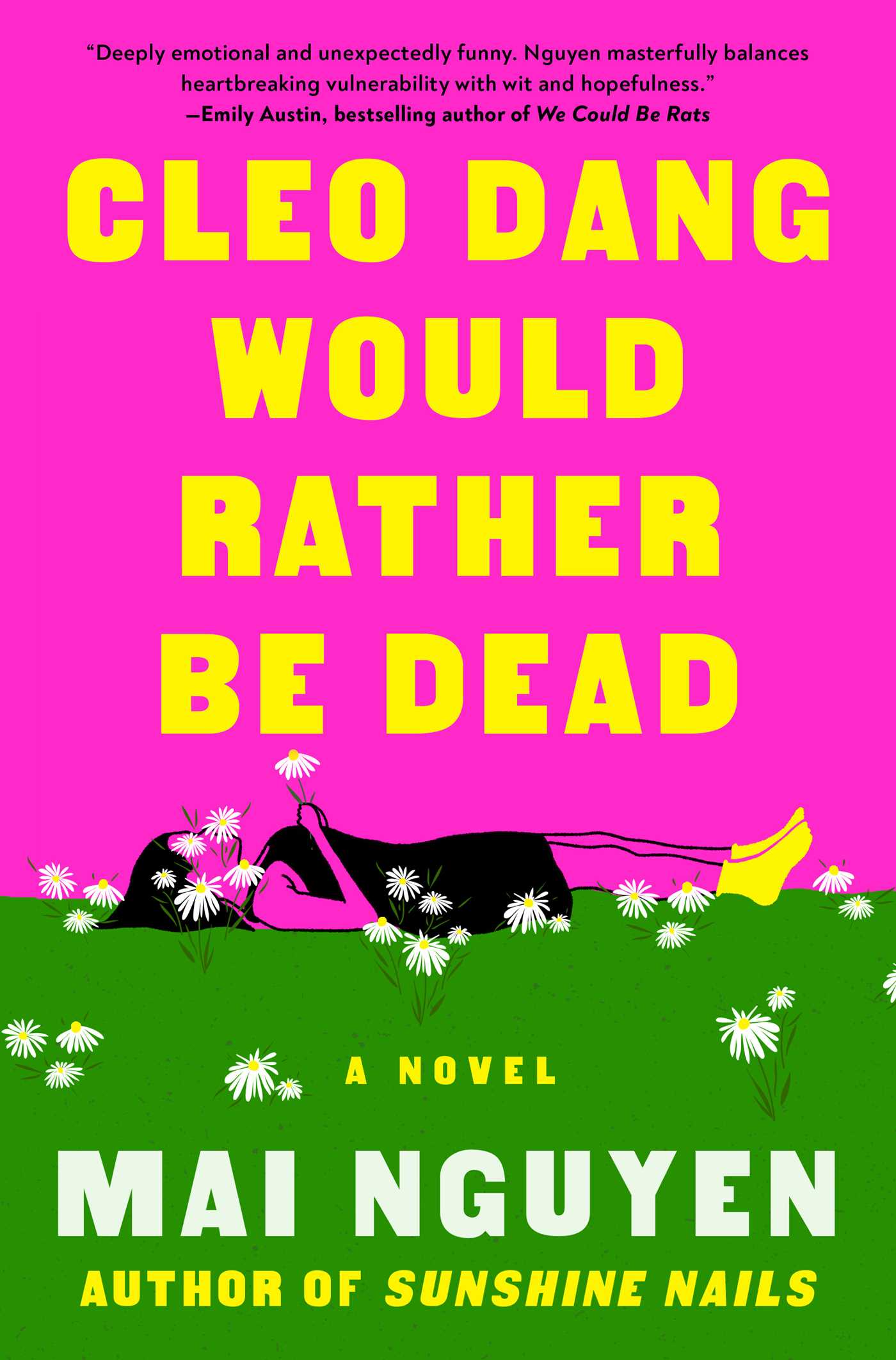
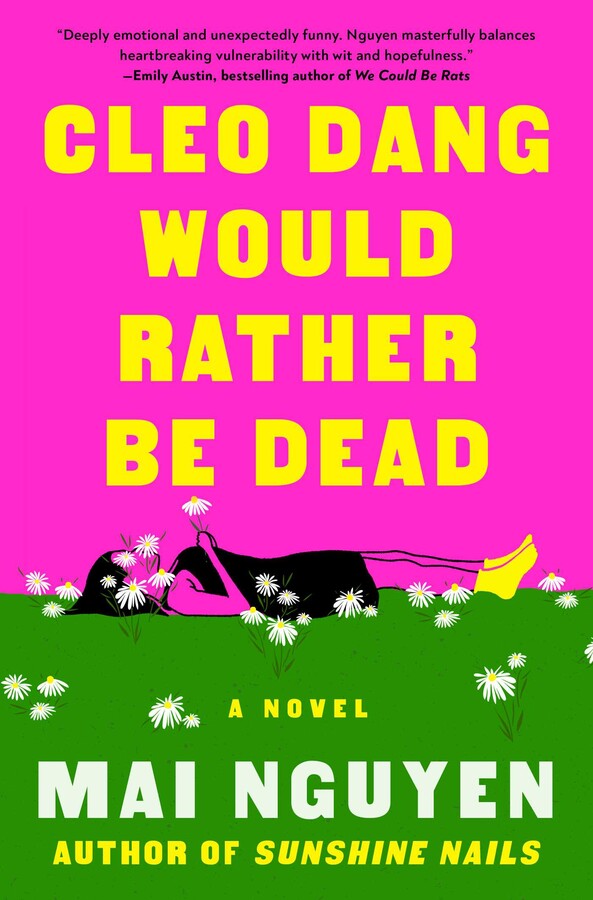
A darkly humorous yet uplifting novel about a grieving mother who starts working at a funeral home and discovers that the best way to honor the dead is to live—from the author of the “insightful, moving” (Taylor Jenkins Reid, New York Times bestselling author) Sunshine Nails.
All Cleo Dang has ever wanted is to be a mother. The day she discovers she’s pregnant is the happiest of her life, especially when she learns that her best friend, Paloma, is also expecting. It’s a wonderful surprise, and together, they enjoy their pregnancies. But when they both go to the hospital in labor, something goes very, very wrong. Paloma comes home with a baby. Cleo does not.
Ravaged by grief, Cleo must now navigate life after losing her baby. She alienates herself from the world, particularly her best friend, who is living the life she so desperately wanted. Forced to take leave from her demanding job as an actuary, Cleo manages to find work at a funeral home, where she meets a revolving cast of bereaved locals and discovers the power of confronting grief.
Darkly humorous yet uplifting, Cleo Dang Would Rather Be Dead follows a grieving mother who starts working at a funeral home and discovers that the best way to honor the dead is to live.
Excerpt
Chapter 1 1
I didn’t expect the casket to be so small. It looked bigger in the catalog, but I suppose everything looks bigger in pictures. The sight of it rips into me like an arrow and I go back in time, wondering why I hadn’t gone with something more bright and colorful to distract from how sadly small it is. There had been so many to choose from. Blue ones covered in clouds and angels. Pink ones with butterflies all over. Green ones with elephants painted on the side. But I didn’t pick any of those, didn’t want to pick any of them really, which is how I ended up with a twenty-eight-inch casket constructed out of solid Canadian oak in a semigloss finish. Simple, classic, not pretending to be something other than what it is.
Even if I wanted to change it now, I can’t. It’s too late. You’re already inside. And people are entering the reception room. They’re forming a line. A line for what I’m unsure. I don’t know where Ethan has gone off to. He’s been dealing with crippling diarrhea all morning, so he must be in the bathroom, probably cursing the anonymous individual who left that questionable stew on our porch last night with only a hastily scrawled note that read, Please accept my condolences.
Oh, he accepted your condolences all right!
I stand awkwardly beside the casket, unsure what to do with my arms, my face, my whole body for that matter, until one of the funeral staff comes up to me and asks if I would like to receive the line.
I freeze. This was not on the itinerary. I had not mentally prepared for activities that were not on the itinerary.
“W-what does that entail exactly?”
“Oftentimes guests want to express their sympathies and offer words of comfort directly to the parents. You don’t have to do anything you don’t want to. Just tell me what you feel comfortable with and I can make this line go away if that’s what you wish.”
I feel hot. And irritated. And upset that an immediate decision is required of me. What do I do? Do I say yes, and run us behind schedule? Do I say no, and disappoint everyone I know? Suddenly I feel incredibly drained, like a phone at one percent. The doctor warned me this might happen. That my brain might not be up to snuff after such a seismic loss and that I should not be put in charge of making big decisions, which I thought was an odd thing to say because isn’t that what we do when somebody we love dies—make big decisions one after the other, the biggest one of all being whether to keep on living?
“Grief brain” was what the doctor called it as he sent us home with some frightening pamphlets and a shoebox containing a lock of your hair, molds of your hands and feet, and a narrow strip of graph paper indicating your heartbeat. The nurses even gave us the tape that adhered the breathing tube to your face. I think they just wanted to give us as many things as they could in hopes it would distract us from our empty arms.
Ethan is back. His forehead is sweaty and his eyes are bloodshot. I tell him about the line, which looks to have grown to about fifty people, and ask if he’s equipped to handle that kind of social pressure. He automatically nods, like a soldier obeying a command, then extends his arms to greet the first person in line. I guess we’re doing this.
I’ve never been more grateful to be married to a textbook extrovert. It had seemed such a curse, having to remember so many friends’ names and the stories of how they met and be in constant competition for his attention. It was something I always struggled with, having to accept I wasn’t the only one who loved him.
Now I see it’s proving quite useful. Ethan gets through the line with speed and proficiency. This comes natural to him. He’s always on no matter where we are, no matter who has died, it seems. Ethan does most of the talking, leaving me with the easier task of accepting hugs and nodding my head at the I’m sorrys and I’m here for yous. I find myself doing a good job, keeping the line moving, not bursting into tears and disrupting the flow. I do my best to not visibly wince at the bright platitudes, all of which fail to downplay the horror of today.
She’s in a better place.
You can always have another baby.
At least you got a few days with her.
At least you can get pregnant again.
God needed another angel.
Everything happens for a reason.
I can’t imagine.
It’s this last sentiment where I find myself gritting my teeth the most. I know that, for most of them, this tragedy defies their understanding of death—that people are supposed to die in the order of age. But surely it’s possible to wonder what it might be like, to put yourself in my shoes and consider a world where sometimes, sadly, children die first.
I try really hard not to make a scene or say anything confrontational but when Claire, an underwriter from work, becomes the eleventh person to say the words I can’t imagine, I explode.
“Well let me help you out with that, Claaaire. Just picture your son, Zach, dying right before your very eyes and the one thing you ever loved more than life itself was just suddenly gone and the only thing capable of bringing you a single ounce of joy was your doctor agreeing to prescribe you the strongest sedative in the world so you could sleep a sleep so deep it would feel like you were stone-cold dead.”
“Cleo!” Ethan snaps.
Claire looks appalled, as if I’ve just slapped her across the face. She blinks a couple times before pulling me in for a hug and saying, “There, there.”
After we hug the last person in line, I spot Paloma. I haven’t seen her since the hospital. She’s wearing a black dress that hints at her postpartum pooch. Her hair is pulled into a tight, greasy bun. Her skin is dry and sallow as puffy lids cast shadows under her eyes. Sleepless nights are painted all over her face. The picture of new mom exhaustion.
What I wouldn’t give to look like her—delirious and deathly tired—if it meant my baby were still alive.
Here’s what you should know about me and Paloma: We are practically a mirror of each other. We live on the same street. We graduated with honors in business. We like our pizza thin-crust, well-done. We drink French 75s exclusively. We drive Kia Souls, surf blue, black roof. Our wedding dresses were signature Theia Couture and, you guessed it, we got married the same year, with the same officiant, at the same venue.
This is all to say that not a single person—not our husbands, friends, or parents—dropped their jaws or batted an eye when we fell pregnant at the same time. It was like a miracle or, at the very least, a message from the divine confirming what we had long suspected: that this inextricable bond between us would never, ever break, even long after we’re dead.
Everything had lined up perfectly. Our bellies were growing, the babies were kicking, and our cravings frequently nudged us to Costco for hot dogs and Dairy Queen for Blizzards. And as if we needed more proof of how predestined this all was, we somehow surprised each other with the exact same gift: an orange spotted onesie that said, “YOU BET GIRAFFE I’M CUTE.”
Nine months later, when our waters broke only minutes apart, we waddled into our respective Kias—Ethan and I leading, her and Freddie behind. At the hospital, the staff, perhaps seeing how tightly our hands were intertwined, automatically placed us in adjoining rooms. Just as we were meant to walk this earth together, so too would our babies.
There was no cry when you came out. A gurgle maybe, but now I’m not sure. So much was happening. One minute I was pushing you out, the next you were connected to a confounding tangle of hospital wires. The doctor said it was hypoxic-ischemic encephalopathy, a type of birth asphyxia that occurs when the baby doesn’t get enough oxygen during delivery. He said the damage to your brain was too severe. That you had to be on a ventilator. That I did nothing wrong. That this was just terrible luck. That he was very, very sorry. And in between all of these statements, he kept peppering in the word Mum to address me. It was so disorienting. I wanted to tell him to please stop calling me that because out of everything that was coming out of his mouth, Mum was breaking my heart the most.
They gave us a private room, dimmed the lights, and let us be alone with you. We ignored the tubes and wires and beeping noises and played family. We gave you a bath. Combed your hair. Changed your diaper. Trimmed your nails. Opened up Goodnight Moon and said good night to the socks and clocks. Told you we loved you in Vietnamese and Japanese, our mother tongues. I don’t know where we found the fortitude to take selfies, but we did—lots of them—and even laughed as we struggled to get the filter to add dog ears to all three of us. We got some good ones of you beside the wooden disc that we had custom carved with your name: Daisy Dang Hayashi.
Babies were crying all around us. I held you as tight as I could, squeezing you into my chest as if willing you to take shelter inside my heart where it was safest. I rocked you from side to side for hours. The only movement came from your little chest as it filled and unfilled with air from the mechanical ventilator. Your beauty was so startling I couldn’t look away. The cloud-like arches of your eyebrows. The tiny curves of your nostrils, like doorways to heaven. I lifted an eyelid. Brown, just like mine. I asked your father to hold open the other eyelid so I could pretend, just for a moment, that you were looking at me with those deep pools of wonder, realizing I was the one whose belly you were inside. That I was your mother.
I closed my eyes and leaned my head back. The silence was dense, the room cold. I didn’t know how to pray, so I whispered something like Please please please oh God please in hopes the doctors had it all wrong and you’d miraculously belt out your first cry.
Then I heard it. A cry. My heart raced as I looked down, awaiting my granted wish.
But it wasn’t you. The cry was coming from the next room.
Paloma’s baby was born.
I take a seat as Paloma runs around like a veteran stage director on speed. I don’t know how she found the time to plan a funeral with a newborn stuck to her breasts all day. When I told her the horrible news, she insisted on taking care of everything. At the time I was so grateful. Now I find myself boiling with a totally irrational, but totally real, resentment towards her because while she may not have slept a wink or bathed in days, she at least had her baby.
“Can I help out with anything?” I ask her.
“Oh gosh, you do not need to do a single thing. The service will begin soon. You just sit tight, sweetie.”
I look around the room and am loath to admit how breathtaking it all looks. There are white daisies everywhere, their yellow disks like pops of hope and optimism. The most beautiful display is saved for the casket, where a combination of dainty daisies and wispy greenery delicately cascade across the top.
“Did you see the dumplings?” Paloma asks.
I didn’t even notice the plush white dumplings flanking each side of the casket. They were party favors from our baby shower. Because that’s what we called you, after all: our little dumpling. I thank Paloma for that poignant touch and tell her everything is perfect, even though everything is terrible.
My mother is sitting next to me. She is like a creature possessed, sobbing so uncontrollably that she somehow falls to the floor from a seated position. Multiple people rush to her aid. They check her pulse, offer her some water and a Werther’s Original to get her blood pressure back up, and lift her slowly back to her chair. I ask her if she’s okay and that’s when she gawks at me. “How are you not falling apart?”
I don’t know what to say. I can’t explain why I haven’t shed a single tear since arriving at the funeral home. At home I can soak pillows into oblivion but here, surrounded by all these people, I can’t even muster a drop. I envy my mother for that, the physical release of a good cry.
The service is going to start in five minutes. I go to the bathroom to change my pad, which is on the brink of leaking. Nobody prepares you for all the postpartum bleeding—the sheer volume, the volcanic gushing, the lime-size clots that slide out without warning. I wipe the jiggly mass of blood off the pad and flush it down the toilet.
I remove the cabbage leaves from my breasts. They are warm and wilted, wet with milk from all the hugging. The lactation consultant at the hospital said the sulfur compounds would stop my supply but clearly it’s not working because I’m as engorged as a horse in heat. I pop a Tylenol and check my reflection in the full-length mirror, my breasts practically up to my neck. Stupid, sad, pathetic excuse of a body. If it can create a little human from scratch, you’d think it could also detect that the little human has died and immediately signal to the breasts: Halt! Halt the productions! There is no baby to feed!
A tall, lanky woman washes her hands beside me. I don’t recognize her, but she sees something in me that provokes her to start a conversation.
“It’s just so tragic, isn’t it? To lose a full-term baby like that? I feel terrible for that woman.”
I stare at her, incredulous, wondering whose plus-one she even is. All I can muster is, “Yeah, I can’t imagine.”
Everybody quiets down as the officiant enters the room and takes out his notebook.
“We open our hearts to you, O God. Let us give thanks to God, who welcomes the stranger…”
What the hell is this? I turn around and hiss at Paloma.
She leans in. “He was the only one I could find last minute!”
I grumble and sit there as the clergyman asks for Jesus Christ to welcome my baby into his arms and to bless her abundantly. As a non-Christian, this brings me no comfort whatsoever. For the rest of the service, I worry that my baby has been shepherded into the arms of a bearded, robed man whose credentials I know nothing of. Is he good with babies? Does he have any childcare experience? Does he know about the five S’s for soothing a crying baby? It isn’t until the clergyman announces that my baby will be in the company of the Virgin Mary and all the other angels and saints in heaven that I begin to feel a little bit better.
After the prayers are done, a handful of people take turns saying a few words. The order and identity of speakers is unbeknownst to me. Paloma gave no hint as to who would be speaking and what they’d be saying. I wish I had pestered a bit more, because had I known Ethan’s uncle was going to sing a “stirring” a capella rendition of Hamilton’s “It’s Quiet Uptown,” the saddest song in musical theater history, I would have submerged that microphone in toilet water. And had I known that my cousin’s daughter was going to do a reading of Robert Munsch’s Love You Forever, the saddest memorial to stillborn babies ever written, I would have doused that book in kerosene and ignited it.
But I had no idea. So I sit through the service, gripping Ethan’s hand while still producing zero tears. I look over at him. His face is wet, tears pooling at the edge of his jaw and soaking the collar that he carefully ironed that morning.
At most funerals, people share funny anecdotes or charming quirks or beloved memories of the deceased. But when someone dies before they’ve truly lived, it complicates the time-honored ritual. Yet, somehow, people still find a way to sum up your short little life. They talk sweetly about how loved and wanted you were, how beautiful you were, how wild and glorious and endless their dreams for you were. Hearing these speeches buoyed me even as they dragged me deeper into a dark abyss.
My mother is the last person to speak. By this point, everybody had more or less said variations of the same thing. That no parent should ever have to outlive their child. That it was fortunate she only ever knew love. That this was a tragic reminder of how we should all hold the ones we love close. What more could my mother say?
“There is so much I don’t know about life and death,” my mother starts in English before switching to Vietnamese for ease, “but one thing I know for sure is… is…”
Then, to my utter disbelief, she bursts into tears and collapses to the ground once again.
After the service, people say their solemn farewells. A tall white man with a mustache and a protruding belly greets us. He looks to be in his sixties. His mustache is full and thick, shaped like a slug. He wears a checkered waistcoat underneath a very loose-fitting jacket. If he had a British accent, he would be a good candidate for Batman’s butler. He introduces himself as Kenneth Timmerman, the director of Monarch Funeral Homes, the person we spoke to on the phone to order the casket. His voice triggers memories of that thick catalog and the dissociative flipping of the pages. He tells us he will inform us when the ashes have been returned from the crematorium, which he estimates to be by the end of the week. We don’t know what to say in return but Thanks.
“I’m very sorry for your loss,” he says. “We hope this service has brought you some semblance of comfort. If there is anything you need at all, please don’t hesitate to contact me. It would be a pleasure to hear from you again, whenever that may be.”
I want to tell him, With all due respect, sir, I hope I never have a reason to see you again, but instead I nod and shake his big, calloused hand, noting the time on his watch and filling with dread that it is only noon, a whole day, a whole life, still ahead of me.
About the Author
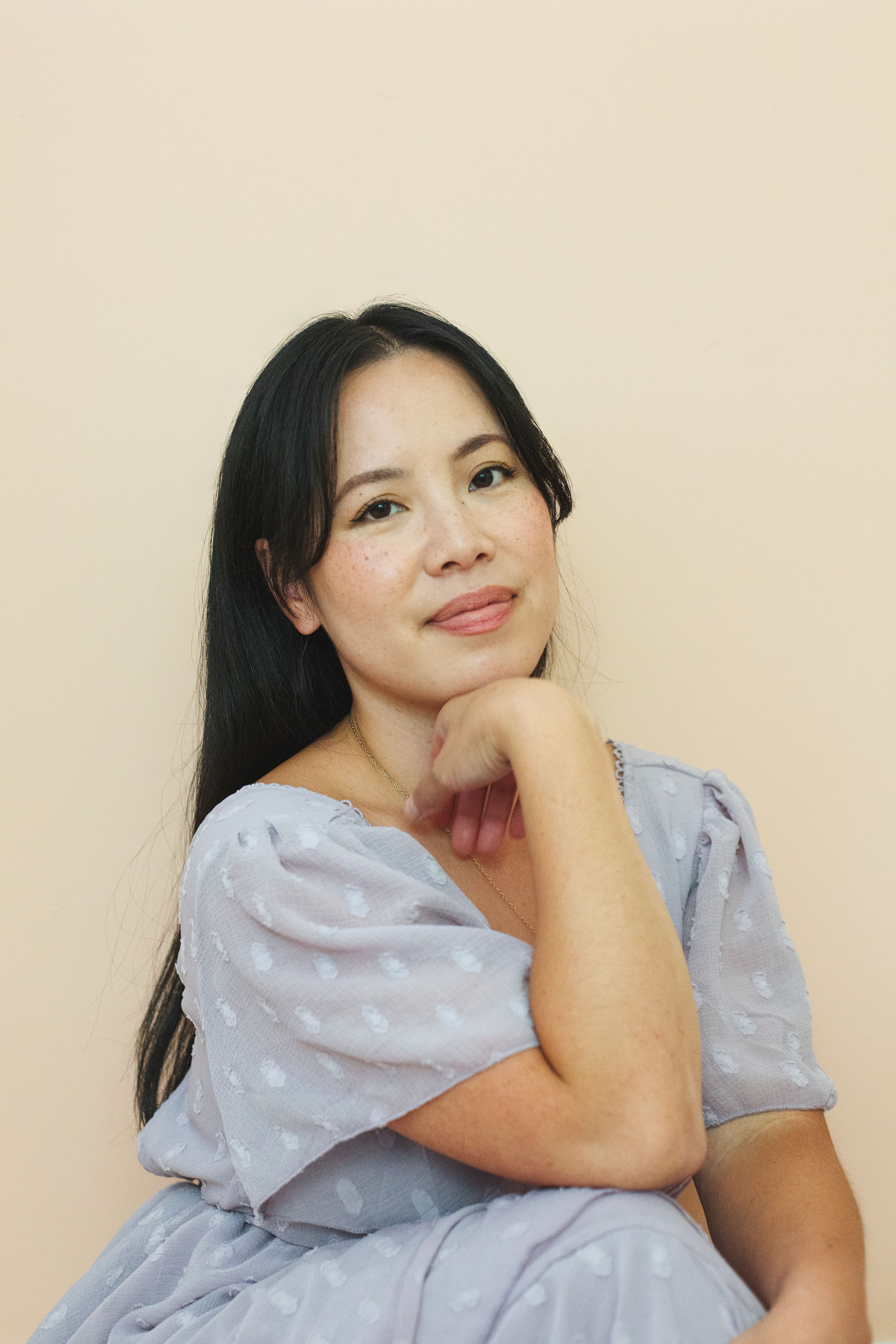
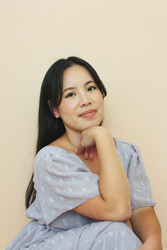
Photograph by Lucy Doan
Mai Nguyen is a Vietnamese Canadian author whose debut novel, Sunshine Nails, was longlisted for Canada Reads and named one of the best books of 2023 by NPR and CBC. Her journalism has appeared in Wired, The Washington Post, and The Toronto Star. Raised in Halifax, she now lives in Toronto with her husband, daughter, and French bulldog.
Product Details
- Publisher: Atria Books (April 14, 2026)
- Length: 288 pages
- ISBN13: 9781668080887
Browse Related Books
Raves and Reviews
"Mai Nguyen's morbidly funny sophomore novel, Cleo Dang Would Rather Be Dead, explores the raw depths of grief as the title character flounders after her infant daughter's death. Touching and insightful, Nguyen's novel is a moving depiction of motherhood and an honest portrait of grief in its multilayered complexity." —Shelf Awareness
"Nguyen is brilliant in her depiction of the agony of grief as well as its absurdity and surprising capacity for tender connection. An astonishing portrait of grief and an ode to the beauty that manages to live in its midst." —Kirkus, starred review
Nguyen (Sunshine Nails, 2023) writes with raw, unflinching honesty about the agony of losing a child, balancing pathos with dark humor. Cleo's messy, nonlinear, yet ultimately hopeful story of rebuilding proves that while some wounds may never heal, they can be transformed into something unexpectedly profound." —Booklist, starred review
"Cleo Dang Would Rather Be Dead is a deeply compassionate and unexpectedly funny novel about love, loss, and the messy, resilient business of being human. Mai Nguyen always writes with warmth, insight, and emotional precision, and here she finds moments of wit and connection even in the most painful terrain. This is a story that sticks with you—not just for the way it turns sorrow into moments of light, but for its tenderness and humanity." —Marissa Stapley, New York Times bestselling author of Lucky
“Cleo Dang Would Rather Be Dead is a window into grief: its ability to make us our worst selves, but also how, over time, it can turn us into a person who sees life for how precious and beautiful and exquisitely improbable it truly is. Nguyen’s writing is open and vulnerable and so very raw. I cried a lot, but I also laughed and was reminded that grief is a journey that never ends but shifts and morphs and should be tended to as long as is needed. It is a testament to the healing power of connection, and I’m so glad this book exists.” —Charlene Carr, author of We Rip the World Apart
“Propulsive and unflinching, Cleo Dang Would Rather Be Dead captures the depth of human loss with the tenacity of life's hopes. When her newborn child dies, Cleo finds herself in an impossible search to make meaning out of tragedy and profound grief. Told with exceptional candor, heartbreak, and humor, Nguyen’s novel evokes a complex spectrum of emotions, causing readers to pause and reflect on their own love, loss, and other life experiences long after reading.” —Ann Y.K. Choi, author of All Things Under the Moon
“It’s rare to read a book knowing that it will stay with you long after it’s finished like this. It had me wiping away tears and laughing within the same page. Mai Nguyen writes about grief with humour, deep insight, and incredible honesty. It’s a beautiful story of a mother’s love, sorrow, joy, and human connection.” —Natalie Sue, bestselling author of I Hope This Finds You Well
"Deeply emotional and unexpectedly funny. Nguyen masterfully balances heartbreaking vulnerability with wit and hopefulness. A truly beautiful novel and window into a mom’s profound love for her baby." —Emily Austin, bestselling author of We Could Be Rats
Praise for Sunshine Nails
“Filled with heart and humor, Sunshine Nails is an insightful, moving story with striking depth, taking on gentrification, family expectations, and generational differences. You will be rooting for the Tran family through every risk and sacrifice they make to save their salon, and ultimately themselves. Mai Nguyen has proven herself to be a real standout.” —Taylor Jenkins Reid, New York Times bestselling author of Carrie Soto is Back
"The story of the Tran family is full of zany, hilarious fun — but it’s also poignant and told with care. Sunshine Nails made me laugh, cry, and think deeply about culture, family, and the ties that bind. What a witty and engaging debut — I was thoroughly charmed!"—Marissa Stapley, New York Times-bestselling author of Lucky
"Nguyen debuts with a glittering story of a family nail salon in Toronto...Nguyen imbues her characters with humanity and nuance, making hay from all their imperfections. Readers are in for a treat."—Publishers Weekly
"Sharp, witty, and warmhearted, Nguyen's debut tackles gentrification, small business ownership, prejudice in the workplace, and--most importantly--the depth of familial ties, and the power of a good manicure."—Shelf Awareness
“Sunshine Nails has been marketed as lighthearted, and it is in many ways — it's funny…and it's a gratifyingly speedy read. But beneath the dust jacket's bright yellows, purples and pinks is a novel of character studies that simmers with questions about work, class, generational divides and the expectations facing refugees making new homes in their asylums.”—NPR
Resources and Downloads
High Resolution Images
-
Book Cover Image (jpg): Cleo Dang Would Rather Be Dead
eBook 9781668080887
-
Author Photo (jpg): Mai Nguyen Photograph by Lucy Doan(0.1 MB)
Any use of an author photo must include its respective photo credit