
Plus, receive recommendations and exclusive offers on all of your favorite books and authors from Simon & Schuster.
0:00 /
LIST PRICE $26.00
PRICE MAY VARY BY RETAILER
Free shipping when you spend $40. Terms apply.
Buy from Other Retailers
Table of Contents
About the Book
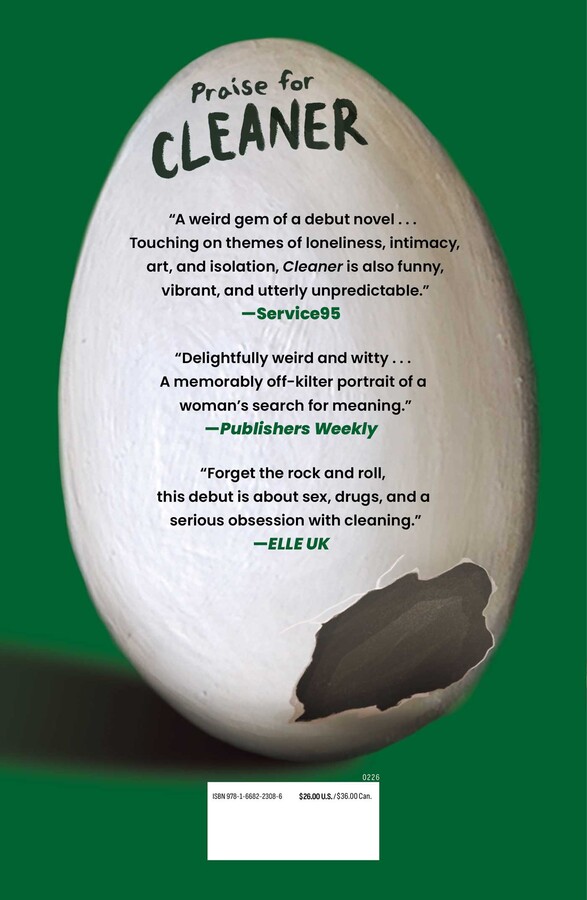
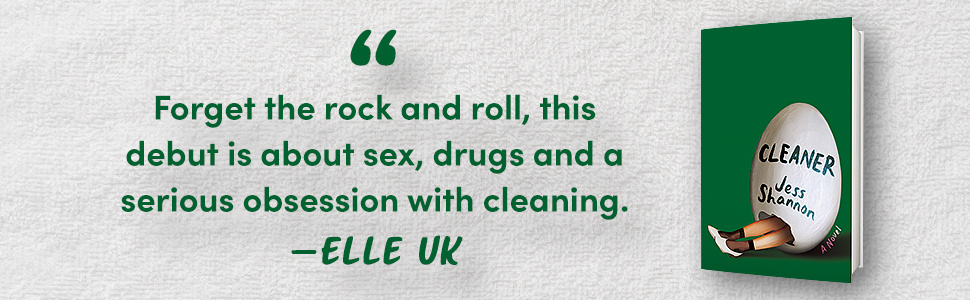
“Forget the rock and roll, this debut is about sex, drugs and a serious obsession with cleaning.” —ELLE
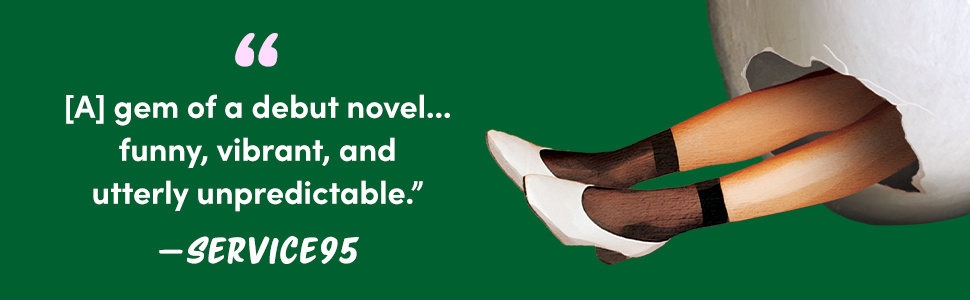
“[A] gem of a debut novel...funny, vibrant, and utterly unpredictable.” —Service95
A disaffected young woman’s work as a cleaner takes her on an increasingly surreal search for a creative fulfillment, gainful employment, and the meaning of life in this sharp, tragicomic debut—perfect for fans of Melissa Broder, Jen Beagin, and Alexandra Tanner.
A young artist returns to her childhood home, with a host of degrees and diplomas in her back pocket. But when forced to confront the reality that the world sees no use for her scholarly exploits, she must find a job—and quickly.
Overqualified, underemployed, and idle, she starts a job as a cleaner for a gallery, where she meets another aspiring artist—Isabella—and they begin a passionate affair. Isabella could not be more different from the cleaner: she’s elegant, successful…and living with her filthy rich boyfriend Paul.
Isabella sneaks the cleaner into her life by hiring her to scrub the apartment she shares with Paul. Little by little, the cleaner relaxes into the comfort of her new surroundings. But when Isabella leaves the apartment one day and doesn’t come back, the cleaner is left to decide whether to back to her old life—or stay and step into Isabella’s.
“[A] gem of a debut novel...funny, vibrant, and utterly unpredictable.” —Service95
A disaffected young woman’s work as a cleaner takes her on an increasingly surreal search for a creative fulfillment, gainful employment, and the meaning of life in this sharp, tragicomic debut—perfect for fans of Melissa Broder, Jen Beagin, and Alexandra Tanner.
A young artist returns to her childhood home, with a host of degrees and diplomas in her back pocket. But when forced to confront the reality that the world sees no use for her scholarly exploits, she must find a job—and quickly.
Overqualified, underemployed, and idle, she starts a job as a cleaner for a gallery, where she meets another aspiring artist—Isabella—and they begin a passionate affair. Isabella could not be more different from the cleaner: she’s elegant, successful…and living with her filthy rich boyfriend Paul.
Isabella sneaks the cleaner into her life by hiring her to scrub the apartment she shares with Paul. Little by little, the cleaner relaxes into the comfort of her new surroundings. But when Isabella leaves the apartment one day and doesn’t come back, the cleaner is left to decide whether to back to her old life—or stay and step into Isabella’s.
Excerpt
Chapter 1
This story doesn’t have a beginning. I just sat on dining room chairs with my legs swinging like anyone else; grew possessive over junk plastic, shoveled chicken nuggets down my throat at birthday parties, and spent enough time gazing quizzically at the sun to grow yearly, like any uniform sapling. I outgrew clothes and shoes faster than my siblings and felt guilty for it, conscious even then that childhood was a wasteful inconstant medium. At school I excelled for want of a peculiar, comfortable love from my parents, proving, perhaps, that a plant that’s desperate to be measured grows more. I equated nurture with expectation. And so I studied ruthlessly, endlessly, until I found myself in my mid-twenties, crowned with an obscene amount of paper, proving my brain had grown beyond capacity, and with an ungodly amount of student debt. (Shit.) When the last certificate plopped through the letterbox onto a pile of takeaway pizza menus, I was disillusioned with the whole thing, and not much more than nonplussed at the triangular crease in the top left-hand corner from the steady grip of the postman, where, I assume, he had positioned his thumb. The poor choice of font did not upset me, nor, indeed, did the quality of the paper, which was not unlike single-ply toilet roll. Back in my bedroom, standing adrift on the only spot of carpet unobscured by dirty laundry, I thought about hanging this thing up nicely in a frame on the wall—that was what proud people did, of course—but I was deterred by the grayish leak creeping down from the ceiling I had yet to ring my landlord about, out of fear of making unscheduled phone calls. The wall was wrong. I could’ve texted the landlord, of course, but the wall would still be wrong. The certificate would have to stay in the envelope and be lost under the bed. A bed that was not even mine. (Shit.) I looked upon what I had created here and saw myself stuck inside a vortex of my own messes. My small room seemed to be visibly clouded by the stink of my body and the stink of my superfluous thinking. After spending two months in my bed, I grabbed the nearest jacket and rushed out onto the street, gasping theatrically for air. The shock of sunlight made my eyes stream with tears. I plugged my earphones in and began walking through this city I had been living in for years but somehow knew nothing about. I did not stop until a man called out to me and I was caught short by the reality of real nighttime, when only moments before I’d been transfixed by a great wash of pink over the spire of an old church. I’d been walking for hours, my stomach was gurgling; another day had died right before my eyes. This man who had brought me to my senses cried something not untrue about the state of my body, which I noted down verbatim on my phone, as had become an unorthodox habit of mine. I turned back the way I had come through the wide city streets and reached the door just as the sun rose, crawling into my bed at about 6 a.m. I awoke, damp and groggy, sometime after 5 p.m., only to drink cup of instant coffee after cup of instant coffee, grab my jacket, and repeat the whole pointless excursion all over again. I woke, I walked, I lived on deli sandwiches in recyclable paper and I watched each watery sunrise until my lease on the flat ran out some weeks later. My other housemates were long whisked away by beckoning purpose. Alone, I spent a sad afternoon sweeping the carpet in the absence of a vacuum cleaner and depositing bin bags of things I couldn’t fit into my suitcase at various charity shops. With my certificates packed neatly in my bag, I trundled home on the train to my parents’ house,resigning myself to the fact I’d never get my deposit back. I swapped the city I found for the city I came from. There, I spent a month or so night walking through my old childhood haunts (the chip shop where I got slapped once, the library where I discovered reading) and faced my parents’ bleary-eyed questions by day, when I’d knock on the front window to be let in at dawn, like some sort of sloping street cat pushing its luck: Hold me, feed me, I have never known the joy of attention! After about a week of this, my limp, doughy parents tentatively suggested I find myself some employment—You could work nights?—which I ignored. I asked them instead what I could do for them, but they were happy, which was a shame. It surprised me. I found myself for the first time intensely jealous of what cannot have been a particularly exciting life. I was the most educated person in the whole family and I could offer them nothing.
This story doesn’t have a beginning. I just sat on dining room chairs with my legs swinging like anyone else; grew possessive over junk plastic, shoveled chicken nuggets down my throat at birthday parties, and spent enough time gazing quizzically at the sun to grow yearly, like any uniform sapling. I outgrew clothes and shoes faster than my siblings and felt guilty for it, conscious even then that childhood was a wasteful inconstant medium. At school I excelled for want of a peculiar, comfortable love from my parents, proving, perhaps, that a plant that’s desperate to be measured grows more. I equated nurture with expectation. And so I studied ruthlessly, endlessly, until I found myself in my mid-twenties, crowned with an obscene amount of paper, proving my brain had grown beyond capacity, and with an ungodly amount of student debt. (Shit.) When the last certificate plopped through the letterbox onto a pile of takeaway pizza menus, I was disillusioned with the whole thing, and not much more than nonplussed at the triangular crease in the top left-hand corner from the steady grip of the postman, where, I assume, he had positioned his thumb. The poor choice of font did not upset me, nor, indeed, did the quality of the paper, which was not unlike single-ply toilet roll. Back in my bedroom, standing adrift on the only spot of carpet unobscured by dirty laundry, I thought about hanging this thing up nicely in a frame on the wall—that was what proud people did, of course—but I was deterred by the grayish leak creeping down from the ceiling I had yet to ring my landlord about, out of fear of making unscheduled phone calls. The wall was wrong. I could’ve texted the landlord, of course, but the wall would still be wrong. The certificate would have to stay in the envelope and be lost under the bed. A bed that was not even mine. (Shit.) I looked upon what I had created here and saw myself stuck inside a vortex of my own messes. My small room seemed to be visibly clouded by the stink of my body and the stink of my superfluous thinking. After spending two months in my bed, I grabbed the nearest jacket and rushed out onto the street, gasping theatrically for air. The shock of sunlight made my eyes stream with tears. I plugged my earphones in and began walking through this city I had been living in for years but somehow knew nothing about. I did not stop until a man called out to me and I was caught short by the reality of real nighttime, when only moments before I’d been transfixed by a great wash of pink over the spire of an old church. I’d been walking for hours, my stomach was gurgling; another day had died right before my eyes. This man who had brought me to my senses cried something not untrue about the state of my body, which I noted down verbatim on my phone, as had become an unorthodox habit of mine. I turned back the way I had come through the wide city streets and reached the door just as the sun rose, crawling into my bed at about 6 a.m. I awoke, damp and groggy, sometime after 5 p.m., only to drink cup of instant coffee after cup of instant coffee, grab my jacket, and repeat the whole pointless excursion all over again. I woke, I walked, I lived on deli sandwiches in recyclable paper and I watched each watery sunrise until my lease on the flat ran out some weeks later. My other housemates were long whisked away by beckoning purpose. Alone, I spent a sad afternoon sweeping the carpet in the absence of a vacuum cleaner and depositing bin bags of things I couldn’t fit into my suitcase at various charity shops. With my certificates packed neatly in my bag, I trundled home on the train to my parents’ house,resigning myself to the fact I’d never get my deposit back. I swapped the city I found for the city I came from. There, I spent a month or so night walking through my old childhood haunts (the chip shop where I got slapped once, the library where I discovered reading) and faced my parents’ bleary-eyed questions by day, when I’d knock on the front window to be let in at dawn, like some sort of sloping street cat pushing its luck: Hold me, feed me, I have never known the joy of attention! After about a week of this, my limp, doughy parents tentatively suggested I find myself some employment—You could work nights?—which I ignored. I asked them instead what I could do for them, but they were happy, which was a shame. It surprised me. I found myself for the first time intensely jealous of what cannot have been a particularly exciting life. I was the most educated person in the whole family and I could offer them nothing.
Reading Group Guide
Get a FREE ebook by joining our mailing list today! Plus, receive recommendations for your next Book Club read.
By clicking 'Sign me up' I agree to the Terms of Use and acknowledge the Privacy Policy and Notice of Financial Incentive. Free ebook offer available to NEW US subscribers only. Offer redeemable at Simon & Schuster's ebook fulfillment partner. Must redeem within 90 days. See full terms and conditions and this month's choices.
This reading group guide for CLEANER includes an introduction, discussion questions, and ideas for enhancing your book club. The suggested questions are intended to help your reading group find new and interesting angles and topics for your discussion. We hope that these ideas will enrich your conversation and increase your enjoyment of the book.
INTRODUCTION
A disaffected young woman’s work as a cleaner takes her on an increasingly surreal search for a creative fulfillment, gainful employment, and the meaning of life in this sharp, tragicomic debut—perfect for fans of Melissa Broder, Jen Beagin, and Alexandra Tanner.
A young artist returns to her childhood home with a host of degrees and diplomas in her back pocket. But when forced to confront the reality that the world sees no use for her scholarly exploits, she must find a job—and quickly.
Overqualified, underemployed, and idle, she starts a job as a cleaner for a gallery, where she meets another aspiring artist—Isabella—and they begin a passionate affair. Isabella could not be more different from the cleaner: she’s elegant, successful . . . and living with her filthy-rich boyfriend, Paul.
Isabella sneaks the cleaner into her life by hiring her to scrub the apartment she shares with Paul. Little by little, the cleaner relaxes into the comfort of her new surroundings. But when Isabella leaves the apartment one day and doesn’t come back, the cleaner is left to decide whether to return to her old life—or stay and step into Isabella’s.
TOPICS AND QUESTIONS FOR DISCUSSION
The novel explores how labor can shape identity, and how meaning can be found in seemingly mundane tasks. How does the book comment on the value we assign to different types of work and its effect on our sense of self?
After spending two months rotting in her bed, the protagonist is suddenly spurred into action, as she rushes “out onto the street, gasping theatrically for air.” She goes on long walks and repeats the “pointless excursion” every day. Why does she do this? What do these walks symbolize?
The narrator laments her staid existence as her “other housemates were long whisked away by beckoning purpose.” Why do you think she fails to launch or pursue the career-oriented paths her peers have chosen? What internal or external forces might contribute to her feelings of purposelessness?
Upon returning home to live with her parents, the narrator begins cleaning, now “frenzied with inner peace.” Why does she latch on to this activity, and why do you think it provides her inner peace? What about cleaning provides her with a sense of calm or control?
The narrator begins an affair with a woman, Isabella, whom she meets while working as a nude model/cleaner at a gallery, and later begins cleaning the apartment Isabella shares with her boyfriend, Paul. Analyze the power dynamics in the relationship between the narrator and Isabella. Who holds the power? Is anyone being exploited?
Think about the ways that loneliness functions in and appears throughout the book. The narrator thinks “if I don’t touch [Isabella] now, I’ll never know intimacy again.” How does loneliness drive her choices?
After falling asleep at Isabella’s house after a night of drunken revelry, the protagonist dreams of a girl who “lives a full and boring life,” and she wakes up “happy and without a guilty conscience.” What might this dream symbolize? How do her feelings after waking complicate our understanding of her character and desires?
Isabella’s sudden disappearance is a major turning point. How does this event transform the story’s direction and the narrator’s journey?
The cleaner has a degree but works a low-wage job. How does the book explore the tension between education, class, and self-worth? What commentary does it make about our contemporary economic situation, where many people with professional degrees are without the career options and financial security that previous generations seemed to have?
Consider the epigraph of the book, which excerpts a letter from Franz Kafka to his fiancée, Felice Bauer. How does this epigraph resonate with Cleaner’s themes?
Think about the structure of the book. Throughout the latter half, time seems to blur: Days seem to blend into one another, and the narrator loses track of chronology. How does the author’s adept manipulation of time mirror the protagonist’s unraveling sense of purpose or identity?
The protagonist’s parents begin hosting a Ukrainian guest while the narrator’s instability seems to grow. When her mother suggests “watching a film ‘as a family,’ [she hides] in the bathroom.” How does this new guest in the home shift the household’s dynamics?
Late in the book, the narrator returns to the art gallery where she first met Isabella. How has the space changed, and how has she changed in relation to it? How does her meeting with Isabella complicate our understanding of truth in the novel?
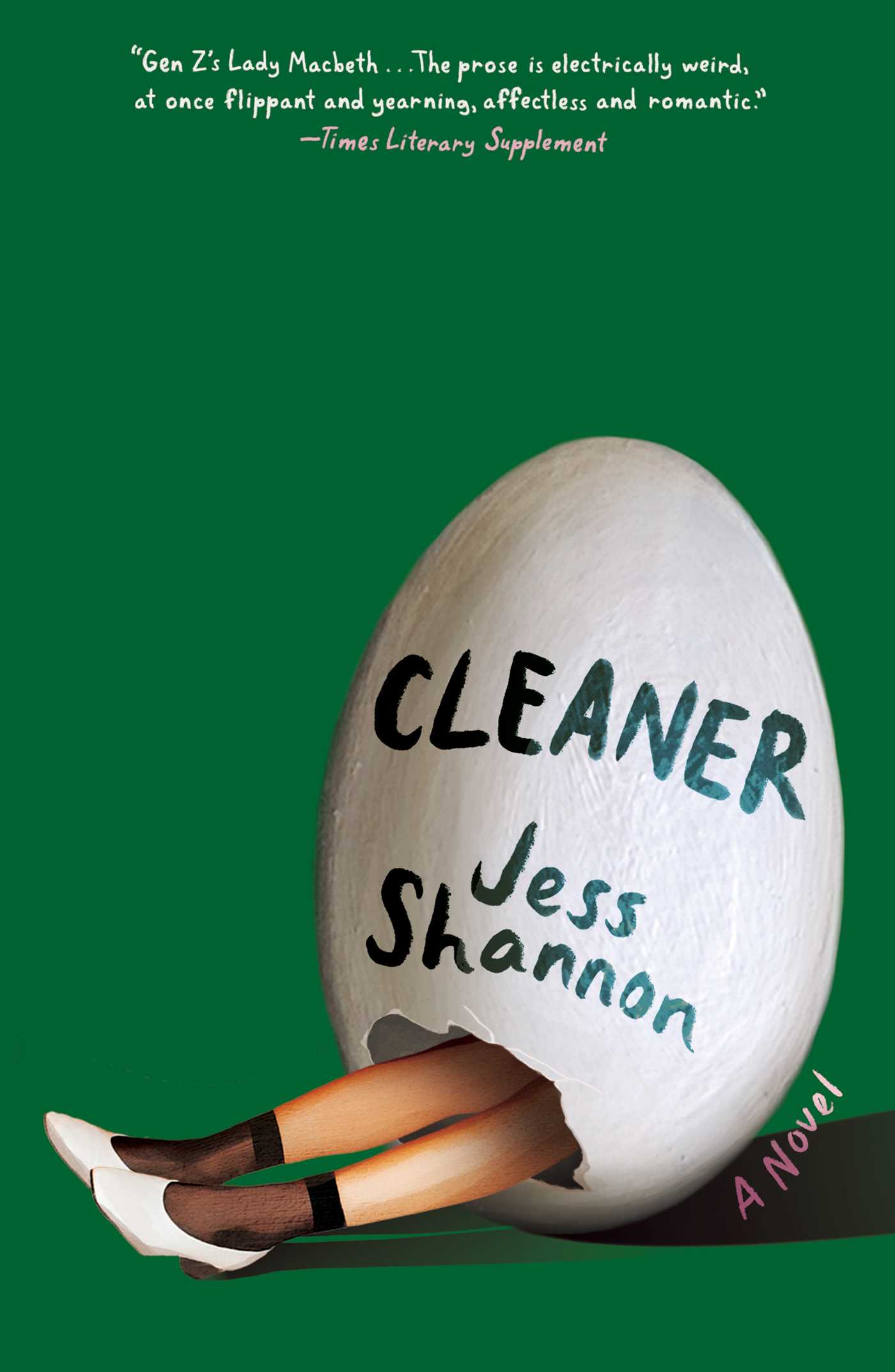
Revisit the final images of the book (the egg, Isabella’s departure). Has the narrator found purpose? What fate do you imagine for her?
The novel’s closing passage refuses tidy resolution. How do you interpret this ending?
ENHANCE YOUR BOOK CLUB
Read Kafka’s Letters to Felice as your next book club pick.
Fan-cast a film or television series adaptation of Cleaner. Who would you select for the roles of the cleaner, Isabella, and the parents?
INTRODUCTION
A disaffected young woman’s work as a cleaner takes her on an increasingly surreal search for a creative fulfillment, gainful employment, and the meaning of life in this sharp, tragicomic debut—perfect for fans of Melissa Broder, Jen Beagin, and Alexandra Tanner.
A young artist returns to her childhood home with a host of degrees and diplomas in her back pocket. But when forced to confront the reality that the world sees no use for her scholarly exploits, she must find a job—and quickly.
Overqualified, underemployed, and idle, she starts a job as a cleaner for a gallery, where she meets another aspiring artist—Isabella—and they begin a passionate affair. Isabella could not be more different from the cleaner: she’s elegant, successful . . . and living with her filthy-rich boyfriend, Paul.
Isabella sneaks the cleaner into her life by hiring her to scrub the apartment she shares with Paul. Little by little, the cleaner relaxes into the comfort of her new surroundings. But when Isabella leaves the apartment one day and doesn’t come back, the cleaner is left to decide whether to return to her old life—or stay and step into Isabella’s.
TOPICS AND QUESTIONS FOR DISCUSSION
The novel explores how labor can shape identity, and how meaning can be found in seemingly mundane tasks. How does the book comment on the value we assign to different types of work and its effect on our sense of self?
After spending two months rotting in her bed, the protagonist is suddenly spurred into action, as she rushes “out onto the street, gasping theatrically for air.” She goes on long walks and repeats the “pointless excursion” every day. Why does she do this? What do these walks symbolize?
The narrator laments her staid existence as her “other housemates were long whisked away by beckoning purpose.” Why do you think she fails to launch or pursue the career-oriented paths her peers have chosen? What internal or external forces might contribute to her feelings of purposelessness?
Upon returning home to live with her parents, the narrator begins cleaning, now “frenzied with inner peace.” Why does she latch on to this activity, and why do you think it provides her inner peace? What about cleaning provides her with a sense of calm or control?
The narrator begins an affair with a woman, Isabella, whom she meets while working as a nude model/cleaner at a gallery, and later begins cleaning the apartment Isabella shares with her boyfriend, Paul. Analyze the power dynamics in the relationship between the narrator and Isabella. Who holds the power? Is anyone being exploited?
Think about the ways that loneliness functions in and appears throughout the book. The narrator thinks “if I don’t touch [Isabella] now, I’ll never know intimacy again.” How does loneliness drive her choices?
After falling asleep at Isabella’s house after a night of drunken revelry, the protagonist dreams of a girl who “lives a full and boring life,” and she wakes up “happy and without a guilty conscience.” What might this dream symbolize? How do her feelings after waking complicate our understanding of her character and desires?
Isabella’s sudden disappearance is a major turning point. How does this event transform the story’s direction and the narrator’s journey?
The cleaner has a degree but works a low-wage job. How does the book explore the tension between education, class, and self-worth? What commentary does it make about our contemporary economic situation, where many people with professional degrees are without the career options and financial security that previous generations seemed to have?
Consider the epigraph of the book, which excerpts a letter from Franz Kafka to his fiancée, Felice Bauer. How does this epigraph resonate with Cleaner’s themes?
Think about the structure of the book. Throughout the latter half, time seems to blur: Days seem to blend into one another, and the narrator loses track of chronology. How does the author’s adept manipulation of time mirror the protagonist’s unraveling sense of purpose or identity?
The protagonist’s parents begin hosting a Ukrainian guest while the narrator’s instability seems to grow. When her mother suggests “watching a film ‘as a family,’ [she hides] in the bathroom.” How does this new guest in the home shift the household’s dynamics?
Late in the book, the narrator returns to the art gallery where she first met Isabella. How has the space changed, and how has she changed in relation to it? How does her meeting with Isabella complicate our understanding of truth in the novel?
Revisit the final images of the book (the egg, Isabella’s departure). Has the narrator found purpose? What fate do you imagine for her?
The novel’s closing passage refuses tidy resolution. How do you interpret this ending?
ENHANCE YOUR BOOK CLUB
Read Kafka’s Letters to Felice as your next book club pick.
Fan-cast a film or television series adaptation of Cleaner. Who would you select for the roles of the cleaner, Isabella, and the parents?
About the Author
(c) Beth Gilbert
Jess Shannon is a writer from Birmingham UK and a proud graduate of the Warwick Writing Programme. She completed her MA in writing in 2021. She spends most of her free time at the theatre and hates cleaning.
Product Details
- Publisher: Scribner (February 17, 2026)
- Length: 224 pages
- ISBN13: 9781668223086
Browse Related Books
Resources and Downloads
High Resolution Images
-
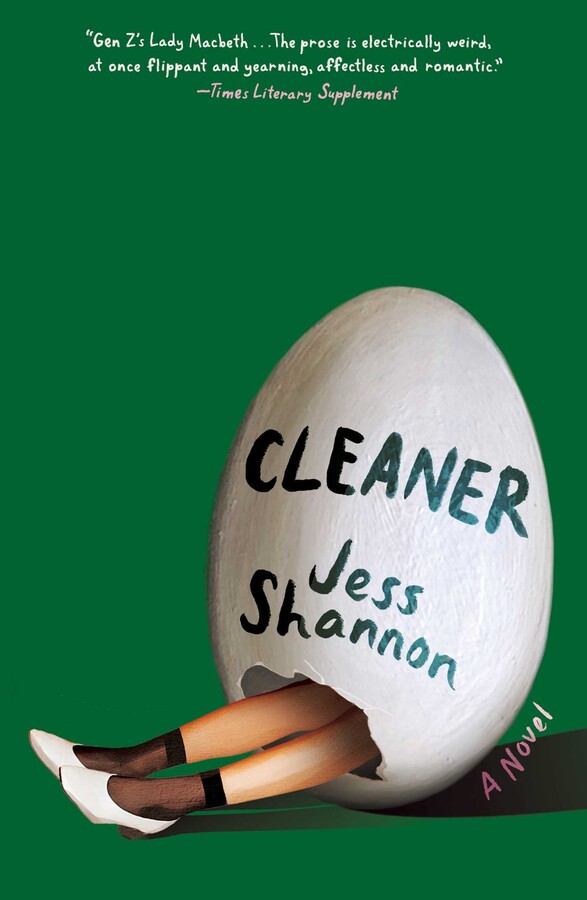
Book Cover Image (jpg): Cleaner
Hardcover 9781668223086
-
Author Photo (jpg): Jess Shannon (c) Beth Gilbert(0.1 MB)
Any use of an author photo must include its respective photo credit