Plus, receive recommendations and exclusive offers on all of your favorite books and authors from Simon & Schuster.
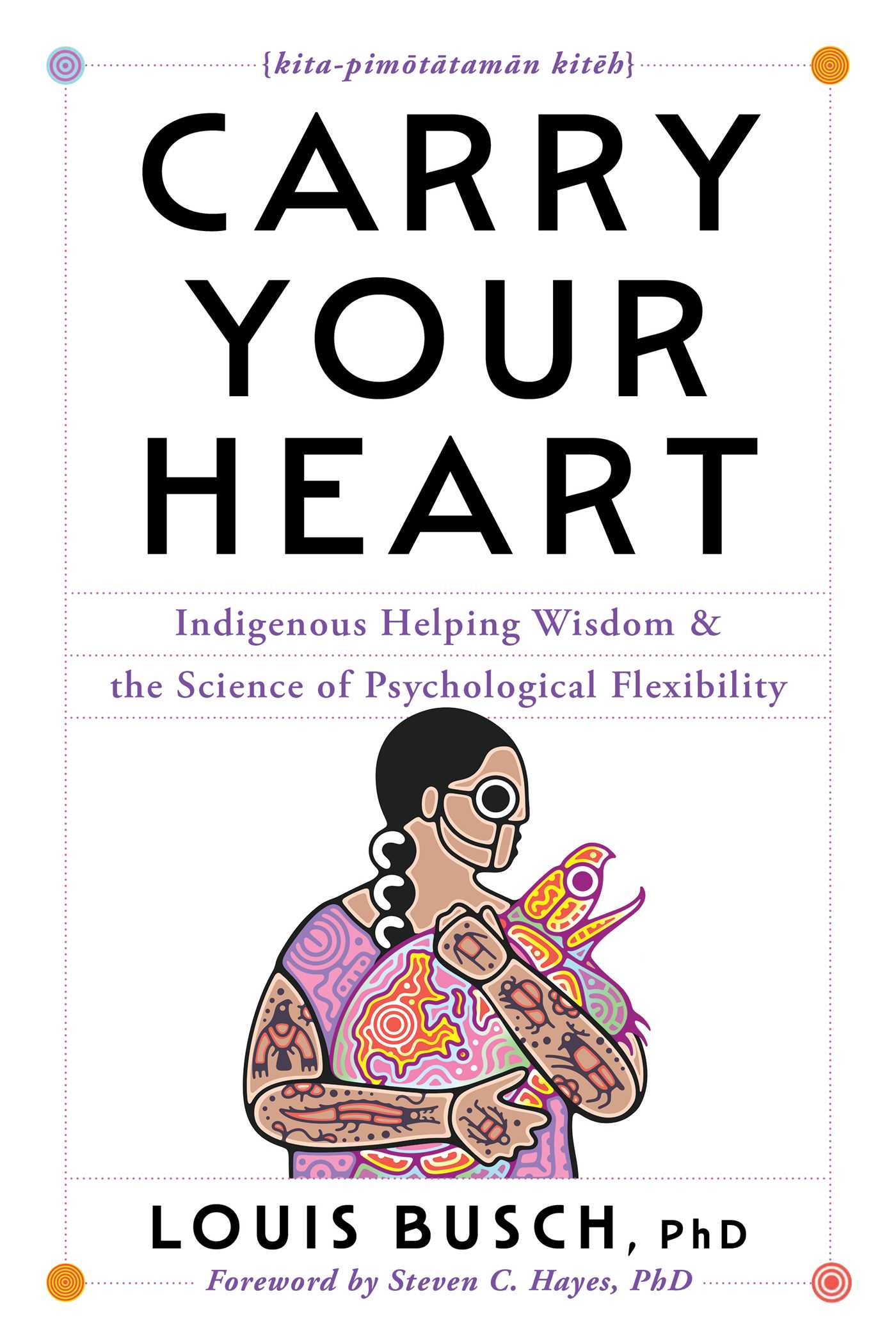
Carry Your Heart
Indigenous Helping Wisdom and the Science of Psychological Flexibility
By Louis Busch
Table of Contents
About the Book
From Cree psychotherapist Louis Busch comes a transformative and insightful journey toward self-discovery and personal growth—integrating Indigenous teaching wisdoms and Western psychology, perfect for fans of What Happened to You? and Braiding Sweetgrass
With an introduction by Steven C. Hayes, PhD.
We all come into this world with hearts wide open, but somewhere along the way, life’s difficulties stack up. We set our hearts down, hide them away, and place heavy stones around to keep us safe from pain.
What if we instead chose to move through life carrying our hearts—our joys, sorrows, fears, griefs, and hopes?
Drawing from principles embedded within Cree worldview, and the author’s two decades of clinical expertise, Carry Your Heart walks readers through teachings from several prominent Indigenous Knowledge Holders from across Turtle Island to reveal how suffering—whether physical or emotional—can foster both personal insight and communal strength. This holistic approach blends Western psychological knowledge and Indigenous cultural teachings, and allows everyone to personalize their journey as they read and work through even the most tender discomforts and stressors with balance and clarity. Through this tapestry of ancestral Teachings, Busch reminds us that even our deepest wounds carry the potential to transform us, and that within our suffering lies a profound connection to the world around us.
Using Indigenous Wisdoms as therapeutic inspiration, Carry Your Heart calls us back to our truest selves—showing that pain, when embraced with compassion, can become the bridge to resilience, strength, and ultimately, wholeness. Beyond a meditative journey, Carry Your Heart equips readers with practical tools to address trauma, cultivate psychological flexibility, and foster lasting well-being.
With an introduction by Steven C. Hayes, PhD.
We all come into this world with hearts wide open, but somewhere along the way, life’s difficulties stack up. We set our hearts down, hide them away, and place heavy stones around to keep us safe from pain.
What if we instead chose to move through life carrying our hearts—our joys, sorrows, fears, griefs, and hopes?
Drawing from principles embedded within Cree worldview, and the author’s two decades of clinical expertise, Carry Your Heart walks readers through teachings from several prominent Indigenous Knowledge Holders from across Turtle Island to reveal how suffering—whether physical or emotional—can foster both personal insight and communal strength. This holistic approach blends Western psychological knowledge and Indigenous cultural teachings, and allows everyone to personalize their journey as they read and work through even the most tender discomforts and stressors with balance and clarity. Through this tapestry of ancestral Teachings, Busch reminds us that even our deepest wounds carry the potential to transform us, and that within our suffering lies a profound connection to the world around us.
Using Indigenous Wisdoms as therapeutic inspiration, Carry Your Heart calls us back to our truest selves—showing that pain, when embraced with compassion, can become the bridge to resilience, strength, and ultimately, wholeness. Beyond a meditative journey, Carry Your Heart equips readers with practical tools to address trauma, cultivate psychological flexibility, and foster lasting well-being.
Appearances
SEP 14
7:00PM
In Person
EVENT - Another Story, moderated by Jesse Wente. With Grandmother Vivian Recollet and katherena vermette
Learn MoreAnother Story
315 Roncesvalles Ave
Toronto, Ontario M6R 2M6
SEP 16
6:30PM
Hamilton Public Library - West Harbour Branch
77 Harbour Branch
Hamilton, Ontario L8L 8K4
SEP 18
7:00PM
McNally Robinson, Grant Park
OCT 9
6:00PM
Cambridge Public Library
12 Water Street South
Ideas Exchange
Cambridge, Ontario N1R 3C5
Excerpt
Chapter 1 1. OTOTIMOWIN
Ototimowin is a word in nehiyawiwin (the Plains Cree dialect) that speaks to a way of being that is open-hearted, relational, and available to others. Simon Bird, a gifted language teacher from Southend Reindeer Lake, Saskatchewan, told me that while the meaning is highly dependent on context, ototimowin can be understood as a way of being approachable, willing to connect, and ready to be in relationship. It may be used to describe people who are warm and attentive, someone who greets others with genuine interest, who makes space for conversation, who is not guarded or withdrawn. To be described with the term ototimowin is a sign of someone who interacts in a good way with others.
When you examine the word more closely, you find that it refers to the quality or condition of belonging through kinship. Its root, ototema, speaks to one’s clan or family lineage. The suffix -win gives it shape as a state of being. Together, they form a word that speaks to relational identity, an understanding of the self through community, land, and ancestry.
The word also carries a deeper teaching. It can serve as a guide for how we relate not only to other people, but also to the full range of experiences that live around us and within us. This way of being is one that makes room for all our experiences in their natural form. This includes our thoughts, feelings, physical sensations, and memories. Some are light, pleasant, and easy to carry. Others feel heavy, sharp, or tangled. Applied in the context of being a good relative to our own experiences, the teaching invites us to welcome them all in with compassion and curiosity, rather than our usual approach of shoving them away or doing our best to keep them hidden.
There are many ways we learn to step away from what hurts. We keep ourselves busy. We reach for substances to soften the painful edges. We scroll our phones until the world fades away, or repeat positive affirmations to silence the critical voices rising inside. Sometimes we seek comfort through control, reassurance, food, or meticulous planning. These responses often come from a place of care. They arise from patterns built to protect us. At the same time, they can pull us away from the teachings our discomfort is offering. When we take a stance of willingness rather than defence, we are invited into a different kind of relationship with those experiences. We meet what comes with a soft front. We let it sit down. We put some tea on. We listen.
This way of being does not arrive all at once. It is something we grow into. It is a skill like practising the guitar or learning to drive. Mastery comes through repeated, undefended contact with our inner and outer worlds. In the pages that follow, I will introduce you to some Knowledge Keepers who have shared teachings that I think embody this way of being. But first, some time travel and a question most of us have asked at our most difficult moments.
TRAPLINES AND TIME TRAVEL
“Mósom, why do we suffer?” The lake is glass-still and paints a second sky upside down in the water.
“Well, what comes to mind when you hear the word pain?” I hear my grandfather say from beside the fire where he is cleaning a long, skinny jackfish, parsing out the troublesome Y-bones with ease. We share the same name, but I sadly did not inherit his fish-cleaning skills. He is speaking Old Cree, but in the dream, I am able to understand everything he says completely.
“Pain?” I parrot, letting the word settle in as he slides the round knife over the tough, slimy skin, separating a perfect fillet that wastes nothing. I set down the branches and the brush I had been collecting and put my hands on my hips. “Uh, hurt?” I stammer. Now he is flipping the fish over and cutting under the gills and around the pectoral fin. “Cut?” I try. Still nothing. “Bad, trauma, injury, suffering, wound?”
He looks up only briefly and points his lips at the bucket beside me. I hand it over to him as he tosses in the fillet, splashing my leg with the fishy water. This makes him smile.
“And what else?” He pulls the next fish out from the black tub beside him and starts the process all over.
“Sickness? Fear? Burn?” As the words come out, I feel a sinking in my stomach and a flood of memory that makes me recoil inward. “Death?” I say. I can feel a lump forming in my throat, and I suddenly don’t want to play this game anymore.
“Mmm-hmm,” he says, neither agreeing nor disagreeing, just acknowledging that he has heard me. He’s on his third fish now, and I know that he has already given me his answer, but I don’t yet understand.
As I wake up, I can still smell the fire burning.
THE GREAT EQUALIZER
Across a lifetime, every person will encounter moments of injury, illness, loss, frustration, failure, and heartbreak. With time, we also come to face the realities of aging bodies, changing capacities, the deaths of people we love, and, eventually, our own mortality. In this sense, pain may be one of the few experiences that genuinely connects us, a shared thread that runs beneath differences of culture, belief, and circumstance.
Pain does not come only from what happens around us. The world inside of us can also be a wellspring for much pain. Fear, grief, shame, anger, worry, and loneliness show up regularly in ordinary life. Our minds are capable of producing thoughts that feel harsh, critical, or overwhelming. While these experiences are often uncomfortable, they are not signs that something has gone wrong. Throughout human history, pain arising both from our environment and from within ourselves has shaped how people learn, adapt, and survive.
These experiences have always required response and ingenuity. Pain has demanded attention, learning, and change. In this way, it has played a role in the development of ways of living that support endurance and care, both individually and collectively.
Long before the arrival of Europeans and the violence that followed, Indigenous Peoples on Turtle Island lived with the realities of war, injury, disease, loss, and the challenges of harsh environments. These experiences were never sought out, but they required adaptation, learning, and ingenuity in the face of uncertainty. Across countless generations, our ancestors did more than persist. They developed complex systems of governance, language, education, art, spirituality, and medicine that supported life, health, and meaning over long periods of time, even amid sustained attempts to erase them.
Because of this long relationship with hardship, many Indigenous teachings speak about pain differently than dominant cultural narratives often do. Pain is understood as part of being alive, not as a personal failure or something that automatically signals something has gone wrong. In this respect, the science of psychological flexibility aligns closely with the teachings shared by many Indigenous helpers and Knowledge Keepers I have had the privilege to learn from. Both recognize that while pain is unavoidable, how we relate to it can shape how we live.
GRANDMOTHER RENÉE THOMAS-HILL
The first stop on our journey brings us to the lands of the great Haudenosaunee Confederacy along the mighty Grand River and to the kitchen table of Grandmother Renée Thomas-Hill. Grandmother Renée is a Cayuga Bear and Turtle Clan Elder of the Mohawk Nation. She is a gifted healer, counsellor, storyteller, educator, historian, lecturer, agriculturalist, and artisan doll maker. She has had a remarkable career spanning many decades and cares deeply for her people. Grandmother Renée peers out at you from behind her glasses with kind eyes and a soft, welcoming smile, but don’t let that fool you! She’s a no-nonsense kohkom who doesn’t mince her words and always gives it to you straight. I really enjoyed getting to know Grandmother Renée and felt an immediate comfort and security in her presence.
In our first visit together, Grandmother Renée described pain as a message from spirit, a wake-up call with the capacity to remind us that we are sacred and to reorient us towards needs we may be neglecting. From her perspective, physical and emotional pain are valuable teachers that help the different parts of ourselves communicate more effectively. I remember her sharing a teaching that has stayed with me. She described the heart, the body, the mind, and the spirit as members of a family, each with its own voice and wisdom.
Our heart, the place where we feel the full spectrum of our emotions, is the Grandmother of this family. The Grandmother is wise and is often the first to know that something is wrong. The Grandmother is also the source of self-compassion, the one who reminds us that we are worthy of love and safety by birthright.
The body is the Mother. Like the Grandmother, the body is concerned with our well-being and sends reminders and makes us aware of what we need to be well.
Our spirit is our Great-Grandmother. While science and psychology have become better at seeing the interconnection of mind, body, and emotion, spirit is still dismissed as belonging to some category outside of health care; this is a mistake. Grandmother Renée insists that our spirit is always speaking to us. We may call it intuition, a gut feeling, or our conscience, but spirit is that part of us that is intimately connected to every other aspect of reality. Grandmother Renée’s own grandmother used to refer to spirit as our “crap detector,” that part of us that intuitively knows the difference between right and wrong, knows when something is “off,” and lets us know when we are bumping up against our values or the natural laws.
Our mind is the Child of our family. The mind is curious and energetic, but impulsive and often too busy thinking of its own needs to listen to what Mother, Grandmother, or Great-Grandmother has to say. Grandmother Renée warns that when we give our mind all the power in the absence of any sort of structure or discipline, we soon run into problems. When our childlike mind strays too far from those other parts of us, it can become destructive and inadvertently cause itself and the others harm. Then, when it inevitably runs into trouble, the mind frantically searches for ways to make things better, but its foresight is limited, so often it seeks out the most immediate sources of relief while ignoring the advice of Mother/body and Grandmother/heart, who plead for a slower, more measured approach to healing. By pausing and paying attention to what our heart and body are saying, our mind is given an opportunity to make an informed decision, and to ask questions about what matters most. Like sitting and working something out with a loving grandparent who has been where we are before.
Stop for a moment and see if you can hear what each member of your family is saying right now. I know how easy it would be to skip ahead when you read the words stop for a moment and… in a book like this. It may feel weird or hokey; I get that. If you do skip ahead, know that it’s okay, maybe you will come back around to it, but know that you might be leaving something valuable behind, and that’s also okay if you’re okay with it. If, however, you are willing to sit in a little weirdness for a moment, go ahead and notice what each member of your inner family is saying right now—even if it’s just their reaction to the invitation to this exercise.
If you pause and listen, you will likely hear the Child mind speak up first, impulsive and impatient, and a series of thoughts will eventually spring into your head about what you are going to have for dinner or about a bill that you haven’t paid yet. Maybe your mind will toss a memory your way, or pass some judgment on what you have read thus far. It will most certainly have something to say about this strange sitting-and-listening activity I am proposing. In fact, it’s likely that as you’ve been reading these words, your mind has already piped in with distractions or criticisms at least a few times. Mine certainly has while writing them. Just take a moment to be curious and observe whatever your mind does.
Now what about the Mother? For a moment, see if you can really listen to your body, start at the top of your head and slowly work your way down, noting any sensation that is there: an itch, tension, soreness, whatever. Notice temperature, pressure, movement, or stillness.
Finally, listen to Grandmother. What feelings are present? What does your heart say? This one is the most difficult, as Grandmothers tend to speak very softly. I often hear from my emotions first in my chest and throat, but the experience of emotion is complex and very subjective. Emotion involves a wide range of physiological and psychological experiences, and the exact way you experience what your mind has labelled sadness or worry is likely different from mine. In fact, for all its incredible feats, modern science has yet to come to a consensus of what emotions actually are. But each of us intimately knows the weight of heartache after a loss, the sharp sting of anger after having been betrayed, or the radiating warmth at reuniting with a loved one after a long absence. Just because we feel doesn’t mean that we are able to recognize, describe, or communicate our emotions effectively; many of us really struggle to do this. To complicate matters, we are frequently so distracted by our mind running wild that we fail to pay any attention to our hearts. Sometimes everyone else in the room is aware of our emotional state before we are.
As you sit here now, what do you feel in your heart? Perhaps there is a dull sadness or some latent fear, a mild irritability, impatience, or restlessness; maybe there is a numbness or a warm contentment or a deep feeling of peace. No need to judge or try to change what you feel; just notice anything that comes up. Spirit, the Great-Grandmother of our system, speaks to each of us in different ways. I recall my cousin Terrance saying that it is up to each of us to determine how our spirit speaks to us, depending on the unique gifts we have been given. Whether it be through dream or vision, through signs in nature, in Ceremony, a voice in stillness, or some other medium, the spirit’s journey is a personal one that takes a lifetime of listening and nurturing.
Listening to our heart, body, and spirit can be difficult when our mind is commanding the spotlight all the time. It’s like trying to have a quiet conversation with your cousin on the bus while the person beside you is yelling at the top of their lungs into their phone. Grandmother Renée once compared the mind to a runaway horse. I remember her telling me how hard it can be to grab the reins when the mind starts its bucking and galloping. “You have to pull back, slow the horse down, and get it started back in the direction of your destination, which can be tough with a horse that has yet to receive any training,” she says.
Grandmother Renée often emphasizes the role of language in our pursuit of the good life, that words both spoken and thought have the capacity to cause significant suffering. Certain words and phrases in particular bother Grandmother Renée, including the use of profanity, words that communicate indifference (“I don’t care”), conceit (“Mine, mine, mine!”), or stubbornness (“I will only do it my way”). She says that the language of hatred and anger shows us that someone is hanging on tightly to their grief, so much so that it comes pouring out of them. She insists that using these words is like putting our own hand in a fire to hurt someone else.
I laughed when Grandmother Renée shared the teaching of the squirrel who tells on you when you use your words inappropriately. The squirrel sits up high in the tree and listens, and when it hears those hurtful words, it rings out with its loud chirping, almost making a “Tsk, tsk, tsk!” sound that a Grandmother might make when she sees you doing something you shouldn’t be doing. I chuckled when I heard this because it is something that both my mom and nohkom used to say when I was a kid. I’d be climbing a tree or swinging a stick around and suddenly get blasted by an angry squirrel, which would scare the heck out of me, and inevitably my mom, auntie, or nohkom would say, “Oh! What have you been up to? Were you swearing? The squirrels are telling on you!” I always thought they were just being a bit nuts (pun intended), but it turns out, just like my Cree granny from South Indian Lake, Mohawk grannies three thousand kilometres southeast were also warning their grandchildren about snitching squirrels.
Grandmother Renée is pointing towards something essential here. How we live with pain and suffering is shaped not only by what happens to us, but by how we make sense of those experiences. Language plays a central role in that process. The ways we describe, label, and organize what we go through influences how pain manifests in our bodies and lives.
Human minds are built for relationship. We notice patterns, draw links, and hold things together across time. Our capacity for language allows us to connect what we see, hear, and feel with memories, expectations, and meanings that exist beyond the present moment. Much of this happens automatically, without deliberate effort or awareness.
This ability has been vital for creativity, problem-solving, and survival. At the same time, it brings a particular vulnerability. Because we can form rich connections between experiences, we can be affected by things that are not actually happening right now. A remembered image, a familiar phrase, or a brief thought can carry the weight of a lived event. A pleasant memory with someone who has died can arrive with such force that grief floods the body, as if we were standing at their funeral again.
If our capacity for language can draw us into these painful moments, it may also offer a way forward. The same processes that bind us to suffering can be worked with differently, opening space for new ways of relating to pain rather than being overtaken by it.
A fundamental teaching for the Mohawk people is that of the Good Mind. Grandmother Renée spoke of this often during our visits. The Good Mind is a philosophy that promotes an awareness of our thoughts and the intentions behind them. When we view our thoughts with patience and carefully examine the words and explore their possible source and impact on others, we can respond with love and kindness. This promotes peace, a particularly important value in the Mohawk worldview. Practising the way of the Good Mind is also about finding balance in body, mind, heart, and spirit. It is about being in harmony with all things in Creation.
Unlike many of the contemplative practices found in contemporary mindfulness psychologies, however, the Good Mind is not viewed as an individualistic or exclusively introspective activity, but a practice that binds people together in a spirit of peace and collaboration. During the Thanksgiving Address that opens many Haudenosaunee events and ceremonies, the words our minds are one are repeated while giving thanks to all aspects of Creation. The philosophy of the Good Mind is complex and based on many teachings and stories that are best sought out in relationship with an Elder or Knowledge Keeper rather than read here in a book. So if this is of interest to you, consider offering a gift to a Knowledge Holder from one of the great Haudenosaunee nations.
Grandmother Renée believes that our mind tests us at every moment. It loves categories and dualities, and wants to label things as this or that, good or bad. She shares a teaching of the twins in all of us, a voice that encourages us and another that seems to want to bring us down. One voice will say, “Woah, we’re nervous! This is a big deal! This is not good! We are going to fail!” and the other will say, “Calm down. Everything is fine. Everything will be okay. We’ve been preparing for this!” And we go back and forth like this, trying to find some consensus between the two, which can be chaotic and exhausting.
Grandmother Renée doesn’t see the twins as good and evil, however, but describes them both as guards and helpers. The goal isn’t to get rid of one or the other or for one or the other to win, she says. That’s impossible and not actually in our best interest. When the twins come together, they can create something beautiful. But first we need to calm the noise we are bringing in response and find enough peace in the moment to actually hear what they are saying and why.
These teachings share some things in common with the psychological flexibility approach. Viewing our thoughts with patience and curiosity can create some distance from them, allowing us to “de-fuse” from them. When we get stuck to our thoughts, we allow them to direct our behaviour, we take them at face value as absolute truth, and they tend to monopolize our attention, causing us to miss out on all the beauty that Creation has to offer.
“So what can we do?” I ask. I’d love Grandmother Renée to give me the secret to a silent mind, but I’d settle for a way to shut my meaner twin up once in a while.
“Do?” she says, looking at me like I’ve got two heads now. “Maybe it’s all the doing that’s your problem.” Now she is studying the confused look on my face. “When you notice those inner energies engaged in their tug-of-war, you might try a different approach than proving one right or wrong, or seeking that escape and immediate comfort.” Grandmother Renée says, “What if, just for a moment, you could see these thoughts with the curiosity of a young child looking up and seeing a rainbow or fireworks for the first time? Simply acknowledging, ‘Oh, that’s an interesting thought!’ without needing to agree, disagree, or judge it in any way?”
I find it hard to imagine myself looking at some of my more difficult and self-critical thoughts this way, but as usual, Grandmother Renée has a story that burns the teaching into my brain.
“Yesterday, this thought flew onto my windowsill as I was lying down for a nap,” she says, wiggling her shoulders to demonstrate the arrogant way the bird strutted into her bedroom. “It had the most interesting colours, and it was very noisy, which made it hard for me to sleep. And to make things worse, it kept saying these terrible things were going to happen. I tried to shoo it away, but it just got louder and louder and meaner and scarier in the things it was saying,” she says, her expression demonstrating how annoyed she was at this. “I tried to ignore it, but then a second thought flew in and landed right beside the first one. This one was so unique looking, with bright tail feathers and a little fuzzy ball on its head. It was squawking at the other thought about how everything was going to be okay and telling me that I shouldn’t worry.
“As I watched and listened to this loud discussion they were having, I noticed they were almost dancing with each other, wings and tail feathers going up and down and side to side like this”—another demonstration with her shoulders. “Finally I sat back and just watched the show they were putting on for me. How lucky I was to have such colourful visitors. And then I noticed that when I stopped trying to shoo them away, they quieted a bit, they were still there arguing back and forth, but before too long I was drifting off to sleep anyway.”
I think I know what she’s getting at, but still the question bounces around in my head: And then what? Grandmother Renée sees me floundering.
“Let me tell it another way,” she says with a patient smile.
“Growing up along the river, you learn everything about the water when you’re very little,” she says. “You form an intimate connection with the river.” She pulls gently at the colourful kohkom shawl draped over her shoulders, seeing something else entirely in her memory:
My grandmother used to say, “You see those green grasses in the water? Those lake grasses are like hands; sometimes they are waving at you, but you must be careful.” When you are out swimming, those grasses might touch your legs and frighten you. Maybe you had a cramp and slowed for a moment to rest and then experienced a jolt of terror at the long, slimy hands touching you. Sometimes those hands can wrap around you, keep you stuck. And of course, you panic and struggle, kick your legs and flap your arms in a wild effort to escape, but all this does is get you even more tangled in even more of the long, grassy fingers. Now it feels like they are pulling you down, down, down. It’s like this with anxiety, isn’t it? When a thought comes, it might frighten you and stop you right in your tracks. And your first urge will be to kick and scream and fight to get away, but this just gets us more of the same. You have to learn to float instead.
As with the watchful squirrels of my youth, Grandmother Renée seems to have tapped into some long-buried memory database on this one.
It’s summer, and I’m maybe ten years old, probably rocking purple jogging pants with neon lightning bolts on them and a pretty deadly rattail to go with them. We had made the fifteen-hour drive up to Lynn Lake from Winnipeg a few weeks earlier. I often wonder how my parents managed not to kill any of us during those long, dusty trips up Highway 391. We were visiting in South Indian Lake, and my cousin Donnie (also called Junior back then) and I had found two large Styrofoam tubs at the fish plant and taken them out by the cliffs to use as makeshift rowboats. The tubs were in pretty rough shape, so it wasn’t quite as elegant as you might imagine. It was more like straddling a half-floating piece of fish-smelling refuse while trying to propel ourselves with broken oars and pieces of wood we had found on the way down the bank. Aesthetics aside, we were doing pretty well and had made it around the point when we passed over a jungle of dark-green seaweed.
The water in South Indian Lake is a sort of pastel blue and difficult to see very far into, as flooding caused by hydroelectric damming has resulted in severe erosion and chemical imbalances, including the synthesis of the neurotoxin methylmercury. For ten-year-old me, the combination of the deep, opaque, oddly coloured water and the long green salad fingers reaching out to tickle my feet made for a truly horrifying experience.
I immediately started kicking and paddling frantically in an attempt to escape. In what I can only imagine was some divine punishment for swearing at squirrels, my Styrofoam raft cracked in half, plunging me into the depths of the killer kelp. My pasty city-boy arms and legs flailed wildly, and I half screamed, half gurgled for help as my life flashed before my eyes. The long strands did indeed appear to be wrapping around me and pulling me down towards whatever sea creatures lurk below. I was a very good swimmer—we swam for five or six hours a day until we were pruney beyond recognition—but at this moment I felt as if it were the first time I had ever touched water.
Just as I resigned myself to a dark fate in the depths off the point, I felt an old boat rope touch my hand and pulled myself up. My cousin Donnie, who at first looked astonished by the scene I was making, proceeded to break out in loud, cackling laughter as he towed me towards the shore. Donnie was two years younger than me but had grown up in the bush and seemed like he was never afraid. To him, the seaweed was just another beautiful part of the adventure. I didn’t know it then, and if I did, I’m sure I did my best not to show it, but I learned a lot from my cousins when we visited the North.
I thank Grandmother Renée and leave her with broadcloth and tobacco in a large, brightly coloured sewing chest in gratitude for the teachings she has shared so openly. Driving home alongside the vibrant beauty of the Grand River in the cold lull of autumn, I find myself reflecting on the many species of seaweed I have struggled against in my life. An old one that still likes to wrap its long green arms around me every now and then is the thought and feeling that I have done something wrong and that someone is angry at me as a result. For many years I have kicked my legs and thrashed my arms violently to prove these intrusive and unwanted thoughts wrong, to distract myself from them, to attack their source, to escape them in any way I can. This has involved replaying positive narratives over and over in my mind in the hopes of convincing my thoughts they are wrong, seeking reassurance and approval from others, and trying to do a whole bunch of “right” things to bury the perceived wrongs.
It has taken me much too long to realize that not only have these strategies been ineffective, they have only served to pull me further down into the grasp of those long green strands of self-deprecation. The more I attempted to fight the unwanted thoughts, the more I thought about them, and the more of my time and attention they commanded. Even when I was thinking “positive thoughts,” the critical ones were lurking just behind them. Whenever I tried to prove myself as “good,” the thoughts were waiting close by to whisper, “But not enough.” Whenever I attacked them head-on, they hit back much harder. And even when I was able to numb or distract myself with substances or heavy metal or work, it was typically a very short-lived solution.
While I will admit I still feel the sting of fear when passing over the seaweed in my life, and even get caught up kicking at them from time to time, more and more I’m learning to float, and to see them for what they are: another interesting, even beautiful part of this human journey we’re on.
In the very short time spent with Grandmother Renée, I have learned so much, but have also become painfully aware of all that I do not know. The journey has just begun.
Ototimowin is a word in nehiyawiwin (the Plains Cree dialect) that speaks to a way of being that is open-hearted, relational, and available to others. Simon Bird, a gifted language teacher from Southend Reindeer Lake, Saskatchewan, told me that while the meaning is highly dependent on context, ototimowin can be understood as a way of being approachable, willing to connect, and ready to be in relationship. It may be used to describe people who are warm and attentive, someone who greets others with genuine interest, who makes space for conversation, who is not guarded or withdrawn. To be described with the term ototimowin is a sign of someone who interacts in a good way with others.
When you examine the word more closely, you find that it refers to the quality or condition of belonging through kinship. Its root, ototema, speaks to one’s clan or family lineage. The suffix -win gives it shape as a state of being. Together, they form a word that speaks to relational identity, an understanding of the self through community, land, and ancestry.
The word also carries a deeper teaching. It can serve as a guide for how we relate not only to other people, but also to the full range of experiences that live around us and within us. This way of being is one that makes room for all our experiences in their natural form. This includes our thoughts, feelings, physical sensations, and memories. Some are light, pleasant, and easy to carry. Others feel heavy, sharp, or tangled. Applied in the context of being a good relative to our own experiences, the teaching invites us to welcome them all in with compassion and curiosity, rather than our usual approach of shoving them away or doing our best to keep them hidden.
There are many ways we learn to step away from what hurts. We keep ourselves busy. We reach for substances to soften the painful edges. We scroll our phones until the world fades away, or repeat positive affirmations to silence the critical voices rising inside. Sometimes we seek comfort through control, reassurance, food, or meticulous planning. These responses often come from a place of care. They arise from patterns built to protect us. At the same time, they can pull us away from the teachings our discomfort is offering. When we take a stance of willingness rather than defence, we are invited into a different kind of relationship with those experiences. We meet what comes with a soft front. We let it sit down. We put some tea on. We listen.
This way of being does not arrive all at once. It is something we grow into. It is a skill like practising the guitar or learning to drive. Mastery comes through repeated, undefended contact with our inner and outer worlds. In the pages that follow, I will introduce you to some Knowledge Keepers who have shared teachings that I think embody this way of being. But first, some time travel and a question most of us have asked at our most difficult moments.
TRAPLINES AND TIME TRAVEL
“Mósom, why do we suffer?” The lake is glass-still and paints a second sky upside down in the water.
“Well, what comes to mind when you hear the word pain?” I hear my grandfather say from beside the fire where he is cleaning a long, skinny jackfish, parsing out the troublesome Y-bones with ease. We share the same name, but I sadly did not inherit his fish-cleaning skills. He is speaking Old Cree, but in the dream, I am able to understand everything he says completely.
“Pain?” I parrot, letting the word settle in as he slides the round knife over the tough, slimy skin, separating a perfect fillet that wastes nothing. I set down the branches and the brush I had been collecting and put my hands on my hips. “Uh, hurt?” I stammer. Now he is flipping the fish over and cutting under the gills and around the pectoral fin. “Cut?” I try. Still nothing. “Bad, trauma, injury, suffering, wound?”
He looks up only briefly and points his lips at the bucket beside me. I hand it over to him as he tosses in the fillet, splashing my leg with the fishy water. This makes him smile.
“And what else?” He pulls the next fish out from the black tub beside him and starts the process all over.
“Sickness? Fear? Burn?” As the words come out, I feel a sinking in my stomach and a flood of memory that makes me recoil inward. “Death?” I say. I can feel a lump forming in my throat, and I suddenly don’t want to play this game anymore.
“Mmm-hmm,” he says, neither agreeing nor disagreeing, just acknowledging that he has heard me. He’s on his third fish now, and I know that he has already given me his answer, but I don’t yet understand.
As I wake up, I can still smell the fire burning.
THE GREAT EQUALIZER
Across a lifetime, every person will encounter moments of injury, illness, loss, frustration, failure, and heartbreak. With time, we also come to face the realities of aging bodies, changing capacities, the deaths of people we love, and, eventually, our own mortality. In this sense, pain may be one of the few experiences that genuinely connects us, a shared thread that runs beneath differences of culture, belief, and circumstance.
Pain does not come only from what happens around us. The world inside of us can also be a wellspring for much pain. Fear, grief, shame, anger, worry, and loneliness show up regularly in ordinary life. Our minds are capable of producing thoughts that feel harsh, critical, or overwhelming. While these experiences are often uncomfortable, they are not signs that something has gone wrong. Throughout human history, pain arising both from our environment and from within ourselves has shaped how people learn, adapt, and survive.
These experiences have always required response and ingenuity. Pain has demanded attention, learning, and change. In this way, it has played a role in the development of ways of living that support endurance and care, both individually and collectively.
Long before the arrival of Europeans and the violence that followed, Indigenous Peoples on Turtle Island lived with the realities of war, injury, disease, loss, and the challenges of harsh environments. These experiences were never sought out, but they required adaptation, learning, and ingenuity in the face of uncertainty. Across countless generations, our ancestors did more than persist. They developed complex systems of governance, language, education, art, spirituality, and medicine that supported life, health, and meaning over long periods of time, even amid sustained attempts to erase them.
Because of this long relationship with hardship, many Indigenous teachings speak about pain differently than dominant cultural narratives often do. Pain is understood as part of being alive, not as a personal failure or something that automatically signals something has gone wrong. In this respect, the science of psychological flexibility aligns closely with the teachings shared by many Indigenous helpers and Knowledge Keepers I have had the privilege to learn from. Both recognize that while pain is unavoidable, how we relate to it can shape how we live.
GRANDMOTHER RENÉE THOMAS-HILL
The first stop on our journey brings us to the lands of the great Haudenosaunee Confederacy along the mighty Grand River and to the kitchen table of Grandmother Renée Thomas-Hill. Grandmother Renée is a Cayuga Bear and Turtle Clan Elder of the Mohawk Nation. She is a gifted healer, counsellor, storyteller, educator, historian, lecturer, agriculturalist, and artisan doll maker. She has had a remarkable career spanning many decades and cares deeply for her people. Grandmother Renée peers out at you from behind her glasses with kind eyes and a soft, welcoming smile, but don’t let that fool you! She’s a no-nonsense kohkom who doesn’t mince her words and always gives it to you straight. I really enjoyed getting to know Grandmother Renée and felt an immediate comfort and security in her presence.
In our first visit together, Grandmother Renée described pain as a message from spirit, a wake-up call with the capacity to remind us that we are sacred and to reorient us towards needs we may be neglecting. From her perspective, physical and emotional pain are valuable teachers that help the different parts of ourselves communicate more effectively. I remember her sharing a teaching that has stayed with me. She described the heart, the body, the mind, and the spirit as members of a family, each with its own voice and wisdom.
Our heart, the place where we feel the full spectrum of our emotions, is the Grandmother of this family. The Grandmother is wise and is often the first to know that something is wrong. The Grandmother is also the source of self-compassion, the one who reminds us that we are worthy of love and safety by birthright.
The body is the Mother. Like the Grandmother, the body is concerned with our well-being and sends reminders and makes us aware of what we need to be well.
Our spirit is our Great-Grandmother. While science and psychology have become better at seeing the interconnection of mind, body, and emotion, spirit is still dismissed as belonging to some category outside of health care; this is a mistake. Grandmother Renée insists that our spirit is always speaking to us. We may call it intuition, a gut feeling, or our conscience, but spirit is that part of us that is intimately connected to every other aspect of reality. Grandmother Renée’s own grandmother used to refer to spirit as our “crap detector,” that part of us that intuitively knows the difference between right and wrong, knows when something is “off,” and lets us know when we are bumping up against our values or the natural laws.
Our mind is the Child of our family. The mind is curious and energetic, but impulsive and often too busy thinking of its own needs to listen to what Mother, Grandmother, or Great-Grandmother has to say. Grandmother Renée warns that when we give our mind all the power in the absence of any sort of structure or discipline, we soon run into problems. When our childlike mind strays too far from those other parts of us, it can become destructive and inadvertently cause itself and the others harm. Then, when it inevitably runs into trouble, the mind frantically searches for ways to make things better, but its foresight is limited, so often it seeks out the most immediate sources of relief while ignoring the advice of Mother/body and Grandmother/heart, who plead for a slower, more measured approach to healing. By pausing and paying attention to what our heart and body are saying, our mind is given an opportunity to make an informed decision, and to ask questions about what matters most. Like sitting and working something out with a loving grandparent who has been where we are before.
Stop for a moment and see if you can hear what each member of your family is saying right now. I know how easy it would be to skip ahead when you read the words stop for a moment and… in a book like this. It may feel weird or hokey; I get that. If you do skip ahead, know that it’s okay, maybe you will come back around to it, but know that you might be leaving something valuable behind, and that’s also okay if you’re okay with it. If, however, you are willing to sit in a little weirdness for a moment, go ahead and notice what each member of your inner family is saying right now—even if it’s just their reaction to the invitation to this exercise.
If you pause and listen, you will likely hear the Child mind speak up first, impulsive and impatient, and a series of thoughts will eventually spring into your head about what you are going to have for dinner or about a bill that you haven’t paid yet. Maybe your mind will toss a memory your way, or pass some judgment on what you have read thus far. It will most certainly have something to say about this strange sitting-and-listening activity I am proposing. In fact, it’s likely that as you’ve been reading these words, your mind has already piped in with distractions or criticisms at least a few times. Mine certainly has while writing them. Just take a moment to be curious and observe whatever your mind does.
Now what about the Mother? For a moment, see if you can really listen to your body, start at the top of your head and slowly work your way down, noting any sensation that is there: an itch, tension, soreness, whatever. Notice temperature, pressure, movement, or stillness.
Finally, listen to Grandmother. What feelings are present? What does your heart say? This one is the most difficult, as Grandmothers tend to speak very softly. I often hear from my emotions first in my chest and throat, but the experience of emotion is complex and very subjective. Emotion involves a wide range of physiological and psychological experiences, and the exact way you experience what your mind has labelled sadness or worry is likely different from mine. In fact, for all its incredible feats, modern science has yet to come to a consensus of what emotions actually are. But each of us intimately knows the weight of heartache after a loss, the sharp sting of anger after having been betrayed, or the radiating warmth at reuniting with a loved one after a long absence. Just because we feel doesn’t mean that we are able to recognize, describe, or communicate our emotions effectively; many of us really struggle to do this. To complicate matters, we are frequently so distracted by our mind running wild that we fail to pay any attention to our hearts. Sometimes everyone else in the room is aware of our emotional state before we are.
As you sit here now, what do you feel in your heart? Perhaps there is a dull sadness or some latent fear, a mild irritability, impatience, or restlessness; maybe there is a numbness or a warm contentment or a deep feeling of peace. No need to judge or try to change what you feel; just notice anything that comes up. Spirit, the Great-Grandmother of our system, speaks to each of us in different ways. I recall my cousin Terrance saying that it is up to each of us to determine how our spirit speaks to us, depending on the unique gifts we have been given. Whether it be through dream or vision, through signs in nature, in Ceremony, a voice in stillness, or some other medium, the spirit’s journey is a personal one that takes a lifetime of listening and nurturing.
Listening to our heart, body, and spirit can be difficult when our mind is commanding the spotlight all the time. It’s like trying to have a quiet conversation with your cousin on the bus while the person beside you is yelling at the top of their lungs into their phone. Grandmother Renée once compared the mind to a runaway horse. I remember her telling me how hard it can be to grab the reins when the mind starts its bucking and galloping. “You have to pull back, slow the horse down, and get it started back in the direction of your destination, which can be tough with a horse that has yet to receive any training,” she says.
Grandmother Renée often emphasizes the role of language in our pursuit of the good life, that words both spoken and thought have the capacity to cause significant suffering. Certain words and phrases in particular bother Grandmother Renée, including the use of profanity, words that communicate indifference (“I don’t care”), conceit (“Mine, mine, mine!”), or stubbornness (“I will only do it my way”). She says that the language of hatred and anger shows us that someone is hanging on tightly to their grief, so much so that it comes pouring out of them. She insists that using these words is like putting our own hand in a fire to hurt someone else.
I laughed when Grandmother Renée shared the teaching of the squirrel who tells on you when you use your words inappropriately. The squirrel sits up high in the tree and listens, and when it hears those hurtful words, it rings out with its loud chirping, almost making a “Tsk, tsk, tsk!” sound that a Grandmother might make when she sees you doing something you shouldn’t be doing. I chuckled when I heard this because it is something that both my mom and nohkom used to say when I was a kid. I’d be climbing a tree or swinging a stick around and suddenly get blasted by an angry squirrel, which would scare the heck out of me, and inevitably my mom, auntie, or nohkom would say, “Oh! What have you been up to? Were you swearing? The squirrels are telling on you!” I always thought they were just being a bit nuts (pun intended), but it turns out, just like my Cree granny from South Indian Lake, Mohawk grannies three thousand kilometres southeast were also warning their grandchildren about snitching squirrels.
Grandmother Renée is pointing towards something essential here. How we live with pain and suffering is shaped not only by what happens to us, but by how we make sense of those experiences. Language plays a central role in that process. The ways we describe, label, and organize what we go through influences how pain manifests in our bodies and lives.
Human minds are built for relationship. We notice patterns, draw links, and hold things together across time. Our capacity for language allows us to connect what we see, hear, and feel with memories, expectations, and meanings that exist beyond the present moment. Much of this happens automatically, without deliberate effort or awareness.
This ability has been vital for creativity, problem-solving, and survival. At the same time, it brings a particular vulnerability. Because we can form rich connections between experiences, we can be affected by things that are not actually happening right now. A remembered image, a familiar phrase, or a brief thought can carry the weight of a lived event. A pleasant memory with someone who has died can arrive with such force that grief floods the body, as if we were standing at their funeral again.
If our capacity for language can draw us into these painful moments, it may also offer a way forward. The same processes that bind us to suffering can be worked with differently, opening space for new ways of relating to pain rather than being overtaken by it.
A fundamental teaching for the Mohawk people is that of the Good Mind. Grandmother Renée spoke of this often during our visits. The Good Mind is a philosophy that promotes an awareness of our thoughts and the intentions behind them. When we view our thoughts with patience and carefully examine the words and explore their possible source and impact on others, we can respond with love and kindness. This promotes peace, a particularly important value in the Mohawk worldview. Practising the way of the Good Mind is also about finding balance in body, mind, heart, and spirit. It is about being in harmony with all things in Creation.
Unlike many of the contemplative practices found in contemporary mindfulness psychologies, however, the Good Mind is not viewed as an individualistic or exclusively introspective activity, but a practice that binds people together in a spirit of peace and collaboration. During the Thanksgiving Address that opens many Haudenosaunee events and ceremonies, the words our minds are one are repeated while giving thanks to all aspects of Creation. The philosophy of the Good Mind is complex and based on many teachings and stories that are best sought out in relationship with an Elder or Knowledge Keeper rather than read here in a book. So if this is of interest to you, consider offering a gift to a Knowledge Holder from one of the great Haudenosaunee nations.
Grandmother Renée believes that our mind tests us at every moment. It loves categories and dualities, and wants to label things as this or that, good or bad. She shares a teaching of the twins in all of us, a voice that encourages us and another that seems to want to bring us down. One voice will say, “Woah, we’re nervous! This is a big deal! This is not good! We are going to fail!” and the other will say, “Calm down. Everything is fine. Everything will be okay. We’ve been preparing for this!” And we go back and forth like this, trying to find some consensus between the two, which can be chaotic and exhausting.
Grandmother Renée doesn’t see the twins as good and evil, however, but describes them both as guards and helpers. The goal isn’t to get rid of one or the other or for one or the other to win, she says. That’s impossible and not actually in our best interest. When the twins come together, they can create something beautiful. But first we need to calm the noise we are bringing in response and find enough peace in the moment to actually hear what they are saying and why.
These teachings share some things in common with the psychological flexibility approach. Viewing our thoughts with patience and curiosity can create some distance from them, allowing us to “de-fuse” from them. When we get stuck to our thoughts, we allow them to direct our behaviour, we take them at face value as absolute truth, and they tend to monopolize our attention, causing us to miss out on all the beauty that Creation has to offer.
“So what can we do?” I ask. I’d love Grandmother Renée to give me the secret to a silent mind, but I’d settle for a way to shut my meaner twin up once in a while.
“Do?” she says, looking at me like I’ve got two heads now. “Maybe it’s all the doing that’s your problem.” Now she is studying the confused look on my face. “When you notice those inner energies engaged in their tug-of-war, you might try a different approach than proving one right or wrong, or seeking that escape and immediate comfort.” Grandmother Renée says, “What if, just for a moment, you could see these thoughts with the curiosity of a young child looking up and seeing a rainbow or fireworks for the first time? Simply acknowledging, ‘Oh, that’s an interesting thought!’ without needing to agree, disagree, or judge it in any way?”
I find it hard to imagine myself looking at some of my more difficult and self-critical thoughts this way, but as usual, Grandmother Renée has a story that burns the teaching into my brain.
“Yesterday, this thought flew onto my windowsill as I was lying down for a nap,” she says, wiggling her shoulders to demonstrate the arrogant way the bird strutted into her bedroom. “It had the most interesting colours, and it was very noisy, which made it hard for me to sleep. And to make things worse, it kept saying these terrible things were going to happen. I tried to shoo it away, but it just got louder and louder and meaner and scarier in the things it was saying,” she says, her expression demonstrating how annoyed she was at this. “I tried to ignore it, but then a second thought flew in and landed right beside the first one. This one was so unique looking, with bright tail feathers and a little fuzzy ball on its head. It was squawking at the other thought about how everything was going to be okay and telling me that I shouldn’t worry.
“As I watched and listened to this loud discussion they were having, I noticed they were almost dancing with each other, wings and tail feathers going up and down and side to side like this”—another demonstration with her shoulders. “Finally I sat back and just watched the show they were putting on for me. How lucky I was to have such colourful visitors. And then I noticed that when I stopped trying to shoo them away, they quieted a bit, they were still there arguing back and forth, but before too long I was drifting off to sleep anyway.”
I think I know what she’s getting at, but still the question bounces around in my head: And then what? Grandmother Renée sees me floundering.
“Let me tell it another way,” she says with a patient smile.
“Growing up along the river, you learn everything about the water when you’re very little,” she says. “You form an intimate connection with the river.” She pulls gently at the colourful kohkom shawl draped over her shoulders, seeing something else entirely in her memory:
My grandmother used to say, “You see those green grasses in the water? Those lake grasses are like hands; sometimes they are waving at you, but you must be careful.” When you are out swimming, those grasses might touch your legs and frighten you. Maybe you had a cramp and slowed for a moment to rest and then experienced a jolt of terror at the long, slimy hands touching you. Sometimes those hands can wrap around you, keep you stuck. And of course, you panic and struggle, kick your legs and flap your arms in a wild effort to escape, but all this does is get you even more tangled in even more of the long, grassy fingers. Now it feels like they are pulling you down, down, down. It’s like this with anxiety, isn’t it? When a thought comes, it might frighten you and stop you right in your tracks. And your first urge will be to kick and scream and fight to get away, but this just gets us more of the same. You have to learn to float instead.
As with the watchful squirrels of my youth, Grandmother Renée seems to have tapped into some long-buried memory database on this one.
It’s summer, and I’m maybe ten years old, probably rocking purple jogging pants with neon lightning bolts on them and a pretty deadly rattail to go with them. We had made the fifteen-hour drive up to Lynn Lake from Winnipeg a few weeks earlier. I often wonder how my parents managed not to kill any of us during those long, dusty trips up Highway 391. We were visiting in South Indian Lake, and my cousin Donnie (also called Junior back then) and I had found two large Styrofoam tubs at the fish plant and taken them out by the cliffs to use as makeshift rowboats. The tubs were in pretty rough shape, so it wasn’t quite as elegant as you might imagine. It was more like straddling a half-floating piece of fish-smelling refuse while trying to propel ourselves with broken oars and pieces of wood we had found on the way down the bank. Aesthetics aside, we were doing pretty well and had made it around the point when we passed over a jungle of dark-green seaweed.
The water in South Indian Lake is a sort of pastel blue and difficult to see very far into, as flooding caused by hydroelectric damming has resulted in severe erosion and chemical imbalances, including the synthesis of the neurotoxin methylmercury. For ten-year-old me, the combination of the deep, opaque, oddly coloured water and the long green salad fingers reaching out to tickle my feet made for a truly horrifying experience.
I immediately started kicking and paddling frantically in an attempt to escape. In what I can only imagine was some divine punishment for swearing at squirrels, my Styrofoam raft cracked in half, plunging me into the depths of the killer kelp. My pasty city-boy arms and legs flailed wildly, and I half screamed, half gurgled for help as my life flashed before my eyes. The long strands did indeed appear to be wrapping around me and pulling me down towards whatever sea creatures lurk below. I was a very good swimmer—we swam for five or six hours a day until we were pruney beyond recognition—but at this moment I felt as if it were the first time I had ever touched water.
Just as I resigned myself to a dark fate in the depths off the point, I felt an old boat rope touch my hand and pulled myself up. My cousin Donnie, who at first looked astonished by the scene I was making, proceeded to break out in loud, cackling laughter as he towed me towards the shore. Donnie was two years younger than me but had grown up in the bush and seemed like he was never afraid. To him, the seaweed was just another beautiful part of the adventure. I didn’t know it then, and if I did, I’m sure I did my best not to show it, but I learned a lot from my cousins when we visited the North.
I thank Grandmother Renée and leave her with broadcloth and tobacco in a large, brightly coloured sewing chest in gratitude for the teachings she has shared so openly. Driving home alongside the vibrant beauty of the Grand River in the cold lull of autumn, I find myself reflecting on the many species of seaweed I have struggled against in my life. An old one that still likes to wrap its long green arms around me every now and then is the thought and feeling that I have done something wrong and that someone is angry at me as a result. For many years I have kicked my legs and thrashed my arms violently to prove these intrusive and unwanted thoughts wrong, to distract myself from them, to attack their source, to escape them in any way I can. This has involved replaying positive narratives over and over in my mind in the hopes of convincing my thoughts they are wrong, seeking reassurance and approval from others, and trying to do a whole bunch of “right” things to bury the perceived wrongs.
It has taken me much too long to realize that not only have these strategies been ineffective, they have only served to pull me further down into the grasp of those long green strands of self-deprecation. The more I attempted to fight the unwanted thoughts, the more I thought about them, and the more of my time and attention they commanded. Even when I was thinking “positive thoughts,” the critical ones were lurking just behind them. Whenever I tried to prove myself as “good,” the thoughts were waiting close by to whisper, “But not enough.” Whenever I attacked them head-on, they hit back much harder. And even when I was able to numb or distract myself with substances or heavy metal or work, it was typically a very short-lived solution.
While I will admit I still feel the sting of fear when passing over the seaweed in my life, and even get caught up kicking at them from time to time, more and more I’m learning to float, and to see them for what they are: another interesting, even beautiful part of this human journey we’re on.
In the very short time spent with Grandmother Renée, I have learned so much, but have also become painfully aware of all that I do not know. The journey has just begun.
About the Author
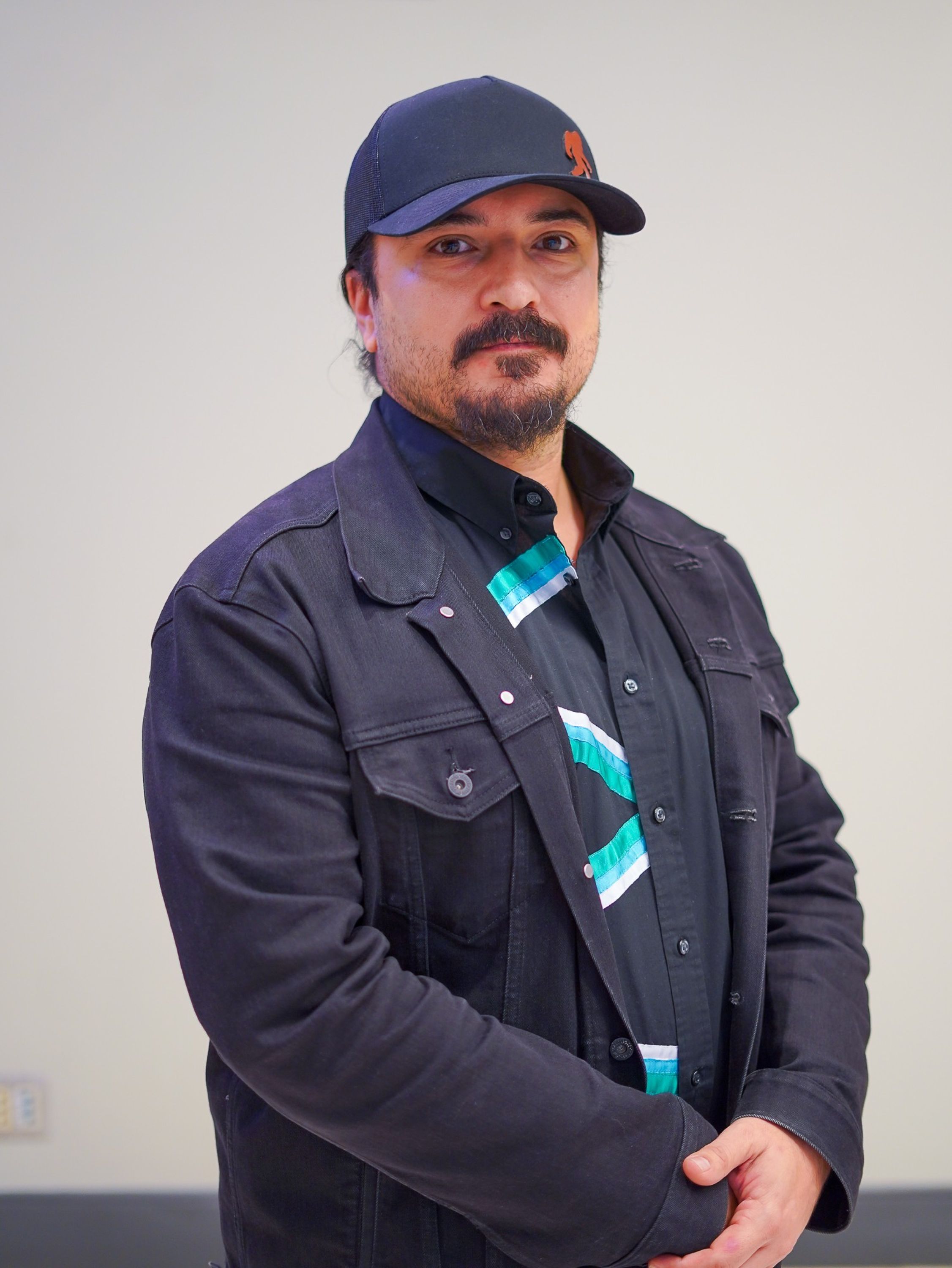
Photograph © Steve Dolson
Louis Busch is a Bear Clan member of Nisichawayasihk Cree Nation, a registered psychotherapist, and a behavioral scientist. With over two decades of experience in mental health, forensic, and community settings, Louis centers his work on relational, ethical, and culturally grounded approaches to wellness. He currently serves as an assistant clinical professor (adjunct) at McMaster University and as a special projects officer for Indigenous curriculum and pedagogy at the University of Toronto. His work is dedicated to centering Indigenous cultural knowledge as the way to restore balance and support the healing journeys of First Nations communities. A recent recipient of the prestigious 2024 SSHRC Impact Awards, Louis dedicates his work to advancing culturally relevant wellness initiatives that empower marginalized communities.
Product Details
- Publisher: Simon & Schuster (September 15, 2026)
- Length: 256 pages
- ISBN13: 9781668206171
Browse Related Books
Raves and Reviews
“Sometimes books find you exactly when you need them. Carry Your Heart is one of those books. It’s a true gift to absorb this collected wisdom, that has been treated with such care and respect. As someone who has been on their own healing journey, there is so much in Carry Your Heart that resonates deeply, as well as new ways of knowing that have expanded my understanding. Carry Your Heart is a much-needed companion on our collective healing journey out of colonialism.”
– — JESSE WENTE, bestselling author of Unreconciled: Family, Truth, and Indigenous Resistance
“Carry Your Heart is a beautiful offering of wisdom allowing us to slow down and feel. If you’re someone struggling with your mental well-being, or connected to another’s struggle, this book is for you. It’s for everyone. Louis Busch, PhD, has provided the gift of a gentle guidebook filled with stories to help us find the way back to our hearts.”
– — CLARA HUGHES, OC, six-time Olympic Medalist and bestselling author of Open Heart, Open Mind
“Some books teach you. Others change you. Carry Your Heart does both. Louis Busch weaves together the wisdom of Indigenous worldviews with the evidence-based insights of Acceptance and Commitment Therapy, and the result is something rare: a book that feels both rigorously grounded and deeply alive. Writing not as a distant expert but as a fellow traveler, Busch brings warmth and hard-won insight to every page. Tender, wise, generous, and genuinely transformative, Carry Your Heart is the kind of book you press into the hands of people you love.”
– — KATE ROBSON, psychotherapist and bestselling author of Something to Hold Onto
“ ‘What can I do today to honour those who have travelled on?’ Answering this question through his extensive practice as a nihithaw psychotherapist, Louis Busch shows how personal pain, when steered by Elders’ insight, helps us face life’s challenges through curiosity, flexibility, and wide-open hearts.”
– — JOHN BORROWS, OC, FRSC, Loveland Chair in Indigenous Law,
Henry N.R. Jackman Faculty of Law, University of Toronto,
and author of The Seven Cycles of Life
“A beautifully written book that skilfully blends ancient wisdom with modern science. Profound, poetic, and pragmatic. Step-bystep, with great compassion, Louis Busch will guide you through facing your fears, transcending your suffering, becoming the sort of person you truly want to be, and living your life to the fullest. Highly recommended!”
– — DR. RUSS HARRIS, bestselling author of The Happiness Trap
“In this empathic and inspiring book, Louis Busch shares his transformative vision for navigating personal crisis, grief, and loss through creative and insightful integration of his own Indigenous Cree values with the science of psychological flexibility. Specifically, Louis interrelates three traditional teachings—belonging through kinship, presence in the world, and purposeful action—with the principles of acceptance and commitment therapy to promote healing and pursue well-being. With great sensitivity and compassion, he encourages us all to learn to ‘move through our lives with emotional and spiritual openness, awareness and intention’—in short, to walk while carrying our hearts.”
– — PROFESSOR JOSEPH P. GONE (Aaniiih-Gros Ventre), PhD, professor of anthropology and of global health and social medicine, Harvard University
Resources and Downloads
High Resolution Images
-
Book Cover Image (jpg): Carry Your Heart
Hardcover 9781668206171
-
Author Photo (jpg): Louis Busch Photograph © Steve Dolson(0.1 MB)
Any use of an author photo must include its respective photo credit