


Plus, receive recommendations and exclusive offers on all of your favorite books and authors from Simon & Schuster.
0:00 /
LIST PRICE $24.00
PRICE MAY VARY BY RETAILER
Get 25% off with code GIFT26 plus free shipping on orders of $40 or more. Discount on physical products only. Terms apply.
Buy from Other Retailers
Table of Contents
About the Book
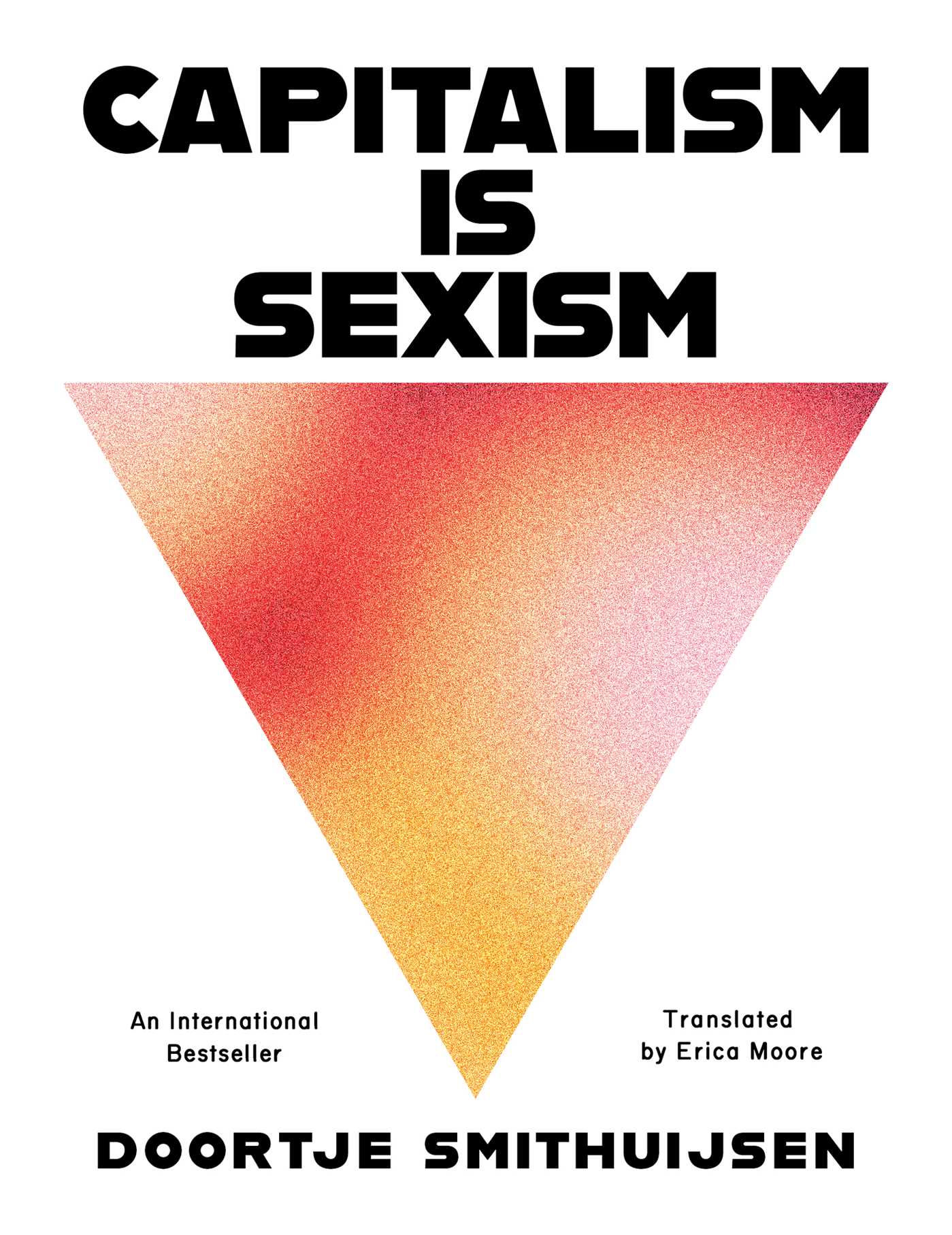
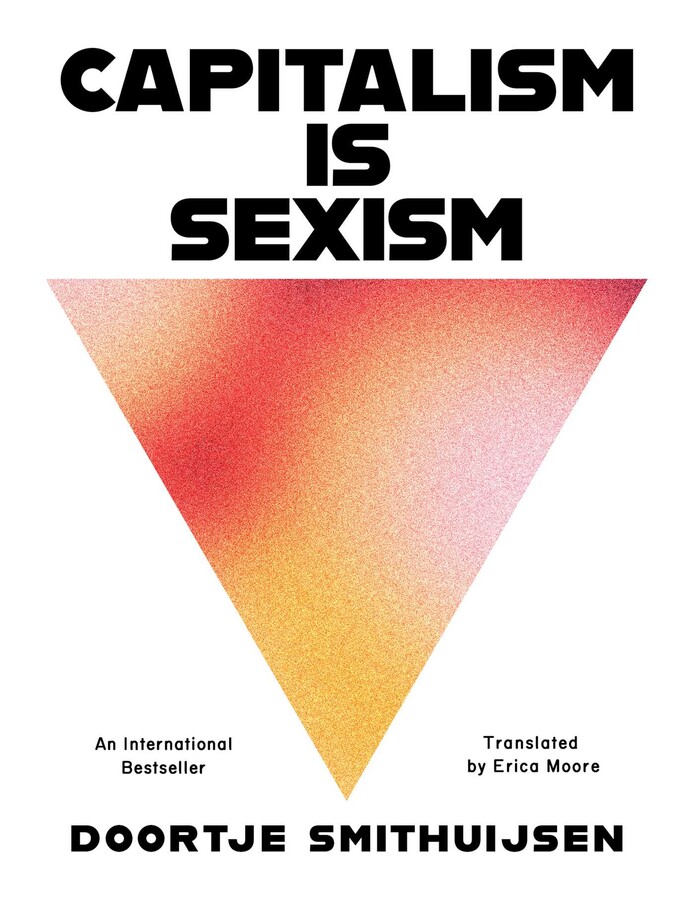
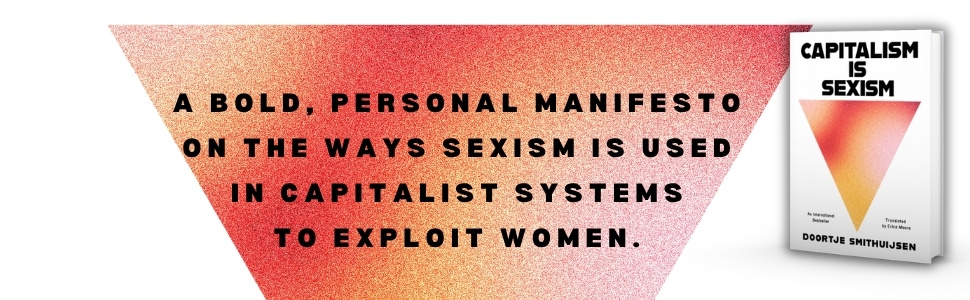
A bold and incisive personal manifesto on the ways sexism is used in capitalist systems to exploit women, using algorithms that pressure them into spending money on a distorted ideal of beauty, motherhood, and success.
The age-old pressure to focus on either a career or building a family has been compounded by a new reality: Millennial women are often both the breadwinner and head of household—all while being told by the cosmetics industry to start Botox before it’s too late and that only the best mothers use a Zeitgeist baby carrier.
Through the lens of her own experiences and influencer culture, prominent Dutch journalist and cultural critic Doortje Smithuijsen explores how seemingly innocuous phenomena like smoothie recipes and spin classes are part of a system that persists in marginalizing women by reinforcing an illusion of inadequacy. Capitalism Is Sexism is not simply about finding body positivity in the age of Ozempic or resisting the Trad Wife lifestyle; it’s about how these forces are here to captivate your attention, your earnings, and your labor—all while pointing towards an inner deficiency. With razor-sharp insight, Smithuijsen shows how difficult it is for women within this system to make choices that are truly their own.
Excerpt
Chapter 1: Motherhood is Easy
1 MOTHERHOOD IS EASY
Like lots of women, I never thought much about being a woman until people made me. This was sometime around my thirtieth birthday, when everyone suddenly started asking when I wanted to have kids. Didn’t matter where I was: at a family gathering, having drinks, at a networking event. Even when I was shooting a documentary, the people I was interviewing would ask, five minutes after I’d met them, how old I was, whether I had kids, whether I wanted kids, and when I thought I’d get started on that.
Of course I said yes. Always and without hesitation. Though I didn’t even know what I meant by that answer. I didn’t feel some inner need to have a child per se—I wanted to in theory, I guess, but I also had my doubts, because I had more than enough plans for my career and was worried about combining all of that. But I sensed that nobody wanted to hear those ruminations. People who ask whether you want kids won’t accept any answer that’s not “Yes.”
Meanwhile, my phone kept asking me the same question. The second I turned thirty, my algorithm shifted: whereas in my twenties I got ads for fashion and cosmetics in my social media feeds, now it was home pregnancy tests, strollers, and diapers. Ads for the Mira at-home test, to find out how fertile you are. Videos for supplements to ensure a “normal hormone balance”—whatever that means. Promos for the Frida fertility cup and the Flo cycle and fertility tracker.
When I was getting my philosophy degree, we learned about the Hegelian concept of the Geist. That’s the idea that there’s such a thing as a collective consciousness—something that steers people’s thoughts and behavior. I remember standing outside class smoking during the break in those long lectures and wondering: where is it then, this Geist? I don’t feel it, I don’t see it. I don’t think I detect its presence at all. I’m not controlled by some Geist, I do whatever I want. I was nineteen.
Ten years later, and I’m feeling the Geist. I feel it in the form of a society that all too clearly has a plan for me—a plan that’s forced on me in all kinds of ways: through ads, through how people deal with me, through the way in which certain behavior is discouraged or condoned. I feel it in the form of the Zeitgeist baby carrier—a wearable carrier made by the Dutch boutique brand Artipoppe, a product that continues to pop up as sponsored content in my social media feeds. Hip fashion models look out at me from my phone, with a baby strapped to their body in a carrier made of linen, tweed, or cashmere, with a houndstooth check, leopard print, or big yin and yang design. Turns out the Geist is a baby carrier. Quite literally.
Artipoppe couldn’t have come up with a better name for their bestseller. I know few products that capture the prevailing zeitgeist so well. On the one hand, the carriers largely define the young-mother look so common in gentrified neighborhoods like mine. At the farmers market, on the playground, outside the Montessori school—you see mothers everywhere with hundreds or even thousands of dollars in baby carrier suspended from their shoulders. On the other hand, the Artipoppe has become a potent symbol in the escalating culture wars over motherhood. When in 2021 the brand’s ads proclaimed, “Motherhood is easy,” it caused an uproar online. Motherhood is easy, sure, for people who have the money for such an outrageously expensive item—and thus also for childcare, a nanny, and high-end toys to keep their brood occupied responsibly. What were they thinking at Artipoppe, presenting themselves so shamelessly as a capitalist “mom brand”? The nerve.
Yet it’s precisely that look—that picture of wealth, of luxury, of moneyed and privileged parenting—that makes Artipoppe so successful. The baby carriers aren’t popular despite their high-end image (and ditto price) but because of it.
Karl Marx noted back in the 19th century that products are never just products. They stand for a set of ideas and assumptions, a collection of cultural convictions and material resources that together form something of value in a specific context. Under capitalism, consumption isn’t only about buying products; it’s also about buying clout in the community.
At a time when poverty is growing, when your chances of climbing the social ladder are slimmer than the odds of slipping down a rung or two, people look for ways to convey that they belong on the side of fortune—that is, on the winning side of the capitalist system. That’s why “affordable luxury” continues to grow in popularity: products that say you’re swimming in money, even as you pay for them with your last bit of salary. A bottle of Aesop hand soap in the bathroom of your overpriced rental; an extravagant natural wine that pegs you as the richest guest at the dinner party, though you have to put it on your credit card.
The more we feel like we’re losing control over our circumstances, the more we go looking for products to compensate. The more people get the idea they can’t compete in the capitalist march of progress, the more they’ll go looking for proof to the contrary—to convince other people and themselves.
In recent years, the formerly solid Dutch middle class is in collapse. The pillars that once supported this social stratum have been kicked away, one by one. Full-time jobs with good salaries and benefits were replaced by gig work; affordable homes were bought up by speculators. At the same time, there’s a middle class forming that primarily manifests as their consumption patterns: the aspirational class. These are the folks in their twenties, thirties, and forties who aspire to belong to the upper socioeconomic classes, but who constantly experience the downward pull of rising rents, vanishing job certainty, and income that doesn’t keep up with inflation. Their consumption patterns revolve around buffering that sense of being sucked downward, by cultivating an image of success for the outside world. Enter Artipoppe, the modern symbol of secure bonding and a childhood of privilege. A symbol of mothers with time, of families with money. A symbol of organic baby food, piano or violin lessons, and fabulous family vacations.
They’re endlessly fascinating to me, these luxury carriers. It’s fascinating that something like this exists at all—that so many people are willing to spend thousands of dollars on an item you can buy for a fraction of that amount, that the need is apparently so great to present yourself in a good socioeconomic light. It fascinates me that more and more women in my own social circle want this thing. And what fascinates me most? That if I’m being honest, I can’t rule out the possibility that someday I, too, will click Buy Now on that website full of Zeitgeist carriers. That’s the thing with the zeitgeist—you’re never completely beyond its reach.
Though I had no concrete plans to have kids, I got the idea around thirty that I should. Where that thought came from, I didn’t know at the time, but it suddenly seemed clear to me that a woman who fails to have kids has failed as a woman. And of course I didn’t want to fail. When I’d hear about PCOS or other forms of infertility, I’d wonder if I might have them. I wanted to stop taking the pill to check to see whether I’d get my period. (But didn’t do it because my boyfriend wasn’t keen on using condoms.) When someone I knew got pregnant, I wanted to hear every detail—how long did it take before her normal cycle was back, how long had they been trying. Like many other women my age, I regularly performed rough calculations: say I stop with the pill on day x, and suppose I’d get pregnant after y months, then that means I can wait until I’m about z years old.
Consciously or not, those external factors—the ads on my phone, the questions from strangers—influenced my thinking, just as they did that of my friends. Every conversation at some point got around to the topic of having children. My female friends—all of them smart, independent, ambitious women—got increasingly caught up in the question of when to have kids. If they were single, their thoughts were dominated by the question of how to find a partner as soon as possible; and if they’d found one, then there was the matter of when to bring up having kids—the fourth date? The fifth? After a month together? Some friends decided to freeze their eggs, others wondered out loud about sperm donors.
With nearly a century of emancipation behind us, we were more highly educated, richer, and freer than ever. And this was what we talked about all the time.
At thirty, I was dating a guy who worked as a musician. When he wasn’t playing a gig, he’d go out. He did his best to live a free and unfettered life. I found that incredibly attractive. As soon as the topic of children came up, he made clear he wasn’t at all thinking about having kids yet, and that—if he ever did have them—he didn’t intend to give up his freedom. I understood that. When I mentioned I might want to freeze my eggs, so I could take the topic of having kids and literally put it on ice, he thought that was weird and a little insulting. We were together, weren’t we? So why would I do such a thing?
We both thought it completely normal that my boyfriend prioritized his freedom. But when I wanted to secure my own freedom, that was suddenly problematic.
While my boyfriend’s attitude toward the topic of kids irritated me, it didn’t surprise me. For years, I’d been surrounded by men who kicked the subject of kids—and more specifically: the subject of women who wanted kids—as far down the road as they could. Single friends on dating apps would set the maximum age at twenty-nine—because all the fuss starts at thirty. Young women who knew they wanted to have children were by definition unappealing—desperation isn’t sexy. It became clear to me how much having kids is still very much the responsibility of women. You first have to work half your life making sure it doesn’t happen, only to subsequently have to make sure it does. Because even as desperation is unanimously deemed undesirable, a woman who never bears children is a flawed female.
The stage of life I found myself in around my thirtieth birthday is what Nell Frizzell calls the panic years—a period that’s been added in the past few decades to the lives of young women with access and ambition. For years, they’ve behaved like one of the guys. They studied as hard, partied as hard, traveled and otherwise enjoyed life as much as their male cohorts. They’re as highly educated (often more so) and well on their way to landing their dream job and living their best life. They’ve held off the subject of having kids as long as they could. That works for a while, until at some point the realization hits that your fertility has an expiration date. You look around, see your so-not-childproof life, and think: Fuck. How can I ever make this work?
The panic years form a period when, under the pressure of internalized societal expectations—and mostly without thinking about it too much—you make choices that determine the course of your life. The main problem in these years, I believe, is that women at this stage of their lives feel lost and alone. We, too, want to keep working full-time, not think about progeny yet, and muddle along endlessly, like many of our male peers. But the desire to bear children also comes knocking, in the form of ovaries that send all kinds of hormones to our brains, and in the form of a society that incessantly wants to know when when when. At the same time, we suddenly experience immense pressure to stay attractive: we’re considering Botox at ever-younger ages, all too aware that we’re never allowed to look old, because old equals infertile, and once you’re infertile, you’re finished. This cocktail of demands leads to doubts and frustrations that feel super personal and unique but which are actually incredibly universal.
It was at the dawn of my own panic years that, seemingly out of nowhere, I started seeing content made by “tradwives.” I suddenly found myself immersed in videos by influencers like the velvet-voiced Nara Smith, who would share how she made a loaf of homemade bread that day or whipped up fresh mozzarella balls, while every year casually bearing a new child, with the same ease as others brew their morning coffee. I saw how Hannah Neeleman, aka Ballerina Farm, milked cows in the morning, then made the milk into oatmeal and scones and muffins to feed her brood of nine. Of course they had Artipoppe baby carriers, the product that ensures mothers can be mothers at all times.
In addition to being some sort of meditation on having kids—a pleasing distraction from all those questions on the topic, like thematic white noise—presumably these vlogs formed something of a mute button for a whole new set of irritations. For most of my life, I’ve been told that many of my qualities are “masculine.” It was always men who said this, by the way, and it was clear they equated “masculine” with “good.” I long saw no harm in these sorts of comments—even felt a certain amount of pride: I was one of the guys.
At the start of my panic years, it dawned on me: I may have “masculine qualities,” but I was not a guy. I may have shared a certain work ethic, a sense of humor even, but I didn’t share in the privileges. When I got home at 8pm after a long day at work, there was no dinner on the table, like there was for many of the men I worked with. My boyfriend was not waiting for me; he was out having a drink or at a friend’s or working out. Who knows. Every time I’ve lived with a man, the household labor—to the extent you’ve got that in a relationship without kids—landed by default on my plate. If we had people over, I took care of the food and drinks. I watered the plants, I called the handyman, I was the one who it occurred to on the way home that we didn’t have anything for dinner and were nearly out of toilet paper. Sure, I could ask my boyfriend to take care of this sort of thing, but that would require an extra step. It seemed easier to just do it myself. The result being that, even without children, I shouldered a greater part of the work. Not only did I work more hours than my partner, I also did much more around the house.
“That’s just how my brain works,” an ex would say when I asked why he didn’t take the initiative to get groceries or do the dishes. In repeating this line, he seemed to forget that the way his “brain” worked determined how mine had to work; that he, by neglecting such chores, imposed an additional workload on me. In that sense, his brain dictated my brain’s activity. And my behavior.
It was on evenings like these—when after a full day’s work I would also take care of dinner, take out the trash, throw in a load of laundry, and pick up a package that got delivered to the neighbors—that by 9pm there was nothing I’d rather do than lose myself in videos posted by Nara Smith or Ballerina Farm. I loved opening Instagram and seeing what kind of steak Nara Smith had cooked for her husband, how Ballerina Farm had prepared eggs that day for her children. Watching these women was incredibly relaxing for some reason. I’d keep scrolling and clicking—watching entire videos detailing everything Nara ate in a day, hearing which products she used for her eczema, listening to the baby names she’d considered and then eliminated for her fourth child. I’d watch Ballerina Farm do yoga and share her workout routine, then see how she collected eggs, kneaded focaccia, and formed ground meat into hamburger patties, all with a baby in the Artipoppe, of course. Ever the mother.
Aside from celebrities, the women with the most online followers are generally those who fit traditional gender roles. These are women who meet a certain standard of beauty, who are married with children, and who don’t work outside the home—their family is their job. Their life explicitly revolves around their role as a wife, a mother. They don’t differ much from those housewives of old, back before first-wave feminism, except that being a housewife often earns these women loads of money.
The popular YouTube channels run by women—with a few exceptions—are primarily about finding a husband, having children, being a mom, family life, caregiving, cooking, gardening. They’re rarely about working or having a career, getting a degree, being free and independent. If they’re about the women themselves, then it’s all about physical appearance—about a healthy lifestyle, diet and exercise, makeup or fashion. What passes for an inner life comes in the form of self-care—meditation, yoga, therapy.
After all those years of emancipation, all the fights for equality, all the efforts to get men and women equal opportunity, is this what we’re watching on our phones in droves? Is this what we’re clicking on at the end of a long day? Are these the women we’re allowing ourselves to be influenced by?
And is this what I want to watch? After a day of thinking, writing, creating, emancipating?
Rationally, it makes no sense to me. But emotionally, I get it. I can see why these women, of all people, are so wildly popular. When I watch them, I’m sucked into my screen, into their world—as if a portal opens and draws me in. When I click on them—slouched on the couch, my coat still on, exhausted and numb—it’s as if they’re saying to me: there’s another way to live your life. There’s a way out.
About the Author
Stijn de Vries
Doortje Smithuijsen lives in Amsterdam where she is a philosopher and journalist frequently featured on Dutch national television and hosts a popular weekly podcast. She has written several books, made documentaries, and regularly publishes in the Volkskrant newspaper.
Product Details
- Publisher: Simon & Schuster (August 11, 2026)
- Length: 128 pages
- ISBN13: 9781668219669
Browse Related Books
Raves and Reviews
"Smithuijsen concludes that 'choice feminism'—a woman’s ability to freely choose a path through life—is more appearance than reality... A highly readable exploration of the insidious relationship between capitalism and gender inequality."
—Kirkus Reviews
Resources and Downloads
High Resolution Images
-
Book Cover Image (jpg): Capitalism Is Sexism
Hardcover 9781668219669
-
Author Photo (jpg): Doortje Smithuijsen Stijn de Vries(0.1 MB)
Any use of an author photo must include its respective photo credit