Plus, receive recommendations and exclusive offers on all of your favorite books and authors from Simon & Schuster.
Published by Square One
Distributed by Simon & Schuster
LIST PRICE $16.95
PRICE MAY VARY BY RETAILER
Free shipping when you spend $40. Terms apply.
Buy from Other Retailers
Table of Contents
About the Book
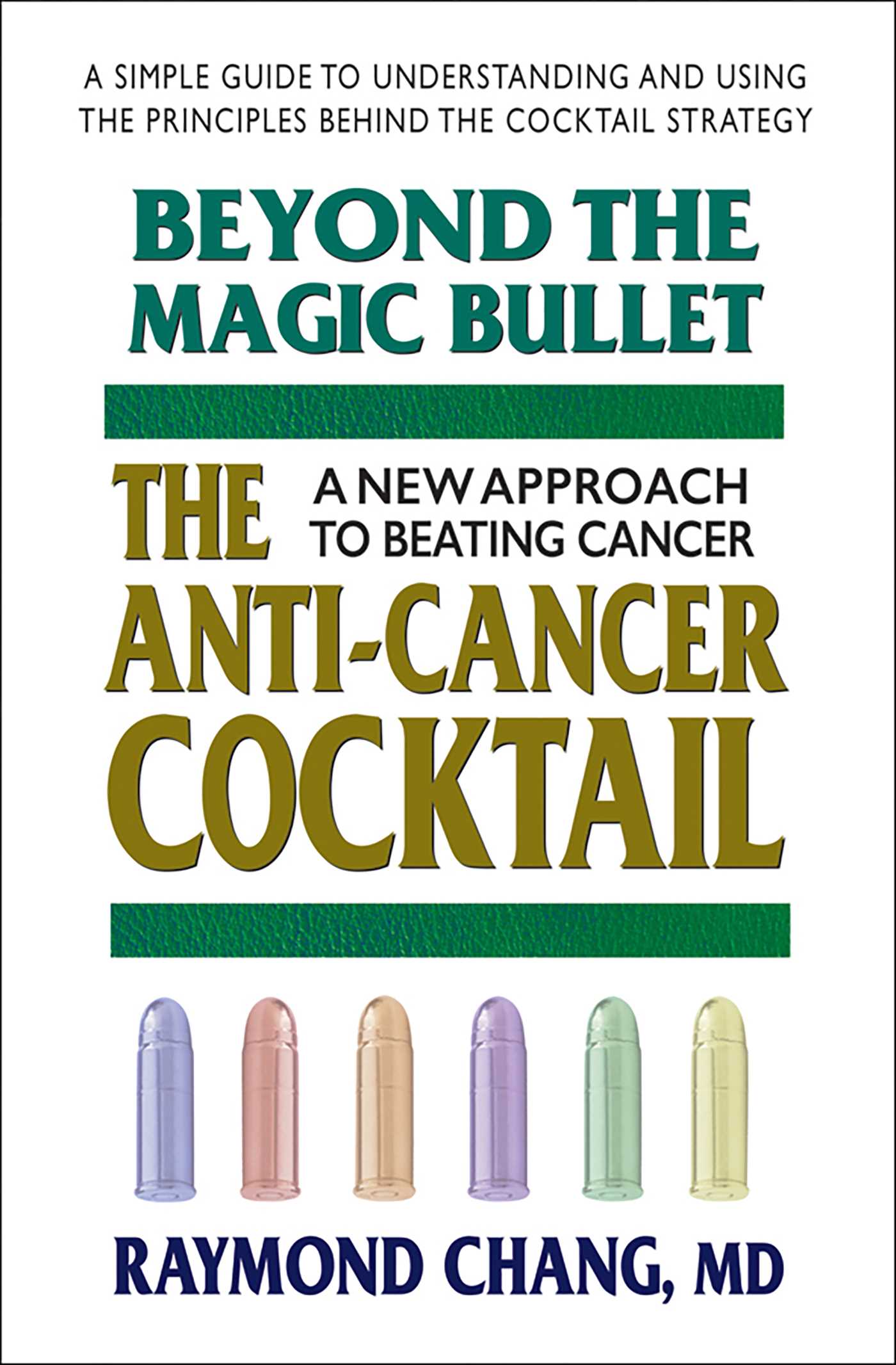
While scientists win occasional skirmishes in the battle against cancer, the overall war continues to go badly. Stories abound about revolutionary drugs that may be available in the future, but offer no real help to those who have cancer today. At present, conventional approaches continue to rely on a narrowly focused strategy of treatments, with doctors using, at best, only one or two drugs or other therapies at a time. While this may be acceptable in a laboratory setting or a clinical trial, it has done little to diminish the number of people who die each year from this dread disease. Recently, however, conventional medicine’s core strategy has been re-examined, and a new, potentially more effective approach has emerged—one that combines the best of Eastern wisdom with Western science. Beyond the Magic Bullet—The Anti-Cancer Cocktail by Dr. Raymond Chang takes a penetrating look at this bold new way of treating cancer.
The book begins by examining modern medicine’s use of surgery, radiation, chemotherapy, hormone therapy, and targeted drugs in the war against cancer. It then offers a new therapy based on the knowledge that certain off-label drugs, nutrients, and therapies are each somewhat effective against cancer. By combining these therapeutic agents into a “cocktail,” doctors have found that they can attack the cancer all at once, on many different levels and at several different angles, with the goal of overwhelming the disease. Dr. Chang not only discusses the effectiveness of the cocktail, but also provides an examination of the most valuable agents available. For over a thousand years, Traditional Chinese Medicine has used the cocktail approach to safely and effectively fight disease. Throughout the world, the most successful treatments for HIV and Hepatitis C are based on this strategy. Beyond the Magic Bullet—The Anti-Cancer Cocktail leads the way to a bright new future of hope and healing.
The book begins by examining modern medicine’s use of surgery, radiation, chemotherapy, hormone therapy, and targeted drugs in the war against cancer. It then offers a new therapy based on the knowledge that certain off-label drugs, nutrients, and therapies are each somewhat effective against cancer. By combining these therapeutic agents into a “cocktail,” doctors have found that they can attack the cancer all at once, on many different levels and at several different angles, with the goal of overwhelming the disease. Dr. Chang not only discusses the effectiveness of the cocktail, but also provides an examination of the most valuable agents available. For over a thousand years, Traditional Chinese Medicine has used the cocktail approach to safely and effectively fight disease. Throughout the world, the most successful treatments for HIV and Hepatitis C are based on this strategy. Beyond the Magic Bullet—The Anti-Cancer Cocktail leads the way to a bright new future of hope and healing.
Excerpt
Since the National Cancer Act declared “war” on the disease in 1971, cancer has been likened to an enemy that must be fought and defeated. Over the last several decades, billions of dollars have been poured into stopping cancer in its tracks and, today, thereis a wealth of information about cancer biology and hundreds of cancer therapies. Yet, a cure has yet to be found. As the title of a 2008 Newsweek article summed it up, “We fought cancer . . . and cancer won.” This predicament has left many scientists and doctors wondering whether the time has come to rethink how the war on cancer should be carried out. Like any war, the war against cancer cannot be won with weapons and firepower alone; an effective strategy is also essential. And this may be the key that is missing.
The study of cancer is a science, but the treatment of cancer involves both science and strategy. While the science may be accurate, the dominant strategy for treating the disease has been largely influenced by medicine’s past success against infectious disease. The effectiveness of antibiotics in killing germs and curing infections shaped the way that doctors approached disease, including cancer, which was initially viewed as a foreign entity that invaded the body. Many believed that curing cancer depended on finding the right medicine to kill the cancer “bug.” And it was from this point of view that the hunt for a “magic bullet,” or single-solution cure, was born. In other words, it was assumed that cancer was like a vault with a single lock, and with only one key that could open it. If only the right key was found, then, like magic, the vault could be unlocked. The possibility that cancer had several “locks,” or even a combination lock, was not widely considered, nor was the idea that patients could have different sets of locks unique to their individual cancers. Instead, the simple “hit or miss” strategy persisted and dominated cancer treatmentphilosophy.
Today, however, there is a growing appreciation of the complex biology of the phenomenon known as cancer. As single-agent therapies continue to prove insufficient, it has become apparent that a single “key,” or magic bullet cure, may simply not exist for most cancers.
Rather, the use of multiple “bullets” simultaneously to target cancer’s multiple dimensions and pathways may be a more appropriate strategy. This combination, or “cocktail,” strategy is neither new nor unique, though it has not been commonly practiced in Western medicine. In contrast, the strategy has been employed in Traditional Chinese Medicine (TCM) for thousands of years in the form of herbal “cocktail” formulas, acupuncture, and other multidimensional treatment methods.
A turning point for Western medicine came in 1994 when Dr. David Ho, in what he referred to as a “Eureka moment,” applied the cocktail strategy to HIV therapy and, in turn, revolutionized treatment for the virus. Furthermore, in 1995, Dr. Ben Williams adopted this strategy to fight a deadly brain tumor, using a cocktail of conventional and alternative therapies. Williams’ “anti-cancer cocktail” was successful, and he has become cancer-free. These examples show that cocktail therapy is a viable strategy that has proven successful in many cases. Now, it is necessary to establish a logical basis for using cocktail therapy to treat malignant cancers of any type and at any stage. That is what this book hopes to achieve.
Divided into two parts, Beyond the Magic Bullet covers cocktail therapy both in theory and in practice. Part 1, “The Biology and Treatment of Cancer,” makes the case for cocktail therapy as a strategy that takes the biological complexity of cancer into full account. Chapter 1 provides an introduction to this complex biology, explaining the numerous ways in which cancer may arise and spread throughout the body. Conventional treatm ents for the disease are outlined in Chapter 2, including classical methods like chemotherapy as well as modern targeted therapies. Chapter 3 takes a look at the competing medical philosophies underlying conventional cancer treatment and cocktail therapy, the pros and cons of which are carefully weighed in Chapter 4. Finally, in Chapters 5 and 6, the actual practice of cocktail therapy is examined in more detail. Here, you will learn about the various “ingredients”--vitamins, herbs, supplements, pharmaceutical drugs, diets, spiritual activities, and more--that may comprise an anticancer cocktail. You will also become familiar with the treatment process, from choosing a doctor to the step-by-step implementation of therapy. This information will help you ensure the best possible cancer care.
Part 2 is split into two sections that list various pharmaceutical drugs and supplements that may be effective for treating and/or preventing cancer. When combined with conventional therapies, these agents may increase the odds of treatment success and survival. This list is neither comprehensive nor intended to replace the expert advice of a healthcare professional. Still, it can serve as a valuable resource when considering cancer treatment options. You can then refer to the Appendix to read three case studies demonstrating how anti-cancer cocktails have been safely and successfully implemented for three actual cancer patients. These cases highlight the potential of cocktail therapy in changing how we approach the treatment of cancer.
Beyond the Magic Bullet is not a self-treatment manual or a recipe book for cancer therapy, but rather a blueprint for a superior strategy. As cancer researchers continue to look for more effective treatments, cocktail therapy may be better able to slow down, stop, and even reverse the disease in the mean time. This book was written in hopes of giving patients an alternative by providing vital information to share and discuss with their physicians. If you or someone you love is affected by cancer, Beyond the Magic Bullet can be the “map” that assists you in navigating this complex and difficult disease.
I believe that cancer is curable, perhaps in our lifetime. I have full faith in the good work that my colleagues are doing today to discover better cancer treatments for tomorrow. At the same time, I believe that a radically different strategy is needed, because cancer simply cannot wait for clinical trials to be completed or for drugs and other therapies to be approved. Careful re-strategizing with our existing arsenal of treatments may produce dramatically improved results now. The time has come to think beyond the magic bullet.
The study of cancer is a science, but the treatment of cancer involves both science and strategy. While the science may be accurate, the dominant strategy for treating the disease has been largely influenced by medicine’s past success against infectious disease. The effectiveness of antibiotics in killing germs and curing infections shaped the way that doctors approached disease, including cancer, which was initially viewed as a foreign entity that invaded the body. Many believed that curing cancer depended on finding the right medicine to kill the cancer “bug.” And it was from this point of view that the hunt for a “magic bullet,” or single-solution cure, was born. In other words, it was assumed that cancer was like a vault with a single lock, and with only one key that could open it. If only the right key was found, then, like magic, the vault could be unlocked. The possibility that cancer had several “locks,” or even a combination lock, was not widely considered, nor was the idea that patients could have different sets of locks unique to their individual cancers. Instead, the simple “hit or miss” strategy persisted and dominated cancer treatmentphilosophy.
Today, however, there is a growing appreciation of the complex biology of the phenomenon known as cancer. As single-agent therapies continue to prove insufficient, it has become apparent that a single “key,” or magic bullet cure, may simply not exist for most cancers.
Rather, the use of multiple “bullets” simultaneously to target cancer’s multiple dimensions and pathways may be a more appropriate strategy. This combination, or “cocktail,” strategy is neither new nor unique, though it has not been commonly practiced in Western medicine. In contrast, the strategy has been employed in Traditional Chinese Medicine (TCM) for thousands of years in the form of herbal “cocktail” formulas, acupuncture, and other multidimensional treatment methods.
A turning point for Western medicine came in 1994 when Dr. David Ho, in what he referred to as a “Eureka moment,” applied the cocktail strategy to HIV therapy and, in turn, revolutionized treatment for the virus. Furthermore, in 1995, Dr. Ben Williams adopted this strategy to fight a deadly brain tumor, using a cocktail of conventional and alternative therapies. Williams’ “anti-cancer cocktail” was successful, and he has become cancer-free. These examples show that cocktail therapy is a viable strategy that has proven successful in many cases. Now, it is necessary to establish a logical basis for using cocktail therapy to treat malignant cancers of any type and at any stage. That is what this book hopes to achieve.
Divided into two parts, Beyond the Magic Bullet covers cocktail therapy both in theory and in practice. Part 1, “The Biology and Treatment of Cancer,” makes the case for cocktail therapy as a strategy that takes the biological complexity of cancer into full account. Chapter 1 provides an introduction to this complex biology, explaining the numerous ways in which cancer may arise and spread throughout the body. Conventional treatm ents for the disease are outlined in Chapter 2, including classical methods like chemotherapy as well as modern targeted therapies. Chapter 3 takes a look at the competing medical philosophies underlying conventional cancer treatment and cocktail therapy, the pros and cons of which are carefully weighed in Chapter 4. Finally, in Chapters 5 and 6, the actual practice of cocktail therapy is examined in more detail. Here, you will learn about the various “ingredients”--vitamins, herbs, supplements, pharmaceutical drugs, diets, spiritual activities, and more--that may comprise an anticancer cocktail. You will also become familiar with the treatment process, from choosing a doctor to the step-by-step implementation of therapy. This information will help you ensure the best possible cancer care.
Part 2 is split into two sections that list various pharmaceutical drugs and supplements that may be effective for treating and/or preventing cancer. When combined with conventional therapies, these agents may increase the odds of treatment success and survival. This list is neither comprehensive nor intended to replace the expert advice of a healthcare professional. Still, it can serve as a valuable resource when considering cancer treatment options. You can then refer to the Appendix to read three case studies demonstrating how anti-cancer cocktails have been safely and successfully implemented for three actual cancer patients. These cases highlight the potential of cocktail therapy in changing how we approach the treatment of cancer.
Beyond the Magic Bullet is not a self-treatment manual or a recipe book for cancer therapy, but rather a blueprint for a superior strategy. As cancer researchers continue to look for more effective treatments, cocktail therapy may be better able to slow down, stop, and even reverse the disease in the mean time. This book was written in hopes of giving patients an alternative by providing vital information to share and discuss with their physicians. If you or someone you love is affected by cancer, Beyond the Magic Bullet can be the “map” that assists you in navigating this complex and difficult disease.
I believe that cancer is curable, perhaps in our lifetime. I have full faith in the good work that my colleagues are doing today to discover better cancer treatments for tomorrow. At the same time, I believe that a radically different strategy is needed, because cancer simply cannot wait for clinical trials to be completed or for drugs and other therapies to be approved. Careful re-strategizing with our existing arsenal of treatments may produce dramatically improved results now. The time has come to think beyond the magic bullet.
Product Details
- Publisher: Square One (October 1, 2011)
- Length: 208 pages
- ISBN13: 9780757002328
Browse Related Books
Raves and Reviews
"His approach will attract patients willing to try a bewildering menu of options."
– Publishers Weekly
"Though there's a lot of medico-speak here—which can be a bit confusing—'Beyond the Magic Bullet' otherwise makes a lot of sense. Author and oncologist Raymond Chang advocates something radically different, his words are soothing and reassuring, and it's empowering for patients to take the cancer-bull by the horns."
– Terri Schlichenmeyer, The Bookworm
"Dr. Chang's presentation is well-written, nicely designed and easy to follow despite its discussion of complex medical and pharmaceutical topics; it is clearly meant to be read by cancer patients and their caregivers."
– Shelf Awareness
Resources and Downloads
High Resolution Images
-
Book Cover Image (jpg): Beyond the Magic Bullet
Trade Paperback 9780757002328